
Eradicating Counterfeit Risks: A Deep Dive into Blockchain Solutions


Welcome to Blockchain Trends, your compass in the ever-evolving landscape of decentralized technology.
Are you ready to unearth the untapped potential of blockchain beyond the hype? Here, we delve into its transformative applications across industries, from DeFi innovations to enterprise solutions. But today, we're focusing on a critical area: Blockchain anticounterfeiting solutions benefits. Discover how this technology is revolutionizing supply chain management and providing unprecedented levels of product authenticity. Intrigued? Let's explore how blockchain is eradicating counterfeit risks and building a future of trust and transparency.
Combating Food Fraud: A Deep Dive into Blockchain Solutions
- The Pervasive Threat of Food Fraud and the Need for Enhanced Traceability
- Blockchain-Based Food Traceability: An Overview
- How Blockchain Ensures Food Integrity: A Detailed Explanation
- Use Cases of Blockchain in Food Traceability: Real-World Examples
- Implementing Blockchain Food Traceability: A Step-by-Step Guide
- Addressing Challenges and Concerns in Blockchain Food Traceability
- The Future of Blockchain and Food Safety: Trends and Predictions
- Measuring the ROI of Blockchain Food Traceability Investments
- Conclusion: Embracing Blockchain for a Safer and More Transparent Food System
-
Frequently Asked Questions
- How can blockchain technology help combat counterfeiting?
- What are the key benefits of using blockchain for anticounterfeiting?
- What types of products are best suited for blockchain anticounterfeiting solutions?
- How does blockchain regulation impact the adoption of anticounterfeiting solutions?
- What is the future outlook for blockchain anticounterfeiting solutions benefits?
- Final Reflection: Securing Authenticity in a Counterfeit World
- Unveil Your Blockchain Potential: Secure Your Future!
The Pervasive Threat of Food Fraud and the Need for Enhanced Traceability
The Economic and Health Impacts of Food Fraud: A Global Perspective
Food fraud, defined as the deliberate deception for economic gain using food, poses a significant and escalating threat worldwide. Economically, it costs the global food industry billions annually. Estimates vary, but reports from organizations like the U.S.
Grocery Manufacturers Association and Michigan State University have placed the global economic impact anywhere from $10 billion to $50 billion per year. This figure is notoriously difficult to pinpoint precisely due to the hidden nature of fraudulent activities, but it underscores the massive financial drain on legitimate businesses, supply chains, and consumers. Beyond direct financial losses, food fraud erodes consumer trust, damages brand reputations, and can lead to costly recalls and litigation.
The health implications of food fraud are arguably even more severe. Adulterated or mislabeled food products can contain undeclared allergens, toxic substances, or contaminants that pose serious health risks, including severe allergic reactions, poisoning, and long-term health issues. Tragic incidents, such as the 2008 Chinese milk scandal where melamine-tainted milk led to the deaths of six infants and sickened tens of thousands, highlight the catastrophic potential of food fraud.
Less dramatic but still harmful examples include mislabeled fish species, diluted olive oil, or honey cut with cheaper syrups, all of which deceive consumers and can carry health risks. The lack of transparency in complex supply chains makes it challenging to quickly identify and isolate fraudulent products, prolonging potential exposure to harm.
Limitations of Traditional Food Traceability Systems
Traditional food traceability systems, often reliant on paper records, spreadsheets, and disparate databases, suffer from fundamental limitations that make them vulnerable to fraud. Information is typically fragmented across different stakeholders – farmers, processors, distributors, retailers – with no single, unified, and easily accessible record. This fragmentation creates data silos and makes it difficult, if not impossible, to trace a product's journey comprehensively and quickly from its origin to the consumer's plate. The manual nature of many traditional systems also introduces significant opportunities for human error, delays, and intentional manipulation or deletion of records.
Moreover, the lack of interoperability between different systems used by various supply chain participants is a major hurdle. Data formats, standards, and technologies often differ, preventing seamless information flow. This disjointed approach means that verifying the authenticity of a product requires time-consuming manual checks and cross-referencing across multiple, untrusted sources.
In the event of a food safety incident or suspected fraud, tracing the source and pathway of contamination can take days or weeks, increasing the potential for further harm and economic loss. These inherent weaknesses make traditional systems inadequate against sophisticated, globally networked food fraudsters, highlighting the need for more robust Blockchain anticounterfeiting solutions benefits.
Blockchain-Based Food Traceability: An Overview
Why Blockchain Revolutionizes Food Provenance and Safety
Blockchain technology offers a revolutionary approach to food provenance and safety by creating a shared, immutable, and transparent ledger of transactions across the entire supply chain. Unlike traditional centralized databases where a single entity controls the data and can alter it, a blockchain distributes the data across a network of participants. Each transaction – whether it's a farmer harvesting produce, a processor packaging goods, or a distributor shipping items – is recorded as a block of data, timestamped, and cryptographically linked to the previous block. This chain of blocks forms a permanent, verifiable history of the product's journey.
The revolutionary aspect lies in the consensus mechanism required to add new blocks. For a transaction to be added to the chain, it must be validated by multiple participants in the network. Once a block is added, it cannot be altered or deleted without changing all subsequent blocks, a task that is computationally infeasible for a single party.
This inherent immutability and decentralized validation make the data highly trustworthy and resistant to tampering. For food safety, this means every step, from farm inputs and harvest dates to processing conditions, transportation temperatures, and retail destinations, can be recorded and verified, creating an unforgeable digital twin of the product's physical journey.
Key Advantages of Blockchain in Food Supply Chains
Implementing blockchain technology in food supply chains offers numerous key advantages that directly contribute to combating food fraud and enhancing safety. One primary benefit is the creation of a single source of truth for product information, accessible to authorized parties across the chain. This eliminates data silos and provides unprecedented visibility. Secondly, the immutability of the blockchain record ensures data integrity; once information is recorded, it cannot be retrospectively changed, making it extremely difficult for fraudsters to alter origin dates, ingredient lists, or certifications. This is a core element of the Blockchain anticounterfeiting solutions benefits.
Furthermore, blockchain enhances trust and accountability. Since multiple parties validate transactions, no single entity can unilaterally dictate the information. This distributed trust model reduces reliance on intermediaries and fosters greater collaboration among supply chain partners. The ability to quickly and accurately trace products also dramatically improves recall efficiency, potentially reducing the time from days or weeks to hours or even minutes, minimizing public health risks and economic damage. Finally, increased transparency empowers consumers with verifiable information about the food they purchase, building confidence and potentially allowing businesses to command a premium for guaranteed authenticity and safety.
How Blockchain Ensures Food Integrity: A Detailed Explanation
Immutable Records: Guaranteeing Data Accuracy from Farm to Fork
The principle of immutability is foundational to how blockchain ensures food integrity. Every significant event in a food product's lifecycle – from planting seeds, applying fertilizers, harvesting, processing, packaging, transportation, and retail stocking – can be recorded as a transaction on the blockchain. Each of these transactions is bundled into a block, cryptographically hashed, and linked to the previous block.
This creates a tamper-evident chain of custody. If someone attempts to alter a piece of data within a block, the hash of that block changes, which then invalidates the hash of the next block in the chain, and so on.
Because this chain is distributed across multiple nodes in the network, any attempted alteration would be immediately obvious to other participants, as their copy of the ledger would not match the fraudulent version. Achieving consensus to accept a fraudulent block across the entire network is practically impossible. This means that the data recorded on the blockchain provides a reliable, unalterable history of the food item. Businesses and consumers can trust that the information regarding origin, processing dates, ingredients, and handling is accurate and has not been tampered with since it was recorded, providing robust Blockchain anticounterfeiting solutions benefits.
Decentralized Verification: Enhancing Trust and Accountability
Decentralized verification is another critical mechanism by which blockchain enhances trust in the food supply chain. Instead of relying on a single authority or centralized database that could be a single point of failure or manipulation, the responsibility for verifying and validating transactions is shared among the network participants. When a new transaction (e.g., a shipment of produce leaving a farm) is initiated, it is broadcast to the network. Nodes on the network then work to verify the legitimacy of this transaction based on predefined rules and the current state of the ledger.
Only after a consensus mechanism is satisfied – meaning a majority of participants agree that the transaction is valid – is the new block added to the blockchain. This process prevents any single entity, whether a farmer, processor, or distributor, from unilaterally adding false information to the ledger. It creates a system of shared accountability where trust is built into the protocol itself rather than relying on trusting a single company or intermediary. This distributed consensus makes the system far more resilient to fraud and error than traditional centralized models.
Enhanced Transparency: Empowering Consumers with Product Information
Blockchain provides unprecedented levels of transparency in the food supply chain, empowering consumers with detailed and verifiable information about the products they purchase. By scanning a QR code on packaging, consumers can potentially access a wealth of data recorded on the blockchain, such as the farm of origin, date of harvest, processing facility, transportation route, and even quality assurance checks performed along the way. This level of detail goes far beyond what is typically available through traditional labeling or traceability methods.
For instance, a consumer concerned about the ethical sourcing of coffee could scan a bag and see immutable records confirming the specific cooperative it came from, fair-trade certifications, and even the date it was roasted. This transparency builds consumer confidence and trust in brands that adopt blockchain traceability. It allows consumers to make informed decisions based on verified data, increasing demand for genuinely sourced and safely handled food products and providing clear Blockchain anticounterfeiting solutions benefits by making fraudulent claims easily detectable.
Use Cases of Blockchain in Food Traceability: Real-World Examples
Tracking Tuna from Ocean to Plate: [Specific Company Example]
While specific company names and detailed, current operational data are often proprietary, the concept of tracking high-value, fraud-prone products like seafood using blockchain is a prominent use case. Consider a scenario involving a major retailer and its tuna supply chain. Tuna is susceptible to species substitution, mislabeling of origin, and illegal fishing practices. A blockchain implementation could begin at the point of catch. Fishermen could record the species, catch location (potentially verified by GPS data), time of catch, and vessel ID on the blockchain.
As the tuna moves through processing plants, distributors, and finally to the retailer, each handover and transformation (e.g., filleting, packaging) is recorded as a transaction on the ledger. This creates a continuous, verifiable history. If a consumer scans the product in the store, they can see the immutable journey, confirming it is the species claimed, caught in a legal zone, and handled through approved facilities. Pilots in the seafood industry have demonstrated that such systems can reduce the time to trace a product from over a week down to seconds, significantly enhancing transparency and combating mislabeling fraud.
Ensuring Organic Certification with Blockchain: [Case Study Detail]
Ensuring the integrity of organic certification is a critical application for blockchain. The organic food market is growing, but so too is the potential for fraudulent claims. A blockchain-based system can connect organic farmers, certification bodies, processors, and retailers on a shared platform. When a farmer receives organic certification, this can be recorded on the blockchain, linked to specific batches of produce. As the produce moves through the supply chain, each entity confirms receipt and processing steps, referencing the original organic certification record on the ledger.
Certification bodies can conduct audits and record their findings directly on the blockchain, providing a transparent and immutable audit trail. This makes it much harder for conventional produce to be fraudulently labeled and sold as organic at later stages in the supply chain. For example, a project might involve a network of small-hold coffee farmers seeking organic certification.
By recording each step – from organic compost application and harvesting to washing, drying, and shipment – on a blockchain, they provide verifiable proof of their organic practices to auditors and buyers, enhancing trust and access to premium markets. This demonstrates tangible Blockchain anticounterfeiting solutions benefits for high-value, trust-dependent markets.
Enhancing Coffee Bean Provenance using Blockchain-Based Tracking: [Industry Application]
The coffee industry, known for its complex global supply chains involving numerous small farmers, intermediaries, roasters, and retailers, is another prime candidate for blockchain traceability. Ensuring fair trade practices, specific origin claims (e.g., single-origin from a particular region or farm), and quality attributes is challenging with traditional methods. A blockchain system can track coffee beans from the individual farm or cooperative through washing stations, dry mills, export, import, roasting, and distribution.
Each transaction records details such as lot number, weight, quality scores, processing methods (washed, natural, honey), and dates. Smart contracts could potentially automate payments to farmers upon verification of shipment or quality milestones recorded on the blockchain. This level of detail provides verifiable provenance, allowing roasters and consumers to confirm the specific origin and journey of the beans.
It combats fraud related to blending cheaper beans with premium ones or misrepresenting regional origins. Projects in this sector have shown the potential to increase farmer income by providing verifiable proof of quality and origin, attracting buyers willing to pay more for guaranteed provenance.
Implementing Blockchain Food Traceability: A Step-by-Step Guide
Mapping Your Food Supply Chain for Vulnerabilities
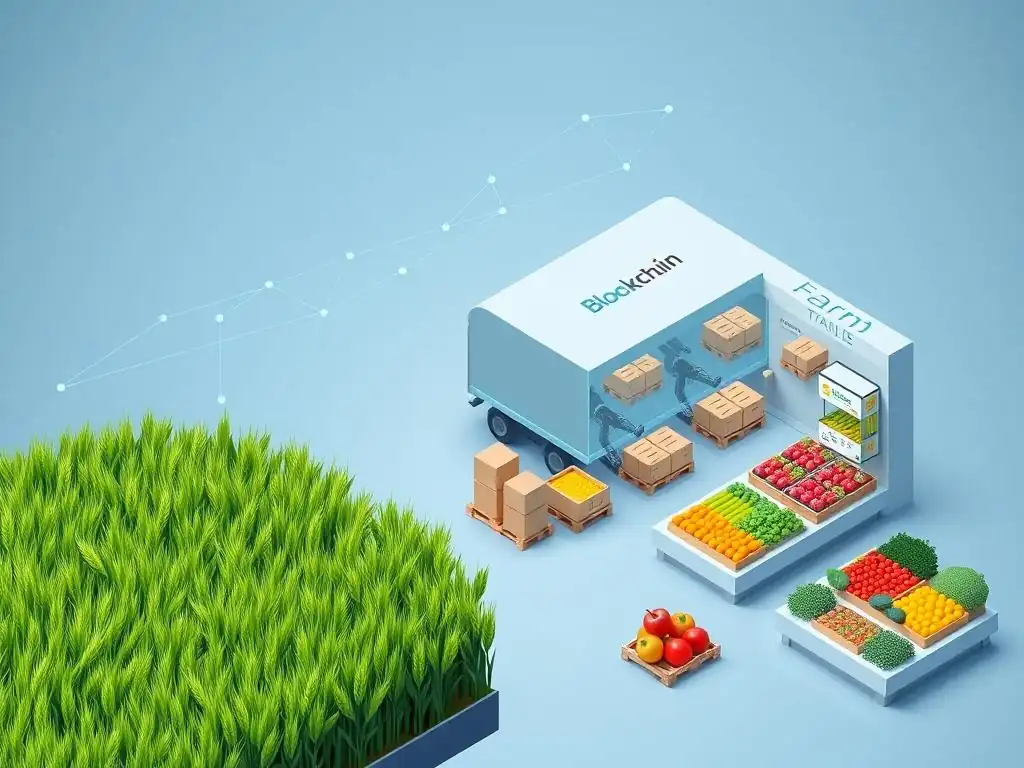
The first crucial step in implementing blockchain food traceability is a thorough mapping and analysis of your existing supply chain. This involves identifying every participant, from the initial source (farm, fishery, etc.) to the final point of sale. Document the flow of goods and the flow of information at each stage. Crucially, identify the points in your supply chain that are most vulnerable to fraud, contamination, or inefficiencies.
- Where are manual records kept?
- Where are there handoffs between different companies or systems?
- Which products are high-value and frequently targeted by fraudsters (e.g., olive oil, honey, seafood, organic produce)?
- Where are delays or lack of visibility most pronounced?
Understanding these vulnerabilities will help prioritize which parts of the supply chain to onboard onto the blockchain first and what data points are most critical to track for effective Blockchain anticounterfeiting solutions benefits.
Selecting a Suitable Blockchain Platform for Food Traceability: [Considerations and Comparisons]
Choosing the right blockchain platform is a critical decision. Not all blockchain networks are suited for supply chain applications. Key considerations include:
- Permissioned vs. Permissionless: Permissioned blockchains (like Hyperledger Fabric or R3 Corda) are often preferred for enterprise supply chains as they allow companies to control who can participate and validate transactions, ensuring data privacy and governance. Permissionless blockchains (like public Ethereum) are open to anyone but may present challenges regarding transaction speed, cost, and data privacy for sensitive supply chain information.
- Scalability: The platform must be able to handle the volume of transactions generated by your supply chain. Consider the number of products, batches, and events that will need to be recorded daily.
- Interoperability: Can the platform easily integrate with existing enterprise systems (e.g., ERP, WMS) and potentially connect with other blockchain networks or data sources (like IoT devices)?
- Cost: Evaluate the costs associated with setting up and running nodes, transaction fees, and development expenses.
- Features: Look for features relevant to supply chain, such as support for smart contracts (for automating processes like payments or quality checks) and robust identity management.
Platforms like IBM Food Trust (built on Hyperledger Fabric), SAP's blockchain solutions, and independent platforms specializing in supply chain offer varying features and models. Comparison involves assessing which platform best meets your specific needs for privacy, speed, cost, and integration capabilities.
Integrating Blockchain with Existing Food Safety Management Systems
Blockchain traceability should complement, not replace, existing food safety management systems (FSMS) like HACCP (Hazard Analysis and Critical Control Points) or ISO 22000. The blockchain acts as an immutable record layer for critical data generated by these systems. Integration involves connecting data sources from your FSMS, such as temperature logs from cold chain monitoring, quality control checks, or sanitation records, to the blockchain platform.
This requires developing APIs (Application Programming Interfaces) or using middleware to securely transfer verified data from sensors, internal databases, or manual input points onto the blockchain. The goal is to automate data capture where possible and ensure that the data recorded on the ledger is accurate at its source. This integration strengthens the overall FSMS by providing an incorruptible audit trail and enhancing the verifiability of safety procedures, contributing significantly to Blockchain anticounterfeiting solutions benefits.
Training and Education: Engaging Stakeholders in Blockchain Adoption
Successful blockchain implementation relies heavily on the adoption and accurate data entry by all participants in the supply chain, many of whom may not be technologically sophisticated. Comprehensive training and education programs are essential for farmers, factory workers, logistics personnel, and retail staff who will interact with the system. This includes training on using the specific platform interface, understanding the importance of accurate and timely data entry, and recognizing the benefits of the system for their own operations (e.g., faster payments, reduced disputes).
Addressing concerns about data privacy, complexity, and the perceived cost of change is crucial. Highlighting the collective benefits – increased efficiency, reduced fraud risks, enhanced brand reputation, and improved consumer trust – can foster buy-in. A phased rollout with pilot programs in specific product lines or regions can help demonstrate value and refine processes before a wider deployment.
Addressing Challenges and Concerns in Blockchain Food Traceability
Data Standardization and Interoperability Challenges
A significant challenge in implementing blockchain food traceability is the lack of universal data standards across the diverse and fragmented food industry. Different companies and sectors use varying formats for product identifiers, location data, and process descriptions. For a blockchain to provide seamless, farm-to-fork traceability, data needs to be standardized so that information from one participant's system can be understood and processed by another's.
Achieving interoperability between different blockchain platforms, or between blockchain networks and legacy systems, also remains complex. While initiatives are underway to develop common standards (e.g., GS1 standards for supply chain), widespread adoption takes time. Without agreed-upon standards and seamless data exchange, the full potential of a connected, transparent food supply chain cannot be realized, limiting the comprehensive application of Blockchain anticounterfeiting solutions benefits.
Regulatory Compliance and Consumer Privacy Considerations
Navigating the evolving landscape of regulations is another challenge. Food safety regulations vary significantly by country and region. A blockchain system must be designed to comply with relevant laws regarding data storage, access, and reporting. For example, regulations might require specific data points to be recorded or mandate how long records must be kept.
Consumer privacy is also a key concern. While tracking product journeys is the goal, the system must protect sensitive business data and consumer personal information. Permissioned blockchains help address this by allowing granular control over data access. However, ensuring that data collected aligns with privacy regulations like GDPR or CCPA, especially when dealing with consumer-facing applications that might link product traceability to purchase data, requires careful design and legal review.
Scalability and Performance Optimization
As food supply chains generate vast amounts of data daily, the scalability and performance of the chosen blockchain platform are critical. Can the network handle millions or billions of transactions efficiently and without prohibitive costs? Early blockchain implementations sometimes faced limitations in transaction throughput and latency.
While newer enterprise-focused platforms have made significant improvements, optimizing performance for large-scale food networks remains an ongoing effort. This involves efficient data modeling, optimizing consensus mechanisms, and potentially using off-chain storage for less critical data while maintaining hashes on-chain for integrity. Ensuring the system can scale as more participants join and more data is recorded is essential for long-term viability and maximizing the Blockchain anticounterfeiting solutions benefits across an entire industry.
The Future of Blockchain and Food Safety: Trends and Predictions
The Role of IoT Sensors and Smart Contracts in Food Traceability
The integration of Internet of Things (IoT) sensors with blockchain is poised to significantly enhance food traceability and safety. IoT devices, such as temperature sensors in refrigerated trucks, humidity monitors in storage facilities, or GPS trackers on shipments, can automatically collect real-time data about environmental conditions and location. This data can then be fed directly onto the blockchain, creating an automated, objective, and immutable record of critical handling conditions.
Smart contracts, self-executing contracts with the terms of the agreement directly written into code, can leverage this IoT data. For instance, a smart contract could automatically trigger an alert or even refuse payment if temperature data recorded on the blockchain indicates that a shipment deviated from the required range for a certain duration. This combination of automated data capture and conditional execution via smart contracts can enhance monitoring, enforce compliance with safety protocols, and provide verifiable proof of proper handling, bolstering Blockchain anticounterfeiting solutions benefits.
The Potential for Blockchain to Improve Food Recall Efficiency
One of the most impactful future applications of blockchain in food safety is the dramatic improvement of food recall efficiency. In traditional systems, identifying affected products and their distribution paths can take days or even weeks, leading to widespread public health warnings and massive economic losses. With a comprehensive blockchain traceability system, the exact path of a contaminated batch can be traced almost instantaneously.
By querying the immutable ledger, authorities and businesses can pinpoint precisely which farms, processing plants, distribution centers, and retail locations received the affected product. This allows for highly targeted and rapid recalls, minimizing the scope of the recall, reducing waste, and most importantly, quickly removing potentially harmful products from consumer reach. Industry pilots have demonstrated the potential to reduce trace times from over a week to mere seconds, showcasing a profound benefit for public safety and operational efficiency.
Blockchain Food Traceability: A Look at Emerging Technologies
Beyond IoT and smart contracts, other emerging technologies are likely to intersect with blockchain food traceability. Artificial intelligence (AI) and machine learning (ML) can be used to analyze the vast amounts of data collected on the blockchain to identify patterns indicative of fraudulent activity or potential safety risks before they escalate. For example, AI could flag unusual transaction patterns or inconsistencies in reported data.
Furthermore, advancements in cryptography, such as zero-knowledge proofs, could allow participants to verify certain aspects of a transaction (e.g., confirming a product is from a certified organic farm) without revealing sensitive underlying data (e.g., the farmer's identity or exact location), addressing privacy concerns. The evolution of blockchain protocols themselves, leading to increased speed, scalability, and reduced energy consumption, will also make these solutions more viable for widespread adoption across the global food supply chain, further amplifying Blockchain anticounterfeiting solutions benefits.
Measuring the ROI of Blockchain Food Traceability Investments
Quantifying the Reduction in Food Fraud Incidents
Measuring the return on investment (ROI) for blockchain food traceability investments requires quantifying tangible benefits. One key metric is the reduction in food fraud incidents. This can be tracked by monitoring instances of mislabeling, species substitution, origin fraud, or counterfeit products detected within the supply chain after blockchain implementation compared to historical data.
For example, a company might track the number of consumer complaints related to authenticity or the results of internal or external audits verifying product claims. While obtaining precise figures can be challenging, a measurable decrease in detected fraudulent products entering the supply chain or reaching consumers provides a clear indication of the Blockchain anticounterfeiting solutions benefits. Some pilot programs have reported significant percentage drops in specific types of fraud within their tracked supply chains.
Assessing the Impact on Consumer Confidence and Brand Loyalty
Improved consumer confidence and enhanced brand loyalty are significant, albeit sometimes harder to quantify, benefits of blockchain traceability. Companies that can offer verifiable proof of their products' origin, safety, and ethical sourcing build trust with consumers who are increasingly demanding transparency.
Measuring this impact can involve consumer surveys tracking trust levels before and after implementation, analyzing sales data for products with blockchain-backed traceability compared to those without, or monitoring online sentiment and reviews. Brands that proactively adopt blockchain to ensure product integrity and communicate this effectively to consumers can differentiate themselves in the market, potentially leading to increased sales, customer retention, and the ability to command premium pricing, representing a strong ROI driven by enhanced trust and the clear communication of Blockchain anticounterfeiting solutions benefits.
Calculating the Efficiency Gains in Supply Chain Operations
Beyond fraud reduction and consumer trust, blockchain traceability yields significant operational efficiencies that contribute to ROI. The ability to quickly and accurately trace products reduces the time and cost associated with investigations into food safety incidents or supply chain disruptions. Recall times can be drastically cut, minimizing the amount of product that needs to be pulled from shelves and reducing associated logistical costs.
Furthermore, improved data accuracy and visibility can streamline logistics, inventory management, and even payment processes. Reduced disputes among supply chain partners due to immutable records and verifiable data can also lead to cost savings. Calculating ROI involves comparing operational costs (e.g., labor for tracing, cost of recalls, inventory losses) before and after blockchain implementation, demonstrating how the technology streamlines processes and reduces waste, adding further layers to the Blockchain anticounterfeiting solutions benefits.
Conclusion: Embracing Blockchain for a Safer and More Transparent Food System
Blockchain Food Traceability: A Competitive Advantage for Food Businesses
The adoption of blockchain technology is transitioning from an experimental concept to a tangible competitive advantage for food businesses. In an era where consumers are increasingly concerned about where their food comes from and how it is produced, providing verifiable transparency through blockchain offers a powerful differentiator. Businesses that can guarantee authenticity, ethical sourcing, and rigorous safety standards backed by an immutable ledger build stronger relationships with their customers and supply chain partners.
Beyond consumer perception, the operational efficiencies gained through rapid traceability, reduced fraud losses, and streamlined processes directly impact the bottom line. Early adopters are demonstrating that the benefits of blockchain for anti-counterfeiting and improved safety translate into reduced risks, lower costs, and enhanced brand value. Embracing this technology positions businesses as leaders in food safety and supply chain innovation.
The Importance of Proactive Measures in Ensuring Food Safety
Combating food fraud and ensuring food safety requires proactive, rather than reactive, measures. Traditional systems often rely on detecting issues after they have occurred, leading to recalls and damage control. Blockchain technology enables a shift towards a preventative approach by creating an environment where fraud is significantly harder to commit and easier to detect.
By establishing an immutable, transparent, and verifiable record from farm to fork, businesses can build trust into the very fabric of their supply chain. While challenges related to standardization and adoption remain, the compelling Blockchain anticounterfeiting solutions benefits, coupled with advancements in the technology, make a strong case for widespread implementation. Investing in blockchain traceability is not just about compliance or efficiency; it's about building a more secure, trustworthy, and sustainable global food system for the future.
Frequently Asked Questions
How can blockchain technology help combat counterfeiting?
Blockchain creates a transparent and immutable ledger that allows for easy tracking of products throughout the supply chain, making it difficult for counterfeiters to introduce fake goods. Each product can have a unique digital identity, verified at each step.
What are the key benefits of using blockchain for anticounterfeiting?
Enhanced product traceability is a primary benefit, alongside increased consumer trust due to verified authenticity. This leads to improved brand reputation and reduced losses from counterfeit goods.
What types of products are best suited for blockchain anticounterfeiting solutions?
High-value goods like pharmaceuticals, luxury items, and electronics are prime candidates. Any product where authenticity verification is crucial can benefit from blockchain implementation.
How does blockchain regulation impact the adoption of anticounterfeiting solutions?
Clear regulatory frameworks are essential for building trust and standardization in blockchain applications. Uncertainty in regulations can hinder investment and adoption of these solutions.
What is the future outlook for blockchain anticounterfeiting solutions benefits?
The future involves wider adoption across various industries, with more sophisticated tracking and authentication methods. Expect integration with IoT devices for real-time monitoring and verification, making counterfeiting increasingly difficult.
Final Reflection: Securing Authenticity in a Counterfeit World
The proliferation of counterfeit goods continues to erode trust and inflict significant economic damage, making the exploration of blockchain anticounterfeiting solutions benefits not just timely, but absolutely critical. The insights shared throughout this article highlight the transformative potential of blockchain technology in establishing immutable provenance and verifiable authenticity, offering a powerful defense against the ever-evolving tactics of counterfeiters.
This journey into blockchain's anticounterfeiting capabilities has underscored its profound influence on building a more transparent and trustworthy global marketplace. The ability to trace a product's journey from origin to consumer, ensuring its authenticity at every step, is not merely a technological advancement; it's a fundamental shift in how we perceive and value trust in commerce. Trust is built with consistency.
This quote resonates deeply, as blockchain provides the consistent, verifiable record needed to rebuild trust in an era where deception is rampant.
As we conclude this exploration, I invite you to consider how these blockchain anticounterfeiting solutions can be implemented within your own sphere of influence. Whether you are a consumer, a business owner, or a policymaker, the power to demand and support authentic products rests, in part, with you. Let us embrace the potential of blockchain to create a future where authenticity is not a privilege, but a guarantee, safeguarding our economies, our health, and our trust in the products we consume.
Okay, I'm ready to create a Call to Action for the end of that article, keeping in mind the "Blockchain Trends" website. Here's the CTA I've crafted:
Unveil Your Blockchain Potential: Secure Your Future!
Thank you for exploring the power of blockchain in combating counterfeit risks! We hope this article has illuminated the innovative solutions available and inspired you to leverage this technology for greater security and trust. Ready to take the next step?
Here's how you can act now:
- Immediately explore and assess how blockchain can enhance the security within your own organization or supply chain. Consider a pilot project to test its effectiveness.
- Share this article with colleagues or industry peers facing similar challenges to spark wider discussion and adoption of blockchain solutions.
- Delve deeper by researching blockchain-based platforms specifically designed for anti-counterfeiting within your industry, looking for practical implementation guides.
What specific counterfeit risk are you most eager to tackle with blockchain solutions? Share your thoughts and challenges in the comments below!
Leave a Reply