
The Evolution of Supply Chain Visibility: From EDI to BlockchainPowered RealTime Tracking

Welcome to Blockchain Trends, your gateway to understanding the revolutionary impact of blockchain beyond the hype. Dive deep into the world of decentralized finance, enterprise solutions, and regulatory landscapes shaping the future. Are you ready to unlock the power of blockchain in transforming industries? This week, we explore how blockchain is revolutionizing operations with " blockchain supply chain visibility tracking," moving far beyond traditional EDI systems. Discover how real-time data and enhanced transparency are reshaping the way goods are tracked and managed, and what this means for the future of global commerce. Intrigued? Read on to uncover the evolution!
- Introduction to Blockchain Supply Chain Visibility Tracking
- Historical Overview: From EDI to Real-Time Tracking in Supply Chains
- The Rise of Blockchain Technology in Supply Chain Management
- Real-Time Tracking Powered by Blockchain: A Paradigm Shift
- Future Trends in Blockchain Supply Chain Visibility Tracking
- Conclusion: The Transformative Potential of Blockchain for Supply Chain Visibility
-
Frequently Asked Questions
- What are the key limitations of traditional EDI systems in supply chain visibility?
- How does blockchain technology enhance supply chain visibility tracking compared to existing methods?
- What are some examples of enterprise applications leveraging blockchain for supply chain management?
- What are the regulatory considerations and challenges associated with implementing blockchain in supply chains?
- What is the future outlook for blockchain-powered supply chain visibility, and what are the potential long-term impacts?
- Final Reflection: Embracing Transparency in a Connected World
- Unlock the Future: Transform Your Supply Chain Today!
Introduction to Blockchain Supply Chain Visibility Tracking
Importance of Supply Chain Visibility in Modern Enterprise Applications
Supply chain visibility is no longer a luxury but a fundamental requirement for modern enterprises navigating complex global networks. It refers to the ability to track goods and information flows accurately from the point of origin to the final destination. In today's fast-paced market, disruptions can arise quickly, from geopolitical events to natural disasters or unexpected shifts in demand.
Without robust visibility, companies struggle to react effectively, leading to costly delays, increased inventory holding costs, and diminished customer satisfaction. Enterprises across sectors, from manufacturing and retail to pharmaceuticals and food production, rely heavily on this transparency to optimize operations, manage risks, and ensure compliance with increasingly stringent regulations. For example, a food producer needs to trace ingredients back to their farm of origin in case of contamination, a process that demands high levels of visibility across multiple intermediaries.
Moreover, enhanced supply chain visibility directly impacts profitability and efficiency. Studies have shown that companies with high levels of visibility can respond to disruptions up to twice as fast as those with lower visibility. This responsiveness translates into reduced losses during crises and the ability to capitalize on opportunities more quickly.
For instance, during a logistics bottleneck at a major port, a company with real-time visibility can reroute shipments proactively, whereas one without might only discover the delay upon arrival, incurring demurrage fees and production line shutdowns. The quest for better supply chain visibility has been a continuous journey, driven by the need for greater control, accountability, and resilience in interconnected business ecosystems. Achieving comprehensive blockchain supply chain visibility tracking represents a significant leap forward in this evolution.
Overview of Blockchain’s Role in Enhancing Supply Chain Transparency
Blockchain technology offers a compelling solution to many of the historical challenges in achieving true supply chain transparency. At its core, a blockchain is a distributed, immutable ledger that records transactions across a network of participants. In the context of supply chains, these "transactions" can represent the movement of goods, changes in ownership, quality checks, or any other relevant event.
Because each transaction is cryptographically linked to the previous one, forming a chain, and is replicated across multiple nodes in the network, the data becomes highly resistant to tampering and unauthorized changes. This inherent immutability ensures that the history of a product or asset recorded on the blockchain is trustworthy and verifiable by all authorized parties.
The decentralized nature of blockchain means that no single entity has complete control over the data. Instead, information is shared among participants, creating a single version of truth accessible to everyone on the network. This contrasts sharply with traditional systems where each party maintains its own siloed database, leading to data inconsistencies, delays, and disputes.
By providing a shared, tamper-proof record of events, blockchain significantly enhances trust and collaboration among disparate supply chain partners—suppliers, manufacturers, distributors, logistics providers, and retailers. This shared ledger facilitates greater accountability and makes it easier to track the provenance, authenticity, and journey of goods, paving the way for unprecedented blockchain supply chain visibility tracking capabilities.
Historical Overview: From EDI to Real-Time Tracking in Supply Chains
Electronic Data Interchange (EDI): The Foundation of Early Supply Chain Visibility
Electronic Data Interchange (EDI) emerged in the late 20th century as one of the first significant steps towards automating and standardizing business-to-business communication in supply chains. Before EDI, critical documents like purchase orders, invoices, and shipping notices were exchanged primarily via paper, fax, or phone, leading to slow processes, manual data entry errors, and significant delays. EDI introduced standardized electronic formats for these documents, allowing computer systems to exchange information directly.
This eliminated much of the manual effort involved in processing paperwork, speeding up transactions and improving accuracy. For example, a retailer could send a purchase order electronically to a supplier's system using a predefined EDI format (like ANSI X12 or UN/EDIFACT), which the supplier's system could then interpret and process automatically.
EDI represented a major improvement in operational efficiency and laid the groundwork for greater connectivity between supply chain partners. It enabled faster order cycles, reduced administrative costs, and provided a basic level of electronic visibility into transaction status. Companies invested heavily in EDI infrastructure and Value Added Networks (VANs) to facilitate these exchanges.
While revolutionary for its time, EDI primarily focused on the exchange of structured business documents between known trading partners with pre-configured connections. It provided visibility into the transaction flow but offered limited insight into the physical flow of goods or real-time status updates beyond acknowledging document receipt.
Limitations of Traditional Supply Chain Tracking Systems
Despite the advancements brought by EDI and subsequent systems, traditional supply chain tracking methods faced several inherent limitations that hindered comprehensive visibility. Many companies relied on disparate, proprietary systems that didn't easily communicate with each other. A manufacturer might use one system for inventory, a logistics provider another for transportation, and a retailer a third for sales and receiving.
Integrating these systems was often complex, expensive, and required custom interfaces, leading to data silos and fragmented information. This lack of interoperability meant that end-to-end visibility was often piecemeal, requiring manual aggregation of data from multiple sources, which was prone to errors and delays.
Furthermore, traditional systems often lacked trust and transparency between parties. Each participant typically maintained their own record of events, and discrepancies could lead to lengthy disputes. Verifying the authenticity of goods or the validity of claims (e.g., regarding damage or delay) was challenging without a universally agreed-upon, immutable record.
For instance, proving exactly when and where a product's temperature deviated from the required range during transit was difficult if data was only recorded intermittently or controlled by a single party. These limitations highlighted the need for a more robust, shared, and trustworthy system capable of providing verifiable blockchain supply chain visibility tracking.
Emergence of Internet and IoT in Supply Chain Monitoring
The advent of the internet revolutionized communication capabilities, providing a new infrastructure for data exchange beyond dedicated EDI networks. Web-based platforms and enterprise resource planning (ERP) systems allowed for more dynamic sharing of information among partners, although often still within the confines of a specific company's or platform's ecosystem.
However, a truly transformative shift in tracking capabilities came with the widespread adoption of the Internet of Things (IoT). IoT devices—such as GPS trackers, environmental sensors (temperature, humidity, shock), RFID tags, and barcodes—enabled the collection of real-time data directly from physical goods and assets as they moved through the supply chain.
Integrating data from these sensors allowed companies to monitor conditions like location, temperature, and handling in near real-time. For example, a pharmaceutical company could place temperature sensors in a shipment of vaccines and receive alerts if the temperature exceeded a critical threshold. This significantly improved operational visibility and quality control.
While IoT provided the data, integrating this data reliably and securely across multiple, untrusted parties remained a challenge. Data could still be siloed within individual company systems or specific monitoring platforms. The potential of combining real-time IoT data with a secure, shared ledger like blockchain offered a powerful path towards achieving truly verifiable and comprehensive blockchain supply chain visibility tracking.
The Rise of Blockchain Technology in Supply Chain Management
How Blockchain Transforms Supply Chain Visibility and Traceability
Blockchain technology fundamentally alters how information is recorded, shared, and trusted within supply chains, thereby transforming visibility and traceability. Instead of each participant keeping their own private records, a blockchain creates a shared, distributed ledger that records every relevant event or transaction related to a product or asset. When a product moves from a supplier to a manufacturer, or undergoes a quality inspection, this event can be recorded on the blockchain. Once recorded, the data is incredibly difficult to alter or delete due to the cryptographic links between blocks and the distribution of the ledger across the network.
This shared, immutable record means that all authorized participants see the same information, eliminating data silos and discrepancies. Tracing a product's journey, from raw material to finished good on a store shelf, becomes a straightforward process of querying the blockchain. This level of transparency allows companies to quickly verify the provenance of goods, track their movement in real-time (when integrated with IoT), and confirm compliance at various stages.
For consumers, this could mean scanning a QR code on a product to see its entire history on the blockchain. For businesses, it means enhanced accountability, reduced fraud, and the ability to pinpoint issues rapidly, demonstrating the power of blockchain supply chain visibility tracking.
Key Features of Blockchain for Supply Chain Transparency: Immutability, Decentralization, and Security
The core features of blockchain technology make it uniquely suited for enhancing supply chain transparency and trust.
- Immutability: Once data is added to the blockchain and validated by the network, it cannot be altered or deleted. This ensures the integrity of the historical record, making it a trustworthy source of truth for all participants. If a record shows a product was stored at a specific temperature at a certain time, that record is permanent and verifiable.
- Decentralization: The ledger is not controlled by a single entity but is distributed across multiple nodes or computers in the network. This prevents any single point of failure and makes the system highly resistant to censorship or manipulation by any one party. Participants can trust the system itself, rather than needing to trust individual partners.
- Security: Blockchain uses advanced cryptography to secure transactions and link blocks. Each transaction is digitally signed, ensuring its authenticity, and the chain structure makes it computationally infeasible to alter past records without being detected by the network. This provides a high level of security against fraud and unauthorized access, crucial for protecting sensitive supply chain data.
These features collectively create an environment of shared trust and transparency that is difficult to achieve with traditional, centralized systems. They enable verifiable, end-to-end blockchain supply chain visibility tracking that benefits all parties involved.
Examples of Blockchain Implementation in Supply Chain Use Cases
Several industries and companies have begun implementing blockchain technology to address specific supply chain challenges. One prominent example is in the food industry, where initiatives like IBM Food Trust use blockchain to improve traceability. Walmart, a participant in Food Trust, conducted a pilot program tracing sliced mangoes from farm to store. Using their previous system, tracing the origin took nearly seven days. With blockchain, the same trace took just 2.2 seconds. This dramatic reduction in time is critical for managing foodborne illness outbreaks, potentially saving lives and reducing massive recall costs.
Another significant area is the tracking of high-value or sensitive goods, such as pharmaceuticals and luxury items. Companies are using blockchain to create digital passports for these products, recording their manufacturing details, ownership history, and movement. This helps combat counterfeiting, which costs the global economy billions annually.
For instance, a pharmaceutical company could track drug shipments on a blockchain to ensure they haven't been tampered with during transit, complying with regulations like the US Drug Supply Chain Security Act (DSCSA). While full global adoption is still underway, these early examples demonstrate the tangible benefits of blockchain supply chain visibility tracking in enhancing trust, efficiency, and safety.
Real-Time Tracking Powered by Blockchain: A Paradigm Shift
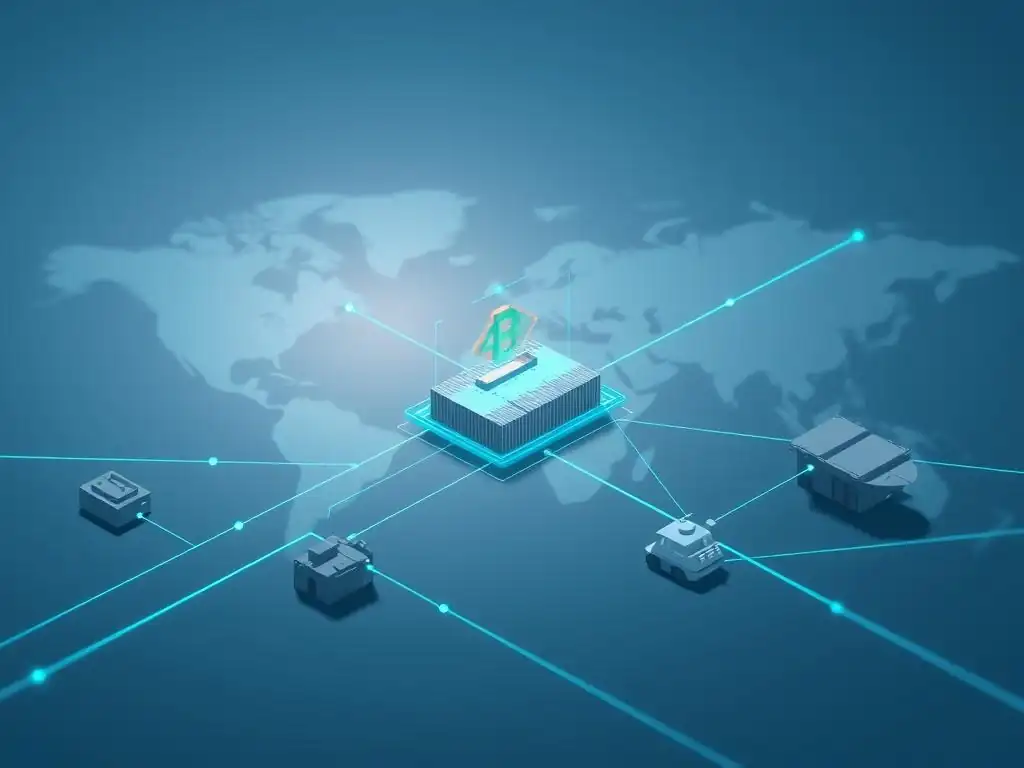
Integrating Blockchain with IoT for Real-Time Supply Chain Monitoring
The true power of blockchain for supply chain visibility is unleashed when integrated with real-time data sources, particularly from the Internet of Things (IoT). While IoT sensors can collect granular data on location, temperature, humidity, shock, and other conditions, blockchain provides the secure, shared, and immutable ledger to record this data reliably across the supply chain network.
As an IoT sensor on a shipping container records a temperature reading, this data can be automatically pushed to the blockchain via a secure gateway. This creates a permanent, verifiable record of the container's environmental conditions at specific points in time and location.
This integration allows for near real-time monitoring of goods as they move. Instead of relying on periodic updates from disparate systems, companies can access a shared, trustable stream of data reflecting the actual state and location of their products. For example, a logistics provider can attach a GPS and temperature sensor to a sensitive shipment like vaccines.
The sensor data is recorded on the blockchain, accessible to the manufacturer, distributor, and even regulatory bodies. If the temperature goes out of range, an alert can be triggered automatically via a smart contract, recording the incident on the blockchain and notifying relevant parties instantly. This fusion of real-time data capture and secure, shared recording elevates blockchain supply chain visibility tracking to unprecedented levels.
Benefits of Blockchain-Powered Real-Time Supply Chain Visibility Tracking
Implementing blockchain-powered real-time tracking offers a multitude of benefits for enterprises. Firstly, it dramatically improves transparency and trust among supply chain partners. With a shared, immutable record of events and conditions, disputes over responsibility for damaged goods or delays can be resolved quickly and fairly based on verifiable data. This increased trust fosters better collaboration and reduces administrative overhead associated with reconciliation and audits.
Secondly, it enhances operational efficiency and responsiveness. Real-time visibility allows companies to identify bottlenecks, predict potential disruptions, and react swiftly. For instance, if a delay is detected at a distribution center, alternative routes or inventory adjustments can be planned proactively. This proactive approach minimizes costly disruptions. Thirdly, it strengthens compliance and reduces risks, particularly for regulated goods like food and pharmaceuticals.
Verifiable, real-time data on handling conditions simplifies audits and provides irrefutable proof of compliance. Finally, it empowers consumers with information, potentially building brand loyalty through demonstrable product authenticity and ethical sourcing. A pilot program by a major retailer using blockchain for tracking specific produce items reported a significant increase in consumer confidence regarding freshness and origin information presented via a scannable code. These benefits highlight the transformative potential of blockchain supply chain visibility tracking.
Challenges and Considerations in Deploying Blockchain-Based Tracking Solutions
While the benefits are significant, deploying blockchain-based supply chain visibility tracking solutions is not without challenges. One major hurdle is the need for widespread adoption across the supply chain network. A blockchain is most effective when all relevant parties—from raw material suppliers to end retailers—participate and contribute data. Convincing multiple independent entities, often with varying levels of technical capability and trust, to adopt a shared platform requires significant effort in terms of negotiation, standardization, and change management. Interoperability between different blockchain platforms or legacy systems can also pose technical challenges.
Another consideration is the cost and complexity of implementation. While blockchain technology is becoming more accessible, setting up and maintaining a consortium blockchain or integrating with existing enterprise systems can require substantial investment in technology, expertise, and infrastructure. Data privacy is also a critical concern; while the ledger is shared, sensitive commercial data needs to be protected.
Solutions like permissioned blockchains, zero-knowledge proofs, or data encryption are necessary to ensure that only authorized parties can access specific information. Finally, defining clear governance rules for the blockchain network, including who can add data, validate transactions, and manage participant access, is crucial for the long-term success and scalability of blockchain supply chain visibility tracking initiatives.
Future Trends in Blockchain Supply Chain Visibility Tracking
Advances in Decentralized Systems and Their Impact on Supply Chain Transparency
The future of blockchain supply chain visibility tracking will be shaped by ongoing advancements in decentralized systems. We are seeing the development of more scalable and energy-efficient blockchain protocols that can handle the high volume of transactions generated by complex global supply chains.
Layer 2 scaling solutions and new consensus mechanisms are addressing the throughput limitations that have sometimes hindered broader enterprise adoption. Furthermore, the concept of decentralized identity is gaining traction, which could allow individual products or entities within the supply chain to have unique, verifiable digital identities on the blockchain, enhancing traceability and accountability without relying on centralized authorities.
The increasing maturity of decentralized autonomous organizations (DAOs) could also influence how supply chain networks are governed. Instead of a single company or consortium board making decisions, governance rules and updates to the blockchain protocol could be managed collectively by network participants through transparent, on-chain voting mechanisms. This could lead to more equitable and resilient supply chain ecosystems. As decentralized technologies become more robust and user-friendly, they will further empower participants, driving greater transparency and collaboration across value chains and solidifying the foundation for advanced blockchain supply chain visibility tracking.
The Role of Smart Contracts in Automating Supply Chain Processes
Smart contracts, self-executing contracts with the terms of the agreement directly written into code, are poised to play an increasingly vital role in automating and streamlining supply chain processes on the blockchain. Once conditions predefined in the smart contract are met—such as a shipment arriving at a specific location (verified by IoT data recorded on the blockchain) or a quality inspection passing (recorded as a transaction)—the smart contract can automatically trigger the next action. This could be releasing payment to a supplier, updating inventory records, sending automated notifications, or initiating the next leg of transportation.
For example, a smart contract could be programmed to release payment for a shipment of perishable goods only when the blockchain record, fed by IoT sensors, confirms that the temperature remained within the acceptable range throughout the entire journey and the goods were received at the destination warehouse. This automation reduces manual intervention, minimizes delays, lowers administrative costs, and reduces the potential for disputes. By automating the execution of agreements based on verifiable, real-time data recorded on the distributed ledger, smart contracts enhance both the efficiency and the trustworthiness of blockchain supply chain visibility tracking.
Regulatory Landscape and Its Influence on Blockchain Adoption in Supply Chains
The evolving regulatory landscape is a significant factor influencing the adoption of blockchain supply chain visibility tracking. Governments and international bodies are increasingly recognizing the potential of blockchain for improving transparency, combating fraud, and ensuring compliance, particularly in sectors with strict requirements like food safety, pharmaceuticals, and customs.
Regulations like the US Food Safety Modernization Act (FSMA) have emphasized the need for enhanced traceability in the food supply chain, and blockchain is being explored as a technology that can meet these stringent requirements more effectively than legacy systems. Similarly, efforts by customs agencies worldwide to digitize trade processes and improve supply chain security are creating opportunities for blockchain adoption.
However, regulatory uncertainty and the lack of clear legal frameworks around blockchain technology in some jurisdictions can also be a barrier to adoption. Issues related to data privacy (e.g., GDPR compliance), the legal status of smart contracts, and cross-border data flow need to be addressed by regulators. As regulatory clarity increases and standards for blockchain implementation in supply chains emerge, it will likely accelerate adoption. Collaboration between industry stakeholders, technology providers, and regulatory bodies is essential to create an environment where blockchain supply chain visibility tracking can flourish responsibly and effectively, driving global trade efficiency and trust.
Conclusion: The Transformative Potential of Blockchain for Supply Chain Visibility
Recap of the Evolution from EDI to Blockchain-Powered Tracking
The journey towards comprehensive supply chain visibility has been a long and progressive one, evolving significantly over several decades. It began with the foundational steps taken by Electronic Data Interchange (EDI), which automated the exchange of structured business documents and brought initial efficiencies to inter-company communication. While groundbreaking for its time, EDI provided limited real-time insight and struggled with interoperability across diverse networks.
The rise of the internet and subsequently IoT technologies introduced the capability to collect real-time data from physical goods, offering granular insights into location and condition. However, integrating this data reliably and securely across fragmented, untrusted systems remained a challenge, often resulting in data silos and a lack of a single source of truth.
The advent of blockchain technology represents the latest and perhaps most significant leap in this evolution. By providing a decentralized, immutable, and secure ledger, blockchain enables the creation of a shared, trustworthy record of every step in a product's journey. When combined with real-time data from IoT devices, it facilitates verifiable, end-to-end blockchain supply chain visibility tracking that was previously unattainable. This progression highlights a continuous drive towards greater transparency, efficiency, and trust within increasingly complex global supply networks, culminating in the transformative potential offered by blockchain.
Strategic Implications for Enterprises Embracing Blockchain Supply Chain Visibility Solutions
For enterprises considering or embracing blockchain supply chain visibility solutions, the strategic implications are profound. Firstly, it offers a significant competitive advantage by enabling greater operational efficiency, reduced costs associated with manual processes and disputes, and enhanced resilience against disruptions. Companies with superior visibility can respond faster to market changes and crises, maintaining business continuity and customer satisfaction. Secondly, it strengthens relationships with supply chain partners by fostering an environment of shared trust and transparency, potentially leading to more collaborative and innovative partnerships.
Furthermore, implementing blockchain supply chain visibility tracking can enhance brand reputation and build consumer trust. The ability to provide verifiable information about product provenance, authenticity, and ethical sourcing resonates with increasingly conscious consumers. For instance, a company proving sustainable practices via a transparent blockchain record can build significant brand loyalty.
Finally, it positions companies favorably in the face of evolving regulatory requirements for traceability and compliance. Embracing blockchain is not just a technological upgrade but a strategic imperative for enterprises seeking to thrive in the future of global commerce, leveraging enhanced blockchain supply chain visibility tracking to unlock new levels of performance and trust.
Frequently Asked Questions
What are the key limitations of traditional EDI systems in supply chain visibility?
EDI systems, while historically important, often suffer from lack of real-time data, limited interoperability, and high implementation costs, hindering comprehensive supply chain visibility. These limitations make it difficult to track goods in real-time.
How does blockchain technology enhance supply chain visibility tracking compared to existing methods?
Blockchain offers immutable records, enhanced security, and improved transparency, enabling real-time tracking and verification of goods throughout the supply chain. This leads to greater trust and efficiency.
What are some examples of enterprise applications leveraging blockchain for supply chain management?
Examples include food traceability to verify origin and safety, pharmaceutical tracking to combat counterfeiting, and logistics optimization for improved efficiency. These enhance brand trust and reduce risks.
What are the regulatory considerations and challenges associated with implementing blockchain in supply chains?
Regulatory uncertainty around data privacy, cross-border transactions, and smart contract legality presents challenges. Compliance with existing and evolving regulations is crucial for adoption.
What is the future outlook for blockchain-powered supply chain visibility, and what are the potential long-term impacts?
The future holds greater automation, improved data analytics, and increased adoption of decentralized systems, leading to more resilient and efficient supply chains globally. This promises significant cost savings and improved customer satisfaction.
Final Reflection: Embracing Transparency in a Connected World
The journey from clunky EDI systems to the promise of blockchain-powered real-time tracking highlights a fundamental shift in how we understand and manage supply chains. What was once a fragmented and opaque process is rapidly transforming into a transparent and interconnected ecosystem, driven by the need for efficiency, resilience, and trust in an increasingly complex global landscape. This evolution is not merely a technological upgrade; it's a paradigm shift that demands a new way of thinking about collaboration and accountability.
The ongoing impact of enhanced supply chain visibility extends far beyond cost savings and streamlined logistics. It's about building a more ethical and sustainable future, where consumers can trace the origins of their products and businesses can ensure responsible sourcing. This transformation is not without its challenges, but the potential benefits are undeniable. The supply chain is the only thing that connects all businesses to each other and to consumers. It is the backbone of the global economy.
- Dave Waters. This quote underscores the critical role of supply chains and the imperative to make them more visible and accountable.
As we stand on the cusp of this new era, let us embrace the power of transparency and collaboration. Consider how you, as a consumer, a business leader, or a technology innovator, can contribute to building more resilient, ethical, and sustainable supply chains. The future of global commerce depends on our collective commitment to embracing the transformative potential of blockchain supply chain visibility tracking.
Unlock the Future: Transform Your Supply Chain Today!
Thank you for exploring the evolution of supply chain visibility, from traditional methods to the transformative potential of blockchain technology. You've gained valuable insights into how real-time tracking can revolutionize your operations and give you a competitive edge. Now, it’s time to turn knowledge into action.
Are you ready to embrace the future? Here are some ways to get started:
- Launch a pilot project: Select a critical segment of your supply chain and explore implementing blockchain-based tracking to see the benefits firsthand. This will help you understand the true impact on your business.
- Research solutions: Investigate the latest blockchain platforms and tools designed for supply chain management. Review case studies of companies already leveraging this technology.
- Join the discussion: Share this article with your colleagues and industry peers, and engage in conversations about blockchain’s potential in your field. Participating in these discussions is vital for industry growth.
What is one immediate step you can take this week to explore integrating blockchain technology into your supply chain visibility strategy? Share your thoughts in the comments below!
Leave a Reply