
From Farm to Fork, Authenticated: Blockchain's Role in Food Supply Chain Integrity

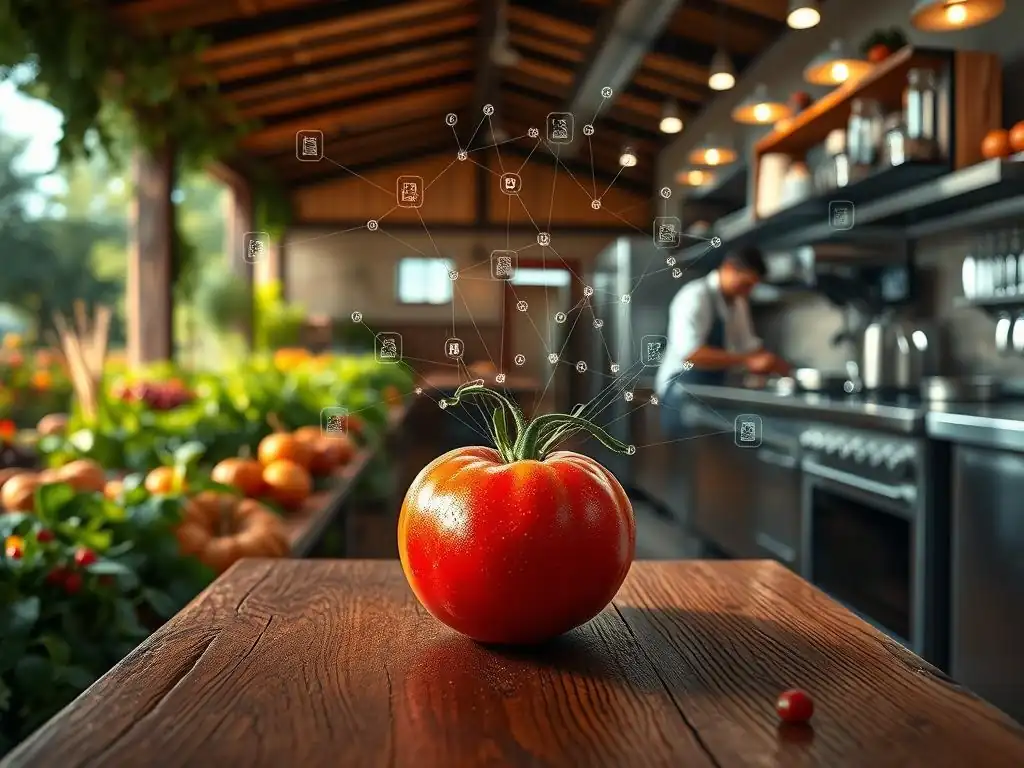
Welcome to Blockchain Trends, your definitive guide to understanding the real-world applications of blockchain technology. Beyond the hype, blockchain is revolutionizing industries, and we're here to explore its transformative potential.
Ever wondered how blockchain can ensure the integrity of your food? Dive into our latest article, "From Farm to Fork, Authenticated: Blockchain's Role in Food Supply Chain Integrity," and discover how this innovative technology is building trust and transparency in every bite. Learn how blockchain food supply chain integrity is becoming essential for businesses and consumers alike. Intrigued? Keep reading to uncover the future of food traceability!
From Farm to Fork, Authenticated: Blockchain's Role in Food Supply Chain Integrity
- The Imperative of Food Supply Chain Transparency and Integrity
- Blockchain Technology: A Solution for Food Supply Chain Challenges
- Blockchain Food Supply Chain: Key Benefits and Applications
- Implementing Blockchain for Food Traceability: A Step-by-Step Guide
- Real-World Examples of Blockchain in the Food Industry
- Overcoming Challenges in Blockchain Food Supply Chain Adoption
- The Future of Blockchain in Food: Trends and Predictions
- Ensuring the Integrity of the Food Supply Chain: Blockchain's Promise
-
Frequently Asked Questions
- What is Blockchain's primary role in enhancing food supply chain integrity?
- How does blockchain improve consumer trust regarding food safety and origin?
- Can blockchain help reduce food fraud and counterfeiting in the food industry?
- What are some practical examples of blockchain being used in the food supply chain?
- What are some of the regulatory challenges and future trends related to blockchain in the food industry?
- Final Reflection: Sowing Seeds of Trust
- Fortify Your Food Future: Embrace Blockchain Transparency!
The Imperative of Food Supply Chain Transparency and Integrity
Growing Concerns About Food Safety and Traceability
Food safety incidents are a persistent global challenge, eroding consumer trust and causing significant economic losses. Contamination outbreaks, mislabeling, and fraudulent substitutions pose serious health risks. For instance, a major food safety incident in 2008 involving melamine-tainted milk powder in China led to the hospitalization of tens of thousands of infants and tragically resulted in several deaths.
Such events highlight the critical need for robust systems that can quickly and accurately trace the origin and journey of food products. The complexity of modern food supply chains, often spanning multiple continents and involving numerous intermediaries, makes identifying the source of contamination or fraud exceedingly difficult and time-consuming using traditional paper-based or siloed electronic records.
Furthermore, consumer awareness regarding food provenance, ethical sourcing, and environmental impact is increasing. Consumers are demanding more information about where their food comes from, how it was produced, and handled. Reports of labor abuses, unsustainable farming practices, or questionable additives, even if isolated, can damage brand reputation severely.
The lack of verifiable information accessible to consumers and regulators throughout the supply chain creates vulnerabilities that can be exploited by malicious actors and hinder rapid response during crises. This growing demand for transparency, coupled with the high stakes involved in food safety, underscores the urgency for technological solutions that can provide verifiable, end-to-end traceability.
The Need for Enhanced Visibility in the Food Industry
Enhanced visibility across the food supply chain is not merely about responding to crises; it's about preventing them and optimizing operations. Traditional supply chain systems often suffer from data fragmentation, where information is held in disparate databases by different parties, making it difficult to gain a holistic view.
When a recall is necessary, tracing affected products can take days or even weeks, leading to larger recalls than necessary, increased waste, and significant financial burdens. For example, a study by the Food Marketing Institute and GMA estimated that the average cost of a food recall for a company is around $10 million, not including brand damage and lost sales.
Beyond safety, improved visibility facilitates better inventory management, demand forecasting, and logistics. Knowing the exact location and condition of goods at any point reduces spoilage and waste. The Food and Agriculture Organization (FAO) estimates that roughly one-third of the food produced in the world for human consumption every year gets lost or wasted.
While not all waste is supply-chain related, inefficiencies due to poor visibility contribute significantly. Implementing systems that provide a shared, real-time view of product flow can unlock substantial efficiencies, improve freshness upon delivery, and build stronger, more accountable relationships among supply chain partners, ultimately strengthening blockchain food supply chain integrity.
Blockchain Technology: A Solution for Food Supply Chain Challenges
How Blockchain Ensures Food Product Authenticity
Blockchain technology offers a powerful mechanism to authenticate food products by creating an unalterable digital history of each item or batch as it moves through the supply chain. Every significant event—from planting or harvesting, processing, packaging, shipping, to retail—can be recorded as a 'block' of data. These blocks are cryptographically linked together, forming a chain that is distributed across a network of participants.
Once data is added to the blockchain, it is extremely difficult and practically impossible to alter or delete without the consensus of the network, which makes tampering with records readily detectable. This inherent immutability means that the recorded provenance of a food item serves as a highly reliable source of truth.
For instance, when a farmer harvests a crop, details like the farm location, harvest date, and use of pesticides (or lack thereof) can be logged. When the crop is processed, information about the processing plant, ingredients added, and packaging date are added to the chain, linked to the original harvest data. This continues at each step.
If a product is later suspected of contamination or questioned for its origin, its entire history can be instantly reviewed on the blockchain. This level of verifiable, step-by-step documentation significantly reduces the possibility of counterfeiting or misrepresentation, as any attempt to insert fake products or alter origin details would break the chain's cryptographic links or require altering records across multiple nodes, a near-impossible feat on a well-designed network focused on blockchain food supply chain integrity.
Immutability and Transparency: Core Principles for Food Traceability
The two foundational principles of blockchain—immutability and transparency—are precisely what make it suitable for enhancing food traceability. Immutability, as discussed, ensures that once data about a food product's journey is recorded, it cannot be retrospectively altered. This is crucial for building trust among supply chain partners and with consumers. If regulators or consumers can access a product's history and be confident that the information hasn't been tampered with, it drastically improves accountability. This contrasts sharply with traditional systems where records can be modified, lost, or exist in siloed systems, making verification difficult.
Transparency, in the context of a blockchain food supply chain, means that relevant information is shared across the network. Depending on the blockchain design (permissioned vs. permissionless), this transparency can be configured.
In a permissioned network, commonly used in enterprise supply chains, participants are known and have specific access rights, allowing sensitive business data to be restricted while still providing necessary traceability information to authorized parties like regulators or even consumers (via a product scan). This selective transparency allows stakeholders to verify the authenticity and journey of food items, quickly identify the source of issues during recalls, and provide consumers with the detailed provenance they increasingly demand, thereby reinforcing the blockchain food supply chain integrity.
Blockchain Food Supply Chain: Key Benefits and Applications
Enhancing Food Safety with Blockchain-Enabled Tracking
Blockchain significantly enhances food safety by enabling rapid and precise traceability during outbreaks or recalls. Instead of spending days or weeks trying to piece together paper records, a blockchain system allows for near-instant identification of the source of a contaminated product and the scope of its distribution.
Walmart famously reduced the time required to trace a package of mangoes from the store back to the farm from seven days to just two seconds using their blockchain-based system. This speed is critical in minimizing the impact of foodborne illnesses, limiting the number of people affected, and preventing further distribution of unsafe products.
Beyond rapid response, blockchain facilitates proactive safety measures. By tracking conditions like temperature, humidity, and handling using IoT sensors integrated with the blockchain, potential safety issues can be identified and addressed before products reach consumers. For example, if a batch of perishable goods experiences a temperature excursion during transit, this anomaly is recorded on the blockchain, alerting relevant parties. This allows for intervention, potential diversion of the affected batch, and prevention of tainted products entering the market, thereby strengthening the overall blockchain food supply chain integrity from the point of production.
Reducing Food Fraud and Counterfeiting Through Immutable Records
Food fraud is a global issue with significant economic and health consequences, estimated to cost the global food industry billions of dollars annually – some estimates place the cost as high as $40 billion per year. Common examples include substituting cheaper ingredients (like substituting olive oil with seed oil), mislabeling origin (e.g., selling conventional fish as wild-caught), or selling expired products with new dates. The immutable ledger provided by blockchain makes it exceptionally difficult to perpetrate such fraud undetected. Each transaction and transformation recorded on the blockchain creates a digital audit trail that is tamper-proof.
By verifying each step of a product's journey, from its origin to the point of sale, the blockchain provides a secure record of authenticity. If a product is labeled as organic or from a specific geographical region, the blockchain can hold verifiable records from the certified farm or region, linked immutably to that specific batch.
Any attempt to introduce counterfeit products or falsify origin information would create a discrepancy in the unalterable chain of custody. This robust, verifiable history acts as a powerful deterrent against fraud and provides a reliable method for authorities and consumers to verify product claims, reinforcing blockchain food supply chain integrity.
Improving Efficiency and Reducing Waste in the Food Supply Chain
Inefficiencies in traditional food supply chains, such as manual data entry, paperwork delays, and poor communication between parties, contribute to delays and increased costs. Blockchain can streamline processes by providing a single, shared source of truth for all participants. Smart contracts, self-executing contracts with the terms of the agreement directly written into code, can automate payments and logistics based on predefined conditions being met (e.g., payment released upon successful delivery and quality check), reducing administrative overhead and accelerating transactions.
Furthermore, enhanced visibility directly contributes to reducing waste. Precise tracking allows for better inventory management, reducing the likelihood of products expiring before reaching their destination. If delays occur, the real-time information on the blockchain allows for quicker rerouting or redistribution. By providing verifiable data on handling conditions (like temperature), blockchain helps identify points of failure and improve cold chain logistics, crucial for perishable goods. Reduced waste not only benefits the environment but also improves profitability for businesses throughout the supply chain, contributing to a more sustainable and efficient blockchain food supply chain.
Implementing Blockchain for Food Traceability: A Step-by-Step Guide
Step 1: Identifying Key Stakeholders and Data Points
The first crucial step in implementing a blockchain food supply chain solution is to clearly define the scope and identify all relevant stakeholders involved in the specific supply chain being targeted. This typically includes farmers, processors, manufacturers, distributors, logistics providers, retailers, and potentially regulators and consumers. Engaging these parties early is vital to understand their needs, existing processes, and data sources. Successful blockchain implementation requires collaboration and agreement on shared data standards and protocols.
Simultaneously, it is essential to identify the critical data points that need to be recorded on the blockchain for each product or batch. These data points should capture key events and attributes throughout the product's journey. Examples include:
- Farm/Origin details (location, harvest date, farming practices)
- Processing information (facility, ingredients, processing date)
- Packaging details (packaging date, lot number, expiration date)
- Transportation data (shipper, routes, temperature logs via IoT)
- Quality control checks and certifications
- Retailer information (arrival date, display date)
Defining these data points precisely ensures that the blockchain captures all necessary information for comprehensive traceability and blockchain food supply chain integrity.
Step 2: Choosing the Right Blockchain Platform [Permissioned vs. Permissionless Blockchains]
Selecting the appropriate blockchain platform is a critical decision that impacts the network's governance, performance, and accessibility. Two primary types exist: permissionless (like public Bitcoin or Ethereum) and permissioned (like Hyperledger Fabric or R3 Corda). Permissionless blockchains are open to anyone, offering maximum transparency but can have variable transaction speeds and higher costs depending on network congestion. They might also expose sensitive business data if not carefully managed.
For enterprise food supply chains, permissioned blockchains are often preferred. In these networks, participants are pre-selected and verified, and access rights can be finely controlled. This allows companies to share necessary traceability data with partners and regulators while keeping commercially sensitive information private. Permissioned ledgers generally offer higher transaction throughput, lower costs, and better scalability for handling the vast amount of data generated in a complex food supply chain. The choice depends on the specific requirements for privacy, scalability, cost, and the level of trust needed among participants to build a functional blockchain food supply chain.
Step 3: Integrating Blockchain with Existing Supply Chain Systems [API Integrations, IoT Devices]
Integrating the chosen blockchain platform with existing legacy systems used by supply chain participants is a major technical hurdle. Most companies already use enterprise resource planning (ERP), warehouse management systems (WMS), or logistics software. The blockchain system needs to seamlessly pull data from these systems and push relevant information back, often achieved through Application Programming Interfaces (APIs). APIs act as connectors, allowing different software applications to communicate and share data in a structured way, ensuring that information flow to the blockchain is automated and accurate, which is vital for maintaining blockchain food supply chain integrity.
Furthermore, integrating data from physical world sensors is crucial for capturing real-time conditions. Internet of Things (IoT) devices, such as temperature sensors, GPS trackers, and humidity monitors placed in storage or transit, can automatically record environmental data. This data is then fed into the blockchain via integration layers, providing an immutable record of the conditions a product experienced. This combination of API-driven system integration and IoT data streams ensures that the digital twin on the blockchain accurately reflects the physical journey and state of the food products, enhancing traceability and safety.
Step 4: Data Management and Security Protocols
Establishing robust data management and security protocols is paramount in a blockchain food supply chain. While the blockchain itself provides immutability, the data entering the blockchain must be accurate and secure at the source. This involves defining clear data governance policies: who is responsible for inputting specific data, verification processes for data accuracy, and standards for data formatting. Training personnel across the supply chain on these protocols is essential to ensure consistent and reliable data capture. Data must be encrypted both in transit and often at rest before being added to the blockchain, especially sensitive information.
Security extends beyond data input. Access control mechanisms within the permissioned blockchain network must be carefully configured to ensure that only authorized participants can view or add specific types of data. Cryptographic keys used for signing transactions must be securely managed. Regular security audits and penetration testing are necessary to identify and mitigate vulnerabilities in the integrated system. Given the critical nature of food safety and the potential for malicious attacks, implementing comprehensive data security measures is not optional but fundamental to the success and trustworthiness of the blockchain food supply chain solution.
Real-World Examples of Blockchain in the Food Industry
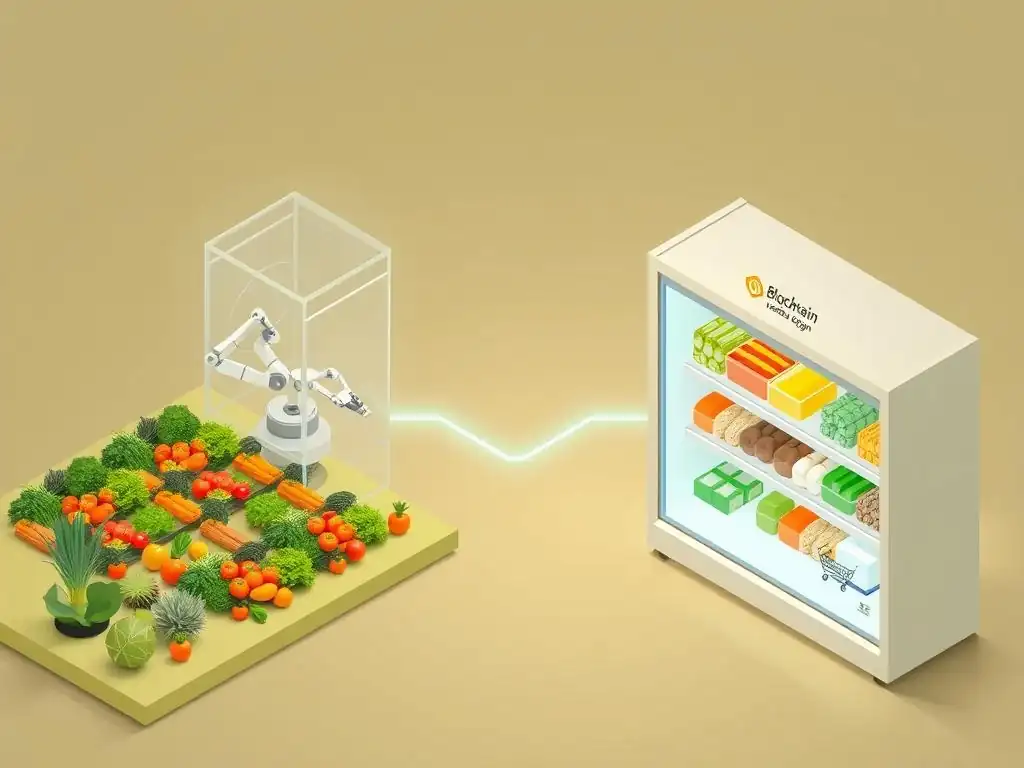
Case Study 1: Walmart's Blockchain Implementation for Mango Traceability
One of the most widely cited examples of blockchain in the food industry is Walmart's implementation for tracing specific produce items, notably sliced mangoes and leafy greens. Prior to blockchain, tracing the origin of a food item could take days or even weeks, significantly hindering response times during outbreaks. Walmart piloted the use of IBM Food Trust, a permissioned blockchain network, involving suppliers and other stakeholders in the supply chain. The goal was to create a shared, immutable record of the product's journey from farm to store shelf.
The results were transformative. As mentioned earlier, the time required to trace a package of mangoes from the store back to its farm of origin was reduced from approximately seven days to just a few seconds.
This dramatic improvement in traceability speed and accuracy demonstrated the potential of blockchain to revolutionize food safety response. Following the success with mangoes, Walmart mandated its suppliers of leafy green vegetables to join the IBM Food Trust network by September 2019, citing the urgent need for rapid traceback in the event of E. coli outbreaks, further solidifying the practical benefits for blockchain food supply chain integrity.
Case Study 2: Carrefour's Use of Blockchain for Tracking Chicken Production
European retailer Carrefour has also been a significant adopter of blockchain technology for food traceability, starting with their "Quality Line" free-range chickens in 2018. Using the Hyperledger-based IBM Food Trust platform, Carrefour enabled consumers to scan a QR code on the product packaging to access detailed information about the chicken's journey. This information includes the farmer's name, location, rearing methods, feed type, dates of birth and slaughter, information about the processing and packaging, and even transportation details.
This initiative aimed to increase consumer trust by providing unprecedented transparency into the provenance and production of their food. By offering this level of verifiable detail, Carrefour differentiated its products and responded to growing consumer demand for transparency. The program was successful and has since been expanded to cover other products, including eggs, cheese, oranges, and tomatoes across various Carrefour markets, demonstrating the scalability and adaptability of blockchain for enhancing blockchain food supply chain integrity across different product categories.
Lessons Learned from Early Blockchain Food Supply Chain Implementations
Early implementations of blockchain in the food industry, like those by Walmart and Carrefour, have provided valuable insights. A key lesson is the critical importance of collaboration and network effects. A blockchain's value increases with the number of participants sharing data. Gaining buy-in from all stakeholders, from small farmers to large retailers, requires clear communication of the benefits and addressing concerns about data sharing and cost. Mandates, as seen with Walmart's leafy green suppliers, can accelerate adoption but require careful implementation to support smaller players.
Another lesson is the necessity of data standardization and quality at the source. "Garbage in, garbage out" applies strongly to blockchain; the immutability is only valuable if the initial data is accurate. Implementing robust data capture methods, including integration with IoT and existing systems, is crucial. Finally, starting with specific, high-value or high-risk products (like those prone to fraud or safety issues) allows companies to test the technology and demonstrate tangible benefits before scaling across their entire product portfolio, paving the way for broader blockchain food supply chain adoption.
Overcoming Challenges in Blockchain Food Supply Chain Adoption
Addressing Data Privacy and Security Concerns
While blockchain offers security through immutability, data privacy remains a significant concern, particularly in permissioned networks where sensitive business information might be shared. Companies are often hesitant to share proprietary data with competitors or even partners. Designing the blockchain network with careful consideration of access controls and data permissions is crucial. Techniques like zero-knowledge proofs, which allow verification of information without revealing the underlying data, can offer enhanced privacy for certain attributes.
Furthermore, the security of the 'oracles'—the mechanisms that feed real-world data onto the blockchain from sources like IoT sensors or legacy systems—is paramount. If the data entering the blockchain is compromised before it's recorded, the immutability of the blockchain ledger is irrelevant. Implementing secure API gateways, validating data sources, and employing cryptographic measures to authenticate data inputs are necessary security protocols. Ensuring compliance with data protection regulations like GDPR also adds layers of complexity that must be addressed during implementation to maintain trust in the blockchain food supply chain.
Scalability Issues and Potential Solutions
Scalability is another challenge for blockchain networks, particularly when dealing with the immense volume of transactions and data generated by a global food supply chain. Public blockchains have faced limitations in transaction speed (transactions per second) compared to traditional databases. While permissioned blockchains are generally more scalable, handling millions or billions of individual product items and their associated data points across a vast network requires a robust infrastructure.
Potential solutions involve leveraging off-chain storage for large data files (like certifications or images), storing only hashes of these files on the blockchain to maintain integrity while keeping the chain itself lean. Utilizing layer 2 scaling solutions or choosing blockchain platforms specifically designed for high throughput in enterprise settings are also strategies. As blockchain technology matures, ongoing developments in consensus mechanisms and network architecture are continuously improving scalability, making it more viable for large-scale blockchain food supply chain implementations.
The Importance of Interoperability Between Different Blockchain Networks
As various companies and consortia launch their own blockchain initiatives, the challenge of interoperability arises. A food product's journey might involve participants already using different blockchain platforms or even different instances of the same platform. For seamless end-to-end traceability, these disparate networks need to be able to communicate and share relevant data. Without interoperability, the supply chain visibility becomes fragmented again, defeating the purpose of a unified ledger.
Developing standards and protocols for cross-chain communication is essential. This could involve building bridges between networks, using middleware that translates data between different blockchain standards, or encouraging the adoption of common industry standards for data formatting and exchange. Initiatives focused on blockchain interoperability are critical for realizing the full potential of interconnected supply chains. Ensuring different blockchain food supply chain systems can exchange information is key to creating a truly transparent and efficient global food system.
The Future of Blockchain in Food: Trends and Predictions
The Rise of Consumer-Facing Blockchain Applications
A significant trend in the future of blockchain in food is the increasing focus on consumer-facing applications. While early implementations primarily focused on B2B traceability for safety and efficiency, the value proposition is extending to the end consumer. Mobile applications that allow consumers to scan a QR code on product packaging and instantly access a verified history of the product – detailing its origin, handling, certifications, and even stories about the farmers – are becoming more common.
This direct access to immutable provenance data builds trust and empowers consumers to make informed purchasing decisions based on factors like sustainability, ethical sourcing, and authenticity. Companies that provide this level of transparency gain a competitive advantage. As consumers become more educated about blockchain and demand more information about their food, the adoption of these consumer-facing traceability tools is expected to accelerate, reinforcing the importance of blockchain food supply chain integrity from the perspective of the final buyer.
Integration with AI and IoT for Enhanced Food Supply Chain Management
The power of blockchain for food traceability is amplified when integrated with other cutting-edge technologies like Artificial Intelligence (AI) and the Internet of Things (IoT). As discussed, IoT sensors provide the real-time data streams (temperature, location, etc.) that feed into the blockchain, creating a dynamic and accurate record. AI can then leverage this wealth of immutable data stored on the blockchain to provide predictive insights.
For example, AI algorithms can analyze historical blockchain data combined with external factors (weather patterns, logistics data) to predict potential issues like delays, spoilage risks, or even identify patterns indicative of fraudulent activity that might not be immediately obvious. AI can optimize routes based on real-time conditions reported by IoT devices and recorded on the chain. This synergy between IoT for data collection, blockchain for secure and transparent record-keeping, and AI for analysis and prediction creates a highly intelligent and resilient food supply chain, significantly enhancing blockchain food supply chain integrity and efficiency.
The Role of Regulation in Shaping the Future of Blockchain Food Traceability
Regulatory frameworks will play a crucial role in shaping the future adoption and impact of blockchain in the food industry. Governments and food safety authorities are increasingly exploring how technology can improve compliance and public health outcomes. Regulations might mandate certain levels of traceability or specific data points to be recorded, potentially accelerating the adoption of blockchain-based systems. For instance, the US FDA's "New Era of Smarter Food Safety" initiative explicitly mentions exploring the use of new technologies, including blockchain, to enhance traceability.
Clear regulatory guidance on data standards, interoperability requirements, and legal recognition of blockchain records will be vital for widespread adoption. Regulatory bodies could also act as nodes on permissioned networks, gaining direct, verifiable access to traceability data during inspections or outbreaks. While regulation needs to be carefully designed to foster innovation rather than stifle it, a supportive and clear regulatory environment will provide the necessary certainty for businesses to invest heavily in blockchain food supply chain solutions, ultimately benefiting consumers through improved safety and transparency.
Ensuring the Integrity of the Food Supply Chain: Blockchain's Promise
Building Consumer Trust Through Transparent Food Provenance
In an era marked by food safety scares and a growing disconnect between consumers and their food sources, building trust is paramount for food businesses. Blockchain technology offers a powerful tool to bridge this gap by providing verifiable, transparent food provenance. By making the journey and key attributes of a food product accessible and immutable, companies can demonstrate authenticity and adherence to quality and ethical standards.
When consumers can scan a product and see its entire history – from the farm where it was grown, details about its handling, processing, and transportation, backed by an immutable record – it fosters confidence. This transparency moves beyond simple marketing claims to provide demonstrable proof. Companies that embrace this level of openness using blockchain can cultivate stronger relationships with their customers, differentiate their products in a crowded market, and build a reputation for integrity, directly leveraging blockchain food supply chain integrity as a competitive advantage.
Creating a More Sustainable and Ethical Food System with Blockchain
Beyond safety and trust, blockchain has the potential to contribute to a more sustainable and ethical food system. By providing granular traceability, blockchain can verify claims related to sustainability practices (e.g., water usage, carbon footprint), fair labor conditions, or certifications (e.g., organic, fair trade). This allows consumers and businesses to support producers who adhere to higher environmental and social standards.
Furthermore, the efficiency gains from improved visibility and reduced waste contribute directly to sustainability goals. By minimizing spoilage during transport and storage, blockchain helps ensure that the resources invested in producing food are not squandered.
The ability to quickly identify and isolate issues also means less food is unnecessarily discarded during recalls. By providing an auditable trail for every step, blockchain technology enables greater accountability across the entire supply chain, helping to build a food system that is not only safer and more transparent but also more environmentally conscious and socially responsible, underpinned by robust blockchain food supply chain integrity.
Frequently Asked Questions
What is Blockchain's primary role in enhancing food supply chain integrity?
Blockchain ensures transparency and traceability throughout the entire food supply chain. This helps in authenticating the origin of food products and verifying their journey.
How does blockchain improve consumer trust regarding food safety and origin?
By providing an immutable record of each step, from farm to consumer, blockchain builds trust. Consumers can access information about the product's history and quality certifications.
Can blockchain help reduce food fraud and counterfeiting in the food industry?
Yes, blockchain's tamper-proof nature makes it extremely difficult to alter or falsify data. This significantly reduces the risk of food fraud and counterfeit products entering the market.
What are some practical examples of blockchain being used in the food supply chain?
Examples include tracking the origin of coffee beans, verifying the organic status of produce, and monitoring the temperature of perishable goods during transport. These implementations focus on enhancing product safety and verifying claims.
Regulatory challenges include establishing industry standards and addressing data privacy concerns. Future trends point towards increased adoption, integration with IoT devices, and wider use in global supply chains.
Final Reflection: Sowing Seeds of Trust
The journey of food, from its origin in the fields to its arrival on our plates, is often shrouded in mystery. Blockchain technology offers a revolutionary solution, bringing unprecedented transparency and accountability to the food supply chain, ensuring that consumers can trust the origins and quality of what they consume. This isn't just about efficiency; it's about rebuilding a broken system of trust.
The implications of a transparent and secure food supply chain extend far beyond simple convenience. Knowing where our food comes from empowers us to make informed choices, support sustainable practices, and hold producers accountable. This shift towards conscious consumption is crucial in a world grappling with environmental concerns and ethical sourcing. The food you eat can either be the safest and most powerful form of medicine or the slowest form of poison.
- Ann Wigmore. This quote underscores the profound impact our food choices have on our well-being and the importance of ensuring its integrity.
As we look to the future, let us embrace the potential of blockchain to cultivate a more ethical and sustainable food system. Consider the power you hold as a consumer to demand transparency and support businesses that prioritize blockchain food supply chain integrity. By making informed choices, you can contribute to a world where food is not only nourishing but also a source of trust and connection.
Fortify Your Food Future: Embrace Blockchain Transparency!
Thank you for exploring how blockchain technology can revolutionize the integrity of our food supply chain. Now that you understand its ability to build trust and prevent fraud, you can take action to promote a more transparent and secure food system.
Consider supporting brands and retailers that utilize blockchain verification for their products—your purchasing choices can make a difference. Share this information with friends, family, and colleagues to raise awareness about the importance of supply chain transparency. Additionally, explore user-friendly blockchain applications that allow consumers to trace the journey of their favorite foods, empowering you to make informed decisions.
What steps will you take today to advocate for greater transparency in your food purchases? Share your ideas in the comments below!
Leave a Reply