
Faster and More Efficient Deliveries: Blockchain's Contribution to Supply Chain Speed


Welcome to Blockchain Trends, your compass in the rapidly evolving world of decentralized technologies. Are you ready to discover how blockchain is revolutionizing industries beyond just cryptocurrencies? This week, we delve into a critical area: supply chain management. Explore how the innovative application of blockchain is dramatically boosting blockchain supply chain delivery speed, creating unprecedented efficiency and transparency. Intrigued? Read on to uncover the future of logistics and discover how blockchain is setting a new standard for speed and reliability.
Faster and More Efficient Deliveries: Blockchain's Contribution to Supply Chain Speed
- Introduction: Revolutionizing Supply Chain Delivery with Blockchain
- Understanding the Bottlenecks in Traditional Supply Chains
- How Blockchain Enhances Supply Chain Delivery Speed
- Key Benefits of Blockchain for Faster Deliveries
- Use Cases: Blockchain in Action for Faster Delivery
- Overcoming Challenges in Implementing Blockchain for Faster Delivery
- The Future of Blockchain and Supply Chain Delivery Speed
- Conclusion: Blockchain as a Catalyst for Faster and More Efficient Supply Chain Deliveries
-
Frequently Asked Questions
- How does blockchain technology contribute to faster supply chain delivery speeds?
- What are some specific examples of how blockchain improves supply chain efficiency?
- How does blockchain help with verification and authentication in the supply chain?
- What role do smart contracts play in accelerating supply chain delivery?
- Are there any challenges to implementing blockchain for faster supply chain delivery?
- Final Reflection: Unlocking Supply Chain Potential
- Ignite Your Supply Chain Future!
Introduction: Revolutionizing Supply Chain Delivery with Blockchain
The Need for Speed: Addressing Delivery Challenges in Modern Supply Chains
In today's hyper-connected global economy, the speed and efficiency of supply chain delivery are paramount. Consumers and businesses alike expect faster, more predictable, and more transparent delivery processes. However, traditional supply chains are often plagued by inefficiencies, bottlenecks, and delays that hinder rapid movement of goods. These challenges stem from complex networks of disparate systems, multiple intermediaries, and a reliance on outdated manual processes, all of which contribute to extended lead times and increased operational costs. Addressing these issues is crucial for maintaining competitiveness and meeting escalating customer expectations.
The pressure for faster deliveries is exacerbated by the rise of e-commerce and just-in-time inventory strategies. Delays at any point in the chain – from sourcing and manufacturing to logistics and last-mile delivery – can have ripple effects, leading to stockouts, production halts, and ultimately, dissatisfied customers.
Studies suggest that inefficiencies in traditional logistics can add significant time to transit, sometimes delaying shipments by days or even weeks due to paperwork, customs clearance issues, or lack of visibility. Improving supply chain delivery speed is no longer just a goal; it's a fundamental requirement for survival and growth in the modern market.
Blockchain Technology: A Solution for Enhanced Supply Chain Efficiency
Blockchain technology, initially known for its role in cryptocurrencies, offers a revolutionary approach to tackling these deep-seated supply chain challenges. By providing a decentralized, immutable ledger that records transactions across a network of computers, blockchain creates a single, shared source of truth for all participants. This inherent transparency and security lay the foundation for significant improvements in efficiency, trust, and, critically, speed within the supply chain.
The application of blockchain in supply chain management goes beyond simple tracking; it enables a fundamental shift in how information flows and how processes are executed. By digitizing and securing transactional data, from origin to destination, blockchain reduces reliance on manual checks and reconciliations, which are often major sources of delay. This distributed ledger technology facilitates automation through smart contracts and provides unprecedented visibility, allowing stakeholders to anticipate and mitigate potential delays proactively, thereby boosting supply chain delivery speed.
Understanding the Bottlenecks in Traditional Supply Chains
Lack of Transparency: A Major Obstacle to Faster Delivery Times
One of the most significant impediments to achieving optimal supply chain delivery speed in traditional systems is the pervasive lack of transparency. Information about a shipment's location, status, and condition is often siloed within individual organizations or passed along manually and sporadically between partners. This fragmentation of data means that no single party has a complete, real-time view of the entire supply chain journey. When issues arise, such as a delay at a port or a quality control problem, it can take significant time for information to propagate through the network, delaying resolution and impacting downstream processes.
This opacity makes it difficult to identify specific points of delay, predict arrival times accurately, or verify the authenticity and handling of goods along the route. For instance, verifying the origin of components or ensuring compliance with specific handling instructions can involve extensive manual checks and document exchanges, each adding time to the overall process. Without a clear, shared record of events, disputes are more likely to occur, requiring time-consuming investigations and further slowing down the movement of goods. This inherent lack of visibility is a critical bottleneck impacting overall supply chain delivery speed.
Inefficient Communication and Coordination Between Stakeholders
Traditional supply chains involve numerous stakeholders, including suppliers, manufacturers, logistics providers, distributors, and retailers. Communication and coordination among these parties are often inefficient, relying on disparate systems, email, phone calls, and even fax machines. Information asymmetry is common, where one party possesses critical information that is not immediately accessible to others who need it to perform their tasks. This disjointed communication leads to delays in decision-making, scheduling conflicts, and a general lack of synchronization across the network.
For example, a change in production schedule by a manufacturer might not be communicated promptly to the logistics provider, leading to delays in arranging transportation. Similarly, customs clearance can be slowed down significantly if required documentation is incomplete or not shared efficiently between the shipper, carrier, and customs brokers. The absence of a unified platform for real-time information sharing and collaborative decision-making creates friction at every handover point, directly impeding the flow of goods and negatively affecting supply chain delivery speed.
Manual Processes and Paperwork: Slowing Down the Delivery Process
A hallmark of many traditional supply chains is the heavy reliance on manual processes and physical paperwork. Bills of lading, customs declarations, invoices, certificates of origin, and inspection reports are often generated, exchanged, and verified manually. This paper-intensive approach is not only prone to errors but also inherently slow. Documents can be lost, misplaced, or delayed in transit, requiring time-consuming re-submissions or verification processes. Each manual step adds friction and potential delays to the delivery timeline.
Consider the process of clearing goods through customs, which often requires the submission and verification of multiple physical documents. Discrepancies or missing information in these documents can lead to goods being held up for days or even weeks. Similarly, verifying the authenticity of goods or compliance with regulations often involves manual checks against physical records. Automating these processes is difficult without a digital, trustworthy record. This dependence on slow, error-prone manual handling of information is a primary contributor to extended lead times and reduced supply chain delivery speed.
How Blockchain Enhances Supply Chain Delivery Speed
Enhanced Transparency and Real-Time Tracking with Blockchain
Blockchain fundamentally transforms supply chain transparency by providing a shared, immutable ledger accessible to all authorized participants. Every transaction, movement, and status update of goods can be recorded on the blockchain in near real-time, creating a comprehensive and tamper-proof history of the product's journey from origin to destination. This single source of truth eliminates information silos and provides unparalleled visibility across the entire supply chain network. Stakeholders no longer have to rely on fragmented data or wait for updates from intermediaries; they can access the latest status directly from the ledger.
This enhanced visibility enables real-time tracking, allowing companies to monitor the location and condition of goods at any point in time. If a shipment is delayed at a specific checkpoint, all relevant parties can see this immediately and take proactive steps to mitigate the impact. For example, a distributor can notify retailers of a revised delivery schedule, or a manufacturer can adjust production based on the real-time arrival of components. This immediate access to accurate information drastically reduces the time spent on tracking, verifying, and resolving issues, significantly improving supply chain delivery speed.
Streamlined Communication and Collaboration Through Distributed Ledgers
By providing a common, shared platform for recording and accessing supply chain data, blockchain streamlines communication and fosters better collaboration among disparate stakeholders. Instead of relying on fragmented systems or manual exchanges, all participants can access the same version of the truth from the distributed ledger. This reduces disputes arising from conflicting information and ensures that everyone is working with the most current data. When information about a shipment or process change is recorded on the blockchain, it is instantly available to all relevant parties, facilitating faster and more coordinated responses.
Furthermore, blockchain can facilitate secure and permissioned sharing of sensitive data, allowing parties to collaborate more effectively while maintaining control over their proprietary information. For instance, a supplier might share quality control data directly on the blockchain, which can then be instantly verified by the manufacturer and logistics provider without lengthy email exchanges or manual checks. This seamless flow of information and improved coordination minimizes delays at handoff points and during critical decision-making processes, directly contributing to faster supply chain delivery speed.
Automation and Smart Contracts: Accelerating Delivery Processes
One of the most powerful capabilities of blockchain for enhancing supply chain delivery speed is the use of smart contracts. These are self-executing contracts with the terms of the agreement directly written into code. Smart contracts automatically execute predefined actions when specific conditions are met and verified on the blockchain. This automation eliminates the need for manual intervention in many transactional processes, such as payments, escrow releases, or triggering the next step in the logistics chain.
For example, a smart contract could automatically release payment to a supplier as soon as the goods are verified as received at the manufacturing plant, based on data recorded on the blockchain. Another smart contract could automatically trigger the next leg of transportation once customs clearance is confirmed. By automating these conditional steps, smart contracts drastically reduce the time spent on administrative tasks, approvals, and manual processing, thereby accelerating the overall delivery process and improving supply chain delivery speed. This shift from sequential, manual steps to automated, parallel execution is a game-changer.
Improved Data Accuracy and Reduced Errors in Supply Chain Logistics
Traditional supply chains are prone to errors in data entry, transcription, and reconciliation across different systems. These inaccuracies can lead to significant delays as discrepancies are identified and resolved. For instance, an incorrect address on a shipping label or an error in a customs declaration can halt a shipment. Reconciling invoices against purchase orders and proof of delivery across multiple parties can also be a time-consuming process fraught with potential errors.
Blockchain's immutable and transparent nature inherently improves data accuracy. Once data is recorded on the blockchain, it cannot be altered, creating a reliable audit trail. Data is often entered closer to the source (e.g., at the point of origin or shipment) and validated by consensus mechanisms, reducing the likelihood of errors propagating through the chain. Furthermore, having a single, shared source of truth minimizes the need for manual data reconciliation between disparate systems. Reduced errors mean fewer exceptions to handle, less time spent on investigations, and a smoother, faster flow of goods, significantly boosting supply chain delivery speed.
Key Benefits of Blockchain for Faster Deliveries
Reduced Delivery Times and Improved Customer Satisfaction
The cumulative effect of enhanced transparency, streamlined communication, automation via smart contracts, and improved data accuracy is a significant reduction in overall delivery times. By eliminating bottlenecks, reducing manual processing, and enabling real-time visibility, blockchain allows goods to move more efficiently through the supply chain. For example, customs clearance processes that once took days can potentially be reduced to hours or even minutes with automated document verification and smart contract execution triggered by blockchain data.
Faster and more predictable deliveries directly translate into improved customer satisfaction. Customers, whether businesses or consumers, value timely and reliable delivery. Reduced lead times allow companies to meet demand more quickly, reduce stockouts, and offer more competitive delivery estimates. This enhanced efficiency and reliability in delivery, powered by blockchain's ability to accelerate processes, builds trust and strengthens customer relationships, providing a clear competitive advantage focused on supply chain delivery speed.
Cost Savings Through Increased Efficiency and Reduced Waste
While the initial investment in blockchain technology might be significant, the long-term cost savings derived from increased efficiency and reduced waste are substantial. Faster delivery cycles mean lower inventory holding costs, as goods spend less time sitting in warehouses or transit. Reduced errors and disputes lead to fewer chargebacks, penalties, and legal fees. Automation through smart contracts lowers administrative overhead by reducing the need for manual processing and reconciliation.
Furthermore, enhanced traceability helps identify inefficiencies and points of waste within the supply chain, allowing companies to optimize routes, consolidate shipments, and reduce spoilage or loss of goods, particularly for perishable items. The overall reduction in operational friction and the optimization of resource utilization contribute to lower costs per shipment. These savings, combined with the ability to achieve faster supply chain delivery speed, improve profitability and operational performance.
Enhanced Security and Reduced Risk of Fraud in the Supply Chain
Blockchain's cryptographic security features and distributed nature make it significantly more resistant to fraud and tampering compared to traditional centralized systems. Each transaction is encrypted and linked to the previous one, forming an immutable chain. Any attempt to alter data would require changing it across multiple nodes in the network simultaneously, which is computationally infeasible. This inherent security is crucial for building trust among supply chain partners who may not have prior relationships.
Reduced risk of fraud means fewer instances of counterfeit goods entering the supply chain, less likelihood of cargo theft through fraudulent documentation, and greater assurance of the integrity of data related to handling and condition. For high-value goods or sensitive shipments, this security is paramount. By minimizing fraudulent activities and ensuring data integrity, blockchain helps prevent delays associated with investigations, disputes, and losses, thereby contributing indirectly but significantly to maintaining consistent and reliable supply chain delivery speed.
Increased Traceability and Accountability Throughout the Delivery Process
Blockchain provides an unprecedented level of traceability for goods as they move through the supply chain. Every step, from the origin of raw materials to the final delivery, can be recorded on the ledger. This creates a detailed and verifiable history that is accessible to authorized parties. If an issue arises – such as a quality problem or a delay – the immutable record allows for rapid identification of where and when the issue occurred and which parties were involved.
This enhanced traceability fosters greater accountability among all stakeholders. Since every action (or inaction) is recorded, it becomes easier to pinpoint responsibility for delays, damage, or non-compliance. Knowing that their actions are being transparently recorded incentivizes participants to adhere to agreed-upon procedures and timelines. This increased accountability helps prevent delays caused by negligence or poor performance, reinforcing the gains made in supply chain delivery speed and ensuring that goods reach their destination efficiently.
Use Cases: Blockchain in Action for Faster Delivery
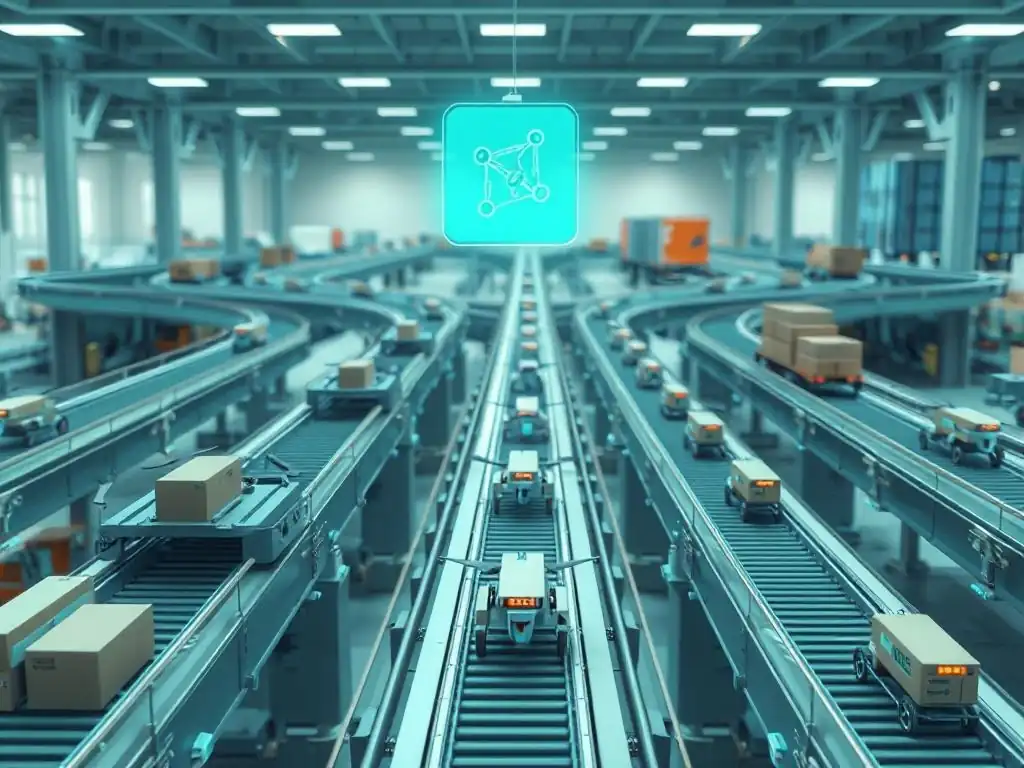
Maersk and IBM's TradeLens Platform: Streamlining Global Trade
One of the most prominent real-world examples of blockchain's application in logistics is the TradeLens platform, a collaboration between shipping giant Maersk and IBM. Launched in 2018, TradeLens aims to digitize and streamline global trade and logistics processes, which traditionally involve complex networks, extensive paperwork, and numerous intermediaries. The platform uses blockchain technology to create a shared, immutable record of shipping transactions across the ecosystem, including carriers, ports, customs authorities, freight forwarders, and inland transportation providers.
By providing a single, transparent view of shipment data, TradeLens reduces the need for manual data entry and reconciliation across disparate systems. Participants can access real-time information about cargo movements, customs documentation status, and container availability. This enhanced visibility and streamlined data flow have been shown to reduce the time required for certain administrative tasks, such as obtaining necessary approvals or exchanging documents, potentially shaving days off the total transit time for international shipments. This directly demonstrates blockchain's impact on boosting global supply chain delivery speed.
Walmart's Blockchain Implementation for Food Traceability
Walmart, one of the world's largest retailers, has successfully implemented blockchain technology to improve food traceability within its supply chains, particularly for leafy greens and other produce. Before blockchain, tracing the origin of contaminated food could take days or even weeks, requiring manual calls and checks across multiple distributors and farms. This delay in identification posed a significant public health risk and led to massive, slow recalls.
By implementing a blockchain-based system, Walmart significantly reduced the time needed to trace produce back to its source. In pilot tests, the time required to trace a package of mangoes from store to farm was reduced from seven days or more to just two seconds.
While this use case primarily focuses on traceability for safety, the underlying principle of rapidly accessing verified data has direct implications for delivery speed. Faster identification of issues (like a quality problem or origin verification) means quicker decisions can be made about sorting, routing, or holding shipments, preventing cascading delays and ensuring the integrity and speed of the supply chain for perishable goods.
De Beers' Tracr Platform: Ensuring Ethical Diamond Sourcing
De Beers, a leading diamond company, developed the Tracr platform, a blockchain-based system designed to track diamonds throughout their value chain, from mine to retailer. The platform assigns a unique ID to each diamond and records its journey on the blockchain, including information about cutting, polishing, certification, and ownership changes. This creates an immutable record that verifies the diamond's authenticity and ethical sourcing.
While the primary goal of Tracr is ethical sourcing and authenticity, the robust tracking mechanism inherent in the platform also contributes to operational efficiency. By providing a clear, digital trail for each stone, it streamlines processes like inventory management, valuation, and transfer between parties.
This digital passport reduces the reliance on physical certificates and manual verification processes, potentially speeding up the transfer of diamonds between different stages of the supply chain. The ability to instantly verify a diamond's history on the blockchain eliminates delays associated with traditional verification methods, showcasing blockchain's potential to enhance supply chain delivery speed even for high-value, low-volume goods.
Overcoming Challenges in Implementing Blockchain for Faster Delivery
Addressing Scalability Issues in Blockchain Networks
One significant challenge in implementing blockchain for large-scale supply chains is scalability. Public blockchains, like Bitcoin or Ethereum, can process a limited number of transactions per second, which might not be sufficient for the massive transaction volumes generated by global supply chains. While private or permissioned blockchains often offer higher throughput, they can still face scalability limitations as the number of participants and transactions grows exponentially. Achieving true supply chain delivery speed benefits requires a network capable of handling millions of transactions daily without performance degradation.
Solutions are emerging to address this, including Layer 2 scaling solutions, sharding, and the development of new blockchain architectures specifically designed for enterprise use cases with high transaction volumes, such as Hyperledger Fabric or specialized supply chain platforms. Organizations considering blockchain for faster delivery must carefully evaluate the network's capacity and choose a solution that can scale with their operations. Pilot programs can help assess performance under realistic load conditions before full deployment.
Ensuring Interoperability Between Different Blockchain Platforms
The blockchain landscape is evolving rapidly, with various platforms and protocols being developed. A major supply chain often involves companies already using different blockchain solutions or needing to interact with external parties on different networks. Ensuring seamless communication and data exchange between these disparate blockchain platforms, as well as with legacy systems (ERPs, WMSs, etc. ), is a critical hurdle. Lack of interoperability can create new data silos and hinder the very transparency and efficiency that blockchain is intended to provide, thus limiting the potential for faster supply chain delivery speed.
Efforts are underway to develop interoperability standards and protocols that allow different blockchains to communicate and share data securely. Solutions include cross-chain bridges, atomic swaps, and middleware that translates data between different networks and traditional systems. For successful implementation, companies must prioritize solutions that offer robust integration capabilities and support evolving interoperability standards to ensure their blockchain network can connect with the broader supply chain ecosystem.
Educating Stakeholders and Promoting Adoption of Blockchain Technology
Implementing blockchain requires buy-in and active participation from all stakeholders within the supply chain network, from suppliers and manufacturers to logistics providers and end customers. Many participants may have limited understanding of blockchain technology, its benefits, and how it impacts their existing processes. Resistance to change, lack of technical expertise, and concerns about data privacy or control can slow down adoption. Without network-wide adoption, the full benefits of enhanced transparency and collaboration needed for achieving significant supply chain delivery speed improvements cannot be realized.
Organizations must invest in comprehensive education and training programs for their employees and supply chain partners. Clearly communicating the value proposition – including how blockchain can lead to faster payments, reduced disputes, and more efficient operations for all parties – is crucial. Pilot projects involving key partners can help build trust and demonstrate tangible benefits. Establishing clear governance models and addressing concerns about data ownership and access are also vital for fostering widespread adoption.
Supply chains operate across diverse jurisdictions, each with its own set of regulations related to data privacy (e.g., GDPR), electronic signatures, customs documentation, and industry-specific compliance requirements (e.g., food safety, pharmaceutical tracking). Implementing a blockchain solution that complies with all relevant regulations across the entire chain can be complex. The immutable nature of blockchain, while beneficial for security, can pose challenges when regulations require data modification or deletion under certain circumstances. Navigating this complex regulatory landscape is essential for successful, legally compliant operations that can still leverage blockchain for improved supply chain delivery speed.
Companies must work closely with legal and compliance experts to design blockchain solutions that meet regulatory requirements in all operating regions. This may involve using permissioned blockchains where data access can be strictly controlled, incorporating mechanisms for handling data that needs to be modified or deleted (while maintaining an audit trail of the change), and ensuring that the legal frameworks around smart contracts are understood and adhered to. Collaboration with regulatory bodies to help shape future standards for blockchain in supply chain is also increasingly important.
The Future of Blockchain and Supply Chain Delivery Speed
Emerging Trends in Blockchain-Based Supply Chain Solutions
The field of blockchain for supply chain management is continuously evolving, with several key trends pointing towards even greater enhancements in delivery speed and efficiency. One trend is the development of specialized blockchain platforms tailored specifically for supply chain use cases, offering features like enhanced transaction throughput, specific data models for goods tracking, and built-in compliance tools. Another is the increasing focus on tokenization of assets, allowing for fractional ownership and more liquid trading of goods within the supply chain, potentially speeding up financial settlements and transfers.
Furthermore, the integration of Decentralized Finance (DeFi) principles with supply chain blockchain is an emerging trend. This could enable faster financing options based on verifiable blockchain data of goods in transit, providing liquidity to suppliers and manufacturers more quickly. The development of standard APIs and interoperability frameworks is also crucial, promising to break down barriers between different networks and legacy systems, creating a more interconnected and faster supply chain ecosystem where information flows freely and securely, bolstering overall supply chain delivery speed.
The Potential for AI and IoT Integration with Blockchain for Enhanced Delivery
The true transformative potential for enhancing supply chain delivery speed lies in the convergence of blockchain with other cutting-edge technologies like Artificial Intelligence (AI) and the Internet of Things (IoT). IoT devices – sensors, GPS trackers, smart containers – can provide real-time data about the location, condition (temperature, humidity, shock), and status of goods. This data can be automatically fed onto the blockchain, creating an objective, verifiable record of events without manual intervention.
AI can then leverage this rich, accurate, and real-time data from the blockchain to provide predictive analytics. AI algorithms can forecast potential delays based on current conditions (e.g., traffic, weather, port congestion), optimize routes dynamically, predict equipment failures, or even anticipate demand fluctuations. By combining the secure, transparent data layer of blockchain with the real-time data capture of IoT and the predictive power of AI, supply chains can become not only faster but also more resilient, intelligent, and autonomous, leading to unprecedented levels of supply chain delivery speed and efficiency.
Blockchain's Role in Building More Resilient and Efficient Supply Chains
Recent global events have highlighted the fragility of traditional, linear supply chains. Disruptions can have far-reaching consequences, causing significant delays and economic losses. Blockchain technology, by its very nature, contributes to building more resilient supply chains. The distributed and transparent nature of the ledger means that critical information is not held in a single point of failure. If one node or system goes down, the network can continue to operate, ensuring continuity of information flow.
Furthermore, the enhanced visibility provided by blockchain allows companies to identify alternative suppliers or routes more quickly in the event of a disruption. Smart contracts can be designed to automatically trigger contingency plans when predefined disruptive events are recorded on the ledger. By fostering greater trust and collaboration among network participants and providing a reliable foundation for data sharing and automation, blockchain enables supply chains to be more adaptable, less prone to cascading failures, and ultimately, more efficient and capable of maintaining supply chain delivery speed even under pressure.
Conclusion: Blockchain as a Catalyst for Faster and More Efficient Supply Chain Deliveries
Blockchain's Transformative Impact on Supply Chain Logistics
Blockchain technology is proving to be a powerful catalyst for transforming supply chain logistics, moving beyond incremental improvements to enable fundamental shifts in operational speed and efficiency. By addressing core challenges such as lack of transparency, inefficient communication, manual processes, and data inaccuracies, blockchain lays the groundwork for a more connected, trustworthy, and automated supply chain ecosystem. The implementation of distributed ledgers and smart contracts facilitates real-time tracking, streamlines workflows, and reduces the friction that traditionally slows down the movement of goods.
The examples of companies like Maersk, IBM, and Walmart demonstrate that the benefits of blockchain in supply chain management are not merely theoretical. They are achieving tangible results, from reducing administrative time in global shipping to drastically cutting down traceability times for perishable goods. These use cases underscore blockchain's capacity to deliver significant improvements in key performance indicators related to speed, reliability, and cost-effectiveness, proving its value in boosting supply chain delivery speed across various industries.
Embracing Blockchain for a Competitive Edge in Delivery Speed and Efficiency
In an increasingly competitive global market, the ability to deliver goods faster and more efficiently is a critical differentiator. Companies that embrace blockchain technology are positioning themselves to gain a significant competitive edge. By enhancing transparency, enabling automation, and fostering better collaboration with partners, blockchain empowers businesses to optimize their logistics operations, reduce lead times, and respond more quickly to market demands and disruptions.
The journey to full blockchain adoption in supply chains is not without its challenges, including scalability, interoperability, and the need for widespread adoption and education. However, the potential rewards in terms of reduced costs, increased security, and, most importantly, enhanced supply chain delivery speed and customer satisfaction, are substantial. As the technology matures and standards evolve, blockchain is set to become an integral part of the future of supply chain management, driving unprecedented levels of speed and efficiency.
Frequently Asked Questions
How does blockchain technology contribute to faster supply chain delivery speeds?
Blockchain provides real-time visibility and immutable records of each step in the supply chain, reducing delays caused by discrepancies or lack of information. This increased transparency allows for quicker identification and resolution of bottlenecks.
What are some specific examples of how blockchain improves supply chain efficiency?
Blockchain enables better tracking of goods, automated contract execution (smart contracts), and reduced paperwork. These features streamline processes, minimize errors, and accelerate the overall delivery timeline.
How does blockchain help with verification and authentication in the supply chain?
Blockchain's tamper-proof nature allows for easy verification of product origin and authenticity. This reduces the risk of counterfeit goods entering the supply chain, saving time and resources spent on verification.
What role do smart contracts play in accelerating supply chain delivery?
Smart contracts automate the execution of agreements between parties in the supply chain. Once pre-defined conditions are met, actions like payment or shipment release are automatically triggered, speeding up the process.
Are there any challenges to implementing blockchain for faster supply chain delivery?
Adoption barriers include the need for collaboration among all stakeholders, initial investment costs, and concerns about data privacy. Overcoming these hurdles is crucial for realizing the full potential of blockchain in improving supply chain delivery speed.
Final Reflection: Unlocking Supply Chain Potential
The exploration of blockchain's impact on supply chain delivery speed reveals a truth that resonates profoundly in today's fast-paced world: efficiency is no longer a luxury, but a necessity. The insights shared throughout this article underscore how blockchain technology is not just a futuristic concept, but a tangible solution driving real-world improvements in delivery times and overall supply chain performance.
This shift towards transparency and speed, facilitated by blockchain, has fundamentally altered the landscape of global commerce. Witnessing the potential of decentralized ledgers to streamline operations and build trust across complex networks is truly inspiring. It reminds us that innovation, when applied thoughtfully, can unlock unprecedented levels of efficiency and collaboration. The key to success is not predicting the future, but preparing for it.
- Unknown
As we conclude, let us reflect on the transformative power of blockchain and its potential to revolutionize not just supply chains, but various aspects of our lives. Consider how you can embrace this spirit of innovation and efficiency in your own endeavors. How can you leverage technology to streamline processes, build trust, and ultimately, deliver faster and more effectively? The future of supply chain delivery speed is here, and it's up to us to embrace its potential and shape its trajectory.
Ignite Your Supply Chain Future!
Thank you for exploring how blockchain is revolutionizing supply chain speed. Now that you've seen the potential, it's time to take the first step toward leveraging this transformative technology.
Here are a few ways to get started:
- Analyze your current supply chain processes to identify key areas where blockchain solutions could improve efficiency.
- Research different blockchain platforms beyond the mainstream enterprise options—there may be smaller, more flexible solutions tailored to your needs.
- Share this article with your colleagues and start a conversation about how blockchain can enhance your team's delivery strategies. Together, we can build a more efficient future!
What is the first practical step you'll take to explore blockchain's impact on your supply chain's speed and efficiency? Share your thoughts below!
Leave a Reply