
The Future of Food Traceability: Will Blockchain Be the Key Ingredient?

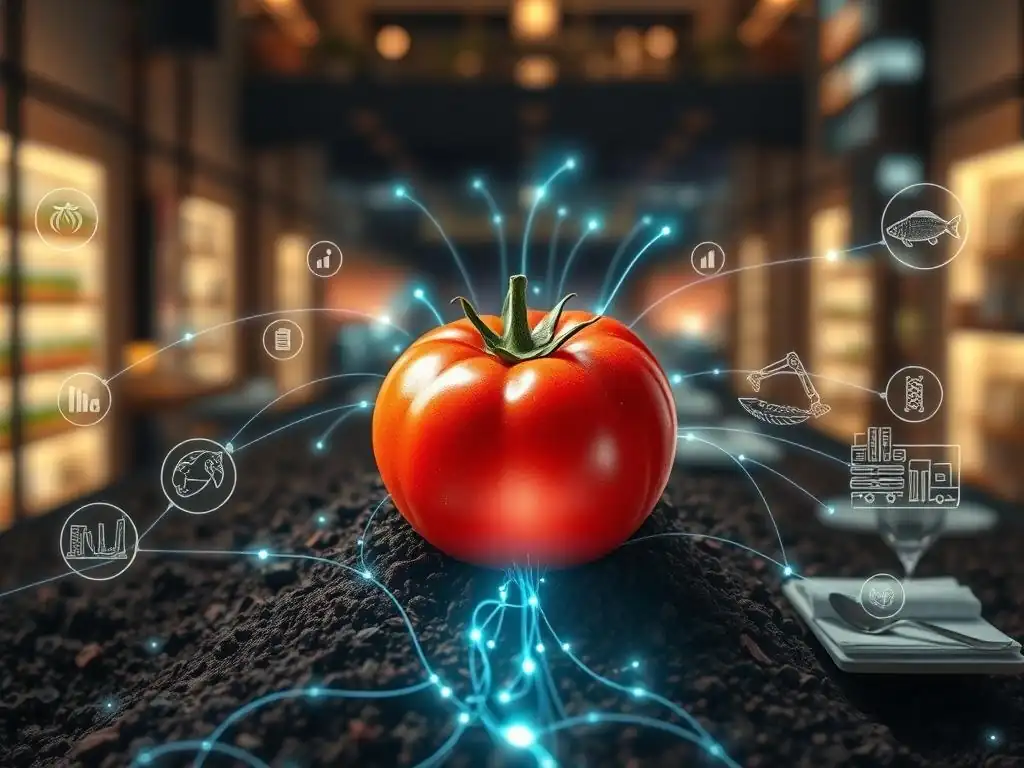
Welcome to Blockchain Trends, your trusted source for uncovering the real-world impact of blockchain technology.
Ever wonder how blockchain can revolutionize industries beyond just cryptocurrencies? Today, we delve into a fascinating application: blockchain food traceability solutions. Discover how this innovative approach is poised to transform the food supply chain, ensuring greater transparency, safety, and efficiency. What secrets does blockchain hold for the future of our food? Read on to find out!
The Future of Food Traceability: Will Blockchain Be the Key Ingredient?
- Introduction: The Growing Need for Enhanced Food Traceability
- Blockchain Food Traceability Solutions: How It Works
- Benefits of Blockchain for Food Traceability: A Detailed Look
- Challenges and Obstacles to Blockchain Adoption in the Food Industry
- Real-World Applications: Blockchain Food Traceability in Action
- Beyond Traceability: Exploring the Broader Applications of Blockchain in the Food Industry
- The Future of Blockchain in Food Supply Chains: Trends and Predictions
- Conclusion: Blockchain's Potential to Revolutionize Food Traceability
-
Frequently Asked Questions
- How can blockchain improve food traceability?
- What are some potential benefits of using blockchain for food traceability for consumers?
- What are some challenges in implementing blockchain food traceability solutions?
- Are there any real-world examples of blockchain being used for food traceability?
- How might regulations impact the adoption of blockchain food traceability solutions?
- Final Reflection: Sowing Seeds of Trust with Blockchain
- Uncover Your Role in a Transparent Food Future!
Introduction: The Growing Need for Enhanced Food Traceability
The Current State of Food Supply Chains: Challenges and Vulnerabilities
The modern food supply chain is a complex, global network involving countless participants, from farmers and processors to distributors and retailers. While this complexity enables global access to diverse foods, it also introduces significant challenges regarding traceability. Current systems often rely on fragmented paper records, disparate databases, and manual processes.
This lack of a unified, transparent system makes it difficult to quickly and accurately track food products from their origin to the consumer's table. When food safety incidents occur, like outbreaks of E. coli or Salmonella linked to specific products, identifying the source and scope of contamination can take days or even weeks.
These delays have tangible consequences. Food recalls become larger and more costly than necessary, leading to significant financial losses for businesses across the chain. For example, a major recall can cost a company an estimated $10 million on average, not including brand damage and lost sales over time.
Furthermore, the opacity in the system makes it harder to verify claims about sourcing, sustainability, or ethical practices, eroding consumer trust and creating opportunities for food fraud, which costs the global industry billions annually. The inherent vulnerabilities in traditional systems highlight a critical need for more robust, efficient, and trustworthy blockchain food traceability solutions.
Why Food Traceability Matters: Consumer Trust and Regulatory Compliance
Effective food traceability is no longer just a good practice; it's a fundamental requirement for maintaining consumer trust and complying with increasingly stringent regulations worldwide. Consumers today are more informed and demanding than ever before. They want to know where their food comes comes from, how it was produced, and that it is safe to eat. Recent surveys indicate that a significant percentage of consumers are willing to pay more for products with verifiable traceability information. When a food safety scandal hits, the resulting loss of confidence can devastate a brand's reputation and long-term viability.
Beyond consumer expectations, regulatory bodies like the FDA in the United States (through initiatives like the Food Safety Modernization Act - FSMA) and the European Food Safety Authority (EFSA) are implementing stricter rules requiring enhanced traceability. These regulations aim to minimize public health risks by enabling faster identification of contaminated food and more efficient removal from the market. Compliance with these mandates requires businesses to invest in systems that can capture, store, and share critical tracking information across supply chain partners. Robust blockchain food traceability solutions offer a path towards meeting these demands effectively and proactively.
Introducing Blockchain Technology: A Paradigm Shift in Traceability
Blockchain technology, initially known for powering cryptocurrencies, is emerging as a transformative tool for various industries, including food and agriculture. At its core, blockchain is a type of distributed ledger technology (DLT) that allows multiple parties to share a single, immutable, and transparent record of transactions or data entries. Unlike traditional centralized databases, where data is controlled by a single entity, a blockchain is shared and synchronized across a network of computers.
This decentralized and tamper-evident nature makes blockchain uniquely suited for addressing the challenges of food traceability. By creating a secure, shared record of every step a food product takes – from farm to processing, packaging, distribution, and retail – blockchain can provide unprecedented visibility and accountability. This paradigm shift moves away from siloed, untrustworthy data towards a collaborative, verifiable history that benefits all participants in the supply chain, ultimately leading to more reliable blockchain food traceability solutions.
Blockchain Food Traceability Solutions: How It Works
Understanding Distributed Ledger Technology (DLT) in Food Supply Chains
Distributed Ledger Technology (DLT) forms the technical foundation for blockchain food traceability solutions. Instead of a single, centralized database storing all information, a DLT network consists of multiple participants, each holding a copy of the ledger. When a transaction or event occurs – for example, a batch of produce is harvested, processed, or shipped – this information is recorded and broadcast to the network. The network participants then validate the transaction according to predefined rules (consensus mechanisms), and once verified, the new data is added as a "block" to the chain, updated across all copies of the ledger.
In the context of food supply chains, DLT means that farmers, processors, distributors, retailers, and even regulators can potentially share access to a single, continuously updated record of a product's journey. This shared view eliminates the need for constant reconciliation between disparate systems and reduces the likelihood of errors or data inconsistencies. It creates a single source of truth accessible to authorized parties, significantly enhancing the potential for effective blockchain food traceability solutions.
Immutable Records: Ensuring Data Integrity and Transparency
One of the most powerful features of blockchain technology for food traceability is the immutability of its records. Once data is added to a block and confirmed by the network, it is cryptographically linked to the previous block, forming a chain. Altering data in a past block would require re-computing the cryptographic links for all subsequent blocks, a computationally infeasible task, especially on a large, distributed network. This makes the ledger highly resistant to tampering and fraud.
For food traceability, this means that information about a product's origin, handling, processing dates, temperature logs, and shipping details, once recorded on the blockchain, cannot be secretly altered or deleted. This provides an unprecedented level of data integrity and transparency. Stakeholders can trust the historical record of a food item, which is crucial for verifying claims, investigating incidents, and building reliable blockchain food traceability solutions. This inherent trust mechanism is a significant improvement over traditional systems where records can be more easily manipulated.
Smart Contracts: Automating Processes and Reducing Friction
Smart contracts are self-executing contracts with the terms of the agreement directly written into code. They run on the blockchain, automatically executing predefined actions when specific conditions are met. In food supply chains, smart contracts can automate various processes, reducing the need for manual intervention, paperwork, and potential disputes.
For instance, a smart contract could automatically trigger payment to a farmer once a shipment of produce is confirmed as received and meets specified quality standards recorded on the blockchain. Another smart contract could automatically update inventory records or notify relevant parties if temperature sensors integrated with the blockchain detect a deviation outside of acceptable limits during transit. By automating these conditional actions, smart contracts can improve efficiency, reduce administrative costs, and accelerate transactions within blockchain food traceability solutions. They add an operational layer of trust and efficiency on top of the secure data layer.
IBM Food Trust: A Blockchain Food Traceability Platform
IBM Food Trust is one of the most prominent examples of a large-scale blockchain food traceability platform in operation. Developed by IBM, it is built on the Hyperledger Fabric blockchain framework and designed specifically for the food ecosystem. The platform connects growers, processors, wholesalers, distributors, manufacturers, retailers, and other parties through a shared, permissioned ledger. Participants contribute data at their respective points in the supply chain, creating an end-to-end view of a food product's journey.
Major participants like Walmart, Nestle, and Dole have joined the network. Walmart, for example, reported that using the platform allowed them to trace a package of mangoes from store back to farm in seconds, compared to the traditional method which could take seven days or more. This dramatic reduction in trace time is critical during food safety events. The platform allows participants to selectively share data with partners based on permissions, balancing the need for transparency with business privacy requirements. IBM Food Trust demonstrates the practical application of blockchain food traceability solutions on a global scale.
Benefits of Blockchain for Food Traceability: A Detailed Look
Improved Transparency and Visibility Throughout the Supply Chain
Blockchain technology offers unparalleled transparency and visibility across the entire food supply chain, from farm to fork. By creating a shared, immutable ledger accessible to authorized participants, all parties can see the history of a product. This includes details like the origin farm, harvest date, processing facility, transportation routes, storage temperatures, and retail destination. Each handoff and transformation is recorded, building a comprehensive digital history.
This enhanced visibility allows businesses to pinpoint bottlenecks, verify supplier claims, and gain deeper insights into the complex movements of goods. Instead of relying on fragmented records or hoping partners are maintaining accurate logs, companies can access a standardized, trustworthy data stream. This improved transparency is a cornerstone of effective blockchain food traceability solutions, enabling better decision-making and proactive management of supply chain operations.
Enhanced Food Safety and Reduced Risk of Contamination
One of the most significant benefits of blockchain food traceability solutions is their potential to dramatically enhance food safety. In the event of a foodborne illness outbreak or a suspected contamination, the ability to quickly and accurately trace the affected product back to its source is paramount. With blockchain, the trace time can be reduced from days or weeks to potentially seconds or minutes, as demonstrated by early adopters.
This rapid traceback allows authorities and companies to identify the specific batch, farm, or facility responsible for the contamination much faster. Consequently, recalls can be more targeted, removing only the affected products from shelves instead of broad, system-wide withdrawals that cause immense waste and economic damage. By isolating the problem source quickly, the spread of contaminated food is limited, protecting public health and significantly reducing the risk of widespread outbreaks associated with the food supply.
Streamlined Recall Processes: Faster and More Efficient
Traditional food recalls are often slow, inefficient, and overly broad due to the difficulty in pinpointing the exact source and distribution path of contaminated products. This results in significant amounts of safe food being unnecessarily discarded and prolonged uncertainty for consumers. Blockchain food traceability solutions fundamentally change this process.
By providing a precise, immutable record of a product's journey, companies can instantly identify which specific lots, shipments, and retail locations received the affected items. This allows for highly targeted recalls, minimizing the amount of product that needs to be pulled from shelves and reducing the associated costs and waste. Faster identification also means that potentially contaminated food is removed from the supply chain much sooner, mitigating further public health risks. The efficiency gains in recall management alone can provide a strong return on investment for implementing blockchain food traceability solutions.
Increased Consumer Confidence and Brand Loyalty
In an era where consumers are increasingly concerned about the safety, origin, and ethical production of their food, transparency builds trust. Blockchain food traceability solutions can empower consumers by providing them with access to verifiable information about the food they purchase. This can be facilitated through simple interfaces like scanning a QR code on a product package with a smartphone.
The QR code could link to a public or permissioned view on the blockchain, showing details such as the farm where the product was grown, dates of processing and packaging, certifications (e.g., organic, fair trade), and even environmental impact data. This level of transparency demonstrates a brand's commitment to quality, safety, and ethical practices. By offering this verifiable information, companies can significantly increase consumer confidence, differentiate their products, and foster stronger brand loyalty among discerning buyers.
Cost Savings and Operational Efficiencies
Implementing blockchain food traceability solutions can lead to substantial cost savings and operational efficiencies throughout the supply chain. Faster and more targeted recalls reduce the financial burden of large-scale product withdrawals, including logistics, disposal, and reputational damage. Reduced food spoilage can be achieved by better monitoring of conditions like temperature using IoT devices linked to the blockchain.
Furthermore, automating processes through smart contracts can decrease administrative overhead related to payments, compliance checks, and record-keeping. Improved data accuracy and accessibility reduce disputes between trading partners and streamline audits. While there are initial investment costs, the long-term benefits in reduced waste, improved logistics, faster dispute resolution, and enhanced safety can lead to significant operational savings and a more resilient supply chain.
Challenges and Obstacles to Blockchain Adoption in the Food Industry
Interoperability Issues: Connecting Different Systems and Stakeholders
One of the major hurdles for widespread blockchain food traceability solutions is the issue of interoperability. The food supply chain is incredibly diverse, involving businesses of all sizes, from small family farms to multinational corporations. These entities use a wide variety of legacy systems for managing inventory, logistics, and data. Integrating these disparate systems with a new blockchain platform is technically challenging and requires significant effort.
Moreover, different blockchain platforms and protocols exist (e.g., Hyperledger Fabric, Ethereum, VeChain), and ensuring they can communicate and share data seamlessly is complex. For blockchain food traceability to be truly effective, data needs to flow smoothly across the entire chain, regardless of the specific system or platform used by individual participants. Achieving this level of interoperability requires industry-wide collaboration and the development of common standards.
Scalability Concerns: Handling Large Volumes of Data
The global food supply chain generates an enormous volume of data daily – from production details and quality checks to logistics information and temperature logs for billions of individual items or batches. Ensuring that a blockchain network can handle this massive influx of data efficiently and cost-effectively is a significant challenge. Public blockchains, while highly decentralized, can sometimes face issues with transaction speed and cost when dealing with very high volumes.
Permissioned or private blockchains, often preferred for enterprise use cases like blockchain food traceability solutions, can offer better scalability and speed. However, even these require careful design and infrastructure to manage the data generated by a global food system. Storing all granular data on the blockchain itself might be impractical; instead, strategies often involve storing summary data or hashes on-chain while linking to off-chain data storage for bulk information, which introduces its own set of challenges regarding data integrity and accessibility.
Data Privacy and Security Considerations
While blockchain offers enhanced security through cryptography and immutability, data privacy remains a concern for businesses in the food industry. Companies are often hesitant to share sensitive business information, such as supplier lists, pricing, or detailed logistics data, even with partners on a permissioned network. Ensuring that competitive information is protected while still providing necessary traceability data requires careful design of the blockchain solution and access controls.
Furthermore, while the data on the blockchain is immutable, the data input into the system must be accurate and secure from the point of origin. If incorrect or fraudulent data is entered initially, the immutable record will simply reflect that inaccuracy. Implementing robust data capture mechanisms and ensuring the security of off-chain data sources linked to the blockchain are critical aspects that need to be addressed for reliable blockchain food traceability solutions.
Lack of Standardization and Regulatory Frameworks

The blockchain space is still relatively young, and there is a lack of universal standards for how blockchain food traceability solutions should be implemented, what data should be included, and how networks should interoperate. Different platforms may use varying data formats or protocols, making it difficult for businesses to connect with multiple partners on different networks.
Additionally, regulatory frameworks specifically addressing the use of blockchain for food traceability are still evolving in many jurisdictions. While existing food safety regulations may provide a basis, clear guidelines on how blockchain data will be accepted as official records, requirements for data input validation, and rules around data access for regulators are needed. This lack of standardization and clear regulatory guidance can create uncertainty and slow down adoption rates.
Resistance to Change and Adoption Barriers
Implementing blockchain food traceability solutions requires significant change management within organizations and across supply chain networks. It involves adopting new technologies, potentially altering existing workflows, and requires collaboration and data sharing among parties who may not have previously had such close integration.
Small farmers or businesses with limited technical resources or capital may face significant barriers to adopting complex blockchain solutions. The perception of blockchain as overly complex, expensive, or unproven can also lead to resistance. Overcoming this inertia requires clear communication of the benefits, user-friendly interfaces, affordable access models, and educational initiatives to build trust and facilitate widespread participation in blockchain food traceability initiatives.
Real-World Applications: Blockchain Food Traceability in Action
Tracking Tuna from Ocean to Table with Blockchain
Several initiatives have explored using blockchain food traceability solutions to track seafood, particularly high-value products like tuna, to combat illegal fishing, verify sustainability claims, and ensure authenticity. For example, a project involving Bumble Bee Foods used SAP's blockchain technology to track yellowfin tuna from Indonesian fishing boats to consumers in the US. By scanning a QR code on the package, consumers could access information about the tuna's journey, including the catch location, the vessel used, and processing details.
This level of transparency helps verify that the tuna was caught legally and sustainably, addressing major concerns in the seafood industry. It also provides consumers with confidence in the product's origin and quality. While these projects often start as pilots or focus on specific product lines, they demonstrate the practical application of blockchain in creating a transparent and verifiable chain of custody for complex global supply chains like seafood.
Ensuring the Authenticity of Coffee Beans with Blockchain
The coffee industry, with its complex global supply chain involving numerous smallholder farmers, intermediaries, roasters, and retailers, is another area where blockchain food traceability solutions are being implemented to improve transparency and ensure authenticity. Projects are underway to track coffee beans from the farm where they were grown, recording details about cultivation practices, harvest dates, washing/drying processes, and export/import data on the blockchain.
This allows roasters and consumers to verify the origin of the beans, confirm certifications (like Fair Trade or organic), and even trace specific flavor profiles back to their source. By providing this verifiable history, blockchain helps combat fraud (like mislabeling origin) and can potentially enable fairer compensation for farmers by providing immutable proof of their contribution and product quality. Companies like Starbucks and Farmer Connect have explored or implemented blockchain pilots for coffee traceability, highlighting its potential impact.
Monitoring the Supply Chain of Beef Products with Blockchain
Tracing beef products from the farm or ranch to the consumer's plate presents unique challenges, including tracking individual animals or groups, managing health records, and monitoring processing stages. Blockchain food traceability solutions are being applied in this sector to enhance safety, verify origin, and support quality claims. Pilot programs have used blockchain to record information about cattle's lineage, vaccinations, feed, and movements, creating a digital passport for each animal or batch.
This data follows the beef through slaughterhouses, processing plants, and distribution. In one instance, a consortium in Australia explored using blockchain to track beef exports to China, providing buyers with verifiable proof of origin and quality, which are critical concerns in international meat trade. The ability to quickly identify the source of potential contamination based on this immutable record significantly improves food safety response and builds trust among international trading partners and end consumers.
Beyond Traceability: Exploring the Broader Applications of Blockchain in the Food Industry
Supply Chain Finance and Payments
Beyond simply tracking products, blockchain can revolutionize financial transactions within the food supply chain. Smart contracts can automate payments based on verifiable data recorded on the blockchain, such as proof of delivery or successful quality inspection. This can significantly speed up payment cycles, improving cash flow for producers and reducing the need for costly intermediaries or complex financing arrangements.
For example, a farmer could receive automatic payment shortly after a distributor confirms receipt of produce and verifies its quality via data logged onto the blockchain. This eliminates delays associated with manual invoicing and verification processes. Blockchain's transparency also allows for more efficient supply chain finance models, where lenders can have greater confidence in the underlying transactions they are financing, potentially leading to better terms for businesses in the food sector.
Inventory Management and Optimization
Blockchain's ability to create a real-time, shared record of goods moving through the supply chain can greatly improve inventory management. By logging every transfer of ownership or location change on the blockchain, businesses can gain accurate, up-to-the-minute visibility into inventory levels across distributed warehouses, distribution centers, and retail locations.
This shared, trusted view helps reduce discrepancies, minimize stockouts or overstocking, and optimize logistics. Combined with IoT sensors tracking conditions like temperature and humidity, blockchain can also provide verifiable proof of product condition, reducing waste due to improper handling and allowing for more dynamic inventory allocation based on precise product status. Enhanced inventory management contributes to more efficient and less wasteful blockchain food traceability solutions.
Building Direct Relationships with Consumers
Blockchain technology can enable food producers and brands to build more direct and trusted relationships with their end consumers. By providing consumers with easy access to verifiable provenance data via blockchain (e.g., through a QR code), brands can share the story of their products, highlight sustainable practices, and build loyalty based on transparency.
This direct line of communication, verified by an immutable ledger, goes beyond traditional marketing claims. It allows consumers to make informed choices based on concrete data about origin, production methods, and ethical sourcing. Some platforms are even exploring using blockchain to facilitate direct sales models from farmers to consumers, cutting out intermediaries and allowing farmers to capture more value while offering consumers unique access to local or specialty products with guaranteed provenance.
Fighting Food Fraud and Counterfeiting
Food fraud, which includes intentional misrepresentation of food for economic gain (e.g., selling conventional food as organic, mislabeling origin, diluting high-value products), is a massive global problem estimated to cost the industry tens of billions of dollars annually. Traditional paper-based or siloed digital systems are often insufficient to detect and prevent sophisticated fraud schemes.
Blockchain food traceability solutions provide a powerful tool to combat food fraud. By creating an immutable, verifiable record of a product's entire journey and characteristics (like testing results, certifications, and handling data), it becomes significantly harder to introduce counterfeit products or falsify information without being detected by other network participants. Any attempt to alter the historical record would be evident. This inherent security and transparency make blockchain a strong deterrent against various forms of food fraud and counterfeiting.
The Future of Blockchain in Food Supply Chains: Trends and Predictions
Increased Adoption and Integration with Existing Systems
Looking ahead, the adoption of blockchain food traceability solutions is expected to increase significantly as businesses recognize the tangible benefits and the technology matures. While widespread, end-to-end adoption across the entire global food system will take time, more companies and consortiums are expected to launch pilot programs and move towards production-scale deployments. Analysts predict that the global food traceability market, including blockchain solutions, will continue to grow substantially, potentially reaching tens of billions in value within the next few years.
A key trend will be the focus on integrating blockchain solutions with existing enterprise resource planning (ERP), supply chain management (SCM), and quality management systems. Rather than replacing all legacy infrastructure, future implementations will prioritize seamless data exchange between existing systems and the blockchain ledger, making adoption less disruptive and more cost-effective for businesses.
The Rise of Consortium Blockchains and Industry Standards
Given the collaborative nature of supply chains and the need for shared data, the future of blockchain in food traceability likely lies in the rise of consortium blockchains. These are permissioned networks governed by a group of participants from the industry, allowing for a balance between decentralization, control, and performance. Industry bodies and major players will likely form these consortia to establish governance rules, define data standards, and ensure interoperability among participants.
The development of common data standards for food traceability information (e.g., using GS1 standards in conjunction with blockchain) will be crucial for seamless data exchange across different companies and platforms. As more consortia emerge and collaborate, de facto or formal standards for blockchain food traceability solutions will likely solidify, paving the way for broader adoption and network effects.
The Role of IoT and AI in Enhancing Blockchain Food Traceability
The synergy between blockchain, the Internet of Things (IoT), and Artificial Intelligence (AI) will significantly enhance the capabilities of future food traceability systems. IoT devices, such as sensors for temperature, humidity, and location, can automatically record environmental conditions and product movements. This data can then be fed directly onto the blockchain, providing real-time, verifiable information about the product's journey and status without manual entry, reducing the risk of human error or tampering.
AI can analyze the vast amounts of data collected on the blockchain and from connected IoT devices to provide predictive insights. This could include forecasting potential spoilage based on temperature logs, identifying unusual patterns that might indicate fraud, optimizing logistics routes, or predicting demand. The combination of immutable data (blockchain), real-time monitoring (IoT), and intelligent analysis (AI) will create highly sophisticated and proactive blockchain food traceability solutions.
Increased Regulatory Scrutiny and Standardization for Blockchain in Food
As blockchain food traceability solutions become more prevalent, regulatory bodies worldwide are expected to increase their scrutiny and work towards developing specific standards and guidelines. Regulators will need to determine how blockchain data can be officially recognized for compliance purposes, establish requirements for data validation at the point of origin, and define access protocols for auditing and investigation.
This increased regulatory focus is not necessarily a barrier but a necessary step towards mainstream adoption. Clear regulations will provide legal certainty for businesses, build trust in blockchain-based records, and help ensure that deployed solutions meet public health and safety objectives. Standardization driven or supported by regulatory bodies will further accelerate interoperability and adoption across the industry.
Conclusion: Blockchain's Potential to Revolutionize Food Traceability
Blockchain: A Key Ingredient for a Safer and More Transparent Food System
The challenges facing the modern food supply chain – from safety outbreaks and inefficient recalls to food fraud and lack of consumer trust – highlight an urgent need for transformation. Traditional systems, built on fragmented data and manual processes, are no longer sufficient in a complex, globalized world. Blockchain technology offers a powerful solution by providing a decentralized, immutable, and transparent ledger for tracking food products from their origin to the consumer.
Blockchain food traceability solutions enable rapid and targeted recalls, significantly enhance food safety, build consumer confidence through verifiable provenance data, and drive operational efficiencies. While challenges related to interoperability, scalability, and adoption barriers exist, ongoing pilot programs and production deployments demonstrate the technology's viability and immense potential. Blockchain is proving to be a key ingredient in building a safer, more transparent, and more trustworthy food system for the future.
Embracing Innovation: The Path to a More Sustainable and Resilient Food Supply Chain
Embracing innovative technologies like blockchain is essential for creating a food supply chain that is not only safer and more transparent but also more sustainable and resilient. Enhanced traceability supports sustainability goals by verifying ethical sourcing, reducing waste through better inventory management and targeted recalls, and potentially enabling direct relationships that benefit producers.
A resilient supply chain is one that can withstand disruptions, whether from food safety crises, natural disasters, or economic volatility. By providing real-time visibility and immutable data, blockchain enhances the ability of supply chain participants to respond quickly and effectively to unforeseen events. The path forward involves continued collaboration among industry stakeholders, technological development, and supportive regulatory frameworks to fully unlock the transformative potential of blockchain food traceability solutions and build a food system fit for the future.
Frequently Asked Questions
How can blockchain improve food traceability?
Blockchain creates an immutable ledger that records every step of the food supply chain, from farm to consumer. This enhanced transparency helps track food products and identify the source of contamination quickly, improving food safety.
What are some potential benefits of using blockchain for food traceability for consumers?
Consumers can gain greater confidence in the origin and authenticity of their food. By accessing blockchain records, they can verify product information and ensure food safety.
What are some challenges in implementing blockchain food traceability solutions?
Challenges include the lack of standardization across the industry, the cost of implementation, and the need for collaboration between different stakeholders in the supply chain.
Are there any real-world examples of blockchain being used for food traceability?
Yes, several companies are piloting or implementing blockchain solutions for food traceability. Examples include tracking seafood, produce, and meat products to ensure origin and freshness.
How might regulations impact the adoption of blockchain food traceability solutions?
Regulations can accelerate adoption by mandating traceability standards and encouraging the use of technologies like blockchain. They can also address data privacy concerns and ensure interoperability between different systems.
Final Reflection: Sowing Seeds of Trust with Blockchain
The journey from farm to fork is increasingly complex, and the need for transparency has never been greater. Blockchain food traceability solutions offer a powerful promise: a verifiable, immutable record of every step in the supply chain. This isn't just about efficiency; it's about building trust with consumers and ensuring the integrity of our food systems in an era of globalized markets and heightened food safety concerns.
The potential of blockchain to revolutionize food traceability is undeniable, and its impact is already being felt. Witnessing the growing adoption of these technologies underscores the fundamental human desire for assurance and accountability in what we consume. The future of food is not just about what we eat, but how we know what we're eating.
This sentiment perfectly encapsulates the driving force behind the push for blockchain-based solutions, empowering consumers and holding producers accountable in unprecedented ways.
As we look ahead, let us embrace the possibilities that blockchain offers. Consider how you, as a consumer, a producer, or a policymaker, can contribute to a more transparent and trustworthy food system. Ask yourself: how can you leverage the power of technology to ensure that the food on your table is safe, sustainable, and ethically sourced? The future of food traceability is not just about technology; it's about building a better world, one block at a time.
Uncover Your Role in a Transparent Food Future!
Thank you for exploring how blockchain can revolutionize food traceability. Now that you understand its potential to transform the food industry, it's time to take action and help build a more transparent and secure food supply chain.
Here are a few steps you can take today:
- Start a conversation! Share this article with friends, family, or colleagues interested in food, technology, or supply chain management. Discuss how blockchain can enhance food safety and transparency.
- Learn more about provenance: Research companies that are already implementing blockchain-based food traceability systems. Explore their platforms and see how they're addressing current supply chain challenges.
- Consider checking the traceability of the products you buy. If it's not available, ask brands whether they plan to use blockchain to track their products. Be an informed shopper and advocate for greater transparency!
What small change can you make in your purchasing habits this week to support food companies that prioritize traceability and build consumer trust? Let's discuss in the comments!
Leave a Reply