
Hyperledger Fabric for Supply Chain: Exploring EnterpriseGrade Blockchain Solutions


Welcome to Blockchain Trends, your guide to understanding the real-world impact of blockchain technology. Beyond the buzz of cryptocurrencies, blockchain is revolutionizing industries. In this article, we delve into Hyperledger Fabric supply chain solutions, exploring how this enterprise-grade blockchain platform is transforming supply chain management. Curious to discover how blockchain can optimize your operations and increase transparency? Read on to unlock the potential of decentralized systems.
Hyperledger Fabric for Supply Chain: Exploring Enterprise-Grade Blockchain Solutions
- Introduction to Hyperledger Fabric in Supply Chain Management
- What is Hyperledger Fabric and Why Use it for Supply Chain?
-
Use Cases: Hyperledger Fabric Supply Chain Solutions in Action
- Tracking and Tracing Goods with Hyperledger Fabric
- Enhancing Supply Chain Transparency and Accountability using Hyperledger Fabric
- Improving Efficiency and Reducing Costs with Hyperledger Fabric
- Seafood Traceability with Hyperledger Fabric
- Pharmaceutical Supply Chain Integrity with Hyperledger Fabric
- Implementing Hyperledger Fabric for Supply Chain: Key Considerations
- Hyperledger Fabric Supply Chain Solutions: Architecture and Components
- Advantages and Disadvantages of Hyperledger Fabric for Supply Chain
- Hyperledger Fabric vs. Other Blockchain Solutions for Supply Chain
- The Future of Hyperledger Fabric in Supply Chain Management
- Conclusion: Embracing Hyperledger Fabric for Supply Chain Transformation
-
Frequently Asked Questions
- What is Hyperledger Fabric and why is it relevant to supply chain management?
- How can Hyperledger Fabric improve supply chain transparency?
- What are some common use cases for Hyperledger Fabric in the supply chain?
- What are the key benefits of using Hyperledger Fabric compared to other blockchain platforms for supply chain applications?
- What are some challenges organizations might face when implementing Hyperledger Fabric for their supply chain?
- Final Reflection: Building Trust in the Chain
- Unleash the Power of Blockchain for Your Supply Chain!
Introduction to Hyperledger Fabric in Supply Chain Management
Understanding Blockchain Trends and Enterprise Blockchain Adoption
Blockchain technology has rapidly evolved beyond its initial association with cryptocurrencies like Bitcoin, becoming a foundational layer for enterprise applications across various sectors. Current blockchain trends indicate a significant shift towards permissioned or private blockchain networks for business use cases, primarily driven by the need for privacy, control, and performance that public blockchains often cannot provide at scale for complex enterprise operations.
This adoption is particularly evident in industries dealing with intricate value chains, such as finance, healthcare, and crucially, supply chain management. Enterprises are exploring distributed ledger technology (DLT) to address long-standing challenges like lack of transparency, data silos, and inefficient processes.
The move towards enterprise blockchain adoption is fueled by the promise of enhanced trust, immutable record-keeping, and streamlined collaboration among multiple parties. Businesses are realizing that traditional systems often struggle to provide a single, reliable source of truth across fragmented supply networks.
According to various industry reports, spending on blockchain solutions by enterprises is projected to reach tens of billions of dollars in the coming years, with supply chain being one of the leading application areas. Companies are piloting and implementing blockchain networks to gain competitive advantages, improve operational efficiency, and meet increasing consumer and regulatory demands for traceability and ethical sourcing.
The Role of Hyperledger Fabric in Transforming Supply Chains
Hyperledger Fabric, an open-source, permissioned blockchain framework hosted by the Linux Foundation, has emerged as a leading choice for enterprise-grade blockchain solutions, particularly within the supply chain domain. Unlike public blockchains, Hyperledger Fabric allows participants to be known and authenticated, making it suitable for business networks where identity and access control are paramount. Its modular architecture enables businesses to tailor the network to their specific needs, defining rules, participants, and transaction visibility. This flexibility is crucial for complex supply chains involving numerous entities, from raw material suppliers and manufacturers to distributors, logistics providers, and retailers.
The transformative role of Hyperledger Fabric in supply chains lies in its ability to create a shared, immutable ledger accessible only to authorized participants. This shared ledger provides a single version of truth regarding the movement, status, and ownership of goods as they travel through the supply chain.
By digitizing and recording transactions on the Fabric network, companies can significantly improve visibility, reduce manual processes, and mitigate risks associated with fraud, errors, and delays. Implementing Hyperledger Fabric supply chain solutions allows organizations to build trust among network members, streamline compliance, and potentially unlock new business models based on transparent and efficient data sharing.
What is Hyperledger Fabric and Why Use it for Supply Chain?
Hyperledger Fabric: A Permissioned Blockchain Framework Explained
Hyperledger Fabric is a robust, general-purpose permissioned distributed ledger technology (DLT) framework designed to support business applications. Developed collaboratively under the Hyperledger project, it distinguishes itself from public blockchains by requiring participants to have known identities. This permissioned nature is fundamental for enterprise use cases where regulatory compliance, data privacy, and accountability are critical. The network is governed by a set of policies agreed upon by the consortium members, dictating who can join the network, who can deploy and execute smart contracts (called chaincode), and who can access specific data.
The architecture of Hyperledger Fabric is highly modular, featuring components like peer nodes (which maintain the ledger and run chaincode), orderer nodes (which order transactions into blocks), and certificate authorities (which manage identities). This modularity allows for customization and scalability. Unlike blockchains that require mining or proof-of-work, Fabric uses a pluggable consensus mechanism, making it energy-efficient and suitable for high-throughput enterprise environments. The separation of transaction endorsement, ordering, and validation processes contributes to its performance and confidentiality features, enabling the deployment of Hyperledger Fabric supply chain solutions that meet stringent business requirements.
Key Features of Hyperledger Fabric for Supply Chain Visibility
Hyperledger Fabric offers several key features that make it particularly well-suited for enhancing supply chain visibility. Firstly, its permissioned nature ensures that only authorized parties can participate in the network and access specific data. This is vital for protecting sensitive commercial information while still allowing necessary data sharing among relevant stakeholders. Secondly, Fabric's support for channels allows for the creation of separate, private ledgers between subsets of participants within the same network. For instance, a channel could be created between a manufacturer and a specific supplier, providing a private data exchange without exposing sensitive information to other network members.
Another crucial feature is the use of chaincode (smart contracts). Chaincode defines the rules and logic for transactions and asset management on the ledger. In a supply chain context, chaincode can automate processes like asset transfer upon payment confirmation, verify product authenticity, or trigger alerts based on predefined conditions (e.g., temperature thresholds for perishable goods).
The immutable nature of the ledger, combined with cryptographic hashing and digital signatures, ensures that once a transaction is recorded, it cannot be altered, providing a tamper-proof audit trail of goods' journey. These features collectively enable the development of powerful Hyperledger Fabric supply chain solutions that provide end-to-end visibility and trust.
Benefits of Using Hyperledger Fabric for Supply Chain Solutions
Implementing Hyperledger Fabric supply chain solutions offers a multitude of benefits for businesses. One primary advantage is enhanced transparency across the entire supply chain. By providing a shared, immutable record of transactions and asset movements, all authorized participants have access to the same, up-to-date information, reducing information silos and improving decision-making. This increased transparency helps build trust among network members, from suppliers to end consumers, and facilitates easier compliance with regulations and standards.
Furthermore, Hyperledger Fabric can significantly improve efficiency and reduce costs. Automation through chaincode can streamline processes like order fulfillment, invoicing, and payments, minimizing manual intervention and potential errors. The reduction in disputes, often caused by conflicting data or lack of trust, also leads to cost savings.
For example, tracing a product's origin or journey can be reduced from days or weeks to mere seconds using a Fabric-based system, as demonstrated by various pilot projects. The secure and immutable nature of the ledger also helps mitigate risks associated with fraud, counterfeiting, and unauthorized product diversion, protecting brand reputation and ensuring product integrity.
Use Cases: Hyperledger Fabric Supply Chain Solutions in Action
Tracking and Tracing Goods with Hyperledger Fabric
One of the most impactful applications of Hyperledger Fabric in supply chains is enabling robust tracking and tracing of goods. By creating a digital identity for each product or batch and recording its movement, status, and ownership changes on the immutable ledger, businesses can achieve granular visibility throughout the supply chain. This allows for instant verification of a product's origin, handling history, and current location. Participants can update the ledger at key milestones, such as shipping, receiving, processing, and quality checks.
Real-world examples illustrate the power of this capability. Walmart, in collaboration with IBM Food Trust (built on Hyperledger Fabric), implemented a traceability system for leafy greens. This initiative dramatically reduced the time required to trace the origin of a product during an outbreak, from approximately seven days to just a few seconds. This level of rapid traceability is critical for food safety, recalls, and ensuring consumer trust. Similarly, companies in the luxury goods sector use Fabric to track high-value items, combating counterfeiting by providing customers with verifiable proof of authenticity and provenance recorded on the blockchain.
Enhancing Supply Chain Transparency and Accountability using Hyperledger Fabric
Hyperledger Fabric significantly enhances transparency and accountability by providing a shared, immutable ledger accessible to all authorized network participants. This shared view eliminates information asymmetries that often exist in traditional supply chains, where different parties might have conflicting or incomplete data. Every transaction, update, or change in status regarding a shipment or product is recorded permanently, creating a comprehensive audit trail that can be easily verified by relevant stakeholders.
This increased transparency fosters greater accountability among network members. Since all actions are recorded and linked to specific identities, it becomes easier to pinpoint responsibility for delays, quality issues, or data discrepancies. For example, in a supply chain for perishable goods, sensors can record temperature data on the Fabric ledger at various points in transit.
If goods spoil due to improper temperature, the immutable record clearly shows where and when the temperature deviation occurred, enabling fair assessment of liability. This level of accountability motivates participants to adhere to agreed-upon standards and processes, leading to a more reliable and trustworthy supply chain ecosystem.
Improving Efficiency and Reducing Costs with Hyperledger Fabric
The implementation of Hyperledger Fabric supply chain solutions directly contributes to improved operational efficiency and reduced costs. Automation through chaincode is a key driver of efficiency gains. Smart contracts can automatically trigger actions based on predefined conditions, such as releasing payment upon confirmation of goods received or initiating a new order when inventory levels drop below a certain threshold. This automation minimizes manual paperwork, reduces administrative overhead, and speeds up transaction processing.
Furthermore, the enhanced transparency and single source of truth provided by Fabric reduce the likelihood and frequency of disputes among supply chain partners. Resolving disputes often involves time-consuming investigations and legal costs. By having a clear, verifiable record of events and data, disagreements can be quickly addressed based on facts recorded on the ledger.
For instance, freight billing disputes, which are common in logistics, can be significantly reduced when shipment milestones and conditions are immutably recorded and agreed upon by carriers and shippers on a Fabric network. Estimates from various pilot projects suggest potential cost reductions of 10-20% or more in specific areas like administration, dispute resolution, and compliance reporting.
Seafood Traceability with Hyperledger Fabric
The seafood industry faces significant challenges related to traceability, sustainability, and preventing illegal, unreported, and unregulated (IUU) fishing. Hyperledger Fabric provides a powerful framework to address these issues by creating transparent and verifiable records from the point of catch to the consumer. Companies are using Fabric-based solutions to track individual fish or batches of seafood, recording data points such as species, catch location, vessel information, fishing method, processing facility, storage temperature, and transportation details.
One notable example is the use of Fabric by organizations like the World Wildlife Fund (WWF) and tech partners to trace tuna in the Pacific Islands. This system captures data from electronic tags, vessel logs, and processing plants, making it accessible to regulators, buyers, and even consumers via QR codes on packaging.
This level of traceability helps combat seafood fraud (e.g., mislabeling less expensive fish as premium species), verify sustainable fishing practices, and ensure compliance with import regulations. The immutable ledger ensures that the provenance data cannot be tampered with, building trust among consumers who are increasingly demanding ethically sourced and traceable food products.
Pharmaceutical Supply Chain Integrity with Hyperledger Fabric
Maintaining the integrity and security of the pharmaceutical supply chain is critical for public health, preventing the proliferation of counterfeit drugs and ensuring patient safety. Hyperledger Fabric's permissioned nature and robust security features make it an ideal platform for building secure and compliant pharmaceutical supply chain networks. Solutions are being developed and implemented to track medications from manufacturing through distribution to pharmacies and hospitals, creating a secure chain of custody.
These Fabric-based systems record unique serial numbers for drug packages, tracking their movement and ownership changes at each step. Regulatory requirements, such as those outlined in the US Drug Supply Chain Security Act (DSCSA), necessitate granular tracking and verification capabilities. Fabric networks can facilitate compliance by providing an immutable record of transactions and allowing authorized parties (like regulators or dispensing pharmacists) to verify the authenticity and history of a drug package. Pilots have shown the potential to reduce the time and complexity associated with drug recalls and investigations into counterfeit incidents, enhancing overall patient safety and supply chain security.
Implementing Hyperledger Fabric for Supply Chain: Key Considerations
Designing a Hyperledger Fabric Network for Supply Chain Requirements
Designing a Hyperledger Fabric network for supply chain requires careful consideration of the specific business processes, participants, and data flows involved. The first step is to clearly define the consortium of organizations that will participate in the network. This involves identifying all relevant stakeholders, including suppliers, manufacturers, distributors, logistics providers, retailers, and potentially regulators or financial institutions. Establishing governance rules for the consortium is crucial, covering aspects like membership criteria, decision-making processes, and data sharing policies.
Next, the network topology must be designed, determining which organizations will host peer nodes, which will act as certificate authorities, and how many orderer nodes are needed to achieve the desired level of decentralization and performance. Channels should be strategically designed to manage data privacy; sensitive data exchanges between specific parties can occur on private channels, while more general transaction data might reside on a common channel accessible to a wider group.
Defining the data model – what information about assets and transactions will be recorded on the ledger – is also paramount, ensuring that all necessary data points for traceability, transparency, and compliance are captured.
Choosing the Right Consensus Mechanism for Supply Chain Applications
Hyperledger Fabric offers pluggable consensus mechanisms, allowing network operators to choose the one best suited for their specific needs. The choice of consensus mechanism impacts network performance, scalability, and fault tolerance. For supply chain applications involving a known and trusted set of participants within a consortium, crash fault-tolerant (CFT) or Byzantine fault-tolerant (BFT) consensus algorithms are typically used.
Popular options include the Raft-based ordering service (a CFT mechanism) or BFT-SMaRt (a BFT mechanism, though less commonly used in production Fabric deployments compared to Raft). Raft is simpler to set up and manage, offering good performance in environments where malicious behavior from orderer nodes is not the primary concern, focusing instead on node crashes or network partitions.
For supply chains requiring higher levels of trust among orderers and resilience against potentially malicious behavior, a BFT mechanism might be considered, though it comes with increased complexity and performance overhead. The decision should be based on the required level of trust among ordering service nodes, the network's expected transaction volume, and the operational complexity the consortium is willing to manage.
Integrating Hyperledger Fabric with Existing Supply Chain Systems
Integrating a Hyperledger Fabric network with existing legacy supply chain systems is a critical step for successful deployment. Most organizations already have various systems in place, such as Enterprise Resource Planning (ERP), Warehouse Management Systems (WMS), Transportation Management Systems (TMS), and IoT platforms. The value of a Fabric-based solution is maximized when it can seamlessly exchange data with these existing systems, acting as a trust layer and shared data source.
Integration is typically achieved through APIs (Application Programming Interfaces). Applications running on existing systems can interact with the Fabric network by sending transactions (invoking chaincode) or querying ledger data via SDKs (Software Development Kits) provided by Hyperledger Fabric. Middleware or integration platforms can be used to facilitate the translation and flow of data between the legacy systems and the blockchain network.
For instance, data captured in a WMS about goods received can be automatically pushed to the Fabric ledger as a transaction, updating the asset's status and location. Careful planning and development of integration layers are essential to ensure data consistency, minimize disruption to existing workflows, and unlock the full potential of Hyperledger Fabric supply chain solutions.
Addressing Data Privacy and Security Concerns in Hyperledger Fabric Implementations
Data privacy and security are paramount concerns in enterprise supply chains, and Hyperledger Fabric provides features to address them, though careful configuration is required. As a permissioned network, access to join and transact is controlled through identity management provided by Certificate Authorities. Data security on the ledger is ensured through cryptographic hashing and digital signatures for each transaction, making the ledger tamper-evident.
Furthermore, Fabric offers features like channels and private data collections to enhance data privacy. Channels allow subsets of participants to have their own isolated ledger for specific transactions, preventing other network members from seeing that data. Private data collections enable parties on the same channel to share sensitive data directly peer-to-peer, with only a hash of that data stored on the channel's ledger.
This ensures the integrity of the data can be verified without exposing the sensitive details to all channel members. Implementing robust access control policies within chaincode and configuring these privacy features correctly are essential steps in deploying secure Hyperledger Fabric supply chain solutions that meet regulatory requirements and protect sensitive business information.
Hyperledger Fabric Supply Chain Solutions: Architecture and Components
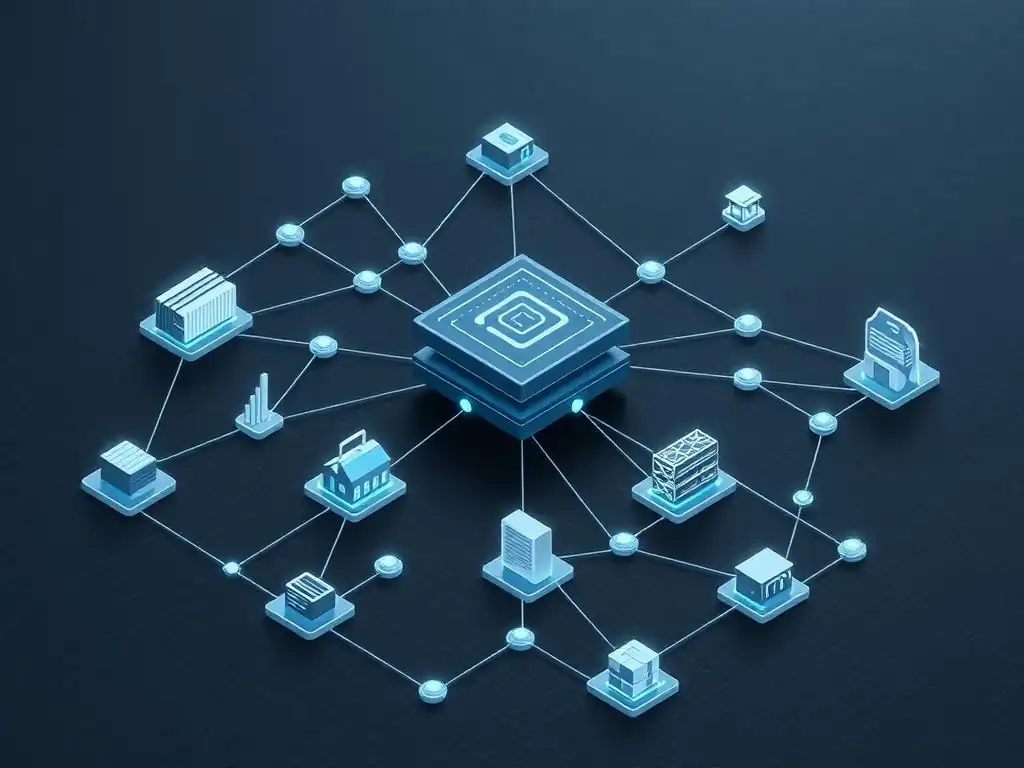
The Structure of a Hyperledger Fabric Network for Supply Chain
A typical Hyperledger Fabric network for a supply chain application involves several key components working together. At the core are the peers, which are nodes that maintain instances of the ledger and run chaincode (smart contracts). Peers can play different roles: some endorse transactions, others commit blocks to the ledger, and some may serve state database queries. For supply chain, different organizations (e.g., manufacturer, distributor, retailer) would typically operate their own peers.
Above the peers are the ordering service nodes (Orderers). These nodes receive endorsed transactions from applications, order them chronologically, and package them into blocks. They do not execute chaincode or maintain the ledger state, but are critical for ensuring transaction consistency across the network.
Identity management is handled by Certificate Authorities (CAs), which issue cryptographic certificates to participants, verifying their identity and controlling their access to the network. The network structure is further segmented by channels, which are private overlays allowing a subset of network participants to transact and maintain a separate ledger specific to their relationship or business process, ensuring data privacy.
Understanding Channels, Chaincode, and Orderers in Supply Chain Applications
Channels are a fundamental concept in Hyperledger Fabric for managing privacy and throughput in complex networks like supply chains. A channel represents a private "subnet" of communication between specific network members. Only participants joined to a channel can see the transactions and ledger data on that channel.
This is crucial in supply chains where not all parties need to see every piece of information; for example, a channel might exist between a supplier and a manufacturer for raw material orders, separate from a channel between the manufacturer and a distributor for finished goods shipments. This segmentation enhances privacy and scalability.
Chaincode, often referred to as smart contracts, contains the business logic that governs transactions on the network. In a supply chain context, chaincode defines the rules for asset creation (e.g., registering a batch of products), asset transfer (e.g., changing ownership upon shipment), and querying asset history. Chaincode is executed by endorsing peers and ensures that transactions are valid according to the predefined rules before being submitted to the ordering service.
Orderers, as mentioned, are responsible for agreeing on the order of transactions and creating blocks, which are then distributed to peers for validation and commitment to their ledgers. Together, channels, chaincode, and orderers form the backbone of Hyperledger Fabric supply chain solutions, enabling secure, private, and automated multi-party interactions.
Data Management and Access Control within Hyperledger Fabric for Supply Chain
Effective data management and stringent access control are paramount in Hyperledger Fabric supply chain solutions. Data on the ledger typically includes information about assets (products, shipments), transactions (ownership transfers, status updates), and related metadata (timestamps, locations, sensor readings). This data is stored in an immutable, append-only fashion on the ledger. Alongside the ledger, peers also maintain a state database (like CouchDB or LevelDB) which stores the current state of all assets, allowing for efficient querying of current information.
Access control is managed at multiple layers. Firstly, network membership is permissioned via Certificate Authorities. Secondly, access to specific data is controlled through channels – only members of a channel can access its ledger data.
Thirdly, within chaincode, logic can be implemented to further restrict who can query or update specific data points based on their organizational identity or role. For highly sensitive data that shouldn't even reside on a channel's ledger, Fabric's private data collections allow participants to share data peer-to-peer, with only a hash of the data recorded on the channel ledger for verification. This layered approach to data management and access control is critical for meeting the privacy and security requirements of complex enterprise supply chains.
Advantages and Disadvantages of Hyperledger Fabric for Supply Chain
Pros: Enhanced Security, Transparency, and Efficiency
Hyperledger Fabric offers significant advantages for supply chain management, primarily centered around enhanced security, transparency, and efficiency. The permissioned nature provides a controlled environment where all participants are known and authenticated, dramatically reducing the risk of unknown or malicious actors compromising the network – a key requirement for enterprise use cases. Data security is bolstered by cryptographic principles, creating an immutable and tamper-evident record of all transactions.
Transparency is vastly improved compared to traditional systems. Authorized network members have access to a shared, real-time view of the supply chain, reducing information asymmetry and fostering trust. This shared visibility enables faster identification of issues, improved collaboration, and easier compliance audits. Efficiency gains stem from process automation via chaincode (smart contracts), reducing manual tasks, minimizing errors, and accelerating transaction cycles. Dispute resolution is streamlined due to the single, verifiable source of truth on the ledger. These combined benefits make Hyperledger Fabric supply chain solutions a compelling option for businesses looking to modernize their operations.
Cons: Complexity, Scalability Challenges, and Integration Hurdles
Despite its advantages, implementing Hyperledger Fabric supply chain solutions also presents challenges. Complexity is a significant hurdle. Designing, deploying, and managing a Hyperledger Fabric network requires specialized technical expertise in blockchain technology, distributed systems, and cryptography. Setting up the network architecture, defining consortium governance, developing and deploying chaincode, and configuring channels and private data collections can be intricate tasks.
Scalability can also be a challenge, particularly in very large supply chains with thousands or millions of transactions daily. While Fabric is designed for higher throughput than many public blockchains, performance can be affected by factors like the complexity of chaincode, the number of endorsing peers required for transactions, and the chosen consensus mechanism. Optimizing network configuration and infrastructure is crucial for achieving high transaction volumes.
Finally, integration hurdles are common. Connecting the Fabric network with existing legacy ERP, WMS, and other enterprise systems requires significant development effort to build robust and reliable integration layers, which can be time-consuming and costly.
Hyperledger Fabric vs. Other Blockchain Solutions for Supply Chain
Comparing Hyperledger Fabric with Ethereum for Supply Chain Applications
When considering blockchain solutions for supply chain, Hyperledger Fabric is often compared with Ethereum, particularly its enterprise-focused versions like Hyperledger Besu (an Ethereum client) or Quorum (a permissioned version of Ethereum). The core difference lies in their fundamental design philosophy: Ethereum (public mainnet) is permissionless, while Hyperledger Fabric is permissioned.
For enterprise supply chains, the permissioned nature of Fabric is often a significant advantage. It allows businesses to control who participates, maintain data privacy through channels and private data, and ensure identity and accountability. Public Ethereum, by contrast, is open to anyone, and all transaction data is publicly visible (though encrypted for private transactions in enterprise versions).
While Ethereum has a large developer community and robust smart contract capabilities (Solidity), the gas cost model and variable transaction fees of the public network can be unpredictable for enterprise operations. Permissioned Ethereum variants like Besu or Quorum address some of these issues, offering private transactions and pluggable consensus, but Fabric's architecture was specifically designed from the ground up for enterprise consortia, offering features like multiple pluggable consensus options and the separation of endorsement, ordering, and validation that are highly relevant for complex business workflows.
Evaluating Corda vs. Hyperledger Fabric for Enterprise Supply Chain Solutions
Another prominent DLT platform often considered for enterprise use cases, including supply chain, is R3 Corda. Corda is specifically designed for regulated industries like finance but is also applicable to supply chain. The main difference between Corda and Hyperledger Fabric lies in their data sharing model.
Fabric uses a shared ledger approach where transactions are broadcast to relevant peers on a channel and recorded on a distributed ledger. Corda, on the other hand, uses a point-to-point transaction model; data is shared only between parties directly involved in a specific transaction, with a notary service ensuring uniqueness and ordering but not holding the full transaction data.
Corda's point-to-point model can offer higher levels of data privacy by default, as data is not broadcast to a channel. However, it can make it more complex to achieve a holistic view of the entire supply chain compared to Fabric's shared ledger on a channel, where all relevant participants have a consistent view of the agreed-upon data. Fabric's channel architecture provides a flexible way to manage data visibility, offering a balance between privacy and shared transparency.
Both platforms support smart contracts (chaincode in Fabric, CorDapps in Corda) and are permissioned. The choice between them often depends on the specific data privacy requirements, the need for a shared vs. point-to-point data model, and the technical expertise available.
When to Choose Hyperledger Fabric for Your Supply Chain Needs
Hyperledger Fabric is an excellent choice for supply chain solutions when the following conditions are met:
- A consortium of known participants: Your supply chain involves multiple, identifiable organizations that need to collaborate and share data in a controlled environment.
- Need for data privacy and access control: You require granular control over who sees which data, necessitating private channels or private data collections to protect sensitive commercial information.
- Complex business logic: Your supply chain processes involve intricate rules and workflows that can be effectively automated and enforced through smart contracts (chaincode).
- High transaction volume requirements: You anticipate a significant volume of transactions and need a platform capable of high throughput and relatively low transaction latency, leveraging Fabric's modular architecture and pluggable consensus.
- Regulatory compliance: You operate in an industry with strict regulatory requirements for data integrity, traceability, and accountability, which are well-supported by Fabric's immutable ledger and identity management features.
Conversely, if your primary need is a public, open network without identity requirements, or if your use case is purely focused on peer-to-peer data exchange without needing a shared view among a group, other platforms might be more suitable. However, for most complex, multi-party enterprise supply chains, Hyperledger Fabric supply chain solutions offer a compelling combination of features to build robust, transparent, and efficient networks.
The Future of Hyperledger Fabric in Supply Chain Management
Emerging Trends and Innovations in Hyperledger Fabric Supply Chain Solutions
The landscape of Hyperledger Fabric supply chain solutions is continuously evolving with emerging trends and innovations. One significant trend is the increasing focus on interoperability between different blockchain networks and traditional systems. As more consortia adopt DLT, the ability to share data and assets across different Fabric networks or even with other blockchain platforms becomes crucial for creating truly interconnected supply chains. Efforts are underway within the Hyperledger community to develop standards and tools for cross-chain communication.
Another key innovation area is the development of more sophisticated chaincode patterns and libraries specifically tailored for supply chain use cases, such as standardized asset models or common transaction types. Furthermore, advancements in privacy-enhancing technologies, like zero-knowledge proofs, are being explored to enable verification of data or compliance without revealing the underlying sensitive information itself, offering even greater privacy within Fabric networks. The focus is shifting from basic traceability to building comprehensive digital twins of supply chains on Fabric, enabling advanced analytics, simulations, and predictive capabilities based on the real-time, trustworthy data on the ledger.
The Impact of Hyperledger Fabric on the Future of Supply Chain Visibility
Hyperledger Fabric is poised to have a profound impact on the future of supply chain visibility. By providing a trusted, shared, and immutable ledger, it fundamentally changes how information flows and is accessed across complex networks. The traditional model of fragmented systems and data silos will be replaced by a collaborative ecosystem where authorized parties have access to a single source of truth regarding product journey, status, and ownership.
This enhanced visibility goes beyond simple tracking; it enables proactive management of disruptions, facilitates faster and more accurate recalls, improves inventory management across the network, and provides verifiable proof of compliance and ethical sourcing to consumers and regulators. As more industries adopt Hyperledger Fabric supply chain solutions, the network effect will multiply, leading to increasingly interconnected and transparent global supply chains. The ability to trace a product's entire history instantly will become a standard expectation, driven by the capabilities provided by platforms like Fabric.
Integration with IoT and AI for Enhanced Supply Chain Automation
The true power of Hyperledger Fabric supply chain solutions is unlocked when integrated with complementary technologies like the Internet of Things (IoT) and Artificial Intelligence (AI). IoT devices, such as sensors tracking temperature, humidity, location, or shock, can automatically capture data points about goods in transit or storage. This data can then be fed directly onto the Hyperledger Fabric ledger via authorized gateways or applications.
Recording IoT data immutably on Fabric provides a verifiable and trustworthy record of conditions throughout the supply chain, which is critical for quality control, insurance claims, and regulatory compliance (e.g., maintaining cold chain integrity for pharmaceuticals or food). AI and machine learning algorithms can then leverage this rich, trustworthy dataset from the Fabric ledger and connected IoT devices to provide advanced insights.
AI can predict potential delays or risks based on historical data patterns, optimize routes, forecast demand, and even automate decision-making processes via chaincode based on AI-driven analysis. This integration of Hyperledger Fabric with IoT and AI creates highly automated, intelligent, and resilient supply chains.
Conclusion: Embracing Hyperledger Fabric for Supply Chain Transformation
Key Takeaways on Hyperledger Fabric and its Potential for Supply Chain
Hyperledger Fabric stands out as a robust and flexible permissioned blockchain framework with significant potential to transform supply chain management. Its core features, including identity management, channels for data privacy, pluggable consensus, and powerful smart contracts (chaincode), are specifically designed to meet the complex requirements of enterprise networks. Implementing Hyperledger Fabric supply chain solutions can lead to tangible benefits, such as dramatically improved traceability, enhanced transparency and accountability among partners, and increased operational efficiency through automation and reduced disputes.
Real-world applications, from food traceability with Walmart's initiative built on IBM Food Trust to pharmaceutical supply chain security, demonstrate the practical impact of Fabric in addressing long-standing industry challenges. While implementation requires careful planning, technical expertise, and integration with existing systems, the strategic advantages gained in terms of trust, visibility, and efficiency make it a compelling technology for businesses seeking to modernize their supply chain operations and stay ahead in an increasingly demanding global market.
Moving Forward with Hyperledger Fabric in the Blockchain Trends Landscape
As the blockchain trends continue to evolve, Hyperledger Fabric is positioned to remain a leading platform for enterprise blockchain adoption, particularly in supply chain. The ongoing development within the Hyperledger community, focusing on scalability, interoperability, and ease of deployment, will further enhance its capabilities. For organizations looking to leverage the power of distributed ledger technology beyond cryptocurrencies, exploring Hyperledger Fabric supply chain solutions is a strategic imperative.
Moving forward, successful adoption will depend on fostering consortium collaboration, establishing clear governance models, and focusing on specific, high-impact use cases that demonstrate clear ROI. The integration of Fabric with IoT for real-time data capture and AI for intelligent automation represents the future direction, promising supply chains that are not only transparent and efficient but also predictive and adaptive. Embracing Hyperledger Fabric is key for businesses aiming to build resilient, trustworthy, and future-proof supply chain operations in the age of decentralized systems.
Frequently Asked Questions
What is Hyperledger Fabric and why is it relevant to supply chain management?
Hyperledger Fabric is a permissioned blockchain framework designed for enterprise-grade solutions. Its modular architecture and focus on privacy make it suitable for managing complex supply chain networks where data confidentiality is paramount.
How can Hyperledger Fabric improve supply chain transparency?
By providing a shared and immutable ledger, Hyperledger Fabric allows all participants in the supply chain to track goods and materials in real-time. This enhanced visibility helps to reduce fraud and improve traceability.
What are some common use cases for Hyperledger Fabric in the supply chain?
Common use cases include tracking product provenance, managing inventory, verifying authenticity, and streamlining logistics. These applications can significantly improve efficiency and reduce costs.
What are the key benefits of using Hyperledger Fabric compared to other blockchain platforms for supply chain applications?
Hyperledger Fabric offers superior scalability and privacy compared to public blockchains. Its permissioned nature allows for better control over access and data visibility, which is crucial for sensitive supply chain information.
What are some challenges organizations might face when implementing Hyperledger Fabric for their supply chain?
Challenges may include the complexity of deployment, the need for technical expertise, and the integration with existing legacy systems. Ensuring interoperability between different systems can also be a hurdle.
Final Reflection: Building Trust in the Chain
The exploration of Hyperledger Fabric as a cornerstone for supply chain solutions underscores a critical need in today's globalized world: enhanced transparency and trust. The complexities and opaqueness that often plague supply chains demand innovative solutions, and the potential of enterprise-grade blockchain, particularly Hyperledger Fabric, to address these challenges is undeniable. This isn't just about technological advancement; it's about fostering greater accountability and resilience in the systems that deliver goods and services to our communities.
The impact of a more transparent and secure supply chain extends far beyond mere efficiency gains. It touches upon ethical sourcing, fair labor practices, and the reduction of counterfeit goods, all of which are increasingly important to consumers and businesses alike. The supply chain is the only thing that connects everything.
- Michael Scott (While perhaps not the most authoritative source, the sentiment rings true; everything we consume has a supply chain behind it). This interconnectedness highlights the profound responsibility we have to ensure these chains are built on principles of integrity and sustainability.
As we move forward, let us all consider the role we play in shaping the future of supply chains. Whether you are a business leader, a technologist, or a consumer, your choices and actions can contribute to a more ethical, efficient, and trustworthy global ecosystem. Embrace the potential of technologies like Hyperledger Fabric to build a better future, one block at a time, and let's collectively strive to create supply chains that reflect our shared values and aspirations.
Unleash the Power of Blockchain for Your Supply Chain!
Thank you for exploring the potential of blockchain technology to transform supply chain management. We hope you've gained valuable insights into creating more transparent and efficient systems. Now, it's time to take the next step!
Here's how you can continue your journey:
- Learn More: Explore the official documentation and tutorials to understand the technical details and how they can be applied to your specific needs.
- Share Your Thoughts: Discuss this article with colleagues or on social media. Let’s start a conversation about how blockchain can revolutionize the industry!
- Stay Updated: Subscribe to our newsletter to receive the latest insights, use cases, and news on enterprise blockchain solutions.
What supply chain challenge are you most eager to address with blockchain technology? Share your thoughts in the comments below!
Leave a Reply