
The Investor's Guide to Blockchain in Supply Chain: Future Opportunities and Growth Sectors


Welcome to Blockchain Trends, your compass in the rapidly evolving world of decentralized technologies. Beyond the hype, blockchain is quietly revolutionizing industries, and nowhere is this more evident than in supply chain management. Are you ready to unlock the secrets to strategic blockchain supply chain investment strategies? This guide delves into the exciting opportunities and growth sectors poised to reshape global commerce – discover how blockchain is creating transparency, efficiency, and resilience in ways you never imagined. Explore the future, starting now.
The Investor's Guide to Blockchain in Supply Chain: Future Opportunities and Growth Sectors
- Introduction: Unlocking Value with Blockchain in Supply Chain Management
- Blockchain Supply Chain Investment Strategies: A Deep Dive
- Future Growth Sectors in Blockchain Enabled Supply Chains
- Evaluating Blockchain Supply Chain Projects: Key Metrics and Due Diligence
- Case Studies: Successful Blockchain Supply Chain Implementations
- Overcoming Challenges in Blockchain Supply Chain Investment
- The Role of Emerging Technologies in Blockchain Supply Chain
- Blockchain Supply Chain Investment: A Long-Term Perspective
- Conclusion: Capitalizing on the Blockchain Supply Chain Revolution
-
Frequently Asked Questions
- ### What are the main benefits of using blockchain in supply chain management that attract investors?
- ### Which specific sectors within the supply chain are currently seeing the most blockchain investment?
- ### What are some common "Blockchain supply chain investment strategies" that investors are employing?
- ### What are the biggest regulatory hurdles or risks associated with investing in blockchain supply chain solutions?
- ### How can investors assess the long-term viability of a blockchain supply chain investment opportunity?
- Final Reflection: Embracing the Decentralized Future of Supply Chains
- Unleash the Potential: Transform Supply Chains with Blockchain!
Introduction: Unlocking Value with Blockchain in Supply Chain Management
Why Blockchain is Revolutionizing Supply Chain Investment
Blockchain technology is fundamentally reshaping traditional supply chain operations, moving beyond its origins in cryptocurrency to offer tangible value in areas like transparency, efficiency, and security. This transformation presents significant opportunities for investors looking to capitalize on the digital evolution of global trade and logistics. The distributed ledger technology provides an immutable and shared record of transactions, movements, and states of goods, addressing long-standing issues such as fraud, inefficiencies, and lack of trust among participants. Early adopters have demonstrated substantial improvements, including reduced administrative costs and faster dispute resolution.
The potential for return on investment in blockchain-enabled supply chain solutions is attracting increasing attention. Reports from various market research firms estimate the global blockchain in supply chain market size to grow significantly, potentially reaching tens of billions of dollars within the next few years. This growth is driven by diverse industry needs, from enhancing food safety traceability to streamlining complex international shipping documentation.
Investors exploring blockchain supply chain investment strategies are finding opportunities across the ecosystem, including infrastructure providers, platform developers, and application-specific solution providers. The shift towards more resilient and transparent supply chains, accelerated by global events, further underscores the long-term value proposition of blockchain technology in this domain.
Understanding the Scope: From Traceability to Transparency
The application of blockchain in supply chains extends far beyond simple tracking. While traceability – the ability to follow a product's journey from origin to destination – is a primary benefit, the technology enables comprehensive transparency across the entire value chain. This means providing stakeholders with verifiable information about a product's provenance, handling history, quality certifications, and even ethical sourcing details. This level of verifiable data is crucial for building consumer trust, meeting regulatory requirements, and optimizing operational processes.
Transparency facilitated by blockchain allows for a single, shared version of truth among multiple parties who may not inherently trust each other. For instance, in complex logistics involving numerous handoffs, a blockchain ledger can record each transfer of custody immutably, reducing disputes and providing clear accountability.
This scope of application is vast, covering everything from recording temperature data for perishable goods to verifying the authenticity of luxury items or pharmaceuticals. Understanding this broad scope is essential for investors evaluating blockchain supply chain investment strategies, as it highlights the diverse range of problems the technology can solve and the varied market segments it can impact.
Blockchain Supply Chain Investment Strategies: A Deep Dive
Identifying Key Investment Areas within Blockchain Supply Chain
Investors looking into blockchain supply chain investment strategies have several avenues to consider, each with different risk profiles and growth potentials. One primary area is investing in companies developing core blockchain platforms or protocols specifically designed for enterprise supply chain use cases. These platforms often focus on scalability, privacy, and interoperability requirements that differ from public blockchains. Examples include enterprise-grade solutions built on Hyperledger Fabric, Ethereum (private variants), or newer specialized protocols.
Another significant area involves investing in software-as-a-service (SaaS) providers building applications on top of these blockchain platforms. These applications address specific industry needs, such as track-and-trace solutions for food, provenance verification for raw materials, or digital documentation systems for logistics. Investing in companies providing consulting, integration, or oracle services that connect real-world data (like IoT sensor readings) to the blockchain is also a viable strategy. Furthermore, venture capital funding flows into startups focused on tokenization of supply chain assets or financing mechanisms leveraging blockchain, indicating a broadening scope for blockchain supply chain investment strategies.
Assessing Risk and Return in Blockchain Supply Chain Ventures
Like any emerging technology sector, investing in blockchain supply chain ventures involves unique risks alongside the potential for high returns. Technology risk is present, as the field is still evolving, and long-term scalability and interoperability solutions are under continuous development. Adoption risk is also significant; while pilot projects are numerous, widespread implementation across complex, multi-party supply chains requires overcoming inertia, integrating with legacy systems, and achieving network effects. Regulatory uncertainty adds another layer of risk, as governments and international bodies are still defining frameworks for blockchain and digital assets.
However, the potential returns are substantial for successful implementations. Companies that effectively leverage blockchain can achieve significant cost savings through reduced errors, faster processing times, and less administrative overhead. They can also unlock new revenue streams or enhance brand value through improved transparency and trust with consumers. For investors, identifying ventures with strong use cases, robust technology, experienced teams, and clear go-to-market strategies is crucial. A careful assessment of the competitive landscape and the specific problem being solved by the blockchain solution forms a core part of effective blockchain supply chain investment strategies.
Future Growth Sectors in Blockchain Enabled Supply Chains
Food and Beverage: Enhancing Traceability and Consumer Trust
The food and beverage sector is a prime candidate for blockchain adoption due to critical needs for safety, provenance verification, and waste reduction. Foodborne illness outbreaks, fraudulent labeling, and inefficient recall processes cost the industry billions annually and erode consumer trust. Blockchain offers a way to create an immutable record of a food item's journey, from farm to fork, including details about farming practices, processing, shipping temperatures, and handling. This enhanced traceability allows for rapid identification of the source of contamination during a recall, potentially reducing the scope and impact of outbreaks.
Major players are already investing heavily in this area. For example, a large retailer famously piloted a blockchain system that reduced the time needed to trace a mango from a store back to its farm from seven days to just over two seconds. While this is a specific case, it illustrates the dramatic efficiency gains possible.
Consumer demand for information about where their food comes from and how it was produced is also rising, driving companies to seek verifiable transparency solutions. Investing in platforms or solutions focused on food provenance and safety represents a compelling part of blockchain supply chain investment strategies.
Pharmaceutical Industry: Combatting Counterfeiting and Ensuring Authenticity
Counterfeit drugs pose a severe public health threat and result in estimated losses of hundreds of billions of dollars for the pharmaceutical industry globally each year. Ensuring the authenticity and integrity of pharmaceutical products throughout the complex supply chain, from manufacturing labs to pharmacies and hospitals, is paramount. Blockchain technology provides a robust mechanism to track and verify each step, creating a secure, tamper-evident history for every package or even individual unit of medication.
Regulations like the US Drug Supply Chain Security Act (DSCSA) and similar initiatives in other regions are mandating enhanced traceability and verification capabilities. Blockchain solutions can help companies meet these requirements more effectively than traditional databases. By recording unique identifiers for each product and every transfer of ownership on an immutable ledger, blockchain makes it significantly harder to introduce counterfeit products into the legitimate supply chain. Opportunities for blockchain supply chain investment strategies exist in companies providing serialization, track-and-trace, and verification platforms specifically tailored for the stringent requirements of the pharmaceutical sector.
Manufacturing: Optimizing Processes and Reducing Waste
In complex manufacturing environments, managing raw materials, components, work-in-progress, and finished goods across multiple sites and suppliers is a significant challenge. Inefficiencies, delays, and errors can lead to substantial waste and increased costs. Blockchain can optimize manufacturing supply chains by providing real-time visibility into the status and location of goods, automating processes through smart contracts, and creating a verifiable record of quality checks and compliance.
For instance, tracking high-value components or critical parts using blockchain can improve inventory management and prevent the use of unauthorized or counterfeit parts in assembled products. Smart contracts can automate payments upon delivery and verification of goods, streamlining financial operations. Furthermore, by providing a clear audit trail of materials and production processes, blockchain can support sustainability initiatives and compliance reporting.
While precise global figures are hard to pinpoint, studies suggest that improved supply chain visibility through technologies like blockchain could lead to manufacturing cost reductions potentially in the range of 5% to 10%. Investing in solutions that apply blockchain to manufacturing process optimization and supply chain visibility is a key element of forward-looking blockchain supply chain investment strategies.
Logistics and Transportation: Streamlining Operations and Improving Efficiency
The logistics and transportation sector is characterized by a complex web of carriers, freight forwarders, ports, customs agencies, and shippers, often relying on fragmented and paper-based processes. This leads to delays, errors, lack of visibility, and disputes. Blockchain offers a path to digitize and streamline many of these operations by creating a shared, immutable ledger for tracking shipments, managing documentation (like bills of lading), and automating payments.
Consider international container shipping, which involves dozens of parties and hundreds of documents per shipment. A blockchain-based platform can provide all authorized parties with access to real-time updates and digital documentation, reducing processing times from days to potentially hours. Projects like TradeLens, a collaboration involving major shipping lines, aim to create an industry-wide platform for sharing logistics data securely.
While achieving broad network adoption takes time, the potential efficiency gains in logistics are immense, estimated to save the industry billions annually through reduced administrative costs and faster cargo movement. Investments in platforms and applications targeting freight management, supply chain finance, and trade documentation are crucial aspects of blockchain supply chain investment strategies in this sector.
Evaluating Blockchain Supply Chain Projects: Key Metrics and Due Diligence
Assessing the Technology: Blockchain Platform and Scalability
When evaluating potential blockchain supply chain investments, a thorough assessment of the underlying technology is paramount. Investors must look beyond the buzzword and understand the specific blockchain platform being utilized. Is it a public, private, or consortium chain? For most enterprise supply chain applications, private or consortium chains are preferred due to requirements for privacy, permissioning, and higher transaction throughput. Key technical metrics to evaluate include:
- Scalability: Can the platform handle the required volume of transactions as the network grows? Supply chains can generate millions of data points daily.
- Interoperability: Can the platform connect and exchange data with other systems, both blockchain-based and traditional enterprise resource planning (ERP) or warehouse management systems (WMS)?
- Security: What cryptographic standards are used? How is data privacy maintained while ensuring transparency for authorized parties?
- Maturity: Is the platform well-developed, with a stable roadmap and active developer community?
Due diligence should involve technical experts who can evaluate the architecture, consensus mechanism, and smart contract capabilities to ensure the technology is robust, fit-for-purpose, and capable of evolving with future needs. Understanding these technical nuances is critical for successful blockchain supply chain investment strategies.
Evaluating the Team: Expertise and Experience in Supply Chain and Blockchain
The success of a blockchain supply chain project hinges significantly on the team executing it. A strong team needs a rare combination of expertise: deep understanding of complex supply chain operations and proficiency in blockchain technology development and implementation. A team heavy on blockchain theory but lacking practical supply chain experience may build a technically sound platform that doesn't address real-world pain points. Conversely, a team with supply chain expertise but limited blockchain knowledge may fail to leverage the technology's unique capabilities effectively.
Key questions to ask during evaluation include:
- Does the team have proven experience implementing technology solutions within supply chain environments?
- Do they have core blockchain developers with experience building and deploying enterprise-grade distributed applications?
- Is there a clear understanding of the specific industry vertical they are targeting (e.g., pharmaceuticals, food, logistics)?
- Have they demonstrated the ability to work with multiple stakeholders in complex ecosystems?
A balanced team with complementary skills across technology, industry knowledge, business development, and regulatory compliance is a strong indicator of potential success when assessing blockchain supply chain investment strategies.
Analyzing the Market: Demand and Competitive Landscape
Understanding the market opportunity and competitive environment is fundamental to any investment decision, and blockchain supply chain ventures are no exception. Investors need to assess the actual demand for the proposed solution. Is it addressing a critical, unmet need or merely a marginal improvement? What is the estimated market size for this specific application within the targeted industry? This requires thorough market research, including interviews with potential customers and industry experts.
Furthermore, it's crucial to analyze the competitive landscape. Who are the direct competitors offering similar blockchain solutions? Are there established players offering traditional solutions that might be resistant to change? What are the competitive advantages of the project being evaluated – is it superior technology, a stronger network effect strategy, better pricing, or deeper industry partnerships? Evaluating the project's go-to-market strategy and its ability to acquire customers and build a network is essential for projecting future growth and potential returns as part of comprehensive blockchain supply chain investment strategies.
Case Studies: Successful Blockchain Supply Chain Implementations
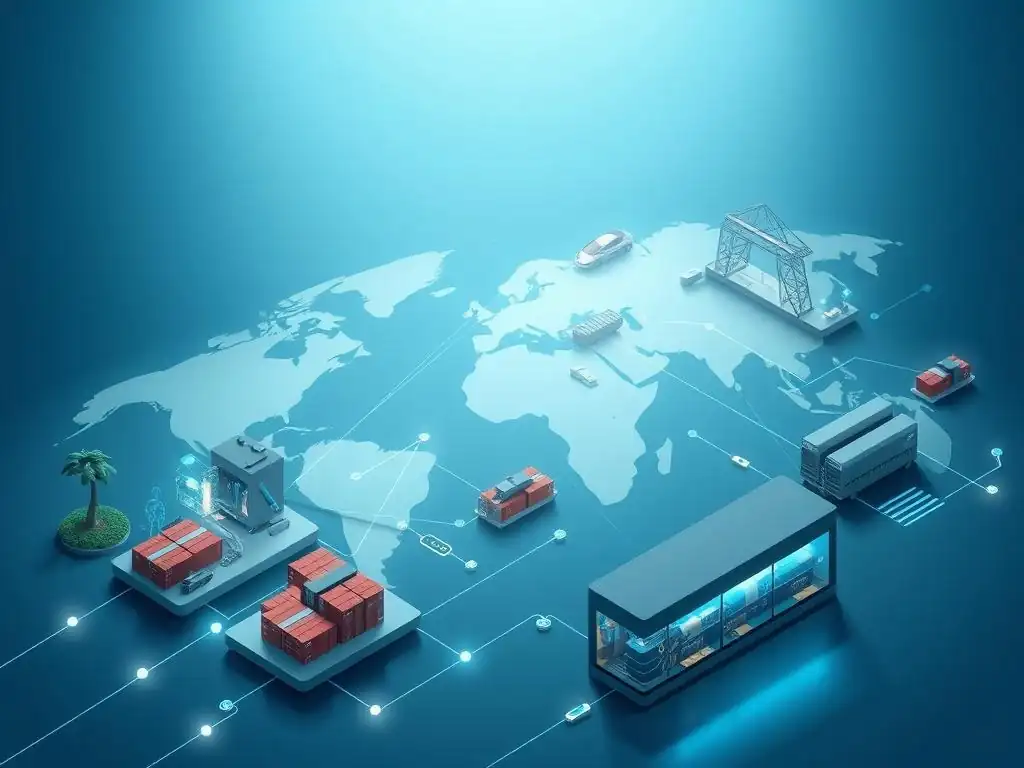
Maersk and IBM's TradeLens: Streamlining Global Trade and Logistics
One of the most prominent examples of blockchain in supply chain is TradeLens, a platform developed by Maersk and IBM. Launched commercially in 2018, TradeLens aims to digitize and streamline global container logistics, which traditionally relies on mountains of paper documentation and fragmented communication. The platform uses blockchain to provide a shared, immutable record of transactions and events across the shipping journey, accessible to permissioned parties like shippers, carriers, freight forwarders, customs authorities, and port operators.
TradeLens has demonstrated tangible benefits, including reducing the time required for documentation processing and improving visibility into cargo movements. While initial adoption faced challenges related to network effects and industry collaboration, the platform has onboarded a significant number of carriers, ports, and other ecosystem participants. This case study illustrates the potential for blockchain to create industry-wide platforms that connect disparate parties and overcome systemic inefficiencies, representing a significant area for blockchain supply chain investment strategies focused on large-scale logistics transformation.
Walmart's Food Traceability Initiative: Enhancing Food Safety and Transparency
Walmart's initiative to use blockchain for food traceability is another widely cited success story, particularly within the food safety domain. Following an E. coli outbreak linked to romaine lettuce, Walmart mandated its leafy green suppliers to upload data onto a blockchain-based system built on Hyperledger Fabric. This system tracks the product from the farm through various intermediaries to the store shelf.
The primary achievement of this initiative was dramatically reducing the time it takes to trace a product back to its origin farm. As mentioned earlier, what previously took days now takes mere seconds. This capability is vital during food safety incidents, allowing for faster and more targeted recalls, minimizing public health risks and economic losses. Walmart's case demonstrates the power of blockchain to enforce standards and improve critical processes within a specific, high-stakes supply chain segment, highlighting the potential for blockchain supply chain investment strategies focused on specific industry verticals like food and agriculture.
Overcoming Challenges in Blockchain Supply Chain Investment
Addressing Regulatory Uncertainty and Compliance
Navigating the evolving regulatory landscape is a significant challenge for blockchain supply chain projects and, by extension, for investors. Regulations regarding data privacy (like GDPR), cross-border data flow, digital signatures, and the legal status of smart contracts are still being defined or interpreted in many jurisdictions. This uncertainty can create legal risks and require platforms to be adaptable to different regional requirements.
Companies operating in this space must prioritize compliance by designing solutions with built-in privacy features, obtaining necessary certifications, and engaging with legal experts to understand and adhere to current and anticipated regulations. For investors, assessing a project's approach to compliance and its ability to navigate regulatory hurdles is crucial. Investing in companies that actively participate in shaping industry standards and regulations can be a strategic move within broader blockchain supply chain investment strategies.
Tackling Interoperability Issues and Data Silos
One of the paradoxes of blockchain is that while it breaks down silos within a network, connecting different blockchain networks and integrating with legacy systems remains a challenge. Supply chains often involve multiple independent systems and potentially different blockchain platforms used by various partners. Ensuring seamless data flow and interoperability between these disparate systems is essential for widespread adoption and realizing the full potential of blockchain.
Projects must develop robust APIs (Application Programming Interfaces) and integration layers to connect with existing ERP, WMS, IoT platforms, and even other blockchain networks. Industry-wide standards for data formats and protocols are needed to facilitate smoother communication. Investors should look for projects that demonstrate a clear strategy for addressing interoperability, either through open standards, partnerships, or versatile integration tools. Overcoming these technical and organizational barriers is key to scaling blockchain supply chain solutions.
Managing Scalability and Performance Requirements
Supply chains generate vast amounts of data, from transaction records to sensor readings. For blockchain to be a viable solution at scale, the underlying platform must be capable of handling a high volume of transactions quickly and cost-effectively. Many early blockchain platforms faced limitations in transaction speed and throughput, which are unacceptable for high-volume enterprise applications.
While significant progress has been made with newer enterprise-focused platforms and layer-2 scaling solutions, scalability remains a key technical consideration. Investors should evaluate the platform's architecture, consensus mechanism, and testing results to ensure it can meet the performance demands of the target supply chain application. Understanding the cost associated with processing transactions (e.g., gas fees on some public chains, or computational costs on private chains) is also important for assessing the economic viability of a solution at scale. Projects that have demonstrated successful pilots handling realistic transaction volumes provide more confidence for blockchain supply chain investment strategies.
The Role of Emerging Technologies in Blockchain Supply Chain
Integrating IoT for Real-Time Data Collection
The true power of blockchain in supply chain is unleashed when combined with other technologies. The Internet of Things (IoT) plays a critical role by providing the real-world data that populates the blockchain ledger. IoT sensors attached to goods, vehicles, or facilities can collect real-time information about location, temperature, humidity, shock, and other environmental conditions.
Integrating IoT data with blockchain ensures that the immutable record reflects the actual physical state and movement of goods. For example, a smart contract could automatically trigger a payment or an alert if temperature data recorded by an IoT sensor on a shipment of pharmaceuticals deviates outside an acceptable range, with the data permanently logged on the blockchain for audit purposes. Companies that effectively combine IoT data streams with blockchain's secure ledger capabilities create powerful, automated, and verifiable supply chain processes, representing compelling opportunities for blockchain supply chain investment strategies.
Leveraging AI for Predictive Analytics and Optimization
Artificial Intelligence (AI) can significantly enhance blockchain-enabled supply chains by adding layers of intelligence and automation beyond simple data recording. While blockchain provides the trust and transparency layer by ensuring data integrity, AI can analyze this verified data to identify patterns, predict potential disruptions, and optimize operations.
For instance, AI algorithms can analyze historical blockchain data on shipment movements and external factors (like weather or traffic) to predict potential delays or identify inefficient routes. AI can also analyze quality control data recorded on the blockchain to predict equipment failures or identify batches of raw materials likely to cause issues. By leveraging AI to gain insights from the secure, verifiable data provided by blockchain, companies can move from reactive problem-solving to proactive optimization. Investments in solutions that combine blockchain's integrity with AI's analytical power are increasingly relevant for modern blockchain supply chain investment strategies.
Exploring the Potential of Digital Twins for Supply Chain Visibility
Digital twins, virtual replicas of physical assets, processes, or systems, offer immense potential for enhancing supply chain visibility and management when integrated with blockchain. A digital twin of a supply chain could simulate the flow of goods, track the status of inventory, and monitor the performance of logistics assets in real-time.
Blockchain can provide the foundational layer of trust and verify data integrity for the digital twin. Data from IoT sensors, ERP systems, and other sources, once verified and recorded on a blockchain, can feed into the digital twin to ensure its accuracy and reliability. This allows for highly accurate simulations, predictive maintenance of assets, and optimization of complex operations based on trustworthy data. The combination of digital twins, IoT, AI, and blockchain creates a highly intelligent and transparent supply chain ecosystem, opening up new frontiers for blockchain supply chain investment strategies focused on advanced visualization and simulation capabilities.
Blockchain Supply Chain Investment: A Long-Term Perspective
The Future of Decentralized Supply Chains and Investment Opportunities
Looking ahead, the trend points towards increasingly decentralized and autonomous supply chains, where blockchain serves as the foundational layer of trust and coordination. In this future, smart contracts could automate complex multi-party agreements, decentralized autonomous organizations (DAOs) could manage aspects of procurement or logistics, and tokenization could facilitate fractional ownership or financing of goods in transit.
This vision of decentralized supply chains opens up new investment opportunities beyond traditional equity or venture capital. Investors might explore opportunities in utility or security tokens associated with decentralized supply chain protocols, or participate in decentralized finance (DeFi) platforms offering financing solutions for supply chain participants based on verifiable blockchain data. While these areas are still nascent, they represent the cutting edge of blockchain supply chain investment strategies and the potential future trajectory of the market.
Preparing for the Next Wave of Blockchain Innovation in Supply Chain
The blockchain supply chain space is rapidly evolving. Investors should prepare for the next wave of innovation, which may include advancements in:
- Interoperability solutions: Protocols and standards that allow different blockchains and legacy systems to communicate seamlessly.
- Zero-Knowledge Proofs (ZKPs): Privacy-enhancing technologies that allow verification of data or transactions without revealing the underlying sensitive information, crucial for competitive supply chains.
- Layer-2 Scaling: Solutions that increase transaction throughput and reduce costs on underlying blockchain networks.
- Decentralized Identity: Solutions for verifying the identity of participants and assets in a supply chain without relying on a single central authority.
Staying informed about these technological advancements and understanding how they might impact existing or create new blockchain supply chain investment strategies is vital for long-term success in this dynamic market.
Conclusion: Capitalizing on the Blockchain Supply Chain Revolution
Investing in blockchain for supply chain management offers compelling opportunities but requires careful consideration. Key takeaways for investors include:
- Blockchain provides tangible value in supply chains by enhancing transparency, traceability, efficiency, and security.
- Diverse investment areas exist, from platform providers to application developers and integration service providers.
- Thorough due diligence is essential, focusing on the technology's scalability and security, the team's expertise, and the market's demand and competitive dynamics.
- Specific sectors like food, pharma, manufacturing, and logistics show strong potential for blockchain adoption and growth.
- Integration with technologies like IoT, AI, and digital twins amplifies blockchain's impact.
- Navigating regulatory uncertainty and technical challenges like interoperability and scalability are critical for project success.
[ ] Understand the specific problem the blockchain solution addresses.
[ ] Evaluate the maturity and suitability of the chosen blockchain platform.
[ ] Assess the team's combined expertise in supply chain and blockchain.
[ ] Analyze the market size and competitive advantages.
[ ] Consider the project's strategy for regulatory compliance and interoperability.
[ ] Explore opportunities in specific high-growth industry verticals.
Building a Diversified Blockchain Supply Chain Investment Portfolio
Given the nascent nature and specific risks associated with individual blockchain supply chain ventures, building a diversified investment portfolio is a prudent strategy. This could involve investing across different segments (platforms, applications, services), different industry verticals (food, pharma, logistics), and potentially different stages of company development (early-stage startups vs. more mature companies).
A diversified approach helps mitigate risks associated with single-point failures, technological obsolescence, or market adoption challenges within a specific niche. As the market matures, blockchain supply chain investment strategies will likely evolve, with increasing focus on established platforms, proven applications, and companies demonstrating clear paths to profitability and widespread adoption. Capitalizing on the blockchain supply chain revolution requires a long-term perspective, continuous learning, and a strategic approach to identifying and backing the ventures poised to transform global commerce.
Frequently Asked Questions
### What are the main benefits of using blockchain in supply chain management that attract investors?
Blockchain offers enhanced transparency and traceability within supply chains. This leads to improved efficiency, reduced fraud, and increased consumer trust, making it an attractive investment area.
### Which specific sectors within the supply chain are currently seeing the most blockchain investment?
Sectors like food and beverage, pharmaceuticals, and luxury goods are experiencing significant blockchain adoption. This is driven by the need for provenance tracking and combating counterfeiting.
### What are some common "Blockchain supply chain investment strategies" that investors are employing?
Investors are focusing on companies developing blockchain platforms, supply chain solutions, and consulting services related to blockchain implementation. They are also investing in early-stage startups with innovative approaches.
### What are the biggest regulatory hurdles or risks associated with investing in blockchain supply chain solutions?
Lack of clear global regulations and data privacy concerns pose significant risks. Interoperability between different blockchain networks also presents a challenge.
### How can investors assess the long-term viability of a blockchain supply chain investment opportunity?
Assess the scalability and security of the blockchain solution. Evaluate the team's expertise and the market demand for the specific supply chain application.
Final Reflection: Embracing the Decentralized Future of Supply Chains
The insights shared throughout this guide underscore a crucial reality: blockchain technology is no longer a futuristic concept, but a tangible force reshaping global supply chains. The potential for increased transparency, efficiency, and security that blockchain offers is not just theoretical; it's actively being realized in various sectors, creating unprecedented investment opportunities for those willing to embrace the decentralized future.
This shift towards blockchain-integrated supply chains is profoundly impacting the way we understand and interact with the movement of goods and services. The ability to trace products from origin to consumer with immutable accuracy fosters trust and accountability, ultimately leading to a more ethical and sustainable global economy. The future of supply chains is not about faster, cheaper, or even more efficient; it's about building resilient, transparent, and collaborative ecosystems.
- Unknown
As you consider the investment strategies outlined in this guide, remember that you are not just investing in technology; you are investing in a future where supply chains are more resilient, transparent, and equitable. Take the knowledge you've gained and explore the growth sectors highlighted, but more importantly, consider how you can contribute to building a more responsible and sustainable global economy through informed blockchain supply chain investment strategies. The future is decentralized, and your participation is vital in shaping its direction.
Unleash the Potential: Transform Supply Chains with Blockchain!
Thank you for exploring the future of supply chain investment with us. We hope this guide has highlighted how blockchain can revolutionize industries and create new opportunities. Now, it’s time to take action and leverage these emerging trends.
Here’s how you can deepen your understanding and become a leader in blockchain-driven supply chain innovation:
- Critically assess your current investment portfolio to identify areas where blockchain technology could add value and present new opportunities.
- Explore and share your insights! Comment below with a growth sector you believe will see the most blockchain adoption in the coming year.
- Sign up for the Blockchain Trends newsletter to stay informed with exclusive insights, expert analysis, and updates on the latest developments in blockchain.
In your opinion, which blockchain-based supply chain solution has the greatest potential to generate significant returns over the next three to five years? Share your thoughts in the comments below!
Leave a Reply