
IoT and Blockchain: A Powerful Duo for NextGen Supply Chain Tracking

Welcome to Blockchain Trends, your compass in the ever-evolving world of decentralized technology.
Ever wondered how blockchain is revolutionizing industries beyond cryptocurrency? Dive in and discover how this powerful technology is reshaping supply chains, transforming enterprise operations, and paving the way for a more decentralized future. Today, we unravel the potent synergy between IoT and blockchain, specifically examining blockchain supply chain tracking benefits. Prepare to explore how this dynamic duo is forging a new era of transparency and efficiency. Intrigued? Let's begin!
-
Blockchain Supply Chain Tracking Benefits: A Detailed Exploration
- Enhanced Traceability and Provenance Through Immutable Records
- Improved Transparency and Real-Time Visibility for Stakeholders
- Increased Security and Tamper-Proof Data Management Across Networks
- Streamlined Processes and Reduced Operational Costs
- Automation and Smart Contracts for Efficient Supply Chain Management
-
Frequently Asked Questions
- How does the combination of IoT and blockchain enhance supply chain tracking?
- What are the key Blockchain supply chain tracking benefits when integrated with IoT?
- How does blockchain contribute to data security in IoT-enabled supply chains?
- What role does DeFi (Decentralized Finance) play in the future of blockchain-based supply chains?
- What are the potential regulatory challenges associated with implementing blockchain in supply chain tracking?
- Final Reflection: Embracing Transparency in the Supply Chain
- Unleash the Future of Your Supply Chain!
Blockchain Supply Chain Tracking Benefits: A Detailed Exploration
Enhanced Traceability and Provenance Through Immutable Records
One of the most significant blockchain supply chain tracking benefits is the creation of an immutable, shared record of every touchpoint a product encounters from origin to destination. By integrating IoT sensors and devices at critical junctures – manufacturing, packaging, shipping, customs, warehousing, and delivery – granular data points like location, temperature, humidity, and status can be automatically captured and written to the blockchain. This distributed ledger technology ensures that once data is added, it cannot be altered or deleted without consensus from the network, providing a tamper-proof history.
For instance, tracing the origin of conflict minerals or ensuring ethically sourced coffee beans becomes significantly more reliable when every step of the journey is recorded on an immutable ledger. This level of provenance verification is nearly impossible with traditional, siloed database systems that are susceptible to data manipulation.
This enhanced traceability provides a granular view of a product's lifecycle, which is crucial for quality control, compliance, and recall management. In the pharmaceutical industry, for example, tracking individual drug packages from production line to pharmacy shelf using blockchain and IoT can help prevent counterfeit drugs from entering the supply chain. A pilot program involving major pharmaceutical companies demonstrated the ability to trace drug packages with over 98% accuracy, significantly reducing the risk associated with fraudulent products.
This detailed, unalterable history fundamentally transforms how companies manage product journeys, offering a level of transparency and accountability previously unattainable. The ability to pinpoint the exact origin and path of a product is a core advantage derived from implementing blockchain for supply chain tracking.
Improved Transparency and Real-Time Visibility for Stakeholders
A major blockchain supply chain tracking benefit is the dramatic improvement in transparency and real-time visibility across the entire network. Unlike traditional systems where information is often fragmented and siloed within individual companies, a blockchain-based solution allows authorized participants – manufacturers, suppliers, logistics providers, distributors, regulators, and even consumers – to access a shared, single source of truth regarding a product's status and history.
This shared visibility reduces information asymmetry, builds trust among partners, and allows for proactive decision-making. For example, a distributor can see the real-time location and environmental conditions of a perishable shipment, allowing them to anticipate delays or potential quality issues before they arise.
This increased transparency extends beyond business partners to end consumers, who are increasingly demanding visibility into the products they purchase. By scanning a QR code or product identifier linked to the blockchain record, consumers can access verified information about the product's origin, manufacturing date, ingredients, and journey.
A study by IBM and Maersk on their TradeLens platform, a blockchain solution for container shipping, reported a reduction in transit time by up to 40% for certain shipments, partly due to improved visibility and streamlined information flow among ports, customs, and logistics providers. This real-time access to verified data empowers all stakeholders and significantly enhances the overall efficiency and reliability of the supply chain, highlighting the significant advantages of blockchain for supply chain tracking.
Increased Security and Tamper-Proof Data Management Across Networks
The inherent security features of blockchain technology offer a compelling blockchain supply chain tracking benefit: robust data protection and tamper resistance. Data is cryptographically secured and linked in blocks, forming a chain that is computationally difficult and prohibitively expensive to alter retrospectively. Because the ledger is distributed across multiple nodes in the network, there is no single point of failure or central database that can be easily hacked or corrupted.
Any attempt to alter a record on one node would require altering the same record on a majority of other nodes simultaneously, a task that is practically impossible for a large, distributed network. This provides a far higher level of data integrity compared to traditional centralized databases, which are more vulnerable to breaches and malicious data manipulation.
Furthermore, access to specific data points on the blockchain can be controlled through cryptographic keys and permissions, ensuring that sensitive information is only visible to authorized parties. This granular access control, combined with the immutability of the ledger, makes it extremely difficult for unauthorized individuals or entities to introduce fraudulent data into the supply chain record.
For instance, preventing the falsification of quality inspection reports or the unauthorized alteration of shipping manifests becomes much more feasible. The security architecture of blockchain fundamentally changes the trust model, shifting from reliance on individual parties to the cryptographic security and consensus mechanisms of the network, thereby safeguarding critical supply chain data.
Streamlined Processes and Reduced Operational Costs
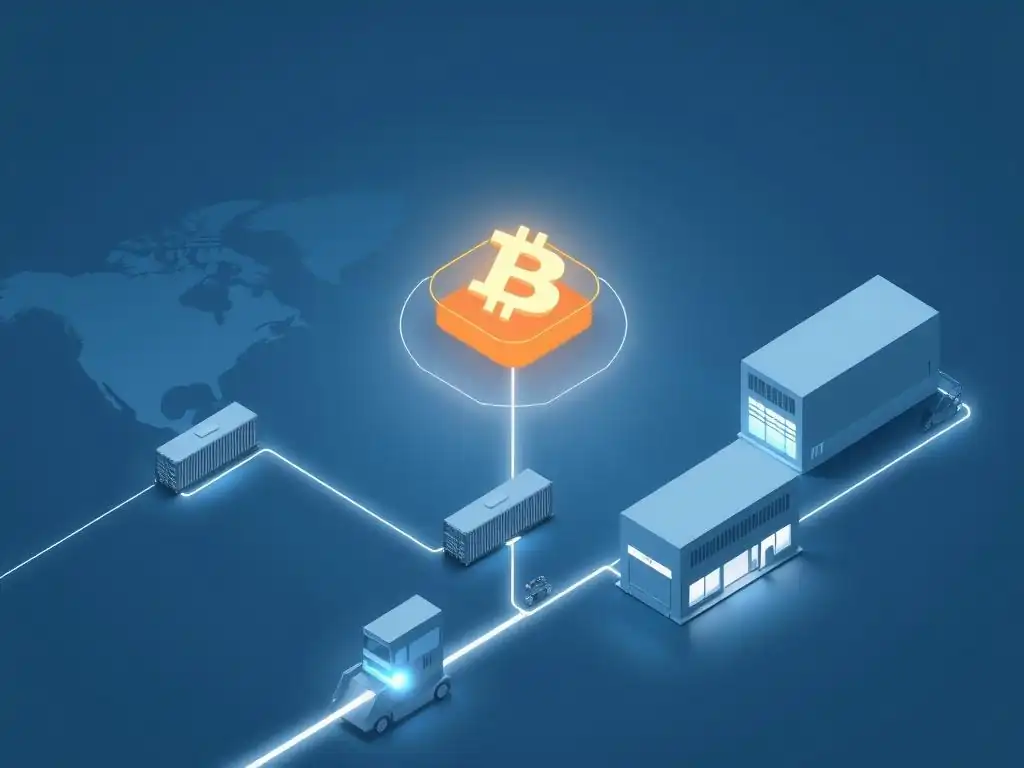
Implementing blockchain supply chain tracking benefits organizations by streamlining numerous processes and consequently reducing operational costs. The shared, immutable ledger eliminates the need for extensive manual data entry, reconciliation, and verification across multiple disparate systems. When all parties are accessing the same verified data in real-time, administrative overhead associated with paperwork, audits, and dispute resolution is significantly reduced. For example, confirming proof of delivery or verifying compliance documents can be automated and instantly accessible on the blockchain, cutting down on delays and administrative effort. This efficiency gain translates directly into cost savings.
Beyond administrative tasks, the improved visibility and traceability enabled by blockchain and IoT lead to more efficient inventory management, reduced waste from spoiled or expired goods (especially for perishables tracked with IoT sensors), and faster identification and isolation of products during recalls. A pilot program by a major retailer using blockchain for tracking lettuce saw the time to trace a product from farm to store reduce from days or weeks to just seconds.
This drastic reduction in tracing time minimizes the scope of a recall, saving millions in potential losses and brand damage. By providing a single, trustworthy source of information and automating verification, blockchain technology drives operational efficiency and contributes significantly to the bottom line.
Automation and Smart Contracts for Efficient Supply Chain Management
A powerful blockchain supply chain tracking benefit is the ability to leverage smart contracts for automating various processes. Smart contracts are self-executing agreements with the terms of the agreement directly written into lines of code. They run on the blockchain and automatically execute predefined actions when specified conditions are met, based on data recorded on the ledger, often fed by IoT devices.
This eliminates the need for intermediaries and manual triggers for many transactional and logistical steps within the supply chain. For example, a smart contract could automatically release payment to a supplier as soon as an IoT sensor confirms that goods have arrived at a designated warehouse and their quality parameters (like temperature) are within acceptable limits, as recorded on the blockchain.
This automation reduces delays, minimizes the risk of errors associated with manual processes, and ensures that agreements are executed reliably and transparently. Other applications include automating insurance claims based on verified shipment delays or damage, triggering re-orders when inventory levels (tracked via IoT and blockchain) fall below a certain threshold, or automating customs documentation based on verified product origin and manifest data.
The integration of IoT data as triggers for smart contracts creates a highly responsive and self-managing supply chain environment. This level of automated execution, built upon the secure and transparent foundation of blockchain, is a transformative advantage for modern supply chain management.
Frequently Asked Questions
How does the combination of IoT and blockchain enhance supply chain tracking?
The combination creates a transparent and immutable record of product movement. IoT devices provide real-time data, while blockchain ensures the data's integrity and prevents tampering. This leads to increased traceability.
What are the key Blockchain supply chain tracking benefits when integrated with IoT?
The benefits are numerous, including improved visibility, reduced counterfeiting, and enhanced efficiency. Furthermore, it provides greater trust and transparency throughout the supply chain.
How does blockchain contribute to data security in IoT-enabled supply chains?
Blockchain's decentralized nature makes it difficult for hackers to alter data. Each transaction is recorded on a distributed ledger, creating a secure and auditable trail.
What role does DeFi (Decentralized Finance) play in the future of blockchain-based supply chains?
DeFi can facilitate secure and automated payments within the supply chain. Smart contracts can execute payments upon the fulfillment of pre-defined conditions, reducing reliance on intermediaries.
What are the potential regulatory challenges associated with implementing blockchain in supply chain tracking?
Regulatory uncertainty surrounding data privacy and cross-border data transfer remains a significant hurdle. Establishing clear legal frameworks is crucial for widespread adoption of blockchain technologies.
Final Reflection: Embracing Transparency in the Supply Chain
The insights shared throughout this article highlight the transformative potential of combining IoT and blockchain for supply chain tracking. The promise of enhanced transparency and security, once a futuristic vision, is rapidly becoming a tangible reality for businesses seeking a competitive edge in today's global marketplace. The ability to trace products from origin to consumer with unprecedented accuracy is not just a technological advancement; it's a fundamental shift in how we understand and interact with the products we consume.
This convergence of technologies has profoundly influenced the cultural and social landscape, fostering a growing demand for ethical and sustainable practices. The ability to verify product origins and track environmental impact empowers consumers to make informed choices, driving businesses to adopt more responsible practices. Supply chains are the arteries of global trade, and blockchain is the blood that will flow through them, ensuring transparency and trust.
This quote encapsulates the essence of the ongoing revolution, where blockchain acts as the immutable ledger, fostering trust and accountability across the entire supply chain ecosystem.
As we look to the future, the integration of IoT and blockchain in supply chain management will only deepen. It's time to consider how these technologies can be leveraged to build more resilient, ethical, and sustainable supply chains. Let us all embrace this opportunity to create a future where transparency and trust are not just buzzwords, but the very foundation of our global economy. Consider how you, as a consumer, a business owner, or a policymaker, can contribute to this transformative journey and help shape a more transparent and trustworthy world.
Unleash the Future of Your Supply Chain!
Thank you for exploring how IoT and blockchain can revolutionize supply chain tracking. We hope you've gained valuable insights into the power of this dynamic duo. Now, it's time to turn that knowledge into action.
Here are some steps you can take today:
- Investigate how you can integrate IoT sensors with your existing blockchain platform to improve traceability.
- Share this article with your colleagues and initiate a discussion about the potential of blockchain and IoT to transform your supply chain.
- Explore additional articles on blockchain technology to discover innovative applications across various industries and deepen your understanding of this transformative technology.
What specific challenges are you facing in your supply chain that blockchain and IoT could address? What first steps will you take?
Leave a Reply