
Logistics 4.0 and Blockchain: Driving Efficiency in the Smart Supply Chain


Welcome to Blockchain Trends, your compass in the rapidly evolving world of decentralized technology!
Delve into the transformative power of blockchain beyond cryptocurrencies. This week, we're unpacking how this groundbreaking technology is revolutionizing industries, from decentralized finance (DeFi) to enterprise solutions. Are you ready to discover how blockchain supply chain logistics efficiency is reshaping the future of commerce? Prepare to explore the cutting-edge advancements and regulatory landscapes that are defining the future of decentralized systems, starting with Logistics 4.0. Let's unlock the potential together...
Logistics 4.0 and Blockchain: Driving Efficiency in the Smart Supply Chain
- Introduction: The Convergence of Logistics 4.0 and Blockchain Technology
- The Challenges Facing Traditional Supply Chains
- Blockchain's Solution: Enhancing Logistics Efficiency with Distributed Ledger Technology
-
Use Cases: Blockchain Applications for Enhanced Supply Chain Logistics Efficiency
- Tracking and Tracing Goods: Real-Time Visibility Across the Supply Chain
- Smart Contracts for Automated Payments and Dispute Resolution in Logistics
- Improving Inventory Management with Blockchain-Enabled Data Sharing
- Enhancing Cold Chain Logistics with Temperature and Location Tracking
- Maersk and IBM's TradeLens: Revolutionizing Global Trade with Blockchain
- Benefits of Blockchain Implementation for Logistics 4.0
- Overcoming the Challenges of Blockchain Adoption in Logistics
- The Future of Blockchain and Logistics 4.0: A Smart and Connected Supply Chain
- Conclusion: Embracing Blockchain for a More Efficient and Transparent Supply Chain Future
-
Frequently Asked Questions
- What is the primary benefit of using blockchain in supply chain logistics?
- How can blockchain improve the efficiency of supply chain logistics?
- What are some examples of enterprise applications of blockchain in supply chain logistics beyond tracking?
- What are the regulatory challenges surrounding the implementation of blockchain in global supply chains?
- How will blockchain impact the future of decentralized supply chain systems?
- Final Reflection: Embracing the Transparent Future of Logistics
- Unveil the Future: Supercharge Your Supply Chain Now!
Introduction: The Convergence of Logistics 4.0 and Blockchain Technology
Defining Logistics 4.0: The Smart Revolution in Supply Chains
Logistics 4.0 represents the next evolutionary stage in supply chain management, characterized by the deep integration of advanced digital technologies. This paradigm shift moves beyond simple automation to create intelligent, interconnected, and highly adaptive supply chain networks. Key enablers include the Internet of Things (IoT), Artificial Intelligence (AI), big data analytics, cloud computing, and robotics, all working together to provide real-time visibility, predictive capabilities, and autonomous decision-making across the entire value chain. The goal is to achieve unprecedented levels of efficiency, flexibility, and responsiveness to meet the demands of a volatile global market.
This transformation fundamentally alters how goods and information flow, enabling smart warehouses that manage inventory autonomously, connected transportation systems that optimize routes in real-time based on traffic and weather, and predictive maintenance for logistics assets. The focus is on creating a seamless, data-driven ecosystem where every component, from raw materials to final delivery, is monitored and optimized. This smart revolution in supply chains is paving the way for enhanced operational performance, reduced costs, and improved customer satisfaction, setting the stage for technologies like blockchain to further amplify these benefits.
Understanding Blockchain's Role in Enhancing Supply Chain Management
Blockchain technology, at its core, is a decentralized, distributed ledger that records transactions across many computers. Once a transaction is recorded, it is extremely difficult to alter, creating an immutable and transparent history of events. In the context of supply chain management, this distributed ledger can track the movement and status of goods, record ownership transfers, and store relevant documents and certifications. Unlike traditional centralized databases, a blockchain shared among supply chain participants eliminates single points of failure and reduces the need for intermediaries, fostering direct peer-to-peer interactions.
The integration of blockchain into supply chains offers a unique solution to long-standing issues such as lack of trust, opacity, and data silos. By providing a single, shared source of truth accessible to all authorized parties – manufacturers, logistics providers, distributors, and even regulators – blockchain enhances transparency and accountability. This shared ledger approach is particularly powerful when combined with the real-time data streams generated by Logistics 4.0 technologies like IoT sensors, creating a verifiable and tamper-proof record of events, which is crucial for driving blockchain supply chain logistics efficiency.
The Challenges Facing Traditional Supply Chains
Lack of Transparency and Traceability in Existing Systems
Traditional supply chains often suffer from a significant lack of end-to-end visibility. Information is typically siloed within individual company systems, making it difficult to track a product's journey comprehensively from origin to destination. When issues arise, such as delays, damage, or quality concerns, pinpointing the exact location or cause within a complex, multi-party network can be time-consuming and challenging. This opacity hinders effective decision-making and makes it difficult for stakeholders to trust the data they receive from partners.
This limited transparency also makes it hard to verify the authenticity and ethical sourcing of products. Consumers and regulators increasingly demand proof of origin, fair labor practices, and environmental compliance. Without a unified, transparent system, validating these claims relies on manual processes and paper trails, which are prone to errors and fraud. The lack of a clear, verifiable history for each product unit creates vulnerabilities that impact everything from brand reputation to regulatory compliance, highlighting a major area where blockchain supply chain logistics efficiency can provide a solution.
Inefficiencies and Delays in Cross-Border Logistics
Cross-border logistics is notoriously complex, involving numerous parties, diverse regulatory requirements, and extensive documentation. The process often relies on manual data entry, paper-based documents like bills of lading, customs declarations, and certificates of origin. This leads to significant delays at ports and borders, increased administrative costs, and a higher risk of errors. Discrepancies in documentation or miscommunication between parties can halt shipments for days or even weeks, impacting delivery times and overall supply chain fluidity.
Furthermore, the lack of standardized digital processes across different countries and organizations exacerbates these inefficiencies. Each party in the chain – freight forwarders, customs brokers, carriers, port authorities, banks – operates on its own systems, requiring data to be repeatedly re-entered or manually transferred. This fragmentation creates friction points that slow down the movement of goods and capital, directly affecting the cost and reliability of international trade. Improving blockchain supply chain logistics efficiency is critical for streamlining these complex cross-border operations.
The Cost of Errors and Counterfeiting in Supply Chain Operations
Errors in traditional supply chain processes, from incorrect order entries to mislabeled shipments and documentation mistakes, can lead to substantial financial losses. Correcting these errors requires time and resources, often involving rework, reshipping, and delayed payments. For example, a single documentation error in international shipping can cost hundreds or even thousands of dollars to rectify and cause significant delays. The cumulative effect of such errors across a large supply chain can amount to millions annually.
Counterfeiting is another major threat, estimated to cost the global economy billions of dollars each year. Fake goods, particularly in industries like pharmaceuticals, luxury goods, and electronics, not only erode brand value and revenue but can also pose serious health and safety risks. Traditional methods of tracking and verifying products are often insufficient to combat sophisticated counterfeiters. The inability to definitively prove a product's authenticity and origin throughout its journey makes it vulnerable to infiltration by fraudulent items, underscoring the need for enhanced security measures like those offered by blockchain supply chain logistics efficiency solutions.
Blockchain's Solution: Enhancing Logistics Efficiency with Distributed Ledger Technology
Increased Transparency and Traceability Through Blockchain
Blockchain provides an unprecedented level of transparency and traceability by creating a shared, immutable record of every transaction and event in a product's lifecycle. As goods move through the supply chain, each step – including origin, handling, location changes, and ownership transfers – can be recorded on the blockchain. This distributed ledger is accessible to authorized participants, allowing them to view the real-time status and history of a shipment, provided they have permission. This eliminates information silos and creates a single source of truth that all parties can trust.
For instance, a food producer can record the origin of ingredients, processing details, and transportation conditions on a blockchain. Distributors and retailers can then verify this information instantly, and in the event of a recall, they can quickly trace the affected products back to their source, significantly reducing response time from weeks to potentially hours. This enhanced visibility not only builds trust among partners but also enables better compliance with regulations and provides consumers with verifiable information about the products they purchase, fundamentally improving blockchain supply chain logistics efficiency.
Streamlining Processes and Reducing Delays with Smart Contracts
Smart contracts are self-executing contracts with the terms of the agreement directly written into code. They run on a blockchain and automatically execute actions when predefined conditions are met. In logistics, smart contracts can automate various processes that traditionally require manual intervention and paperwork, such as payments, customs clearance triggers, and quality checks. For example, a smart contract could automatically release payment to a carrier once GPS data from IoT sensors confirms that the shipment has arrived at its destination and temperature logs meet the specified conditions.
By automating these conditional processes, smart contracts eliminate delays caused by manual verification, paperwork processing, and payment approvals. They reduce the need for intermediaries, lowering transaction costs and speeding up the flow of goods and finances. This automation minimizes human error and ensures that contractual obligations are met precisely as agreed, leading to smoother operations and improved predictability in the supply chain. Implementing smart contracts is a key strategy for achieving significant blockchain supply chain logistics efficiency gains.
Enhanced Security and Reduced Counterfeiting with Immutable Records
The inherent characteristics of blockchain technology, particularly its immutability and cryptographic security, make it a powerful tool against fraud and counterfeiting. Each transaction or data entry added to the blockchain is cryptographically linked to the previous one, forming a chain. Once a block of transactions is added, it cannot be altered or deleted without invalidating the entire chain, which would require an impossible amount of computing power to achieve on a widely distributed network. This makes the historical record highly secure and tamper-proof.
By assigning a unique digital identity to each product or shipment and recording its journey on the blockchain, companies can create a verifiable chain of custody. This allows any party with access to check the authenticity of a product by scanning a QR code linked to its blockchain record.
If a product's recorded history deviates from the expected path or shows signs of tampering, it can be flagged as potentially counterfeit or compromised. This enhanced security measure provides a strong deterrent to fraudsters and gives businesses and consumers confidence in the legitimacy of goods, thereby boosting blockchain supply chain logistics efficiency and reliability.
Use Cases: Blockchain Applications for Enhanced Supply Chain Logistics Efficiency
Tracking and Tracing Goods: Real-Time Visibility Across the Supply Chain
One of the most direct and impactful applications of blockchain in logistics is enhancing the tracking and tracing of goods. By linking physical products to digital tokens or records on a blockchain, companies can create a dynamic, real-time view of their location, status, and condition as they move through the supply chain. IoT sensors attached to shipments can automatically feed data – such as GPS location, temperature, humidity, and shock – directly onto the blockchain, creating an undeniable record accessible to all relevant parties.
This real-time visibility empowers logistics managers to identify bottlenecks, predict potential delays, and react quickly to disruptions. For example, a global shipping company tracking containers on a blockchain can monitor their progress across oceans and through ports, providing accurate estimated times of arrival to customers. This granular level of traceability, from the origin of raw materials to the final delivery point, significantly improves operational control and enables proactive management of the supply chain, contributing directly to blockchain supply chain logistics efficiency.
Smart Contracts for Automated Payments and Dispute Resolution in Logistics
Smart contracts are revolutionizing financial transactions and dispute resolution within logistics networks. Instead of waiting for manual verification and invoicing processes, payments can be triggered automatically based on verifiable events recorded on the blockchain. For instance, a carrier's payment could be automatically released from an escrow account via a smart contract once the blockchain confirms successful delivery, verified by location data and a digital signature from the recipient.
Furthermore, smart contracts can embed rules for dispute resolution. If a shipment is delayed beyond a certain threshold, or if temperature logs show a breach of agreed-upon conditions, the smart contract can automatically initiate a penalty payment or trigger a predefined dispute resolution process, potentially involving an oracle service to verify external data. This automation reduces the time and cost associated with manual invoicing, payment processing, and lengthy dispute negotiations, streamlining financial flows and enhancing blockchain supply chain logistics efficiency.
Improving Inventory Management with Blockchain-Enabled Data Sharing
Effective inventory management relies on accurate, timely, and shared data across multiple locations and parties. Blockchain can improve inventory processes by providing a shared, immutable ledger for tracking inventory levels, movements, and ownership changes in near real-time. When goods are received, shipped, or transferred between warehouses or partners, these transactions are recorded on the blockchain, creating a transparent and verifiable history of inventory flow.
This shared view of inventory data reduces discrepancies between different parties' records, minimizing stockouts and overstocking. It allows for more accurate forecasting and planning by providing a reliable snapshot of available goods across the entire network. For example, a manufacturer sharing inventory data on a blockchain with its suppliers and distributors can enable just-in-time delivery strategies more effectively. By improving the accuracy and accessibility of inventory information, blockchain enhances operational efficiency and contributes significantly to blockchain supply chain logistics efficiency.
Enhancing Cold Chain Logistics with Temperature and Location Tracking
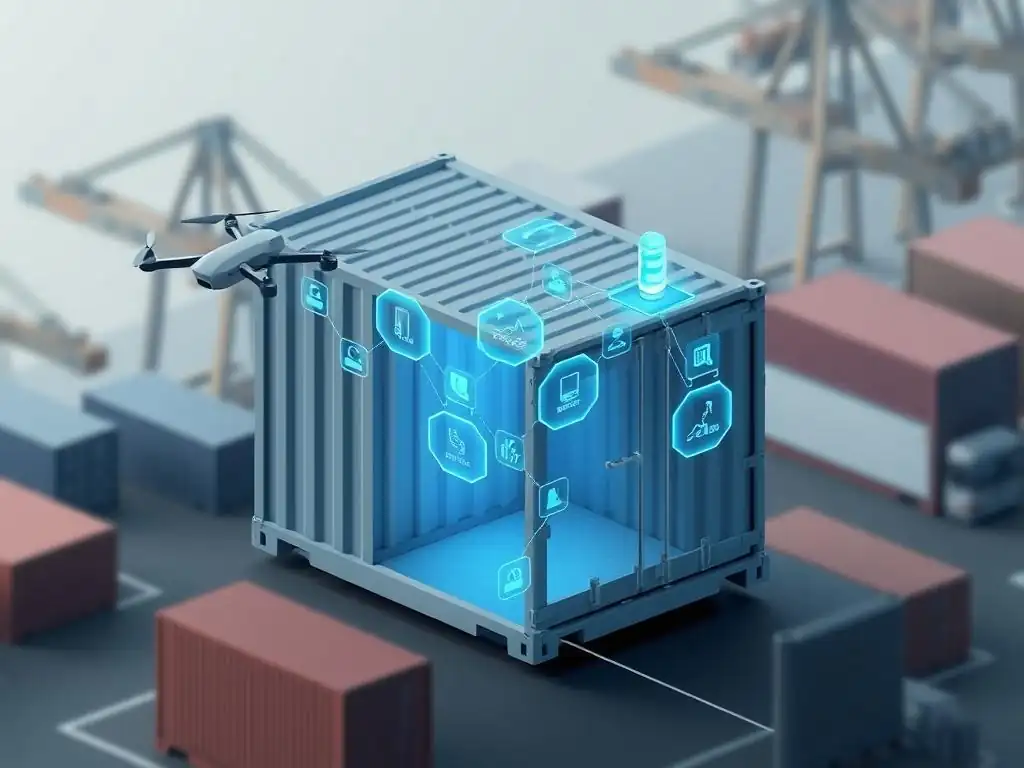
Cold chain logistics, crucial for transporting sensitive goods like food, pharmaceuticals, and chemicals, requires strict monitoring of environmental conditions, particularly temperature. Failure to maintain the required temperature range can lead to spoilage, rendering products unusable and causing significant financial losses and potential health risks. Traditional methods often rely on manual checks or data loggers that provide historical data but lack real-time visibility and tamper-proof recording.
Integrating IoT temperature sensors with a blockchain allows for continuous, automated recording of temperature data onto an immutable ledger. This creates a trustworthy and verifiable history of the temperature conditions throughout the entire transit. If the temperature deviates outside the acceptable range, a notification can be sent immediately, and the event is permanently recorded on the blockchain. This not only ensures product quality and safety but also provides clear evidence in case of disputes, enhancing accountability and boosting blockchain supply chain logistics efficiency in critical areas like pharma distribution.
Maersk and IBM's TradeLens: Revolutionizing Global Trade with Blockchain
A prominent real-world example of blockchain's application in logistics is TradeLens, a platform developed by Maersk and IBM. Launched in 2018, TradeLens is a blockchain-based shipping solution designed to promote more efficient and secure global trade. It aims to connect various participants in the global supply chain – including carriers, ports and terminals, customs authorities, freight forwarders, and logistics providers – onto a single, shared platform.
TradeLens utilizes blockchain to provide a neutral, trusted network for sharing immutable transaction data related to container shipments. This includes information like bill of lading data, customs releases, sensor data from IoT devices, and payment statuses.
By providing a shared source of truth and automating data flows, TradeLens has demonstrated the potential to significantly reduce the manual effort involved in tracking shipments and managing documentation. Reports have suggested that the platform can cut down the time it takes for goods to travel from shipper to consignee by up to 40% by reducing delays associated with documentation handling, clearly illustrating the impact on blockchain supply chain logistics efficiency at a global scale.
Benefits of Blockchain Implementation for Logistics 4.0
Improved Efficiency and Reduced Costs in Supply Chain Operations
Implementing blockchain solutions can lead to substantial improvements in operational efficiency and significant cost reductions across the supply chain. By automating processes through smart contracts, eliminating manual data entry, and reducing the need for intermediaries, companies can streamline workflows and decrease administrative overhead. The enhanced transparency and traceability provided by blockchain minimize errors, reduce the time spent investigating discrepancies, and speed up transaction settlements.
For example, automating customs documentation and clearance processes using blockchain and smart contracts can drastically cut down on port delays, which are a major source of cost in international trade. Furthermore, reduced instances of fraud, counterfeiting, and product spoilage directly translate into lower financial losses. Studies and pilot programs have indicated potential cost savings ranging from 10% to 25% or even more in specific logistics processes by leveraging blockchain technology, demonstrating a clear path to improved blockchain supply chain logistics efficiency.
Enhanced Security and Reduced Fraudulent Activities
Blockchain's inherent security features, such as immutability and cryptography, make it highly resistant to tampering and fraud. The distributed nature of the ledger means that there is no single point of attack, making it extremely difficult for malicious actors to alter transaction records undetected. This provides a robust defense against various types of fraud, including documentation forgery, product counterfeiting, and unauthorized data manipulation.
By creating a secure, verifiable history for each product, blockchain significantly reduces the risk of counterfeit goods entering the legitimate supply chain. Companies can definitively prove the authenticity and origin of their products, protecting their brand reputation and ensuring consumer safety. The ability to securely share sensitive data with trusted partners without fear of unauthorized alteration builds a more secure and reliable supply chain ecosystem, enhancing overall blockchain supply chain logistics efficiency through increased trust and integrity.
Increased Transparency and Trust Among Supply Chain Partners
Trust is fundamental to effective supply chain collaboration, but traditional systems often lack the transparency needed to build strong trust among disparate parties. Blockchain addresses this by providing a shared, immutable ledger that offers a single, verifiable source of truth accessible to all authorized participants. Every transaction and event recorded on the blockchain is transparent to those with permission, eliminating information asymmetry and fostering accountability.
This shared visibility builds confidence among supply chain partners, as they can independently verify the status and history of goods and transactions. It reduces the need for costly audits and reconciliation processes. For instance, a manufacturer, logistics provider, and retailer sharing data on a blockchain can all see the same, accurate information about shipment location, condition, and ownership transfer in real-time. This increased transparency cultivates stronger relationships, improves collaboration, and is essential for unlocking further blockchain supply chain logistics efficiency.
Better Data Management and Enhanced Decision-Making
Logistics 4.0 generates vast amounts of data from IoT devices, sensors, and various systems. Blockchain provides a secure and reliable method for capturing, storing, and sharing this critical data. By creating an immutable record of data points – such as temperature logs, location pings, quality inspection results, and handling events – blockchain ensures data integrity and trustworthiness. This reliable data foundation is essential for effective analysis and decision-making.
With access to accurate, real-time, and verifiable data on the blockchain, logistics managers can gain deeper insights into supply chain performance. They can analyze historical data to identify patterns, predict potential issues, optimize routes, manage inventory more effectively, and respond faster to disruptions. This data-driven approach, powered by the secure and transparent nature of blockchain, enables more informed and strategic decisions that drive continuous improvement and enhance blockchain supply chain logistics efficiency.
Overcoming the Challenges of Blockchain Adoption in Logistics
Scalability Issues and Technological Limitations
One of the significant challenges facing widespread blockchain adoption in logistics is scalability. Public blockchains, like Bitcoin or Ethereum (though Ethereum is improving with Eth2), can process a limited number of transactions per second, which may not be sufficient for the high volume of transactions generated by large, complex supply chains. While private or permissioned blockchains offer better throughput, they still face limitations compared to traditional centralized databases designed for massive transaction volumes.
Furthermore, integrating blockchain technology with existing legacy systems within logistics companies and across different partners can be technically complex and require significant investment. Ensuring seamless data flow between diverse platforms, including ERP systems, warehouse management systems (WMS), and transportation management systems (TMS), presents significant technological hurdles. Addressing these scalability and integration challenges is crucial for realizing the full potential of blockchain supply chain logistics efficiency.
Interoperability Challenges Between Different Blockchain Platforms
The blockchain landscape is fragmented, with numerous platforms and protocols emerging, each with its own standards and capabilities. This lack of interoperability between different blockchain networks poses a significant challenge for creating seamless, end-to-end supply chain solutions. A consortium using one type of permissioned blockchain might find it difficult to share data directly and efficiently with another partner using a different platform, creating new data silos.
Achieving true blockchain supply chain logistics efficiency requires the ability to connect disparate networks and allow for the smooth exchange of information and assets. Efforts are underway to develop interoperability standards and protocols, but widespread adoption is still some time away. Until different blockchain platforms can easily communicate and transact with each other, implementing solutions that span the entire value chain involving multiple independent parties will remain complex.
Regulatory Uncertainty and Legal Considerations
The regulatory landscape surrounding blockchain technology is still evolving across different jurisdictions. Clarity is needed on how existing laws regarding data privacy, digital signatures, smart contracts, and liability apply to blockchain-based systems. For instance, the legal status of smart contracts and how disputes are resolved when code execution leads to unintended consequences can be ambiguous in many legal frameworks.
Furthermore, international logistics involves navigating a patchwork of regulations in different countries. Harmonizing blockchain-based processes and data sharing across borders requires addressing diverse legal requirements related to data residency, customs declarations, and electronic documentation. Navigating this regulatory uncertainty and establishing clear legal frameworks are essential steps for fostering widespread adoption and ensuring the legality and enforceability of blockchain-based logistics solutions, which is necessary for maximizing blockchain supply chain logistics efficiency.
Ensuring Data Privacy and Security on Blockchain
While blockchain provides immutability, privacy is a key consideration, especially in permissioned networks used for enterprise supply chains. Sensitive commercial data, such as pricing, customer information, or proprietary processes, needs to be shared only with authorized parties. Ensuring granular control over data access and visibility on the blockchain is paramount to protect competitive advantage and comply with data protection regulations like GDPR.
Security also remains a continuous concern. Although the blockchain ledger itself is highly secure, the points where data enters or leaves the blockchain (oracles, APIs) can be vulnerable. Ensuring the integrity of data fed onto the blockchain from external sources like IoT sensors is critical. Robust identity management and access control mechanisms are necessary to prevent unauthorized access and ensure that only verified and accurate data is recorded, which is fundamental for maintaining the trust and security required for blockchain supply chain logistics efficiency.
The Future of Blockchain and Logistics 4.0: A Smart and Connected Supply Chain
The Role of IoT and AI in Further Enhancing Blockchain-Based Logistics Solutions
The convergence of Blockchain, IoT, and AI is set to create truly intelligent and autonomous supply chains. IoT devices will continue to provide the real-time, verifiable data stream – location, condition, performance metrics – that populates the blockchain ledger. This immutable data foundation, secured by blockchain, is the perfect input for AI algorithms. AI can analyze this vast dataset to identify patterns, predict demand fluctuations, optimize routes dynamically, anticipate equipment failures, and even automate complex decision-making processes.
For example, AI can use blockchain-verified IoT data on shipment locations and traffic conditions to reroute trucks automatically via smart contracts if delays are predicted. It can analyze temperature logs on the blockchain to predict the remaining shelf life of perishable goods. This synergy creates a proactive rather than reactive supply chain, where AI-powered insights are acted upon automatically through blockchain-based smart contracts, leading to unprecedented levels of automation and optimization that significantly enhance blockchain supply chain logistics efficiency.
Exploring Decentralized Finance (DeFi) for Supply Chain Financing
Decentralized Finance (DeFi), built on blockchain technology, offers new possibilities for financing and payments within the supply chain. Traditional supply chain finance often involves complex processes, intermediaries, and delays, particularly for small and medium-sized enterprises (SMEs). DeFi platforms can enable faster, more transparent, and potentially lower-cost financing options, such as invoice financing or dynamic discounting, directly on the blockchain.
Using blockchain, verifiable records of shipments, deliveries, and invoices can be used as tokenized assets or collateral within DeFi protocols. Smart contracts can automate payment terms based on agreed-upon conditions, reducing the need for manual processing and potentially enabling instant payments upon delivery verification. This can improve cash flow for suppliers and carriers, reduce financing costs, and add another layer of financial efficiency to the blockchain-enabled supply chain, further boosting blockchain supply chain logistics efficiency beyond just operational movements.
The Rise of Permissioned Blockchains and Industry-Specific Consortia
While public blockchains are suitable for some applications, the future of enterprise logistics on blockchain likely lies with permissioned or private blockchains and industry-specific consortia. Permissioned blockchains offer better control over participants, enhanced privacy, and higher transaction throughput, which are crucial for enterprise-level operations dealing with sensitive commercial data and high transaction volumes.
Industry consortia, like TradeLens (shipping) or similar initiatives emerging in pharmaceuticals or food, bring together key players within a specific sector to build and govern a shared blockchain network. This collaborative approach facilitates the development of common standards, ensures that the platform meets the specific needs of the industry, and encourages widespread adoption among competitors and partners alike. The growth of these focused, collaborative networks is essential for creating the critical mass required for blockchain to truly transform logistics and deliver widespread blockchain supply chain logistics efficiency.
Conclusion: Embracing Blockchain for a More Efficient and Transparent Supply Chain Future
The integration of Blockchain technology with the principles and technologies of Logistics 4.0 is not just an incremental upgrade; it represents a fundamental shift towards building smarter, more efficient, and profoundly more transparent supply chains. By providing an immutable, shared ledger, blockchain tackles core challenges like lack of visibility, inefficiency in cross-border operations, and the costly threats of errors and counterfeiting. Its ability to enable real-time traceability, automate processes via smart contracts, and enhance data security lays a robust foundation for the future of logistics.
While challenges related to scalability, interoperability, regulatory clarity, and data privacy remain, ongoing technological advancements and collaborative industry efforts are steadily addressing these hurdles. The synergy with technologies like IoT and AI promises further automation and intelligence, while exploring DeFi applications opens new avenues for financial efficiency. Embracing blockchain is becoming increasingly essential for companies aiming to thrive in the complex global marketplace, offering a clear path to unlocking significant blockchain supply chain logistics efficiency, building greater trust among partners, and creating a truly connected and resilient supply network for the future.
Frequently Asked Questions
What is the primary benefit of using blockchain in supply chain logistics?
The primary benefit is enhanced transparency and traceability throughout the entire supply chain, leading to increased trust and accountability. This helps reduce fraud and improve efficiency.
How can blockchain improve the efficiency of supply chain logistics?
Blockchain facilitates real-time tracking of goods, automates processes like payments through smart contracts, and reduces paperwork, leading to faster and more efficient operations.
What are some examples of enterprise applications of blockchain in supply chain logistics beyond tracking?
Beyond tracking, blockchain enables secure data sharing among stakeholders, streamlines customs clearance, and facilitates efficient inventory management leading to cost savings.
What are the regulatory challenges surrounding the implementation of blockchain in global supply chains?
Regulatory challenges include lack of standardized frameworks, concerns about data privacy and security, and the need for cross-border collaboration to ensure compliance across different jurisdictions.
How will blockchain impact the future of decentralized supply chain systems?
Blockchain will empower more autonomous and resilient supply chains by fostering direct interactions between participants and eliminating intermediaries, leading to greater efficiency and control.
Final Reflection: Embracing the Transparent Future of Logistics
The journey through Logistics 4.0 and the integration of blockchain technology reveals a powerful truth: the future of supply chains hinges on transparency and efficiency. What was once a fragmented and opaque system is rapidly evolving into a connected, secure, and optimized network, driven by the transformative potential of blockchain. This shift isn't just about technological advancement; it's about building trust and resilience in a globalized world.
The impact of this evolution extends far beyond mere cost savings. The ability to trace goods from origin to consumer, verify authenticity, and streamline processes has profound implications for ethical sourcing, environmental sustainability, and consumer confidence. The supply chain of the future will not just be about moving goods, but about moving information, trust, and value.
This quote encapsulates the essence of the blockchain revolution, highlighting its capacity to redefine the very fabric of commerce and societal well-being.
As we stand at the cusp of this new era, consider the role you can play in shaping its trajectory. How can you advocate for greater transparency in your own supply chains? How can you leverage technology to build a more sustainable and equitable future? The power to drive positive change lies within each of us. Embrace the potential of blockchain and Logistics 4.0, and let us collectively build a supply chain that is not only efficient but also ethical, resilient, and truly smart.
Unveil the Future: Supercharge Your Supply Chain Now!
Thanks for diving into the world of Logistics 4.0 and blockchain! You've now got a solid grasp on how these cutting-edge technologies are revolutionizing supply chain efficiency. Now it's time to put that knowledge into action and see real-world results.
Here’s how you can immediately leverage what you've learned:
- Strategize Your First Blockchain Pilot Project: Identify a specific, manageable area in your current supply chain where blockchain could provide the biggest impact. Focus on transparency and traceability!
- Explore open-source blockchain platforms: Experiment with platforms like Hyperledger Fabric or Corda to understand the intricacies of blockchain integration in logistics.
- Share this article with colleagues and industry peers: Spark a discussion and foster collaboration on implementing these innovative solutions within your network.
What's the single biggest improvement you envision blockchain bringing to your organization's supply chain? Share your thoughts in the comments below!
Leave a Reply