
Outdated vs. Optimized: Blockchain's Efficiency Gains Compared to Traditional Methods


Welcome to Blockchain Trends, your guide to unlocking the transformative potential of blockchain technology! Ever wondered exactly how much more efficient blockchain can be compared to traditional methods? Our article, " Outdated vs. Optimized: Blockchain's Efficiency Gains Compared to Traditional Methods," delves into a detailed Blockchain efficiency gains comparison, specifically within the realm of Blockchain for Supply Chain Management. Prepare to be surprised by the data – and consider how these improvements could revolutionize your own processes. Curious about real-world applications and quantifiable results? Let's explore the exciting possibilities!
Outdated vs. Optimized: Blockchain's Efficiency Gains Compared to Traditional Methods
- Introduction: The Need for Enhanced Efficiency in Supply Chain Logistics
- Blockchain Efficiency Gains Comparison: A Detailed Analysis
- Traditional Methods vs. Blockchain: A Side-by-Side Comparison
- Case Studies: Real-World Examples of Blockchain Efficiency in Logistics
- Blockchain's Impact on Supply Chain Management: Beyond Efficiency
- Overcoming Challenges to Blockchain Adoption in Logistics
- The Future of Blockchain in Supply Chain Efficiency
-
Frequently Asked Questions
- What are some key areas where blockchain technology offers efficiency gains compared to traditional methods?
- How does blockchain-based DeFi (Decentralized Finance) contribute to Blockchain efficiency gains comparison?
- What role does smart contract automation play in achieving efficiency gains within blockchain systems?
- Are there specific enterprise applications where blockchain demonstrably improves efficiency over traditional systems?
- What regulatory challenges might hinder the realization of full Blockchain efficiency gains comparison?
- Final Reflection: Embracing Blockchain's Efficiency Revolution
- Uncover Blockchain's Power: Optimize Your Future!
Introduction: The Need for Enhanced Efficiency in Supply Chain Logistics
Supply chain logistics, the backbone of global commerce, faces persistent challenges that hinder efficiency and increase costs. Traditional methods, often reliant on fragmented systems and manual processes, struggle to keep pace with the demands of a rapidly evolving global market. The need for enhanced efficiency is paramount, driven by pressures to reduce operational expenditures, improve delivery times, and meet increasing customer expectations for transparency and speed.
The complexities of modern supply chains involve numerous intermediaries, disparate data silos, and a lack of real-time visibility. These issues lead to delays, errors, disputes, and ultimately, significant inefficiencies. Industries are actively seeking transformative technologies that can streamline operations, foster collaboration, and unlock new levels of performance, making a detailed blockchain efficiency gains comparison crucial for understanding potential improvements.
Understanding the Current Challenges in Traditional Supply Chain Management
Traditional supply chain management is plagued by several deep-seated issues rooted in its historical reliance on legacy systems and manual processes. A primary challenge is the lack of end-to-end visibility. Goods move across multiple parties—manufacturers, distributors, logistics providers, customs—each often using their own isolated systems. This creates data silos, making it difficult to track the journey of a product in real-time. For instance, confirming the provenance of a specific batch of goods might require navigating through emails, faxes, and scattered databases across several companies, potentially taking days.
Furthermore, traditional methods suffer from high administrative overhead and transaction costs. Each handoff point often involves paperwork, verification steps, and manual data entry, which are prone to errors and delays. Disputes over shipments, quantities, or quality can be protracted and costly to resolve due to incomplete or conflicting records. A report by the World Economic Forum in 2020 estimated that inefficiencies in global supply chains cost businesses billions annually, with administrative costs alone potentially accounting for up to one-fifth of the total transport cost for some goods.
Blockchain as a Catalyst for Supply Chain Optimization: An Overview
Blockchain technology presents a compelling solution to many of these traditional challenges, acting as a powerful catalyst for supply chain optimization. By providing a decentralized, immutable, and transparent ledger, blockchain can create a single, shared source of truth for all participants in a supply chain network. This shared ledger records every transaction and movement of goods, from origin to destination, in a way that is verifiable by all authorized parties.
The core principle of blockchain—distributed consensus and immutability—fundamentally changes how data is managed and trusted within a supply chain. Instead of relying on centralized databases controlled by individual entities, data is distributed across the network, making it highly resistant to tampering or fraud. This inherent security and transparency lay the groundwork for significant efficiency gains, improved collaboration, and enhanced accountability, paving the way for a meaningful blockchain efficiency gains comparison against traditional methods.
Blockchain Efficiency Gains Comparison: A Detailed Analysis
The implementation of blockchain technology in supply chain logistics yields measurable improvements across various operational metrics. This section delves into a detailed blockchain efficiency gains comparison, highlighting how blockchain surpasses traditional methods in key areas. The gains are not merely incremental but often represent a fundamental shift in how supply chain processes are executed and managed.
Examining specific aspects like transaction costs, transparency, and speed reveals the transformative power of blockchain. The shift from siloed, manual processes to a shared, automated, and secure digital infrastructure unlocks efficiencies previously unattainable. This comparative analysis provides concrete insights into the practical benefits derived from adopting blockchain solutions in logistics.
Reduced Transaction Costs with Blockchain Technology
One of the most significant efficiency gains with blockchain in supply chain logistics is the substantial reduction in transaction costs. Traditional supply chains involve multiple intermediaries—banks, brokers, customs agents, freight forwarders—each adding their own fees and requiring manual processing steps. These layers contribute significantly to the overall cost of moving goods. Blockchain's ability to facilitate peer-to-peer transactions and automate processes directly addresses these cost centers.
Industry reports suggest that integrating blockchain can reduce transaction costs in supply chains by 15-20% or more. For instance, a pilot program involving a major shipping company reportedly saw a reduction in documentation processing costs by up to 80% by moving to a blockchain-based platform. These cost savings are derived from eliminating redundant data entry, reducing paperwork, and minimizing the need for third-party verification services.
Eliminating Intermediaries and Streamlining Processes
Blockchain enables the direct exchange of information and value between parties in a supply chain, effectively removing many traditional intermediaries. Instead of relying on banks for escrow services or brokers to facilitate communication, smart contracts on a blockchain can automatically execute agreements when predefined conditions are met. For example, a payment can be automatically released to a supplier once a shipment's arrival is verified on the blockchain ledger.
This disintermediation streamlines complex processes like customs clearance, freight billing, and payment processing. By providing a single, shared ledger accessible to relevant parties (with appropriate permissions), the need for multiple checks and reconciliations across disparate systems is drastically reduced. This automation and direct interaction lead to faster processing times and fewer manual touchpoints, significantly boosting overall efficiency.
Lowering Fees and Improving Cost Transparency
The reduction in intermediaries directly translates to lower fees associated with transactions. Traditional cross-border payments, for instance, often involve multiple correspondent banks, each levying fees. Blockchain-based payment solutions can facilitate near-instantaneous, low-cost transfers directly between payer and payee. This not only reduces banking fees but also improves cash flow for businesses involved in the supply chain.
Furthermore, blockchain enhances cost transparency. All transaction fees recorded on the blockchain are visible to participants, preventing hidden costs and providing a clear audit trail of financial flows. This transparency allows businesses to better understand and manage their expenditures within the supply chain, contributing to greater financial efficiency and predictability.
Enhanced Transparency and Traceability in Logistics
Transparency and traceability are critical for modern supply chains, driven by consumer demand for ethical sourcing, regulatory requirements, and the need for efficient recalls. Traditional methods often lack the granular, real-time visibility required for true end-to-end traceability. Information about a product's origin, journey, and handling is often fragmented or delayed.
Blockchain fundamentally improves transparency and traceability by creating an immutable and shared record of every event in a product's lifecycle. Each step, from raw material sourcing to manufacturing, packaging, shipping, and delivery, can be recorded as a transaction on the blockchain. This distributed ledger ensures that all authorized parties have access to the same, verified information, providing unprecedented visibility.
Real-Time Tracking and Monitoring of Goods
By integrating IoT devices (like sensors for temperature, location, or humidity) with a blockchain platform, the physical movement and condition of goods can be recorded in near real-time. As a shipment moves, sensor data and logistical updates (e.g., arrival at a port, departure from a warehouse) are recorded as transactions on the blockchain. This allows stakeholders—manufacturers, logistics providers, customers—to track the status and condition of goods with high precision.
This real-time monitoring capability is a significant improvement over traditional systems that rely on periodic updates or manifest checks. It allows for proactive management of potential issues, such as rerouting shipments facing delays or addressing temperature excursions for perishable goods before they spoil. This level of visibility reduces uncertainty and improves operational responsiveness.
Immutable Records for Improved Accountability
The immutable nature of blockchain records ensures that once data is added to the ledger, it cannot be altered or deleted. This creates a tamper-proof history of every product and transaction. If a dispute arises regarding the handling of goods, the blockchain provides an indisputable audit trail that clearly shows who did what and when.
This immutability significantly improves accountability among supply chain partners. Each participant is responsible for the data they add to the chain, and this data serves as a permanent record. This increased accountability reduces fraud, minimizes disputes, and builds trust among stakeholders, contributing to a more efficient and reliable supply chain operation.
Increased Speed and Automation in Supply Chain Operations
Manual processes and reliance on paper documentation in traditional supply chains inherently lead to delays. Tasks like verifying purchase orders, confirming shipments, initiating payments, and resolving discrepancies can take days or even weeks. Blockchain technology, combined with smart contracts, introduces a high degree of automation and accelerates many of these time-consuming operations.
The speed increase comes from replacing manual, sequential steps with automated, concurrent, and trustless processes. Information is shared instantly across the network, and actions can be triggered automatically based on predefined conditions. This shift from a linear, document-heavy workflow to a dynamic, data-driven process results in significant time savings throughout the supply chain.
Smart Contracts for Automated Processes
Smart contracts are self-executing contracts with the terms of the agreement directly written into code. They reside on the blockchain and automatically execute when specific conditions are met. In a supply chain context, smart contracts can automate various processes:
- Automatically releasing payment to a supplier upon confirmation of goods delivery (recorded on the blockchain).
- Triggering the next step in a workflow (e.g., customs clearance) once required documentation is uploaded and verified on the chain.
- Initiating insurance claims automatically if sensor data indicates damage or spoilage during transit.
This automation eliminates manual intervention for routine tasks, reducing human error and speeding up the entire process flow. A smart contract can execute in seconds or minutes, whereas a manual process might take hours or days.
Faster Payment Processing and Settlement
Traditional international trade often involves complex and slow payment processes, including letters of credit and multiple banking steps that can take days or weeks to settle. Blockchain-based payment solutions and the use of stablecoins or cryptocurrencies can facilitate near-instantaneous payment processing and settlement.
When payment terms are integrated into a smart contract, funds can be released automatically and immediately upon fulfillment of contract conditions, such as proof of delivery or quality inspection confirmation recorded on the blockchain. This drastically reduces the time goods or services are in transit without payment being settled, improving cash flow for suppliers and reducing financial risk for buyers. Some blockchain platforms report settlement times reduced from days to mere minutes.
Traditional Methods vs. Blockchain: A Side-by-Side Comparison
Comparing traditional supply chain methods directly against blockchain implementations reveals stark differences in efficiency, transparency, and cost. Traditional systems, built incrementally over decades, often struggle with interoperability, data integrity, and speed. Blockchain, designed with data sharing and security in mind, offers a fundamentally different paradigm.
This side-by-side analysis highlights the limitations inherent in legacy systems and demonstrates how blockchain provides practical solutions that address these bottlenecks. The contrast underscores the potential for significant blockchain efficiency gains comparison points across critical operational metrics.
Traditional Supply Chain Limitations: Inefficiencies and Bottlenecks
Traditional supply chains are characterized by several key limitations that create inefficiencies and bottlenecks:
- Data Silos: Information is scattered across different companies and disparate systems, making it difficult to get a unified view.
- Lack of Transparency: Limited visibility into the origin, movement, and status of goods for all stakeholders.
- Manual Processes: Heavy reliance on paper documents and manual data entry, leading to delays and errors.
- High Transaction Costs: Multiple intermediaries and complex processes inflate costs.
- Slow Dispute Resolution: Resolving issues is time-consuming due to fragmented data and lack of a single source of truth.
- Limited Automation: Many processes require human intervention, slowing down operations.
These limitations combine to create a system that is often slow, expensive, prone to errors, and lacking in the agility required for modern global trade.
How Blockchain Addresses These Limitations: A Practical Approach
Blockchain provides a practical framework for overcoming the limitations of traditional supply chains:
- Shared, Distributed Ledger: Creates a single, immutable source of truth accessible to all authorized participants, breaking down data silos.
- Enhanced Visibility: Provides real-time, end-to-end tracking and monitoring of goods, improving transparency.
- Automation via Smart Contracts: Automates routine transactions and processes, reducing manual effort and errors.
- Reduced Intermediaries: Facilitates direct peer-to-peer interactions, lowering transaction costs.
- Immutable Records: Provides a clear, tamper-proof audit trail for fast and reliable dispute resolution.
- Increased Speed: Streamlines processes and accelerates transactions through automation and instant data sharing.
By implementing these features, blockchain transforms a fragmented, manual process into a cohesive, automated, and transparent ecosystem, achieving significant blockchain efficiency gains.
Comparative Analysis: Transaction Time - Minutes/Hours vs. Days/Weeks
A key area for blockchain efficiency gains comparison is transaction time, particularly for complex processes like cross-border trade finance or multi-party verification.
- Blockchain Value: Transactions involving multiple parties and verification steps, such as trade finance agreements or supply chain payments triggered by delivery confirmation, can be reduced from days or even weeks to minutes or hours using blockchain and smart contracts. For example, a typical letter of credit process can take 5-10 days or longer, while a blockchain-based smart contract equivalent could settle in under an hour once conditions are met.
- Traditional Value: Traditional methods for multi-party transactions often involve extensive paperwork, manual checks, and sequential approvals across different organizations, typically taking several days, and sometimes weeks, to complete.
Comparative Analysis: Inventory Accuracy - 99%+ vs. 85-95%
Inventory accuracy is vital for efficient logistics, impacting everything from warehousing costs to order fulfillment rates. Errors in traditional systems often stem from manual counting, data entry mistakes, and delays in updating stock levels across different locations.
- Blockchain Value: By providing a real-time, immutable record of goods movement, ownership transfer, and stock levels across the supply chain, blockchain can significantly improve inventory accuracy. Integrating IoT sensors and automated scanning systems that record data directly to the blockchain can push accuracy rates towards 99% or higher by minimizing manual errors and providing instant updates.
- Traditional Value: Inventory accuracy in traditional systems typically ranges from 85% to 95%, depending on the industry and operational rigor. Discrepancies often arise from shipping errors, receiving errors, misplaced items, and delays in updating centralized systems.
Case Studies: Real-World Examples of Blockchain Efficiency in Logistics
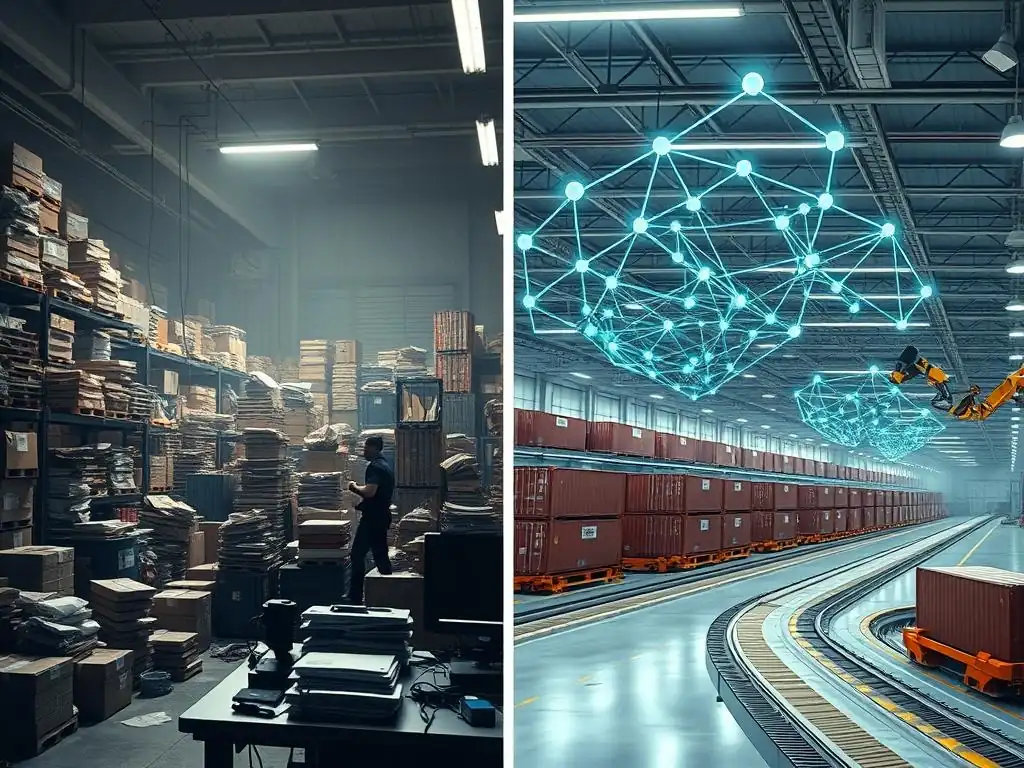
Real-world implementations provide the most compelling evidence of blockchain efficiency gains comparison benefits. Several major companies have piloted and deployed blockchain solutions to address specific challenges in their supply chains, demonstrating quantifiable improvements. These case studies illustrate the practical application of blockchain principles and the tangible results achieved.
Examining these examples allows us to move beyond theoretical potential and see how blockchain is actively transforming logistics operations for global enterprises.
Case Study 1: Maersk - Implementing Blockchain for TradeLens Platform
Maersk, the world's largest container shipping line, partnered with IBM to develop TradeLens, a blockchain-based platform aimed at digitizing and streamlining global supply chains. The platform connects shippers, ports and terminals, customs authorities, ocean carriers, and inland transportation providers on a single, shared ledger. The goal was to replace paper-based processes and fragmented communication with a transparent, secure, and efficient digital system.
TradeLens focuses on improving visibility, reducing documentation handling times, and fostering collaboration among the numerous parties involved in international trade. By recording shipment data, customs releases, and transportation updates on the blockchain, all participants gain access to the same, verified information in real-time, reducing delays caused by information lags or discrepancies.
Results and Quantifiable Efficiency Improvements
The implementation of TradeLens has demonstrated significant blockchain efficiency gains. Pilot tests and early deployments showed a substantial reduction in the time required for documentation processing. For a single shipment, the time taken to process shipping instructions, bills of lading, and customs forms was reportedly reduced by up to 80%, from days to hours.
Furthermore, the platform improved the predictability of cargo movements and reduced instances of manual data entry errors. While specific aggregated cost savings are proprietary, the reported time reductions in documentation and improved data accuracy inherently lead to lower administrative costs and faster cargo flow through ports and customs, contributing to overall supply chain efficiency.
Case Study 2: Walmart - Leveraging Blockchain for Food Traceability
Walmart, a global retail giant, implemented a blockchain solution to enhance the traceability of food products, particularly leafy greens, in its supply chain. Following foodborne illness outbreaks traced back to contaminated produce, Walmart recognized the urgent need to improve the speed and accuracy of tracing products back to their origin. Traditional methods, relying on paper records and manual lookups, often took days or weeks to trace a product through the supply chain.
Walmart mandated that its suppliers of leafy greens upload data about their produce onto a blockchain-based ledger. This data includes information about the farm, processing facility, and shipping details. When a product is scanned at a store or distribution center, its journey through the supply chain is recorded on the blockchain, creating an immutable record.
Results and Quantifiable Efficiency Improvements
The results of Walmart's blockchain implementation for food traceability were dramatic and highlighted significant blockchain efficiency gains comparison points against previous methods. The time required to trace a product from store back to farm was reduced from an average of 7 days using traditional methods to just 2.2 seconds using the blockchain system.
This drastic reduction in tracing time has critical implications for food safety, enabling faster identification and isolation of contaminated products during a recall event, thereby minimizing potential harm to consumers and financial losses for the company. The improved data integrity and accessibility also streamlined internal processes related to supply chain management and compliance.
Blockchain's Impact on Supply Chain Management: Beyond Efficiency
While efficiency gains are a primary driver for blockchain adoption in logistics, the technology's impact extends beyond mere operational speed and cost reduction. Blockchain also fundamentally enhances critical aspects like data security, stakeholder collaboration, and regulatory compliance, creating a more robust and trustworthy supply chain ecosystem.
These broader impacts contribute to a more resilient and adaptable supply chain, better equipped to handle disruptions and meet evolving demands. Understanding these additional benefits provides a holistic view of blockchain's transformative potential in logistics management.
Improved Data Security and Integrity
Data security is paramount in supply chains, where sensitive information about products, shipments, and partners is constantly exchanged. Traditional centralized databases are vulnerable to cyberattacks, data breaches, and internal tampering. Blockchain's decentralized architecture and cryptographic principles offer a superior level of data security and integrity.
Data on a blockchain is encrypted and distributed across multiple nodes in the network. Adding new data requires consensus among participants, and once added, the data is immutable. This makes it extremely difficult for malicious actors to alter historical records without being detected by the network. This inherent security reduces the risk of fraud, errors, and unauthorized data manipulation, ensuring that all participants are working with trustworthy information.
Enhanced Collaboration and Communication Among Stakeholders
Supply chains involve a multitude of stakeholders—manufacturers, suppliers, logistics providers, customs, banks, buyers—who often operate independently with limited visibility into each other's activities. This lack of seamless communication and collaboration can lead to delays, misunderstandings, and inefficiencies. Blockchain fosters enhanced collaboration by providing a shared, transparent platform.
By giving authorized parties access to a single, real-time ledger of supply chain events, blockchain facilitates better coordination and communication. Stakeholders can track the progress of goods, verify data, and react proactively to potential issues based on shared, reliable information. This shared visibility builds trust and enables more effective partnerships throughout the supply chain network.
Streamlined Regulatory Compliance and Reporting
Navigating the complex landscape of regulatory compliance and reporting requirements is a significant challenge in global logistics. Ensuring adherence to customs regulations, safety standards, and environmental mandates often involves extensive documentation and manual verification processes. Blockchain can significantly streamline these activities.
By recording compliance-related data (e.g., certifications, permits, inspection results) on the immutable ledger, blockchain creates an easily auditable and verifiable history. Regulators and auditors can be granted permission to access the relevant data on the chain, simplifying compliance checks and reducing the burden of manual reporting. This improved efficiency in compliance contributes to faster processing times and reduced administrative overhead.
Overcoming Challenges to Blockchain Adoption in Logistics
Despite the compelling blockchain efficiency gains comparison points, the widespread adoption of blockchain in logistics faces several significant hurdles. These challenges range from technical complexities to organizational resistance and regulatory uncertainty. Addressing these issues is crucial for unlocking the full potential of blockchain technology in supply chains.
Overcoming these obstacles requires careful planning, investment, collaboration, and a clear understanding of the specific requirements of the logistics industry.
Addressing Scalability Concerns
One of the primary technical challenges for blockchain in logistics is scalability. Public blockchains, while highly decentralized, can sometimes struggle to handle the high volume of transactions generated by large-scale supply chains. Processing thousands or millions of transactions per second, which is often required in global logistics, can strain the capacity of some blockchain architectures, leading to slower transaction times and higher costs.
Solutions to address scalability include using private or permissioned blockchains (like Hyperledger Fabric or R3 Corda) designed for enterprise use with higher transaction throughput, implementing layer-2 scaling solutions, or utilizing sharding techniques. Choosing the right blockchain architecture based on the specific needs and transaction volume of the supply chain is essential for ensuring performance.
Ensuring Interoperability with Existing Systems
Logistics companies and their partners rely on a myriad of legacy systems—Enterprise Resource Planning (ERP), Warehouse Management Systems (WMS), Transportation Management Systems (TMS), Electronic Data Interchange (EDI)—that have been built over decades. Integrating a new blockchain platform with these existing, often disparate, systems is a complex and costly undertaking.
Achieving interoperability requires developing robust Application Programming Interfaces (APIs) and middleware that can translate data between legacy systems and the blockchain ledger. Industry standards for data formats and communication protocols are also needed to ensure seamless data exchange across different platforms and participants within a blockchain network.
The regulatory landscape surrounding blockchain technology is still evolving in many jurisdictions. Uncertainty regarding the legal status of smart contracts, the handling of digital assets, data privacy regulations (like GDPR), and cross-border data flow can create hesitancy among businesses considering blockchain adoption.
Addressing regulatory uncertainty involves engaging with policymakers, participating in industry consortia to develop best practices, and building blockchain solutions that are designed with compliance in mind. As governments and international bodies develop clearer guidelines for blockchain technology, the path to adoption will become smoother.
The Future of Blockchain in Supply Chain Efficiency
The trajectory for blockchain in supply chain logistics points towards increasingly sophisticated and integrated applications. As the technology matures and initial challenges are overcome, we can expect blockchain to become a fundamental component of future supply chain infrastructure, driving unprecedented levels of efficiency, transparency, and automation.
The future holds exciting possibilities as emerging trends and innovations further enhance blockchain's capabilities and its role in transforming global logistics.
Emerging Trends and Innovations
Several emerging trends and innovations are poised to further amplify blockchain's impact on supply chain efficiency:
- Integration with IoT and AI: Tighter integration of blockchain with Internet of Things (IoT) devices for real-time data capture and Artificial Intelligence (AI) for predictive analytics and automated decision-making based on blockchain data.
- Decentralized Finance (DeFi) in Supply Chain: Utilizing DeFi protocols for faster, more flexible, and potentially lower-cost financing options within the supply chain, such as tokenized assets or automated invoice financing via smart contracts.
- Interchain Communication: Development of protocols that allow different blockchain networks to communicate and exchange data, improving interoperability across diverse supply chain ecosystems built on different platforms.
- Digital Twins: Creation of digital replicas of physical supply chain assets and processes, updated in real-time with data from IoT and recorded on the blockchain for enhanced monitoring, simulation, and optimization.
Predictions for Blockchain's Role in Transforming Logistics
Predictions for blockchain's role in transforming logistics are ambitious. Experts foresee a future where:
- End-to-end supply chain visibility becomes the norm, not the exception.
- Customs clearance and international trade documentation are largely automated, reducing transit times and costs.
- Supply chain finance is significantly streamlined and made more accessible through blockchain-based solutions.
- Counterfeiting and fraud are drastically reduced due to immutable provenance tracking.
- Supply chains become more resilient and responsive to disruptions through real-time data and automated responses via smart contracts.
The blockchain efficiency gains comparison will become even more favorable as the technology matures and adoption scales.
Preparing for a Blockchain-Enabled Supply Chain
Businesses looking to leverage blockchain for supply chain efficiency should begin preparing now. This involves:
- Education and Training: Understanding the fundamentals of blockchain technology and its specific applications in logistics.
- Pilot Programs: Starting with small-scale pilot projects focused on specific pain points (e.g., traceability for a particular product line, automating a specific payment process).
- Collaboration: Engaging with supply chain partners to explore shared blockchain solutions, as the benefits are maximized when multiple parties participate.
- Infrastructure Assessment: Evaluating existing IT infrastructure and identifying necessary upgrades or integration strategies.
- Talent Acquisition: Building internal expertise in blockchain technology and smart contract development.
Embracing blockchain is not just a technological upgrade; it's a strategic shift towards a more transparent, efficient, and collaborative future for supply chain management.
Frequently Asked Questions
What are some key areas where blockchain technology offers efficiency gains compared to traditional methods?
Blockchain offers efficiency gains in areas like supply chain management, reducing transaction costs, and improving data security and transparency, bypassing traditional intermediary processes.
How does blockchain-based DeFi (Decentralized Finance) contribute to Blockchain efficiency gains comparison?
DeFi platforms utilize blockchain to automate financial processes, leading to faster and cheaper transactions compared to traditional banking. This highlights a crucial Blockchain efficiency gains comparison example.
What role does smart contract automation play in achieving efficiency gains within blockchain systems?
Smart contracts automate processes, reducing the need for manual intervention and paperwork, leading to faster execution and decreased operational costs.
Are there specific enterprise applications where blockchain demonstrably improves efficiency over traditional systems?
Yes, supply chain tracking, identity management, and secure data sharing are examples where blockchain's transparency and immutability lead to significant efficiency improvements compared to traditional methods.
What regulatory challenges might hinder the realization of full Blockchain efficiency gains comparison?
Unclear regulations can create uncertainty and slow adoption, potentially limiting the full realization of efficiency gains. Standardized frameworks are needed to support wider adoption and optimal performance.
Final Reflection: Embracing Blockchain's Efficiency Revolution
The exploration of blockchain efficiency gains compared to traditional methods reveals a stark contrast, highlighting the urgent need for modernization in various sectors. The evidence presented underscores that while legacy systems struggle with inherent limitations, blockchain offers a pathway to streamlined processes, reduced costs, and enhanced transparency, making its adoption not just advantageous, but increasingly essential in today's rapidly evolving digital landscape.
The shift towards blockchain is not merely a technological upgrade; it represents a fundamental change in how we perceive and interact with data and value. This transformation resonates deeply, reminding us that progress often requires challenging established norms and embracing innovative solutions. The future is already here – it's just not evenly distributed.
- William Gibson. This quote perfectly encapsulates the current state, where the benefits of blockchain are becoming increasingly apparent, yet widespread adoption remains a journey we must actively pursue.
As we stand at the cusp of this technological revolution, let us not be passive observers. Instead, let us actively explore how blockchain can optimize our own spheres of influence, whether in our professional endeavors or personal lives. Consider the potential for increased efficiency, enhanced security, and greater transparency that blockchain offers, and ask yourself: how can I contribute to a future where these benefits are accessible to all? The time to embrace the blockchain revolution and unlock its transformative potential is now.
Uncover Blockchain's Power: Optimize Your Future!
Thank you for exploring the potential of blockchain technology. We hope this has given you a clearer understanding of how it can transform traditional processes. Now, it's time to take action.
Are you ready to experience the benefits of blockchain firsthand?
- Identify one area within your current workflows where implementing blockchain could lead to significant efficiency improvements. Start small and expand gradually.
- Visit our resources section for real-world case studies and practical guides to help you on your blockchain journey.
- Share this article with a colleague or friend who could benefit from learning about blockchain's efficiency advantages and start a conversation!
Which process are you thinking of optimizing with blockchain, and what improvements do you expect? Let us know in the comments!
Leave a Reply