
The Quantum Leap for Supply Chains: How QuantumResistant Blockchain Will Secure the Future


Welcome to Blockchain Trends, your compass in the rapidly evolving world of decentralized technologies! Discover how blockchain is reshaping industries beyond cryptocurrency, from DeFi innovations to enterprise-level solutions. Intrigued by the future of supply chain security? Explore our insights into Quantumresistant blockchain supply chains and uncover how this groundbreaking technology is poised to revolutionize trust and transparency in the age of quantum computing. Ready to dive in and future-proof your understanding?
Securing Supply Chains: Quantum-Resistant Blockchain for the Future
- Introduction: Protecting Supply Chains in the Quantum Era
- Vulnerabilities: Quantum Computing vs. Current Blockchain
- Quantum-Resistant Blockchain for Supply Chains
- Benefits of Quantum-Resistant Blockchain in Supply Chain Management
- Real-World Applications: Quantum-Resistant Blockchain in Action
- Challenges and Considerations for Adoption
- The Future of Blockchain in Supply Chain: A Quantum-Secure Vision
- Conclusion: Embracing Quantum Resistance for Supply Chain Security
-
Frequently Asked Questions
- What is Quantum-Resistant Blockchain and why is it important for supply chains?
- How does Quantum-Resistant Blockchain differ from traditional blockchain technology?
- What are the main benefits of implementing a Quantum-Resistant Blockchain in supply chain management?
- What challenges are associated with adopting Quantum-Resistant Blockchain solutions in supply chains?
- What is the future outlook for Quantum-Resistant Blockchain and its impact on supply chains?
- Final Reflection: Securing Tomorrow's Supply Chains
- Secure Your Supply Chain's Future: Explore Quantum-Resistant Solutions Now!
Introduction: Protecting Supply Chains in the Quantum Era
The global supply chain is a complex, interconnected network, vital for the movement of goods and services across continents. As this network becomes increasingly digitized, integrating technologies like blockchain to enhance transparency and security, it also faces evolving threats. One of the most significant future threats is the advent of practical quantum computing, which has the potential to break current cryptographic algorithms underpinning blockchain security. Protecting these intricate systems with quantumresistant blockchain supply chains is becoming a critical concern for ensuring future resilience.
The Quantum Threat to Blockchain Security
Current blockchain technology relies heavily on public-key cryptography, specifically algorithms like RSA and Elliptic Curve Cryptography (ECC), for securing transactions, verifying identities, and maintaining data integrity. These algorithms are considered secure because the mathematical problems they are based on are computationally infeasible for classical computers to solve within a reasonable timeframe.
However, quantum computers, leveraging principles of quantum mechanics, possess the theoretical capability to solve these specific problems exponentially faster. Shor's algorithm, for instance, could factor large numbers efficiently, potentially compromising the digital signatures and public keys used in blockchain, while Grover's algorithm could speed up brute-force attacks on hash functions.
This vulnerability means that a sufficiently powerful quantum computer could, in theory, compromise the security of existing blockchain implementations. An attacker could potentially forge digital signatures, allowing them to authorize fraudulent transactions or tamper with recorded data without detection. While large-scale fault-tolerant quantum computers capable of running these algorithms are still years away, the "harvest now, decrypt later" threat is real: sensitive blockchain data encrypted today could be stored by adversaries and decrypted once quantum computers become powerful enough. This poses a long-term risk to the integrity and immutability that blockchain is intended to provide for supply chain operations.
The Importance of Quantum Resistance for Blockchain in Supply Chain
Supply chains handle vast amounts of sensitive and valuable data, including intellectual property, financial records, logistical details, and product authenticity information. A breach in this data could lead to significant financial losses, reputational damage, regulatory penalties, and even risks to public safety (e.g., in pharmaceutical or food supply chains). As blockchain is increasingly adopted to secure and streamline these operations – tracking goods, managing inventory, verifying provenance – ensuring its long-term security against emerging threats is paramount. Implementing quantumresistant blockchain supply chains is not merely a theoretical exercise but a necessary step to future-proof these critical infrastructures.
The transition to quantum-resistant cryptography is a proactive measure to safeguard the integrity and trust established by blockchain in supply chains. Industries are already moving towards piloting blockchain solutions for traceability, such as tracking luxury goods to combat counterfeiting or monitoring cold chains for perishable items. The data recorded in these systems is expected to remain secure and verifiable for decades.
Without quantum resistance, the foundational security of these systems could be undermined. Therefore, exploring and adopting quantum-safe cryptographic standards is essential to maintain the promised benefits of blockchain in supply chain management and prevent a future where quantum attacks could compromise historical or ongoing transactions.
Vulnerabilities: Quantum Computing vs. Current Blockchain
The core strength of current blockchain lies in its cryptographic security. However, this strength becomes a vulnerability when faced with the unique computational power of quantum computers. Understanding precisely how these future machines could attack existing cryptographic primitives is crucial for appreciating the need for quantumresistant blockchain supply chains.
How Quantum Computers Can Compromise Blockchain Encryption
Quantum computers leverage phenomena like superposition and entanglement to perform certain calculations much faster than classical computers. For blockchain, the primary concerns are the potential impacts of Shor's algorithm on public-key cryptography and Grover's algorithm on hash functions. Shor's algorithm can efficiently solve the integer factorization problem (used in RSA) and the discrete logarithm problem (used in ECC).
These problems are the basis for the digital signatures (e.g., ECDSA) and key exchange mechanisms used extensively in blockchain to authenticate users and secure transactions. A quantum computer running Shor's algorithm could potentially derive a user's private key from their public key, allowing an attacker to sign transactions on their behalf or decrypt previously encrypted data.
While Shor's algorithm poses an existential threat to public-key cryptography, Grover's algorithm offers a quadratic speedup for searching unstructured databases. In the context of blockchain, this could potentially reduce the time required for brute-forcing hash collisions or attacking proof-of-work mining by speeding up hash calculations.
Although the impact of Grover's algorithm is less severe than Shor's – it makes attacks faster but doesn't render them instantly feasible – it still weakens the security margin provided by hash functions like SHA-256, which are fundamental to blockchain's integrity and mining process. The combined threat highlights the need to transition towards cryptographic algorithms specifically designed to withstand attacks from large-scale quantum computers, forming the basis of quantumresistant blockchain supply chains.
Supply Chain Data at Risk: Vulnerable Points in the Blockchain
Within a blockchain-based supply chain, various types of sensitive data are recorded, each potentially vulnerable to quantum attacks. Transaction data, recording the movement and ownership of goods, relies on digital signatures for authenticity. If an attacker can forge signatures using a quantum computer, they could inject fake transactions, alter ownership records, or replay old transactions, disrupting the entire chain of custody.
Smart contracts, which automate agreements based on predefined conditions, also rely on digital signatures for deployment and execution authorization. A quantum attack could compromise the integrity of these contracts, leading to unauthorized execution or manipulation of automated processes, such as payments or inventory updates.
Furthermore, sensitive information like product specifications, quality control data, origin details, and participant identities might be stored on or referenced by the blockchain. While the data itself might be encrypted before being placed on-chain or stored off-chain with encrypted pointers, the encryption keys or the digital signatures protecting the pointers could be vulnerable to quantum attacks. For example, a pharmaceutical supply chain might store clinical trial data hashes or temperature logs on the blockchain.
If the digital signatures verifying these hashes are compromised, an attacker could potentially introduce falsified data without detection, with severe consequences for product safety and regulatory compliance. Securing these vulnerable points requires integrating quantum-resistant cryptography into the blockchain architecture, a key aspect of developing robust quantumresistant blockchain supply chains.
Quantum-Resistant Blockchain for Supply Chains
Addressing the quantum threat requires a fundamental shift in the cryptographic algorithms used within blockchain technology. Quantum-resistant cryptography, also known as post-quantum cryptography (PQC), focuses on developing new algorithms that are secure against both classical and quantum computers. Integrating these algorithms into blockchain platforms is the core of building quantumresistant blockchain supply chains.
Understanding Quantum-Resistant Cryptography
Quantum-resistant cryptography encompasses a range of cryptographic approaches based on mathematical problems that are believed to be hard for both classical and quantum computers to solve. Unlike current public-key cryptography, which relies on number theory problems vulnerable to Shor's algorithm, PQC candidates are often based on problems from different areas of mathematics, such as lattices, hash functions, multivariate polynomials, and error-correcting codes.
These alternative mathematical foundations are not known to be efficiently solvable by quantum algorithms. The development and standardization of these algorithms are ongoing global efforts, with organizations like the U.S. National Institute of Standards and Technology (NIST) leading initiatives to evaluate and select candidates for future cryptographic standards.
The goal of quantum-resistant cryptography is to provide a secure replacement for existing public-key algorithms like RSA and ECC, which are used for digital signatures, key exchange, and encryption. For blockchain, the primary focus is on quantum-resistant digital signature schemes and potentially key encapsulation mechanisms (KEMs) for secure communication between participants.
Integrating these new primitives into the blockchain protocol, transaction formats, and smart contract platforms is essential to create a quantum-safe environment. This transition is complex, requiring careful design and testing to ensure that the new algorithms are not only secure but also efficient enough for the performance requirements of blockchain networks, especially when applied to high-volume scenarios like global supply chains.
Quantum-Resistant Algorithms: Exploring Lattice-Based Cryptography and Hash-Based Signatures
Among the most promising candidates for quantum-resistant cryptography are lattice-based cryptography and hash-based signatures. Lattice-based cryptography relies on the difficulty of solving certain problems in high-dimensional lattices. These problems, such as the Shortest Vector Problem (SVP) or the Learning With Errors (LWE) problem, are not known to be efficiently solvable by quantum computers.
Lattice-based algorithms can be used for both encryption and digital signatures, offering potential versatility. Examples include CRYSTALS-Dilithium for signatures and CRYSTALS-Kyber for key encapsulation, both of which are finalists in the NIST PQC standardization process. These algorithms often feature relatively small key sizes and fast performance compared to some other PQC candidates, making them attractive for integration into blockchain protocols for quantumresistant blockchain supply chains.
Hash-based signatures, such as Lamport signatures, Merkle Signature Schemes (MSS), and stateful hash-based signatures like XMSS and LMS, are another class of quantum-resistant algorithms. They are based on the security of cryptographic hash functions, which are generally considered more resistant to quantum attacks (Grover's algorithm provides only a quadratic speedup, not exponential like Shor's). While some hash-based schemes are "stateful" (requiring careful management of private keys to avoid reuse, which can compromise security), others are "stateless" (like XMSS^MT or the newer SPHINCS+).
SPHINCS+, also a NIST finalist, offers stateless operation, which is highly desirable for blockchain applications where managing stateful keys across many transactions is challenging. Hash-based signatures tend to have larger signature sizes compared to lattice-based schemes but offer strong security guarantees based on well-understood hash function security. Both lattice-based and hash-based approaches are being explored for securing the digital signatures within quantumresistant blockchain supply chains.
Implementing Quantum-Resistant Blockchain for Supply Chain Security
Implementing quantum-resistant blockchain for supply chain security involves several layers of technological integration and strategic planning. At the protocol level, the existing cryptographic primitives (like ECDSA for signatures) need to be replaced or augmented with quantum-resistant alternatives (like CRYSTALS-Dilithium or SPHINCS+). This could involve hard forks for existing blockchain platforms or designing new blockchain networks from the ground up with PQC integrated.
Transaction formats would need to be updated to accommodate potentially larger public keys and signatures from PQC algorithms. For instance, typical ECDSA signatures are around 72 bytes, while PQC signatures can range from a few hundred bytes (Dilithium) to several kilobytes (SPHINCS+). This increase impacts transaction size, potentially affecting throughput and storage requirements on the blockchain.
Beyond the core protocol, smart contract platforms and decentralized applications (dApps) built on the blockchain for supply chain use cases must also be updated. Any smart contract logic that relies on verifying digital signatures or performing cryptographic operations will need to be compatible with the new quantum-resistant algorithms. This requires developer education and updated toolkits.
Furthermore, the infrastructure supporting the blockchain nodes – including hardware, software libraries, and network configurations – must be capable of handling the computational and data size requirements of PQC operations. Transitioning to quantumresistant blockchain supply chains is a significant undertaking that necessitates collaboration between blockchain developers, supply chain participants, and cryptographic experts to ensure a smooth and secure migration.
Benefits of Quantum-Resistant Blockchain in Supply Chain Management
Adopting quantum-resistant blockchain offers significant advantages for supply chain management, primarily by future-proofing the security and integrity of the data recorded on the ledger. These benefits extend beyond mere cryptographic protection, impacting trust, efficiency, and resilience across the network. The implementation of quantumresistant blockchain supply chains provides a robust defense against future threats while enhancing the core value proposition of blockchain in this domain.
Enhanced Security and Data Integrity
The most immediate benefit of quantum-resistant blockchain is the significant enhancement of security against the looming threat of quantum computing. By replacing vulnerable cryptographic algorithms with quantum-safe alternatives, the blockchain's digital signatures and potentially other cryptographic elements remain secure even in the presence of powerful quantum adversaries. This ensures the long-term integrity of the supply chain data recorded on the ledger.
Participants can trust that the transaction history, asset ownership records, and verification data are authentic and have not been tampered with, either now or in the future when quantum computers are prevalent. For example, in tracking high-value goods like electronics or pharmaceuticals, the immutability guaranteed by quantum-resistant cryptography ensures that product provenance and compliance data, once recorded, cannot be retroactively altered, preventing fraud and ensuring regulatory adherence.
This enhanced security translates directly into improved data integrity. Every data point recorded on the blockchain – whether it's a timestamp of a shipment arrival, a temperature reading from a cold chain sensor, or a quality control certification – is protected by robust, quantum-safe digital signatures. If any attempt were made to alter this data on a block, the signature would become invalid, immediately alerting the network to the tampering attempt.
This level of integrity is crucial for critical supply chain applications where data accuracy is paramount. The implementation of quantumresistant blockchain supply chains provides a foundational layer of trust that current blockchain alone cannot guarantee in the face of quantum advancements.
Improved Traceability and Transparency
Blockchain's inherent ability to provide a shared, immutable ledger significantly improves traceability and transparency in supply chains. Integrating quantum-resistant cryptography strengthens this capability by ensuring the data on the ledger remains verifiably accurate and unaltered over time, even across decades. This is particularly important for products with long lifecycles or those requiring long-term record-keeping for compliance, such as aerospace components or medical implants. With quantumresistant blockchain supply chains, every step in the product's journey – from raw material sourcing to manufacturing, distribution, and even end-of-life disposal – can be securely recorded and audited.
For instance, a food producer using quantum-resistant blockchain could record batch details, farm origin, processing dates, and shipping routes. In the event of a food safety issue, regulatory bodies or consumers could trace the contaminated product back to its origin quickly and with absolute confidence in the data's integrity, protected by quantum-safe signatures.
This enhanced transparency, underpinned by quantum resistance, not only aids in rapid recall management but also builds consumer trust by providing verifiable proof of product authenticity and ethical sourcing. The long-term security offered by quantum-resistant blockchain is vital for maintaining the trustworthiness of this transparent data trail.
Reduced Counterfeiting and Fraud
Counterfeiting and fraud are major challenges in global supply chains, costing industries billions annually. Blockchain technology helps combat this by creating a secure, verifiable record of product ownership and movement. Quantum-resistant blockchain fortifies this defense by ensuring that the digital identities and transaction records used to track authentic products cannot be compromised by future quantum attacks. By linking physical products to digital twins or unique identifiers recorded on a quantum-resistant ledger, companies can create an immutable chain of custody that is difficult for counterfeiters to replicate or tamper with.
Consider the luxury goods market, where counterfeiting is rampant. Using quantum-resistant blockchain, manufacturers could assign unique digital certificates to each item, recorded on the ledger at the point of creation. As the item moves through the supply chain – from distributor to retailer to consumer – each transfer of ownership is recorded and signed with quantum-safe cryptography.
Consumers could verify the authenticity of an item by checking its digital certificate against the secure ledger. Even in the quantum era, the cryptographic proof of authenticity would remain intact, making it significantly harder for counterfeiters to insert fake items into the legitimate supply chain or forge verifiable records. This application of quantumresistant blockchain supply chains offers a powerful tool in the fight against global illicit trade.
Building Trust and Resilience
Ultimately, the adoption of quantum-resistant blockchain in supply chains contributes significantly to building trust among all participants and enhancing the overall resilience of the network. Trust is foundational in supply chain collaborations, and the assurance that the shared ledger is secure against future threats reinforces this trust. Suppliers, manufacturers, logistics providers, distributors, retailers, and even end consumers can rely on the blockchain as a single source of truth, knowing that the data has not been compromised. This shared confidence facilitates smoother operations, reduces disputes, and enables more efficient collaboration.
Furthermore, a quantum-resistant blockchain supply chain is inherently more resilient against future technological disruptions. By proactively addressing the quantum threat, businesses avoid the potential chaos and security failures that could occur if they waited for quantum computers to become a present danger. This preparedness ensures business continuity and protects critical operations from being halted or compromised by cryptographic breaches. Investing in quantum-resistant blockchain supply chains is an investment in the long-term security, stability, and trustworthiness of global trade networks, positioning organizations to navigate the future technological landscape with confidence.
Real-World Applications: Quantum-Resistant Blockchain in Action
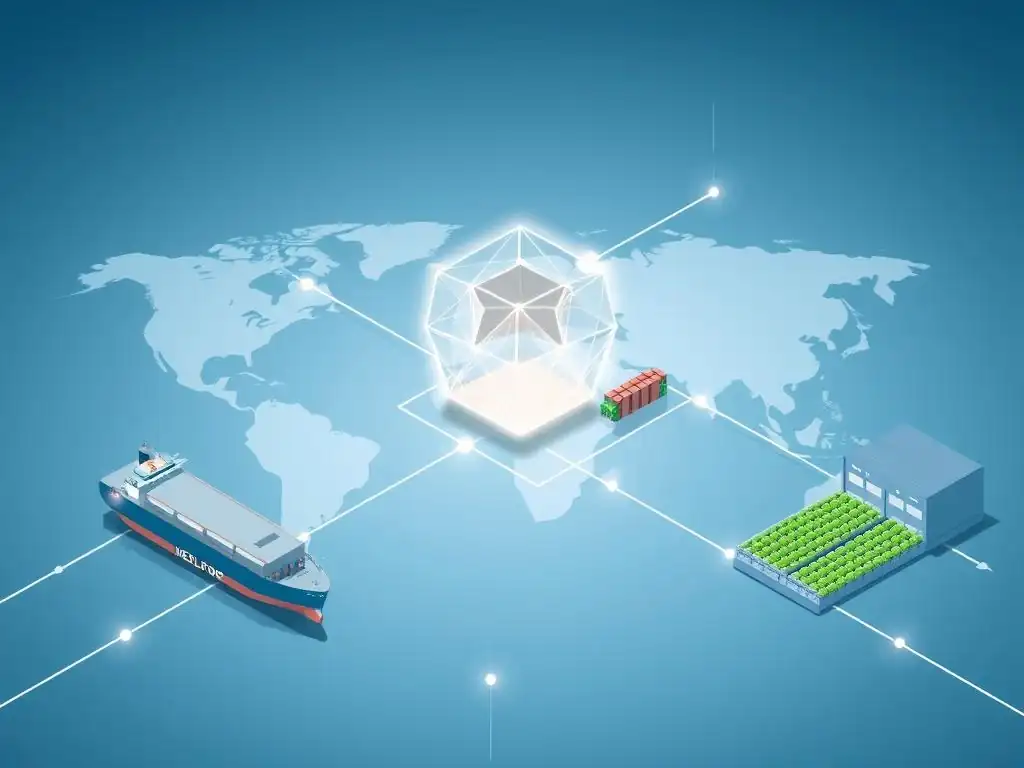
While large-scale deployments of quantum-resistant blockchain are still in their early stages, the potential applications across various industries are clear, building upon existing blockchain use cases and future-proofing them. These examples illustrate how quantum-resistant blockchain supply chains can enhance security and integrity in sectors where data sensitivity and product authenticity are critical.
Case Study 1: Pharmaceuticals - Protecting Sensitive Data
The pharmaceutical supply chain is one of the most complex and regulated in the world, involving sensitive data ranging from manufacturing details and clinical trial data hashes to tracking controlled substances and managing cold chain requirements. Ensuring the integrity and privacy of this data is paramount for patient safety and regulatory compliance. A quantum-resistant blockchain could be used to create an immutable and verifiable record of a drug's journey from production to patient. For example, serialization data for individual drug packages, temperature logs during transport, and ownership transfers between entities could be recorded on the ledger.
With current blockchain, the digital signatures verifying these critical records could eventually be vulnerable to quantum attacks, potentially allowing malicious actors to falsify temperature logs or tamper with serialization data, enabling the introduction of counterfeit or improperly handled drugs into the market. By implementing quantum-resistant blockchain supply chains, the cryptographic security underpinning these records remains robust. This ensures that regulatory audits can rely on the historical data with confidence, and stakeholders can verify the authenticity and proper handling of medications.
While specific large-scale public deployments using PQC are still emerging, pilot projects exploring blockchain for drug traceability (like the U.S. DSCSA requirements) highlight the critical need for quantum-safe solutions to secure this data for the decades required by regulations. Protecting this sensitive information with quantum-resistant cryptography is vital for maintaining trust in the drug supply chain and safeguarding public health.
Case Study 2: Food Industry - Ensuring Food Safety and Authenticity
Food supply chains face significant challenges related to traceability, safety, and combating food fraud. Consumers increasingly demand transparency about where their food comes from and how it was produced. Blockchain is being explored and piloted by major food companies to track products from farm to table, providing verifiable provenance data. For instance, a company might record data points like farm location, harvest date, processing facility, inspection results, and shipping details on a blockchain. This allows for rapid tracing of contaminated products during outbreaks and provides consumers with proof of origin and quality.
In a quantum era, the cryptographic signatures securing this food traceability data could be compromised. An attacker could potentially alter the origin data of a product, allowing mislabeled or unsafe food to enter the market undetected, or falsify organic certifications. Implementing quantum-resistant blockchain supply chains ensures that the integrity of this traceability data is maintained long-term.
The secure, immutable record of each step in the food's journey, protected by quantum-safe cryptography, allows for irrefutable verification of authenticity and safety information. Companies like Walmart have previously piloted blockchain for food traceability, demonstrating the feasibility; future iterations of such systems will require quantum resistance to maintain their security guarantees against evolving threats, ensuring consumer safety and trust in the food supply chain.
Use Cases Across Supply Chain Verticals
The principles of applying quantum-resistant blockchain extend across numerous supply chain verticals beyond pharmaceuticals and food.
- Aerospace & Defense: Tracking high-value, long-lifecycle components and ensuring the integrity of maintenance records. The lifespan of aircraft components can be decades, making the long-term security offered by quantum-resistant blockchain essential.
- Automotive: Securing the supply chain for critical parts, managing recalls, and tracking the lifecycle of vehicles. As cars become more connected and reliant on complex electronic components, securing the origin and authenticity of these parts is vital.
- Luxury Goods: Combating counterfeiting by creating verifiable digital identities and tracking ownership transfers for high-value items like watches, handbags, or art.
- Raw Materials: Ensuring ethical sourcing and tracking materials like minerals or timber from origin to finished product, providing auditable proof for sustainability claims.
- Electronics: Tracking components, managing warranties, and securing intellectual property embedded in the supply chain process.
In each of these areas, quantum-resistant blockchain supply chains offer the promise of enhanced security, improved traceability, and greater trust, building on the foundational benefits of blockchain while mitigating the significant future risk posed by quantum computing. The specific data points tracked and the regulatory requirements vary by industry, but the core need for long-term, quantum-safe data integrity remains consistent.
Challenges and Considerations for Adoption
While the benefits of quantum-resistant blockchain for supply chains are compelling, the path to widespread adoption is not without its challenges. These include technical hurdles related to performance and scalability, practical considerations around cost and complexity, and the evolving regulatory landscape. Addressing these issues is critical for the successful implementation of quantumresistant blockchain supply chains.
Scalability and Performance
Quantum-resistant cryptographic algorithms, while secure, can sometimes be less efficient than their pre-quantum counterparts in terms of computational speed, key sizes, and signature sizes. For instance, while some PQC signature schemes like Dilithium have reasonable performance, others like SPHINCS+ can have significantly larger signature sizes (several kilobytes) compared to ECDSA (around 72 bytes). Larger transaction sizes mean less data fits into a single block, potentially reducing the transaction throughput of the blockchain network. They also increase storage requirements for nodes, which can become substantial over time in large supply chain networks handling millions of transactions.
Achieving the high transaction volumes required by complex, global supply chains (which can demand thousands or even tens of thousands of transactions per second in certain segments) using quantum-resistant algorithms poses a significant technical challenge. Developers are actively researching optimizations for PQC algorithms and exploring layer-2 scaling solutions that are compatible with quantum-resistant cryptography.
Techniques like zero-knowledge proofs (ZKPs), which are also being adapted for quantum resistance, could potentially help by allowing verification of transactions off-chain while posting a small, verifiable proof on-chain. Overcoming these scalability and performance bottlenecks is crucial for making quantumresistant blockchain supply chains viable for large-scale industrial use.
Cost and Complexity of Implementation
Migrating existing blockchain implementations or deploying new quantum-resistant blockchain solutions involves considerable cost and complexity. Organizations currently using or piloting pre-quantum blockchain solutions will face the challenge of transitioning, which may require significant changes to their software architecture, infrastructure, and operational processes. This could involve:
- Upgrading or replacing blockchain node software.
- Modifying transaction formats and smart contracts.
- Investing in new hardware capable of efficiently processing PQC algorithms.
- Retraining developers and IT staff on quantum-resistant cryptography and its implementation.
- Integrating the new blockchain system with existing enterprise resource planning (ERP) and supply chain management (SCM) systems.
The financial investment can be substantial, encompassing development costs, infrastructure upgrades, and ongoing maintenance. Furthermore, the complexity of integrating relatively new cryptographic primitives into complex distributed systems like blockchain requires specialized expertise, which may be scarce. For small and medium-sized enterprises (SMEs) within a supply chain, these costs and complexities could be significant barriers to participation, potentially hindering network adoption unless solutions are designed to be accessible and cost-effective. The total cost of ownership for quantumresistant blockchain supply chains needs careful evaluation and planning.
Regulatory Landscape and Standardization
The regulatory landscape surrounding both blockchain and quantum-resistant cryptography is still evolving. While many jurisdictions are exploring blockchain's potential, specific regulations governing its use in sensitive supply chain applications (like pharmaceuticals or customs) are still being developed. Simultaneously, the standardization of quantum-resistant algorithms is underway, led by bodies like NIST. As of late 2023/early 2024, NIST announced initial selections for standardization (e.g., CRYSTALS-Kyber, CRYSTALS-Dilithium, SPHINCS+, and SLH-DSA), but the full standardization process takes time, and further algorithms are still being evaluated.
The lack of finalized, widely adopted standards can create uncertainty for businesses looking to implement quantum-resistant blockchain supply chains. Choosing algorithms that might not become the final standard could lead to costly rework in the future. Furthermore, regulatory bodies may eventually mandate specific cryptographic standards for certain types of supply chain data.
Navigating these evolving standards and regulations requires close monitoring and potentially a phased approach to implementation, perhaps starting with hybrid solutions or focusing on algorithms that are strong candidates for standardization. Harmonizing global standards for quantum-resistant blockchain in supply chains will be essential for enabling seamless cross-border operations.
Overcoming Adoption Barriers
Beyond the technical and cost challenges, overcoming human and organizational barriers to adopting quantum-resistant blockchain supply chains is crucial. Supply chains involve multiple independent entities, often with varying levels of technological maturity and willingness to adopt new systems. Gaining consensus and achieving network effects across an entire supply chain requires trust, collaboration, and clear value propositions for all participants. Educating stakeholders about the quantum threat and the benefits of quantum resistance is necessary to build support for the transition.
Furthermore, the perceived risk associated with deploying new, complex technology can be a barrier. Organizations may be hesitant to be early adopters of quantum-resistant blockchain due to concerns about stability, security vulnerabilities in the new algorithms (though rigorously tested), or integration difficulties. Pilot projects and phased rollouts, focusing on specific high-value or high-risk use cases, can help demonstrate the technology's viability and build confidence.
Developing user-friendly interfaces and providing robust support are also key to facilitating adoption, particularly for smaller participants in the supply chain. Addressing these multifaceted barriers requires a comprehensive strategy involving technology development, standardization efforts, regulatory clarity, and strong industry collaboration.
The Future of Blockchain in Supply Chain: A Quantum-Secure Vision
The trajectory of blockchain adoption in supply chains is increasingly intertwined with the need for quantum resistance. As the technology matures and the quantum threat approaches, the focus will shift towards building a truly quantum-secure supply chain ecosystem. This future vision relies on the continuous evolution of quantum-resistant blockchain technology and proactive preparation by industry stakeholders. The long-term viability of blockchain for securing complex logistical networks hinges on the successful integration of quantum-safe cryptography, paving the way for robust quantumresistant blockchain supply chains.
The Evolution of Quantum-Resistant Blockchain Technology
The field of quantum-resistant cryptography is dynamic, with ongoing research and development leading to new algorithms and optimizations. The initial set of standardized algorithms from NIST is just the beginning; further rounds of evaluation and standardization are expected, potentially introducing more efficient or specialized algorithms. The evolution of quantum-resistant blockchain technology will likely involve the integration of these newer standards as they emerge. Furthermore, research is focused on developing blockchain architectures specifically designed to minimize the impact of larger PQC key and signature sizes on performance, perhaps through innovative consensus mechanisms or data structures.
Hybrid approaches may also play a role in the transition, where both pre-quantum and quantum-resistant cryptography are used in parallel for a period. This "cryptographic agility" allows systems to transition gradually and provides a fallback if unforeseen vulnerabilities are found in early PQC implementations. The development of developer tools, libraries, and platforms that abstract the complexity of PQC will also be crucial for accelerating adoption. The future will see quantum-resistant blockchain protocols becoming more mature, efficient, and easier to implement, specifically tailored to the demands of supply chain operations, thereby enabling more widespread quantumresistant blockchain supply chains.
Preparing for a Quantum-Secure Supply Chain Ecosystem
Preparation for a quantum-secure supply chain ecosystem is a multi-year process that organizations should begin now. It involves several key steps:
- Inventory Cryptographic Assets: Identify where and how cryptography is used within current supply chain systems, including blockchain implementations, and assess its vulnerability to quantum attacks.
- Monitor PQC Development: Stay informed about the progress of quantum computing and the standardization efforts for quantum-resistant cryptography (e.g., NIST process updates).
- Develop a Transition Roadmap: Plan the strategy for migrating critical systems to quantum-resistant cryptography, considering timelines, dependencies, and resource requirements.
- Pilot Quantum-Resistant Solutions: Experiment with quantum-resistant blockchain or PQC implementations in controlled environments or specific low-risk use cases to gain experience and evaluate performance.
- Engage with Partners: Collaborate with supply chain partners, technology providers, and industry consortia to ensure a coordinated approach to adopting quantum-resistant standards.
- Invest in Talent: Train or acquire personnel with expertise in quantum-resistant cryptography and secure system design.
Proactive preparation allows organizations to transition smoothly, minimize disruption, and avoid being caught unprepared when quantum computers become powerful enough to break current security. Building quantumresistant blockchain supply chains is a key part of this preparedness, ensuring the long-term security of the digital backbone of future supply networks.
The Role of Quantum-Resistant Blockchain in Supply Chain Solutions
Quantum-resistant blockchain is poised to become a fundamental component of next-generation supply chain solutions. Its ability to provide long-term, verifiable data integrity and authenticity makes it ideal for applications requiring high levels of trust and security over extended periods. Beyond basic traceability, quantum-resistant blockchain can underpin sophisticated supply chain finance platforms, securely recording and verifying invoices, purchase orders, and payments. It can enhance the security of digital twins used to model physical assets in the supply chain, ensuring the data accurately reflects the real-world object.
Furthermore, secure, quantum-resistant smart contracts can automate complex supply chain processes, such as triggering payments upon verified delivery or managing insurance claims based on immutable event data, all while being resistant to quantum tampering. The integration of IoT devices for data collection (e.g., temperature, location) can also be secured using quantum-resistant techniques to authenticate device identities and secure data transmission to the blockchain.
The vision is a fully interconnected, transparent, and automated supply chain ecosystem where the foundational security provided by quantum-resistant blockchain supply chains guarantees the integrity and trustworthiness of all digital interactions, enabling greater efficiency, resilience, and collaboration.
Conclusion: Embracing Quantum Resistance for Supply Chain Security
The future of supply chain management is increasingly digital and interconnected, with blockchain technology playing a vital role in enhancing transparency, traceability, and trust. However, the emergence of quantum computing poses a significant threat to the cryptographic security underpinning current blockchain implementations. Proactively addressing this threat by adopting quantum-resistant cryptography is not merely an option but a necessity for ensuring the long-term security and integrity of supply chain data and operations. Building quantumresistant blockchain supply chains is an essential step towards a resilient and trustworthy global trade network.
Key Takeaways: Quantum-Resistant Blockchain and Supply Chains
- Current blockchain cryptography (RSA, ECC) is vulnerable to attacks by future large-scale quantum computers using algorithms like Shor's.
- Supply chain data, including transaction history, smart contracts, and sensitive product information, is at risk if not protected by quantum-resistant methods.
- Quantum-resistant cryptography, such as lattice-based schemes (CRYSTALS-Dilithium) and hash-based signatures (SPHINCS+), offers security against both classical and quantum computers.
- Implementing quantum-resistant blockchain supply chains enhances security, improves traceability, reduces fraud, and builds trust by ensuring long-term data integrity.
- Real-world applications in pharmaceuticals, food, aerospace, and other verticals can leverage quantum-resistant blockchain for critical data protection.
- Challenges include scalability, performance, implementation costs, complexity, and the need for regulatory clarity and standardization.
- Overcoming these challenges requires proactive planning, investment in R&D, collaboration, and education across the supply chain ecosystem.
The convergence of blockchain's distributed ledger technology with the robust security of quantum-resistant cryptography offers a powerful solution for the future of supply chain management. It provides the assurance that the digital transformation of supply chains will remain secure and reliable in the face of evolving technological threats.
Moving Forward: Investing in Quantum-Safe Solutions
Organizations involved in supply chain operations, particularly those leveraging or planning to leverage blockchain, must prioritize the transition to quantum-safe solutions. This involves not only technical migration but also strategic planning, risk assessment, and collaboration with technology providers and industry partners. Investing in research, piloting quantum-resistant blockchain implementations, and engaging with standardization efforts are crucial steps.
The cost of inaction outweighs the cost of preparation. A quantum attack on an unprotected supply chain blockchain could lead to catastrophic data breaches, loss of trust, legal liabilities, and significant financial damage. By embracing quantum resistance now, organizations can build a more secure, resilient, and future-proof supply chain ecosystem. The development and adoption of quantumresistant blockchain supply chains represent a critical investment in the future of global commerce, ensuring that the benefits of decentralized, transparent systems are preserved for decades to come.
Frequently Asked Questions
What is Quantum-Resistant Blockchain and why is it important for supply chains?
Quantum-Resistant Blockchain refers to blockchain technology that is designed to withstand attacks from future quantum computers. This is crucial for supply chains because these systems will eventually be able to break current cryptographic methods, compromising data integrity and security.
How does Quantum-Resistant Blockchain differ from traditional blockchain technology?
The core difference lies in the cryptographic algorithms used. Traditional blockchains often rely on algorithms vulnerable to quantum computing, while Quantum-Resistant Blockchains employ post-quantum cryptography designed to resist these attacks, ensuring long-term security.
What are the main benefits of implementing a Quantum-Resistant Blockchain in supply chain management?
The primary benefits include enhanced security against future threats, improved data integrity and traceability, and increased trust among supply chain partners. This leads to greater efficiency and reduced risk of fraud or counterfeiting.
What challenges are associated with adopting Quantum-Resistant Blockchain solutions in supply chains?
Challenges include the complexity of implementation, the lack of standardized protocols, and the initial investment costs associated with upgrading existing systems. Furthermore, there's a need for expert knowledge in post-quantum cryptography.
What is the future outlook for Quantum-Resistant Blockchain and its impact on supply chains?
The future is promising, with increasing research and development in post-quantum cryptography. As quantum computers become more powerful, Quantum-Resistant Blockchain will become essential for securing supply chains and ensuring their long-term viability.
Final Reflection: Securing Tomorrow's Supply Chains
The exploration of quantum-resistant blockchain for supply chains isn't just a theoretical exercise; it's a critical imperative for safeguarding global commerce. As quantum computing rapidly advances, the vulnerabilities of current blockchain infrastructure become increasingly apparent, threatening the very foundations of trust and transparency upon which modern supply chains are built. Ignoring this looming threat is akin to building a house on sand – a risk we simply cannot afford to take.
This topic has profoundly influenced my understanding of the delicate balance between technological innovation and security. The potential for quantum computers to disrupt established systems underscores the need for proactive adaptation and forward-thinking solutions. Witnessing the ingenuity behind quantum-resistant algorithms has been truly inspiring, highlighting the human capacity to anticipate and mitigate future challenges. The best way to predict the future is to create it.
- Peter Drucker. This quote resonates deeply, urging us to actively shape the future of supply chain security rather than passively awaiting its arrival.
Now, consider the implications of this knowledge for your own role in the world. Whether you're a business leader, a technology enthusiast, or simply a concerned citizen, the security of global supply chains affects us all. Let us embrace the challenge of building a more resilient and secure future, one quantum-resistant block at a time. Reflect on how you can contribute to this vital endeavor, and let your actions be guided by the principles of foresight, collaboration, and unwavering commitment to innovation.
Secure Your Supply Chain's Future: Explore Quantum-Resistant Solutions Now!
Thank you for exploring the future of supply chain security with us. We hope you've gained valuable insights into how quantum-resistant blockchain is set to transform the industry. Are you ready to take the next step?
Here's how you can leverage this knowledge and prepare your operations for the future:
- Prioritize evaluating quantum-resistant blockchain solutions for your supply chain network to ensure long-term data integrity. Taking this proactive approach can significantly reduce your vulnerability to emerging quantum computing threats.
- Dive deeper into understanding the cryptographic algorithms used in quantum-resistant blockchains. Research and compare different approaches to ensure the solution you select matches your specific security requirements.
- Share this article with your network and start a conversation! Let’s work together to promote the adoption of quantum-resistant blockchain for more secure and resilient supply chains.
What challenges do you foresee as quantum computing advances, and how do you plan to address them in your supply chain security strategy?
Leave a Reply