
Resilient Supply Chains: Building Robustness and Agility with Blockchain Technology


Welcome to Blockchain Trends, your gateway to understanding the profound impact of blockchain technology.
Are you ready to discover how blockchain is revolutionizing industries beyond just cryptocurrencies? In this article, we delve into the fascinating world of blockchain supply chain resilience. Explore how this innovative technology is forging more robust and agile supply chains, creating new levels of transparency and efficiency. Intrigued? Keep reading to uncover the secrets of building a more resilient future for global commerce.
Resilient Supply Chains: Building Robustness and Agility with Blockchain Technology
- Introduction: The Need for Blockchain Supply Chain Resilience
- Blockchain for Enhanced Supply Chain Robustness: Key Features
- Building Blockchain Supply Chain Agility: Adapting to Change
- Implementing Blockchain for Supply Chain Resilience: A Step-by-Step Guide
- Case Studies: Blockchain Success Stories in Supply Chain Management
- Overcoming Challenges in Blockchain Supply Chain Adoption
- The Future of Blockchain and Supply Chain Resilience
- Conclusion: Achieving Supply Chain Resilience with Blockchain Technology
-
Frequently Asked Questions
- What specific challenges in supply chains can blockchain technology help address?
- How does blockchain enhance supply chain resilience specifically?
- What are some practical examples of companies using blockchain for supply chain management?
- What regulatory considerations should companies keep in mind when implementing blockchain in their supply chains?
- What is the future outlook for blockchain adoption in supply chain management, and what innovations can we expect?
- Final Reflection: Forging a Future of Trust and Transparency
- Fortify Your Future: Embrace Blockchain for Unstoppable Supply Chains!
Introduction: The Need for Blockchain Supply Chain Resilience
Understanding Modern Supply Chain Vulnerabilities
Modern supply chains are intricate global networks, often involving dozens or even hundreds of parties across different continents. This complexity, while enabling efficiency and cost reduction, inherently introduces significant vulnerabilities. Disruptions can stem from a myriad of sources, including natural disasters like floods or pandemics (as seen with COVID-19), geopolitical instability, cyberattacks targeting logistics systems, or even simple human error leading to delays or misrouted goods. The cascading effect of a single point of failure in such a highly interconnected system can halt production lines, deplete inventories, and result in substantial financial losses and reputational damage for businesses.
Furthermore, a lack of transparency across these extended networks exacerbates vulnerabilities. Companies often have limited visibility beyond their immediate Tier 1 suppliers, making it difficult to assess risks deeper within the chain or quickly identify the source and impact of a disruption. This opacity hinders proactive risk management and slows down response times when issues arise. The imperative for blockchain supply chain resilience has become critical, pushing businesses to seek innovative solutions that can provide the necessary visibility, security, and agility to withstand unpredictable global events.
Blockchain Technology as a Solution for Supply Chain Disruptions
Blockchain technology offers a decentralized, immutable, and transparent ledger system that can fundamentally address many of the inherent weaknesses in traditional supply chains. By creating a shared, tamper-proof record of transactions and events across the network, blockchain provides unparalleled visibility into the movement and status of goods, from raw materials to finished products. This enhanced visibility is a cornerstone of blockchain supply chain resilience, allowing stakeholders to track assets, verify origins, and monitor conditions in near real-time.
Beyond transparency, blockchain's immutability ensures data integrity, making it virtually impossible for records to be altered or falsified without the consensus of the network. This security feature is crucial for building trust among disparate parties and protecting against fraud or data manipulation. Additionally, the capability to execute smart contracts directly on the blockchain automates processes based on predefined conditions, streamlining workflows and reducing reliance on manual interventions that are prone to error and delay. Together, these features lay the foundation for building robust and agile supply chains capable of identifying, responding to, and recovering from disruptions more effectively.
Blockchain for Enhanced Supply Chain Robustness: Key Features
Transparency and Traceability: Enhancing Supply Chain Visibility with Blockchain
Transparency and traceability are foundational elements for building blockchain supply chain resilience. By recording every transaction and movement of a product or asset on a shared, distributed ledger, blockchain creates an end-to-end audit trail that is accessible to authorized participants.
This means companies can trace the journey of goods backward to their origin or forward to their destination with unprecedented detail. For instance, a food manufacturer using blockchain could trace a specific batch of ingredients back to the farm it came from, including details about harvesting, processing, and transportation, all within seconds or minutes, compared to days or weeks with traditional paper-based systems.
This level of visibility is invaluable for identifying bottlenecks, verifying ethical sourcing, managing recalls, and responding quickly to quality issues. When a problem arises, such as contaminated produce, blockchain traceability allows for pinpointing the exact source of the issue and recalling only the affected products, rather than issuing costly and wasteful mass recalls. This targeted approach not only saves money but also builds consumer trust by demonstrating a commitment to safety and accountability. Realizing blockchain supply chain resilience heavily relies on this transparent and traceable foundation.
Immutability and Security: Strengthening Data Integrity in Supply Chains using Blockchain
The immutable nature of blockchain is a critical feature for ensuring data integrity and security within complex supply chains. Once a transaction or record is added to the blockchain, it is cryptographically linked to the previous block, forming a chain that is extremely difficult to alter without compromising the entire network. This inherent security prevents tampering, fraud, and unauthorized changes to critical supply chain data, such as ownership records, quality certifications, or shipping manifests. Participants can trust that the data they are viewing is accurate and has not been manipulated.
This robust data security is essential for establishing trust among stakeholders who may not have prior relationships or a central authority to rely on. It protects sensitive information while allowing for secure sharing of necessary data among authorized parties. For example, in the pharmaceutical industry, ensuring the integrity of cold chain data for temperature-sensitive drugs is paramount. Blockchain can provide an unalterable record of temperature readings throughout transit, offering verifiable proof of compliance and significantly strengthening blockchain supply chain resilience against data breaches or record falsification that could compromise product quality or safety.
Smart Contracts: Automating and Streamlining Supply Chain Processes
Smart contracts are self-executing contracts with the terms of the agreement directly written into code. Deployed on a blockchain, these contracts automatically trigger actions when predefined conditions are met, without the need for intermediaries. This capability can significantly automate and streamline various supply chain processes, from payments and escrow to quality checks and logistics handling. For instance, a smart contract could automatically release payment to a supplier once a shipment is confirmed as delivered and verified for quality via IoT sensors, all recorded on the blockchain.
Automation via smart contracts reduces manual administrative work, minimizes delays caused by paperwork or human approval bottlenecks, and lowers transaction costs. It also enhances reliability and predictability in operations. By codifying business logic and enforcing it automatically, smart contracts reduce the potential for disputes arising from misinterpretations or non-compliance. This automation layer contributes significantly to building blockchain supply chain resilience by making processes faster, more efficient, and less susceptible to human error or intentional manipulation, allowing supply chains to operate more smoothly even under pressure.
Building Blockchain Supply Chain Agility: Adapting to Change
Real-time Tracking and Monitoring with Blockchain
Real-time tracking and monitoring are vital components of supply chain agility, enabling businesses to react swiftly to changing conditions. By integrating blockchain with IoT devices (like GPS trackers, temperature sensors, or humidity monitors), companies can gain granular, near real-time visibility into the location, condition, and status of goods as they move through the supply chain. Each data point from an IoT device can be recorded as a transaction on the blockchain, creating a live, verifiable feed of information accessible to relevant parties.
This capability allows for proactive management of potential issues. If a shipment of perishable goods is delayed or experiences temperature fluctuations outside the acceptable range, alerts can be triggered immediately. Supply chain managers can then take corrective action, reroute shipments, or inform customers before a significant problem develops. This dynamic responsiveness significantly enhances blockchain supply chain resilience, allowing businesses to adapt quickly to disruptions, optimize logistics on the fly, and minimize the impact of unexpected events on delivery schedules and product quality.
Improved Collaboration and Communication among Supply Chain Stakeholders
Effective collaboration and communication are essential for navigating complex supply chains, especially during times of disruption. Blockchain provides a shared, single source of truth for all authorized participants, including manufacturers, suppliers, logistics providers, distributors, and even regulators. By providing access to the same, immutable data ledger, blockchain reduces information silos and ensures that all parties are working with consistent, up-to-date information. This shared visibility fosters greater trust and facilitates smoother interactions across the network.
This improved data sharing capability streamlines communication and decision-making. Instead of relying on fragmented systems, emails, or phone calls to get updates or verify information, stakeholders can simply query the blockchain. This reduces delays, prevents misunderstandings, and allows for more coordinated responses to challenges. For example, if a port is unexpectedly closed, all parties involved in shipments passing through that port can instantly see the impact on the shared ledger and collaboratively plan alternative routes or schedules, significantly bolstering blockchain supply chain resilience through unified action.
Faster and More Efficient Dispute Resolution using Blockchain
Disputes are common in complex supply chains, often arising from disagreements over delivery times, product quality, payment terms, or contractual obligations. Resolving these disputes through traditional methods can be time-consuming, costly, and damaging to business relationships, further eroding blockchain supply chain resilience. Blockchain technology, particularly when combined with smart contracts, offers a path towards faster and more efficient dispute resolution.
The immutable audit trail on the blockchain provides a transparent and verifiable record of all transactions, events, and conditions related to a shipment or agreement. This clear record serves as objective evidence that can be easily reviewed by all parties, simplifying the process of identifying the root cause of a disagreement.
When smart contracts are used, the terms and execution are automated and recorded on the ledger, leaving little room for ambiguity regarding whether conditions were met. In cases where disputes still arise, the verifiable data on the blockchain significantly accelerates the resolution process, potentially reducing resolution times from months to days or even hours, minimizing financial and operational impacts.
Implementing Blockchain for Supply Chain Resilience: A Step-by-Step Guide
Step 1: Identifying Key Pain Points in Your Supply Chain
The first crucial step in leveraging blockchain for blockchain supply chain resilience is to conduct a thorough assessment of your current supply chain to identify its most significant vulnerabilities and inefficiencies. This involves mapping out the entire process from raw materials to final delivery, pinpointing areas prone to delays, lack of visibility, data integrity issues, or high costs associated with manual processes or disputes. Typical pain points might include opaque sourcing, difficulty in tracking goods across multiple logistics providers, slow and error-prone paperwork, or challenges in verifying compliance and certifications.
Engaging with stakeholders across different functions – procurement, logistics, operations, finance, and IT – is essential during this phase. Understanding their specific challenges and requirements will help define the scope and objectives for a blockchain implementation. For instance, a food company might prioritize traceability for safety recalls, while a luxury goods manufacturer might focus on combating counterfeiting. Clearly defining these pain points provides a strategic focus for the blockchain initiative and ensures that the technology is applied where it can deliver the most impactful improvements to blockchain supply chain resilience.
Step 2: Choosing the Right Blockchain Platform for Supply Chain Management
Selecting the appropriate blockchain platform is a critical decision that depends on the specific needs and scale of your supply chain operation. Various platforms exist, broadly categorized as public (like Ethereum or Bitcoin, less common for enterprise supply chains due to privacy and throughput concerns), consortium/private (like Hyperledger Fabric or R3 Corda, designed for enterprise use with permissioned access), or hybrid models. Consortium blockchains are often preferred for supply chain applications because they allow participating organizations to control who can join the network and access data, while still providing a shared, immutable ledger.
Factors to consider when choosing a platform include scalability (can it handle the transaction volume? ), security features, interoperability with existing systems, ease of development and integration, cost of implementation and maintenance, and the availability of developer support and a robust ecosystem. Evaluating the platform's consensus mechanism (how transactions are validated) and smart contract capabilities is also vital. A well-chosen platform will provide the necessary technical foundation to build effective blockchain supply chain resilience solutions that meet the specific requirements identified in Step 1.
Step 3: Integrating Blockchain with Existing Supply Chain Systems
Integrating the new blockchain platform with existing legacy systems is often one of the most complex steps in deploying a blockchain supply chain solution. Few companies can afford to replace their entire IT infrastructure overnight. Instead, the blockchain needs to seamlessly connect with systems such as Enterprise Resource Planning (ERP), Warehouse Management Systems (WMS), Transportation Management Systems (TMS), and IoT platforms. This integration is crucial for feeding data from physical operations onto the blockchain and for leveraging blockchain data within existing business processes.
Integration typically involves using Application Programming Interfaces (APIs), middleware, or specialized connectors to ensure data flows smoothly and accurately between systems. Designing a data model that maps existing data points to the blockchain structure is essential. Careful planning is required to determine which data points should be recorded on the blockchain (e.g., shipment status, ownership transfer, quality checks) and which can remain off-chain. Successful integration ensures that the blockchain enhances, rather than disrupts, current operations and is fundamental for achieving true blockchain supply chain resilience.
Step 4: Establishing Data Governance and Security Protocols
Implementing robust data governance and security protocols is paramount for any blockchain supply chain initiative. While blockchain provides inherent security features like immutability, the overall security posture depends heavily on how the system is designed, managed, and accessed. Data governance involves defining clear rules and responsibilities for data input, validation, access control, and error handling. It's crucial to determine which participants have permission to write data to the ledger, who can view specific types of data, and how data quality is ensured.
Security protocols must extend beyond the blockchain itself to cover the endpoints where data enters the network (e.g., IoT devices, user interfaces) and the integration points with legacy systems. This includes implementing strong authentication mechanisms, encryption for data in transit and at rest (where applicable off-chain), and regular security audits. Establishing clear incident response plans is also vital. A well-defined governance framework and stringent security measures build trust among participants and are non-negotiable for leveraging blockchain to enhance blockchain supply chain resilience while protecting sensitive business information.
Case Studies: Blockchain Success Stories in Supply Chain Management
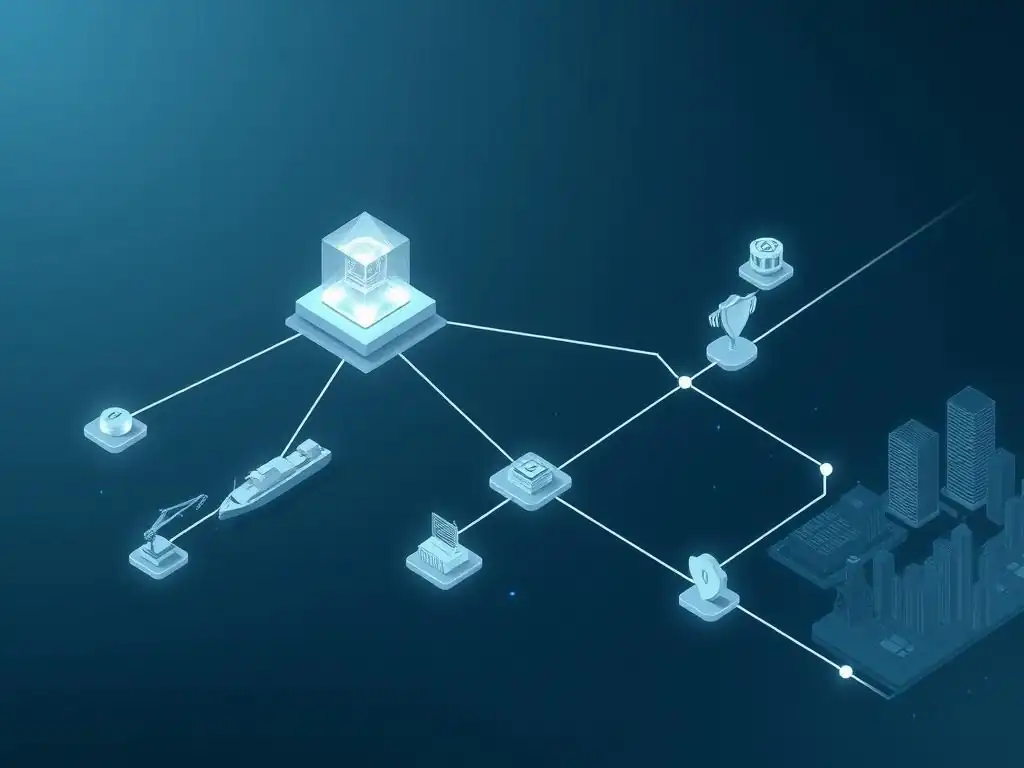
Maersk and IBM's TradeLens: Streamlining Global Trade with Blockchain
One of the most prominent examples of blockchain in supply chain management is TradeLens, a platform developed through a collaboration between Maersk, a global shipping giant, and IBM. Launched in 2018, TradeLens aims to digitize and streamline global container shipping, which traditionally involves a complex web of paper documents and disparate systems across dozens of parties including carriers, ports, customs authorities, and logistics providers. The platform uses Hyperledger Fabric blockchain technology to create a shared, immutable record of shipping data.
TradeLens provides participants with near real-time visibility into the entire journey of a container, from booking to delivery. By replacing manual processes and paper documents with digital, blockchain-verified data, the platform has demonstrated significant efficiencies. Reports indicate that TradeLens can reduce the time it takes for data to be shared among parties from days to minutes. This increased transparency and efficiency help mitigate delays, reduce errors, and improve overall predictability in the highly complex world of ocean freight, directly contributing to blockchain supply chain resilience for global shippers and their customers.
Walmart's Food Traceability Initiative: Enhancing Food Safety with Blockchain
Walmart's implementation of blockchain for food traceability is a widely cited success story, highlighting the technology's potential to enhance food safety and blockchain supply chain resilience against contamination events. Following outbreaks linked to contaminated produce, Walmart mandated that its leafy green suppliers implement blockchain-based traceability using the IBM Food Trust platform (also built on Hyperledger Fabric). This initiative aimed to drastically reduce the time required to trace the origin of food products in the event of a recall.
Before blockchain, tracing the source of contamination in leafy greens could take days or even weeks, requiring manual collection and analysis of paper records from farms, processors, distributors, and retailers. With the blockchain system, Walmart demonstrated the ability to trace a product from store back to farm in mere seconds. This rapid traceability allows for faster and more targeted recalls, limiting the scope of outbreaks, reducing waste, and protecting public health. It's a clear example of how blockchain provides the visibility and speed necessary for robust food supply chain resilience.
De Beers' Tracr Platform: Tracking Diamonds and Combating Conflict Diamonds
De Beers, the world's leading diamond company, developed the Tracr™ platform to provide traceability for diamonds from mine to retailer. The platform uses blockchain technology to create a secure, immutable record of each diamond's journey, including its origin, characteristics, and ownership at various stages of the value chain. This initiative addresses key challenges in the diamond industry, including ensuring the authenticity of diamonds and preventing the flow of conflict diamonds (those mined in war zones and sold to finance conflict).
By recording each step on the blockchain, Tracr provides verifiable proof of provenance and ownership. This increases transparency for consumers who are increasingly demanding ethically sourced products and helps industry participants comply with regulations like the Kimberley Process Certification Scheme. The platform assigns a unique ID to each registered diamond, which is recorded on the distributed ledger along with relevant data points. This level of verifiable traceability enhances trust throughout the diamond supply chain and contributes significantly to blockchain supply chain resilience against illicit trade and reputational damage.
Overcoming Challenges in Blockchain Supply Chain Adoption
Addressing Scalability Concerns in Blockchain Supply Chain Solutions
One of the significant challenges facing widespread blockchain adoption in supply chains is scalability. Public blockchains, while highly decentralized, can struggle with transaction throughput and speed, which are critical for high-volume supply chain operations. Enterprise-focused consortium or private blockchains typically offer better performance, but even they can face limitations as the number of participants and transactions grows exponentially. A large, global supply chain might generate millions of data points or transactions daily, requiring a platform that can handle this volume efficiently and cost-effectively.
Addressing scalability involves exploring various technical solutions. These include optimizing consensus mechanisms to be faster and less computationally intensive, implementing off-chain solutions for storing large data payloads while keeping hashes on-chain, or utilizing layer 2 scaling solutions that process transactions off the main chain before settling them periodically. Choosing a platform designed with enterprise scalability in mind, such as Hyperledger Fabric or Corda, is often the first step. Continuous monitoring and performance optimization are necessary to ensure the blockchain solution can support the demands of a resilient and agile supply chain as it scales.
Ensuring Interoperability between Different Blockchain Networks
As blockchain adoption increases, it is likely that different participants within a supply chain or across different supply chains will utilize different blockchain platforms. For example, a supplier might use one platform to manage raw material provenance, while a manufacturer uses another for production tracking, and a logistics provider uses a third for shipment monitoring. Ensuring seamless communication and data exchange between these disparate networks, or "interoperability," is a major challenge for achieving comprehensive blockchain supply chain resilience.
Lack of interoperability creates data silos, hindering the end-to-end visibility that blockchain promises. Solutions to this challenge are still evolving but include developing cross-chain communication protocols, creating standardized data models and APIs that can work across platforms, and utilizing middleware or network-of-networks approaches that connect different blockchains. Industry-wide collaboration to establish common standards for supply chain data representation and exchange on blockchain is crucial. Achieving true blockchain supply chain resilience at a global scale will heavily depend on the ability of different blockchain networks to interact and share information securely and efficiently.
Mitigating Security Risks and Vulnerabilities in Blockchain Systems
While blockchain is often touted for its inherent security features like immutability and cryptography, it is not entirely immune to security risks and vulnerabilities. The security of a blockchain supply chain solution depends not only on the underlying protocol but also on the implementation details, smart contract code quality, and the security practices of participating organizations. Risks can include vulnerabilities in smart contract code (leading to exploits), private key compromises, denial-of-service attacks, or attacks on the infrastructure hosting the blockchain nodes.
Mitigating these risks requires a multi-layered approach. This includes rigorous smart contract auditing before deployment, implementing strong key management practices to protect private keys, securing the network infrastructure (nodes, servers), and using identity and access management systems to control who can access and write data to the ledger. Regular security assessments and penetration testing are also vital. Furthermore, educating participants about best security practices is essential. Proactive security measures are fundamental to maintaining the integrity and trustworthiness of the system and ensuring that blockchain genuinely enhances blockchain supply chain resilience rather than introducing new vulnerabilities.
The Future of Blockchain and Supply Chain Resilience
Emerging Trends in Blockchain-Based Supply Chain Management
The landscape of blockchain in supply chain management is continuously evolving, with several emerging trends poised to further enhance blockchain supply chain resilience. One significant trend is the development of more specialized blockchain solutions tailored for specific industries or use cases, such as pharmaceuticals, food and beverage, or luxury goods. These platforms offer features and data models optimized for the unique requirements of those sectors.
Another trend is the increasing focus on privacy-preserving techniques, such as zero-knowledge proofs, which allow parties to verify information on the blockchain without revealing the underlying sensitive data. This is crucial for competitive supply chains where businesses are reluctant to share proprietary information openly. Furthermore, the integration of blockchain with other technologies like Artificial Intelligence (AI) and the Internet of Things (IoT) is becoming more sophisticated, creating powerful synergies for predictive analytics, automated monitoring, and optimized logistics, all contributing to a more resilient and agile supply chain ecosystem.
The Role of AI and IoT in Enhancing Blockchain Supply Chains
Artificial Intelligence (AI) and the Internet of Things (IoT) are playing increasingly vital roles in augmenting blockchain's capabilities for supply chain resilience. IoT devices collect vast amounts of real-time data on factors like location, temperature, humidity, and shock – data that can be recorded immutably on the blockchain. This combination provides verifiable, granular visibility into the physical state and movement of goods throughout the chain. For example, IoT sensors on a refrigerated truck can continuously record temperature data, and this data, timestamped and uploaded to the blockchain, provides irrefutable proof of cold chain compliance.
AI can then analyze this wealth of blockchain-verified data to identify patterns, predict potential disruptions (e.g., predicting equipment failure based on sensor data), optimize routes, manage inventory proactively, and even automate decision-making via smart contracts. AI algorithms can process historical blockchain data to identify fraudulent activities or inefficiencies that might otherwise go unnoticed. The synergy between IoT for data collection, blockchain for data integrity and transparency, and AI for data analysis and prediction creates a powerful framework for building highly intelligent, automated, and robust blockchain supply chain resilience.
Preparing for the Widespread Adoption of Blockchain in Supply Chains
Widespread adoption of blockchain in supply chains is not a matter of 'if' but 'when'. Businesses that prepare now will be better positioned to leverage its benefits and achieve blockchain supply chain resilience. Preparation involves several key steps. Firstly, developing a strong understanding of the technology's capabilities and limitations is crucial. This includes educating internal teams about blockchain fundamentals and its potential applications in their specific context.
Secondly, companies should start exploring pilot projects or proof-of-concepts in targeted areas where blockchain can address significant pain points, as identified in the implementation steps. This allows organizations to gain hands-on experience, test the technology's viability, and demonstrate value internally. Furthermore, engaging with industry consortiums and technology providers is important to stay abreast of emerging standards, platforms, and best practices. Finally, addressing the organizational change management aspects – getting stakeholders on board, defining new processes, and training staff – is just as important as the technology itself for a smooth transition to a blockchain-enabled future for supply chain management.
Conclusion: Achieving Supply Chain Resilience with Blockchain Technology
Key Takeaways: Blockchain for a More Robust and Agile Supply Chain
Achieving blockchain supply chain resilience is no longer optional but a strategic imperative in today's volatile global environment. Blockchain technology offers a powerful set of features – transparency, immutability, security, and automation via smart contracts – that directly address the fundamental vulnerabilities of traditional supply chains. By creating a shared, trusted, and verifiable record of transactions and events, blockchain provides the end-to-end visibility and data integrity needed to build robustness.
Furthermore, blockchain enhances agility through real-time tracking (especially when combined with IoT), improved collaboration among stakeholders via a single source of truth, and faster, more efficient dispute resolution. While challenges related to scalability, interoperability, and security exist, they are being actively addressed through ongoing technological advancements and industry collaboration. The successful case studies across various sectors demonstrate the tangible benefits that blockchain can deliver in practice.
The Long-Term Benefits of Investing in Blockchain-Based Supply Chain Solutions
Investing in blockchain-based supply chain solutions yields significant long-term benefits that extend far beyond simply mitigating risks. By enhancing transparency and traceability, businesses can build greater trust with consumers and partners, improve brand reputation, and better meet increasing demands for ethical sourcing and sustainability. The increased efficiency and automation driven by smart contracts lead to reduced operational costs, faster cycle times, and optimized resource utilization.
Moreover, the data integrity provided by blockchain leads to higher quality data for analytics, enabling better forecasting, inventory management, and strategic decision-making. Ultimately, a truly resilient and agile supply chain, powered by blockchain, allows businesses to navigate disruptions more effectively, maintain continuity of operations, protect revenue streams, and gain a competitive advantage in a rapidly changing global market. The journey towards blockchain supply chain resilience is an investment in the future viability and success of an organization.
Frequently Asked Questions
What specific challenges in supply chains can blockchain technology help address?
Blockchain helps address challenges like lack of transparency, counterfeit goods, and inefficient tracking. It creates a secure and immutable record of each step in the supply chain.
How does blockchain enhance supply chain resilience specifically?
By providing real-time visibility and immutable data, blockchain enables faster response to disruptions. This enhanced transparency allows for quicker identification and resolution of issues.
What are some practical examples of companies using blockchain for supply chain management?
Several companies are using blockchain for tracking goods, verifying origins, and automating payments. Examples include tracking food products and verifying diamonds.
What regulatory considerations should companies keep in mind when implementing blockchain in their supply chains?
Companies need to consider regulations related to data privacy, cross-border transactions, and industry-specific requirements. Compliance is crucial for successful blockchain integration.
What is the future outlook for blockchain adoption in supply chain management, and what innovations can we expect?
The future holds wider adoption with innovations like improved interoperability, AI integration, and more sophisticated smart contracts. This will lead to more efficient and resilient supply chains.
Final Reflection: Forging a Future of Trust and Transparency
The exploration of blockchain technology's potential to bolster supply chain resilience reveals a critical truth: the interconnectedness of our global systems demands innovative solutions for stability and security. In a world increasingly susceptible to disruptions, from geopolitical instability to natural disasters, the ability to adapt and recover quickly is no longer a luxury, but a necessity. The insights shared here highlight the transformative power of blockchain in creating more transparent, secure, and ultimately, more resilient supply chains.
The impact of a robust supply chain extends far beyond mere efficiency; it touches every aspect of our lives, from the availability of essential goods to the stability of global economies. Witnessing the potential of blockchain to mitigate risks and foster trust within these complex networks is profoundly inspiring, reminding us of the power of technology to address some of humanity's most pressing challenges. The supply chain is the backbone of global commerce, and blockchain offers a revolutionary way to strengthen that backbone, ensuring greater stability and resilience for all.
- Don Tapscott, Blockchain Revolution.
As we look to the future, let us not simply marvel at the technological advancements, but actively embrace the opportunity to build a more resilient and equitable world. Consider how you, in your own sphere of influence, can champion the adoption of blockchain and other innovative technologies to strengthen the systems that support our communities and economies. The future of supply chains, and indeed, the future of our interconnected world, depends on our collective commitment to building a more robust and agile future, one block at a time.
Fortify Your Future: Embrace Blockchain for Unstoppable Supply Chains!
Thank you for exploring the world of resilient supply chains and discovering how blockchain can be a game-changer. We hope you've gained valuable insights into building stronger and more agile operations. Now, it's time to put that knowledge into action and lead the way in this revolution.
Here's how to get started:
- Identify one key area in your supply chain that could benefit from blockchain technology. Focus on the most pressing challenge or the area with the greatest potential for improvement.
- Share your challenges: In the comments below, describe a specific issue you're facing in your supply chain. Let's learn from each other's experiences!
- Look beyond familiar territory: Explore case studies of blockchain implementation in industries different from yours to find new perspectives and innovative applications.
What is the most impactful blockchain solution you plan to implement in your supply chain within the next year, and what benefits do you expect to see? Share your vision!
Leave a Reply