
Revolutionizing Logistics with Blockchain: Optimizing Routes and Reducing Delays


Welcome to Blockchain Trends, your premier source for understanding the real-world impact of blockchain technology. Beyond the hype, we delve into the transformative applications shaping industries worldwide.
Ever wondered how blockchain can revolutionize supply chains? Our latest deep dive uncovers how to tackle a critical challenge: blockchain logistics route optimization delays. Discover how this innovative technology is being harnessed to streamline processes, reduce bottlenecks, and ultimately, create a more efficient and transparent future for logistics. Intrigued? Read on to unlock the potential.
- Revolutionizing Logistics with Blockchain: Optimizing Routes and Reducing Delays
- Blockchain Technology: A Solution for Logistics Optimization
- Blockchain Logistics Route Optimization: A Detailed Look
- Reducing Delays with Blockchain in Logistics
- Case Studies: Blockchain Success Stories in Logistics
- Overcoming the Challenges of Blockchain Implementation in Logistics
- The Future of Blockchain in Logistics: Trends and Predictions
- Conclusion: Blockchain as a Catalyst for Logistics Transformation
-
Frequently Asked Questions
- How can blockchain technology specifically help with logistics route optimization?
- What role does blockchain play in reducing delays within logistics operations?
- Beyond tracking, what other benefits does blockchain offer to the logistics industry?
- What are the main challenges in implementing blockchain solutions for logistics route optimization and delay reduction?
- How does regulation impact the adoption of blockchain-based logistics solutions for route optimization delays?
- Final Reflection: Embracing Transparency in Transit
- Unlock the Future: Implement Blockchain in Your Logistics Today!
Revolutionizing Logistics with Blockchain: Optimizing Routes and Reducing Delays
The High Cost of Inefficient Route Planning
Inefficient route planning represents a significant drain on resources within the logistics sector. Transportation costs often account for a substantial portion of overall supply chain expenses, sometimes ranging from 10% to 20% of total logistics costs, or even higher depending on the industry and type of goods. Poor planning leads directly to increased fuel consumption due to suboptimal mileage, longer travel times, and unnecessary wear and tear on vehicles.
This not only inflates operational budgets but also impacts profitability and environmental sustainability. The complexity arises from numerous variables, including traffic conditions, delivery windows, vehicle capacity, driver availability, and diverse customer locations, making manual or outdated planning methods notoriously inefficient.
Beyond the direct financial outlays, inefficient routes contribute to hidden costs such as increased labor hours, potential fines for missed delivery windows, and higher insurance premiums due to extended time on the road. Consider a fleet of 100 trucks; even a small percentage improvement in route efficiency, say 5%, can translate into millions of dollars in annual savings on fuel and maintenance alone, based on average operating costs and mileage.
The lack of real-time data integration and reliance on static planning tools means logistics operations often cannot adapt quickly to unforeseen events, leading to suboptimal paths that cost time and money. Addressing these inefficiencies through advanced methods like blockchain logistics route optimization is becoming a critical priority for businesses looking to stay competitive.
The Impact of Delays on Supply Chain Performance
Delays in logistics have a cascading negative effect throughout the entire supply chain, impacting everything from manufacturing schedules to customer satisfaction. When goods are delayed in transit, production lines might halt waiting for components, retailers may experience stockouts leading to lost sales, and end customers face frustration, potentially damaging brand reputation.
The financial consequences are substantial, including penalties for late deliveries, increased inventory holding costs at various points in the chain, and expedited shipping fees to mitigate previous delays. A study by the World Economic Forum estimated that supply chain disruptions, which often stem from or include logistics delays, can cost companies up to 45% of annual profits.
Furthermore, persistent delays erode trust among supply chain partners. Manufacturers, distributors, and retailers rely on predictable lead times to manage their operations effectively. Unreliable delivery schedules make planning difficult, forcing companies to hold excess buffer stock, which ties up capital and increases warehousing costs. In sectors like automotive or electronics, where just-in-time (JIT) inventory is common, a single delay can disrupt complex assembly processes across multiple locations. The implementation of technologies aimed at reducing delays, such as blockchain for enhanced visibility and predictive capabilities, is essential for building resilient and reliable supply chains capable of meeting modern demands.
Lack of Transparency and Traceability in Traditional Logistics
Traditional logistics systems often suffer from a significant lack of transparency and traceability, making it difficult to track goods accurately from origin to destination. Information about a shipment's location, status, and condition is frequently siloed within individual company systems, relying on manual updates or disparate electronic data interchange (EDI) formats that are prone to errors and delays.
This fragmented view means that stakeholders, including shippers, carriers, receivers, and regulators, often lack a single, trusted source of truth regarding a shipment's journey. This opacity makes it challenging to identify the source of problems, verify compliance, or quickly resolve disputes, such as claims for damaged or lost goods.
The absence of comprehensive, easily accessible traceability also hinders efforts to optimize routes and predict delays effectively. Without real-time, verifiable data on past performance, traffic patterns, and potential disruptions across the network, route planning remains based on historical averages rather than dynamic conditions. For instance, tracking the exact origin and handling history of a food product or pharmaceutical is critical for safety and regulatory compliance, yet traditional systems often provide only limited visibility.
This lack of end-to-end traceability increases the risk of fraud, theft, and the movement of counterfeit goods, while also making it harder to implement efficient recall procedures. Blockchain technology offers a promising solution by creating a shared, immutable ledger that can record every step of a shipment's journey, providing unprecedented transparency and traceability.
Blockchain Technology: A Solution for Logistics Optimization
How Blockchain Enhances Transparency in Supply Chains
Blockchain technology fundamentally enhances transparency in supply chains by creating a shared, immutable ledger accessible to all authorized participants. Each transaction, or block of data (such as a shipment update, a change in custody, or a sensor reading), is cryptographically linked to the previous one, forming a chain that is extremely difficult to alter retroactively.
This distributed ledger eliminates the need for a central authority to verify transactions, as consensus mechanisms ensure that all copies of the ledger are synchronized and accurate across the network. For logistics, this means that information about a shipment's origin, route taken, handling history, temperature, and delivery status can be recorded in real-time and viewed by relevant parties, from the initial supplier to the final customer, depending on permissions.
This shared, tamper-proof record provides a single source of truth for all parties involved in the supply chain, drastically reducing disputes and improving accountability. For example, if a shipment is delayed or damaged, the blockchain record can clearly show where and when the event occurred, who was responsible for the goods at that point, and what conditions were reported.
This level of visibility helps pinpoint bottlenecks, verify compliance with contractual terms, and streamline processes like audits and payments. The enhanced transparency facilitated by blockchain is a critical enabler for improving trust among supply chain partners and lays the groundwork for sophisticated applications like blockchain logistics route optimization.
Blockchain's Role in Real-Time Tracking and Monitoring
Blockchain technology plays a pivotal role in enabling more accurate and reliable real-time tracking and monitoring of goods in transit. By integrating with IoT devices such as GPS trackers, temperature sensors, and humidity monitors placed on shipments or vehicles, blockchain can record verifiable, timestamped data directly onto the distributed ledger.
As a shipment moves along its route, these sensors can continuously feed data points to the blockchain, creating a live, immutable log of its location, environmental conditions, and status updates. Unlike traditional systems where tracking data might reside in siloed databases or be subject to manual entry errors, the blockchain provides a decentralized, secure, and shared record that multiple stakeholders can access simultaneously.
This real-time data stream, recorded on the blockchain, allows companies to monitor the progress and condition of their goods with unprecedented accuracy. Shippers can verify that goods are being kept within specified temperature ranges, carriers can provide proof of delivery with precise timestamps and locations, and receivers can anticipate arrivals more accurately.
For instance, tracking high-value pharmaceuticals or perishable foods becomes significantly more reliable when every transfer and environmental condition is recorded immutably. This enhanced tracking capability is fundamental to optimizing logistics routes by providing the dynamic data needed for adjustments and is key to reducing delays by offering early warnings about potential issues.
The Potential of Blockchain for Secure Data Sharing
One of the core strengths of blockchain technology in logistics is its potential for secure and controlled data sharing among multiple, often competing, parties. In traditional supply chains, sharing sensitive business data like pricing, customer information, or detailed route plans is often restricted due to trust concerns and data security risks. However, effective logistics optimization and collaboration require participants to share relevant data seamlessly.
Blockchain addresses this by providing a secure, permissioned environment where data can be shared selectively and cryptographically verified. Participants on a blockchain network can be granted specific levels of access, allowing them to view only the information necessary for their role, such as a carrier seeing only the details for the shipments they are handling.
The cryptographic nature of blockchain ensures the integrity and authenticity of the data being shared. Each transaction is signed and verified, making it extremely difficult for unauthorized parties to tamper with the information. Furthermore, the decentralized nature means that data is not stored in a single, vulnerable database.
This secure sharing mechanism facilitates better collaboration among shippers, carriers, ports, customs, and financial institutions. It allows for the flow of information needed for processes like automated customs clearance, streamlined payments, and, crucially, collaborative blockchain logistics route optimization, where shared traffic data or port congestion information can inform better decision-making across the network without compromising competitive secrets.
Blockchain Logistics Route Optimization: A Detailed Look
Using Blockchain to Create Smart Contracts for Route Execution
Smart contracts, self-executing contracts with the terms of the agreement directly written into code, are a powerful application of blockchain technology for logistics route optimization. These digital contracts reside on the blockchain and automatically execute predefined actions when specific conditions are met, based on verifiable data recorded on the ledger.
For route execution, smart contracts can automate steps like releasing payment to a carrier upon verified delivery at a specific location and time, triggered by GPS data recorded on the blockchain. They can also automatically adjust compensation based on performance metrics, such as on-time delivery rates or adherence to planned routes.
Beyond simple payments, smart contracts can manage complex routing agreements. For instance, a smart contract could specify alternative delivery instructions or dynamic pricing adjustments if traffic conditions (reported by IoT devices and recorded on the blockchain) exceed a certain threshold along the planned route. This automation removes the need for manual verification and reduces administrative overhead, while also ensuring that all parties adhere to the agreed-upon terms. By embedding routing logic and performance incentives directly into self-executing code on a transparent and immutable ledger, smart contracts enhance the efficiency, reliability, and accountability of route execution within blockchain logistics frameworks.
Decentralized Route Planning: Achieving Optimal Delivery Paths
Decentralized route planning leverages the power of blockchain to move away from centralized, potentially opaque, planning systems towards a more collaborative and data-driven approach. In a traditional setting, route optimization software often relies on proprietary data sets and algorithms within a single company. With a blockchain-based platform, participants across the supply chain – including multiple carriers, shippers, and even infrastructure providers – can potentially contribute real-time data (such as traffic, road conditions, port congestion, or available vehicle capacity) to a shared, secure network. This aggregated, verifiable data provides a much richer and more accurate picture of the logistical landscape.
Algorithms running on or interacting with the blockchain can then utilize this comprehensive, decentralized data set to calculate more optimal routes. Unlike systems limited by single-party data, a decentralized approach can identify efficiencies across different carriers or modes of transport, potentially suggesting consolidated shipments or alternative paths based on the network's collective intelligence and real-time conditions.
For example, a blockchain-based platform could match available cargo with underutilized vehicle capacity from multiple carriers, optimizing routes not just for a single fleet but for an entire network of participants. This collaborative data environment is key to achieving truly efficient and dynamic blockchain logistics route optimization.
Improving Route Efficiency with Blockchain-Based Predictive Analytics
Blockchain technology significantly enhances the capabilities of predictive analytics for improving route efficiency. By providing a secure, immutable, and comprehensive record of historical and real-time logistics data – including past routes, delivery times, traffic patterns, weather impacts, and performance metrics – blockchain creates a robust foundation for machine learning algorithms. These algorithms can analyze the verifiable data on the ledger to identify patterns, predict potential delays, forecast optimal travel times under various conditions, and even anticipate maintenance needs for vehicles based on their recorded usage.
For example, by analyzing historical delivery data and corresponding traffic conditions recorded on the blockchain, predictive models can forecast the likelihood of delays on specific road segments at different times of the day or week with greater accuracy. This allows logistics planners to proactively adjust routes to avoid predicted congestion or disruptions.
Similarly, by analyzing past performance data of different carriers or routes, the system can recommend the most efficient options for future shipments. This integration of blockchain's data integrity with powerful predictive analytics enables dynamic adjustments to routes before problems occur, moving from reactive delay management to proactive blockchain logistics route optimization.
Reducing Delays with Blockchain in Logistics
Real-Time Visibility and Delay Prediction Using Blockchain
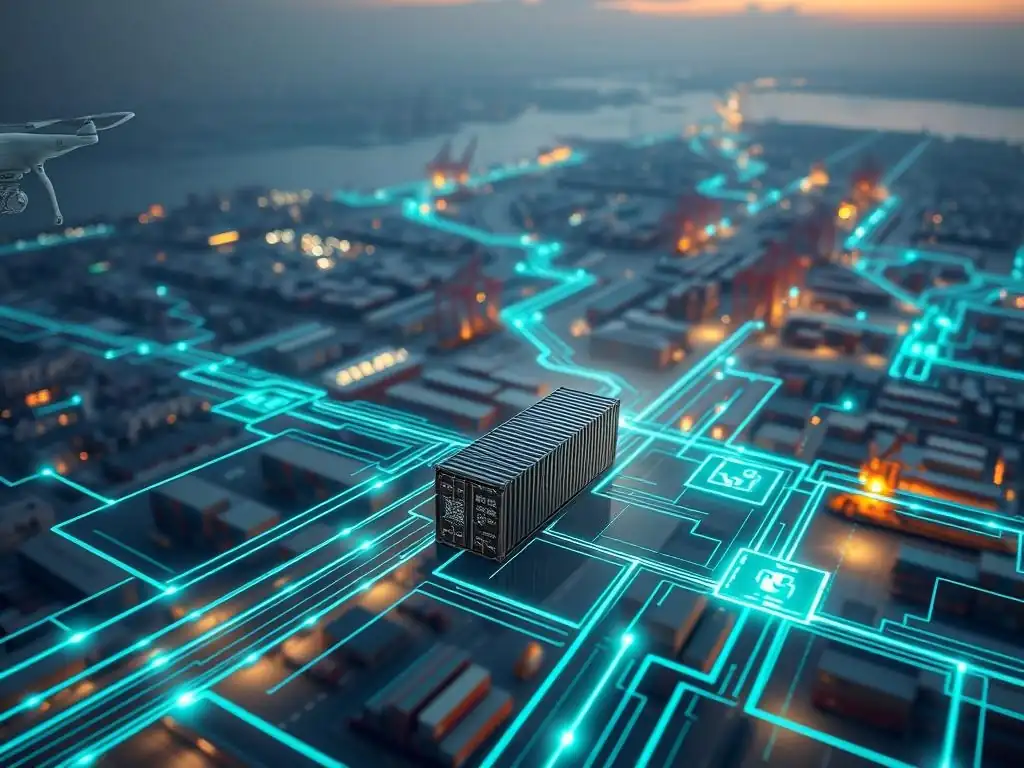
One of the most direct ways blockchain helps in reducing logistics delays is by providing unparalleled real-time visibility across the supply chain. As discussed, blockchain, often integrated with IoT sensors, creates a live, immutable log of a shipment's progress and condition. This means that stakeholders can see exactly where goods are, whether they are on schedule, and if any environmental parameters (like temperature) are outside acceptable ranges, all verifiable on the shared ledger. This real-time data stream is crucial because it allows for immediate identification of potential issues as they arise.
Beyond just tracking, the verifiable historical and real-time data on the blockchain feeds into sophisticated predictive analytics models. These models can analyze current conditions against vast historical data to predict the likelihood and estimated duration of potential delays. For example, if a shipment is moving slower than expected through a known congestion zone, the system can flag a potential delay hours in advance, allowing logistics managers to explore alternative options. This proactive identification and prediction, powered by the integrity of blockchain data, is a fundamental step towards minimizing the impact of disruptions and reducing overall logistics delays.
Automated Delay Management Through Smart Contracts
Blockchain-based smart contracts offer a powerful mechanism for automating the management and mitigation of delays once they are predicted or occur. When a potential delay is identified through real-time tracking and predictive analytics recorded on the blockchain, a smart contract can be triggered based on predefined rules embedded in its code. For instance, a smart contract could automatically notify relevant parties (shipper, carrier, receiver) the moment a shipment's status changes to "delayed" based on verifiable GPS data.
Furthermore, smart contracts can automate actions to mitigate the delay or its consequences. This could include automatically initiating a search for an alternative carrier if the original one is significantly off schedule, adjusting delivery schedules with receiving parties, or even calculating and processing compensation or penalty payments based on the terms agreed upon and recorded in the contract, verified by immutable blockchain data. This automated response capability significantly speeds up the reaction time to disruptions, reducing the overall impact of delays and improving the efficiency of blockchain logistics operations.
Enhancing Communication and Collaboration to Minimize Disruptions
Effective communication and collaboration among supply chain partners are vital for minimizing disruptions and reducing logistics delays. Traditional communication methods, often relying on emails, phone calls, or faxes, are prone to misinterpretation, delays, and lack of a clear audit trail. Blockchain addresses this by providing a shared, transparent, and secure platform where all relevant information regarding a shipment's status, potential issues, and proposed solutions can be recorded and accessed by authorized parties in near real-time.
When a disruption occurs, such as a vehicle breakdown or unexpected road closure, the incident and its impact can be quickly documented on the blockchain. This information is immediately visible to all relevant stakeholders, enabling faster and more coordinated responses. For example, a carrier can log a breakdown, triggering notifications to the shipper and receiver via the blockchain platform.
Collaborative decision-making regarding rerouting or alternative arrangements can then be facilitated using the shared, verifiable data. This enhanced, transparent communication channel, underpinned by blockchain's integrity, fosters greater trust and allows partners to work together more effectively to navigate challenges and minimize blockchain logistics route optimization delays.
Case Studies: Blockchain Success Stories in Logistics
Maersk and IBM's TradeLens: Streamlining Global Trade
One of the most prominent examples of blockchain implementation in logistics is TradeLens, a platform developed by Maersk and IBM. Launched in 2018, TradeLens aims to digitize and streamline global container shipping supply chains, which traditionally involve complex interactions among dozens of parties including carriers, ports, customs authorities, freight forwarders, and inland transportation providers. The platform uses blockchain technology to create a shared, immutable record of transactions and events throughout a shipment's journey, from the booking of a container to its final delivery.
TradeLens provides participants with enhanced visibility into the movement of goods, enabling them to track shipments in near real-time and access authenticated data regarding container status, documentation, and customs clearance. By standardizing and securing the flow of information, the platform helps reduce manual processes, minimize errors, and accelerate transit times. While initial adoption faced challenges, the platform has demonstrated the potential for significant efficiency gains, with early users reporting reductions in transit times and improved predictability, directly contributing to tackling logistics delays and improving overall global trade efficiency.
Walmart's Food Traceability Initiative: Enhancing Food Safety
Walmart's initiative to use blockchain for food traceability is another compelling case study showcasing the technology's practical benefits in the supply chain, with direct implications for logistics. In response to foodborne illness outbreaks, Walmart mandated that suppliers of leafy greens implement blockchain-based tracking to enhance traceability. Traditionally, tracing the origin of contaminated food could take weeks, involving manual record-keeping across multiple entities.
By implementing a blockchain solution, Walmart significantly reduced the time required to trace food back to its source. In a pilot test, tracing a mango from farm to store using traditional methods took over seven days; with blockchain, it took just 2.2 seconds.
This rapid traceability is critical for isolating contaminated products quickly, minimizing the scope of recalls, and protecting consumer health. While primarily focused on food safety, this enhanced traceability also provides logistics benefits by offering clear, verifiable data on product movement, handling, and location throughout the supply chain, improving overall visibility and contributing to more efficient logistics operations.
Analyzing the Key Benefits and ROI of Blockchain Adoption
Analyzing the key benefits and potential Return on Investment (ROI) of blockchain adoption in logistics reveals several compelling advantages. The primary benefits include enhanced transparency and traceability, improved data security and integrity, increased efficiency through automation (especially via smart contracts), and better collaboration among supply chain partners. These benefits directly translate into cost savings and revenue opportunities. For instance, reduced administrative costs due to automated processes can be significant, potentially cutting down on paperwork and manual data entry by a considerable margin.
Furthermore, improved visibility and predictability lead to reduced logistics delays, which in turn minimize costs associated with demurrage, penalties, and expedited shipping. Faster customs clearance, facilitated by secure, verifiable documentation on the blockchain, can shave days off transit times for international shipments.
While quantifying the exact ROI can vary greatly depending on the specific implementation and scale, studies and pilot programs suggest potential savings in the range of 10-25% in administrative costs and substantial reductions in dispute resolution time. The ability to offer more reliable and efficient services can also provide a competitive advantage, potentially leading to increased business and revenue growth, making blockchain logistics route optimization a worthwhile investment for many companies.
Overcoming the Challenges of Blockchain Implementation in Logistics
Addressing Scalability Issues in Blockchain Networks
One of the significant challenges facing widespread blockchain adoption in logistics is scalability. Public blockchains like Bitcoin or Ethereum, while decentralized and secure, can process a limited number of transactions per second (e.g., Bitcoin handles around 7 transactions/second, Ethereum around 15-30, though newer versions aim for more). A global logistics network, however, generates millions of transactions daily – from location updates and temperature readings to custody transfers and payment triggers. Current public blockchain speeds are often insufficient to handle this volume efficiently.
Permissioned or private blockchains, such as Hyperledger Fabric or R3 Corda, are often considered for enterprise logistics applications because they offer higher transaction throughput and lower latency. These networks restrict participation to known parties, allowing for more efficient consensus mechanisms. Industry consortia are also working on scaling solutions like sharding or layer-2 protocols to increase transaction capacity. While progress is being made, ensuring a blockchain network can handle the immense volume and velocity of data generated by large-scale logistics operations remains a critical area of development to fully realize the potential of blockchain logistics route optimization and delay reduction.
Data Security and Privacy Considerations for Logistics Data
While blockchain is inherently secure due to its cryptographic nature and immutability, implementing it in logistics raises specific data security and privacy considerations. Logistics data, including shipment contents, values, customer information, and routes, is often sensitive and proprietary. While the ledger is tamper-proof, ensuring that only authorized parties can access specific data is paramount, especially in permissioned networks where participants are known entities. Cryptographic techniques like zero-knowledge proofs can allow verification of data without revealing the data itself, offering enhanced privacy.
Furthermore, the integration of IoT devices feeding data to the blockchain introduces potential vulnerabilities at the edge. Securing these devices and ensuring the integrity of the data they transmit before it is recorded on the ledger is crucial. Compliance with data privacy regulations like GDPR (General Data Protection Regulation) also needs careful consideration.
While blockchain data is immutable, GDPR grants individuals the 'right to be forgotten' in some cases, which poses a conceptual challenge. Solutions often involve storing sensitive personal data off-chain, with only a hashed reference on the blockchain, or designing the network such that personal data is not directly stored on the ledger, addressing privacy while retaining the benefits for blockchain logistics route optimization.
Regulatory Compliance and Standardization in Blockchain Logistics
Navigating the complex landscape of regulatory compliance and achieving standardization are critical hurdles for blockchain implementation in logistics. Logistics operations cross numerous jurisdictions, each with its own set of rules regarding data handling, trade compliance, customs procedures, and liability. Integrating blockchain into these processes requires ensuring that the technology not only complies with existing regulations but is also recognized and accepted by relevant authorities worldwide. For example, electronic bills of lading on a blockchain need legal recognition equivalent to paper documents in various countries.
The lack of universal standards for blockchain platforms and data formats is another significant challenge. Different consortia and companies are developing their own blockchain solutions, which can lead to interoperability issues. For a blockchain network to effectively connect diverse players in the supply chain, from small carriers to large customs agencies, common protocols and data standards are necessary.
Industry-wide collaboration is needed to establish these standards, ensuring seamless data exchange and widespread adoption. Addressing these regulatory and standardization challenges is essential for unlocking the full potential of blockchain logistics route optimization and for the technology to become a ubiquitous tool in global supply chains.
The Future of Blockchain in Logistics: Trends and Predictions
Blockchain and IoT Integration for Enhanced Tracking
The future of blockchain in logistics is intrinsically linked with the continued integration of Internet of Things (IoT) devices. As the cost of sensors decreases and connectivity expands globally, more shipments, vehicles, and assets will be equipped with devices that can report real-time data on location, condition (temperature, humidity, shock), and security status. Blockchain provides the ideal secure and immutable ledger to record this vast stream of IoT data. This combination allows for highly granular and verifiable tracking, creating a 'digital twin' of the physical supply chain on the blockchain.
This enhanced integration will move beyond simple tracking to enable sophisticated monitoring and automated responses. Smart contracts triggered by IoT data recorded on the blockchain can automatically initiate actions like temperature adjustments in refrigerated containers, rerouting vehicles based on real-time traffic reported by connected infrastructure, or alerting authorities if a container is tampered with. This fusion of verifiable IoT data on an immutable blockchain ledger will provide unprecedented visibility and control, dramatically improving efficiency and reliability in blockchain logistics operations and further refining blockchain logistics route optimization.
The Rise of Decentralized Logistics Platforms
Building on the principles of blockchain, the logistics sector is likely to see the rise of truly decentralized logistics platforms. These platforms could move away from centralized marketplaces or brokerage models towards peer-to-peer networks where shippers and carriers can interact directly on a blockchain. Smart contracts could automate the bidding, booking, and payment processes, reducing the need for intermediaries and potentially lowering costs. Reputation systems built on the blockchain could track and verify the performance of participants, fostering trust in a decentralized environment.
Such platforms could also facilitate collaborative logistics, allowing multiple companies to pool resources, consolidate shipments, and optimize routes together based on shared, verifiable data without revealing sensitive competitive information. This move towards decentralization, powered by blockchain, could democratize access to logistics services, increase efficiency by optimizing across networks rather than within single companies, and create more resilient supply chains less reliant on central points of control. This represents a significant evolution in how logistics services are procured and managed, driven by the capabilities of blockchain logistics route optimization in a distributed network.
The Impact of Blockchain on Sustainable Supply Chain Practices
Blockchain technology is poised to have a significant impact on promoting sustainable supply chain practices within logistics. By providing immutable traceability, blockchain can verify the origin of goods and track their journey through the supply chain, making it easier to ensure compliance with ethical sourcing, fair labor practices, and environmental regulations. For example, companies can use blockchain to prove that raw materials were sourced sustainably or that carbon emissions targets were met during transportation.
Furthermore, the efficiency gains achieved through blockchain logistics route optimization and reduced delays directly contribute to sustainability. More efficient routes mean less fuel consumption and lower greenhouse gas emissions. Reduced delays and better predictability minimize waste associated with spoilage (for perishables) or overstocking. Blockchain can also track and verify the proper disposal or recycling of goods, closing the loop in a circular economy model. By providing the data integrity and transparency needed to verify sustainable practices, blockchain empowers companies to build more environmentally and socially responsible logistics operations.
Conclusion: Blockchain as a Catalyst for Logistics Transformation
Blockchain technology is emerging as a powerful catalyst for transforming the logistics industry, addressing long-standing challenges related to inefficiency, lack of transparency, and delays. By providing a secure, immutable, and shared ledger, blockchain enables unprecedented visibility and traceability across complex supply chains. This foundational capability lays the groundwork for significant improvements, particularly in the critical areas of route optimization and delay reduction.
The application of blockchain, coupled with smart contracts and integrated IoT data, allows for dynamic and automated processes that can create more efficient routes, predict potential delays with greater accuracy, and manage disruptions proactively. Case studies like TradeLens and Walmart's traceability initiative demonstrate the tangible benefits, from streamlined global trade to enhanced food safety. While challenges related to scalability, data privacy, and standardization remain, ongoing developments and collaborative efforts are steadily paving the way for wider adoption.
The future promises further integration with IoT and the rise of decentralized platforms, all contributing to more efficient, transparent, and sustainable logistics operations. Ultimately, blockchain logistics route optimization delays are being tackled head-on by this transformative technology, promising a more resilient and responsive global supply chain.
Frequently Asked Questions
How can blockchain technology specifically help with logistics route optimization?
Blockchain enables a shared, immutable ledger for all parties involved in the supply chain. This transparency allows for better route planning based on real-time data and historical performance, leading to more efficient pathways.
What role does blockchain play in reducing delays within logistics operations?
By providing real-time tracking and verifiable timestamps for each step of the process, blockchain helps identify bottlenecks and potential delays. This increased visibility allows for proactive intervention and faster problem resolution.
Beyond tracking, what other benefits does blockchain offer to the logistics industry?
Blockchain facilitates smart contracts that automate processes like payment and customs clearance, reducing manual intervention and potential errors. It also enhances security and trust between stakeholders in the supply chain.
What are the main challenges in implementing blockchain solutions for logistics route optimization and delay reduction?
Interoperability between different blockchain platforms and legacy systems is a major hurdle. Data privacy concerns and the need for industry-wide standardization also pose significant challenges.
How does regulation impact the adoption of blockchain-based logistics solutions for route optimization delays?
Clear and consistent regulations are needed to provide a legal framework for blockchain-based transactions and data sharing. Uncertainty surrounding regulations can hinder investment and slow down adoption in the logistics sector.
Final Reflection: Embracing Transparency in Transit
The promise of seamless supply chains has long been a logistical aspiration, but the inherent complexities of global trade often lead to bottlenecks and inefficiencies. Today, as businesses grapple with unprecedented disruptions and heightened consumer expectations, the need for transparency and optimization in logistics is more critical than ever. Blockchain technology, with its inherent security and decentralized nature, offers a powerful solution to revolutionize route optimization and minimize costly delays.
The impact of blockchain on logistics extends far beyond mere efficiency gains; it fosters a new era of trust and accountability across the entire supply chain. Witnessing the potential of this technology to reshape how goods are moved and tracked inspires a sense of optimism for a future where delays are minimized and resources are utilized more effectively. The supply chain is the backbone of global commerce, and blockchain is the nervous system that will bring it to life.
- Don Tapscott, Blockchain Revolution.
As we conclude this exploration of blockchain's transformative power in logistics, I invite you to consider how these principles of transparency, security, and optimization can be applied in your own sphere of influence. Whether you're a business leader seeking to streamline operations or a consumer demanding greater accountability, embrace the potential of blockchain to build a more efficient, resilient, and trustworthy future for global trade. Let's work together to unlock the full potential of this technology and create a world where goods flow seamlessly, and delays become a distant memory.
Unlock the Future: Implement Blockchain in Your Logistics Today!
Thank you for diving into the potential of blockchain to revolutionize logistics. We hope you've gained valuable insights into how this technology can streamline routes and minimize delays. Now, let's put this knowledge into action!
Here are a few steps you can take to get started:
- Initiate a pilot project: Start small by implementing blockchain for a single, well-defined logistics route. This will allow you to test its effectiveness and identify potential challenges before scaling up.
- Explore blockchain-based logistics platforms: Research and compare available platforms to find the best fit for your business needs and technological infrastructure.
- Share this article with your colleagues and network: Help spread the word about the transformative potential of blockchain in logistics.
What's one small step you can take this week to explore the use of blockchain in your logistics operations?
Leave a Reply