
The Security Layer: Blockchain's Added Protection for Efficient Logistics

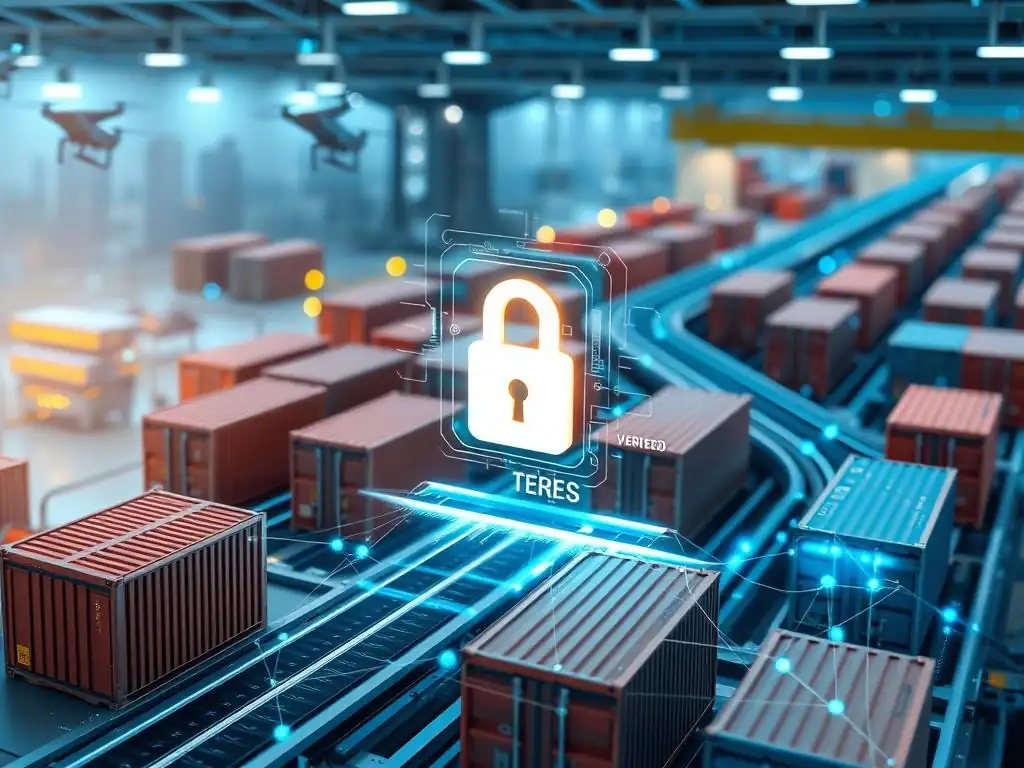
Welcome to Blockchain Trends, your gateway to understanding the groundbreaking impact of blockchain technology beyond the headlines. Are you ready to discover how blockchain is revolutionizing industries? This month, we delve into a critical area: supply chain management. Explore how implementing blockchain can unlock significant blockchain logistics security benefits, adding an unprecedented layer of protection and efficiency to your operations. Intrigued? Keep reading to uncover the secrets behind this transformative technology and its potential to reshape the future of logistics.
The Security Layer: Blockchain's Added Protection for Efficient Logistics
- Introduction: Revolutionizing Logistics with Blockchain Technology
- Understanding Blockchain Logistics Security Benefits
- How Blockchain Enhances Security in Logistics: A Detailed Look
- Specific Applications of Blockchain for Logistics Security
- Blockchain vs. Traditional Security Methods in Logistics
- Overcoming Challenges in Implementing Blockchain for Logistics Security
- Real-World Examples of Blockchain Security in Logistics
- The Future of Blockchain Logistics Security Benefits
- Conclusion: Embracing Blockchain for a More Secure and Efficient Logistics Ecosystem
-
Frequently Asked Questions
- What are the primary blockchain logistics security benefits highlighted in the article?
- How does blockchain enhance transparency in logistics operations?
- In what ways does blockchain improve traceability within the logistics sector?
- What role does immutability play in boosting logistics security using blockchain?
- Beyond security, what other advantages does blockchain bring to logistics operations?
- Final Reflection: Embracing Blockchain's Secure Logistics Future
- Unveil the Future of Logistics Security!
Introduction: Revolutionizing Logistics with Blockchain Technology
The Growing Need for Enhanced Security in Modern Logistics
The complexity of modern global supply chains presents significant security challenges. As goods traverse multiple borders, modes of transport, and intermediaries, the risk of theft, damage, counterfeiting, and data breaches escalates. Traditional paper-based systems and disparate digital platforms often lack real-time visibility and robust mechanisms for ensuring data integrity and preventing unauthorized access.
The estimated cost of supply chain crime globally is staggering, potentially reaching hundreds of billions of dollars annually, highlighting the urgent need for more secure and resilient logistics operations. This imperative for enhanced security is not just about protecting physical goods but also safeguarding sensitive information related to shipments, customers, and trade secrets.
Furthermore, the increasing reliance on interconnected digital systems, while boosting efficiency, also expands the attack surface for cyber threats. Phishing attacks, ransomware, and data manipulation pose serious risks to logistics data, potentially disrupting operations, causing financial losses, and eroding trust among supply chain partners.
The fragmented nature of traditional IT infrastructures in logistics means that a security breach in one part of the chain can have cascading effects, compromising the integrity of data further down the line. Addressing these vulnerabilities requires a fundamental shift towards more secure, transparent, and resilient technological frameworks that can protect against both physical and digital threats across the entire logistics lifecycle.
Blockchain's Promise: Beyond Cryptocurrencies, Towards Secure Supply Chains
While blockchain technology first gained prominence through cryptocurrencies like Bitcoin, its potential extends far beyond digital currency into various sectors, including logistics. At its core, blockchain is a distributed, immutable ledger that records transactions in a secure and transparent manner. This inherent architecture offers a compelling solution to many of the security challenges plaguing traditional logistics. By providing a shared, tamper-evident record of every event and transaction within the supply chain, blockchain can build a foundation of trust among disparate parties who may not inherently trust each other.
The application of blockchain technology in logistics is poised to deliver significant benefits, particularly in establishing a robust security layer. This technology enables verifiable tracking of goods, secure sharing of documents, and immutable recording of events, drastically reducing opportunities for fraud, errors, and unauthorized alterations. Exploring the Blockchain logistics security benefits reveals how this decentralized approach can create more resilient, transparent, and trustworthy supply chains, moving beyond simple tracking to provide a comprehensive security framework that protects assets and data from origin to destination.
Understanding Blockchain Logistics Security Benefits
What Makes Blockchain Secure for Logistics Operations?
Blockchain's fundamental design principles contribute directly to its security capabilities in logistics. Unlike centralized databases, a blockchain is distributed across multiple nodes, meaning there is no single point of failure that can be exploited by attackers. Data recorded on a blockchain is cryptographically linked in blocks, creating a chain where altering one block would require altering all subsequent blocks, a computationally infeasible task. This structure inherently protects against data manipulation and ensures the integrity of the information stored.
Moreover, access and validation rules are determined by consensus mechanisms across the network, rather than relying on a single authority. This decentralized validation process makes it extremely difficult for any single entity to fraudulently alter transaction records or introduce false data into the system. These core characteristics—distribution, cryptographic linking, and consensus—combine to create a highly secure environment for recording and managing logistics data, offering substantial Blockchain logistics security benefits compared to traditional, more vulnerable systems.
Key Security Features: Immutability, Transparency, and Decentralization
The security of blockchain in logistics is underpinned by several key features:
- Immutability: Once data is recorded on a blockchain and validated, it is exceptionally difficult, if not impossible, to alter or delete it. Each block contains a cryptographic hash of the previous block, creating a secure chain. Any attempt to tamper with data in an earlier block would break this chain, immediately signaling that the data has been compromised. This immutability ensures a reliable audit trail for every product movement, ownership change, and condition report throughout the supply chain, making it invaluable for verifying authenticity and accountability.
- Transparency: While privacy can be maintained through permissions and data encryption, the ledger itself can be designed to be transparent to authorized participants. All parties involved in a specific transaction or supply chain segment can potentially view the same, consistent record of events. This shared visibility reduces information asymmetry, minimizes disputes, and makes it easier to identify discrepancies or fraudulent activities quickly. Different levels of transparency can be implemented depending on the specific blockchain network and data sensitivity, from fully public ledgers to permissioned networks where access is restricted to known entities.
- Decentralization: The blockchain ledger is not stored in one location but is replicated and distributed across numerous computers or nodes on the network. This eliminates the risks associated with centralized databases, such as single points of failure, data loss due to server crashes, or targeted cyberattacks on a central hub. If one node goes offline or is compromised, the network as a whole remains operational and secure, as the data is verified and maintained by other participants. This distributed architecture significantly enhances the resilience and reliability of the logistics security system.
These features collectively provide robust Blockchain logistics security benefits, creating a trustworthy environment for logistics data management that is resistant to tampering, provides clear visibility, and is resilient against various threats.
How Blockchain Enhances Security in Logistics: A Detailed Look
Preventing Counterfeiting and Fraud in the Supply Chain
Counterfeiting and fraud are major issues in global logistics, costing industries billions and posing risks, especially in sectors like pharmaceuticals and luxury goods. Blockchain technology offers a powerful mechanism to combat these problems. By assigning a unique digital identity (often linked to a physical identifier like a QR code or NFC tag) to each product at its origin, and recording its journey on an immutable ledger, blockchain creates a verifiable history.
This allows consumers, regulators, and supply chain partners to trace the product back to its source and verify its authenticity at any point. For instance, a consumer could scan a code on a product to see its entire history, including manufacturing date, location, and transit records, making it difficult for counterfeit goods without this verifiable history to enter the legitimate supply chain.
The transparency and immutability aspects are key here. Every transfer of ownership, location scan, or status update is recorded as a transaction on the blockchain. If a product's history is incomplete or shows inconsistencies, it raises a red flag, indicating potential fraud or counterfeiting.
This is particularly critical in industries where product integrity is paramount. According to some industry reports, using blockchain for anti-counterfeiting could reduce losses from fake goods by a significant percentage, potentially up to 15-20% in affected sectors, by enabling rapid identification and removal of fraudulent items from the market. This direct impact on reducing illegal trade is a tangible Blockchain logistics security benefit.
Improving Data Integrity and Traceability with Blockchain
Maintaining accurate and trustworthy data across complex logistics operations is a persistent challenge. Errors in data entry, delays in updates, or malicious alterations can lead to misrouted shipments, inventory inaccuracies, and compliance issues. Blockchain addresses this by providing a single source of truth for all authorized participants. Once data—such as shipment details, sensor readings (temperature, humidity), or customs documentation—is recorded on the blockchain, its integrity is protected by cryptographic hashing and the consensus mechanism. Any attempt to change the data would be immediately detectable as it would break the chain of hashes.
This enhanced data integrity directly improves traceability. With an immutable record of every step a product or shipment takes, companies gain unprecedented visibility into their supply chains. They can pinpoint exactly where a delay occurred, who handled the goods at each stage, and verify conditions during transit.
This level of traceability is crucial for rapid recalls in case of quality issues, investigating loss or damage claims, and ensuring regulatory compliance. For example, tracking a food product from farm to fork becomes verifiable and transparent, which can significantly reduce the time and scope of a recall, potentially saving lives and minimizing financial impact. The ability to trust the data at every point is a core Blockchain logistics security benefit.
Securing Sensitive Logistics Data with Cryptographic Techniques
Logistics operations involve a vast amount of sensitive data, including shipment manifests, customer information, pricing details, and proprietary routes. Protecting this data from cyber threats is critical. Blockchain leverages advanced cryptographic techniques not only to link blocks but also to secure individual transactions and control access. Public-key cryptography is used to verify the identity of participants and authorize transactions, ensuring that only authorized parties can record or access specific types of information. Data can also be encrypted before being added to the blockchain, adding another layer of security.
Furthermore, while the ledger structure is distributed, access can be managed through permissioned blockchains, where participants must be validated and granted specific rights to view or record data. This allows companies to share relevant information securely with partners (e.g., carriers, customs agents) without exposing sensitive competitive data to the entire network.
Smart contracts, self-executing contracts with the terms directly written into code on the blockchain, can also automate and secure processes like payments or releases of goods based on verifiable events recorded on the ledger, reducing the risk of human error or malicious interference in transactional workflows. These cryptographic safeguards and access controls are fundamental Blockchain logistics security benefits, protecting valuable information from unauthorized access and manipulation.
Specific Applications of Blockchain for Logistics Security
Tracking and Tracing Goods: Reducing Loss and Theft
Effective tracking and tracing are fundamental to secure logistics, and blockchain significantly enhances these capabilities. By creating an immutable, shared ledger of every movement and handling event for a package or container, blockchain provides a level of transparency and accountability previously unattainable. Each scan, transfer of custody, or status update is recorded as a transaction, timestamped and cryptographically secured. This creates a digital thread that follows the physical goods, visible to all authorized parties.
This enhanced traceability directly contributes to reducing loss and theft. If a shipment goes missing or is delayed, the blockchain record allows for precise identification of the last known location and the party responsible at that point. This accountability acts as a deterrent to theft and provides clear evidence for investigations.
For high-value goods, the granularity of tracking can be increased, with sensors logging conditions and GPS data immutably recorded on the chain. Projects have demonstrated improvements in tracking accuracy, with some pilot programs reporting a reduction in lost or unaccounted-for shipments by upwards of 10-15% compared to traditional methods lacking a unified, trusted record. This reduction in shrinkage is a clear Blockchain logistics security benefit.
Streamlining Customs Clearance: Enhancing Security and Efficiency
Customs clearance is often a bottleneck in global logistics, involving extensive documentation, multiple agencies, and potential delays due to verification processes. Blockchain can streamline this by providing a secure, shared platform for relevant parties—importers, exporters, carriers, customs authorities, and banks—to submit, verify, and access necessary documents and data. Instead of relying on paper documents or disparate electronic systems, all parties can access the same version of trade data on the blockchain, reducing discrepancies and the need for manual verification.
The security benefits here are twofold: first, the immutability of the data ensures that submitted documents (like bills of lading, commercial invoices, certificates of origin) cannot be tampered with after submission, reducing the risk of fraud. Second, the transparency (among authorized parties) allows customs officials to quickly verify the legitimacy of a shipment's contents and history, speeding up the clearance process.
Pilot programs exploring blockchain for customs have shown potential reductions in clearance times by days and significant decreases in the volume of paper documentation, while simultaneously enhancing the security posture by providing a trusted audit trail for regulators. This efficiency gain, underpinned by enhanced security, is a key Blockchain logistics security benefit.
Managing Inventory: Preventing Overstocking and Shortages
Accurate inventory management is crucial for operational efficiency and financial health, but it's often hampered by poor data visibility and delayed updates across warehouses and distribution centers. Blockchain can improve inventory security and accuracy by providing a real-time, shared ledger of inventory levels and movements across the supply chain network. Every item received, shipped, or transferred is recorded as a transaction, creating an immutable record of inventory status.
This shared, accurate view helps prevent issues like ghost inventory (items recorded but physically missing) or miscounts, which can result from data entry errors or theft. By providing a single source of truth, blockchain enables better forecasting and demand planning, reducing the likelihood of costly overstocking or damaging shortages. For example, tracking raw materials from supplier to manufacturing to finished goods distribution on a blockchain provides continuous, verifiable inventory data, allowing for just-in-time strategies with greater confidence.
Companies implementing blockchain for inventory visibility have reported reductions in inventory discrepancies by over 20% in some cases, leading to significant cost savings and improved security against shrinkage. This tangible improvement in inventory control is a direct Blockchain logistics security benefit.
Blockchain vs. Traditional Security Methods in Logistics

Limitations of Traditional Systems: Vulnerabilities and Inefficiencies
Traditional logistics security relies heavily on a combination of physical security measures (locks, guards), paper-based documentation, centralized databases, and fragmented electronic systems (like EDI). While these methods have served the industry for decades, they suffer from significant limitations. Paper documents are susceptible to loss, damage, and manual alteration. Centralized databases are attractive targets for cyberattacks and can suffer from single points of failure. Electronic Data Interchange (EDI) systems, while automating some processes, are often based on outdated technology, lack real-time capabilities, and can be expensive and complex to integrate across diverse partners, creating data silos.
These traditional approaches often lack end-to-end visibility and a unified, tamper-proof record across the entire supply chain. This fragmentation makes it difficult to quickly identify the source of errors, fraud, or security breaches. For instance, tracking a shipment across multiple carriers, each using their own system, creates data gaps and delays. Recovering from a data breach in a centralized system can be time-consuming and costly, potentially exposing sensitive information. The inherent vulnerabilities and inefficiencies of these legacy methods highlight the need for a more robust and integrated security framework like the one offered by blockchain.
Blockchain's Advantages: A Comparative Analysis of Security Protocols
Comparing blockchain's security protocols to traditional methods reveals distinct advantages that contribute to Blockchain logistics security benefits. Traditional systems often rely on perimeter security and access controls around centralized data repositories. While necessary, this doesn't protect against insider threats or data manipulation once access is gained. Blockchain, conversely, builds security into the very structure of the data itself through cryptographic hashing and immutability. Every record is inherently protected against retrospective alteration.
Furthermore, traditional systems often depend on trust between individual parties, which is verified through contracts and audits. Blockchain, through its decentralized consensus mechanisms, replaces the need for blind trust with cryptographic proof and verifiable processes. Transactions are validated by multiple participants on the network, making collusion to defraud the system significantly harder than altering records in a single database. While traditional systems might employ encryption, blockchain combines encryption with distribution and immutability, offering a multi-layered security approach that is more resilient to various forms of attack and error.
Case Study: Comparing Blockchain and Traditional Security in Pharmaceutical Tracking
Consider the pharmaceutical industry, where preventing counterfeiting and ensuring product integrity are matters of public health. Traditionally, tracking pharmaceuticals involves serial numbers, paper manifests, and disparate databases managed by manufacturers, distributors, pharmacies, and regulators. This system is vulnerable to counterfeit products entering the supply chain at various points, and tracing a specific batch in case of a recall can take days or even weeks, relying on manual searches through scattered records. Estimates suggest billions are lost annually to pharmaceutical counterfeiting.
A blockchain-based system for pharmaceutical tracking, like those being piloted under regulations such as the US DSCSA (Drug Supply Chain Security Act), would record the unique identifier of each drug package on a distributed ledger from manufacturing to dispensing. Every change in ownership or location is a verifiable transaction. If a counterfeit product (without a valid blockchain history) attempts to enter the chain, it can be immediately flagged.
In a recall scenario, tracing the affected batch to specific pharmacies or patients can be done in minutes by querying the immutable blockchain record, significantly reducing the public health risk and financial impact compared to the days or weeks required with traditional methods. This stark contrast highlights the profound Blockchain logistics security benefits in critical sectors.
Overcoming Challenges in Implementing Blockchain for Logistics Security
Addressing Scalability Issues in Blockchain Networks
While blockchain offers significant security advantages, implementing it for large-scale global logistics operations presents challenges, particularly concerning scalability. Public blockchains like Bitcoin or Ethereum, while highly secure, process a limited number of transactions per second compared to the millions required by global logistics giants. This can lead to network congestion and slow transaction finality, which is incompatible with the fast pace of supply chain operations.
Solutions are being developed and implemented to address this. Permissioned or private blockchains (like Hyperledger Fabric or Corda), designed for enterprise use, offer higher transaction throughput by restricting participation to known entities and using more efficient consensus mechanisms. Layer 2 scaling solutions and sharding are also being explored to increase the transaction capacity of public networks.
For logistics, the focus is often on permissioned networks where throughputs of several thousand transactions per second are becoming achievable, moving closer to the demands of complex supply chains. Overcoming scalability is crucial to realizing the full Blockchain logistics security benefits on a global scale.
Ensuring Interoperability with Existing Logistics Systems
Another significant hurdle is integrating blockchain solutions with the vast array of existing legacy IT systems used in logistics, including Warehouse Management Systems (WMS), Transportation Management Systems (TMS), Enterprise Resource Planning (ERP) systems, and Electronic Data Interchange (EDI). These systems often operate on different technological stacks and data formats, making seamless data exchange with a blockchain network complex. For blockchain to be truly effective, it needs to ingest data accurately from these systems and potentially feed verified data back.
Achieving interoperability requires developing robust APIs (Application Programming Interfaces) and middleware that can translate data between legacy systems and the blockchain. Industry standards for data formatting on the blockchain are also needed to ensure consistency across different platforms and participants. While challenging, successful integration is vital for adoption. Pilot projects have demonstrated that with careful planning and development, it is possible to link existing systems to blockchain networks, allowing companies to leverage Blockchain logistics security benefits without a complete overhaul of their IT infrastructure.
Regulatory Compliance and Data Privacy Considerations
Implementing blockchain in logistics also raises complex regulatory and data privacy questions. Regulations like GDPR in Europe grant individuals the "right to be forgotten," allowing them to request the deletion of their personal data. The immutable nature of blockchain, however, makes deleting data extremely difficult. This conflict requires careful consideration of what type of data is stored directly on the chain versus what is stored off-chain with only a hashed reference on the blockchain.
Furthermore, different countries have varying regulations regarding data sovereignty, electronic signatures, and the legal status of blockchain records. Navigating this complex global regulatory landscape requires careful legal review and system design to ensure compliance. Companies must design their blockchain solutions to comply with relevant data privacy laws, potentially using techniques like zero-knowledge proofs or storing only anonymized or encrypted data hashes on the public ledger while keeping sensitive details in off-chain, permissioned databases. Addressing these legal and privacy concerns is critical for the successful and compliant deployment of solutions leveraging Blockchain logistics security benefits.
Real-World Examples of Blockchain Security in Logistics
Example: IBM Food Trust and its Impact on Food Safety
IBM Food Trust is a notable example of blockchain being applied to enhance security and traceability in the food supply chain. Developed by IBM and built on Hyperledger Fabric, it connects growers, processors, wholesalers, distributors, manufacturers, retailers, and others through a permissioned blockchain network. Participants can share food origin details, processing data, and shipping information on the immutable ledger.
The primary security benefit demonstrated by IBM Food Trust is the dramatic reduction in the time it takes to trace the origin of contaminated food during a recall. Traditionally, tracing a food item back through the supply chain could take days or even weeks, involving sifting through countless paper records and disparate databases. Walmart, a key partner in IBM Food Trust, reported that tracing a package of mangoes from store back to farm went from seven days to just 2.2 seconds using the blockchain platform.
This rapid traceability is a critical public safety security benefit, enabling faster removal of potentially harmful products from shelves and minimizing outbreaks. The platform also enhances data integrity, ensuring that information about food handling and conditions is accurate and tamper-proof from farm to table.
Example: Maersk and IBM's TradeLens Platform for Supply Chain Visibility
TradeLens, a platform jointly developed by Maersk and IBM (also built on Hyperledger Fabric), is another significant real-world application focusing on container shipping and global trade logistics. It aims to provide end-to-end visibility and streamline information sharing among shippers, ports and terminals, customs authorities, ocean carriers, and inland transportation providers.
The security benefits of TradeLens stem from creating a single, shared, immutable record of container movements, documentation, and events accessible to authorized parties. This reduces reliance on error-prone manual processes and prevents data manipulation. For example, the platform secures key documents like bills of lading and customs declarations by placing them or their hashes on the blockchain, ensuring their integrity and authenticity.
This enhanced security posture helps prevent fraud and speeds up processes like port clearances. While specific quantifiable security improvements are still emerging as the platform scales, the increased data accuracy, transparency among partners, and reduction in potential points of data tampering represent significant Blockchain logistics security benefits for the complex world of global container logistics.
Quantifiable Results: Improvements in Security and Efficiency
While precise, publicly available figures on security improvements directly attributable solely to blockchain are still relatively nascent, the examples above and numerous pilot projects point towards significant quantifiable results in related areas like efficiency and traceability, which underpin security. For instance, reducing traceability time from days to seconds, as demonstrated by IBM Food Trust, is a direct security improvement in terms of faster response to threats (like contamination).
Reports from various industry pilots suggest potential benefits such as:
- Reduction in documentation errors by up to 25% in some trials.
- Decreased customs clearance times, potentially by 40-50% in some cases, which reduces dwell time and associated risks.
- Lower instances of disputes related to shipment status or condition due to the availability of a shared, immutable record.
- Estimated potential reduction in supply chain fraud and counterfeiting losses, though specific percentages vary widely by industry.
These operational efficiencies and data improvements are direct consequences of the enhanced security and data integrity provided by blockchain, demonstrating tangible Blockchain logistics security benefits that translate into cost savings and increased reliability for businesses.
The Future of Blockchain Logistics Security Benefits
Emerging Trends: Blockchain-Based IoT Security for Logistics
A significant emerging trend is the convergence of blockchain and the Internet of Things (IoT) for logistics security. IoT devices, such as sensors tracking temperature, location, or vibration in shipping containers, generate vast amounts of real-time data. However, these devices can be vulnerable to hacking, and the data they produce could be manipulated before being recorded in a central system.
Integrating IoT devices with a blockchain network allows sensor data to be recorded directly onto the immutable ledger as transactions. This provides a verifiable, tamper-proof record of the conditions goods experienced during transit. Blockchain can also be used to secure the IoT devices themselves, managing their identities and ensuring that data is only accepted from authorized, authenticated sensors.
This combination creates a powerful system for monitoring product integrity and security in real-time, building trust in the data generated by edge devices. The synergy between blockchain's security features and IoT's data collection capabilities promises to unlock even greater Blockchain logistics security benefits in the coming years.
Potential Impact on Global Trade and Supply Chain Management
The widespread adoption of blockchain for logistics security has the potential to fundamentally transform global trade and supply chain management. By creating a more secure, transparent, and efficient flow of goods and information across borders, blockchain can reduce trade barriers, lower costs, and increase the speed and reliability of international commerce. The trust layer provided by blockchain can facilitate transactions between parties who have never worked together before, opening up new markets and opportunities.
A future where key trade documents are securely shared on a blockchain, where product authenticity is easily verifiable, and where payment releases are automated via smart contracts based on immutable delivery confirmations would represent a significant leap forward. This enhanced security and efficiency can lead to more resilient supply chains, better prepared to handle disruptions like pandemics or geopolitical events. The long-term impact of realizing these Blockchain logistics security benefits could include a significant boost to global GDP through more fluid and trustworthy trade flows.
Predictions for the Adoption of Blockchain Security in Logistics
While challenges remain, the trajectory for blockchain adoption in logistics, particularly for its security benefits, appears positive. Industry analysts predict steady growth in the use of blockchain technology in supply chain management over the next decade. Factors driving this adoption include increasing regulatory pressure for traceability (e.g., in food and pharmaceuticals), the growing threat of cyberattacks on logistics infrastructure, and the demonstrated efficiency gains from early implementations.
Initial adoption is likely to continue in high-value or highly regulated sectors where the cost of fraud or lack of traceability is highest. As the technology matures, scalability solutions improve, and interoperability standards emerge, adoption is expected to broaden across general cargo and less regulated industries. While a complete overhaul of all logistics systems to blockchain is not imminent, hybrid approaches and permissioned networks focused on specific security pain points are likely to become more common, solidifying the role of Blockchain logistics security benefits as a key driver for industry modernization.
Conclusion: Embracing Blockchain for a More Secure and Efficient Logistics Ecosystem
Key Takeaways: The Power of Blockchain for Logistics Security
Blockchain technology offers a powerful suite of capabilities that can significantly enhance security within the logistics industry. Its core features—immutability, transparency, and decentralization—provide a robust foundation for securing data, verifying authenticity, and building trust among supply chain participants. From preventing counterfeiting and fraud to improving data integrity, streamlining customs, and enhancing inventory management, the Blockchain logistics security benefits are clear and compelling.
While challenges related to scalability, interoperability, and regulation exist, ongoing developments and real-world implementations demonstrate that these hurdles are being addressed. The potential to create more resilient, transparent, and trustworthy supply chains capable of withstanding both physical and digital threats makes blockchain a transformative technology for the sector. The integration with emerging technologies like IoT further promises to unlock new levels of security and efficiency, paving the way for a more secure global trade environment.
Call to Action: Exploring Blockchain Solutions for Your Logistics Needs
Understanding the profound Blockchain logistics security benefits is the first step towards modernizing your supply chain operations. For businesses operating in logistics, exploring how blockchain technology can be applied to address specific security vulnerabilities and efficiency bottlenecks is no longer a futuristic consideration but a present necessity.
Assess your current security challenges: Where are the points of vulnerability in your data management, product traceability, or partner interactions? Research existing blockchain platforms and solutions tailored for logistics, considering permissioned networks for enterprise use. Engage with technology providers and industry consortia exploring blockchain applications. Pilot programs focused on specific use cases, such as high-value cargo tracking or document security, can provide valuable insights into the practical benefits and implementation considerations. Embracing blockchain is an investment in creating a more secure, transparent, and efficient logistics ecosystem for the future.
Frequently Asked Questions
What are the primary blockchain logistics security benefits highlighted in the article?
The main blockchain logistics security benefits discussed include enhanced transparency, improved traceability, and greater resistance to tampering, making the supply chain more secure and reliable.
How does blockchain enhance transparency in logistics operations?
Blockchain creates a shared, immutable ledger that all authorized participants can access. This transparency allows stakeholders to track goods at every stage, reducing disputes and delays.
In what ways does blockchain improve traceability within the logistics sector?
Blockchain provides a complete and verifiable history of a product's journey. This enhanced traceability helps verify authenticity, prevent counterfeiting, and streamline recall processes if needed.
What role does immutability play in boosting logistics security using blockchain?
Blockchain's immutability ensures that recorded data cannot be altered or deleted once added to the chain. This feature safeguards against fraud and manipulation, contributing to more secure logistics.
Beyond security, what other advantages does blockchain bring to logistics operations?
Besides blockchain logistics security benefits, blockchain can also improve efficiency, reduce costs, and foster collaboration among stakeholders in the supply chain.
Final Reflection: Embracing Blockchain's Secure Logistics Future
The exploration of blockchain's role in logistics security culminates in a powerful realization: the potential for enhanced transparency and trust is no longer a futuristic concept, but a present-day imperative. As global supply chains become increasingly complex and vulnerable to disruption, the inherent security benefits of blockchain offer a tangible solution to mitigate risks and foster greater efficiency. The shift towards decentralized, immutable record-keeping is not merely a technological upgrade; it represents a fundamental reimagining of how we approach logistics management.
The impact of blockchain on logistics extends far beyond simple tracking and tracing. It influences the very fabric of trust between stakeholders, fostering a collaborative environment where data integrity is paramount. Witnessing the evolution of blockchain from a nascent technology to a practical solution for securing supply chains has been truly inspiring, highlighting its power to reshape industries. The future of logistics is not just about moving goods faster; it's about moving them with greater security, transparency, and trust. Blockchain is the key to unlocking that future.
- Industry Expert.
Now, consider the implications of this secure, transparent future for your own role in the logistics ecosystem. How can you champion the adoption of blockchain within your organization or community? What steps can you take to educate yourself and others about the transformative potential of this technology? Embrace the opportunity to be a part of this revolution, and together, we can build a more secure, efficient, and resilient global supply chain for all.
Unveil the Future of Logistics Security!
Thank you for exploring how blockchain is transforming logistics security. We hope you've gained valuable insights into leveraging this technology to improve efficiency and build greater trust within your supply chain. Are you ready to take the next step?
Here are some practical ways to enhance the security of your logistics operations:
- Implement a pilot blockchain project focused on tracking and tracing your most vulnerable shipments.
- Explore lesser-known blockchain platforms specializing in supply chain management and evaluate their compatibility with your existing systems.
- Share this article with your colleagues and start a conversation about the potential of blockchain in logistics within your organization.
What immediate security improvements do you envision making to your logistics process using blockchain? Share your thoughts in the comments below!
Leave a Reply