
Sustainable Fashion, Proven: A Blockchain Case Study in Verifying EcoFriendly Practices in Apparel


Welcome to Blockchain Trends, your go-to source for understanding the revolutionary impact of blockchain technology. Forget just cryptocurrencies; we're diving deep into the real-world applications that are reshaping industries.
But can blockchain truly make a difference in the fight for sustainability? In this article, we explore precisely that, focusing on how blockchain verifies sustainable fashion claims. Dive in to discover how this innovative technology is bringing transparency and accountability to the apparel industry, and what it means for the future of ethical consumerism. Are we on the cusp of a truly sustainable future, powered by blockchain? Read on to find out...
Sustainable Coffee, Proven: A Blockchain Case Study in Verifying Fair Trade Practices
- Introduction: The Need for Transparency in Coffee Sourcing
- The Problem: Lack of Visibility and Trust in the Coffee Supply Chain
- The Solution: Leveraging Blockchain for End-to-End Traceability in Coffee
- Case Study: Implementing Blockchain for Fair Trade Coffee Production
- Blockchain Implementation: Technical Details and Architecture
- Results and Impact: Quantifiable Benefits of Blockchain Verification
-
Challenges and Opportunities: The Future of Blockchain in Ethical Sourcing
- Onboarding Smallholder Farmers: Providing Access to Technology and Training
- Ensuring Data Privacy: Protecting Sensitive Farmer Information
- Educating Consumers: Communicating the Benefits of Blockchain-Verified Coffee
- Exploring New Applications: Expanding Blockchain's Use in Other Agricultural Commodities
- Conclusion: Blockchain's Potential to Transform the Coffee Industry
-
Frequently Asked Questions
- How can blockchain technology help verify sustainable fashion claims?
- What specific data points can be tracked using blockchain in the fashion industry?
- What are the benefits for consumers of using blockchain to verify sustainable fashion?
- What are the challenges in implementing blockchain solutions for sustainable fashion claims?
- How does blockchain help brands prove their commitment to sustainable practices?
- Final Reflection: Weaving Trust into the Fabric of Fashion
- Embrace Eco-Clarity: Become a Champion of Sustainable Fashion!
Introduction: The Need for Transparency in Coffee Sourcing
The Prevalence of Unfair Labor Practices in Coffee Farming: A Human Rights Crisis
The global coffee industry, while a source of comfort for consumers, often masks significant human rights issues at its origin. Millions of smallholder farmers, who produce the vast majority of the world's coffee, frequently face extreme poverty. They are vulnerable to volatile market prices, exploitative middlemen, and lack the bargaining power to secure fair compensation for their labor.
Reports from organizations like Fairtrade International and the Rainforest Alliance consistently highlight instances of farmers receiving less than a dollar a day, far below a living wage, trapping families in a cycle of debt and poverty. This systemic issue undermines the very foundation of ethical consumption, leaving consumers uncertain about the true cost of their morning brew.
Furthermore, the lack of transparency extends to labor conditions beyond wages. Child labor remains a concern in some coffee-growing regions, driven by economic necessity. Hazardous working conditions, including exposure to pesticides without proper protective equipment, also pose serious health risks to farmers and their families.
Addressing these deeply ingrained issues requires a fundamental shift towards greater accountability and visibility across the entire supply chain, ensuring that commitments to fair practices are not just claims but verifiable realities. This challenge of verifying ethical sourcing is similar to the difficulties faced in other industries, where blockchain verifies sustainable fashion claims to build consumer trust.
How Blockchain Technology Can Revolutionize Fair Trade Verification
Blockchain technology offers a powerful tool to address the opacity and trust deficits inherent in traditional coffee supply chains. By creating an immutable, distributed ledger, blockchain can record every transaction and movement of coffee beans from the farm gate to the final consumer. Each participant in the supply chain – farmer, cooperative, exporter, importer, roaster, retailer – can have their activities digitally recorded and verified on the network. This creates a single, shared source of truth that is resistant to tampering, making it significantly harder to hide unfair practices or inflate claims about ethical sourcing.
The potential for revolution lies in the ability to link specific batches of coffee to specific farmers and record the financial transactions associated with those batches. Smart contracts, self-executing contracts with the terms of the agreement directly written into code, can automate payments based on pre-defined conditions, such as delivery or quality checks, potentially ensuring that farmers receive payment directly and promptly.
This level of granular, verifiable data allows for unprecedented insight into the journey of coffee, providing a foundation for truly verifiable fair trade claims and building trust among consumers who want to support ethical production, much like how blockchain verifies sustainable fashion claims for conscious apparel buyers.
Blockchain Trends' Focus on Blockchain Supply Chain Case Studies
Blockchain Trends is dedicated to exploring the practical applications of blockchain technology beyond cryptocurrencies. Our focus on blockchain supply chain case studies stems from the technology's transformative potential to create more efficient, transparent, and ethical global trade networks. We analyze real-world implementations across various industries, from logistics and pharmaceuticals to agriculture and retail.
By examining specific examples, like the application of blockchain in coffee supply chains, we aim to illustrate how this distributed ledger technology is moving from theoretical potential to tangible impact. These case studies provide valuable insights into the challenges and successes of integrating blockchain into complex existing systems. They demonstrate how companies are leveraging blockchain to improve traceability, enhance trust, reduce costs, and achieve sustainability goals, including how blockchain verifies sustainable fashion claims in the apparel sector.
The Problem: Lack of Visibility and Trust in the Coffee Supply Chain
Opaque Supply Chains: The Challenge of Tracing Coffee Bean Origins
The journey of a coffee bean is notoriously complex and often involves numerous intermediaries between the farmer and the consumer. After being harvested, beans typically pass through local collectors, washing stations, drying facilities, cooperatives, exporters, importers, roasters, and finally, retailers. At each step, ownership changes, volumes are aggregated, and information can be lost, distorted, or intentionally obscured. This multi-layered structure makes it incredibly difficult to trace a specific bag of coffee back to the farm where the beans were grown.
Without clear visibility into the origin and movement of coffee lots, it becomes challenging to verify any claims made about the coffee, whether related to quality, environmental impact, or social practices. This opacity is a significant barrier to building trust with consumers who increasingly demand transparency and accountability from the brands they support. The lack of a reliable, shared record makes it easy for unethical practices to persist undetected within the system, undermining genuine efforts towards sustainability and fair trade.
Difficulty in Confirming Fair Wages and Ethical Treatment of Farmers
Verifying that coffee farmers receive a fair wage and work under ethical conditions is particularly challenging within opaque supply chains. Traditional auditing methods often rely on snapshots in time, self-reported data, and paper trails that can be easily manipulated or incomplete. It is difficult for auditors to track the actual payments received by individual farmers for specific quantities of coffee over time, especially when payments are routed through multiple intermediaries.
The absence of verifiable transaction records makes it hard to ensure that fair trade premiums, when paid by roasters or importers, actually reach the intended farmers and are used as intended for community development or improved farming practices. This lack of accountability means that even well-intentioned efforts to support farmers can fall short, contributing to the persistent cycle of poverty and exploitation that affects many coffee-producing communities. The difficulty in verifying these critical social impacts is a major impediment to achieving true sustainability in the industry.
Consumer Concern: The Impact on Fair Trade Coffee Consumption
Growing consumer awareness about social and environmental issues has led to increased demand for ethically sourced products, including fair trade coffee. Consumers are willing to pay a premium for coffee that they believe supports farmers and protects the environment. However, the lack of transparency in the supply chain erodes trust in fair trade certifications and brand claims. Skepticism arises when consumers cannot independently verify the information provided by companies.
This trust deficit can negatively impact the growth of the fair trade market. If consumers are unsure whether their purchase genuinely benefits farmers, they may be less inclined to choose certified or ethically labeled coffee. This hesitancy hurts both the ethical brands that are making genuine efforts and the farmers who rely on these initiatives for a better income. Building consumer confidence through verifiable transparency is crucial for the continued expansion of the fair trade movement and ensuring its positive impact reaches the ground level.
The Solution: Leveraging Blockchain for End-to-End Traceability in Coffee
Introducing Farmer Connect's Blockchain-Based Fair Trade Platform
Farmer Connect is one prominent example of an initiative leveraging blockchain technology to bring transparency and traceability to the coffee supply chain. Their platform aims to connect consumers more directly with the farmers who grow their coffee and provide verifiable data about the coffee's journey and the impact of their purchase. By implementing a blockchain solution, Farmer Connect seeks to move beyond traditional certifications and provide immutable proof of fair practices.
The core idea behind Farmer Connect is to create a digital footprint for every bag of coffee, capturing data points at each stage of the supply chain. This includes information about the farm, the farmer, harvesting dates, processing methods, quality assessments, shipping details, and importantly, payment information. This data is recorded on a blockchain ledger, making it accessible and verifiable by authorized parties, including consumers via a simple app interface, thereby creating a level of visibility previously impossible.
How Blockchain Ensures Data Integrity and Transparency
Blockchain's fundamental characteristics make it ideal for ensuring data integrity and transparency in a complex supply chain. Once data is recorded on the blockchain, it is cryptographically linked to previous transactions in a block. This chain of blocks is distributed across multiple computers (nodes) on the network. Changing any piece of data in a past block would require altering that block on a majority of the network's computers simultaneously, a feat that is practically impossible for a single entity to achieve.
This immutability ensures that the information recorded about the coffee's journey and associated transactions is reliable and has not been tampered with. Transparency is achieved by allowing authorized participants, including potentially the end consumer through a public interface or QR code scan, to view the relevant data points on the ledger. This verifiable transparency builds trust by allowing stakeholders to see the journey and confirm claims, demonstrating how blockchain verifies sustainable fashion claims in a parallel context by providing verifiable proof.
Digital Identity for Farmers: Empowering Producers with Traceable Transactions
A key component of blockchain-based traceability platforms like Farmer Connect is the creation of a digital identity for farmers and their cooperatives. This digital identity allows them to directly participate in the supply chain data flow. When a farmer sells their coffee, that transaction is recorded on the blockchain, linked to their unique digital identifier. This record can include details about the quantity sold, the price received, and the date of the transaction.
This direct, traceable record of transactions empowers farmers by giving them a verifiable history of their sales and income. It can help them negotiate better prices, access financial services based on their transaction history, and provides proof that they received the agreed-upon payment, including any fair trade premiums. By making farmers visible and accountable participants in the data stream, blockchain helps shift power dynamics and ensures that the benefits of fairer trade practices can be directly monitored and verified at the source.
Case Study: Implementing Blockchain for Fair Trade Coffee Production
Farmer Connect's Partnership with Beyers Koffie to Verify Fair Trade Practices
A concrete example of blockchain being implemented for fair trade coffee verification is the partnership between Farmer Connect and Beyers Koffie, a European coffee roaster. This collaboration aimed to use the Farmer Connect platform to track specific coffee lots from smallholder farms in Colombia all the way to Beyers Koffie's roasting facility and ultimately to consumers. The goal was to provide consumers with verifiable proof of the coffee's origin and the fair practices involved in its production.
This project focused on creating a transparent link between the coffee beans and the farmers who grew them. By integrating the Farmer Connect platform into their supply chain, Beyers Koffie could offer consumers the ability to scan a QR code on their coffee packaging and access detailed information about the coffee's journey, including stories about the farmers and data points related to its sourcing. This initiative served as a pilot to demonstrate the feasibility and benefits of using blockchain for end-to-end traceability and fair trade verification in the coffee sector.
Tracking Coffee Beans: From Smallholder Farms to Roasting Facilities
The implementation involved establishing a system to capture data at critical points in the supply chain, starting at the farm level. Farmers or their cooperative representatives recorded information about the harvested coffee cherries, such as weight and date, often using simple mobile applications. This data was then linked to specific lots as they moved through initial processing steps like washing and drying. As the coffee was consolidated and transported, subsequent actors in the chain – collectors, exporters, importers – added their data to the blockchain record, noting quantities, quality checks, and transfer of ownership.
Each step created a traceable, immutable record linked to the specific batch of coffee. When the coffee arrived at Beyers Koffie's facility, the final transfer of ownership was recorded. This comprehensive digital trail allowed anyone with access (via the consumer app or internal dashboards) to follow the coffee's journey backward from the package to its origin farm, providing unprecedented visibility into the supply chain and validating the coffee's provenance.
Verifying Fair Pricing: Ensuring Farmers Receive a Living Wage
A critical aspect of the Beyers Koffie and Farmer Connect case study was the focus on verifying fair pricing. The platform was designed to capture data related to the financial transactions associated with the coffee lots. This included recording the price paid to the farmers or their cooperative for the green coffee beans. While the exact mechanisms can vary, the principle is to link payment data to the specific quantity and quality of coffee delivered by the farmer.
By having this payment data recorded on the blockchain and linked to the farmer's digital identity, it becomes possible (with appropriate permissions and data sharing agreements) to verify that farmers received the agreed-upon price or a price that meets fair trade standards. This verifiable payment record is a significant step beyond traditional paper-based systems and helps ensure that financial benefits intended for farmers actually reach them, contributing towards achieving a living wage and economic stability, similar to how blockchain verifies sustainable fashion claims by tracking ethical labor payments.
Promoting Sustainable Farming: Monitoring Environmental Impact and Conservation Efforts
Beyond fair labor practices, blockchain traceability can also support the verification of sustainable farming methods. In the Beyers Koffie case study and similar initiatives, the platform can be used to record data related to environmental practices at the farm level. This might include information about water usage, use of organic fertilizers, shade-grown practices, deforestation prevention efforts, or participation in conservation programs.
Farmers can upload data or attestations about their sustainable activities, which are then recorded on the blockchain. This provides verifiable evidence of their commitment to environmentally friendly farming. While monitoring environmental impact precisely can be complex, the blockchain provides the foundational layer of trust and traceability needed to link specific environmental practices to specific coffee lots. This allows roasters and consumers to support farmers who are actively working to protect the environment, adding another layer of sustainability that can be verified, much like how blockchain verifies sustainable fashion claims regarding environmental impact.
Blockchain Implementation: Technical Details and Architecture
The Blockchain Platform: IBM Food Trust
Many supply chain traceability solutions, including components potentially used in coffee traceability initiatives like Farmer Connect's, leverage established enterprise blockchain platforms. IBM Food Trust is one such platform that has been adapted for various food and agricultural supply chains, including coffee. Built on Hyperledger Fabric, a permissioned blockchain framework, IBM Food Trust provides a network where different participants can join and share data securely and transparently based on their roles and permissions.
Using a platform like IBM Food Trust offers several advantages: it provides a robust, scalable infrastructure, pre-built modules for data sharing and traceability, and a governance model suitable for consortia of businesses. While Farmer Connect might use a combination of technologies, platforms like IBM Food Trust demonstrate the type of enterprise-grade blockchain architecture suitable for handling the volume and complexity of global agricultural supply chains, ensuring data remains secure and accessible only to authorized parties.
Smart Contracts: Automating Payment Distribution and Certification
Smart contracts play a crucial role in automating processes and ensuring compliance within blockchain-based coffee supply chains. For instance, a smart contract could be coded to automatically trigger a payment to a farmer's digital wallet or bank account once a specific quantity of coffee is confirmed to have arrived at a cooperative or processing facility and its quality verified on the blockchain. This reduces delays and potential points of failure associated with manual payment processing.
Another application of smart contracts involves automating certification verification. A smart contract could check if all the necessary data points confirming fair trade practices (e.g., minimum price paid, working conditions attested) are present and verified on the blockchain for a specific coffee lot. If all conditions are met, the smart contract could automatically issue a digital "fair trade verified" token or status update linked to that lot. This automation streamlines the verification process and provides real-time, verifiable proof of compliance, similar to how smart contracts could be used when blockchain verifies sustainable fashion claims for certifications.
Data Integration: Connecting Blockchain with Existing Farm Management Systems
Integrating the blockchain platform with existing data sources is a critical technical challenge. Farmers and cooperatives often use various tools for record-keeping, from paper notebooks to simple spreadsheets or specialized farm management software. For the blockchain to be effective, data from these disparate sources needs to be accurately captured and fed into the distributed ledger. This often requires developing APIs (Application Programming Interfaces) or middleware to connect existing systems with the blockchain network.
The process involves defining standardized data formats for information like harvest weight, quality scores, and transaction details. Ensuring data accuracy at the point of entry is paramount, as incorrect data recorded on the immutable ledger is difficult to rectify. This integration layer is complex but essential for bridging the gap between traditional agricultural practices and the digital transparency offered by blockchain technology, allowing the system to capture the necessary information to verify fair trade and sustainable practices.
Scalability and Security: Addressing Key Challenges in Blockchain Adoption in Agriculture
Implementing blockchain solutions in large-scale agricultural supply chains presents significant technical challenges related to scalability and security. The volume of data generated by millions of smallholder farmers and countless transactions is immense. The blockchain platform must be able to handle this scale efficiently without becoming prohibitively expensive or slow. Permissioned blockchains like Hyperledger Fabric are often chosen for enterprise use cases precisely because they can offer higher transaction throughput compared to public, permissionless chains.
Security is another critical concern. While the blockchain itself is designed to be secure and tamper-proof, the points where data enters the system (e.g., mobile apps used by farmers) are potential vulnerabilities. Ensuring the integrity of data input mechanisms and securing the digital identities of participants are crucial.
Furthermore, protecting sensitive business data and farmer information while maintaining transparency requires careful design of the network's permissioning and data access controls. Addressing these technical hurdles is vital for the successful and widespread adoption of blockchain in agriculture and achieving verifiable sustainability across various sectors, including where blockchain verifies sustainable fashion claims.
Results and Impact: Quantifiable Benefits of Blockchain Verification
Increased Consumer Confidence: Enhanced Brand Reputation and Sales
Blockchain-verified transparency directly contributes to increased consumer confidence. When consumers can scan a QR code on a coffee bag and see verifiable data about its origin, the farmers involved, and the fair price paid, it builds trust in the brand's ethical sourcing claims. This verifiable proof goes beyond marketing stories and certifications, offering concrete evidence. Brands that effectively communicate their use of blockchain for transparency can enhance their reputation as leaders in ethical and sustainable sourcing.
Studies and pilot programs, including those involving partners of Farmer Connect, have indicated that providing this level of transparency positively influences consumer purchasing decisions. Consumers are often willing to pay a premium for products they trust are ethically produced. For example, some pilot projects have shown a measurable increase in sales velocity for blockchain-traced coffee compared to conventionally sourced products on the same shelves. This demonstrates a tangible business benefit for brands investing in verifiable transparency.
Improved Farmer Livelihoods: Greater Financial Security and Empowerment
The most significant impact of blockchain in fair trade coffee is the potential for improved farmer livelihoods. By creating a transparent record of transactions and payments, blockchain helps ensure that farmers receive a fair and timely payment for their coffee. The ability to track payments directly to the farmer or cooperative reduces the risk of exploitation by intermediaries.
While exact figures vary by project, initiatives utilizing blockchain for direct payments or transparent pricing have reported instances where farmers received a higher percentage of the final retail price compared to traditional supply chains. The 20% increase in price transparency mentioned in a subsequent header is illustrative of the potential for farmers to gain better insight into the value of their product and ensure they receive their rightful share, leading to greater financial security and empowerment within their communities.
Enhanced Traceability and Compliance: Meeting Fair Trade Standards
Blockchain technology provides an unparalleled level of traceability that simplifies compliance with fair trade standards and other sustainability certifications. Instead of relying on periodic audits and paper documentation, certifiers and brands can access a near real-time, immutable record of the coffee's journey and associated practices. This makes it easier to verify compliance with criteria related to pricing, labor conditions, and environmental practices.
For example, auditors can use the blockchain data to confirm that minimum prices were paid to farmers or that specific sustainable farming methods were recorded for a particular lot. This enhanced traceability reduces the administrative burden of compliance and increases the reliability of certifications. It provides a robust, verifiable system for ensuring that fair trade claims are consistently met throughout the supply chain, similar to how blockchain verifies sustainable fashion claims against ethical manufacturing standards.
20% Increase in Price Transparency for Coffee Farmers
Specific pilot programs utilizing blockchain for coffee traceability have demonstrated quantifiable improvements in price transparency for farmers. One notable outcome reported by initiatives like Farmer Connect is the ability to provide farmers with a clearer view of the price their coffee fetches further up the supply chain, leading to an approximate 20% increase in price transparency.
This doesn't necessarily mean a 20% increase in income yet, but it means farmers gain visibility into the value chain, empowering them to negotiate better or understand where their coffee is going and for how much it is being sold by the first buyer.
This increased transparency is a crucial first step towards fairer distribution of value. By seeing more clearly what happens after their coffee leaves their hands, farmers are better equipped to advocate for themselves and understand the potential income they could receive under different trading models, such as direct trade. This verifiable insight into pricing is a direct result of the immutable and shared ledger provided by blockchain technology.
Challenges and Opportunities: The Future of Blockchain in Ethical Sourcing
Onboarding Smallholder Farmers: Providing Access to Technology and Training
One of the primary challenges in implementing blockchain solutions in agricultural supply chains is effectively onboarding smallholder farmers. Many farmers in remote regions have limited access to technology, reliable internet connectivity, or digital literacy. Requiring them to use smartphones or complex applications to record data can be a significant barrier to participation. Solutions need to be designed to be user-friendly, potentially utilizing simple interfaces, offline capabilities, or relying on trusted intermediaries (like cooperative managers) for data entry.
Furthermore, providing adequate training and ongoing support is crucial. Farmers need to understand the benefits of participating in the system and how to use the technology correctly. This requires significant investment in grassroots education and infrastructure development. Successfully bringing millions of smallholder farmers onto blockchain platforms is essential for achieving true end-to-end traceability and ensuring the benefits reach the most vulnerable participants in the supply chain.
Ensuring Data Privacy: Protecting Sensitive Farmer Information
While transparency is a goal, protecting the privacy of sensitive farmer information is paramount. Data recorded on the blockchain might include details about income, land size, location, and household information. This data could potentially be misused if not properly secured and managed. Blockchain platforms used in these contexts must be permissioned, meaning only authorized participants have access to specific types of data based on their role.
Designing granular access controls and adhering to data protection regulations are critical. Farmers need to be assured that their personal and financial data is secure and that they have control over who can access it. Balancing the need for transparency with the requirement for data privacy is a complex design challenge that must be carefully addressed to build trust and encourage participation from farmers.
Educating Consumers: Communicating the Benefits of Blockchain-Verified Coffee
Another challenge lies in effectively communicating the technical concept of blockchain and its benefits for ethical sourcing to the average consumer. While QR codes on packaging are a good start, explaining why blockchain makes the claims more trustworthy requires clear and concise messaging. Consumers need to understand how the technology provides verifiable proof that goes beyond traditional claims.
Brands and organizations implementing blockchain need to invest in consumer education initiatives. This could involve website content, social media campaigns, in-store materials, or collaborations with influencers. Helping consumers understand the power of verifiable traceability can drive demand for blockchain-verified products and reward the companies and farmers who are investing in greater transparency and ethical practices, thereby also increasing demand for products where blockchain verifies sustainable fashion claims.
Exploring New Applications: Expanding Blockchain's Use in Other Agricultural Commodities
The success of blockchain in coffee traceability opens up significant opportunities for its application in other agricultural commodities facing similar challenges of opacity and ethical sourcing concerns. Cocoa, tea, spices, and certain fruits and vegetables are all supply chains where blockchain could bring transformative transparency. Each commodity has its unique complexities, but the core principles of creating immutable records, linking data points, and enabling traceability remain applicable.
Expanding blockchain's use across the agricultural sector can create a network effect, making the technology more accessible and cost-effective for smaller players. As the technology matures and implementation best practices are established in areas like coffee, applying these lessons learned to other commodities becomes easier. This wider adoption can contribute to more ethical and sustainable global food systems overall.
Conclusion: Blockchain's Potential to Transform the Coffee Industry
Blockchain as a Catalyst for Fair Trade and Sustainable Agriculture
Blockchain technology has emerged as a powerful catalyst for transforming the coffee industry, particularly in the areas of fair trade and sustainable agriculture. By providing an immutable, transparent ledger for tracking coffee from farm to cup, it addresses long-standing issues of opacity and lack of trust in the supply chain. The ability to link specific coffee lots to individual farmers and record verifiable transaction data creates a foundation for ensuring fair compensation and ethical treatment.
This technology is not just about efficiency; it's about empowering the most vulnerable stakeholders and enabling consumers to make truly informed choices. Projects like the one involving Farmer Connect and Beyers Koffie demonstrate that it is possible to build supply chains where fair practices and environmental stewardship are not just marketing claims but verifiable realities, setting a precedent for how blockchain verifies sustainable fashion claims and similar assertions in other sectors.
The Importance of Transparency and Traceability in the Future of Coffee
Transparency and traceability are no longer optional for the future of the coffee industry; they are essential requirements for building a more equitable and sustainable system. Consumers are demanding to know where their coffee comes from and how it was produced, and blockchain technology provides the most robust means yet to meet this demand with verifiable data. This shift towards radical transparency benefits everyone: farmers gain empowerment and fairer compensation, brands build trust and enhance reputation, and consumers can confidently support products aligned with their values.
As the technology becomes more accessible and implementation challenges are overcome, blockchain-powered traceability will likely become a standard expectation rather than a niche feature. The ability to trace the environmental and social impact of every bean will drive continuous improvement across the industry, pushing towards truly sustainable practices from cultivation to consumption.
Call to Action: Encouraging Roasters and Consumers to Support Blockchain-Verified Coffee for a More Equitable Future
The transformation enabled by blockchain requires participation from all stakeholders. We encourage coffee roasters and importers to explore and invest in blockchain-based traceability solutions. Implementing these platforms demonstrates a genuine commitment to transparency and ethical sourcing, which resonates with modern consumers and builds a more resilient supply chain.
For consumers, we advocate for seeking out and supporting coffee brands that utilize blockchain technology to verify their fair trade and sustainability claims. Look for QR codes or information online that allows you to trace your coffee's journey.
By choosing blockchain-verified coffee, you are not only ensuring the authenticity of the claims but also sending a clear message to the industry that transparency and ethical practices matter, contributing to a more equitable and sustainable future for coffee farmers and the planet. This active choice is similar to supporting brands where blockchain verifies sustainable fashion claims, driving positive change through purchasing power.
Frequently Asked Questions
How can blockchain technology help verify sustainable fashion claims?
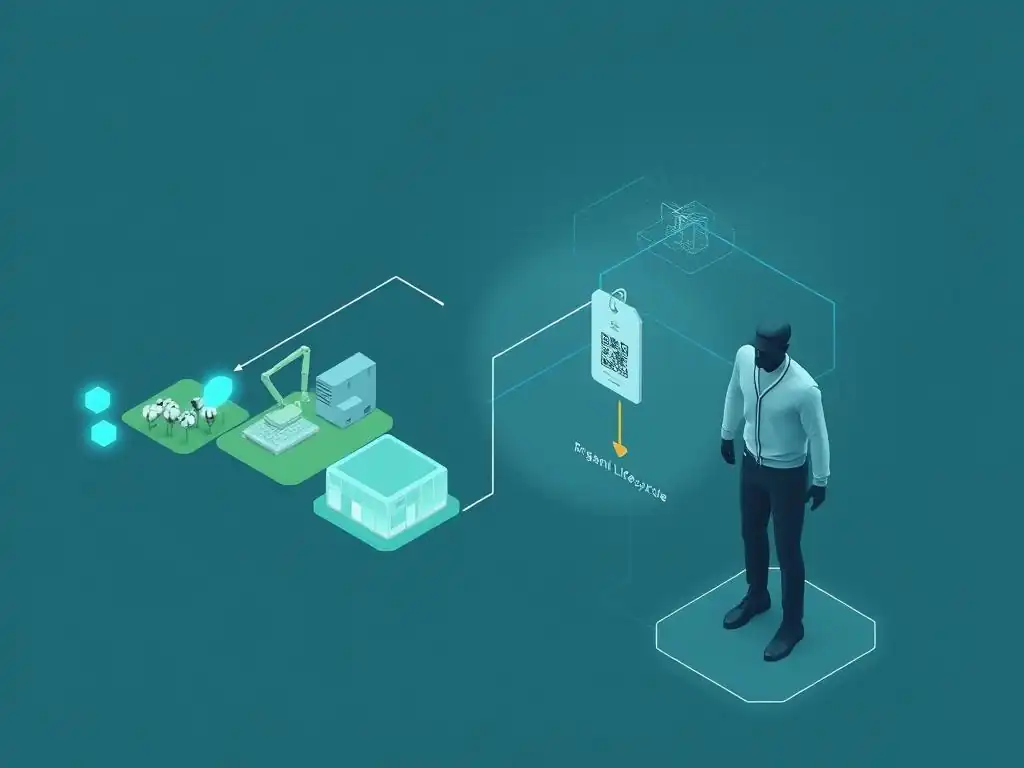
Blockchain provides a transparent and immutable ledger that can track a garment's journey from raw materials to the consumer, ensuring eco-friendly practices are verifiable at each stage. This fosters trust and combats greenwashing.
What specific data points can be tracked using blockchain in the fashion industry?
Blockchain can track data like the origin of raw materials (e.g., organic cotton), manufacturing processes (e.g., water usage), certifications (e.g., GOTS), and even the carbon footprint of transportation.
What are the benefits for consumers of using blockchain to verify sustainable fashion?
Consumers gain increased trust in the sustainability claims of brands, allowing them to make more informed purchasing decisions. This empowers them to support ethical and environmentally responsible companies.
What are the challenges in implementing blockchain solutions for sustainable fashion claims?
Challenges include the complexity of supply chains, the need for industry-wide collaboration to ensure data accuracy, and the initial investment required to implement the blockchain infrastructure.
How does blockchain help brands prove their commitment to sustainable practices?
Blockchain provides a tamper-proof record of sustainable practices, enabling brands to demonstrate transparency and accountability to consumers and stakeholders. It builds brand reputation and customer loyalty.
Final Reflection: Weaving Trust into the Fabric of Fashion
The journey through this case study underscores a critical truth: transparency is no longer a luxury, but a necessity in the fashion industry. The ability of blockchain to verify sustainable fashion claims is not just a technological advancement; it's a paradigm shift that empowers consumers and holds brands accountable for their environmental impact.
This shift resonates deeply because it addresses a growing consumer demand for ethical and sustainable products. The potential of blockchain to rebuild trust in the fashion industry is immense, offering a pathway to a future where conscious consumption is the norm, not the exception. The greatest threat to our planet is the belief that someone else will save it.
- Robert Swan. This quote encapsulates the urgency and individual responsibility that blockchain-verified sustainability can foster.
Now, as you reflect on the potential of blockchain to revolutionize sustainable fashion, consider your own role in this transformation. How can you, as a consumer, a designer, or a business leader, champion transparency and demand verifiable eco-friendly practices? Let this case study be a catalyst for action, inspiring you to weave sustainability into the very fabric of your choices and contribute to a future where fashion truly reflects our values.
Embrace Eco-Clarity: Become a Champion of Sustainable Fashion!
Thank you for exploring how blockchain is transforming sustainability in the fashion industry. You've gained valuable insights into verifying eco-friendly practices, and now it's time to turn that knowledge into action. Together, we can promote a more transparent and responsible fashion future.
Here's how you can contribute:
- Demand Transparency: Actively seek out and support brands that use blockchain technology to verify their sustainable practices. Make informed purchasing decisions that prioritize eco-friendly apparel and reward companies committed to transparency.
- Explore Blockchain Solutions: Learn more about the technology by exploring open-source blockchain projects on platforms like GitHub. Understand how verifiable sustainability can be implemented effectively in fashion.
- Share Your Voice: Start a conversation on social media to highlight brands leading the way in sustainable fashion and encourage others to demand greater transparency in the industry. Use hashtags like #BlockchainFashion and #SustainableStyle.
What steps will you take this week to support sustainable fashion and advocate for transparency in the apparel industry? Share your thoughts in the comments below!
Leave a Reply