
Unmasking Counterfeits: How Blockchain Verifies Product Provenance


Welcome to Blockchain Trends, your compass in the rapidly evolving world of decentralized technology! Beyond the hype of cryptocurrencies lies a profound potential to reshape industries, and here, we're diving deep. Ever wondered how to definitively prove the authenticity of a product, battling counterfeits and ensuring consumer trust? Our featured article, " Unmasking Counterfeits: How Blockchain Verifies Product Provenance," unlocks the secrets of blockchain product provenance verification and its transformative impact on supply chains.
Discover how this innovative solution is revolutionizing traceability and transparency. Ready to peel back the layers and uncover the future of secure supply chains? Let's begin...
Unmasking Counterfeits: How Blockchain Verifies Product Provenance
- Introduction: The Growing Threat of Counterfeit Goods and the Need for Enhanced Product Authentication
- Blockchain Technology: A Paradigm Shift in Product Provenance Tracking
- Blockchain Product Provenance Verification: A Deep Dive
- Benefits of Blockchain-Based Product Provenance Systems
- Real-World Applications of Blockchain in Product Provenance
- Overcoming Challenges in Implementing Blockchain Product Provenance
- The Future of Blockchain Product Provenance: Trends and Opportunities
- Conclusion: Blockchain as a Catalyst for a More Transparent and Trustworthy Product Ecosystem
-
Frequently Asked Questions
- What is product provenance and why is it important?
- How does blockchain technology help verify product provenance?
- What are some real-world examples of blockchain product provenance verification?
- What are the benefits of using blockchain product provenance verification for businesses?
- What are some of the challenges in implementing blockchain product provenance verification?
- Final Reflection: Embracing Trust Through Transparency
- Unveil Authentic Products: Start Tracing with Blockchain!
Introduction: The Growing Threat of Counterfeit Goods and the Need for Enhanced Product Authentication
Counterfeiting poses a significant and escalating threat to global economies, industries, and consumer safety. Fake goods range from luxury items and electronics to critical components like pharmaceuticals and automotive parts. The proliferation of e-commerce has further exacerbated this problem, making it easier for counterfeiters to reach a global market while remaining relatively anonymous. The scale of this issue is staggering, costing businesses billions annually in lost revenue, damaged brand reputation, and legal expenses. Consumers, often unaware, face risks ranging from financial loss to serious health hazards when purchasing unverified or fake products.
Addressing this pervasive problem requires robust, verifiable, and tamper-proof systems for tracking products throughout their lifecycle. Traditional methods of authentication and supply chain tracking have proven insufficient against increasingly sophisticated counterfeiting operations. There is a clear and urgent need for enhanced product authentication mechanisms that can provide irrefutable proof of origin and journey, restoring trust in the goods consumers purchase.
The Global Impact of Counterfeiting on Industries and Consumers
The global trade in counterfeit and pirated goods is a multi-trillion-dollar enterprise. Estimates from organizations like the OECD and the European Union Intellectual Property Office (EUIPO) suggest that the value of international trade in counterfeit and pirated goods could reach hundreds of billions of dollars annually, potentially exceeding half a trillion USD. This doesn't even account for domestically produced and consumed fakes, which further inflate the total economic damage. Entire industries, such as fashion, luxury goods, pharmaceuticals, automotive, electronics, and consumer packaged goods, suffer immense financial losses due to counterfeit sales.
Beyond the financial impact on businesses, counterfeiting directly harms consumers. Fake pharmaceuticals can contain incorrect dosages, harmful substances, or no active ingredients, leading to health crises or even fatalities. Counterfeit electronics and parts can malfunction dangerously, causing fires or accidents. Consumers are also defrauded financially, paying for genuine-quality products but receiving inferior or dangerous fakes. The erosion of consumer trust in brands and marketplaces is another significant, albeit harder to quantify, consequence. The need for reliable blockchain product provenance verification has never been more critical to protect both economic interests and public safety.
Traditional Methods of Product Verification: Limitations and Vulnerabilities
For decades, industries have relied on various methods to combat counterfeiting and verify product authenticity. These include physical security features like holograms, watermarks, special inks, and security threads. Digital methods involve serial numbers, QR codes, RFID tags, and centralized databases to track products. While these methods offer some level of protection, they are often vulnerable to sophisticated counterfeiters. Holograms can be replicated, serial numbers can be copied or cloned, and centralized databases can be hacked or manipulated, allowing fake products to appear legitimate within the system.
A major limitation of traditional systems is the lack of transparency and interconnectedness across the entire supply chain. Information is often siloed within different companies – manufacturers, distributors, retailers – making it difficult to create a single, verifiable history for a product. Furthermore, these systems often rely on trust between parties, which can be exploited.
Once a product leaves the control of one entity, its journey can become opaque, creating opportunities for counterfeits to enter the legitimate supply chain. This inherent lack of end-to-end visibility and immutable record-keeping highlights the need for a more robust solution like blockchain product provenance verification.
Blockchain Technology: A Paradigm Shift in Product Provenance Tracking
Blockchain technology, originally underpinning cryptocurrencies, has emerged as a transformative solution for various industries, including supply chain management and anti-counterfeiting. Its fundamental design principles offer unique advantages over traditional centralized systems when it comes to tracking assets and verifying information. By providing a secure, transparent, and tamper-proof ledger, blockchain can fundamentally change how we understand and verify the origin and journey of goods.
The core innovation of blockchain lies in its distributed nature. Instead of a single database controlled by one entity, the ledger is replicated across a network of computers (nodes). Any new transaction or record must be validated by the network participants according to established rules before being added to a block.
Once a block is added to the chain, it is cryptographically linked to the previous block, making it incredibly difficult to alter past records without invalidating the entire chain – an action that would require the consensus of the majority of the network. This inherent security and distributed control make blockchain an ideal foundation for building trusted product provenance systems.
Understanding Blockchain's Core Principles: Decentralization, Immutability, and Transparency
Decentralization is perhaps the most defining characteristic of blockchain. Unlike a traditional database hosted on a single server or by a single company, a blockchain ledger is distributed across many computers in a network.
No single entity has complete control over the data, which reduces points of failure and makes the system resistant to censorship or manipulation by one party. In the context of blockchain product provenance verification, this means that the record of a product's journey isn't held by just the manufacturer or a logistics company, but is shared and validated across the network of supply chain partners involved.
Immutability is another critical principle. Once data is recorded on the blockchain and a block is validated and added to the chain, it is extremely difficult, if not practically impossible, to alter or delete that data retroactively. This is achieved through cryptographic hashing and the linking of blocks.
Any attempt to tamper with a record in a previous block would change its hash, breaking the cryptographic link to the subsequent block and alerting the network to the attempted alteration. This ensures that the provenance data recorded on the blockchain is a permanent and reliable history, making it a powerful tool for authenticity verification.
Transparency, while sometimes configurable (e.g., in private blockchains), is a key feature of many blockchain applications. On public blockchains like Bitcoin or Ethereum, all transactions are visible to anyone on the network, though participants may be identified by pseudonymous addresses rather than real-world identities. In enterprise or supply chain contexts, permissions can be set to control who can view specific data, but the principle remains that validated information is accessible to authorized parties across the network.
This shared visibility allows all participants in a supply chain network, from the manufacturer to potentially the end consumer (via a public interface), to see the same verified history of a product, fostering trust and accountability. This transparency is fundamental to effective blockchain product provenance verification.
How Blockchain Enables Secure and Transparent Supply Chain Management
Blockchain technology fundamentally enhances supply chain management by providing a shared, secure, and transparent ledger for tracking goods and related information. As a product moves through the supply chain – from raw material sourcing, manufacturing, assembly, packaging, shipping, customs, distribution, to retail – each significant step or transfer of ownership can be recorded as a transaction on the blockchain. Each transaction is timestamped and immutable, creating a chronological and verifiable history.
This distributed ledger eliminates the need for intermediaries to verify transactions between parties, as the network collectively validates the information. It also reduces reliance on paper trails and disparate, incompatible databases. By providing a single source of truth accessible to all authorized participants, blockchain significantly improves visibility across complex, multi-party supply chains. This enhanced transparency makes it much harder for counterfeit goods to infiltrate the legitimate supply chain undetected, as their history would not match the verified records on the blockchain. This robust tracking capability is the backbone of effective blockchain product provenance verification.
Blockchain Product Provenance Verification: A Deep Dive
Implementing blockchain product provenance verification involves several key steps, from uniquely identifying each product to tracking its entire journey and using automated processes to verify authenticity. At its core, the process creates a digital twin or unique identifier for a physical product on the blockchain, linking the real-world item to its digital history.
This system relies on trusted points of data entry throughout the supply chain. For instance, at the point of manufacture, a product is assigned a unique identifier (like a serial number or a QR code) which is then recorded on the blockchain along with initial details like manufacturing date, location, and batch number.
As the product changes hands or reaches significant milestones (e.g., leaves the factory, arrives at a distribution center, is shipped to a retailer), these events are also recorded on the ledger by the relevant parties. This continuous recording builds a comprehensive and immutable history, which can later be queried to verify the product's legitimacy.
Creating a Digital Identity for Products on the Blockchain
The first crucial step in blockchain product provenance verification is assigning each individual product, or sometimes a batch of products, a unique digital identity on the blockchain. This is often achieved by creating a token on the blockchain that is cryptographically linked to the physical item. This token can represent the product itself or hold key identifying information. A common approach is to use standards like GS1 identifiers (like GTINs) in conjunction with blockchain technology.
This digital identity is typically associated with a unique physical identifier on the product itself, such as a serial number, a QR code, or an NFC tag. When the product is manufactured or first enters the supply chain, its unique physical identifier is scanned or registered, and the corresponding digital identity and initial provenance data (e.g., manufacturer, date, location) are recorded on the blockchain. This initial entry serves as the product's digital birth certificate. Subsequent data points related to the product's journey will be linked to this unique digital identity on the ledger, creating a continuous and verifiable history.
Tracking Product Journey: From Origin to Consumer
Once a product has its digital identity on the blockchain, its movement and handling throughout the supply chain can be tracked and recorded. Each time the product changes hands, reaches a new location, or undergoes a significant process (like quality inspection or packaging), the relevant data is added to its record on the blockchain. This involves authorized participants in the supply chain network – such as logistics providers, customs agents, distributors, and retailers – recording these events.
For example, when a batch of goods leaves the factory, the manufacturer records the shipment details on the blockchain, linking it to the digital identities of the products in that batch. When the shipment arrives at a distribution center, the center scans the goods and records the reception on the blockchain. This creates a chain of custody recorded on the immutable ledger.
Ultimately, when the product reaches the consumer, they can potentially scan the physical identifier (like a QR code on the packaging) to access the product's verified history on the blockchain, confirming its journey and authenticity before purchase. This end-to-end tracking is vital for effective blockchain product provenance verification.
The Role of Smart Contracts in Automating Verification Processes
Smart contracts play a pivotal role in automating and enforcing rules within blockchain product provenance verification systems. These are self-executing contracts with the terms of the agreement directly written into code. They run on the blockchain and automatically execute predefined actions when specific conditions are met, without the need for intermediaries.
In the context of provenance, smart contracts can automate verification checks and trigger actions based on the recorded data. For instance, a smart contract could be programmed to automatically flag a product if its recorded journey deviates from the expected path or if a certain time threshold between supply chain steps is exceeded. A smart contract could also automatically transfer ownership of goods on the blockchain once a payment transaction is confirmed.
Furthermore, smart contracts can be used to automate warranty activation upon the consumer's verification scan or manage royalty payments based on product resale. By automating these processes, smart contracts increase efficiency, reduce the risk of human error, and ensure that provenance data is acted upon consistently and reliably, strengthening the overall blockchain product provenance verification system.
Benefits of Blockchain-Based Product Provenance Systems
The adoption of blockchain technology for product provenance verification offers a multitude of benefits that address the shortcomings of traditional systems and provide significant value to businesses and consumers alike. These benefits stem directly from the core principles of blockchain: decentralization, immutability, and transparency.
From enhancing the visibility of supply chains to building consumer trust and mitigating the risks associated with counterfeiting, blockchain provides a powerful framework. The ability to create a single, shared, and verifiable history for every product transforms supply chain operations, making them more efficient and secure. This comprehensive approach to tracking and verification is revolutionizing how goods are moved and authenticated globally.
Enhanced Transparency and Traceability Across the Supply Chain
Blockchain systems provide unprecedented transparency and traceability across complex supply chains. Unlike fragmented traditional systems where information is siloed, a blockchain ledger allows all authorized participants to see the same, up-to-date record of a product's journey. Every transfer of ownership, location change, or inspection point recorded on the blockchain contributes to a comprehensive and immutable audit trail.
This enhanced visibility allows businesses to pinpoint the exact location and status of goods at any point in time. It also makes it easier to identify bottlenecks, inefficiencies, or points of failure within the supply chain. For instance, if a product recall is necessary, companies can quickly and accurately trace affected batches back to their origin and forward to their current location, significantly reducing the time and cost associated with recalls. This level of granular traceability is a core strength of blockchain product provenance verification.
Improved Consumer Trust and Confidence in Product Authenticity
One of the most significant benefits of blockchain product provenance verification is the ability to empower consumers and build trust. By providing consumers with a simple way to verify the authenticity and history of a product, brands can instill confidence in their purchases. This is often done via a QR code on the product packaging that, when scanned with a smartphone, links to a public interface displaying the product's verified journey on the blockchain.
Seeing an immutable record of where and when a product was manufactured, how it traveled through the supply chain, and potentially even details about its materials or ethical sourcing, provides consumers with tangible proof of legitimacy. This transparency combats consumer skepticism fueled by the prevalence of fakes and builds a stronger relationship between brands and their customers. For example, consumers buying high-value goods or sensitive items like food and medicine can gain peace of mind knowing they are purchasing a genuine product with a verified history.
Reduced Risk of Counterfeiting and Fraudulent Activities
Blockchain product provenance verification directly targets the root causes of counterfeiting by making it significantly harder for fake goods to enter or remain hidden within the legitimate supply chain. Since the blockchain record is immutable and distributed, creating a counterfeit product and trying to give it a fake but convincing history on the ledger is extremely difficult. Any attempt to register a non-existent product or falsify its journey would require colluding with multiple participants in the network and would likely be detected due to the consensus mechanism.
Even if a counterfeiter manages to copy a product's physical identifier (like a QR code), scanning it would reveal a history that doesn't match the typical journey of a genuine product, or it might show that the identifier has already been scanned multiple times in different locations, indicating cloning. The transparency and auditability of the blockchain deter fraudulent activities and provide a reliable method for distinguishing genuine products from fakes, thereby significantly reducing the risk of counterfeiting and protecting brand integrity.
Streamlined Supply Chain Operations and Increased Efficiency
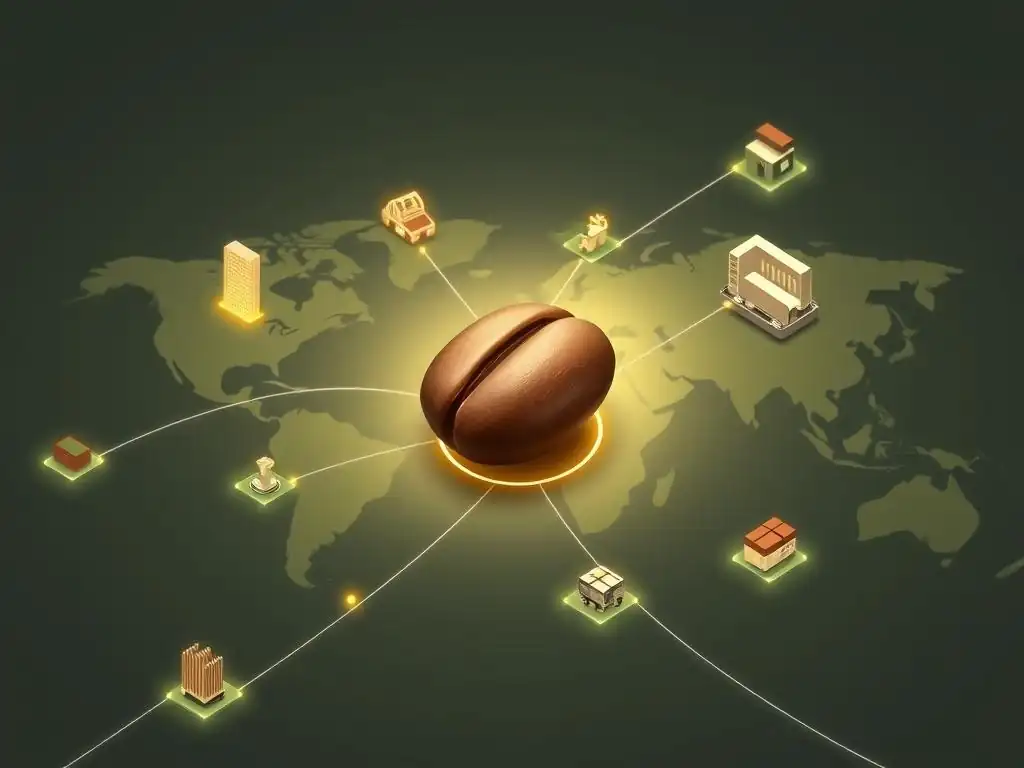
Beyond anti-counterfeiting, blockchain product provenance verification can lead to streamlined operations and increased efficiency within the supply chain. The shared, single source of truth reduces disputes between parties regarding the status or location of goods, as all participants are working with the same verified data. This minimizes delays caused by data discrepancies or the need for manual reconciliation across different systems.
Automating processes through smart contracts, as discussed earlier, further enhances efficiency. For example, automated payments triggered by goods arriving at a certain point can speed up transactions and improve cash flow. The improved visibility also allows for better inventory management, demand forecasting, and logistics planning. By creating a more transparent, automated, and data-driven supply chain, businesses can reduce operational costs and improve overall efficiency.
Data Integrity and Security in Product Provenance
Data integrity and security are paramount in product provenance, and blockchain technology inherently provides robust protections in these areas. The cryptographic nature of blockchain ensures that once data is recorded, it cannot be altered without detection. Each block contains a cryptographic hash of the previous block, creating a secure chain. Changing any data within a block would change its hash, breaking the link and making the tampering immediately obvious to the network.
Furthermore, the distributed nature of the ledger means that there is no single point of failure or a central database that can be compromised to manipulate provenance records on a large scale. Data is replicated across multiple nodes, making the system highly resilient. While the data input points (e.g., scanning stations) still require security measures, the core ledger itself offers a high level of security and data integrity, ensuring that the recorded product provenance information is trustworthy and reliable.
Real-World Applications of Blockchain in Product Provenance
Blockchain product provenance verification is moving beyond theoretical discussions and is being implemented across various industries to combat counterfeiting, enhance traceability, and build trust. Several major companies and consortia have launched initiatives to leverage blockchain's unique capabilities for tracking goods and verifying authenticity.
These real-world applications demonstrate the practical effectiveness of using a distributed, immutable ledger to create transparent and verifiable supply chains. From high-value luxury goods to critical pharmaceuticals and everyday food items, blockchain is proving its value in ensuring product legitimacy and safety for consumers.
Case Study 1: Blockchain for Verifying the Authenticity of Luxury Goods
The luxury goods market is heavily targeted by counterfeiters, resulting in billions of dollars in losses annually. Brands like LVMH (Louis Vuitton Moët Hennessy) have recognized the need for advanced provenance tracking. LVMH, in collaboration with Prada and Cartier (Richemont), launched the Aura Blockchain Consortium. This platform uses blockchain technology to provide a secure and transparent record of luxury products' lifecycle, from sourcing raw materials to manufacturing, distribution, and even resale.
Each luxury item is given a digital certificate of authenticity stored on the blockchain, linked to a physical identifier on the product. Consumers can scan this identifier (e.g., a QR code or NFC tag) to access the product's immutable history, verifying its origin, components, and authenticity. This system not only combats counterfeiting but also facilitates services like after-sales care and certified pre-owned markets, adding value throughout the product's lifespan and strengthening the brand's reputation for authenticity and exclusivity.
Case Study 2: Tracking and Tracing Pharmaceuticals with Blockchain for Patient Safety
Counterfeit pharmaceuticals pose a severe threat to global public health. Fake drugs can be ineffective, harmful, or even deadly. Regulatory bodies worldwide, such as the US FDA, have mandated stricter tracking requirements for prescription drugs. Blockchain offers a powerful solution to enhance the security and traceability of the pharmaceutical supply chain. Initiatives like the MediLedger Project, a consortium of pharmaceutical companies, have explored using blockchain to meet these requirements.
MediLedger focuses on verifying product identifiers and transaction data between trading partners in the US pharmaceutical supply chain. By recording each change of ownership and location on a blockchain, the system creates an unforgeable history for each drug package. This allows participants to verify the legitimacy of the product and its transaction history at any point, making it extremely difficult for counterfeit or diverted drugs to infiltrate the supply chain undetected. This application of blockchain product provenance verification is directly contributing to improved patient safety by ensuring the integrity of life-saving medications.
Case Study 3: Ensuring Ethical Sourcing and Fair Trade Practices in the Food Industry Using Blockchain
Consumers are increasingly demanding transparency regarding the origin and ethical sourcing of their food. Blockchain technology is being used to provide verifiable proof of where food products come from and how they were produced. IBM Food Trust is a prominent example, connecting growers, processors, distributors, and retailers on a blockchain network.
Participants on the IBM Food Trust platform record data points such as farm origin, harvest dates, processing facilities, shipping routes, and quality checks. This creates a comprehensive, end-to-end traceability record for food items. In one instance, tracing the origin of a mango using traditional methods took days or weeks; with IBM Food Trust, it could be done in seconds.
This rapid traceability helps in identifying the source of contaminated food quickly during outbreaks, potentially saving lives. Furthermore, it allows brands to provide consumers with verifiable stories about their products, confirming claims of organic farming, fair labor practices, or specific geographic origins, enhancing consumer trust and supporting ethical sourcing initiatives through transparent blockchain product provenance verification.
Overcoming Challenges in Implementing Blockchain Product Provenance
While the benefits of blockchain product provenance verification are significant, implementing these systems at scale across complex global supply chains is not without its challenges. These include technical hurdles related to transaction throughput and interoperability, as well as organizational and data standardization issues that require collaboration among multiple stakeholders.
Addressing these challenges is crucial for the widespread adoption and success of blockchain-based provenance solutions. Solutions are being developed and refined within the blockchain community and through industry consortia, but they require continued effort and collaboration.
Scalability Issues and Potential Solutions for Large-Scale Deployments
One of the primary challenges for widespread blockchain product provenance verification is scalability. Public blockchains like Ethereum (before recent updates) have faced limitations in the number of transactions they can process per second compared to traditional payment networks. Tracking millions or billions of individual products moving through complex supply chains requires a system capable of handling a massive volume of transactions efficiently and cost-effectively.
Solutions are emerging to address this. Newer blockchain protocols and layer-2 scaling solutions are designed for higher throughput. Private or permissioned blockchains, often used in enterprise settings, can be optimized for specific industry needs and typically offer much faster transaction speeds and lower costs than public, open networks. Techniques like sharding, sidechains, and state channels are also being explored and implemented to increase blockchain capacity, making large-scale product provenance tracking more feasible.
Interoperability Challenges Between Different Blockchain Platforms
As various industries and companies adopt different blockchain platforms (e.g., Hyperledger Fabric, Ethereum, Corda, VeChain), interoperability becomes a significant challenge. A single product's journey might involve participants using different blockchain networks or even traditional systems. Ensuring seamless data flow and verification across these disparate systems is essential for end-to-end blockchain product provenance verification.
Efforts are underway to improve interoperability through standards and protocols that allow different blockchains to communicate and share information. Cross-chain bridges and atomic swaps are technical solutions enabling assets or data to move between different chains. Industry consortia are also working on establishing common data standards and frameworks to facilitate data exchange, regardless of the underlying blockchain technology. The ability for different systems to 'talk' to each other is critical for building comprehensive and interconnected provenance networks.
The Importance of Data Standards and Collaboration Across the Supply Chain
Effective blockchain product provenance verification relies heavily on consistent data input and collaboration among all parties in the supply chain. For the immutable ledger to be valuable, the data recorded must be accurate, standardized, and consistently formatted across different organizations. Without agreed-upon data standards for product identifiers, location codes, event types (e.g., 'shipped', 'received'), and other relevant information, integrating data from various sources becomes difficult, hindering traceability.
Achieving this requires significant collaboration among supply chain partners, including competitors, to agree on common standards and processes for data capture and recording on the blockchain. This involves establishing governance models for the blockchain network and ensuring that all participants have the necessary infrastructure and incentives to contribute accurate data. Building trust and fostering cooperation among diverse stakeholders is a fundamental, non-technical challenge that must be overcome for successful blockchain product provenance verification.
The Future of Blockchain Product Provenance: Trends and Opportunities
The field of blockchain product provenance verification is continuously evolving, driven by technological advancements and increasing demand for transparency and authenticity. Several key trends and opportunities are shaping the future of how blockchain is used to track goods and combat counterfeiting.
These developments point towards more integrated, intelligent, and consumer-centric provenance systems. As the technology matures and regulatory landscapes adapt, blockchain's role in creating a more transparent and trustworthy global product ecosystem is set to expand significantly.
Integration with IoT Devices for Real-Time Tracking and Monitoring
A major future trend in blockchain product provenance verification is the deeper integration with Internet of Things (IoT) devices. Sensors can collect real-time data about a product's condition (e.g., temperature, humidity, location, shock during transit) and automatically record this data onto the blockchain. This creates a dynamic and highly granular record of the product's journey and condition, adding another layer of verifiable information beyond just location and ownership changes.
For example, in the cold chain logistics for food or pharmaceuticals, temperature sensors can continuously log data onto the blockchain, providing irrefutable proof that goods were stored within the required temperature range throughout their transit. This automated, real-time data capture reduces the potential for manual errors or data manipulation, significantly enhancing the reliability and detail of the blockchain product provenance record.
The Rise of Decentralized Marketplaces and Product Verification Platforms
The future may see a rise in decentralized marketplaces and platforms built on blockchain that inherently incorporate product provenance verification. These platforms could connect consumers directly with manufacturers or verified distributors, with the blockchain providing the underlying trust layer for product authenticity.
Consumers could potentially purchase goods directly on a platform where every listed item has a verifiable blockchain history, eliminating the risk of buying fakes from unknown third-party sellers. These platforms could also facilitate the resale of authenticated goods, creating trusted secondary markets. Such decentralized ecosystems, underpinned by robust blockchain product provenance verification, could fundamentally alter e-commerce and retail by prioritizing transparency and trust.
Regulatory Landscape and the Role of Blockchain in Combating Counterfeiting
Governments and regulatory bodies are increasingly recognizing the potential of blockchain technology in combating illicit trade and ensuring product safety. Future developments are likely to include regulatory frameworks that either mandate or incentivize the use of technologies like blockchain for tracking specific types of goods, particularly in sectors like pharmaceuticals, food, and high-value exports/imports.
Collaboration between industry players and regulators will be crucial in establishing standards and guidelines for blockchain product provenance verification systems that meet compliance requirements. As authorities gain a better understanding of blockchain's capabilities, it is likely to become a standard tool in the global fight against counterfeiting and for ensuring supply chain integrity.
The role of NFTs in product authentication
Non-Fungible Tokens (NFTs) are emerging as a promising tool within blockchain product provenance verification, particularly for unique or high-value items. An NFT is a unique digital asset stored on a blockchain that represents ownership of a specific item, which can be digital or linked to a physical object.
By creating an NFT for a physical product, brands can provide consumers with a unique, verifiable, and transferable digital certificate of authenticity. This NFT can store provenance data and potentially grant access to exclusive content or services. For luxury goods, art, collectibles, or limited-edition items, an NFT serves as an immutable digital twin and proof of ownership on the blockchain. When the physical item is resold, the associated NFT can also be transferred, maintaining a continuous, verifiable history on the blockchain and further enhancing the system of blockchain product provenance verification.
Conclusion: Blockchain as a Catalyst for a More Transparent and Trustworthy Product Ecosystem
The challenge of counterfeit goods is immense, impacting economies, industries, and most importantly, consumer safety and trust. Traditional methods of product verification have proven inadequate against increasingly sophisticated threats. However, blockchain technology offers a powerful and transformative solution by providing a decentralized, immutable, and transparent ledger for tracking products throughout their entire lifecycle.
By enabling robust blockchain product provenance verification, we can create supply chains where every product's history is verifiable, reducing opportunities for fraud and enhancing accountability. The benefits extend beyond anti-counterfeiting to include improved operational efficiency, enhanced traceability, and the ability to build deeper trust with consumers.
Empowering Consumers with Verified Product Information
One of the most significant outcomes of widespread blockchain product provenance verification is the empowerment of consumers. By providing easy access to a product's verified history on the blockchain, consumers can make informed purchasing decisions with confidence. Scanning a QR code or NFC tag and instantly seeing an immutable record of where, when, and how a product was made and transported provides a level of transparency previously unavailable.
This direct access to verifiable provenance data shifts power to the consumer, allowing them to trust the authenticity and claims associated with the products they buy. It also encourages brands to maintain high standards throughout their supply chains, knowing that their processes are potentially open to scrutiny and verification via the blockchain record.
Building a Future Where Counterfeiting is Significantly Reduced Through Blockchain Solutions
Blockchain technology holds the potential to significantly reduce the prevalence of counterfeiting globally. While no single technology is a silver bullet, the inherent security, transparency, and immutability of blockchain make it a formidable tool in the fight against fake goods. By creating a verifiable digital history for products that is incredibly difficult to forge or alter, blockchain makes the supply chain a hostile environment for counterfeiters.
As more industries adopt blockchain product provenance verification systems and these networks become interconnected, the ability to track and authenticate goods across borders and complex distribution channels will improve dramatically. This collective effort, powered by blockchain, is building a future where the risks associated with purchasing counterfeit products are substantially mitigated, protecting both economic interests and public welfare.
The Long-Term Vision for Blockchain Product Provenance Verification
The long-term vision for blockchain product provenance verification involves a global, interconnected ecosystem where product authenticity and history are easily verifiable by anyone, anywhere. This future includes seamless integration with IoT devices for real-time tracking, the proliferation of decentralized marketplaces built on trust and transparency, and supportive regulatory frameworks that encourage or mandate blockchain adoption for critical goods.
Overcoming current challenges related to scalability, interoperability, and data standardization will pave the way for this vision. As the technology matures and collaboration increases across industries, blockchain product provenance verification will become a standard practice, transforming supply chains into transparent, efficient, and trustworthy networks that benefit businesses, governments, and consumers alike, ultimately creating a world with far fewer fakes and greater confidence in the products we use every day.
Frequently Asked Questions
What is product provenance and why is it important?
Product provenance refers to a product's complete history from origin to sale. It's important because it builds consumer trust and combats counterfeiting.
How does blockchain technology help verify product provenance?
Blockchain creates an immutable and transparent record of a product's journey. Each step is recorded as a block on the chain, making it extremely difficult to tamper with the information.
What are some real-world examples of blockchain product provenance verification?
Several industries are already implementing blockchain for provenance. Examples include tracking food supply chains, verifying the authenticity of luxury goods, and tracing the origin of pharmaceuticals.
What are the benefits of using blockchain product provenance verification for businesses?
Businesses benefit from increased brand reputation, reduced losses from counterfeiting, and improved supply chain efficiency. They can also demonstrate ethical sourcing to consumers.
What are some of the challenges in implementing blockchain product provenance verification?
Challenges include the cost of implementation, the need for industry-wide adoption, and ensuring data accuracy from the initial point of origin.
Final Reflection: Embracing Trust Through Transparency
The journey through understanding blockchain product provenance verification reveals more than just a technological solution; it unveils a fundamental shift in how we perceive trust and authenticity in a world increasingly saturated with counterfeits. The ability to trace a product's journey, from its origin to the consumer, offers a powerful antidote to the pervasive anxieties surrounding fraudulent goods and unethical supply chains.
This technology's influence extends far beyond mere consumer protection. It's about fostering a culture of accountability and ethical consumption, empowering individuals to make informed choices that align with their values. As the digital and physical worlds continue to converge, the need for verifiable truth becomes paramount. Trust, but verify.
- Ronald Reagan. This sentiment, though spoken in a different context, perfectly encapsulates the essence of blockchain's role in establishing a more transparent and trustworthy marketplace.
Now, as you reflect on the potential of blockchain product provenance verification, consider its implications for your own life and choices. How can you support businesses that prioritize transparency and ethical practices? How can you leverage this technology to demand greater accountability from the brands you trust? The power to shape a more authentic and equitable world lies within your grasp. Embrace the opportunity to be a conscious consumer and advocate for a future where trust is not blind, but built on verifiable truth.
Unveil Authentic Products: Start Tracing with Blockchain!
Thank you for exploring how blockchain is revolutionizing product authentication! Now that you understand the power of verifiable provenance, it's time to take action and contribute to a more transparent and trustworthy marketplace.
Here are a few ways you can get involved:
- Explore blockchain-based provenance platforms: Research existing systems that utilize blockchain for product tracking and consider how their technology can be applied to industries you care about.
- Engage in conversations: Share this article with your network to spark discussions about how blockchain can help combat counterfeiting. Together, we can raise awareness.
- Recommend products or industries: Think of specific products or sectors that would benefit from blockchain-based provenance and suggest this solution to companies already adopting the technology.
What is one small step you can take this week to promote greater product transparency through blockchain?
Leave a Reply