
Beyond Ethereum: Layer2 Solutions for Other Blockchains


Welcome to Blockchain Trends, your go-to source for navigating the ever-evolving world of decentralized technology. Tired of hearing only about Bitcoin? We delve deeper, exploring the real-world applications and transformative potential of blockchain. This week, we're tackling a critical piece of the puzzle: Layer 2 scaling solutions. While often associated with Ethereum, what about other blockchains? Discover how these innovative approaches are revolutionizing scalability and interoperability across the entire ecosystem, opening doors to a future beyond just cryptocurrencies. Intrigued? Read on to unlock the potential...
Beyond Ethereum: Layer 2 Solutions for Enhanced Blockchain Scalability
- Introduction to Layer 2 Scaling Solutions and Blockchain Scalability
- Layer 2 Implementations on Alternative Blockchains
- Comparing Layer 2 Solutions Across Different Blockchains
- Benefits of Layer 2 Solutions for Non-Ethereum Blockchains
- Challenges and Future of Layer 2 on Alternative Blockchains
- Conclusion: The Future of Blockchain Lies in Scalability
-
Frequently Asked Questions
- What are Layer 2 scaling solutions, and why are they important?
- Why are Layer 2 solutions relevant beyond just Ethereum?
- What are some examples of Layer 2 solutions being implemented on blockchains other than Ethereum?
- How do Layer 2 solutions impact the security of a blockchain?
- What is the future of Layer 2 scaling solutions in the broader blockchain ecosystem?
- Final Reflection: The Expanding Horizon of Scalability
- Unleash the Power: Dive Deeper into Layer2 Innovation!
Introduction to Layer 2 Scaling Solutions and Blockchain Scalability
The Need for Scalability in Blockchains Beyond Ethereum
Scalability has emerged as a critical bottleneck hindering the widespread adoption of blockchain technology across various sectors, extending far beyond the well-documented challenges faced by Ethereum. While Ethereum's scalability issues are widely discussed, the need for enhanced throughput and reduced transaction costs is a universal concern for virtually all blockchains aiming for mainstream adoption.
Blockchains, by their very nature, are designed to be decentralized and secure, often at the expense of transaction processing speed. This inherent trade-off becomes acutely apparent as networks grow and transaction volume increases.
For instance, Bitcoin, the pioneering cryptocurrency, processes around 7 transactions per second (TPS), while even newer Layer 1 blockchains like Solana, which boast higher TPS, still face limitations under peak demand. This constrained capacity can lead to network congestion, soaring transaction fees, and a degraded user experience, effectively limiting the potential use cases for blockchain technology in areas requiring high transaction volumes, such as decentralized finance (DeFi), high-frequency trading, and mainstream consumer applications.
The demand for scalable blockchain solutions is not merely about handling more cryptocurrency transactions; it is fundamentally about unlocking the potential of blockchain for a multitude of real-world applications. Consider supply chain management, where tracking thousands of transactions per minute might be necessary, or decentralized social media platforms needing to handle user interactions at scale. Without significant improvements in scalability, these ambitious applications risk becoming impractical due to slow processing times and prohibitive costs.
Therefore, the quest for scalability is not confined to Ethereum but is a universal imperative for any blockchain platform aspiring to become a foundational technology for the future of the internet and digital economies. Addressing this challenge is crucial to move beyond niche applications and realize the transformative potential of blockchain across diverse industries and use cases.
Understanding Layer 2: Off-Chain Solutions Explained
Layer 2 scaling solutions represent a paradigm shift in blockchain architecture, moving beyond the inherent limitations of Layer 1 blockchains by processing transactions "off-chain." In essence, Layer 2 solutions operate as secondary frameworks built on top of a primary blockchain (Layer 1), inheriting the security and consensus mechanisms of the underlying base layer while significantly enhancing transaction throughput and reducing costs.
This is achieved by handling the bulk of transaction processing and computation away from the main blockchain, only leveraging Layer 1 for crucial functions like data anchoring, dispute resolution, and final settlement. Imagine a highway (Layer 1) designed for foundational security and settlement, and express lanes (Layer 2) built on top to handle the high-volume traffic more efficiently.
There are various types of Layer 2 solutions, each with its own approach to off-chain processing. Rollups, for example, bundle multiple transactions into a single batch and submit them to the Layer 1 blockchain, effectively amortizing the on-chain cost across numerous transactions. Optimistic Rollups assume transactions are valid by default and only perform fraud proofs if challenged, while Zero-Knowledge (ZK) Rollups use cryptographic proofs to guarantee transaction validity before submitting them to Layer 1.
State Channels and Sidechains represent other categories, allowing participants to transact off-chain for extended periods, only interacting with the main chain to open and close channels or bridge assets. Regardless of the specific implementation, the core principle of Layer 2 remains consistent: to enhance scalability by decoupling transaction execution from the constraints of the base blockchain, paving the way for faster, cheaper, and more scalable blockchain applications.
Layer 2 Implementations on Alternative Blockchains
Arbitrum on Arbitrum Orbit: Optimistic Rollups for Scalability
Arbitrum, developed by Offchain Labs, has emerged as a leading Layer 2 scaling solution initially focused on Ethereum. However, the underlying technology powering Arbitrum is not exclusive to Ethereum and is being extended to support other blockchain ecosystems through Arbitrum Orbit. Arbitrum Orbit allows developers to launch their own Layer 3 chains, often referred to as "Orbit chains," that settle on Arbitrum One or Arbitrum Nova (Arbitrum's main Layer 2 chains).
These Orbit chains leverage the robust security and established infrastructure of the Arbitrum ecosystem, enabling projects to build highly customized and scalable blockchains tailored to their specific needs. This represents a significant step towards realizing a multi-chain future where specialized blockchains can interoperate seamlessly.
Arbitrum Orbit utilizes optimistic rollup technology, a core component of Arbitrum's scaling strategy. Optimistic rollups function by assuming transactions are valid and only require fraud proofs to be submitted to the Layer 1 chain in case of disputes. This "optimistic" approach significantly reduces the computational burden on the main chain, as validity computations are primarily performed off-chain.
Furthermore, Arbitrum's technology incorporates advanced compression techniques to minimize the data posted on-chain, further reducing transaction costs. By extending this proven technology through Orbit, Arbitrum is enabling other blockchain ecosystems to benefit from the scalability and efficiency gains previously primarily associated with Ethereum-centric Layer 2 solutions.
Arbitrum's Orbit Chains: Customizable Scalability Options
Arbitrum Orbit chains offer a high degree of customization, empowering developers to tailor their Layer 3 blockchains to meet specific application requirements. One key aspect of customization is the choice of data availability. Orbit chains can opt for on-chain data availability, posting transaction data directly to Arbitrum One or Nova for maximum security and transparency. Alternatively, they can choose off-chain data availability solutions, which can further reduce costs and increase throughput but may introduce different security trade-offs. This flexibility allows projects to optimize for their specific security and performance needs.
Beyond data availability, Orbit chains also offer customization in areas like governance and permissions. Projects can define their own governance models, ranging from decentralized community governance to more centralized control, depending on their application and objectives. Furthermore, Orbit chains can be permissioned or permissionless, allowing for the creation of both public and private blockchain environments.
This level of customization makes Arbitrum Orbit a versatile platform for a wide range of applications, from gaming and social media platforms requiring high throughput and low latency to enterprise solutions demanding specific governance structures and data privacy considerations. The ability to fine-tune these parameters ensures that Orbit chains are not just scalable but also optimally configured for their intended use cases.
Arbitrum's Nitro Tech Stack: Enhanced Performance and Security
The performance and security of Arbitrum Orbit chains are underpinned by the Arbitrum Nitro tech stack, a significant upgrade to Arbitrum's initial architecture. Nitro represents a complete reimplementation of the Arbitrum virtual machine and proving system, resulting in substantial improvements in both speed and efficiency. A key component of Nitro is its integration with WebAssembly (WASM), a widely adopted standard for creating high-performance web applications. By compiling smart contracts to WASM, Nitro significantly reduces execution time, leading to faster transaction processing and lower gas costs compared to the previous Arbitrum Virtual Machine (AVM).
Furthermore, Nitro introduces an interactive fraud-proof system optimized for WASM. This system allows for much faster and more efficient fraud proofs, enhancing the security of the optimistic rollup mechanism. In the event of a dispute, fraud proofs can be executed quickly and cost-effectively, ensuring the integrity of the chain.
The Nitro stack also incorporates a sequencer written in Go, a high-performance programming language, further contributing to increased transaction throughput. Collectively, these advancements within the Nitro tech stack provide Orbit chains with a robust foundation for scalability and security, making them a compelling option for projects seeking to build high-performance blockchain applications beyond the limitations of Layer 1.
Optimism on OP Stack: Modular Open-Source Layer 2
Optimism, another leading Ethereum Layer 2 solution, is also extending its technology to support broader blockchain ecosystems through the OP Stack. The OP Stack is a modular, open-source framework designed to facilitate the creation of custom Layer 2 blockchains, often referred to as "OP Chains."
Similar to Arbitrum Orbit, the OP Stack allows developers to build on top of Optimism's established infrastructure and utilize its optimistic rollup technology to achieve scalability and efficiency for blockchains beyond Ethereum. The open-source nature of the OP Stack is a key differentiator, fostering community collaboration and innovation in the development of Layer 2 solutions.
Optimism's approach, embodied in the OP Stack, emphasizes modularity and composability. The OP Stack is built as a collection of independent modules that can be mixed and matched to create customized Layer 2 chains. This modular design provides developers with significant flexibility to tailor their OP Chains to specific requirements, choosing from different data availability layers, execution environments, and governance mechanisms. By open-sourcing the OP Stack, Optimism aims to empower a wider range of developers and blockchain projects to leverage its scaling technology and contribute to the growth of a diverse and interconnected ecosystem of Layer 2 solutions.
OP Stack's Modular Architecture for Customization
The modular architecture of the OP Stack is central to its value proposition, enabling unparalleled customization for developers building OP Chains. The stack is conceptually divided into layers, including the data availability layer, the execution layer, the settlement layer, and the governance layer. Each layer can be swapped out or customized to suit specific needs.
For instance, an OP Chain could choose to use Ethereum for data availability, inheriting its robust security, or opt for a more cost-effective off-chain data availability solution. Similarly, the execution layer could be customized to support different virtual machines or programming languages beyond the Ethereum Virtual Machine (EVM).
This modularity extends to governance as well. OP Chains can implement diverse governance models, ranging from fully decentralized DAOs to more centralized structures, depending on the application and community preferences. Furthermore, the open-source nature of the OP Stack encourages community contributions and the development of new modules, constantly expanding the customization possibilities. This flexible and extensible architecture makes the OP Stack a powerful tool for creating specialized Layer 2 blockchains tailored to a wide spectrum of use cases, from high-throughput applications like gaming to enterprise solutions requiring specific compliance and governance frameworks.
Use Cases for OP Stack: Gaming
The gaming industry is emerging as a prominent use case particularly well-suited for the scalability and customization offered by the OP Stack. Blockchain gaming often requires high transaction throughput, low latency, and minimal transaction fees to support seamless gameplay and in-game economies. Traditional Layer 1 blockchains often fall short in meeting these demands, leading to slow and expensive in-game transactions that can hinder the user experience. OP Chains built with the OP Stack offer a solution by providing the necessary scalability to handle the high volume of in-game actions and transactions.
For example, a game developer could create an OP Chain specifically designed for their game, optimizing it for fast transaction processing and low gas costs. They could customize the OP Stack to use a data availability solution that balances cost and security for in-game assets and transactions. Furthermore, the modularity of the OP Stack allows for the integration of game-specific features and functionalities directly into the Layer 2 chain.
The open-source nature of the OP Stack also fosters collaboration within the gaming community, allowing developers to share modules and best practices for building blockchain games. As the demand for blockchain-based gaming continues to grow, the OP Stack and similar modular Layer 2 frameworks are poised to play a crucial role in enabling scalable and engaging gaming experiences.
StarkWare on StarkNet: ZK-Rollups for Scalability and Privacy
StarkWare, a company specializing in Zero-Knowledge (ZK) technology, has developed StarkNet, a permissionless decentralized ZK-Rollup operating on Ethereum. StarkNet distinguishes itself through its use of ZK-STARKs (Zero-Knowledge Scalable Transparent Arguments of Knowledge), a type of cryptographic proof known for its scalability and security. While initially focused on Ethereum, the underlying ZK-STARK technology and the principles behind StarkNet are applicable to other blockchain ecosystems seeking enhanced scalability and privacy. ZK-Rollups, in general, offer unique advantages in terms of security and privacy compared to optimistic rollups.
StarkNet leverages ZK-Rollups to achieve significant scalability gains. ZK-Rollups bundle transactions off-chain and generate a cryptographic validity proof that attests to the correctness of these transactions. This proof is then submitted to the Layer 1 blockchain, allowing the chain to verify the validity of a large batch of transactions efficiently, without needing to re-execute each transaction individually. This approach dramatically increases transaction throughput and reduces gas costs. Furthermore, ZK-Rollups inherently offer enhanced privacy, as the validity proof only demonstrates the correctness of the transactions without revealing the details of the transactions themselves.
StarkNet's Validity Proofs for Security
The security of StarkNet and other ZK-Rollups relies heavily on validity proofs. Unlike optimistic rollups that assume validity and rely on fraud proofs for dispute resolution, ZK-Rollups use validity proofs to cryptographically guarantee the correctness of transactions before they are finalized on the Layer 1 blockchain. ZK-STARKs, the specific type of validity proof used by StarkNet, are particularly noteworthy for their scalability and transparency.
"Scalable" in this context refers to the efficiency of proof generation and verification, which remains computationally feasible even for very large batches of transactions. "Transparent" means that the cryptographic assumptions underlying ZK-STARKs are based on well-established mathematical problems, making them considered highly secure.
Validity proofs provide a stronger form of security compared to fraud proofs in certain aspects. With ZK-Rollups, users do not need to actively monitor the Layer 2 chain for fraudulent activity, as the validity proof itself ensures the integrity of the transactions. This inherent security advantage can be particularly appealing for applications where trust and security are paramount. The cryptographic rigor of validity proofs, combined with the scalability of ZK-STARKs, positions StarkNet as a robust Layer 2 solution for blockchains seeking both high performance and strong security guarantees.
Exploring StarkNet's Potential for DeFi and Enterprise Applications
StarkNet's combination of scalability, privacy, and security makes it particularly well-suited for applications in DeFi and enterprise settings. In DeFi, the need for high transaction throughput and low fees is critical for supporting complex financial instruments and high-frequency trading. StarkNet's ZK-Rollup architecture can provide the necessary performance improvements to enable more sophisticated DeFi protocols and enhance the user experience for decentralized financial applications. Furthermore, the privacy features inherent in ZK-Rollups can be valuable in DeFi, particularly for applications requiring confidential transactions or protecting user data.
For enterprise applications, StarkNet offers a secure and scalable platform for building blockchain-based solutions. Enterprises often have stringent requirements for security, compliance, and data privacy. ZK-Rollups can address these concerns by providing strong cryptographic security and enabling privacy-preserving transactions.
Potential enterprise use cases for StarkNet include supply chain management, identity management, and secure data sharing platforms. The ability to create permissioned StarkNet instances also allows enterprises to build private or consortium blockchains with the scalability and privacy benefits of ZK-Rollups. As ZK-Rollup technology matures, StarkNet is poised to play an increasingly important role in both the DeFi and enterprise blockchain landscapes.
Cosmos IBC: Inter-Blockchain Communication Protocol
The Inter-Blockchain Communication Protocol (IBC) within the Cosmos ecosystem takes a different approach to scalability, focusing on interoperability and chain sovereignty rather than directly enhancing the transaction throughput of individual blockchains. IBC is a protocol that allows independent blockchains, known as "zones" in the Cosmos network, to communicate and transact with each other in a secure and decentralized manner. While not a Layer 2 scaling solution in the traditional sense, IBC effectively enhances the overall scalability of the Cosmos ecosystem by enabling workload distribution across multiple interconnected blockchains.
IBC functions by establishing secure communication channels between different blockchains. When a transaction needs to move from one blockchain to another within the Cosmos network, IBC facilitates this transfer through a standardized protocol. Each blockchain maintains its own sovereignty and consensus mechanism, but IBC enables them to interoperate seamlessly, sharing assets and data. This interconnected network of blockchains can collectively handle a significantly larger volume of transactions compared to a single monolithic blockchain. Therefore, IBC contributes to scalability at the ecosystem level by enabling horizontal scaling through a network of independent but interoperable blockchains.
IBC's Sovereignty and Scalability
A key aspect of IBC is its emphasis on blockchain sovereignty. Each blockchain connected via IBC retains its independence and control over its own consensus, governance, and application logic. IBC does not impose a shared security model or force blockchains to conform to a single set of rules. This sovereignty is crucial for allowing diverse blockchains with different functionalities and governance preferences to participate in the Cosmos ecosystem. By maintaining sovereignty, blockchains can optimize for their specific use cases and communities, while still benefiting from interoperability with other chains through IBC.
From a scalability perspective, IBC enables horizontal scaling. Instead of trying to increase the transaction throughput of a single blockchain to handle growing demand, IBC allows the workload to be distributed across multiple interconnected blockchains. As transaction volume increases, new blockchains can be added to the Cosmos network, each specializing in different applications or functionalities.
This modular and distributed architecture allows the Cosmos ecosystem to scale more effectively than monolithic blockchains, which are often constrained by the scalability limits of a single chain. IBC's approach to scalability through interoperability and sovereignty represents a distinct and valuable contribution to the broader blockchain scaling landscape.
The Role of IBC in the Cosmos Ecosystem
IBC is fundamental to the architecture and functionality of the Cosmos ecosystem. It serves as the backbone for inter-chain communication and value transfer, enabling the vision of an "Internet of Blockchains." The Cosmos Hub, the first blockchain in the Cosmos network, acts as a central hub connecting various zones through IBC.
Many projects within the Cosmos ecosystem, ranging from DeFi platforms to decentralized exchanges and social media applications, leverage IBC to interoperate with other Cosmos blockchains. This interconnectedness fosters a vibrant and diverse ecosystem where different blockchains can specialize in specific functionalities and collaborate to create more complex and powerful applications.
The Cosmos SDK (Software Development Kit), a modular framework for building blockchains, is also deeply integrated with IBC. The Cosmos SDK makes it easy for developers to build new blockchains that are natively compatible with IBC, facilitating seamless integration into the Cosmos ecosystem.
This ease of development and interoperability has contributed to the rapid growth of the Cosmos network, with hundreds of blockchains now connected or under development within the ecosystem. IBC's role extends beyond just value transfer; it enables the sharing of data, smart contract interactions, and other forms of inter-chain communication, fostering a truly interconnected and scalable blockchain ecosystem.
Comparing Layer 2 Solutions Across Different Blockchains
Transaction Throughput and Latency Comparison
Comparing transaction throughput and latency across different Layer 2 solutions requires acknowledging that these metrics can vary significantly depending on the specific implementation, network conditions, and measurement methodologies. However, we can provide approximate ranges and relative comparisons to understand the performance characteristics of different approaches. Optimistic rollups, like Arbitrum and Optimism, generally aim for throughput in the range of 1,000 to 4,000+ transactions per second (TPS). Latency, the time it takes for a transaction to be considered final, is typically longer with optimistic rollups due to the fraud-proof challenge period, often ranging from minutes to hours.
ZK-Rollups, such as StarkNet, can potentially achieve even higher throughput, with theoretical estimates ranging from thousands to tens of thousands of TPS. Latency in ZK-Rollups can be significantly lower than optimistic rollups, potentially reaching seconds to minutes, as validity proofs provide faster finality. Cosmos IBC, being an interoperability protocol, doesn't directly measure TPS for a single Layer 2 but rather enhances the aggregate throughput of the Cosmos ecosystem. The combined TPS of the Cosmos network can be substantial, depending on the number and capacity of interconnected blockchains. Latency for inter-chain transactions through IBC is typically in the seconds range.
It's crucial to note that these are approximate figures and can fluctuate. Real-world performance depends on factors like network congestion, transaction complexity, and the specific optimizations implemented by each Layer 2 solution. Furthermore, the trade-offs between throughput and latency often involve security considerations, with different Layer 2 approaches prioritizing these factors differently.
Security Considerations for Layer 2 Scaling on Various Platforms
Security is a paramount concern for any Layer 2 scaling solution, as they inherit their security from the underlying Layer 1 blockchain while introducing their own unique security models. Optimistic rollups rely on fraud proofs for security. The assumption is that transactions are valid unless proven otherwise.
A challenge period is implemented, during which anyone can submit a fraud proof if they detect an invalid transaction in a rollup batch. This mechanism relies on the honesty of at least one participant to monitor the rollup and challenge fraudulent transactions. The security of optimistic rollups depends on the effectiveness of the fraud-proof mechanism and the economic incentives for participants to act as watchdogs.
ZK-Rollups leverage validity proofs for security. These cryptographic proofs mathematically guarantee the correctness of transactions before they are finalized on Layer 1. ZK-Rollups provide stronger security guarantees in some respects compared to optimistic rollups, as they do not rely on a challenge period or the assumption of honest participants. The security of ZK-Rollups hinges on the cryptographic assumptions underlying the validity proof system, such as ZK-STARKs or ZK-SNARKs.
Cosmos IBC focuses on inter-chain security and relies on the security of each individual blockchain connected to the network. IBC itself provides a secure communication protocol, but the overall security of inter-chain transactions depends on the robustness of the consensus mechanisms and security models of the participating blockchains. While IBC enhances scalability and interoperability, it also introduces complexities in managing security across a network of independent blockchains. Projects choosing Layer 2 solutions need to carefully evaluate the security models and trade-offs associated with each approach, considering their specific application requirements and risk tolerance.
Development and Adoption of Layer 2 Technologies
The development and adoption of Layer 2 technologies are rapidly evolving across the blockchain landscape. Initially, Layer 2 solutions were primarily focused on Ethereum, addressing its well-documented scalability challenges. Arbitrum and Optimism have emerged as leading optimistic rollups on Ethereum, experiencing significant adoption in DeFi and other sectors. Their technologies are now being extended to support other blockchains through Arbitrum Orbit and OP Stack, indicating a growing trend towards multi-chain Layer 2 solutions.
StarkNet represents a prominent ZK-Rollup solution on Ethereum, gaining traction for its scalability and privacy features. While ZK-Rollup technology is generally considered more complex to implement than optimistic rollups, StarkNet and other ZK-Rollup projects are actively developing and expanding their ecosystems. Cosmos IBC has seen significant adoption within the Cosmos ecosystem, enabling interoperability and scalability for a growing number of interconnected blockchains. The development of IBC and the Cosmos SDK has fostered a vibrant ecosystem of independent but interoperable chains.
Beyond these prominent examples, other Layer 2 solutions, such as state channels and sidechains, are also being explored and implemented on various blockchains. The overall trend indicates a strong momentum towards Layer 2 adoption as blockchains seek to overcome scalability limitations and enable wider adoption. The ongoing development and refinement of Layer 2 technologies are crucial for realizing the full potential of blockchain for mainstream applications across diverse industries.
Benefits of Layer 2 Solutions for Non-Ethereum Blockchains
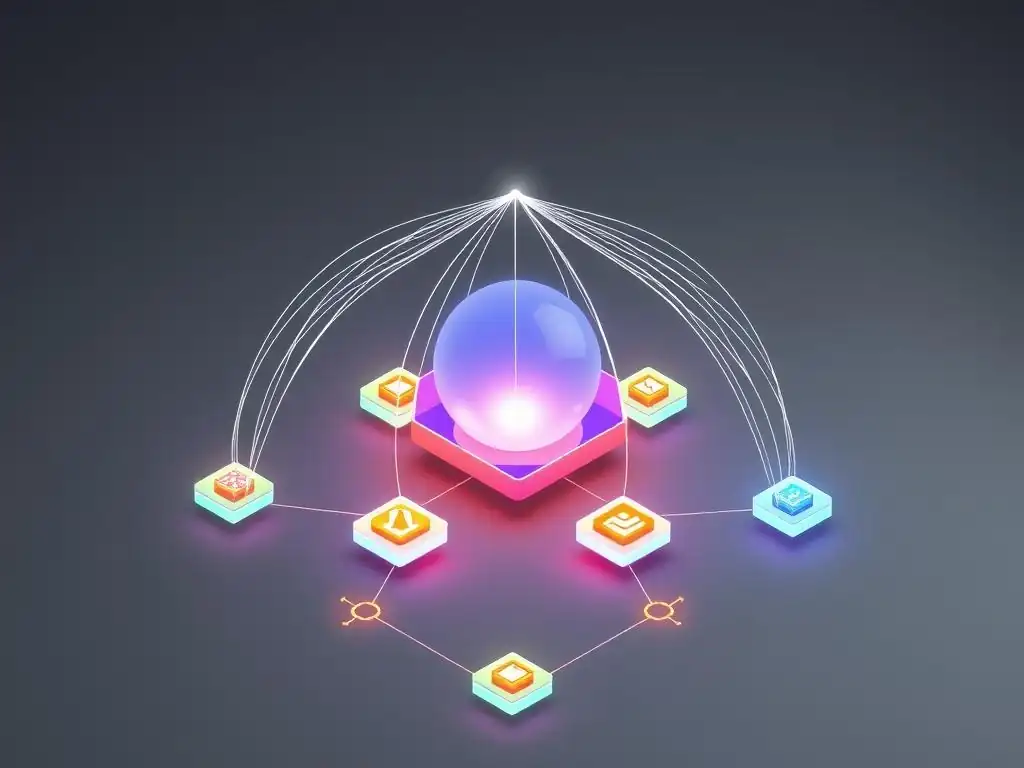
Enhanced Transaction Speeds and Reduced Fees
The most immediate and tangible benefits of Layer 2 solutions for non-Ethereum blockchains are enhanced transaction speeds and reduced fees. By processing transactions off-chain and only anchoring essential data on the main chain, Layer 2 solutions can dramatically increase the number of transactions a blockchain network can handle per second. For blockchains that currently struggle with transaction congestion and slow processing times, Layer 2 implementations can provide a significant performance boost, making the network more responsive and user-friendly.
Reduced transaction fees are another crucial advantage. High gas fees on congested blockchains can be a major barrier to entry for users and developers, especially for micro-transactions and frequent interactions with decentralized applications. Layer 2 solutions significantly lower transaction costs by amortizing on-chain fees across batches of off-chain transactions or by utilizing more efficient off-chain processing mechanisms.
This reduction in fees makes blockchain technology more accessible and economically viable for a wider range of use cases, from everyday payments to high-volume applications. For non-Ethereum blockchains aiming to compete with or complement Ethereum's ecosystem, Layer 2 solutions offer a powerful tool to improve their competitiveness in terms of speed and cost-effectiveness.
Improved User Experience for Decentralized Applications (dApps)
Layer 2 solutions directly translate to a significantly improved user experience for decentralized applications (dApps). Slow transaction confirmation times and high gas fees can be frustrating for dApp users, hindering the seamless and intuitive interaction expected in modern applications. By providing faster transaction speeds and lower fees, Layer 2 solutions create a smoother and more responsive dApp experience, making blockchain applications more appealing to mainstream users.
For example, in blockchain gaming, Layer 2 solutions can enable near-instantaneous in-game transactions, allowing for fluid gameplay and real-time interactions. In decentralized social media, Layer 2 can facilitate fast and low-cost micropayments for content creation and engagement. In DeFi, Layer 2 can enable faster and cheaper trading, lending, and borrowing, making decentralized financial services more accessible and efficient. By addressing the key pain points of slow speeds and high costs, Layer 2 solutions are essential for bridging the gap between the current limitations of blockchain technology and the user experience expectations of mainstream applications.
Enabling New Use Cases and Applications
Beyond improving existing applications, Layer 2 solutions also enable entirely new use cases and applications that were previously impractical or infeasible on less scalable blockchains. The increased throughput and reduced costs unlocked by Layer 2 open up possibilities for high-volume applications that require processing thousands or even tens of thousands of transactions per second. Examples include decentralized social media platforms with millions of users, high-frequency decentralized exchanges, micro-payment systems for content streaming or IoT devices, and large-scale blockchain-based gaming ecosystems.
Furthermore, Layer 2 solutions can facilitate the development of more complex and sophisticated decentralized applications. With lower transaction costs, developers can build dApps with more intricate smart contract logic and functionalities, without being constrained by gas limitations. Layer 2 also makes it more viable to experiment with new blockchain-based business models and applications that require a high degree of scalability and efficiency. By expanding the capabilities and reducing the limitations of blockchain technology, Layer 2 solutions are driving innovation and unlocking a wider spectrum of potential use cases across various industries.
Challenges and Future of Layer 2 on Alternative Blockchains
Fragmentation and Interoperability Issues
While Layer 2 solutions offer significant benefits, their proliferation across different blockchains also introduces potential fragmentation and interoperability issues. As various blockchains adopt different Layer 2 technologies, or even different implementations of the same technology, the ecosystem can become fragmented, making it more challenging for users and developers to navigate and interact across different chains and Layer 2 networks. For instance, assets locked on one Layer 2 solution may not be easily transferable to another Layer 2 solution on a different blockchain or even on the same blockchain if they are incompatible.
Interoperability between different Layer 2 solutions and between Layer 2 and Layer 1 blockchains is crucial to mitigate fragmentation and ensure a seamless user experience. Developing standardized protocols and bridges that enable cross-Layer 2 communication and asset transfers is a key challenge for the future. Addressing fragmentation and interoperability is essential to realize the full potential of a multi-chain Layer 2 ecosystem and avoid creating isolated silos of liquidity and functionality. Efforts to promote interoperability standards and develop robust bridging solutions are critical for fostering a more unified and user-friendly blockchain landscape.
Security Risks and Mitigation Strategies
While Layer 2 solutions inherit security from the underlying Layer 1 blockchain, they also introduce their own security risks that need to be carefully considered and mitigated. Optimistic rollups, for example, rely on fraud proofs and a challenge period, which introduces a potential delay in finality and requires active monitoring to detect and challenge fraudulent transactions. ZK-Rollups, while offering stronger cryptographic security, are more complex to implement and may have their own unique vulnerabilities depending on the specific cryptographic assumptions and implementations.
Data availability is another critical security consideration for Layer 2 solutions. Ensuring that transaction data is readily available is essential for both optimistic and ZK-Rollups to allow for fraud proofs or validity proof verification. Different data availability solutions, such as on-chain data posting or off-chain data availability committees, have varying security and cost trade-offs.
Projects deploying Layer 2 solutions need to carefully assess and mitigate these security risks by implementing robust monitoring systems, secure data availability solutions, and rigorous security audits. Ongoing research and development in Layer 2 security are crucial for ensuring the long-term robustness and trustworthiness of these scaling solutions.
The Evolving Landscape of Blockchain Scaling
The landscape of blockchain scaling is continuously evolving, with ongoing research and innovation in both Layer 2 and Layer 1 technologies. While Layer 2 solutions have gained significant traction and are becoming increasingly mature, Layer 1 blockchains are also exploring various scaling improvements, such as sharding and consensus mechanism optimizations. The future of blockchain scaling is likely to involve a combination of both Layer 1 and Layer 2 solutions, with each layer playing a complementary role in achieving overall scalability.
Layer 2 solutions are expected to become even more sophisticated and efficient, with advancements in rollup technologies, validity proof systems, and interoperability protocols. Modular blockchain architectures, like the OP Stack and Arbitrum Orbit, are gaining momentum, enabling greater customization and flexibility in Layer 2 deployments. The development of more user-friendly Layer 2 infrastructure and tools is also crucial for wider adoption. As the blockchain space matures, the focus will likely shift towards creating a seamless and interconnected multi-chain ecosystem, where Layer 2 solutions play a vital role in enabling scalability and interoperability across diverse blockchain platforms.
Conclusion: The Future of Blockchain Lies in Scalability
Layer 2 as a Key Component of Blockchain Evolution
Layer 2 solutions are unequivocally a key component of blockchain evolution. They represent a pragmatic and effective approach to overcoming the inherent scalability limitations of Layer 1 blockchains, paving the way for wider adoption and more diverse use cases. By decoupling transaction processing from the constraints of the base layer, Layer 2 solutions unlock significant improvements in transaction throughput, reduce fees, and enhance the user experience for decentralized applications. Their development and adoption are essential for blockchain technology to move beyond niche applications and become a foundational infrastructure for the future of the internet and digital economies.
The success of Layer 2 solutions is not limited to Ethereum; their principles and technologies are increasingly being applied to other blockchains, extending the benefits of scalability across the broader blockchain landscape. As Layer 2 technologies mature and become more readily available, they are poised to play an increasingly critical role in shaping the future of blockchain and driving its mainstream adoption.
Exploring the Potential of a Multi-Chain Future
The rise of Layer 2 solutions is intrinsically linked to the potential of a multi-chain future. Layer 2 technologies facilitate the creation of interconnected networks of blockchains, each optimized for specific use cases and functionalities. This multi-chain vision contrasts with the earlier notion of a single dominant blockchain and recognizes the diversity of needs and applications within the blockchain space. Layer 2 solutions enable interoperability and value transfer between different blockchains, fostering a more collaborative and interconnected ecosystem.
Protocols like Cosmos IBC and frameworks like Arbitrum Orbit and OP Stack are instrumental in building this multi-chain future. They empower developers to create customized and scalable blockchains that can interoperate seamlessly, sharing assets and data. This interconnectedness enhances the overall scalability and resilience of the blockchain ecosystem, allowing for specialization and innovation across different chains. The multi-chain future, enabled by Layer 2 and interoperability solutions, promises a more diverse, scalable, and robust blockchain landscape.
The Importance of Continued Innovation in Layer 2 Technologies
Continued innovation in Layer 2 technologies is of paramount importance for realizing the full potential of blockchain scaling. While significant progress has been made, there are still challenges to overcome and areas for improvement. Further research and development are needed to enhance the security, efficiency, and interoperability of Layer 2 solutions. Innovations in rollup technologies, validity proof systems, data availability solutions, and cross-Layer 2 communication protocols are crucial for pushing the boundaries of blockchain scalability.
The open-source nature of many Layer 2 projects fosters community collaboration and accelerates innovation. Ongoing research and development efforts, combined with active community participation, are essential for driving the evolution of Layer 2 technologies and ensuring that they can meet the growing demands of the blockchain ecosystem. Continued innovation in Layer 2 is not just about improving scalability; it is about unlocking new possibilities for blockchain technology and shaping its future trajectory.
Frequently Asked Questions
What are Layer 2 scaling solutions, and why are they important?
Layer 2 scaling solutions are protocols built on top of existing blockchains (Layer 1) to increase transaction throughput and reduce fees. They are crucial for blockchain adoption by making it more accessible and efficient.
Why are Layer 2 solutions relevant beyond just Ethereum?
While initially focused on Ethereum, Layer 2 solutions are becoming vital for other blockchains facing scalability challenges. They offer a way to boost performance and lower costs without fundamentally altering the base layer's security.
What are some examples of Layer 2 solutions being implemented on blockchains other than Ethereum?
Various blockchains are exploring Layer 2 solutions, including sidechains, validium, and optimistic rollups, adapted to their specific architectures. These aim to enhance their transaction processing capacity and overall user experience.
How do Layer 2 solutions impact the security of a blockchain?
Layer 2 solutions can impact security differently depending on their design. Some rely on the underlying Layer 1 for security, while others introduce their own security assumptions which need careful consideration.
What is the future of Layer 2 scaling solutions in the broader blockchain ecosystem?
Layer 2 scaling solutions are expected to become increasingly important for the growth and adoption of blockchain technology. They will play a key role in enabling more complex and efficient decentralized applications across various blockchains.
Final Reflection: The Expanding Horizon of Scalability
The journey through the landscape of Layer 2 scaling solutions reveals a critical truth: blockchain technology's future hinges on its ability to adapt and scale. While Ethereum has pioneered much of this innovation, the need for efficient and cost-effective transactions transcends any single blockchain. The exploration of Layer 2 solutions for other blockchains isn't just a technical exercise; it's a vital step towards realizing the full potential of decentralized technology for a global audience.
The impact of these scaling solutions extends far beyond mere transaction speed. They influence the accessibility and usability of blockchain applications, shaping the very fabric of the decentralized web. Witnessing the emergence of Layer 2 solutions across diverse ecosystems underscores the collaborative spirit driving this technological revolution. The key to our success is our ability to learn from each other, adapt, and innovate.
This sentiment perfectly encapsulates the ongoing evolution of Layer 2 technology, where cross-chain collaboration and knowledge sharing are paramount.
Now, as you consider the possibilities presented by these advancements, ask yourself: how can you contribute to this expanding horizon of scalability? Whether you're a developer, investor, or simply a curious observer, your understanding and engagement are crucial. Embrace the potential of Layer 2 solutions to unlock new frontiers in blockchain technology and help build a more accessible and efficient decentralized future for all.
Unleash the Power: Dive Deeper into Layer2 Innovation!
Thank you for exploring the world of Layer2 solutions beyond Ethereum! We hope you've gained a clearer understanding of how these technologies are driving innovation across the blockchain landscape. Now, it's time to put that knowledge into action and contribute to this exciting evolution.
Here are a few steps you can take right now:
- Research a blockchain: Choose a blockchain platform and thoroughly investigate its Layer2 ecosystem. Learn about the challenges it faces, its successes, and its future potential.
- Explore related projects: Visit our website to discover resources on emerging blockchain technologies and Layer2 scalability solutions.
- Join the conversation: Participate in online forums or communities dedicated to alternative Layer2 solutions. Sharing your insights and asking questions helps the entire space grow.
Which Layer2 project, beyond Ethereum, are you most eager to explore further, and what impact do you believe it will have on its parent blockchain?
Leave a Reply