
Blockchain Sharding: A Beginner's Guide to Scalable Cryptocurrencies


Welcome to Blockchain Trends, your compass in the rapidly evolving world of decentralized technologies!
Beyond the hype, blockchain's true potential lies in its ability to reshape industries and redefine how we interact. Ever wondered how blockchain can handle the demands of mainstream adoption? This week, we delve into the critical issue of blockchain scalability solutions explained, starting with an accessible guide to blockchain sharding. Discover how this powerful technique is paving the way for a faster, more efficient, and truly decentralized future. Ready to unravel the complexities and possibilities? Let's begin!
-
Blockchain Sharding: A Beginner's Guide to Scalable Cryptocurrencies
- Understanding Blockchain Scalability Challenges
- Introducing Blockchain Sharding: A Key Blockchain Scalability Solution
- How Blockchain Sharding Works: A Deep Dive
- Different Types of Blockchain Sharding Architectures
- Benefits of Blockchain Sharding for Scalability
- Challenges and Considerations of Implementing Blockchain Sharding
- Examples of Cryptocurrencies Utilizing Blockchain Sharding
- The Future of Blockchain Sharding and Scalable Cryptocurrencies
- Conclusion: Blockchain Sharding as a Promising Scalability Solution for Cryptocurrencies
-
Frequently Asked Questions
- What is blockchain sharding, and why is it important?
- How does blockchain sharding work in practice?
- What are some of the main challenges associated with implementing blockchain sharding?
- Besides sharding, what other Blockchain Scalability Solutions Explained exist to improve blockchain performance?
- How might regulations affect the adoption and development of blockchain sharding solutions?
- Final Reflection: Embracing the Scalable Future
- Ignite Your Blockchain Future: Start Sharding Your Knowledge!
Blockchain Sharding: A Beginner's Guide to Scalable Cryptocurrencies
Understanding Blockchain Scalability Challenges
The Blockchain Scalability Problem: Transaction Throughput Limitations
Blockchain technology, in its original form, faces significant hurdles when it comes to handling a large number of transactions. This issue, known as the blockchain scalability problem, is primarily due to the way transactions are processed and validated. Traditional blockchains like Bitcoin and Ethereum process transactions sequentially, meaning each transaction must be verified and added to the blockchain one after another by all nodes in the network. This consensus mechanism, while crucial for security and decentralization, inherently limits the number of transactions that can be processed within a given time frame.
For instance, Bitcoin's network can handle approximately 7 transactions per second (TPS), while Ethereum, before its transition to Proof-of-Stake and sharding implementation, hovered around 15-20 TPS. These figures pale in comparison to centralized payment processors like Visa, which can manage thousands of TPS. This transaction throughput limitation becomes a bottleneck, leading to slower transaction speeds, increased transaction fees during periods of high network activity, and ultimately hindering the widespread adoption of blockchain technology for mass-market applications. The need for effective blockchain scalability solutions is therefore paramount to unlock the full potential of cryptocurrencies and decentralized applications.
Why Scalability Matters for Cryptocurrency Adoption
Scalability is not merely a technical detail; it is a critical factor determining the practical usability and mainstream adoption of cryptocurrencies. Imagine a scenario where a popular decentralized application (dApp) experiences a surge in users. If the underlying blockchain cannot scale to accommodate this increased demand, users will face slow transaction confirmations, potentially waiting minutes or even hours for their transactions to be processed. Furthermore, as network congestion increases, transaction fees tend to skyrocket. In peak times on the Ethereum network, transaction fees have occasionally reached hundreds of dollars, making everyday transactions prohibitively expensive for the average user.
This poor user experience directly impedes the broader acceptance of cryptocurrencies as viable alternatives to traditional financial systems. For cryptocurrencies to compete with established payment networks and become widely used for daily transactions, they must offer comparable speed and cost-effectiveness. Scalability is the key to achieving this. Without effective blockchain scalability solutions, cryptocurrencies risk remaining niche technologies, unable to fulfill their promise of becoming a truly global and accessible financial infrastructure. Addressing scalability is therefore essential for bridging the gap between the current limitations of blockchain technology and the requirements of a mass-market, decentralized future.
Introducing Blockchain Sharding: A Key Blockchain Scalability Solution
What is Blockchain Sharding? Breaking Down the Concept
Blockchain sharding is a database partitioning technique adapted to the context of blockchain technology to improve scalability. Think of it like dividing a large company into smaller, more manageable teams. Instead of having every node in the network process every single transaction, sharding splits the blockchain into smaller partitions, known as "shards." Each shard operates like its own mini-blockchain, responsible for processing a subset of the network's transactions. This parallel processing significantly increases the overall transaction throughput of the entire network.
Imagine a library where every book request had to be processed by every librarian. This would be incredibly slow and inefficient. Sharding is akin to dividing the library into sections, each with its own librarians. Now, book requests are directed to the relevant section, allowing multiple requests to be processed simultaneously.
In blockchain sharding, nodes are divided into groups and assigned to specific shards. Each shard maintains its own state, processes transactions, and generates blocks independently. By distributing the workload across multiple shards, the network can handle a significantly larger volume of transactions, achieving greater scalability without compromising decentralization or security. This makes blockchain sharding a leading candidate among blockchain scalability solutions explained in the industry.
Sharding vs. Layer-2 Scaling Solutions: A Comparison
While blockchain sharding represents a Layer-1 scaling solution, meaning it modifies the base protocol of the blockchain itself, other approaches, known as Layer-2 solutions, operate on top of the existing blockchain. Layer-2 solutions like payment channels (e.g., Lightning Network for Bitcoin) and rollups (e.g., Optimistic and ZK-Rollups for Ethereum) aim to increase transaction throughput without fundamentally altering the main blockchain structure. Payment channels enable off-chain transactions, settling only the net result on the main chain, while rollups bundle multiple transactions into a single transaction on the main chain, reducing the load on the base layer.
Sharding and Layer-2 solutions offer different trade-offs. Layer-2 solutions are often quicker to implement and deploy as they don't require major changes to the core protocol. They can provide significant scalability improvements for specific use cases, such as micro-payments (payment channels) or high-volume dApp interactions (rollups). However, Layer-2 solutions can introduce complexities in terms of security assumptions and user experience, and they might not provide the same level of scalability as sharding in the long run.
Sharding, on the other hand, offers potentially greater scalability by fundamentally increasing the base layer's capacity. However, it is technically more complex to implement and requires significant protocol-level changes. Ultimately, both sharding and Layer-2 solutions play important roles in the quest for blockchain scalability solutions explained and adopted across different projects, often complementing each other to achieve optimal performance and user experience.
How Blockchain Sharding Works: A Deep Dive
Dividing the Blockchain: Shards and Their Roles
In a sharded blockchain, the network is partitioned into multiple shards, each functioning as a smaller, independent blockchain. These shards are not merely copies of the main chain; they are distinct partitions, each responsible for processing a subset of the overall network transactions and maintaining a portion of the blockchain's state. Nodes within the network are assigned to specific shards, meaning they only need to store and validate data relevant to their assigned shard, rather than the entire blockchain. This significantly reduces the computational and storage burden on individual nodes, allowing for increased network participation and decentralization.
The process of assigning nodes to shards, known as sharding assignment, is crucial for security and efficiency. Ideally, nodes should be randomly and dynamically assigned to shards to prevent malicious actors from concentrating their influence within a single shard. Each shard operates autonomously, processing transactions and producing blocks related to its assigned data range or transaction type.
For example, in state sharding, each shard might be responsible for a specific range of accounts or smart contracts. This division of labor allows for parallel processing of transactions across different shards, drastically increasing the network's overall transaction processing capacity and contributing to effective blockchain scalability solutions explained through practical implementations.
Cross-Shard Communication: Ensuring Data Integrity
While shards operate independently to enhance scalability, they must also be able to communicate with each other to maintain data integrity and enable complex applications that require interactions across different shards. This inter-shard communication is a critical aspect of sharded blockchain architecture and presents significant technical challenges. When a transaction involves accounts or data residing in different shards, a mechanism is needed to ensure atomicity and consistency across shards. This is often achieved through cross-shard transaction protocols.
One common approach involves using "receipts" or "proofs" to verify transactions across shards. When a transaction initiated in one shard needs to affect the state of another shard, the initiating shard generates a proof of the transaction's validity. This proof is then relayed to the target shard, which can independently verify the transaction and update its own state accordingly.
This process requires robust mechanisms to prevent double-spending and ensure that cross-shard transactions are executed correctly and securely. Maintaining data integrity across shards is paramount to the functionality and security of a sharded blockchain, and various cryptographic techniques and consensus protocols are employed to achieve reliable cross-shard communication, contributing to the overall effectiveness of blockchain scalability solutions explained in practical systems.
Transaction Validation in a Sharded Blockchain
Transaction validation in a sharded blockchain differs significantly from traditional, non-sharded blockchains. In a non-sharded system, every full node validates every transaction. However, in a sharded system, this is no longer necessary or efficient. Instead, within each shard, a subset of nodes, typically those assigned to that shard, is responsible for validating transactions and producing blocks for that specific shard. This localized validation process is key to achieving scalability gains.
Different sharding architectures employ various mechanisms for transaction validation. In some approaches, each shard has its own consensus mechanism, allowing it to operate independently. In others, there might be a global consensus layer that coordinates the shards and ensures overall network consistency. For instance, a common approach is to use committees of nodes within each shard to perform validation and block production.
These committees are typically selected using random selection processes to maintain security and prevent collusion. Only the nodes within a particular shard's committee need to validate transactions and blocks for that shard, significantly reducing the computational overhead compared to a system where every node validates every transaction. This localized validation is a core component of blockchain scalability solutions explained through sharding.
Different Types of Blockchain Sharding Architectures
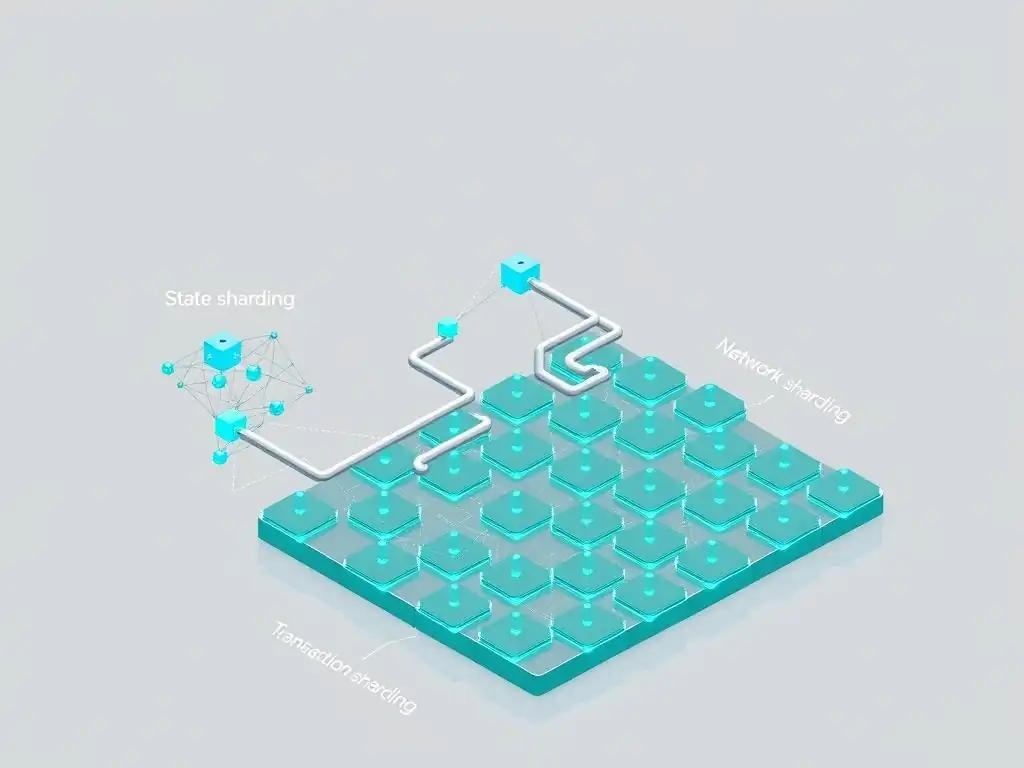
State Sharding: Partitioning the Blockchain State
State sharding is perhaps the most conceptually straightforward type of blockchain sharding. It involves partitioning the blockchain's state, which includes accounts, balances, and smart contract data, across different shards. Each shard is responsible for maintaining and processing transactions related to a specific subset of this state. For example, accounts with addresses within a certain range might be assigned to a particular shard. When a transaction is initiated, it is routed to the shard responsible for the accounts involved in that transaction.
State sharding aims to reduce the storage and processing burden on individual nodes by limiting the amount of state they need to maintain. Nodes assigned to a specific shard only need to store and process the state relevant to that shard, rather than the entire global state. This significantly improves efficiency and scalability.
However, state sharding introduces challenges in handling cross-shard transactions, where a transaction involves accounts or smart contracts residing in different shards. Efficient and secure cross-shard communication protocols are essential to ensure data consistency and atomicity in state-sharded blockchains. Despite these complexities, state sharding remains a prominent approach among blockchain scalability solutions explained and explored by various projects.
Transaction Sharding: Distributing Transaction Processing
Transaction sharding focuses on distributing the processing of transactions across different shards, rather than partitioning the state itself. In this approach, the entire blockchain state is still accessible to all shards, but the responsibility for processing transactions is divided. Incoming transactions are routed to different shards for processing, allowing for parallel transaction execution. This can significantly increase transaction throughput, as multiple shards can process transactions concurrently.
Transaction sharding can be implemented in various ways. One approach is to randomly assign transactions to shards based on a hash of the transaction data or sender address. Another approach is to use a more structured assignment based on transaction type or smart contract involved.
The key advantage of transaction sharding is its ability to parallelize transaction processing, thereby improving scalability. However, it can introduce complexities in ensuring data consistency and preventing double-spending, especially if transactions depend on the global state. Careful design of transaction routing and consensus mechanisms is crucial to effectively implement transaction sharding as one of the effective blockchain scalability solutions explained and considered in the industry.
Computation Sharding: Parallelizing Computation Tasks
Computation sharding aims to parallelize the execution of computationally intensive tasks, such as smart contract execution. In traditional blockchains, smart contracts are typically executed sequentially by every node in the network, which can become a bottleneck, especially for complex smart contracts. Computation sharding addresses this by dividing the computation workload across different shards. Each shard can be responsible for executing a subset of smart contracts or computational tasks in parallel.
This approach can significantly improve the performance of blockchains that rely heavily on smart contracts or require complex computations. Computation sharding can be combined with state sharding or transaction sharding to achieve even greater scalability gains. However, it introduces challenges in managing the dependencies between computations and ensuring consistent results across shards. Sophisticated scheduling and coordination mechanisms are needed to effectively implement computation sharding. Despite these complexities, computation sharding is an important aspect of blockchain scalability solutions explained and pursued for enhancing the performance of smart contract platforms.
Hybrid Sharding Approaches: Combining Different Techniques
Recognizing the strengths and weaknesses of different sharding types, many blockchain projects are exploring hybrid sharding approaches that combine state, transaction, and computation sharding techniques. Hybrid sharding aims to leverage the benefits of multiple sharding types to achieve optimal scalability and performance. For example, a hybrid approach might combine state sharding to reduce storage overhead with transaction sharding to parallelize transaction processing and computation sharding to accelerate smart contract execution.
By carefully combining different sharding techniques, hybrid approaches can potentially overcome the limitations of individual sharding types and achieve a more balanced and effective scalability solution. For instance, a system might use state sharding to partition data and transaction sharding to distribute transaction processing, while also incorporating computation sharding for specific types of computationally intensive smart contracts.
The design and implementation of hybrid sharding architectures are complex and require careful consideration of the trade-offs between scalability, security, and complexity. However, hybrid approaches represent a promising direction in the evolution of blockchain scalability solutions explained and developed to meet the diverse needs of blockchain applications.
Benefits of Blockchain Sharding for Scalability
Increased Transaction Throughput: Handling More Transactions Per Second (TPS)
The primary benefit of blockchain sharding is a significant increase in transaction throughput. By dividing the network into shards and processing transactions in parallel, a sharded blockchain can handle a substantially larger number of transactions per second (TPS) compared to a non-sharded blockchain. Theoretically, the TPS of a sharded blockchain can scale almost linearly with the number of shards. If a blockchain is divided into N shards, and each shard can process X transactions per second, the total network capacity could potentially reach N*X TPS.
For example, Zilliqa, one of the early adopters of sharding, claims to have achieved over 2,800 TPS in testnet environments, a significant improvement compared to pre-sharding blockchain platforms. While real-world performance can vary depending on network conditions and implementation details, sharding demonstrably offers the potential for orders of magnitude increase in transaction throughput. This enhanced TPS is crucial for supporting high-volume applications like decentralized exchanges, social media platforms, and global payment systems, making sharding a key component of blockchain scalability solutions explained to address the limitations of earlier blockchain designs.
Improved Network Efficiency: Reducing Congestion and Latency
Beyond increased TPS, blockchain sharding also leads to improved network efficiency. In a non-sharded blockchain, every node must process and validate every transaction, leading to network congestion, especially during periods of high demand. This congestion results in longer transaction confirmation times and increased latency. Sharding mitigates this congestion by distributing the workload across multiple shards. Nodes only need to process transactions and data relevant to their assigned shard, reducing the computational and communication burden on the entire network.
This reduced congestion translates to faster transaction confirmation times and lower latency. Users experience quicker transaction processing, leading to a smoother and more responsive user experience. Improved network efficiency also reduces the resources required to operate nodes, potentially lowering the barrier to entry for network participation and further enhancing decentralization. By addressing network congestion and latency, sharding contributes significantly to the overall usability and efficiency of blockchain networks, representing a vital aspect of blockchain scalability solutions explained and implemented in practice.
Enhanced Scalability: Supporting Growing User Base and Data Volume
Blockchain sharding is designed to provide truly scalable blockchain scalability solutions explained that can adapt to a growing user base and increasing data volume. As more users join the network and the amount of data stored on the blockchain grows, non-sharded blockchains can face significant performance degradation and even become unusable. Sharding allows the blockchain to scale horizontally by adding more shards as needed to accommodate increased demand. When the network becomes congested or data volume increases, new shards can be added to distribute the load and maintain performance.
This horizontal scalability is a key advantage of sharding. It allows the blockchain to grow organically with its user base and data volume without encountering fundamental performance bottlenecks. Unlike vertical scaling, which involves increasing the capacity of individual nodes, horizontal scaling through sharding is more sustainable and resilient in the long run. By enabling blockchains to scale elastically, sharding paves the way for truly global and mass-market blockchain applications, making it a critical technology for the future of decentralized systems and a core element of effective blockchain scalability solutions explained and developed.
Challenges and Considerations of Implementing Blockchain Sharding
Data Availability and Security Risks
Implementing blockchain sharding introduces new challenges, particularly concerning data availability and security. In a sharded system, each shard holds only a portion of the blockchain data. Ensuring that this data remains available and secure across all shards is crucial. One potential risk is data unavailability attacks, where malicious actors attempt to disrupt a shard by making its data unavailable, potentially halting transaction processing within that shard.
Another security concern is the reduced redundancy within each shard compared to a non-sharded blockchain. If a significant portion of nodes in a shard becomes compromised, the security of that shard, and potentially the entire network, could be at risk. To mitigate these risks, sharded blockchains employ various techniques such as data dispersal, erasure coding, and robust shard assignment mechanisms to ensure data availability and maintain security even if some shards are compromised or experience node failures. Addressing these data availability and security challenges is paramount for the successful implementation of blockchain scalability solutions explained through sharding.
Cross-Shard Transaction Complexity
Cross-shard transactions, which involve interactions between accounts or smart contracts residing in different shards, are inherently more complex than intra-shard transactions. Coordinating transactions across multiple shards while maintaining atomicity, consistency, isolation, and durability (ACID properties) is a significant technical challenge. Ensuring that cross-shard transactions are executed correctly and securely without introducing vulnerabilities or performance bottlenecks requires sophisticated protocols and consensus mechanisms.
Different approaches to cross-shard transactions exist, each with its own trade-offs in terms of complexity, performance, and security. Some approaches involve atomic cross-shard transactions, which guarantee that either the entire transaction succeeds across all shards or fails completely. Others employ asynchronous cross-shard communication, which can improve performance but introduces complexities in managing transaction dependencies and ensuring data consistency. Managing cross-shard transaction complexity is a crucial aspect of designing and implementing robust blockchain scalability solutions explained through sharding architectures.
Shard Coordination and Consensus Mechanisms
Coordinating the operation of multiple shards and achieving consensus across the sharded network is more complex than in a non-sharded blockchain. Each shard needs to reach consensus on its own transactions and blocks, and there also needs to be a mechanism for global coordination and consensus across all shards to ensure overall network consistency and security. Designing effective shard coordination and consensus mechanisms is essential for the proper functioning of a sharded blockchain.
Different sharding architectures employ various approaches to shard coordination and consensus. Some use a hierarchical consensus model, where each shard has its own local consensus mechanism, and a higher-level consensus layer coordinates the shards. Others use a single, unified consensus mechanism that spans across all shards. The choice of consensus mechanism impacts the performance, security, and complexity of the sharded blockchain. Developing efficient and secure shard coordination and consensus mechanisms is a critical challenge in the development of blockchain scalability solutions explained through sharding techniques.
Sybil Resistance in Sharded Systems
Sybil resistance, the ability to prevent a single entity from controlling a disproportionate share of the network's resources by creating multiple identities (Sybil attack), is a crucial security requirement for any decentralized system, including sharded blockchains. In a sharded system, ensuring Sybil resistance within each shard and across the entire network is particularly important. If a malicious actor can control a significant number of nodes within a shard, they could potentially compromise the security of that shard and launch attacks such as double-spending or censorship.
To maintain Sybil resistance in sharded systems, robust node assignment and shard membership management mechanisms are needed. These mechanisms should prevent malicious actors from easily acquiring control over shards. Techniques such as verifiable random functions (VRFs), stake-based shard assignment, and reputation systems are employed to enhance Sybil resistance in sharded blockchains. Addressing Sybil resistance is a fundamental security consideration in the design and implementation of effective blockchain scalability solutions explained and secured through sharding architectures.
Examples of Cryptocurrencies Utilizing Blockchain Sharding
Ethereum 2.0: Sharding Implementation
Ethereum 2.0, now simply known as Ethereum since "The Merge", is a major upgrade to the Ethereum blockchain that incorporates sharding as a key component of its scalability strategy. Initially, Ethereum 2.0 envisioned implementing full state sharding across 64 shards. However, the roadmap has evolved, and the current focus is on a more phased approach to sharding. While full state sharding is still under development, Ethereum has implemented "proto-danksharding" (EIP-4844) which introduces "blobs" of data to the network, significantly increasing data availability and reducing Layer-2 rollup costs. This is a step towards full data sharding and ultimately state sharding.
Ethereum's sharding implementation aims to dramatically increase the network's transaction throughput and reduce gas fees, making it more accessible and usable for a wider range of applications. The phased approach allows for iterative development and deployment, mitigating the risks associated with implementing complex sharding technologies. While the full realization of Ethereum's sharding vision is still ongoing, the progress made represents a significant step forward in demonstrating the practical application of blockchain scalability solutions explained through sharding in a major cryptocurrency platform.
Zilliqa: Sharding Implementation
Zilliqa is one of the pioneering cryptocurrencies to successfully implement blockchain sharding on its mainnet. Zilliqa utilizes transaction sharding, where the network is divided into shards that process transactions in parallel. This architecture has allowed Zilliqa to achieve significantly higher transaction throughput compared to non-sharded blockchains. Zilliqa's sharding implementation dynamically adjusts the number of shards based on network demand, allowing it to scale its capacity as needed.
Zilliqa's experience with sharding provides valuable real-world insights into the benefits and challenges of implementing this scalability solution. While Zilliqa has demonstrated the potential of sharding to increase TPS, it also highlights the complexities involved in designing and operating a sharded blockchain network. Zilliqa's continued development and adoption serve as a practical case study for blockchain scalability solutions explained and tested in a live, operational cryptocurrency environment.
Analyzing the Performance and Effectiveness of Sharding in Practice
Analyzing the performance and effectiveness of sharding in practice requires considering both theoretical projections and real-world data from projects like Zilliqa and Ethereum's ongoing sharding implementation. While theoretical models suggest significant TPS gains from sharding, actual performance depends on various factors, including network conditions, transaction patterns, and implementation details. Zilliqa's reported TPS figures demonstrate the potential for substantial throughput increases, but real-world usage patterns and network load can influence actual performance.
Ethereum's phased sharding approach allows for incremental evaluation of sharding effectiveness. Proto-danksharding is already showing promising results in reducing Layer-2 costs, indicating the positive impact of increased data availability. As Ethereum progresses towards full state sharding, monitoring its performance and analyzing its impact on network throughput, latency, and gas fees will be crucial for understanding the real-world effectiveness of sharding as a blockchain scalability solution. Continued research and data analysis from projects implementing sharding are essential for refining sharding techniques and optimizing blockchain scalability solutions explained and deployed in practice.
The Future of Blockchain Sharding and Scalable Cryptocurrencies
Sharding and the Evolution of Decentralized Finance (DeFi)
Blockchain sharding is poised to play a crucial role in the future evolution of Decentralized Finance (DeFi). DeFi applications, ranging from decentralized exchanges (DEXs) to lending platforms, demand high transaction throughput and low fees to support mass adoption and compete with traditional financial systems. The current scalability limitations of many blockchains hinder the growth and accessibility of DeFi. Sharding offers a viable path to overcome these limitations and unlock the full potential of DeFi.
By providing the necessary scalability, sharding can enable DeFi platforms to handle a significantly larger volume of transactions, reduce gas fees, and improve user experience. This can lead to wider adoption of DeFi services, increased liquidity in decentralized markets, and the development of more complex and sophisticated DeFi applications. Sharding is therefore a key enabler for the continued growth and mainstream adoption of DeFi, making it a critical component of blockchain scalability solutions explained in the context of decentralized financial ecosystems.
The Role of Sharding in Enterprise Blockchain Applications
Beyond cryptocurrencies and DeFi, blockchain sharding also holds significant promise for enterprise blockchain applications. Many enterprise use cases, such as supply chain management, digital identity, and cross-border payments, require high transaction throughput, low latency, and the ability to handle large volumes of data. Traditional blockchains, with their scalability limitations, may not be suitable for these demanding enterprise applications. Sharding offers a solution to make blockchain technology viable for a wider range of enterprise use cases.
By providing enterprise-grade scalability, sharding can enable businesses to leverage the benefits of blockchain technology, such as transparency, security, and immutability, for their operational needs. Sharding can facilitate the development of enterprise blockchain solutions that can handle the scale and performance requirements of large organizations and complex business processes. Therefore, sharding is a crucial technology for expanding the applicability of blockchain beyond cryptocurrencies and into the realm of enterprise solutions, representing a key aspect of blockchain scalability solutions explained for business adoption.
Overcoming the Trilemma: Balancing Scalability, Security, and Decentralization
Blockchain technology faces the so-called "blockchain trilemma," which posits that it is challenging to simultaneously achieve scalability, security, and decentralization. Traditional blockchains often prioritize security and decentralization, sacrificing scalability. Sharding is considered a promising approach to overcome this trilemma by enabling blockchains to scale without compromising security or decentralization.
By distributing the workload across shards, sharding increases scalability while maintaining decentralization by allowing more nodes to participate in the network with reduced resource requirements. Furthermore, well-designed sharding architectures incorporate security mechanisms to protect against attacks and ensure data integrity across shards. While achieving a perfect balance between scalability, security, and decentralization remains an ongoing challenge, sharding represents a significant step towards overcoming the blockchain trilemma and realizing the full potential of decentralized, scalable, and secure blockchain networks. It is a leading contender among blockchain scalability solutions explained to address the fundamental trade-offs inherent in blockchain design.
Conclusion: Blockchain Sharding as a Promising Scalability Solution for Cryptocurrencies
Blockchain sharding emerges as a highly promising Layer-1 scaling solution for cryptocurrencies, addressing the critical challenge of transaction throughput limitations that hinder wider adoption. By dividing the blockchain into smaller, parallel shards, sharding offers a pathway to significantly increase transaction processing capacity, improve network efficiency, and enhance overall scalability. While challenges remain in implementing sharding, particularly concerning data availability, cross-shard transactions, and security considerations, ongoing research and development, as demonstrated by projects like Ethereum and Zilliqa, are steadily advancing the maturity and effectiveness of sharding techniques.
As the demand for scalable blockchain solutions grows, particularly in areas like DeFi and enterprise applications, sharding is poised to play an increasingly important role in shaping the future of decentralized systems. By enabling blockchains to scale horizontally without sacrificing security or decentralization, sharding offers a viable path towards realizing the vision of truly global, accessible, and high-performance cryptocurrency networks. Blockchain sharding, therefore, stands out as a key innovation among blockchain scalability solutions explained and actively pursued to unlock the transformative potential of blockchain technology for mass adoption and diverse applications.
Frequently Asked Questions
What is blockchain sharding, and why is it important?
Blockchain sharding is a scalability solution that divides a blockchain into smaller, manageable pieces called shards. This allows parallel processing of transactions, improving overall throughput and addressing the limitations of traditional blockchains.
How does blockchain sharding work in practice?
Sharding involves dividing the blockchain's state and transaction processing responsibilities among different groups of nodes. Each shard independently validates transactions and maintains its own portion of the blockchain, increasing efficiency.
What are some of the main challenges associated with implementing blockchain sharding?
One key challenge is ensuring cross-shard communication and data consistency between shards. Another involves preventing security vulnerabilities like single-shard attacks, where malicious actors target a single shard.
Besides sharding, what other Blockchain Scalability Solutions Explained exist to improve blockchain performance?
Other solutions include Layer-2 scaling (like payment channels and rollups) and sidechains. These approaches aim to offload transaction processing from the main blockchain to increase throughput.
How might regulations affect the adoption and development of blockchain sharding solutions?
Regulations could potentially impact the legal and operational aspects of sharded blockchains. Clarity and compliance frameworks regarding data privacy and security will be crucial for widespread adoption.
Final Reflection: Embracing the Scalable Future
The journey through blockchain sharding reveals more than just a technical solution; it unveils a pathway to democratized and accessible digital ecosystems. The limitations of early blockchains are becoming increasingly apparent in today's world, where demand for decentralized applications and cryptocurrencies is surging. Sharding, as a vital scalability solution, is no longer a theoretical concept but a crucial component in shaping the future of blockchain technology and its widespread adoption.
The impact of blockchain scalability solutions extends far beyond mere transaction speed. It's about fostering inclusivity, reducing transaction costs, and empowering individuals to participate in a more equitable financial and technological landscape. The potential for sharding to revolutionize industries, from supply chain management to healthcare, is immense. The future of finance is decentralized, and blockchain technology is the key. Sharding unlocks the potential for this future to be accessible to all.
This quote encapsulates the transformative power of sharding in making decentralized systems truly scalable and inclusive.
As we conclude this exploration of blockchain sharding, I invite you to consider its implications for your own understanding of the digital world. How can you leverage this knowledge to advocate for more efficient and accessible blockchain solutions? How can you contribute to building a future where decentralized technologies empower individuals and drive innovation? The future of blockchain is not just about technology; it's about the people who shape it. Let us embrace the challenge and build a more scalable, inclusive, and decentralized future, together.
Ignite Your Blockchain Future: Start Sharding Your Knowledge!
Thank you for exploring the world of blockchain sharding with us! We hope you now have a clearer understanding of how this technology is paving the way for more scalable and efficient cryptocurrencies. Are you ready to take the next step?
Here are a few actions you can take immediately to deepen your understanding and contribute to the future of blockchain:
- Experiment with creating a simplified, theoretical model of a sharded blockchain. Outline how shards validate transactions and communicate with each other.
- Share this article with fellow crypto enthusiasts and spark a conversation about the potential of sharding on your favorite social media platforms.
- Explore other scaling solutions and compare their advantages and disadvantages to sharding, such as proof-of-stake or layer-2 solutions.
Which aspect of sharding interests you the most, and what real-world problem do you think it can best address? Share your thoughts in the comments below!
Leave a Reply