
Blockchain Sharding and Interoperability: Bridging the Gap Between Sharded Chains


Welcome to Blockchain Trends, your definitive guide to understanding the revolutionary impact of blockchain beyond the buzz.
Ever wondered how disparate blockchain networks can seamlessly communicate and share data? This article delves deep into blockchain interoperability solutions benefits, exploring how these innovations are crucial for unlocking the full potential of decentralized systems. Discover how sharding and interoperability are working together to pave the way for a more connected and scalable blockchain future. Intrigued? Read on to uncover the cutting-edge advancements shaping tomorrow's digital landscape.
Blockchain Sharding and Interoperability: Bridging the Gap Between Sharded Chains
- Introduction to Blockchain Sharding and Interoperability Challenges
-
Frequently Asked Questions
- What is blockchain sharding, and why is it important?
- How does blockchain interoperability relate to sharding?
- What are some of the key benefits of blockchain interoperability solutions?
- What are some challenges in implementing blockchain interoperability solutions for sharded chains?
- How will blockchain interoperability solutions impact the future of decentralized systems?
- Final Reflection: Embracing the Interconnected Blockchain Future
- Unleash the Power of Interconnected Blockchains!
Introduction to Blockchain Sharding and Interoperability Challenges
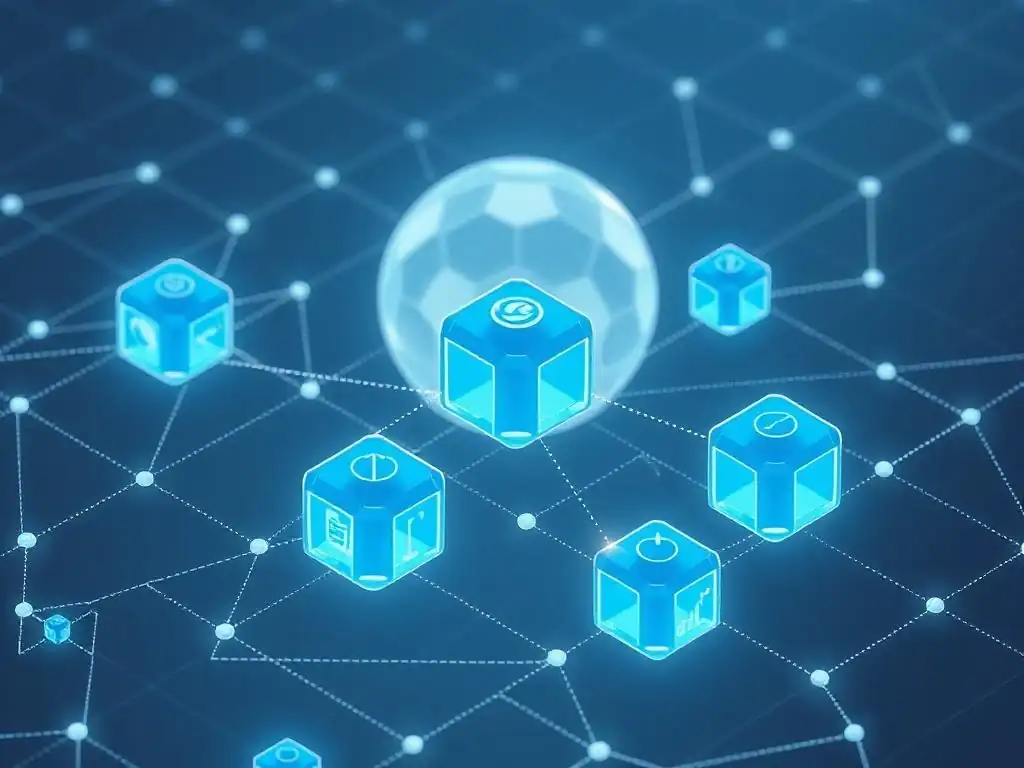
Understanding Blockchain Sharding: A Scalability Solution
Blockchain technology, while revolutionary, has faced scalability limitations, particularly with the increasing demand for higher transaction throughput. Traditional blockchains process transactions sequentially, which can lead to congestion and slower processing times as the network grows. Sharding emerges as a pivotal Layer-1 scaling solution designed to overcome this bottleneck. Imagine a database partitioned into smaller, more manageable pieces – sharding applies this principle to blockchains.
By dividing the blockchain network into shards, each shard processes only a fraction of the network's transactions in parallel. This parallel processing significantly increases the overall transaction processing capacity of the blockchain, allowing it to handle a much larger volume of transactions compared to non-sharded chains. For instance, Ethereum's roadmap includes sharding as a key component of its scalability strategy, aiming to drastically increase its transaction throughput from its current rate of approximately 15-30 transactions per second to potentially thousands or even tens of thousands.
The core concept of sharding involves breaking down the monolithic blockchain into smaller, independent blockchains called shards. Each shard operates autonomously, maintaining its own state and processing transactions. This division of labor allows the network to process multiple transactions concurrently, as different shards can work on different sets of transactions simultaneously. Think of it as a highway with multiple lanes instead of a single lane road.
Each lane (shard) can handle traffic independently, greatly increasing the overall flow. This approach not only addresses transaction throughput but also reduces the computational burden on individual nodes, as each node only needs to validate transactions within its assigned shard, rather than the entire network's transactions. This distributed approach is crucial for enabling blockchains to scale to meet the demands of global adoption and support increasingly complex applications.
The Interoperability Problem: Connecting Fragmented Blockchains
While sharding offers a robust solution for scalability, it introduces a new challenge: interoperability. By design, sharded blockchains are fragmented into multiple independent chains. This fragmentation creates silos of data and value, making it difficult for different shards to communicate and interact with each other seamlessly. Imagine each shard as a separate island, isolated from the others.
Users and applications operating within one shard may find it challenging to access data or assets residing on another shard. This lack of interoperability can hinder the overall functionality and user experience of sharded blockchains. For example, if a user has assets on one shard and wants to use a decentralized application (dApp) deployed on another shard, they would face significant hurdles without effective interoperability solutions.
This fragmentation directly impacts the user experience and the potential for network effects. If shards cannot communicate effectively, it limits the composability of dApps and the fluid movement of assets across the sharded network. Consider a scenario where DeFi applications are distributed across different shards.
Without interoperability, users would be restricted to using applications within a single shard, limiting their access to the full spectrum of DeFi services available across the entire network. This lack of connectivity can also lead to liquidity fragmentation, where assets are spread across different shards, making it harder to aggregate liquidity for efficient trading and other financial activities. Therefore, addressing the interoperability problem is paramount to unlocking the full potential of sharded blockchains and ensuring a cohesive and user-friendly decentralized ecosystem.
Why Blockchain Interoperability Solutions are Crucial for Sharded Chains
Blockchain interoperability solutions are not merely beneficial for sharded chains; they are absolutely crucial for their long-term viability and success. Without effective interoperability, sharded blockchains risk becoming a collection of isolated networks, failing to realize the synergistic benefits of a unified, scalable blockchain ecosystem. The primary reason for this criticality lies in the inherent fragmentation introduced by sharding. As shards operate independently, mechanisms are needed to bridge these gaps and enable seamless communication and data exchange between them. This is where blockchain interoperability solutions step in, acting as the crucial connective tissue that binds the sharded blockchain together.
The blockchain interoperability solutions benefits are multifaceted and directly address the limitations imposed by sharding. Firstly, interoperability solutions allow for the efficient transfer of assets and data between shards. This cross-shard communication is essential for applications that require access to data or functionality distributed across different parts of the sharded network.
Secondly, interoperability fosters a more unified user experience. Users should ideally be able to interact with the sharded blockchain as a single, cohesive entity, regardless of the underlying sharded architecture. Interoperability solutions enable this seamless experience by abstracting away the complexities of shard boundaries.
Finally, and perhaps most importantly, interoperability unlocks the true scalability potential of sharded chains. By enabling shards to work together and leverage each other's resources, interoperability solutions ensure that the sharded blockchain can function as a highly scalable and interconnected ecosystem, capable of supporting a wide range of complex and demanding applications. In essence, interoperability transforms a potentially fragmented sharded system into a powerful, unified, and scalable blockchain platform.
Frequently Asked Questions
What is blockchain sharding, and why is it important?
Sharding is a technique that divides a blockchain into smaller, more manageable pieces (shards). This increases transaction throughput and scalability, addressing limitations of traditional blockchains.
How does blockchain interoperability relate to sharding?
Interoperability allows different sharded chains to communicate and exchange data. Without it, sharded blockchains become isolated islands, limiting their overall utility and potential.
What are some of the key benefits of blockchain interoperability solutions?
Interoperability solutions enable seamless asset transfers between shards, facilitate cross-shard smart contract execution, and improve the overall user experience by unifying fragmented ecosystems.
What are some challenges in implementing blockchain interoperability solutions for sharded chains?
Ensuring security and trustlessness across different shards is a major challenge. Maintaining data consistency and avoiding double-spending problems also require robust mechanisms.
How will blockchain interoperability solutions impact the future of decentralized systems?
Interoperability will unlock the true potential of decentralized systems by enabling more complex and interconnected applications. This will lead to greater adoption and innovation across various industries.
Final Reflection: Embracing the Interconnected Blockchain Future
The exploration of blockchain sharding and interoperability solutions culminates in a crucial realization: the future of blockchain hinges on seamless communication and collaboration between disparate networks. The fragmented landscape of isolated chains, while offering scalability benefits, ultimately limits the true potential of decentralized technology. Only through robust interoperability solutions can we unlock the full power of blockchain and realize its transformative impact across industries.
The journey towards a truly interconnected blockchain ecosystem is not merely a technical challenge; it's a cultural shift. We must move beyond the siloed mentality and embrace a collaborative spirit, fostering innovation and shared growth. This requires a commitment to open standards, cross-chain communication protocols, and a willingness to bridge the gaps that currently divide the blockchain world. The strength of the web is in its universality. Access by everyone regardless of disability is an essential aspect.
- Tim Berners-Lee. This sentiment applies equally to the blockchain space: its strength lies in its interconnectedness and accessibility for all.
As we stand at the cusp of this interconnected future, let us reflect on the lessons learned and the opportunities that lie ahead. Consider how you can contribute to this evolution, whether through supporting interoperability initiatives, advocating for open standards, or simply embracing the spirit of collaboration. The future of blockchain is not predetermined; it is shaped by the choices we make today. Let us choose to build a future where blockchains work together, empowering individuals and transforming industries for the better.
Unleash the Power of Interconnected Blockchains!
Thank you for exploring the exciting world of blockchain sharding and interoperability with us. Now that you understand how these innovations are shaping the future, it's time to turn your knowledge into action.
Here’s how you can contribute to a more connected blockchain ecosystem:
- Dive deeper by exploring and experimenting with existing interoperability platforms. Gaining hands-on experience with these solutions is a vital next step.
- Join the conversation! Share this article with your network and spark discussions on the potential and challenges of sharded blockchains.
- Consider contributing to open-source projects focused on improving cross-chain communication protocols—your perspective could be invaluable.
What innovative cross-chain application do you envision building in a seamlessly interoperable blockchain future?
Leave a Reply