
Exploring the Limitations of State Channels: Challenges and Tradeoffs


Welcome to Blockchain Trends, your guide to understanding the real-world impact of blockchain technology. While the promise of instant, scalable transactions is alluring, state channels – a popular solution for overcoming blockchain limitations – come with their own set of challenges. Dive in to explore the tradeoffs and discover if this approach truly delivers on its potential in the world of decentralized systems. What are the real-world constraints and how do they impact the future of blockchain scalability?
- Exploring Lightning Network: Addressing Bitcoin's Scalability Challenges
- Lightning Network Limitations: Key Challenges and Drawbacks
- Security Vulnerabilities in Lightning Network: Potential Risks and Mitigation Strategies
- Lightning Network vs. Other Scaling Solutions: A Comparative Analysis
- Overcoming the Limitations of Lightning Network: Potential Solutions and Future Developments
- Real-World Examples: Examining the Limitations in Action [El Salvador's Bitcoin Adoption]
- Conclusion: Is the Lightning Network a Viable Scaling Solution for Bitcoin?
-
Frequently Asked Questions
- What are state channels and how do they relate to blockchain scalability?
- What are some key limitations of state channels in terms of complexity?
- How do state channels handle dispute resolution and what are the drawbacks?
- What are the limitations of state channels in terms of network effects and adoption?
- What are the security considerations and potential vulnerabilities of using state channels?
- Final Reflection: Navigating the State Channel Frontier
- Dive Deeper into Scalable Blockchain Solutions!
Exploring Lightning Network: Addressing Bitcoin's Scalability Challenges
Defining Lightning Network: An Off-Chain Payment Channel Solution
The Lightning Network is presented as a layer-2 scaling solution designed to enhance the transaction processing capabilities of blockchain networks, primarily Bitcoin. It operates on the concept of state channels, enabling users to conduct multiple transactions off the main blockchain (off-chain) while only recording the opening and closing states of these channels on the main chain (on-chain). This approach significantly reduces congestion on the primary blockchain, as only aggregated channel balances are periodically settled on the main ledger.
Imagine traditional banking: most transactions occur within a bank's internal ledger, and only larger transfers between banks are recorded at a higher, central level. The Lightning Network applies a similar principle to Bitcoin, aiming to facilitate faster and cheaper transactions for everyday use cases.
At its core, the Lightning Network functions by establishing peer-to-peer payment channels between users. These channels are created through an on-chain Bitcoin transaction, effectively locking up a certain amount of Bitcoin within a multi-signature address. Once the channel is open, participants can send and receive Bitcoin amongst themselves instantaneously and with minimal fees, without broadcasting each individual transaction to the entire Bitcoin network.
These off-chain transactions are secured cryptographically and are backed by the initial on-chain commitment. Only when users decide to close the channel is the final, aggregated balance of transactions settled back onto the main Bitcoin blockchain, making the system significantly more efficient for high-frequency, low-value transactions.
The Advantages of Lightning Network: Instant Payments and Reduced Fees
One of the most compelling advantages of the Lightning Network is the dramatic reduction in transaction confirmation times. Traditional Bitcoin transactions require confirmation from the network, which can take anywhere from minutes to hours, depending on network congestion and transaction fees paid. In contrast, Lightning Network transactions are near-instantaneous, often confirming in milliseconds.
This speed is crucial for use cases requiring rapid payments, such as point-of-sale systems, online micro-transactions, or real-time exchanges. For instance, a point-of-sale system accepting Bitcoin through the Lightning Network can process a payment as quickly as a credit card transaction, significantly improving user experience for merchants and customers alike.
Furthermore, the Lightning Network drastically lowers transaction fees. Bitcoin transaction fees fluctuate based on network demand and the size of the transaction in bytes. During periods of high network congestion, fees can become prohibitively expensive, especially for small transactions, sometimes exceeding the value of the transaction itself.
Lightning Network transactions, being off-chain, incur significantly lower fees, often fractions of a cent. This cost-effectiveness makes Bitcoin viable for micro-payments and everyday transactions that would be impractical or too expensive on the main Bitcoin blockchain. For example, sending a few satoshis (fractions of a Bitcoin) as a tip or for a small online purchase becomes economically feasible with Lightning, opening up new possibilities for Bitcoin adoption in various micropayment-driven economies.
How Lightning Network Differs from On-Chain Transactions
The fundamental difference between Lightning Network and on-chain Bitcoin transactions lies in their processing and settlement mechanisms. On-chain Bitcoin transactions are broadcast to the entire network, verified by miners, and permanently recorded on the public blockchain ledger. This process ensures high security and immutability but introduces latency and scalability limitations. Every transaction competes for block space, leading to potential delays and fee increases during peak network usage. On-chain transactions are akin to writing every single transaction into a public, immutable ledger that everyone needs to verify.
In contrast, Lightning Network transactions occur off-chain within private payment channels established between users. These transactions are not immediately broadcast to the entire Bitcoin network nor are they individually recorded on the main blockchain until the channel is closed.
Instead, transactions are updated within the channel through cryptographic commitments between the participants, offering speed and lower fees at the cost of requiring channel setup and management. Think of Lightning Network channels as private agreements between parties transacting frequently, where only the initial agreement and final settlement are publicly recorded on the main Bitcoin ledger, much like settling a tab at the end of the night instead of recording every drink purchased individually.
Lightning Network Limitations: Key Challenges and Drawbacks
Lightning Network Routing Challenges: Finding Efficient Payment Paths
One significant limitation of the Lightning Network is the challenge of routing payments efficiently across the network. Since Lightning Network operates as a network of interconnected payment channels, a user sending a payment to another user may not have a direct channel open with the recipient. In such cases, the payment needs to be routed through a series of intermediary channels, potentially involving multiple hops.
Finding the most efficient and reliable route, especially in a decentralized and dynamically changing network, poses a complex routing problem. The network relies on routing algorithms to discover paths, and these algorithms must balance factors like channel capacity, fees charged by intermediary nodes, and path reliability to ensure successful payment delivery.
Inefficient routing can lead to payment failures or higher transaction costs. If a path is congested, lacks sufficient capacity in one or more channels along the way, or if intermediary nodes charge high routing fees, payments may fail to reach their destination or become more expensive than anticipated. Furthermore, the dynamic nature of the network, with channels opening and closing constantly, makes route discovery a continuous process.
Finding optimal routes in real-time requires sophisticated routing protocols and network infrastructure, and the network's efficiency is directly impacted by the effectiveness of these routing mechanisms. In practice, this can sometimes translate to users experiencing failed payments or needing to retry transactions through different routes, particularly when sending larger amounts or to less connected nodes.
Understanding Channel Capacity Limitations: Liquidity Management
Another crucial limitation stems from channel capacity and the need for effective liquidity management. Each Lightning Network channel has a fixed capacity defined by the amount of Bitcoin initially locked into it. This capacity dictates the maximum amount that can be transacted through that specific channel before it needs to be rebalanced or closed and reopened. If a channel's capacity is depleted in one direction (e.g., Alice has sent most of her Bitcoin to Bob), further payments in that direction become impossible unless liquidity is added back to Alice's side of the channel.
This capacity constraint introduces the concept of liquidity management, a critical aspect of operating on the Lightning Network. Nodes need to strategically manage their channel balances to ensure they have sufficient liquidity to both send and receive payments. Imbalances in channel capacity can lead to payment failures and require users to actively manage their channels, either by rebalancing them (moving funds from one side of the channel to the other) or by opening new channels with different nodes.
For example, if a merchant frequently receives payments but rarely sends them out, their channels may become imbalanced, requiring them to periodically rebalance their channels or open new channels to continue accepting payments effectively. This adds complexity to user experience and requires a deeper understanding of channel mechanics than simply using on-chain Bitcoin transactions.
Lightning Network Complexity: User Experience and Technical Expertise
The technical complexity of the Lightning Network presents a significant barrier to mainstream adoption. Setting up and managing a Lightning Network node, opening and managing channels, and understanding concepts like routing and liquidity management require a level of technical expertise that is currently beyond the average user. While user-friendly wallets are emerging to abstract some of this complexity, the underlying system remains inherently more complex than simply using a standard Bitcoin wallet for on-chain transactions.
This complexity impacts user experience in several ways. Users may encounter challenges in setting up nodes, understanding channel capacity, or troubleshooting payment failures. The need for channel management, rebalancing, and understanding routing mechanics adds friction to the user experience compared to the simplicity of on-chain Bitcoin transactions. Furthermore, the learning curve associated with Lightning Network can deter less technically inclined users from adopting it. While ongoing development focuses on simplifying user interfaces and automating channel management processes, the inherent complexity of off-chain state channel technology remains a significant hurdle to overcome for widespread Lightning Network adoption among non-technical users.
Security Vulnerabilities in Lightning Network: Potential Risks and Mitigation Strategies
Channel Jamming Attacks: Identifying and Preventing Denial-of-Service
Channel jamming attacks represent a potential denial-of-service (DoS) vulnerability in the Lightning Network. In these attacks, malicious actors attempt to clog payment channels by initiating numerous non-committal payment attempts or by strategically failing to forward payments, effectively blocking legitimate payments from being routed through those channels. By exploiting the routing mechanism and resource limitations of nodes, attackers can disrupt network operations and degrade the user experience for legitimate users.
These jamming attacks can manifest in different forms, such as resource exhaustion attacks where attackers flood nodes with payment requests, or routing attacks where they manipulate routing information to create bottlenecks and prevent payments from reaching their destinations. Identifying and mitigating these attacks is crucial for network stability.
Possible mitigation strategies include implementing reputation systems for nodes, rate limiting payment requests, and developing more robust routing algorithms that are less susceptible to manipulation. For instance, nodes might implement reputation scores based on past behavior to prioritize routing payments through reliable nodes and penalize nodes exhibiting suspicious activity, thereby reducing the effectiveness of jamming attempts.
Loss of Funds: Addressing Risks of Inactivity and Node Failure
While generally considered secure, the Lightning Network does introduce certain risks related to fund loss, particularly in scenarios involving inactivity or node failure. If a user becomes inactive or their Lightning Network node fails without properly closing their channels and settling on-chain, there is a potential risk of funds being locked or, in less likely scenarios, lost. This risk stems from the time-sensitive nature of channel state updates and the need for participants to actively monitor their channels and respond to protocol events within specific timeframes.
To mitigate these risks, robust wallet software and node implementations are essential. Wallets should automatically handle channel closures and on-chain settlements in case of user inactivity or node failure. Furthermore, users should be educated on best practices for node operation, including regular backups and understanding the importance of timely channel closures.
Features like watchtowers, which are third-party services that monitor channels for users and can automatically react to malicious or non-cooperative channel partners, are also being developed to further reduce the risk of fund loss due to inactivity or node failures. These security measures aim to ensure that even in less-than-ideal operational scenarios, user funds remain safe and recoverable.
Addressing Security Risks: Best Practices for Node Operation
Effectively addressing security risks in the Lightning Network relies heavily on implementing and adhering to best practices for node operation. Running a Lightning Network node securely requires a combination of technical measures and user awareness. This includes keeping node software up-to-date with the latest security patches, implementing strong node security configurations, and actively monitoring node activity for suspicious behavior.
Best practices also extend to channel management and liquidity strategies. Nodes should carefully select channel partners, prioritize opening channels with reputable and reliable nodes, and proactively manage channel liquidity to ensure smooth operation and minimize routing failures. Regularly backing up node data is crucial for disaster recovery and preventing fund loss in case of hardware failure or unforeseen events.
Furthermore, staying informed about the latest security vulnerabilities and recommended mitigation techniques within the Lightning Network community is essential for maintaining a secure and resilient node operation. Adhering to these best practices collectively strengthens the security and reliability of the entire Lightning Network ecosystem.
Lightning Network vs. Other Scaling Solutions: A Comparative Analysis
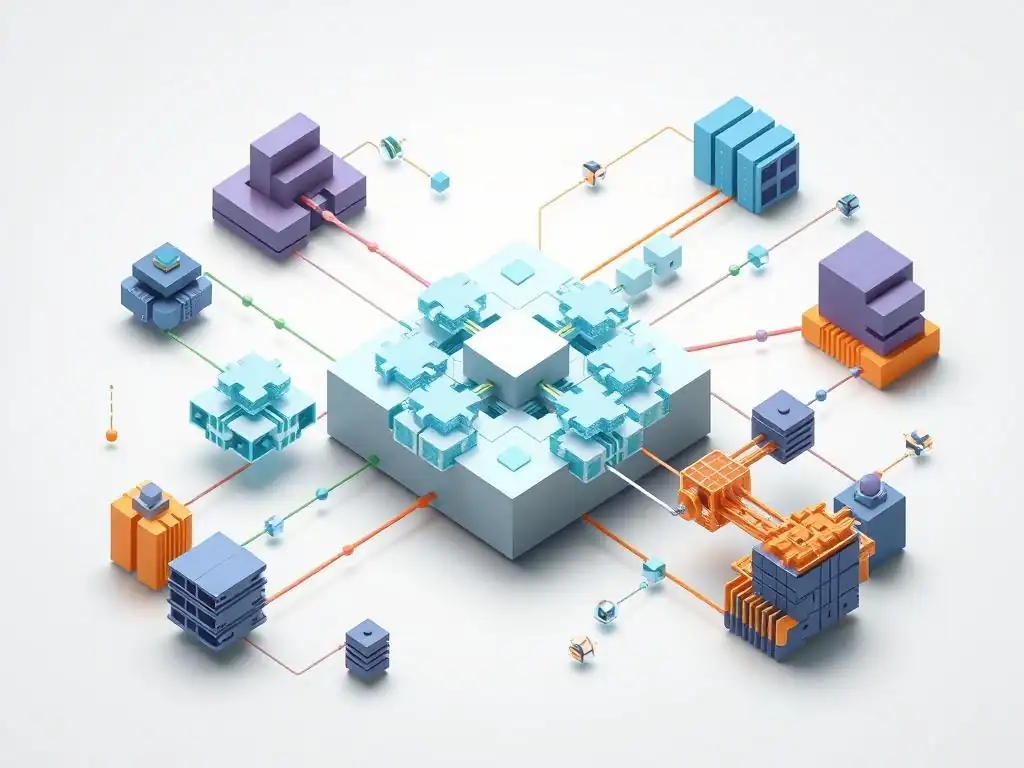
Lightning Network vs. Sidechains: A Comparison of Scalability and Trust
When comparing Lightning Network to sidechains as Bitcoin scaling solutions, key differences emerge in their approaches to scalability, security, and trust models. Sidechains are separate blockchains that run parallel to the main Bitcoin chain and are pegged to Bitcoin, allowing Bitcoin to be moved to and from the sidechain. Sidechains can offer significant scalability improvements by processing transactions independently from the main chain, often with different consensus mechanisms and block parameters optimized for higher throughput. However, sidechains typically introduce a different trust model compared to Lightning Network.
Sidechains often rely on their own set of validators and consensus mechanisms, which may introduce new trust assumptions beyond the security of the main Bitcoin blockchain. While some sidechains aim to be highly secure, the security level ultimately depends on the design and implementation of the specific sidechain.
Lightning Network, in contrast, leverages the security of the main Bitcoin blockchain for channel openings and closures and relies on cryptographic commitments for off-chain transactions, generally considered to inherit the security properties of Bitcoin itself more directly. In terms of scalability, both solutions offer improvements, but Lightning Network is particularly geared towards micro-payments and high-frequency transactions, while sidechains might be more suitable for applications requiring more complex functionalities or larger transaction volumes.
Lightning Network vs. MimbleWimble: Evaluating Privacy and Functionality
Comparing Lightning Network to MimbleWimble, another blockchain technology focused on scalability and privacy, reveals different priorities and trade-offs. MimbleWimble blockchains, like Grin and Beam, are designed with a strong emphasis on privacy and scalability from the base layer. They achieve this through techniques like transaction cut-through and confidential transactions, which reduce blockchain bloat and enhance transaction privacy by obscuring transaction amounts and participants. While MimbleWimble offers inherent privacy features at the base layer, its scripting capabilities and smart contract functionality are generally less developed compared to Bitcoin and its ecosystem.
Lightning Network, while primarily focused on scalability and speed, does not inherently provide privacy enhancements in the same way as MimbleWimble. While Lightning Network transactions are off-chain and not publicly broadcast until channel closure, channel openings and closures are still visible on the Bitcoin blockchain. Privacy in Lightning Network is an area of ongoing development, with projects exploring techniques like onion routing for payments to obfuscate payment paths and enhance transaction privacy.
MimbleWimble offers built-in privacy and scalability at the base layer, while Lightning Network prioritizes scalability and speed for Bitcoin transactions, with privacy features being a secondary but developing aspect. The choice between them depends on the specific application requirements, prioritizing either strong base-layer privacy or leveraging the existing Bitcoin ecosystem with layer-2 scaling solutions.
When to Choose Lightning Network: Ideal Use Cases for Micro-Payments
The Lightning Network excels in scenarios requiring fast, low-fee micro-payments and high-frequency transactions, making it ideally suited for specific use cases. Micro-payments, such as tipping content creators online, paying for metered services, or enabling pay-per-use applications, become economically feasible with Lightning Network due to its negligible transaction fees. Traditional on-chain Bitcoin transactions are often impractical for such small payments due to transaction fees potentially exceeding the payment amount itself.
Another ideal use case is point-of-sale systems. The near-instant transaction confirmations of Lightning Network enable merchants to accept Bitcoin payments as quickly as credit card transactions, improving the user experience for both merchants and customers. Applications involving real-time exchanges, such as decentralized exchanges or gaming platforms requiring fast in-game transactions, also benefit significantly from the speed and low latency of Lightning Network.
For larger value transactions or scenarios where on-chain settlement and immutability are paramount, traditional on-chain Bitcoin transactions might still be preferred. However, for everyday transactions, micro-payments, and applications demanding speed and low fees, the Lightning Network provides a compelling scaling solution for Bitcoin.
Overcoming the Limitations of Lightning Network: Potential Solutions and Future Developments
Atomic Multipath Payments (AMP): Improving Payment Reliability
Atomic Multipath Payments (AMP) are a promising development aimed at improving payment reliability and overcoming channel capacity limitations within the Lightning Network. AMP allows a single payment to be split and routed across multiple channels simultaneously, increasing the likelihood of successful payment delivery, especially for larger amounts. If a single channel lacks sufficient capacity for a large payment, AMP can break down the payment into smaller parts and send them through different paths, effectively aggregating channel capacity across the network.
This approach enhances payment reliability by reducing the dependence on finding a single channel with sufficient capacity. It also improves efficiency by potentially utilizing multiple underutilized channels in parallel, rather than relying solely on finding a single, large-capacity channel. AMP is still under development and implementation, but its potential to address routing challenges and capacity limitations is significant. By enabling payments to be fragmented and routed across multiple paths, AMP aims to make the Lightning Network more robust and capable of handling larger transactions and improving overall payment success rates.
Trampoline Routing: Enhancing Scalability and Path Discovery
Trampoline Routing is another innovation designed to enhance scalability and improve path discovery within the Lightning Network. Traditional Lightning Network routing relies on source routing, where the sender's node needs to discover and specify the entire payment path. This approach can become less scalable as the network grows larger, as each node needs to maintain a comprehensive view of the network topology to find efficient routes. Trampoline Routing aims to address this by introducing a more hierarchical and scalable routing approach.
In Trampoline Routing, instead of the sender discovering the entire path, the sender only needs to find a route to a "trampoline node." This trampoline node then takes over the responsibility of routing the payment further towards the destination. This reduces the routing burden on individual nodes and makes path discovery more efficient, especially in larger and more complex networks.
Trampoline Routing improves scalability by reducing the amount of routing information each node needs to maintain and process, making the network more resilient and efficient as it grows. By simplifying path discovery and distributing routing responsibilities, Trampoline Routing aims to enhance the overall scalability and performance of the Lightning Network.
The Future of Lightning Network: Innovations and Emerging Trends
The future of the Lightning Network is marked by continuous innovation and emerging trends focused on addressing current limitations and expanding its capabilities. Ongoing research and development are focused on improving routing algorithms, enhancing privacy features, simplifying user experience, and increasing network reliability. Developments in areas like channel management automation, improved liquidity provisioning, and cross-chain Lightning Network implementations are also actively being explored.
One notable trend is the increasing focus on user experience improvements, making Lightning Network more accessible and user-friendly for non-technical users. Wallet developers are working on abstracting away the complexities of channel management and routing, providing more seamless and intuitive user interfaces. Another trend is the exploration of new use cases beyond payments, such as decentralized applications and data streaming over the Lightning Network.
The Lightning Network is a rapidly evolving technology, and ongoing innovation is crucial for realizing its full potential as a scalable and efficient layer-2 solution for Bitcoin and potentially other blockchain networks. The community's continuous efforts to address limitations and explore new possibilities suggest a promising future for the Lightning Network ecosystem.
Real-World Examples: Examining the Limitations in Action [El Salvador's Bitcoin Adoption]
Analyzing the Challenges Faced by El Salvador in Scaling Bitcoin Payments
El Salvador's adoption of Bitcoin as legal tender in 2021 presented a real-world test case for scaling Bitcoin payments, and while specific data on Lightning Network usage in El Salvador is still emerging, anecdotal evidence and broader analyses highlight potential challenges related to scaling and infrastructure. While El Salvador's government promoted the use of the state-sponsored Chivo wallet, which incorporated Lightning Network functionality, adoption faced hurdles related to technological literacy, internet access, and the inherent complexities of using Bitcoin and Lightning Network for everyday transactions.
Reports suggested that many Salvadorans, particularly in rural areas, struggled with understanding and using the technology. Limited internet connectivity and smartphone penetration also posed challenges to widespread adoption of digital payment solutions like Lightning Network. Furthermore, the volatility of Bitcoin's price and the complexities of managing Lightning Network channels and wallets may have contributed to slower-than-anticipated adoption rates in certain segments of the population. While El Salvador's experiment is ongoing, it underscores the real-world challenges of deploying and scaling Bitcoin payments, even with layer-2 solutions like Lightning Network, in contexts with varying levels of technological infrastructure and digital literacy.
Lessons Learned: Overcoming Limitations and Optimizing Performance
El Salvador's experience, and other real-world deployments of Lightning Network, offer valuable lessons for overcoming limitations and optimizing performance for future implementations. A key takeaway is the critical importance of user education and simplified user interfaces. Making Lightning Network accessible to non-technical users requires intuitive wallets, clear educational resources, and robust customer support to address user challenges and build confidence in the technology. Addressing infrastructure limitations, such as improving internet access and smartphone penetration, is also crucial for enabling broader adoption, especially in developing economies.
Furthermore, optimizing network performance through advancements like AMP and Trampoline Routing, as discussed earlier, is essential for improving payment reliability and scalability. Ongoing development efforts to automate channel management, enhance liquidity provisioning, and improve routing efficiency will contribute to a more robust and user-friendly Lightning Network experience. Real-world deployments and case studies like El Salvador's provide valuable feedback loops for developers and the community to identify pain points, address limitations, and continuously refine the Lightning Network technology to achieve its full potential as a global scaling solution for Bitcoin and potentially other blockchain-based payment systems.
Conclusion: Is the Lightning Network a Viable Scaling Solution for Bitcoin?
Weighing the Pros and Cons: A Balanced Perspective on Lightning Network
The Lightning Network presents a compelling layer-2 scaling solution for Bitcoin, offering significant advantages in terms of transaction speed and cost-effectiveness. Its ability to facilitate near-instantaneous, low-fee micro-payments addresses a critical limitation of on-chain Bitcoin transactions and opens up new use cases for Bitcoin in everyday transactions and micropayment-driven applications. However, the Lightning Network is not without its limitations and challenges. Routing complexities, channel capacity constraints, technical complexity for users, and potential security vulnerabilities represent ongoing areas of development and improvement.
Weighing the pros and cons, the Lightning Network demonstrates strong potential as a viable scaling solution, particularly for specific use cases like micro-payments and point-of-sale transactions. Its strengths lie in its speed and cost-efficiency, while its weaknesses are primarily related to complexity and network maturity. Ongoing innovations and community efforts are actively addressing these limitations, and the network continues to evolve and improve. A balanced perspective acknowledges both the significant advancements and the remaining challenges, recognizing that the Lightning Network is a developing technology with considerable promise.
The Role of Lightning Network in the Future of Bitcoin Adoption
The Lightning Network is poised to play a crucial role in the future of Bitcoin adoption, particularly in enabling Bitcoin to function as a viable medium of exchange for everyday transactions. By addressing Bitcoin's scalability limitations, the Lightning Network makes Bitcoin more practical for use cases beyond simply a store of value or investment asset. Its ability to facilitate fast and cheap transactions opens up opportunities for Bitcoin adoption in areas like e-commerce, micropayments, and emerging economies where low-fee payment solutions are critical.
As the Lightning Network matures and user experience improves, it has the potential to significantly expand Bitcoin's reach and utility. While on-chain Bitcoin transactions will likely remain important for larger value settlements and security, the Lightning Network offers a complementary layer for high-frequency, low-value transactions, making Bitcoin more versatile and accessible to a wider range of users and applications. The continued development and adoption of the Lightning Network are therefore crucial factors in shaping the future trajectory of Bitcoin and its broader integration into the global financial landscape.
Frequently Asked Questions
What are state channels and how do they relate to blockchain scalability?
State channels are a layer-2 scaling solution for blockchain. They enable parties to conduct multiple transactions off-chain, only interacting with the main blockchain to open and close the channel, thus reducing on-chain congestion.
What are some key limitations of state channels in terms of complexity?
State channels can become complex to implement, especially when involving multiple participants or intricate transaction logic. This complexity can lead to higher development costs and increased risk of errors.
How do state channels handle dispute resolution and what are the drawbacks?
Dispute resolution in state channels relies on predefined smart contracts on the main chain. If parties disagree on the off-chain state, they can submit evidence to the blockchain, but this process can be slow and costly if not properly designed.
What are the limitations of state channels in terms of network effects and adoption?
State channels require direct interaction between participants, limiting their usability in scenarios where parties don't have an established relationship. This can hinder widespread adoption compared to other scaling solutions.
What are the security considerations and potential vulnerabilities of using state channels?
While generally considered secure, state channels are vulnerable if one party goes offline or becomes unresponsive, potentially leading to funds being locked or disputes being unresolved. Careful monitoring and design are crucial for security.
The exploration of state channel limitations, as we've seen, isn't merely an academic exercise; it's a crucial step in unlocking the true potential of blockchain technology. Understanding these challenges – from liquidity constraints to complex multi-party interactions – is paramount to building scalable and truly decentralized applications that can handle real-world transaction volumes. The future of blockchain adoption hinges on our ability to overcome these hurdles and refine the technology.
The ongoing evolution of state channels profoundly impacts the blockchain landscape, shaping the direction of layer-2 scaling solutions. My own fascination with this topic stems from the belief that it represents a fundamental shift in how we think about blockchain scalability, moving away from monolithic on-chain transactions towards more efficient off-chain interactions. The key to scaling blockchain lies not in simply increasing block size, but in intelligently moving transactions off-chain while maintaining security and trust.
This quote encapsulates the core principle driving the development and refinement of state channels.
As we conclude this exploration, I invite you to reflect on the implications of these limitations. Consider how you, as a developer, user, or simply an interested observer, can contribute to overcoming these challenges. What innovative solutions can you envision? How can you advocate for responsible development and deployment of state channel technology? The future of blockchain scalability is not predetermined; it is shaped by the collective ingenuity and dedication of those who dare to explore its frontiers.
Okay, here's a CTA draft for the end of a web article titled "Exploring the Limitations of State Channels: Challenges and Tradeoffs" on the website "Blockchain Trends" (blockchaintrends.org):
Dive Deeper into Scalable Blockchain Solutions!
Thank you for exploring the complexities of state channels with us. We hope you now have a better understanding of their limitations and the tradeoffs involved. Ready to put this knowledge to use?
Here are some next steps you can take:
- Critically evaluate the proposed state channel solutions in your own blockchain projects. Understand their potential impact on scalability and security. This is your primary action.
- Delve into the latest research on alternative scaling solutions like Plasma, Validium, and zk-Rollups. Compare and contrast them with state channels.
- Share this article with your fellow blockchain enthusiasts and start a discussion around the best approach to solve the challenges of scalability.
Now that you know the limitations of state channels, what specific projects are you excited to see implementing alternative scaling solutions, and why?
Leave a Reply