
Exploring ZeroKnowledge Proofs in ZKRollup Layer2 Solutions


Welcome to Blockchain Trends, your guide to understanding the revolutionary impact of blockchain technology!
Dive into the fascinating world beyond cryptocurrencies and discover how blockchain is reshaping industries. This week, we're unlocking the secrets of ZKRollups Layer2 scaling solutions, exploring how these innovative technologies are poised to solve blockchain's biggest challenge. Ready to learn how Zero-Knowledge Proofs are revolutionizing transaction speeds and efficiency? Let's begin!
- Exploring Zero-Knowledge Proofs in ZKRollup Layer2 Scaling Solutions
- Understanding Layer-2 Scaling Solutions for Blockchain Networks
- Deep Dive into ZKRollups: A Promising Layer-2 Approach
- Zero-Knowledge Proofs (ZKPs): The Core of ZKRollups
- How Zero-Knowledge Proofs Work Within ZKRollups
- Benefits of Using ZKRollups with Zero-Knowledge Proofs
- Challenges and Limitations of ZKRollups
- ZKRollups vs. Other Layer-2 Solutions: A Comparative Analysis
- Real-World Applications and Use Cases of ZKRollups
- The Future of ZKRollups and Zero-Knowledge Technology
- Conclusion: ZKRollups as a Key Component of Blockchain Scalability.
-
Frequently Asked Questions
- What are ZKRollups and why are they considered Layer2 scaling solutions?
- How do Zero-Knowledge Proofs (ZKPs) contribute to the functionality of ZKRollups?
- What are some potential use cases for ZKRollups beyond just faster and cheaper transactions?
- What are the challenges associated with implementing and using ZKRollup Layer2 solutions?
- How might regulations impact the development and adoption of ZKRollup Layer2 scaling solutions?
- Final Reflection: The Dawn of Trustless Scalability
- Unlock the Potential of Zero-Knowledge Proofs: Your Next Move!
Exploring Zero-Knowledge Proofs in ZKRollup Layer2 Scaling Solutions
Introduction to Blockchain Scalability Challenges and Layer-2 Solutions
The promise of blockchain technology to revolutionize industries and redefine digital interactions is undeniable. However, the foundational blockchain networks, like Ethereum and Bitcoin, face a significant hurdle: scalability. These Layer-1 blockchains, while secure and decentralized, struggle to process a high volume of transactions quickly and cost-effectively. Bitcoin, for instance, handles around 7 transactions per second (TPS), and Ethereum, before its major upgrades, hovered around 15-30 TPS. This limited throughput leads to network congestion, increased transaction fees (gas fees on Ethereum), and slower confirmation times, hindering mainstream adoption and limiting the potential use cases for decentralized applications (dApps).
To overcome these limitations, the blockchain community has actively developed various scaling solutions. Among these, Layer-2 solutions have emerged as a particularly promising approach. Layer-2 solutions are protocols built on top of an existing Layer-1 blockchain. They aim to offload transaction processing from the main chain, thereby enhancing scalability without compromising the security and decentralization offered by the underlying Layer-1. These solutions encompass a range of technologies, including state channels, sidechains, Plasma, Rollups, and Validium, each with its own set of trade-offs and advantages in addressing the blockchain scalability trilemma – security, scalability, and decentralization.
Understanding Layer-2 Scaling Solutions for Blockchain Networks
What are Layer-2 Scaling Solutions?
Layer-2 scaling solutions are essentially secondary frameworks or protocols that operate on top of a base blockchain (Layer-1). Imagine a highway system: Layer-1 is the main highway, providing security and finality, while Layer-2 solutions are like express lanes or parallel roads built alongside the highway. These "express lanes" handle a large volume of traffic (transactions) more efficiently, relieving congestion on the main highway. In the context of blockchain, Layer-2 solutions process transactions off-chain, meaning they are executed outside the main blockchain network. Only summarized or aggregated transaction data, or proofs of computation, are periodically submitted to the Layer-1 blockchain.
This off-chain processing is the key to scalability. By moving the bulk of transaction computation and validation away from the resource-constrained Layer-1, Layer-2 solutions can significantly increase transaction throughput and reduce transaction costs. Different Layer-2 approaches achieve this in various ways, but they all share the common goal of enhancing the scalability of the underlying blockchain without sacrificing its core security properties. Crucially, Layer-2 solutions inherit the security of the Layer-1 blockchain to varying degrees, ensuring that the processed transactions are ultimately anchored and verifiable on the main chain.
The Need for Scalability: Addressing Blockchain Limitations
The necessity for Layer-2 scaling solutions stems directly from the inherent limitations of Layer-1 blockchains in handling widespread adoption. Consider the growing popularity of decentralized finance (DeFi) applications and the increasing interest in NFTs. During peak usage periods, these applications can drive network congestion on blockchains like Ethereum, leading to exorbitant gas fees that can make even simple transactions prohibitively expensive. For instance, during periods of high NFT trading volume, gas fees on Ethereum have spiked to hundreds of dollars for a single transaction, effectively excluding many users from participating in the ecosystem.
Furthermore, the slow transaction speeds of Layer-1 blockchains create a poor user experience. Waiting minutes or even hours for a transaction to be confirmed is unacceptable for many real-world applications, especially in areas like payments or high-frequency trading.
If blockchain technology is to achieve its potential to become a foundational technology for various industries, it must be able to handle transaction volumes comparable to or exceeding those of existing centralized systems like Visa or Mastercard, which can process thousands of transactions per second. Layer-2 scaling solutions are therefore not just an optimization; they are a critical requirement for the long-term viability and mainstream adoption of blockchain technology, allowing it to evolve beyond niche applications and become a truly scalable and accessible infrastructure.
Deep Dive into ZKRollups: A Promising Layer-2 Approach
What are ZKRollups?
ZKRollups, short for Zero-Knowledge Rollups, represent a cutting-edge Layer-2 scaling solution that leverages zero-knowledge proofs (ZKPs) to achieve high transaction throughput and maintain strong security. ZKRollups operate by "rolling up" or batching numerous transactions into a single transaction on the Layer-1 blockchain.
This batching process significantly reduces the amount of data and computation that needs to be performed directly on the main chain, as instead of verifying each individual transaction, the Layer-1 network only needs to verify a cryptographic proof that all transactions within the batch are valid. This proof is the "zero-knowledge" component, allowing verification without revealing the details of each transaction.
Essentially, a ZKRollup works by executing transactions off-chain in a separate environment. After a batch of transactions is processed, a validity proof, generated using zero-knowledge proof technology, is submitted to the Layer-1 blockchain. This proof cryptographically guarantees the correctness of all the transactions in the batch. Alongside the proof, the minimal transaction data required to reconstruct the state changes is also posted on-chain, ensuring data availability. This combination of off-chain computation and on-chain data availability and proof verification allows ZKRollups to achieve significantly higher scalability compared to Layer-1, while inheriting the security of the underlying blockchain.
How ZKRollups Enhance Scalability and Efficiency
ZKRollups achieve enhanced scalability and efficiency through several key mechanisms. Firstly, by processing transactions off-chain, they drastically reduce the computational burden on the Layer-1 blockchain. Instead of every node in the Layer-1 network needing to execute and verify each transaction, this work is delegated to the ZKRollup operator. The Layer-1 network only needs to verify the concise validity proof, a much less computationally intensive task. This shift in computational load is the primary driver of increased throughput.
Secondly, batching transactions into a single on-chain transaction dramatically reduces gas costs. Submitting a single proof and minimal data for a large batch of transactions is significantly cheaper than submitting individual transactions for each user action. This cost reduction is distributed across all transactions within the batch, resulting in significantly lower gas fees for individual users compared to transacting directly on Layer-1.
Estimates suggest that ZKRollups can achieve throughput improvements of 10-100x compared to Layer-1, while also reducing transaction costs by a similar magnitude. For example, StarkNet, a prominent ZKRollup, claims to be able to achieve thousands of TPS, a substantial leap from Ethereum's base layer capacity.
Zero-Knowledge Proofs (ZKPs): The Core of ZKRollups
What are Zero-Knowledge Proofs?
Zero-Knowledge Proofs (ZKPs) are cryptographic protocols that allow one party (the prover) to convince another party (the verifier) that a statement is true, without revealing any information beyond the truth of the statement itself. Imagine proving you know the solution to a Sudoku puzzle without showing the verifier the actual solution. ZKPs achieve this seemingly paradoxical feat through sophisticated mathematical and cryptographic techniques. The core concept is to demonstrate knowledge or validity without disclosing the underlying secret or sensitive information.
In the context of blockchain and ZKRollups, ZKPs are used to prove the validity of off-chain computations. The ZKRollup operator acts as the prover, generating a ZKP that demonstrates that a batch of transactions was processed correctly according to the rollup's state transition rules. The Layer-1 blockchain acts as the verifier, quickly and efficiently verifying this proof without needing to re-execute all the transactions or access the detailed transaction data. This ability to prove correctness without revealing underlying details is what makes ZKPs so powerful and crucial for ZKRollups.
Key Properties of Zero-Knowledge Proofs: Completeness, Soundness, and Zero-Knowledge
Zero-Knowledge Proofs are characterized by three fundamental properties that ensure their effectiveness and security: Completeness, Soundness, and Zero-Knowledge.
- Completeness: If the statement is true, a honest prover can always convince a honest verifier that the statement is indeed true. In the context of ZKRollups, this means if the ZKRollup operator has correctly processed a batch of transactions, they can always generate a proof that the Layer-1 blockchain will accept as valid.
- Soundness: If the statement is false, no cheating prover can convince a honest verifier that the statement is true, except with a negligible probability. This is crucial for security in ZKRollups. It means that a malicious ZKRollup operator cannot submit a fraudulent proof to the Layer-1 blockchain and get invalid transactions accepted. The soundness property ensures the integrity of the rollup's state.
- Zero-Knowledge: The verifier learns nothing beyond the fact that the statement is true. In ZKRollups, this means the Layer-1 blockchain (and anyone observing the proof verification) learns only that the batch of transactions is valid, but gains no information about the individual transactions themselves, the users involved, or the specific data being transacted. This property contributes to enhanced privacy within ZKRollups.
These three properties collectively guarantee that ZKPs provide a secure and privacy-preserving mechanism for verifying computations, making them ideal for use in ZKRollups and other privacy-focused blockchain applications.
Types of Zero-Knowledge Proofs Used in ZKRollups: SNARKs and STARKs
While the general concept of Zero-Knowledge Proofs is broad, two specific types of ZKPs are predominantly used in ZKRollups: SNARKs and STARKs.
- SNARKs (Succinct Non-Interactive ARguments of Knowledge): SNARKs are characterized by their succinct proof size and fast verification times. "Succinct" means the proof size is very small, typically just a few hundred bytes, regardless of the complexity of the computation being proven. "Non-Interactive" implies that the proof can be generated and verified without any back-and-forth communication between the prover and verifier after an initial setup phase. SNARKs often rely on complex mathematical constructs like elliptic curves and pairing-based cryptography. While offering efficiency in proof size and verification, SNARKs can have a computationally intensive and trusted setup process, meaning an initial ceremony is required to generate cryptographic parameters, and the security of the system relies on the honesty of the participants in this ceremony. Examples of ZKRollups using SNARKs include zkSync and Loopring.
- STARKs (Scalable Transparent ARguments of Knowledge): STARKs are a newer type of ZKP that addresses some of the limitations of SNARKs. "Scalable" refers to their efficiency in proof generation and verification, particularly for very complex computations. "Transparent" means STARKs do not require a trusted setup. They rely on simpler and more transparent cryptography, such as hash functions and polynomial commitments, making them arguably more secure and auditable. STARKs generally produce larger proofs than SNARKs, and verification might be slightly slower, but they offer significant advantages in terms of security and scalability for very large and complex computations. StarkWare's StarkNet and StarkEx are prominent examples of ZKRollup technologies utilizing STARKs.
Both SNARKs and STARKs are powerful ZKP technologies, each with its own set of trade-offs. The choice between them for a ZKRollup implementation often depends on the specific application requirements, prioritizing factors like proof size, verification speed, setup transparency, and the complexity of the computations being proven.
How Zero-Knowledge Proofs Work Within ZKRollups
The Process of Aggregating Transactions in ZKRollups
ZKRollups operate by aggregating, or batching, numerous user transactions into a single transaction that is ultimately recorded on the Layer-1 blockchain. This aggregation process is crucial for achieving scalability gains. Here's a simplified overview of how it works:
- User Transactions: Users initiate transactions on the ZKRollup, similar to how they would on Layer-1. These transactions are sent to the ZKRollup operator.
- Transaction Queue: The ZKRollup operator maintains a queue of pending transactions.
- Batch Creation: Periodically, or when a certain number of transactions accumulate, the operator creates a batch of these pending transactions. The size of the batch can vary depending on the specific ZKRollup implementation and network conditions.
- State Transition Execution: The ZKRollup operator executes these batched transactions off-chain. This involves updating the state of the ZKRollup based on the transactions in the batch. The state represents the balances and other relevant data within the ZKRollup.
- State Root Generation: After executing the transactions, the operator calculates the new state root of the ZKRollup. The state root is a cryptographic hash that represents the entire state of the ZKRollup at a given point in time.
- Proof Generation: The operator then generates a Zero-Knowledge Proof (ZKP) that proves that the state transition from the previous state root to the new state root was performed correctly, according to the defined rules of the ZKRollup and based on the transactions in the batch.
This aggregation process allows the ZKRollup to process many transactions off-chain and then represent the result of these transactions on Layer-1 with a single, concise proof and state update.
Generating and Verifying ZKPs for Transaction Batches
The generation and verification of Zero-Knowledge Proofs are the core cryptographic operations that enable ZKRollups to function securely and efficiently.
- Proof Generation: The ZKRollup operator, acting as the prover, performs complex computations to generate the ZKP. This process involves encoding the transaction batch, the initial state, the final state, and the rules of state transition into a format suitable for the chosen ZKP system (SNARKs or STARKs). The computational cost of proof generation can be significant, requiring specialized hardware and optimized algorithms, especially for large batches and complex computations. The generated proof is a relatively small piece of data that cryptographically attests to the validity of the entire batch of transactions.
- Proof Verification: The generated ZKP, along with the new state root and the minimal transaction data, is submitted to the Layer-1 blockchain. Smart contracts on Layer-1 are designed to act as verifiers. These contracts efficiently verify the ZKP. The verification process is computationally much lighter than proof generation and significantly less resource-intensive than re-executing all the transactions in the batch on Layer-1. If the proof verification is successful, the Layer-1 smart contract updates the ZKRollup's state root stored on-chain, effectively finalizing the batch of transactions. If the verification fails, the batch is rejected, ensuring the integrity of the ZKRollup.
This separation of computationally intensive proof generation (off-chain) and efficient proof verification (on-chain) is key to the scalability and efficiency gains offered by ZKRollups.
On-Chain Data Availability and Security Considerations
While ZKRollups perform transaction processing off-chain, ensuring data availability on-chain is crucial for security and trust. Data availability means that the transaction data necessary to reconstruct the ZKRollup's state must be publicly accessible on the Layer-1 blockchain. This is essential for several reasons:
- Rollup Recoverability: In case of operator failure or malicious behavior, users need to be able to reconstruct the ZKRollup's state and potentially exit their funds. On-chain data availability ensures that the necessary information for this recovery is publicly and permanently recorded on the Layer-1 blockchain.
- Fraud Prevention: Even with ZKPs guaranteeing validity, on-chain data availability allows independent observers to audit the ZKRollup's operations and verify the correctness of state transitions. This transparency enhances trust and provides an additional layer of security.
- Force Transactions: In some ZKRollup designs, users can initiate "force transactions" directly on Layer-1 if the operator becomes unresponsive or attempts to censor transactions. These force transactions rely on the availability of transaction data on-chain to be processed by the Layer-1 smart contracts.
ZKRollups typically achieve on-chain data availability by posting the transaction data (or call data) along with the validity proof to the Layer-1 blockchain. This data is typically compressed and optimized to minimize on-chain costs, but it remains publicly accessible. This combination of ZKPs for validity and on-chain data availability is a defining characteristic of ZKRollups, distinguishing them from other Layer-2 solutions like Validium, which may opt for off-chain data availability to further reduce costs but introduce different security trade-offs.
Benefits of Using ZKRollups with Zero-Knowledge Proofs
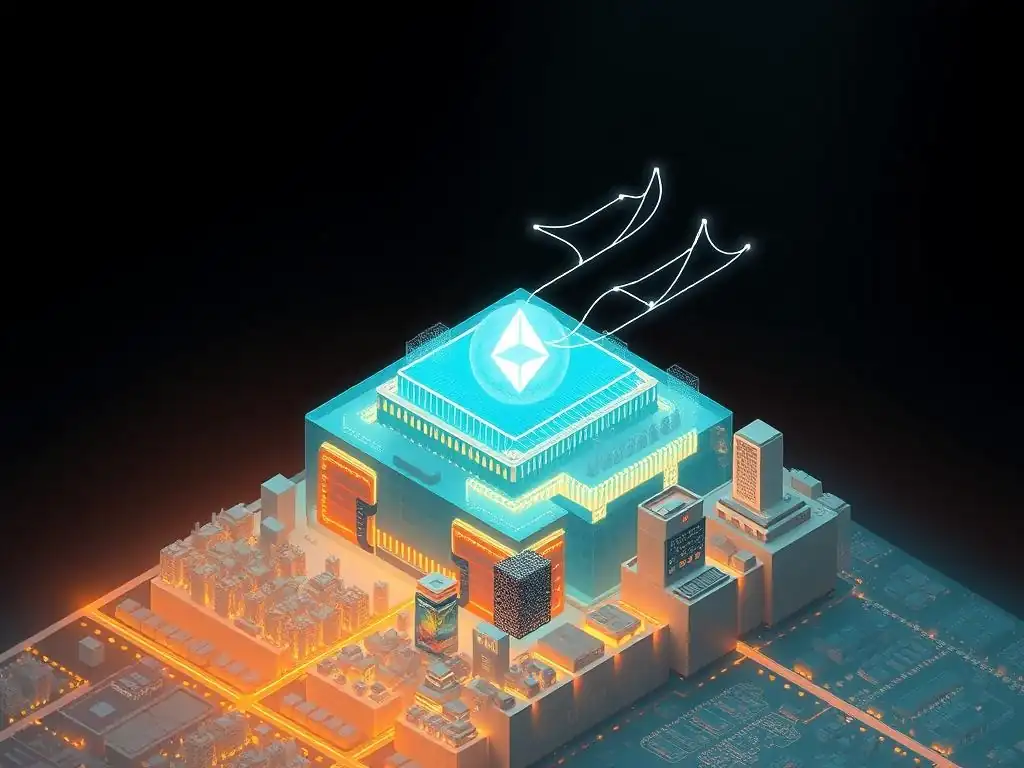
Enhanced Scalability and Transaction Throughput
The primary benefit of ZKRollups is their significant enhancement of scalability and transaction throughput compared to Layer-1 blockchains. By processing transactions off-chain and using Zero-Knowledge Proofs to verify batches of transactions on-chain, ZKRollups can achieve orders of magnitude improvements in TPS. While Layer-1 blockchains like Ethereum might handle tens of transactions per second, ZKRollups can potentially reach thousands of TPS. This increased throughput addresses the scalability bottleneck that hinders the widespread adoption of blockchain technology and enables support for applications requiring high transaction volumes, such as high-frequency trading, micro-payments, and mass-market gaming.
For example, StarkNet, a ZKRollup utilizing STARKs, claims to be able to process thousands of transactions per second, and zkSync Era, another prominent ZKRollup, has demonstrated significantly lower transaction costs compared to Ethereum Layer-1 during periods of high network activity. This scalability directly translates to a better user experience with faster transaction confirmations and the ability to handle a larger number of users and applications without network congestion.
Improved Privacy and Data Protection
ZKRollups inherently offer improved privacy and data protection compared to transacting directly on Layer-1 blockchains. The Zero-Knowledge nature of the proofs means that the Layer-1 blockchain only verifies the validity of transaction batches without needing to know the details of individual transactions or the identities of the transacting parties. While transaction data is typically made available on-chain for security reasons, ZKRollups can be designed to minimize the amount of personally identifiable information revealed on-chain.
Furthermore, advancements in ZKP technology, such as recursive proofs and privacy-preserving ZKPs, are further enhancing the privacy capabilities of ZKRollups. For instance, some ZKRollup implementations are exploring techniques to allow private transactions within the rollup itself, where even the operator does not have full visibility into all transaction details. This focus on privacy makes ZKRollups particularly attractive for applications where data confidentiality is paramount, such as financial transactions, sensitive data sharing, and decentralized identity management.
Reduced Gas Fees Compared to Layer-1 Transactions
A significant practical benefit of ZKRollups is the substantial reduction in gas fees for users compared to transacting directly on Layer-1 blockchains. By batching numerous transactions into a single on-chain transaction and reducing the computational burden on Layer-1, ZKRollups drastically lower the gas costs associated with each individual transaction. The cost of verifying a ZKP on Layer-1 is significantly less than the cost of verifying each transaction individually. This cost saving is then distributed across all transactions within the batch, resulting in significantly lower fees for users.
During periods of high network congestion on Ethereum, gas fees for simple transactions on Layer-1 can become prohibitively expensive, sometimes reaching tens or even hundreds of dollars. In contrast, transactions on ZKRollups typically cost a fraction of a dollar, even during periods of high usage. This dramatic reduction in gas fees makes blockchain technology accessible to a wider range of users and use cases, especially for micro-transactions and applications where cost sensitivity is a major factor. The reduced gas fees are a key driver for the growing adoption of ZKRollups across various DeFi and other blockchain applications.
Challenges and Limitations of ZKRollups
Computational Complexity and Hardware Requirements
While ZKRollups offer significant advantages, they also come with inherent challenges and limitations. One of the primary challenges is the computational complexity associated with generating Zero-Knowledge Proofs. Generating ZKPs, especially for complex computations and large transaction batches, is a computationally intensive task. This requires specialized hardware and optimized software to perform efficiently. The computational burden of proof generation can be a bottleneck, potentially limiting the maximum achievable throughput and increasing the latency of transaction processing.
For example, generating STARK proofs, while transparent and scalable, can be computationally demanding, requiring significant processing power and memory. ZKRollup operators need to invest in robust infrastructure and continuously optimize their proof generation processes to handle increasing transaction volumes and maintain acceptable performance. The hardware requirements for ZKRollup operators are considerably higher than for operators of some other Layer-2 solutions, which can be a barrier to entry and potentially contribute to centralization concerns if only a few entities can afford the necessary infrastructure.
Development Complexity and Auditability
Developing and implementing ZKRollups is a complex undertaking that requires deep expertise in cryptography, distributed systems, and blockchain technology. The design and implementation of ZKP systems, especially SNARKs and STARKs, are highly specialized fields. Building secure and efficient ZKRollups requires careful attention to detail, rigorous security audits, and extensive testing. The complexity of ZKRollup development can lead to longer development cycles and a higher risk of vulnerabilities if not handled carefully.
Furthermore, the cryptographic nature of ZKPs can make ZKRollup codebases more challenging to audit and understand compared to simpler Layer-2 solutions. Auditing ZKRollup implementations requires specialized expertise in cryptography and formal verification techniques. Ensuring the security and correctness of ZKRollups is paramount, as any vulnerabilities could potentially compromise user funds or the integrity of the rollup's state. The development complexity and auditability challenges necessitate a cautious and rigorous approach to ZKRollup development and deployment.
Potential for Centralization and Trust Assumptions
Despite being designed as Layer-2 solutions inheriting Layer-1 security, ZKRollups can introduce certain centralization points and trust assumptions. In most current ZKRollup implementations, a single operator (or a small set of operators) is responsible for sequencing transactions, executing state transitions, generating ZKPs, and submitting them to Layer-1. This operator role introduces a degree of centralization, as the operator has significant control over the rollup's operations. While the ZKPs guarantee the validity of state transitions, users still rely on the operator to be honest and available to process transactions and submit proofs in a timely manner.
If the operator becomes malicious or goes offline, it could disrupt the ZKRollup's operation, potentially leading to censorship or delays in transaction processing. While mechanisms like fraud proofs and data availability are designed to mitigate these risks, the reliance on a central operator remains a valid concern. Ongoing research and development efforts are focused on decentralizing ZKRollup operators through techniques like distributed proof generation and decentralized sequencing to reduce trust assumptions and enhance the overall robustness and decentralization of ZKRollups.
ZKRollups vs. Other Layer-2 Solutions: A Comparative Analysis
ZKRollups vs. Optimistic Rollups: Key Differences
When comparing ZKRollups and Optimistic Rollups, two prominent Layer-2 scaling solutions, key differences emerge in their approach to security and transaction finality. Optimistic Rollups, as the name suggests, "optimistically" assume that transactions are valid by default. They post transaction data to Layer-1 and allow a challenge period, typically 7 days, during which anyone can submit a fraud proof if they detect an invalid transaction within the rollup. If no fraud proof is submitted within the challenge period, the transactions are considered finalized on Layer-1.
ZKRollups, in contrast, use Zero-Knowledge Proofs to cryptographically prove the validity of each transaction batch before it is finalized on Layer-1. This fundamental difference leads to several trade-offs. ZKRollups offer faster transaction finality, as transactions are finalized as soon as the ZKP is verified on Layer-1, typically within minutes or even seconds.
Optimistic Rollups have a much longer finality time due to the challenge period. However, Optimistic Rollups are generally simpler to implement and have lower computational overhead for transaction processing, as they do not require the complex proof generation process of ZKRollups. ZKRollups, while more complex, offer stronger security guarantees due to the cryptographic validity proofs, while Optimistic Rollups rely on economic incentives and the assumption that there will be honest validators monitoring the rollup for fraud.
ZKRollups vs. Plasma: Strengths and Weaknesses
Plasma is an earlier Layer-2 scaling solution that utilizes a network of "child chains" anchored to the main Layer-1 blockchain. Each Plasma chain is designed to handle a specific type of application or asset. Plasma aims to achieve scalability by processing transactions on these child chains and only periodically submitting Merkle roots representing the state of the child chains to the Layer-1 root chain. A key feature of Plasma is its emphasis on minimizing on-chain data, often only requiring the root hash of the child chain's state to be posted to Layer-1.
Compared to ZKRollups, Plasma offers potential for very high scalability and lower on-chain costs, especially in scenarios where data availability is less critical. However, Plasma suffers from significant limitations, particularly around data availability and complex state transitions. In Plasma, data availability is often assumed to be handled off-chain by the Plasma chain operator.
If the operator becomes unavailable or malicious and withholds data, users might struggle to prove fraud or withdraw their funds. Furthermore, handling complex state transitions and general-purpose computation is challenging in Plasma, making it less suitable for DeFi applications and smart contract execution compared to ZKRollups. ZKRollups, with their on-chain data availability and cryptographic validity proofs, offer a more robust and general-purpose Layer-2 scaling solution, albeit with potentially higher on-chain costs and computational complexity than Plasma.
Sidechains and Validium: How They Compare to ZKRollups
Sidechains and Validium represent other categories of Layer-2 scaling solutions that differ significantly from ZKRollups in their security models and data availability approaches. Sidechains are independent blockchains that run parallel to the main Layer-1 chain and are connected via a two-way bridge. Sidechains have their own consensus mechanisms and security models, which can be different from the Layer-1 chain.
While sidechains can offer high scalability and customization, they do not inherit the security of the Layer-1 chain. The security of a sidechain relies on its own consensus mechanism and validator set, which might be less robust than the Layer-1 chain.
Validium, similar to ZKRollups, uses Zero-Knowledge Proofs for transaction validity. However, Validium differs in its data availability model. In Validium, transaction data is not posted on-chain to Layer-1. Instead, data availability is typically handled by a data availability committee (DAC) or a similar off-chain entity. This off-chain data availability significantly reduces on-chain costs and can further enhance scalability compared to ZKRollups.
However, Validium introduces a trust assumption in the DAC. Users must trust that the DAC will honestly and reliably store and provide access to the transaction data. If the DAC fails or becomes malicious, data availability could be compromised. ZKRollups, with their on-chain data availability, offer a stronger security model compared to both sidechains and Validium, at the cost of potentially higher on-chain costs and computational complexity than Validium.
Real-World Applications and Use Cases of ZKRollups
DeFi Applications Leveraging ZKRollups: Decentralized Exchanges and Payment Systems
ZKRollups are particularly well-suited for Decentralized Finance (DeFi) applications due to their enhanced scalability, reduced gas fees, and improved privacy. Decentralized Exchanges (DEXs) are a prime example. DEXs built on Layer-1 blockchains often suffer from slow transaction speeds and high gas fees, especially during periods of high trading volume, leading to poor user experience and making them less competitive with centralized exchanges.
ZKRollups can significantly improve DEX performance by enabling faster order execution, lower trading fees, and higher transaction throughput, making decentralized trading more accessible and efficient. Loopring and zkSync are examples of ZKRollup projects powering DEXs, offering users a more cost-effective and faster trading experience.
ZKRollups are also being explored for payment systems. The reduced transaction costs and faster confirmation times offered by ZKRollups make them ideal for micro-payments and high-volume payment applications. Imagine a decentralized payment system built on a ZKRollup that allows for near-instant and virtually fee-less transactions, enabling use cases like micropayments for content consumption, fast and affordable remittances, and efficient payment processing for online merchants. Projects like zkSync are actively developing payment solutions leveraging ZKRollup technology to address these needs.
Enterprise Use Cases: Supply Chain Tracking and Secure Data Sharing
Beyond DeFi, ZKRollups have potential applications in enterprise settings, particularly in areas requiring secure and scalable data management and tracking. Supply chain tracking is one such use case. Imagine a supply chain management system built on a ZKRollup where data about product origin, manufacturing processes, and shipment tracking is recorded on the rollup. ZKRollups can provide a tamper-proof and auditable record of the entire supply chain, enhancing transparency and accountability. Zero-Knowledge Proofs can also be used to selectively disclose information to different stakeholders in the supply chain, ensuring data privacy while maintaining transparency where needed.
Secure data sharing is another enterprise application. ZKRollups can facilitate secure and privacy-preserving data sharing between organizations. Sensitive data can be processed and shared within a ZKRollup, with ZKPs ensuring data integrity and confidentiality. Organizations can verify the correctness of data processing and analysis without needing to access the raw data itself, enhancing data privacy and compliance with data protection regulations. Pharmaceutical companies sharing research data or financial institutions collaborating on fraud detection could benefit from ZKRollup-based secure data sharing platforms.
Gaming and NFTs: Enhancing User Experience with Faster Transactions
The gaming and Non-Fungible Token (NFT) sectors are also poised to benefit significantly from ZKRollups. Traditional blockchain-based games and NFT marketplaces often suffer from slow transaction speeds and high gas fees, hindering user experience and limiting the potential for complex in-game economies and dynamic NFT interactions. ZKRollups can address these limitations by providing faster and cheaper transactions, enabling smoother gameplay and more affordable NFT trading. Imagine a blockchain game built on a ZKRollup where players can seamlessly trade in-game assets, participate in complex game mechanics, and enjoy near-instant transaction confirmations without incurring exorbitant gas fees.
For NFTs, ZKRollups can make minting, trading, and transferring NFTs significantly more affordable and efficient, opening up the NFT space to a wider audience and enabling new use cases. ZKRollups can also facilitate more complex NFT functionalities, such as dynamic NFTs that evolve based on on-chain events or in-game actions, without overwhelming the underlying Layer-1 blockchain. The enhanced scalability and reduced costs offered by ZKRollups can unlock the full potential of blockchain gaming and NFTs, creating more engaging and accessible experiences for users.
The Future of ZKRollups and Zero-Knowledge Technology
Advancements in ZKP Technology: Recursive Proofs and Hardware Acceleration
The field of Zero-Knowledge Proof technology is rapidly evolving, with ongoing research and development leading to significant advancements that will further enhance the capabilities of ZKRollups. Recursive proofs are a particularly promising area of development. Recursive proofs allow for the aggregation of proofs, meaning that multiple proofs can be combined into a single, more concise proof. In the context of ZKRollups, recursive proofs can be used to further scale transaction throughput by batching proofs themselves, reducing the on-chain verification overhead and potentially achieving even higher TPS.
Hardware acceleration is another crucial area of advancement. The computational intensity of ZKP generation is a bottleneck, and specialized hardware accelerators, such as GPUs and ASICs, are being developed to significantly speed up proof generation times. Hardware acceleration can dramatically reduce the latency of ZKRollup operations and improve overall performance, making ZKRollups even more competitive with centralized systems in terms of speed and efficiency. Companies like Nvidia and AMD are investing in hardware optimized for cryptographic computations, including ZKPs, which will likely drive further advancements in ZKRollup performance.
The Evolving Landscape of Layer-2 Scaling Solutions
The Layer-2 scaling solution landscape is dynamic and competitive, with various approaches vying for adoption. ZKRollups are emerging as a leading contender due to their strong security guarantees, scalability potential, and growing ecosystem. However, other Layer-2 solutions, such as Optimistic Rollups and Validium, also have their own strengths and are being actively developed and deployed. The future likely involves a multi-layered scaling ecosystem, where different Layer-2 solutions are used for different applications and use cases, depending on their specific requirements and trade-offs.
Hybrid approaches that combine features of different Layer-2 solutions are also emerging. For instance, Validium chains can be combined with ZKRollups for even greater scalability and cost reduction in specific scenarios. Interoperability between different Layer-2 solutions and Layer-1 blockchains will be crucial for creating a seamless and interconnected blockchain ecosystem. Standards and protocols are being developed to facilitate interoperability and cross-Layer-2 communication, enabling users to easily move assets and data between different scaling solutions and the main chain.
The Potential Impact of ZKRollups on Blockchain Adoption
ZKRollups have the potential to be a key component in driving mainstream blockchain adoption. By addressing the scalability bottleneck and reducing transaction costs, ZKRollups make blockchain technology more accessible and usable for a wider range of applications and users. The enhanced scalability and lower fees can unlock new use cases that were previously impractical or too expensive on Layer-1 blockchains, such as mass-market gaming, micro-payments, and high-frequency DeFi applications.
The improved privacy features of ZKRollups also address a critical concern for many users and enterprises, making blockchain technology more palatable for applications involving sensitive data and compliance requirements. As ZKRollup technology matures, and development tools and infrastructure become more readily available, we can expect to see wider adoption of ZKRollups across various industries and applications. ZKRollups, along with other Layer-2 scaling solutions, are paving the way for a future where blockchain technology can truly scale to meet the demands of a global, decentralized digital economy.
Conclusion: ZKRollups as a Key Component of Blockchain Scalability.
Zero-Knowledge Proofs, at the heart of ZKRollup Layer2 scaling solutions, represent a significant leap forward in addressing blockchain's inherent scalability challenges. By leveraging the power of cryptographic proofs, ZKRollups offer a compelling path towards achieving high transaction throughput, reduced gas fees, and enhanced privacy, all while inheriting the robust security of the underlying Layer-1 blockchain.
While challenges related to computational complexity and development exist, the rapid advancements in ZKP technology, coupled with the growing adoption of ZKRollups across various applications, underscore their potential to be a cornerstone of a scalable and user-friendly blockchain future. As the blockchain landscape continues to evolve, ZKRollups are poised to play a crucial role in unlocking the transformative power of decentralized technology for the masses.
Frequently Asked Questions
What are ZKRollups and why are they considered Layer2 scaling solutions?
ZKRollups are a Layer2 scaling solution that bundle multiple transactions off-chain and then submit a single validity proof to the main blockchain. This drastically reduces transaction costs and increases throughput, making them a powerful alternative to on-chain scaling.
How do Zero-Knowledge Proofs (ZKPs) contribute to the functionality of ZKRollups?
Zero-Knowledge Proofs (ZKPs) allow the ZKRollup to prove the validity of the batched transactions without revealing any details about the transactions themselves. This ensures data privacy and security while enabling efficient verification on the main chain.
What are some potential use cases for ZKRollups beyond just faster and cheaper transactions?
Beyond transaction scalability, ZKRollups can enable private decentralized finance (DeFi) applications, secure data sharing, and enhanced voting systems, all while leveraging the security of the underlying blockchain.
What are the challenges associated with implementing and using ZKRollup Layer2 solutions?
Developing and deploying ZKRollups is technically complex, requiring specialized cryptographic expertise and significant computational resources for generating proofs. Furthermore, adoption barriers exist due to the relative novelty of the technology.
How might regulations impact the development and adoption of ZKRollup Layer2 scaling solutions?
Regulations surrounding data privacy and security could significantly influence the design and implementation of ZKRollups. Clear regulatory guidelines are needed to foster innovation while ensuring compliance with legal frameworks.
Final Reflection: The Dawn of Trustless Scalability
The journey through Zero-Knowledge Proofs and their pivotal role in ZKRollups Layer2 scaling solutions reveals more than just technical innovation; it unveils a paradigm shift in how we approach trust and efficiency in decentralized systems. The promise of verifiable computation without revealing sensitive data is no longer a distant dream, but a tangible reality reshaping the landscape of blockchain technology and beyond. This is a critical step towards a truly scalable and accessible decentralized future.
The impact of ZKRollups extends far beyond mere transaction speed; it touches upon the very core of data privacy and security. The ability to validate transactions without exposing the underlying information is a profound advancement, one that resonates deeply with the growing demand for individual control over personal data. The future of finance is decentralized, and the future of decentralization is privacy.
This quote encapsulates the essence of what ZKRollups offer: a pathway to a more secure, private, and efficient digital world.
As we stand on the cusp of widespread adoption, let us not only marvel at the technological prowess of ZKRollups but also contemplate their ethical implications. Consider how these solutions can empower individuals, protect vulnerable populations, and foster a more equitable digital society. The future of ZKRollups Layer2 scaling solutions is not just about faster transactions; it's about building a future where trust is not assumed, but mathematically proven. Let us all strive to contribute to this vision, ensuring that this powerful technology is used for the betterment of humanity.
Unlock the Potential of Zero-Knowledge Proofs: Your Next Move!
Thank you for exploring the fascinating world of Zero-Knowledge Proofs and ZK-Rollups. We hope this discussion has shed light on their vital role in Layer 2 scaling solutions. Now, it's time to take action and help shape the future of blockchain technology.
Here are some immediate steps you can take:
- Deepen your understanding by implementing a basic Zero-Knowledge Proof in a test environment. Experiment with different cryptographic libraries and experience firsthand the power of zero-knowledge proofs.
- Explore related projects utilizing ZK-Rollups and identify opportunities for contribution or collaboration. Are there open-source initiatives where your skills could make a difference?
- Share this article with your network and encourage discussion about the potential and challenges of Zero-Knowledge Proofs in scaling blockchain technology. Let’s bring more minds into this exciting field!
What innovative application of Zero-Knowledge Proofs will you champion in the ZK-Rollup space? Share your ideas in the comments below!
Leave a Reply