
The Future of Blockchain Scalability: Will State Channels Lead the Way?


Welcome to Blockchain Trends, your guide to navigating the ever-evolving world of decentralized technologies.
Intrigued by the promise of blockchain but curious about its limitations? You're in the right place. We delve into the real-world applications and future possibilities of this transformative technology, going far beyond the hype. Our journey begins with a critical challenge: scalability.
But how exactly can blockchain handle the growing demands of a decentralized future? Let's explore a fascinating solution: blockchain scalability state channels. Discover how they work and if they are the key to unlocking the true potential of blockchain. Read on to find out!
- The Future of Blockchain Scalability: The Role of Layer-2 Solutions
- Introduction to Layer-2 Scaling Solutions
- How Layer-2 Solutions Enhance Blockchain Scalability
- Types of Layer-2 Solutions and Their Applications
- Advantages of Using Layer-2 Solutions for Blockchain Scalability
- Disadvantages and Limitations of Layer-2 Solutions
- Layer-2 Solutions: A Comparative Analysis
- Real-World Examples and Use Cases of Layer-2 Solutions
- The Future of Blockchain Scalability with Layer-2 Solutions
- Conclusion: Layer-2 Solutions – A Critical Component of Blockchain's Scalable Future
-
Frequently Asked Questions
- What are state channels and how do they improve blockchain scalability?
- How do state channels differ from other blockchain scaling solutions like sharding or sidechains?
- What are some potential use cases for state channels beyond simple payments?
- What are the main challenges or limitations associated with using state channels?
- How might regulation impact the adoption and development of state channel technology?
- Final Reflection: Embracing the Scalable Horizon
- Unlock Scalable Blockchain Solutions Now!
The Future of Blockchain Scalability: The Role of Layer-2 Solutions
The Blockchain Scalability Trilemma: Balancing Security, Decentralization, and Scalability
The blockchain scalability trilemma, a concept popularized by Ethereum's founder Vitalik Buterin, posits that a blockchain system can only realistically achieve two out of three desirable properties at a fundamental level: security, decentralization, and scalability. Security refers to the network's ability to resist attacks and ensure data integrity. Decentralization speaks to the distribution of power and control across many participants, preventing single points of failure and censorship.
Scalability, in this context, denotes the network's capacity to handle a growing number of transactions and users efficiently, without compromising speed or increasing costs excessively. The trilemma highlights the inherent trade-offs in blockchain design; optimizing for one aspect often comes at the expense of another. For instance, increasing security might involve more complex consensus mechanisms that reduce transaction throughput and thus scalability, while prioritizing decentralization by having a large number of nodes can also impact speed and efficiency.
Historically, blockchains like Bitcoin and Ethereum have prioritized security and decentralization, sometimes at the cost of scalability. Bitcoin, known for its robust security and decentralized nature, processes around 7 transactions per second (TPS). Ethereum, while aiming for greater flexibility with smart contracts, manages approximately 15-20 TPS on its main chain.
These figures are significantly lower compared to centralized payment processors like Visa, which can handle thousands of TPS. This limitation becomes particularly evident during periods of high network activity, leading to congestion and increased transaction costs, hindering wider adoption and diverse use cases beyond simple value transfer. The challenge is to find innovative solutions that can break or circumvent this trilemma, allowing blockchains to scale effectively while maintaining their core values of security and decentralization.
Transaction Throughput Limitations and the Need for Improvement
Transaction throughput, measured in transactions per second (TPS), is a critical metric for assessing a blockchain's scalability. Low TPS limits the number of operations a blockchain network can process within a given timeframe. Bitcoin's average of 7 TPS and Ethereum's 15-20 TPS are often cited as bottlenecks preventing mainstream adoption for applications requiring high transaction volumes, such as high-frequency trading, large-scale micro-payments, or social media platforms built on blockchain.
Consider a decentralized social media platform aiming to rival Twitter; millions of users generating posts, likes, and shares would quickly overwhelm a blockchain capable of only a few transactions per second. This limitation directly impacts user experience, making the network slow and potentially unusable during peak times.
The need for improved transaction throughput is driven by the ambition to expand blockchain use cases beyond niche applications. For blockchain to become a foundational technology for a wide range of industries – from finance and supply chain management to gaming and the Internet of Things – it must be able to handle transaction volumes comparable to or exceeding those of existing centralized systems. Industry analysts predict that for blockchain to achieve mass adoption, networks need to reach thousands or even tens of thousands of TPS while maintaining reasonable transaction fees.
Without significant improvements in transaction throughput, blockchain technology risks remaining confined to specific sectors and failing to realize its full transformative potential. Therefore, research and development efforts are heavily focused on various scalability solutions aimed at overcoming these inherent limitations and paving the way for wider blockchain adoption.
Network Congestion and High Gas Fees: Barriers to User Adoption
Network congestion occurs when the demand for transactions exceeds the blockchain's processing capacity. This situation leads to a backlog of pending transactions waiting to be included in a block. A prime example of network congestion in action is the Ethereum network during periods of high demand for popular decentralized applications (dApps) or non-fungible token (NFT) mints.
In such instances, users compete to have their transactions processed quickly, leading to bidding wars on transaction fees, commonly known as "gas fees" on Ethereum. During peak congestion in 2021 and 2022, gas fees on Ethereum surged to hundreds of US dollars for simple token transfers, making the network prohibitively expensive for many users, especially for smaller transactions.
High gas fees and unpredictable transaction times are significant barriers to user adoption, particularly for everyday users and smaller businesses. Imagine trying to make a small purchase using cryptocurrency, only to find that the transaction fee is higher than the purchase price itself. This scenario undermines the usability and cost-effectiveness of blockchain for many practical applications.
Furthermore, network congestion and high fees create uncertainty and a poor user experience, potentially driving users away from blockchain-based platforms and back to traditional centralized alternatives. For blockchain to achieve mainstream appeal, it is crucial to address these issues by implementing effective scalability solutions that can reduce congestion, stabilize transaction fees, and ensure a smooth and affordable user experience. This is where Layer-2 scaling solutions come into play, offering promising avenues to tackle these challenges.
Introduction to Layer-2 Scaling Solutions
What are Layer-2 Solutions and How Do They Work?
Layer-2 solutions are protocols or frameworks built on top of an existing Layer-1 blockchain (like Bitcoin or Ethereum) to enhance its scalability without altering the underlying Layer-1 protocol itself. They operate "off-chain" for the most part, meaning they handle transactions and computations outside of the main blockchain network. Layer-2 solutions inherit the security and decentralization of the Layer-1 blockchain, as they ultimately rely on it for final settlement and dispute resolution.
Instead of every transaction being processed and validated directly on the Layer-1 chain, Layer-2 solutions aggregate or process transactions in a more efficient manner off-chain, and then periodically anchor or submit summarized data back to the Layer-1 blockchain. This approach significantly reduces the load on the main chain, allowing for increased transaction throughput and lower fees.
The core mechanism behind Layer-2 solutions involves moving a significant portion of transaction processing and computation away from the congested Layer-1 blockchain. Different Layer-2 solutions employ various techniques to achieve this. For example, state channels enable direct, off-chain transactions between two or more parties, only involving the Layer-1 chain for opening and closing the channel.
Rollups bundle multiple transactions together and submit a summary of these transactions, along with cryptographic proof, to the Layer-1 chain for verification. Sidechains are independent blockchains that run parallel to the main chain and are connected to it through a bridge, allowing for asset transfer and transaction processing on the sidechain. By offloading a substantial amount of work from the Layer-1 chain, Layer-2 solutions effectively increase the overall transaction processing capacity of the blockchain ecosystem while maintaining the security and decentralization provided by the underlying Layer-1.
Key Benefits of Layer-2 Solutions for Scaling Blockchain Networks
Layer-2 solutions offer several key benefits that directly address the scalability challenges faced by Layer-1 blockchains. Firstly, they provide enhanced throughput, dramatically increasing the number of transactions a blockchain network can process per second. By handling transactions off-chain, Layer-2 solutions bypass the limitations of the main chain's consensus mechanism, allowing for significantly faster transaction processing. For instance, state channels can enable virtually instant transactions between participants, while rollups can process hundreds or even thousands of transactions in a single batch submitted to Layer-1.
Secondly, Layer-2 solutions result in reduced latency. Latency refers to the time it takes for a transaction to be confirmed and finalized. By processing transactions off-chain, Layer-2 solutions minimize the confirmation times associated with Layer-1 blocks, leading to faster transaction finality. This improvement is crucial for applications requiring near-instantaneous transactions, such as point-of-sale systems or high-frequency decentralized exchanges.
Thirdly, and perhaps most importantly for user adoption, Layer-2 solutions lead to lower transaction fees. By reducing congestion on the Layer-1 chain and employing more efficient transaction processing methods, Layer-2 solutions can drastically reduce the gas fees associated with blockchain transactions. This cost reduction makes blockchain technology more accessible and affordable for a wider range of users and use cases, paving the way for broader adoption and real-world applications.
Layer-2 Solutions vs. Layer-1 Scaling Solutions
Layer-1 scaling solutions aim to improve the base protocol of the blockchain itself to enhance scalability. These solutions involve modifications to the core blockchain architecture, such as increasing block size, implementing sharding, or changing the consensus mechanism. For example, increasing block size, as seen in Bitcoin Cash, allows for more transactions to be included in each block, potentially increasing TPS.
Sharding, a more complex Layer-1 solution, involves dividing the blockchain into multiple shards, each processing a subset of transactions concurrently, thus parallelizing transaction processing and boosting scalability. Another Layer-1 approach is transitioning to a more scalable consensus mechanism, like Proof-of-Stake (PoS) as Ethereum has done with its Merge, which can offer faster block times and higher throughput compared to Proof-of-Work (PoW).
Layer-2 solutions, in contrast, operate without requiring changes to the Layer-1 protocol. They are built as separate layers that interact with the main chain but handle the bulk of transaction processing off-chain. This distinction is crucial because Layer-1 changes are often complex, require network-wide consensus and upgrades, and can potentially introduce new security risks or disrupt the existing network. Layer-2 solutions offer a less invasive and often faster route to scalability. They can be deployed and iterated upon more rapidly, providing incremental improvements to scalability without fundamentally altering the underlying blockchain. Furthermore, Layer-2 solutions can be built on top of existing Layer-1 blockchains, leveraging their established security and decentralization, whereas Layer-1 scaling efforts can sometimes compromise these core properties in the pursuit of scalability. Both Layer-1 and Layer-2 solutions are vital for the future of blockchain scalability, often working in a complementary manner to address different aspects of the challenge.
How Layer-2 Solutions Enhance Blockchain Scalability
Off-Chain Computation: Reducing Mainnet Congestion
Off-chain computation is a fundamental principle behind Layer-2 solutions that directly contributes to reduced mainnet congestion. By moving transaction processing and computational tasks away from the Layer-1 blockchain, Layer-2 solutions alleviate the burden on the main network. Instead of every transaction being processed and validated by every node on the Layer-1 chain, Layer-2 solutions handle these operations in a separate environment.
This drastically reduces the number of transactions that need to be directly processed by the main chain, thereby decreasing congestion and improving overall network efficiency. Imagine a busy highway representing the Layer-1 blockchain; Layer-2 solutions create side roads to divert traffic, allowing the main highway to flow more freely.
State channels, for example, enable participants to conduct numerous transactions directly between themselves off-chain, only submitting the final state of their interaction to the main chain when they are finished. Rollups aggregate multiple transactions into a single batch and generate a concise proof of validity, which is then submitted to the Layer-1 chain for verification. Sidechains function as independent blockchains, processing transactions separately and periodically anchoring themselves to the main chain for security.
In all these cases, the common thread is the reduction of computational load and transaction volume on the main Layer-1 blockchain. This off-chain approach is crucial for enabling blockchain networks to handle a significantly larger number of transactions without experiencing performance degradation or exorbitant fees due to congestion.
Increased Transaction Speed and Reduced Latency
Layer-2 solutions inherently lead to increased transaction speed and reduced latency due to their off-chain nature. Since transactions are processed and confirmed outside of the slower, block-by-block confirmation process of the Layer-1 blockchain, Layer-2 solutions can achieve significantly faster transaction times.
In a typical Layer-1 blockchain transaction, users must wait for the transaction to be included in a block, for the block to be confirmed by the network's consensus mechanism, and often for several subsequent blocks to be added for increased security (block confirmations). This process can take anywhere from minutes to hours depending on the blockchain and network conditions.
Layer-2 solutions bypass this lengthy confirmation process for the majority of transactions. State channels, once opened, allow for near-instantaneous transactions between participants as they occur directly off-chain. Rollups, while still requiring on-chain verification, significantly reduce the verification burden by processing transactions in batches and submitting condensed proofs.
Sidechains offer faster transaction speeds as they often have their own, more optimized consensus mechanisms and block times. The result is a dramatic reduction in transaction latency, making blockchain transactions feel much faster and more responsive, comparable to the speed of centralized payment systems. This speed improvement is critical for enhancing user experience and enabling real-time applications on blockchain, such as decentralized gaming, high-frequency trading, and instant payments.
Lower Transaction Fees: Improving User Experience
Lower transaction fees are a direct and highly impactful benefit of Layer-2 solutions, significantly improving user experience and accessibility. As discussed earlier, network congestion on Layer-1 blockchains often leads to skyrocketing gas fees, making even simple transactions expensive. Layer-2 solutions mitigate this issue by reducing congestion on the main chain and by employing more efficient transaction processing methods off-chain. By processing transactions in bulk, as in rollups, or directly between participants off-chain, as in state channels, Layer-2 solutions minimize the computational cost and resource demands on the Layer-1 network, translating directly to lower fees for users.
For example, using Layer-2 scaling solutions on Ethereum, users can often experience transaction fees that are a fraction of the cost of transacting directly on the Ethereum mainnet. While mainnet ETH transactions might cost several dollars or even tens of dollars during peak times, Layer-2 transactions can often be completed for cents or even fractions of a cent. This dramatic reduction in fees makes blockchain technology significantly more accessible to a wider range of users, particularly those engaging in smaller transactions or those in regions with lower average incomes.
Lower fees also unlock new use cases for blockchain, such as micro-payments, which become economically viable with Layer-2 solutions. By making blockchain more affordable and user-friendly, Layer-2 solutions are essential for driving mainstream adoption and realizing the full potential of decentralized technologies.
Types of Layer-2 Solutions and Their Applications
State Channels: Direct Payment Channels and Generalized State Channels
State channels are a type of Layer-2 solution that enable direct, private, and off-chain transactions between participants. They work by establishing a dedicated channel between two or more parties, secured by a smart contract on the Layer-1 blockchain. Initially, participants lock up a certain amount of cryptocurrency in the smart contract, which serves as the base state of the channel.
Once the channel is open, participants can transact directly with each other off-chain, exchanging signed messages to update the state of the channel (e.g., balance changes). These off-chain transactions are instant and incur minimal fees, as they do not require the involvement of the main blockchain for each transaction.
There are two main types of state channels: direct payment channels and generalized state channels. Direct payment channels, like Bitcoin's Lightning Network, are primarily designed for fast and low-cost payments between two parties. Generalized state channels extend this concept to support more complex interactions beyond simple payments.
They can be used to execute smart contract logic off-chain, enabling faster and more scalable execution of dApps. Once participants have completed their interactions within the channel, they can close the channel by submitting the final state to the Layer-1 blockchain. The smart contract then distributes the funds according to the agreed-upon final state.
State channels are particularly well-suited for applications requiring frequent interactions between a fixed set of participants, such as micropayments, gaming, and subscription services. Examples of projects utilizing state channels include the Lightning Network for Bitcoin and Raiden Network for Ethereum, although state channels have seen limited adoption compared to other Layer-2 solutions due to complexity and limitations in handling complex state transitions.
Sidechains: Independent Blockchains Anchored to the Main Chain
Sidechains are independent blockchains that run parallel to the main Layer-1 blockchain and are connected to it through a two-way bridge. They operate as separate blockchains with their own consensus mechanisms, block parameters, and potentially even different functionalities compared to the main chain. The bridge mechanism allows for the transfer of assets (typically cryptocurrency) between the main chain and the sidechain.
Users can "move" their assets from the main chain to the sidechain to benefit from the sidechain's features, such as faster transaction speeds, lower fees, or specialized functionalities. Transactions are then processed on the sidechain, and users can later "move" their assets back to the main chain when needed.
Sidechains offer greater flexibility than some other Layer-2 solutions as they can be customized and optimized for specific use cases. For example, a sidechain could be designed with a different consensus mechanism or virtual machine to support specific types of applications more efficiently. However, sidechains also introduce their own security considerations. While they are anchored to the main chain for asset security, the sidechain itself operates independently and its security depends on its own consensus mechanism and validator set. If a sidechain has a weaker security model than the main chain, it could be more vulnerable to attacks. Examples of sidechain projects include Liquid Network for Bitcoin and Polygon PoS Chain, which functions as a sidechain to Ethereum. Sidechains are suitable for applications requiring customizability, scalability, and potentially different functionalities than the main chain, but users need to be aware of the security trade-offs associated with the sidechain's independent operation.
Rollups: Bundling Transactions for Efficient On-Chain Verification
Rollups are a Layer-2 scaling solution that enhances scalability by bundling or "rolling up" multiple transactions into a single batch that is submitted to the Layer-1 blockchain. Instead of processing each transaction individually on the main chain, rollups execute transactions off-chain and then post only the transaction data (or a compressed version of it) and a cryptographic proof of validity to the Layer-1 chain.
This approach significantly reduces the amount of data and computation that needs to be performed on the main chain, leading to increased throughput and lower fees. The security of rollups relies on the Layer-1 blockchain, as the main chain is ultimately responsible for verifying the validity of the rolled-up transactions.
There are two main types of rollups: Optimistic Rollups and ZK-Rollups (Zero-Knowledge Rollups). Optimistic Rollups assume that transactions are valid by default and only perform on-chain verification in case of a dispute. They rely on a fraud-proof mechanism, where anyone can challenge the validity of a rollup batch within a certain timeframe.
If a fraud is proven, the rollup state is rolled back, and the fraudulent actor is penalized. ZK-Rollups, on the other hand, use zero-knowledge proofs (specifically, zk-SNARKs or zk-STARKs) to cryptographically prove the validity of the rolled-up transactions before submitting them to the Layer-1 chain. This means that ZK-Rollups do not rely on fraud proofs and can offer faster finality and potentially stronger security assumptions compared to Optimistic Rollups.
Rollups are considered a promising Layer-2 scaling solution for Ethereum and other blockchains, offering a balance of scalability, security, and compatibility with existing smart contracts. Examples of rollup projects include Arbitrum and Optimism (Optimistic Rollups) and StarkNet and zkSync (ZK-Rollups).
Advantages of Using Layer-2 Solutions for Blockchain Scalability
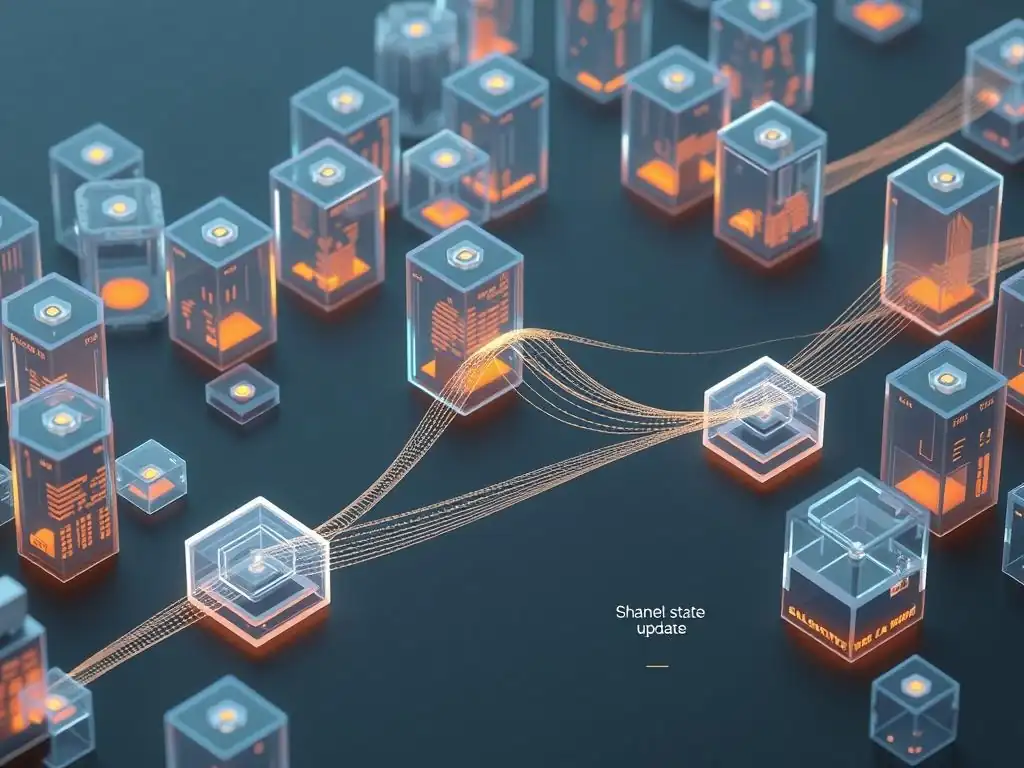
Enhanced Throughput and Improved Performance
Layer-2 solutions demonstrably enhance throughput and improve the overall performance of blockchain networks. By offloading transaction processing and computation from the congested Layer-1 blockchain, these solutions enable a significantly higher number of transactions to be processed per second. For instance, Optimistic Rollups on Ethereum, such as Arbitrum and Optimism, have demonstrated the ability to increase transaction throughput by 10-100x compared to the Ethereum mainnet.
ZK-Rollups like StarkNet and zkSync offer even greater potential for throughput improvements, potentially reaching thousands of TPS while maintaining strong security guarantees. State channels, while more limited in application scope, can enable virtually instant transactions between channel participants, drastically improving performance for specific use cases like micropayments and fast exchanges.
This enhanced throughput translates to a more responsive and efficient blockchain network, capable of handling a larger volume of user activity and supporting more demanding applications. Improved performance is crucial for enabling blockchain to scale to meet the needs of mainstream adoption. For applications like decentralized social media, high-volume decentralized exchanges, and blockchain-based gaming, the throughput improvements offered by Layer-2 solutions are essential for providing a seamless and user-friendly experience. By overcoming the transaction throughput limitations of Layer-1 blockchains, Layer-2 solutions pave the way for a wider range of applications and greater scalability for the entire blockchain ecosystem.
Reduced Latency and Faster Transaction Confirmation Times
Reduced latency and faster transaction confirmation times are significant advantages of Layer-2 solutions, directly addressing a key pain point for blockchain users – slow transaction speeds. Layer-1 blockchains, particularly those using Proof-of-Work consensus mechanisms, often have block times ranging from seconds to minutes, and users typically need to wait for multiple block confirmations for security. This can result in transaction finality taking several minutes or even longer. Layer-2 solutions, by processing transactions off-chain, bypass this lengthy confirmation process for the majority of transactions.
State channels enable near-instantaneous transactions between participants within the channel, as transactions are simply updates to the channel's state and do not require on-chain block confirmations until the channel is closed. Rollups, while still anchoring to the Layer-1 chain, achieve faster finality compared to Layer-1 transactions. Optimistic Rollups have faster confirmation times than the main chain, though they have a longer finality period due to the fraud-proof mechanism.
ZK-Rollups, with their cryptographic validity proofs, can offer faster finality than Optimistic Rollups, approaching Layer-1 security with significantly reduced latency. The reduced latency provided by Layer-2 solutions improves user experience, making blockchain transactions feel faster and more responsive, which is crucial for applications requiring real-time interactions and faster transaction settlement.
Lower Transaction Costs and Increased Accessibility
Lower transaction costs are arguably one of the most impactful advantages of Layer-2 solutions, directly increasing the accessibility and usability of blockchain technology. High gas fees on Layer-1 blockchains, particularly during periods of network congestion, have become a major barrier to entry for many users, especially for smaller transactions and for users in regions with lower economic capacity. Layer-2 solutions address this issue by significantly reducing transaction fees, often by orders of magnitude. By offloading transaction processing and computation from the main chain, Layer-2 solutions reduce congestion and the associated gas fee pressures.
Rollups, in particular, are designed to minimize on-chain data and computation, leading to substantial fee reductions. Transactions on Optimistic and ZK-Rollups are typically much cheaper than equivalent transactions on the Ethereum mainnet. State channels, with their off-chain transaction model, also offer extremely low transaction costs for interactions within the channel.
The drastic reduction in transaction fees makes blockchain technology more affordable and accessible to a broader user base, including individuals and small businesses who were previously priced out by high gas fees. Lower fees also unlock new use cases for blockchain, such as micropayments, decentralized social media interactions, and blockchain-based gaming, which require low-cost transactions to be economically viable. By making blockchain more affordable, Layer-2 solutions are vital for driving mainstream adoption and realizing the inclusive potential of decentralized technologies.
Disadvantages and Limitations of Layer-2 Solutions
Complexity of Implementation and Integration
Despite their advantages, Layer-2 solutions are not without their drawbacks, one of which is the complexity of implementation and integration. Developing, deploying, and integrating Layer-2 solutions into existing blockchain ecosystems is a technically challenging undertaking. It requires specialized expertise in cryptography, distributed systems, and smart contract development. Implementing Layer-2 solutions often involves creating new infrastructure, developing specialized software, and designing secure and efficient communication protocols between the Layer-2 solution and the Layer-1 blockchain.
For developers, integrating Layer-2 solutions into their dApps can also add complexity. It may require modifying existing codebases, adapting to new APIs and development paradigms, and ensuring compatibility between the Layer-2 solution and the dApp's functionality. Furthermore, the complexity of Layer-2 solutions can make them more difficult to audit and verify, potentially increasing the risk of bugs or vulnerabilities.
The technical complexity of Layer-2 solutions can also slow down their adoption, as it requires significant effort and resources for both developers and users to understand, implement, and utilize them effectively. While efforts are being made to simplify the developer experience and improve tooling around Layer-2 solutions, the inherent complexity remains a significant limitation compared to developing directly on Layer-1.
Security Considerations and Potential Vulnerabilities
While Layer-2 solutions are designed to inherit the security of the underlying Layer-1 blockchain, they also introduce their own set of security considerations and potential vulnerabilities. The security of a Layer-2 solution depends on its specific design and implementation, and different types of Layer-2 solutions have different security trade-offs. For example, Optimistic Rollups rely on a fraud-proof mechanism, which introduces a challenge period during which transactions can be challenged. If the fraud-proof system is compromised or if participants fail to detect and challenge invalid transactions within the challenge period, vulnerabilities could be exploited.
ZK-Rollups, while generally considered to have stronger security assumptions due to their use of cryptographic validity proofs, are also complex and rely on the security of the underlying cryptographic assumptions and the correctness of the zero-knowledge proof systems. Sidechains introduce a separate security domain, as their security depends on their own consensus mechanism and validator set, which may be weaker than the Layer-1 blockchain. State channels require careful management of channel states and secure off-chain communication between participants, and vulnerabilities in channel management or communication protocols could lead to security breaches.
Furthermore, bridges connecting Layer-2 solutions to Layer-1 blockchains are also potential points of vulnerability, as they involve cross-chain asset transfers and complex smart contract interactions. Auditing Layer-2 solutions and their associated infrastructure is crucial to identify and mitigate potential security risks, and ongoing research and development are essential to improve the security and robustness of Layer-2 technologies.
Dependence on the Underlying Layer-1 Blockchain
A fundamental limitation of Layer-2 solutions is their dependence on the underlying Layer-1 blockchain for security and final settlement. Layer-2 solutions are not independent blockchains; they are built on top of and rely on the Layer-1 chain for core functionalities like data availability, consensus, and dispute resolution. This dependence means that the security and performance of a Layer-2 solution are ultimately tied to the characteristics of the Layer-1 blockchain it is built upon. If the Layer-1 blockchain experiences security breaches, network outages, or scalability issues, these problems can potentially impact the Layer-2 solutions built on top of it.
For example, if the Layer-1 blockchain suffers a 51% attack or experiences a prolonged network congestion, Layer-2 solutions relying on it could also be affected. Similarly, if the Layer-1 blockchain's consensus mechanism is compromised, the security of Layer-2 solutions could be undermined. This dependence also implies that Layer-2 solutions are limited by the capabilities of the Layer-1 blockchain they are built on.
While Layer-2 solutions can significantly improve scalability, they cannot completely overcome the fundamental limitations of the underlying Layer-1. Therefore, the long-term scalability and security of the blockchain ecosystem still require ongoing improvements and advancements in both Layer-1 and Layer-2 technologies, working in a complementary manner.
Layer-2 Solutions: A Comparative Analysis
Optimistic Rollups vs. ZK-Rollups: Trade-offs and Use Cases
Optimistic Rollups and ZK-Rollups represent two prominent types of Layer-2 scaling solutions, each with distinct trade-offs in terms of security, speed, and complexity. Optimistic Rollups are characterized by their simplicity and EVM (Ethereum Virtual Machine) compatibility, making them relatively easier to implement and integrate with existing Ethereum dApps. They achieve scalability by assuming transactions are valid by default and only verifying them on-chain in case of a dispute, using a fraud-proof mechanism. The main trade-off of Optimistic Rollups is their challenge period, typically around 7 days, during which withdrawals from the rollup back to Layer-1 are delayed to allow for potential fraud proofs.
This delay can impact user experience, particularly for applications requiring fast withdrawals. Optimistic Rollups are well-suited for general-purpose dApps, DeFi protocols, and applications where EVM compatibility and relative simplicity are prioritized over absolute speed and instant finality. Examples include Arbitrum and Optimism.
ZK-Rollups offer potentially stronger security and faster finality compared to Optimistic Rollups by using zero-knowledge proofs (zk-SNARKs or zk-STARKs) to cryptographically verify the validity of transactions before they are submitted to Layer-1. This eliminates the need for a challenge period, resulting in faster withdrawals and potentially stronger security assumptions. However, ZK-Rollups are generally more complex to implement and have historically had limited EVM compatibility, making it more challenging to port existing Ethereum dApps to ZK-Rollups.
While ZK-Rollups are rapidly evolving and improving in terms of EVM compatibility and tooling, they still tend to be more computationally intensive and require more specialized cryptographic expertise compared to Optimistic Rollups. ZK-Rollups are particularly well-suited for applications requiring high security, fast finality, and privacy, such as decentralized exchanges, payment systems, and enterprise solutions. Examples include StarkNet and zkSync.
Sidechains vs. Validium: Security and Trust Assumptions
Sidechains and Validium represent different approaches to Layer-2 scaling, with distinct security and trust assumptions. Sidechains, as discussed earlier, are independent blockchains connected to the main chain via a bridge. They offer flexibility and customizability but introduce their own security domain.
The security of a sidechain depends on its own consensus mechanism and validator set, which may be independent of the main chain's security. Users bridging assets to a sidechain are trusting the security of the sidechain itself, in addition to the main chain. If a sidechain has a weaker security model, it could be more vulnerable to attacks, and assets bridged to the sidechain could be at risk.
Sidechains often rely on a smaller, permissioned set of validators, which can be less decentralized and potentially more susceptible to collusion or attacks compared to the large, permissionless validator sets of Layer-1 blockchains. Polygon PoS Chain, while sometimes referred to as a sidechain, is more accurately described as a commit-chain or a Layer-2 chain with its own consensus mechanism and validator set.
Validium, on the other hand, is a type of Layer-2 scaling solution that is similar to ZK-Rollups in that it uses zero-knowledge proofs for transaction validity. However, Validium differs from ZK-Rollups in how it handles data availability. While ZK-Rollups post transaction data (or compressed data) on-chain, Validium keeps transaction data off-chain, typically with a data availability committee.
This off-chain data availability approach can further reduce on-chain costs and potentially increase scalability, but it introduces a different trust assumption. Users of a Validium are trusting the data availability committee to honestly and reliably store and provide access to the transaction data. If the data availability committee fails or becomes compromised, users might not be able to access their funds or prove their transactions.
Validium offers a trade-off between scalability and data availability trust assumptions, suitable for applications where extremely high scalability and lower on-chain costs are prioritized, and a degree of trust in a data availability committee is acceptable. Examples of Validium projects are less prevalent compared to rollups, but projects like StarkEx offer Validium modes.
Plasma vs. Other Layer-2 Solutions: Evolving Landscape
Plasma was an earlier proposed Layer-2 scaling solution for Ethereum, aiming to create "child chains" anchored to the main chain. Plasma envisioned creating a hierarchical structure of blockchains, with a main Plasma chain and potentially further child chains branching off, each handling a subset of transactions.
The core idea of Plasma was to minimize the amount of data and computation required on the main chain by processing most transactions on these child chains and only using the main chain for dispute resolution and data anchoring. Plasma aimed to achieve high scalability by processing transactions off-chain and relying on fraud proofs for security, similar to Optimistic Rollups.
However, Plasma faced significant technical challenges and limitations in its development and implementation. One of the main challenges was the complexity of handling data availability and ensuring data integrity in the Plasma child chains. Another limitation was the difficulty of supporting general-purpose smart contracts on Plasma, as it was primarily designed for simpler payment and token transfer use cases.
Due to these challenges and the emergence of more promising and practical Layer-2 solutions like rollups, Plasma has seen limited adoption and development activity in recent years. While the initial concepts of Plasma influenced the development of other Layer-2 solutions, particularly Optimistic Rollups, Plasma itself is no longer considered a leading Layer-2 scaling solution in the evolving landscape.
Rollups, especially Optimistic and ZK-Rollups, have emerged as more practical and widely adopted Layer-2 solutions for Ethereum and other blockchains, offering a better balance of scalability, security, and usability compared to Plasma. The blockchain scalability landscape is constantly evolving, and research and development are ongoing to explore new and improved Layer-2 scaling techniques.
Real-World Examples and Use Cases of Layer-2 Solutions
Polygon: Scaling Ethereum with a Suite of Solutions
Polygon (formerly Matic Network) is a prominent example of a project providing a suite of Layer-2 scaling solutions for Ethereum. Initially focused on its Polygon PoS Chain, which functions as a commit-chain or sidechain to Ethereum, Polygon has expanded its ecosystem to encompass a broader range of Layer-2 technologies. Polygon PoS Chain offers faster transaction speeds and lower fees compared to the Ethereum mainnet, making it popular for dApps, DeFi protocols, and NFT marketplaces.
It utilizes a Proof-of-Stake consensus mechanism and its own validator set, providing a separate execution environment for Ethereum-compatible applications. Over 3 million daily transactions were processed on Polygon PoS chain in late 2023, demonstrating its significant contribution to Ethereum scalability.
Beyond Polygon PoS Chain, Polygon is also actively developing and deploying other Layer-2 solutions, including Optimistic Rollups (Polygon Hermez, now Polygon zkEVM Validium), ZK-Rollups (Polygon Zero, Polygon Miden), and Validium (Polygon zkEVM Validium). Polygon zkEVM Validium, for instance, aims to bring ZK-Rollup technology with EVM compatibility to Ethereum, enabling scalable and secure execution of smart contracts with lower fees.
Polygon's strategy is to offer a modular and diverse ecosystem of Layer-2 solutions, allowing developers to choose the most suitable scaling technology for their specific application requirements. Polygon's adoption by numerous dApps and projects highlights the real-world demand for Layer-2 scaling solutions and their effectiveness in improving the scalability and usability of the Ethereum ecosystem.
Arbitrum: Optimistic Rollup for Scalable Smart Contracts
Arbitrum is a leading Optimistic Rollup solution for Ethereum, designed to provide scalable and low-cost execution of smart contracts. Developed by Offchain Labs, Arbitrum utilizes fraud proofs and a challenge period to ensure the security of transactions rolled up to the Ethereum mainnet. Arbitrum boasts near-EVM compatibility, allowing developers to easily port their existing Ethereum dApps to Arbitrum with minimal code changes.
Arbitrum significantly increases transaction throughput and reduces gas fees compared to the Ethereum mainnet, making it an attractive platform for DeFi protocols, NFT marketplaces, and other dApps requiring scalability. Arbitrum One, its flagship rollup chain, has consistently processed hundreds of thousands of transactions daily and has attracted a substantial ecosystem of dApps and users.
Real-world examples of dApps deployed on Arbitrum include popular DeFi platforms like Uniswap, SushiSwap, and Aave, as well as NFT marketplaces like TreasureDAO. These dApps have leveraged Arbitrum's scalability to offer users faster transaction speeds and lower fees, enhancing user experience and attracting a larger user base. Arbitrum's success demonstrates the practical effectiveness of Optimistic Rollups in scaling smart contract platforms and enabling the growth of the decentralized application ecosystem on Ethereum. Arbitrum's continued development and adoption further solidify the role of Layer-2 solutions in addressing blockchain scalability challenges.
StarkNet: ZK-Rollup for Scalable and Private Transactions
StarkNet is a prominent ZK-Rollup solution for Ethereum, developed by StarkWare, focusing on providing scalable and private transactions. StarkNet leverages zk-STARKs (Zero-Knowledge Succinct Transparent Argument of Knowledge) technology to generate cryptographic proofs of transaction validity, enabling efficient and secure scaling. StarkNet aims to offer high throughput, low fees, and strong security guarantees, while also incorporating privacy features through zero-knowledge proofs. Unlike early ZK-Rollups with limited EVM compatibility, StarkNet is designed to support general-purpose smart contracts and is actively developing its own smart contract language, Cairo, and a developer ecosystem.
Real-world use cases of StarkNet include decentralized exchanges like dYdX (which initially used StarkWare's StarkEx Validium technology and is migrating to StarkNet) and Immutable X, an NFT scaling platform also built using StarkWare's technology and leveraging ZK-Rollup principles. These platforms demonstrate the ability of ZK-Rollups to handle high transaction volumes and complex smart contract interactions with lower fees and enhanced scalability.
StarkNet's focus on privacy through zero-knowledge proofs also opens up potential use cases in areas requiring confidential transactions, such as private DeFi applications or enterprise solutions. StarkNet's ongoing development and growing ecosystem highlight the increasing importance of ZK-Rollups as a powerful Layer-2 scaling solution for Ethereum and other blockchains, particularly for applications demanding both scalability and privacy.
The Future of Blockchain Scalability with Layer-2 Solutions
The Evolving Landscape of Layer-2 Technologies
The landscape of Layer-2 technologies is rapidly evolving, with ongoing research and development driving innovation and improvements across different types of solutions. Optimistic Rollups and ZK-Rollups are becoming increasingly mature and widely adopted, with projects like Arbitrum, Optimism, StarkNet, and zkSync continuously enhancing their performance, security, and developer tooling. Hybrid Layer-2 solutions, combining features of different approaches, are also emerging, seeking to optimize for specific trade-offs and use cases. For example, projects are exploring Validium modes that leverage ZK-proofs for validity but utilize off-chain data availability to further reduce costs.
Interoperability between different Layer-2 solutions is also becoming a key focus, as the ecosystem matures and the need for seamless asset and data transfer across various Layer-2 chains grows. Cross-Layer-2 bridges and communication protocols are being developed to enable greater composability and network effects within the Layer-2 ecosystem.
Furthermore, research into new Layer-2 techniques and cryptographic primitives is ongoing, with the potential for breakthroughs that could further enhance scalability, security, and privacy. The future of Layer-2 technologies is likely to involve a diverse and interconnected ecosystem of specialized solutions, catering to a wide range of application requirements and user needs, constantly pushing the boundaries of blockchain scalability.
Overcoming Challenges and Improving Interoperability
While Layer-2 solutions have made significant strides in addressing blockchain scalability, challenges remain in areas such as complexity, security, and interoperability. Simplifying the developer experience and improving tooling for Layer-2 development is crucial for wider adoption. Efforts are underway to create more user-friendly SDKs, libraries, and developer documentation to lower the barrier to entry for building dApps on Layer-2.
Enhancing the security of Layer-2 solutions is an ongoing priority, with research focused on formal verification, security audits, and robust cryptographic implementations. Addressing potential vulnerabilities and ensuring the long-term security of Layer-2 protocols is essential for building trust and confidence in these scaling solutions.
Improving interoperability between different Layer-2 solutions and between Layer-2 and Layer-1 blockchains is also a critical challenge. Developing standardized protocols and bridges for seamless asset and data transfer across different Layer-2 chains is necessary to create a more unified and interconnected blockchain ecosystem. Cross-Layer-2 communication protocols are being explored to enable dApps to interact and compose across different Layer-2 environments. Overcoming these challenges and fostering greater interoperability will be essential for realizing the full potential of Layer-2 solutions and enabling a truly scalable and interconnected blockchain future.
The Potential Impact of Layer-2 Solutions on Decentralized Applications
Layer-2 solutions have the potential to profoundly impact the landscape of decentralized applications (dApps) by overcoming the scalability limitations that have hindered their widespread adoption. By enabling significantly higher transaction throughput, lower fees, and faster transaction times, Layer-2 solutions can unlock a new generation of dApps that were previously impractical or infeasible on congested Layer-1 blockchains. Complex and high-volume dApps, such as decentralized social media platforms, blockchain-based gaming ecosystems, and high-frequency DeFi applications, become more viable with Layer-2 scalability. Micro-payment use cases, previously economically unfeasible due to high transaction fees, become practical and accessible with Layer-2 solutions.
The improved user experience offered by Layer-2 solutions, with faster and cheaper transactions, can attract a wider user base to dApps, driving mainstream adoption of decentralized technologies. Layer-2 solutions can also enable more innovative and sophisticated dApp functionalities, as developers are no longer constrained by the scalability limitations of Layer-1 blockchains.
The growth and evolution of the dApp ecosystem, powered by Layer-2 scalability, has the potential to disrupt traditional industries and create new paradigms for decentralized finance, social interaction, gaming, and various other applications. Layer-2 solutions are a critical enabler for realizing the full potential of decentralized applications and bringing the benefits of blockchain technology to a broader audience.
Conclusion: Layer-2 Solutions – A Critical Component of Blockchain's Scalable Future
Frequently Asked Questions
What are state channels and how do they improve blockchain scalability?
State channels are a layer-two scaling solution that allows participants to transact off-chain. This reduces the load on the main blockchain and significantly increases transaction speed.
How do state channels differ from other blockchain scaling solutions like sharding or sidechains?
Unlike sharding which splits the blockchain, and sidechains which are separate blockchains, state channels enable direct, off-chain interactions between participants. This means faster and cheaper transactions, but requires pre-agreed upon rules.
What are some potential use cases for state channels beyond simple payments?
State channels can be used for complex applications like gaming, micro-transactions, and real-time data streams. Any scenario requiring frequent and low-latency transactions can benefit.
What are the main challenges or limitations associated with using state channels?
State channels require participants to be online and responsive, and they need to agree on the initial state of the channel. Disputes require on-chain settlement, which can be costly.
How might regulation impact the adoption and development of state channel technology?
Regulatory clarity around smart contract legality and data privacy is crucial for wider adoption. Unclear regulations could hinder development and limit practical applications of state channels.
Final Reflection: Embracing the Scalable Horizon
The journey through the intricacies of blockchain scalability, particularly focusing on state channels, reveals a critical juncture for the technology's widespread adoption. The potential of state channels to unlock near-instantaneous and cost-effective transactions is no longer a theoretical possibility, but a tangible solution being actively developed and deployed. This shift from concept to reality underscores the urgency of understanding and embracing these scaling solutions to truly realize blockchain's transformative power.
The evolution of blockchain, and specifically the pursuit of scalability through mechanisms like state channels, has profoundly shaped the discourse around decentralized technologies. It's inspiring to witness the ingenuity and dedication driving this innovation, knowing that it directly impacts the accessibility and usability of blockchain for everyone. The future of blockchain is not just about building better blockchains, but about building better ways to use them.
This quote encapsulates the essence of our exploration, highlighting the importance of user experience and practical application in the quest for a truly decentralized future.
As we stand on the precipice of a more scalable blockchain ecosystem, I invite you to consider the role you can play in shaping this future. Explore the possibilities, engage in the discussions, and contribute to the development of solutions that will empower individuals and communities around the world. The future of blockchain is not predetermined; it is being built, brick by brick, by those who dare to envision a more decentralized and equitable world.
Unlock Scalable Blockchain Solutions Now!
Thank you for exploring the potential of state channels with us. We hope this article has shed light on how they can address blockchain scalability challenges. Now, it’s time to turn knowledge into action.
Here are some ways to deepen your understanding:
- Try building a simple application using state channels! Hands-on experimentation is the best way to grasp their capabilities.
- Share this article with colleagues or your network to promote discussions on innovative scalability solutions.
- Join our community forum to share your thoughts and ask questions about the future of state channels.
Are you ready to be part of the scalability revolution? What exciting application do you see enabled by state channels?
Leave a Reply