
Latest Advancements in Blockchain Sharding Research: Innovations to Watch


Welcome to Blockchain Trends, your go-to source for understanding the real-world impact of blockchain technology!
Dive into the future of decentralized systems as we explore applications extending far beyond cryptocurrency. In this article, we unravel the complexities and latest breakthroughs in Blockchain sharding scalability solutions 2024. Discover how these innovations are poised to revolutionize transaction speeds and unlock unprecedented potential. What are the key factors driving these advancements, and which solutions are truly game-changing? Let's find out!
Latest Advancements in Blockchain Sharding Research: Innovations to Watch
- Blockchain Sharding Scalability Solutions 2024: An Overview
- Cutting-Edge Sharding Techniques: Innovations Driving Scalability
- Recent Research in Sharding Security: Protecting Against Attacks
- Sharding Implementations and Testnets: Progress in 2024
- The Role of Layer-2 Solutions in Conjunction with Sharding
- Challenges and Future Directions in Blockchain Sharding Research
- Conclusion: The Future of Blockchain Scalability Lies in Sharding Advancements
-
Frequently Asked Questions
- What is blockchain sharding, and why is it important?
- How does sharding improve blockchain scalability?
- What are some of the latest advancements in blockchain sharding research?
- What are the potential risks associated with blockchain sharding?
- How are regulatory bodies approaching blockchain sharding and its implications?
- Final Reflection: Unlocking Blockchain's Scalable Future
- Unleash the Power of Sharding: Dive Deeper Now!
Blockchain Sharding Scalability Solutions 2024: An Overview
The Growing Need for Blockchain Scalability
As blockchain technology matures and its applications expand beyond cryptocurrencies to encompass areas like decentralized finance (DeFi), supply chain management, and digital identity, the inherent limitations of traditional blockchain architectures become increasingly apparent. The original blockchain designs, while secure and decentralized, often struggle with transaction throughput and latency when faced with a growing number of users and applications. This scalability bottleneck manifests as slow transaction processing times and high gas fees, hindering wider adoption and innovation within the blockchain space.
For instance, early blockchain networks could only process a handful of transactions per second, a stark contrast to the thousands handled by centralized payment processors like Visa. This disparity necessitates innovative solutions to enhance blockchain's capacity to handle increasing demands.
The demand for scalable blockchain solutions is not merely a theoretical concern; it's a practical imperative driven by real-world use cases. Consider the exponential growth of DeFi platforms, which require blockchains to manage a high volume of complex transactions related to trading, lending, and borrowing. Similarly, enterprise adoption of blockchain for supply chain tracking or secure data management requires networks capable of handling massive datasets and numerous transactions efficiently.
Without significant advancements in scalability, blockchain technology risks remaining niche, unable to fulfill its potential as a foundational technology for a decentralized future. Therefore, research into blockchain scalability solutions is not just an academic pursuit, but a critical endeavor to unlock the full transformative power of distributed ledger technology in 2024 and beyond.
Understanding Blockchain Sharding: A Foundational Concept
Blockchain sharding emerges as a prominent Layer-1 scalability solution, drawing inspiration from database sharding techniques. In essence, sharding divides the blockchain network into smaller, manageable partitions called "shards." Each shard operates as its own independent blockchain, processing a subset of the network's transactions and maintaining only a fraction of the overall blockchain state.
This parallel processing dramatically increases the network's transaction throughput, as multiple shards can process transactions concurrently, rather than sequentially as in traditional monolithic blockchains. Imagine a highway where, instead of all traffic being funneled into a single lane, multiple lanes (shards) are opened, allowing vehicles (transactions) to flow much more freely and efficiently.
The core principle of blockchain sharding lies in distributing the workload across multiple shards. Instead of every node in the network having to process and validate every transaction, nodes are assigned to specific shards and are responsible for only the transactions and data relevant to their shard. This reduction in individual node workload is the key to scalability.
For example, in a sharded blockchain, if there are 10 shards, each shard might only need to process 1/10th of the total transactions compared to a non-sharded chain. This allows the network to handle significantly more transactions overall. However, the complexity lies in ensuring security, data availability, and seamless communication between shards, which are the focus of ongoing research and innovation in blockchain sharding scalability solutions for 2024.
Cutting-Edge Sharding Techniques: Innovations Driving Scalability
State Sharding: Partitioning Blockchain State
State sharding is considered one of the most complex yet potentially impactful sharding techniques. It goes beyond simply dividing transaction processing and extends the partitioning to the blockchain's state itself – the current account balances, smart contract code, and other data that represents the network's status. By sharding the state, each shard becomes responsible for maintaining only a portion of the global state, dramatically reducing the storage and computational burden on individual nodes.
This approach allows for truly parallel processing and significantly enhances the scalability potential of blockchain networks. Think of it like dividing a large database into smaller, independent databases, each managing a specific segment of the data.
Implementing state sharding presents significant technical challenges, particularly in maintaining data consistency and ensuring secure cross-shard transactions. One of the primary challenges is ensuring data availability: if a shard is responsible for a portion of the state, how do we guarantee that data is always accessible when needed, especially when transactions might involve state across multiple shards? Researchers are actively exploring techniques like data dispersal and erasure coding to enhance data availability in state-sharded systems.
Furthermore, efficient and secure cross-shard communication protocols are crucial to enable transactions that involve state transitions across different shards. Innovations in state sharding are at the forefront of blockchain sharding scalability solutions in 2024, with projects like Ethereum's planned sharding implementation representing a significant step forward in this area.
Cross-Shard Communication Optimization: Reducing Latency
Efficient communication between shards is paramount for the overall performance of a sharded blockchain. When transactions involve interactions across multiple shards, the latency associated with cross-shard communication can become a bottleneck, negating some of the scalability benefits of sharding. Optimizing cross-shard communication is therefore a critical area of research, focusing on minimizing latency and maximizing throughput of inter-shard messages. Inefficient cross-shard communication can lead to delays in transaction finality and hinder the seamless operation of decentralized applications that span multiple shards.
Several techniques are being explored to optimize cross-shard communication. One approach involves asynchronous cross-shard communication, where shards do not need to wait for immediate confirmation from other shards for every interaction. Instead, messages are passed and processed in a more decoupled manner, improving overall concurrency.
Another area of focus is the development of efficient routing protocols and message queuing systems to minimize the time it takes for messages to travel between shards. Furthermore, researchers are investigating techniques like "committees" or "notaries" to facilitate faster and more secure cross-shard communication by creating trusted intermediaries for inter-shard interactions. Advancements in cross-shard communication optimization are essential for realizing the full potential of blockchain sharding scalability solutions, especially as decentralized applications become more complex and interconnected in 2024.
Secure Cross-Shard Transactions: Addressing the Atomic Transaction Problem
Ensuring the atomicity of cross-shard transactions is a fundamental challenge in sharded blockchain systems. Atomicity, in the context of transactions, means that either all parts of a transaction succeed, or none of them do. In a sharded environment, where a single transaction might involve operations across multiple shards, achieving atomicity becomes significantly more complex than in a non-sharded blockchain.
If a cross-shard transaction fails midway through its execution, it's crucial to ensure that the state remains consistent and that no partial changes are committed across different shards. This is known as the atomic transaction problem in distributed systems, and its secure resolution is vital for the integrity of sharded blockchains.
Various approaches are being researched to address the atomic cross-shard transaction problem. One common technique is the use of atomic commitment protocols, such as two-phase commit (2PC) or its variations. These protocols ensure that all shards involved in a transaction agree on whether to commit or abort the transaction before any changes are permanently applied.
However, traditional 2PC can introduce latency and complexity, so researchers are exploring more efficient and scalable atomic commitment mechanisms tailored for sharded blockchain architectures. Another direction involves exploring optimistic concurrency control, where transactions are initially processed optimistically, and conflicts are resolved only when necessary. Developing robust and secure solutions for atomic cross-shard transactions is a critical area of focus in blockchain sharding research, as it directly impacts the reliability and usability of sharded blockchain scalability solutions in real-world applications.
Recent Research in Sharding Security: Protecting Against Attacks
Addressing Single-Shard Takeover Vulnerabilities
A key security concern in sharded blockchains is the potential for a "single-shard takeover" attack. Because each shard is smaller than the entire network, it might be easier for a malicious actor to compromise a single shard compared to attacking the entire non-sharded blockchain. If an attacker gains control of a shard, they could potentially manipulate transactions within that shard, leading to double-spending or other malicious activities. Addressing these single-shard takeover vulnerabilities is crucial for ensuring the overall security and trustworthiness of sharded blockchain systems.
Research in this area focuses on enhancing the security of individual shards and mitigating the impact of a potential shard compromise. One approach is to employ stronger security mechanisms within each shard, such as more robust consensus algorithms or enhanced node selection processes. Another important aspect is to implement mechanisms to detect and respond to shard takeover attempts quickly.
This might involve monitoring shard behavior for anomalies and having contingency plans to isolate or recover compromised shards. Furthermore, techniques like fraud proofs and data availability checks can help ensure that even if a shard is compromised, the overall network can still detect and prevent malicious activities from propagating across shards. Securing against single-shard takeover attacks is a primary focus in blockchain sharding security research, aiming to make sharded scalability solutions as robust and secure as traditional blockchains.
Verifiable Random Function (VRF) Enhancements for Shard Assignment
The process of assigning nodes to shards, known as shard assignment, is a critical security component in sharded blockchains. If shard assignment is predictable or biased, it could create vulnerabilities that attackers could exploit to target specific shards. Verifiable Random Functions (VRFs) are cryptographic tools used to ensure randomness and unpredictability in shard assignment, making it more difficult for attackers to predict which nodes will be assigned to which shards and thus harder to orchestrate targeted attacks. Recent research focuses on enhancing VRF implementations to improve their efficiency, security, and suitability for blockchain sharding environments.
Enhancements to VRFs for shard assignment include optimizing their computational performance to minimize overhead during node assignment, especially in dynamic sharding systems where nodes might frequently join or leave shards. Researchers are also exploring VRF variations that offer stronger security properties, such as resistance to collusion attacks or enhanced privacy features.
Furthermore, integrating VRFs with other security mechanisms, like distributed key generation and threshold signatures, can create more robust and resilient shard assignment schemes. By leveraging advanced VRF techniques, blockchain sharding scalability solutions can achieve more secure and unpredictable shard assignments, significantly reducing the risk of targeted attacks and enhancing the overall security posture of sharded networks.
Byzantine Fault Tolerance (BFT) in Sharded Architectures: Latest Developments
Byzantine Fault Tolerance (BFT) consensus algorithms are designed to ensure consensus even in the presence of malicious or faulty nodes in a distributed system. In the context of sharded blockchains, BFT algorithms are crucial for ensuring that each shard can reach consensus reliably and securely, even if some nodes within the shard are compromised or behaving maliciously. Recent developments in BFT research are focused on adapting and optimizing BFT algorithms specifically for sharded architectures, addressing the unique challenges and requirements of sharded blockchain environments.
Latest developments include research into BFT algorithms that are more scalable and efficient, suitable for the potentially larger number of nodes within individual shards. Optimizations are being explored to reduce the communication overhead and latency associated with traditional BFT algorithms, making them more practical for high-throughput sharded systems.
Furthermore, researchers are investigating hybrid consensus approaches that combine BFT with other consensus mechanisms, such as Proof-of-Stake (PoS), to leverage the strengths of different algorithms and achieve a balance between security, performance, and energy efficiency in sharded blockchains. Integrating advanced BFT consensus mechanisms into sharded architectures is a key area of development, ensuring the robustness and reliability of blockchain sharding scalability solutions in the face of potential attacks and node failures.
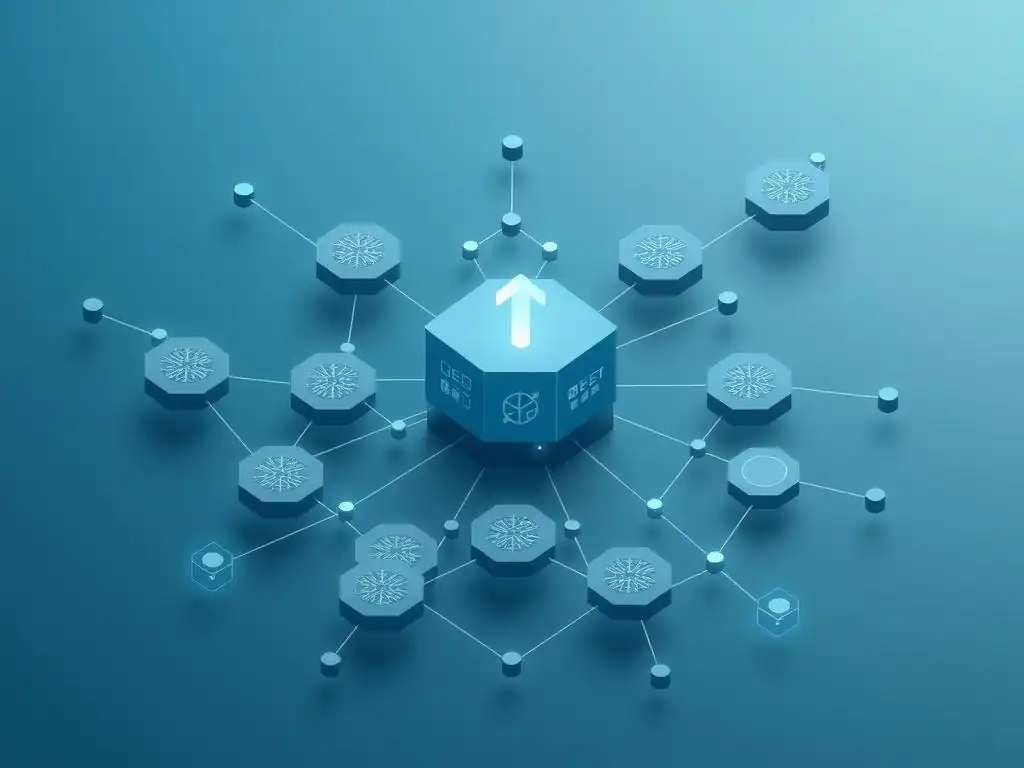
Ethereum 2.0 Sharding Testnet Analysis: Performance and Security
Ethereum's transition to Ethereum 2.0, now known as the Consensus Layer, includes sharding as a core component for enhancing scalability. The planned implementation of sharding on Ethereum represents a significant undertaking and is closely watched by the blockchain community. Analysis of Ethereum 2.0 sharding testnets provides valuable insights into the performance and security characteristics of sharding in a large-scale, real-world blockchain environment. These testnets serve as crucial proving grounds for validating sharding concepts and identifying potential challenges before full deployment.
Early analysis of Ethereum 2.0 sharding testnets indicates promising results in terms of increased transaction throughput and reduced latency compared to the original Ethereum chain. Metrics such as transactions per second (TPS), block finality times, and cross-shard communication latency are being closely monitored and analyzed. Security assessments of the testnets focus on evaluating the resilience of the sharded architecture to various attack vectors, including single-shard takeover attempts and Sybil attacks.
Data from these testnets is informing ongoing refinements and optimizations to the Ethereum sharding design, contributing to the development of robust and performant blockchain sharding scalability solutions. While the full rollout of Ethereum sharding is still underway, the progress demonstrated in testnets in 2024 highlights the potential of sharding to significantly improve the scalability of major blockchain platforms.
Zilliqa Sharding Implementation: Architectural Insights
Zilliqa is one of the pioneering blockchain projects to implement sharding in its mainnet. Zilliqa's sharding architecture offers valuable architectural insights into the practical considerations and trade-offs involved in building and operating a sharded blockchain. By examining Zilliqa's implementation, researchers and developers can gain a deeper understanding of the challenges and best practices for designing and deploying sharded blockchain systems. Zilliqa's experience provides real-world data and lessons learned that are highly relevant to the ongoing development of blockchain sharding scalability solutions.
Zilliqa utilizes a network sharding approach, dividing the network into smaller shards responsible for processing transactions in parallel. Key architectural features of Zilliqa's sharding implementation include its use of a consensus protocol tailored for sharded environments and its mechanisms for cross-shard communication. Analyzing Zilliqa's performance metrics, such as transaction throughput and scalability under varying network conditions, provides valuable empirical data on the effectiveness of network sharding in practice.
Furthermore, studying Zilliqa's security model and its approaches to mitigating sharding-specific vulnerabilities offers important lessons for securing sharded blockchain systems. Zilliqa's implementation serves as a significant case study for understanding the practical aspects of blockchain sharding and its potential to enhance scalability.
Comparing Different Sharding Approaches: Trade-offs and Benefits
Various sharding approaches have been proposed and are under development, each with its own set of trade-offs and benefits. Comparing these different approaches is essential for understanding the landscape of blockchain sharding scalability solutions and for making informed decisions about which approach is best suited for specific applications and use cases. The primary distinctions between sharding approaches lie in how they partition the blockchain network and manage cross-shard communication and data consistency.
Key sharding approaches include network sharding, state sharding, and transaction sharding. Network sharding, as implemented by Zilliqa, focuses on dividing the network of nodes into shards. State sharding, as planned for Ethereum, partitions the blockchain state itself. Transaction sharding, a less common approach, aims to divide transactions based on certain criteria and assign them to specific shards.
Each approach has different implications for scalability, security, and complexity of implementation. For example, state sharding offers potentially higher scalability but is also more complex to implement securely. Network sharding is generally considered simpler to implement but might offer slightly lower scalability gains compared to state sharding. Understanding these trade-offs and benefits is crucial for navigating the diverse landscape of blockchain sharding solutions and for selecting the most appropriate approach for achieving blockchain scalability in 2024 and beyond.
The Role of Layer-2 Solutions in Conjunction with Sharding
Combining Sharding with Rollups for Enhanced Scalability
Layer-2 scaling solutions, such as rollups, offer complementary approaches to blockchain scalability that can be effectively combined with sharding to achieve even greater scalability gains. Rollups, in essence, process transactions off-chain and then post a summary of those transactions back to the main Layer-1 blockchain. By combining rollups with sharding, each shard can potentially support multiple rollups, further amplifying the overall transaction processing capacity of the blockchain network. This synergistic combination represents a powerful strategy for achieving high levels of scalability for demanding blockchain applications.
Rollups benefit from the increased throughput provided by sharding, while sharding benefits from the transaction compression and reduced on-chain data burden offered by rollups. For instance, in a sharded Ethereum architecture, each shard could become a settlement layer for multiple rollups, effectively multiplying the scalability improvements. Different types of rollups, such as optimistic rollups and zero-knowledge (ZK) rollups, can be combined with sharding, each offering different trade-offs in terms of security, performance, and complexity.
Research and development are actively exploring optimal integration strategies for combining sharding and rollups, aiming to create highly scalable and efficient blockchain platforms capable of supporting a wide range of decentralized applications. The combination of sharding and rollups is emerging as a leading approach in blockchain sharding scalability solutions for achieving truly massive scaling potential.
Validium and Sharding: Synergistic Approaches
Validium is another type of Layer-2 scaling solution that, similar to rollups, can synergistically complement sharding. Validium solutions also process transactions off-chain but differ from rollups in how they handle data availability. While rollups typically post transaction data on-chain, Validium solutions rely on external data availability committees or other mechanisms to ensure data availability. Combining Validium with sharding can offer unique advantages in terms of scalability and potentially lower on-chain data footprint compared to combining rollups with sharding.
When integrated with sharding, Validium solutions can further reduce the data burden on each shard, as the main chain shards only need to verify validity proofs from Validium chains, rather than storing all transaction data. This combination can be particularly beneficial for applications that require very high throughput and are less sensitive to the potential security trade-offs associated with external data availability in Validium.
Research is exploring different architectures for integrating Validium with sharded blockchains, focusing on optimizing data availability mechanisms and ensuring secure and efficient interaction between Validium chains and the underlying sharded Layer-1. The synergistic combination of Validium and sharding represents another promising avenue for achieving enhanced blockchain sharding scalability solutions, particularly for specific use cases with stringent scalability requirements.
State Channels Complementing Sharded Blockchains
State channels are Layer-2 scaling solutions that enable direct, off-chain interactions between participants, significantly reducing the need for on-chain transactions for certain types of applications. While state channels are primarily designed for payment and micropayment applications, they can also complement sharded blockchains by offloading certain types of transactions from the main chain, further enhancing overall scalability. By integrating state channels with sharded architectures, blockchain platforms can achieve a multi-layered scaling approach, leveraging the strengths of both sharding and state channels.
In a sharded blockchain environment, state channels can be used for frequent, low-value transactions between users within a shard, while less frequent, higher-value transactions or transactions requiring global consensus can be processed on the sharded main chain. This hybrid approach can optimize resource utilization and improve the overall efficiency of the blockchain network. For example, in a gaming application built on a sharded blockchain, state channels could be used for in-game microtransactions, while sharding handles the more critical game state updates and asset transfers.
Research is exploring the integration of state channels with different sharding architectures, focusing on developing efficient mechanisms for channel management and seamless interaction between state channels and sharded blockchains. State channels offer a valuable complementary scaling solution that can further enhance the scalability potential of blockchain sharding scalability solutions, especially for applications involving frequent microtransactions or peer-to-peer interactions.
Challenges and Future Directions in Blockchain Sharding Research
Data Availability Issues in Sharded Systems
Data availability remains a critical challenge in sharded blockchain systems. In a sharded architecture, where each shard holds only a fraction of the total blockchain data, ensuring that data is always available when needed, especially for transaction verification and network recovery, becomes more complex than in non-sharded blockchains. If data from a particular shard becomes unavailable, it can hinder transaction processing, compromise security, and potentially lead to network disruptions. Addressing data availability issues is a central focus of ongoing research in blockchain sharding scalability solutions.
Various techniques are being explored to enhance data availability in sharded systems. One approach is data redundancy, where data is replicated across multiple nodes or shards to increase the likelihood of availability even if some nodes fail. Erasure coding is another technique that allows for data reconstruction even if a portion of the data is lost or unavailable.
Furthermore, researchers are investigating data availability sampling techniques, where nodes can efficiently verify data availability without downloading the entire dataset. Developing robust and efficient solutions for data availability is crucial for ensuring the reliability and security of sharded blockchains, and remains a key area of research and innovation in 2024.
Dynamic Resharding Strategies: Adapting to Network Conditions
Dynamic resharding refers to the ability of a sharded blockchain system to adjust its sharding configuration dynamically in response to changing network conditions, such as fluctuations in transaction load or node availability. Static sharding configurations, where the number of shards and shard assignments are fixed, can become inefficient or even vulnerable under dynamic network conditions. Dynamic resharding strategies aim to optimize network performance and security by adapting the sharding configuration in real-time, ensuring that resources are efficiently allocated and that the network remains resilient to changing demands.
Research in dynamic resharding focuses on developing algorithms and protocols for automatically adjusting the number of shards, reassigning nodes to shards, and migrating data between shards without disrupting network operation. Key challenges include minimizing the overhead and disruption caused by resharding events, ensuring data consistency during resharding, and designing resharding strategies that are robust and resistant to manipulation by malicious actors.
Adaptive resharding algorithms that can intelligently respond to real-time network traffic patterns and node availability are being explored. Dynamic resharding is a crucial area of development for creating truly scalable and adaptable blockchain sharding scalability solutions capable of handling the unpredictable nature of real-world blockchain usage.
The Future of Interoperability Between Sharded Blockchains
As sharding becomes more prevalent, the issue of interoperability between different sharded blockchains will become increasingly important. In a future where multiple sharded blockchains coexist, the ability for these chains to communicate and interact with each other seamlessly will be crucial for realizing the full potential of a decentralized and interconnected blockchain ecosystem. Interoperability between sharded blockchains will enable cross-chain asset transfers, cross-chain smart contract interactions, and the creation of more complex and interconnected decentralized applications spanning multiple sharded networks.
Research into interoperability solutions for sharded blockchains is exploring various approaches, including cross-chain bridges, atomic swaps, and inter-blockchain communication protocols. Developing secure and efficient mechanisms for cross-shard communication within a single sharded blockchain is already a challenge, and extending this interoperability to different sharded blockchains presents even greater complexities. Standardization efforts and the development of common interoperability protocols are crucial for fostering a truly interconnected ecosystem of sharded blockchains. The future of blockchain sharding scalability solutions is intertwined with the development of robust and widely adopted interoperability standards that enable seamless communication and collaboration between different sharded blockchain networks.
Conclusion: The Future of Blockchain Scalability Lies in Sharding Advancements
The pursuit of blockchain scalability is paramount to unlocking the technology's full potential and enabling its widespread adoption across diverse industries. Blockchain sharding, with its innovative approach to partitioning blockchain networks and parallelizing transaction processing, stands as one of the most promising Layer-1 scalability solutions. The advancements in sharding research witnessed in 2024, particularly in areas like state sharding, cross-shard communication optimization, and enhanced security mechanisms, demonstrate the continued progress and maturation of this technology.
While challenges remain, particularly in ensuring data availability, implementing dynamic resharding, and achieving interoperability between sharded chains, the ongoing research and development efforts are steadily addressing these hurdles. The synergistic combination of sharding with Layer-2 solutions like rollups and validium further amplifies the scalability potential, paving the way for blockchain networks capable of handling transaction volumes comparable to traditional centralized systems. As blockchain technology continues to evolve and its applications expand, the future of blockchain scalability, and indeed the future of a truly decentralized web, increasingly hinges on the continued innovation and successful deployment of blockchain sharding advancements.
Frequently Asked Questions
What is blockchain sharding, and why is it important?
Blockchain sharding is a database partitioning technique that divides the blockchain into smaller, more manageable pieces called shards. This is important because it significantly improves scalability by allowing parallel processing of transactions.
How does sharding improve blockchain scalability?
Sharding enables the blockchain to process more transactions concurrently by distributing the workload across multiple shards. This reduces the burden on any single node and boosts the overall throughput and transaction speed of the network.
What are some of the latest advancements in blockchain sharding research?
Recent research focuses on improving cross-shard communication efficiency, enhancing shard security to prevent attacks, and developing dynamic sharding schemes that adapt to network conditions.
What are the potential risks associated with blockchain sharding?
A major risk is the potential for security vulnerabilities, especially in single-shard attacks. Ensuring data consistency and secure cross-shard communication are also crucial challenges.
How are regulatory bodies approaching blockchain sharding and its implications?
Regulatory bodies are carefully examining the impact of sharding on data privacy and security. They are also assessing how existing regulations might need to be adapted to address the unique challenges posed by this technology.
Final Reflection: Unlocking Blockchain's Scalable Future
The exploration of blockchain sharding advancements, as detailed throughout this article, underscores the critical need for robust and scalable solutions in today's rapidly evolving digital landscape. As blockchain technology continues to permeate various industries, from finance to supply chain management, the limitations of traditional blockchain architectures become increasingly apparent. The innovations highlighted here represent a significant step towards overcoming these limitations and unlocking the true potential of decentralized systems.
The relentless pursuit of efficient sharding techniques has not only reshaped the technical possibilities of blockchain but also profoundly influenced the broader conversation around decentralization and accessibility. Witnessing this evolution firsthand reinforces the belief that technology, at its core, should empower individuals and foster greater transparency. The future of blockchain lies in its ability to scale without compromising security or decentralization.
This quote encapsulates the driving force behind the research and development discussed, reminding us that innovation must be guided by ethical considerations and a commitment to inclusivity.
Now, as you reflect on the advancements presented, consider how these breakthroughs might impact your own engagement with blockchain technology. How can you leverage these scalable solutions to build more efficient, secure, and accessible applications? The future of blockchain is not just a technological pursuit; it's a collective endeavor. Embrace the potential, explore the possibilities, and contribute to a future where blockchain truly empowers us all.
Unleash the Power of Sharding: Dive Deeper Now!
Thank you for exploring the cutting-edge of blockchain sharding with us! You’ve gained valuable insights into the innovations shaping the future of scalable decentralized systems. Are you ready to take the next step and contribute to this exciting field?
Here are a few ways you can get involved:
- Start experimenting! Explore existing sharding implementations and consider building a small prototype to test different approaches. This is your chance to turn theory into practice.
- Share this article with your network to spark discussions on how these advancements can reshape blockchain technology.
- Delve into the whitepapers of the projects mentioned to better understand their architectural decisions and future plans.
What innovative sharding application are you most excited to see realized, and what challenges do you anticipate in its development? Share your thoughts in the comments below!
Leave a Reply