
LayerZero vs. Polkadot: A Comparative Analysis of Leading CrossChain Protocols


Welcome to Blockchain Trends, your compass in the ever-evolving world of decentralized technologies. Beyond the hype, blockchain is reshaping industries, from finance to supply chains. Intrigued by how different protocols connect these disparate blockchains? Dive into our comprehensive analysis of " LayerZero vs. Polkadot," a crucial crosschain comparison that unveils the strengths and weaknesses of these leading solutions. Discover which protocol is best positioned to unlock the full potential of blockchain interoperability and why this matters for the future of decentralized systems. Ready to unravel the complexities and opportunities?
LayerZero vs. Polkadot: A Comparative Analysis of Leading Cross-Chain Protocols
- Introduction: Understanding the Need for Cross-Chain Interoperability
-
LayerZero: A Deep Dive into its Cross-Chain Protocol
- LayerZero's Architecture: How it Enables Interoperability
- Key Features of LayerZero: Ultra Light Node and Decentralized Oracles
- LayerZero's Security Model: Trust Minimization in Cross-Chain Transfers
- LayerZero Use Cases: Stargate Finance and Interoperable NFTs
- Advantages and Disadvantages of LayerZero's Approach
- Polkadot: Exploring its Multi-Chain Framework
- LayerZero vs. Polkadot: A Detailed Analysis
- LayerZero vs. Polkadot: Fee Structures and Cost Efficiency
- LayerZero and Polkadot: Ecosystem and Adoption
- The Future of Cross-Chain Communication: LayerZero and Polkadot's Role
- Conclusion: Choosing the Right Cross-Chain Protocol
-
Frequently Asked Questions
- How does LayerZero facilitate cross-chain communication?
- What are the key differences between LayerZero's architecture and Polkadot's parachain model?
- What are the primary use cases for LayerZero beyond typical cross-chain transfers?
- What are the regulatory challenges facing cross-chain protocols like LayerZero and Polkadot?
- How do LayerZero and Polkadot compare in terms of scalability and transaction costs?
- Final Reflection: Bridging the Blockchain Divide
- Unlock the Future of Cross-Chain Innovation!
Introduction: Understanding the Need for Cross-Chain Interoperability
The Growing Demand for Seamless Blockchain Communication
In the burgeoning landscape of blockchain technology, the demand for seamless communication between disparate networks has never been more pronounced. Initially, blockchains operated in silos, each with its own ecosystem, tokens, and functionalities. This isolation, while fostering specialized innovation within individual chains, presented a significant barrier to the broader adoption and synergistic potential of blockchain technology. Users and developers found themselves restricted to single ecosystems, unable to easily transfer assets or data across different blockchains. This fragmentation hindered the creation of truly interconnected decentralized applications and limited the overall user experience in the Web3 space.
The need for cross-chain communication arises from the fundamental desire to break down these silos and unlock the true potential of a multi-chain future. Imagine a scenario where a decentralized finance (DeFi) application on Ethereum could seamlessly access liquidity locked on Solana, or where a non-fungible token (NFT) minted on Polygon could be effortlessly traded on a marketplace built on Avalanche.
This level of interoperability is crucial for creating a more fluid, efficient, and user-friendly blockchain environment. As the number of blockchains continues to grow, the importance of cross-chain solutions becomes increasingly critical for the long-term viability and scalability of the entire ecosystem.
The Importance of Cross-Chain Solutions for Blockchain Scalability & Interoperability
Cross-chain solutions are not merely about facilitating asset transfers; they are fundamental to addressing the critical challenges of blockchain scalability and interoperability. Scalability issues plague many popular blockchains, particularly during periods of high demand, leading to network congestion and exorbitant transaction fees. By enabling applications and users to leverage the strengths of different blockchains, cross-chain technologies can distribute network load and optimize resource utilization.
For example, computationally intensive tasks could be offloaded to chains optimized for processing power, while chains focused on low fees could be utilized for high-volume microtransactions. This distributed approach to blockchain infrastructure is essential for achieving the scalability needed to support mass adoption.
Furthermore, interoperability, the ability of different blockchain networks to communicate and share data, is paramount for creating a cohesive and interconnected blockchain ecosystem. Without interoperability, the potential for innovation is fragmented, and users are confined to walled gardens. Cross-chain protocols act as bridges, enabling the flow of information and value between these disparate networks.
This interconnectedness unlocks new possibilities for decentralized applications, allowing for the creation of complex, multi-chain applications that leverage the unique features of various blockchains. Ultimately, cross-chain solutions are the linchpin for realizing the vision of a truly decentralized and interconnected Web3, where different blockchains can seamlessly interact and collaborate.
LayerZero vs. Polkadot: Setting the Stage
In the pursuit of seamless cross-chain interoperability, several protocols have emerged, each with its unique approach and architecture. Among these, LayerZero and Polkadot stand out as two prominent and innovative solutions. LayerZero is designed as an omnichain interoperability protocol, emphasizing lightweight messaging and trust minimization, aiming to connect all blockchains in a secure and efficient manner.
It achieves this through its innovative Ultra Light Node architecture and reliance on decentralized oracles. On the other hand, Polkadot is a heterogeneous multi-chain framework, built to support a network of specialized blockchains called parachains, all connected and secured by a central Relay Chain. Polkadot's architecture prioritizes shared security and scalability through its unique parachain model.
This article delves into a detailed LayerZero Polkadot crosschain comparison, exploring their distinct architectures, security models, use cases, and advantages and disadvantages. By examining these two leading cross-chain protocols, we aim to provide a comprehensive understanding of the current landscape of blockchain interoperability and the diverse approaches being taken to achieve seamless cross-chain communication. This comparative analysis will equip readers with the knowledge necessary to understand the nuances of LayerZero vs. Polkadot and their respective roles in shaping the future of a multi-chain ecosystem.
LayerZero: A Deep Dive into its Cross-Chain Protocol
LayerZero's Architecture: How it Enables Interoperability
LayerZero's architecture distinguishes itself through its innovative Ultra Light Node (ULN) approach. Unlike traditional bridges that maintain full nodes of connected chains, LayerZero utilizes ULNs, which are significantly more efficient and cost-effective. A ULN does not store and validate all block headers.
Instead, it relies on on-chain contracts and a combination of decentralized oracles (Chainlink or Band Protocol) and block explorers to verify transaction validity. When a message is sent from Chain A to Chain B, the ULN on Chain A fetches the block header and transaction proof. This information, along with the transaction payload, is then relayed to Chain B by the selected oracle and block explorer pair, acting independently to enhance security.
This unique architecture allows LayerZero to achieve cross-chain communication with gas costs comparable to single-chain transactions. By avoiding the computational overhead of full nodes, LayerZero significantly reduces the resources required for cross-chain messaging. Furthermore, the separation of oracle and block explorer roles introduces a layer of security, as collusion between these independent entities would be required to compromise the system. This design philosophy prioritizes efficiency and cost-effectiveness without sacrificing security, making LayerZero a compelling solution for developers seeking to build interoperable applications.
Key Features of LayerZero: Ultra Light Node and Decentralized Oracles
The core innovation of LayerZero lies in its Ultra Light Node (ULN) technology, a departure from the heavy infrastructure of traditional blockchain bridges. Traditional bridges often operate by running full nodes of each connected chain, a resource-intensive process that can lead to higher costs and latency. In contrast, LayerZero's ULN is designed to be lightweight and efficient. It operates on-chain and only validates block headers on demand, significantly reducing gas consumption for cross-chain transactions. Independent oracles, such as Chainlink and Band Protocol, and block explorers are integral to the ULN's functionality, providing crucial security and data verification.
Another key feature of LayerZero is its configurable security stack, allowing developers to customize the level of security and cost associated with their cross-chain interactions. Developers can choose their preferred oracle and block explorer combination, and even implement custom verifiers for enhanced security. This flexibility empowers developers to tailor LayerZero's security to the specific needs of their application, balancing security requirements with cost considerations.
For instance, applications requiring the highest level of security might opt for a more robust and potentially more expensive oracle setup, while applications prioritizing cost-effectiveness might choose a different configuration. This granular control over security parameters is a unique advantage of LayerZero's design.
LayerZero's Security Model: Trust Minimization in Cross-Chain Transfers
LayerZero's security model is predicated on the principle of trust minimization, aiming to reduce the reliance on centralized intermediaries in cross-chain transfers. Unlike some bridging solutions that depend on a federation of validators or custodians, LayerZero leverages decentralized oracles and block explorers to independently verify cross-chain transactions. This separation of duties is crucial for security. For a malicious actor to compromise a cross-chain transfer on LayerZero, they would need to collude with both the selected oracle and the block explorer simultaneously, a significantly higher barrier than compromising a single entity.
Furthermore, LayerZero’s configurable security stack allows applications to further enhance security by implementing custom verification logic and choosing from a range of reputable oracle providers. The protocol itself does not hold custody of user funds; instead, assets remain on their native chains until a cross-chain transaction is successfully verified and executed. This non-custodial nature reduces the risk of centralized points of failure and enhances the overall security of the system. While no system is entirely trustless, LayerZero's design aims to minimize trust assumptions by distributing verification responsibilities and empowering developers with customizable security options.
LayerZero Use Cases: Stargate Finance and Interoperable NFTs
LayerZero has already seen significant adoption across various use cases, particularly in decentralized finance (DeFi) and the burgeoning world of interoperable NFTs. Stargate Finance, a prominent DeFi protocol built on LayerZero, exemplifies the protocol's capabilities in enabling seamless cross-chain asset transfers. Stargate allows users to swap stablecoins across different blockchains with unified liquidity pools and instant guaranteed finality. This eliminates the fragmentation of liquidity across chains and provides a smoother user experience for cross-chain DeFi activities. Stargate's success highlights LayerZero's effectiveness in facilitating efficient and secure cross-chain value transfer in the DeFi space.
Beyond DeFi, LayerZero is also being utilized to create interoperable NFTs, enabling NFTs to move seamlessly across different blockchain ecosystems. This unlocks new possibilities for NFT projects, allowing them to reach wider audiences and leverage the unique features of various chains. For example, an NFT minted on Ethereum could be bridged to Solana for trading on a Solana-based marketplace, or utilized within a metaverse built on Polygon.
This cross-chain NFT functionality expands the utility and accessibility of NFTs, fostering a more interconnected and vibrant NFT ecosystem. These real-world examples demonstrate LayerZero's versatility and its potential to power a wide range of cross-chain applications beyond simple asset transfers.
Advantages and Disadvantages of LayerZero's Approach
LayerZero's approach to cross-chain interoperability offers several key advantages. Its Ultra Light Node architecture provides significant gas cost savings compared to traditional bridges, making cross-chain transactions more accessible and efficient. The configurable security stack empowers developers with flexibility to tailor security levels to their specific application needs. The trust-minimized security model, relying on independent oracles and block explorers, reduces reliance on centralized intermediaries and enhances overall security. Furthermore, LayerZero's generalized messaging capability allows for the transfer of arbitrary data, not just assets, opening doors for complex cross-chain applications beyond simple token bridging.
However, LayerZero's approach also has potential disadvantages. As a relatively newer protocol, it has a shorter track record compared to more established solutions like Polkadot, and its long-term security and robustness are still being tested in real-world scenarios. The reliance on external oracles, while enhancing decentralization, introduces a dependency on the security and reliability of these oracle networks.
While the configurable security stack is an advantage, it also places the burden of security configuration on developers, requiring a deeper understanding of security trade-offs. Despite these potential drawbacks, LayerZero's innovative architecture and growing adoption position it as a significant player in the cross-chain interoperability landscape.
Polkadot: Exploring its Multi-Chain Framework
Polkadot's Architecture: Parachains, Relay Chain, and Bridges
Polkadot's architecture is fundamentally different from LayerZero's, opting for a multi-chain framework built around a central Relay Chain. At its core, Polkadot is a network of blockchains, designed to facilitate interoperability and scalability through its unique structure. The Relay Chain serves as the central hub, providing shared security and message routing for connected blockchains called parachains.
Parachains are independent blockchains that can have their own tokens, governance, and functionalities, but they benefit from the security and interoperability provided by the Relay Chain. This architecture allows for the creation of specialized blockchains tailored to specific use cases, while maintaining a unified security and communication framework.
Bridges in Polkadot facilitate communication with blockchains external to the Polkadot ecosystem, such as Ethereum or Bitcoin. These bridges allow for the transfer of assets and data between Polkadot parachains and external networks, extending Polkadot's interoperability beyond its own ecosystem. The Relay Chain acts as the central coordinator, ensuring secure and reliable message passing between parachains and external networks. This architecture, with its emphasis on shared security and parachain specialization, provides a robust and scalable platform for building a diverse range of decentralized applications.
Polkadot's security model is built on the concept of shared security, a key differentiator from LayerZero and many other bridging solutions. Parachains in Polkadot do not need to establish their own independent security mechanisms. Instead, they leverage the security of the Relay Chain, which is secured by a large pool of validators staking DOT, Polkadot's native token.
This shared security model significantly reduces the barrier to entry for new blockchains, as they can bootstrap security from day one without needing to build a large and trusted validator set from scratch. This is particularly beneficial for smaller or newer projects that may lack the resources to establish robust independent security.
Furthermore, Polkadot has a sophisticated on-chain governance system that allows DOT holders to participate in the network's evolution and decision-making processes. This governance system is responsible for upgrades to the Polkadot network, including the Relay Chain and parachains, and ensures that the network evolves in a decentralized and community-driven manner. The combination of shared security and on-chain governance provides a robust and adaptable security model for the Polkadot ecosystem, fostering trust and stability for parachains and users alike.
Polkadot Use Cases: Acala Network and Moonbeam
Polkadot's ecosystem is rich with diverse parachains catering to a wide range of use cases. Acala Network, for instance, is a DeFi parachain on Polkadot focused on creating a decentralized financial hub. Acala offers a suite of DeFi products, including a stablecoin (aUSD), decentralized exchange (DEX), and staking derivatives, all within the Polkadot ecosystem. Acala leverages Polkadot's interoperability to connect with other parachains and external networks, creating a comprehensive DeFi ecosystem within Polkadot. Acala's focus on DeFi demonstrates Polkadot's capability to support complex financial applications requiring high levels of security and interoperability.
Moonbeam is another prominent parachain on Polkadot, designed to be a developer-friendly platform for building cross-chain compatible applications. Moonbeam is Ethereum-compatible, allowing developers to easily port their existing Ethereum smart contracts and dApps to the Polkadot ecosystem. This compatibility significantly lowers the barrier to entry for Ethereum developers looking to leverage Polkadot's scalability and interoperability.
Moonbeam acts as a bridge between the Ethereum and Polkadot ecosystems, enabling developers to build applications that can seamlessly interact with both networks. These examples of Acala and Moonbeam showcase the versatility of Polkadot and its ability to host a diverse range of specialized parachains catering to various needs and functionalities.
Advantages and Disadvantages of Polkadot's Approach
Polkadot's multi-chain framework offers significant advantages in terms of scalability and security. The parachain model allows for parallel processing of transactions, significantly increasing network throughput compared to single-chain architectures. The shared security model lowers the barrier to entry for new blockchains and provides robust security for the entire ecosystem. Polkadot's on-chain governance system ensures that the network evolves in a decentralized and community-driven manner, fostering long-term sustainability and adaptability. The ability to create specialized parachains tailored to specific use cases allows for optimization and efficiency within the ecosystem.
However, Polkadot's approach also presents certain disadvantages. The parachain slot auction process, required to secure a slot on the Relay Chain, can be competitive and expensive, potentially limiting access for smaller projects. The complexity of Polkadot's architecture can be higher compared to simpler bridging solutions, potentially increasing development and integration complexity. While parachains benefit from shared security, they are also dependent on the security and performance of the Relay Chain. Despite these challenges, Polkadot's robust architecture and thriving ecosystem position it as a leading platform for building a scalable and interoperable blockchain future.
LayerZero vs. Polkadot: A Detailed Analysis
Architectural Differences: LayerZero vs. Polkadot
The fundamental architectural difference between LayerZero and Polkadot lies in their approach to cross-chain interoperability. LayerZero is designed as a messaging protocol that sits atop existing blockchains, enabling them to communicate with each other through its Ultra Light Node and decentralized oracle network. It doesn't require any changes to the underlying blockchains themselves. LayerZero acts as an intermediary, facilitating message passing and data transfer between independent chains. Its strength lies in its lightweight nature and ease of integration with existing blockchains.
Polkadot, on the other hand, is a heterogeneous multi-chain framework. It's not just a protocol but a network of interconnected blockchains built specifically to work together. Polkadot requires blockchains to be built as parachains and connect to its central Relay Chain to benefit from its shared security and interoperability.
This approach provides a more tightly integrated and inherently interoperable ecosystem, but it requires projects to build or adapt their blockchains to fit within the Polkadot framework. In essence, LayerZero is a bridge connecting existing islands, while Polkadot is creating a new continent designed for interconnectedness from the ground up. This LayerZero Polkadot crosschain comparison highlights their distinct architectural philosophies.
Security Considerations: Comparing the Security Models
When comparing the security models of LayerZero vs. Polkadot, key differences emerge. LayerZero emphasizes trust minimization through its decentralized oracle network and Ultra Light Node design. Security relies on the assumption that it's highly improbable for both the chosen oracle and block explorer to collude and act maliciously. While LayerZero aims to minimize trust, it still relies on the security of external oracles and the underlying blockchains it connects. Its security model is more akin to securing individual cross-chain transactions rather than providing shared security across a network of blockchains.
Polkadot, conversely, offers a shared security model. All parachains connected to the Relay Chain benefit from the pooled security of the Relay Chain validators. This provides a higher degree of inherent security for parachains, as they are secured by a large and economically incentivized validator set.
Polkadot's security is deeply integrated into its architecture, providing a robust foundation for its ecosystem. However, the security of the entire Polkadot network ultimately depends on the security of the Relay Chain itself. Both LayerZero and Polkadot prioritize security, but they achieve it through fundamentally different architectural approaches, impacting the nature and scope of their security guarantees.
Scalability and Throughput: Evaluating Performance
In terms of scalability and throughput, Polkadot's parachain architecture is inherently designed for high performance. By allowing for parallel processing of transactions across multiple parachains, Polkadot can achieve significantly higher throughput compared to single-chain blockchains. The parachain model enables horizontal scalability, where adding more parachains increases the network's overall capacity. This makes Polkadot well-suited for applications requiring high transaction volumes and low latency.
LayerZero's scalability is different. It doesn't directly increase the throughput of individual blockchains it connects. Instead, it focuses on efficient cross-chain communication, minimizing gas costs and latency for inter-chain transactions. LayerZero's ULN design is optimized for speed and efficiency in message passing, but the overall transaction processing capacity still depends on the underlying blockchains. While LayerZero enhances the efficiency of cross-chain interactions, Polkadot offers a more fundamental approach to scalability by distributing transaction processing across multiple parallel chains. This LayerZero Polkadot crosschain comparison reveals that Polkadot is architecturally geared towards higher throughput and scalability at the network level.
Development and Deployment: Ease of Integration
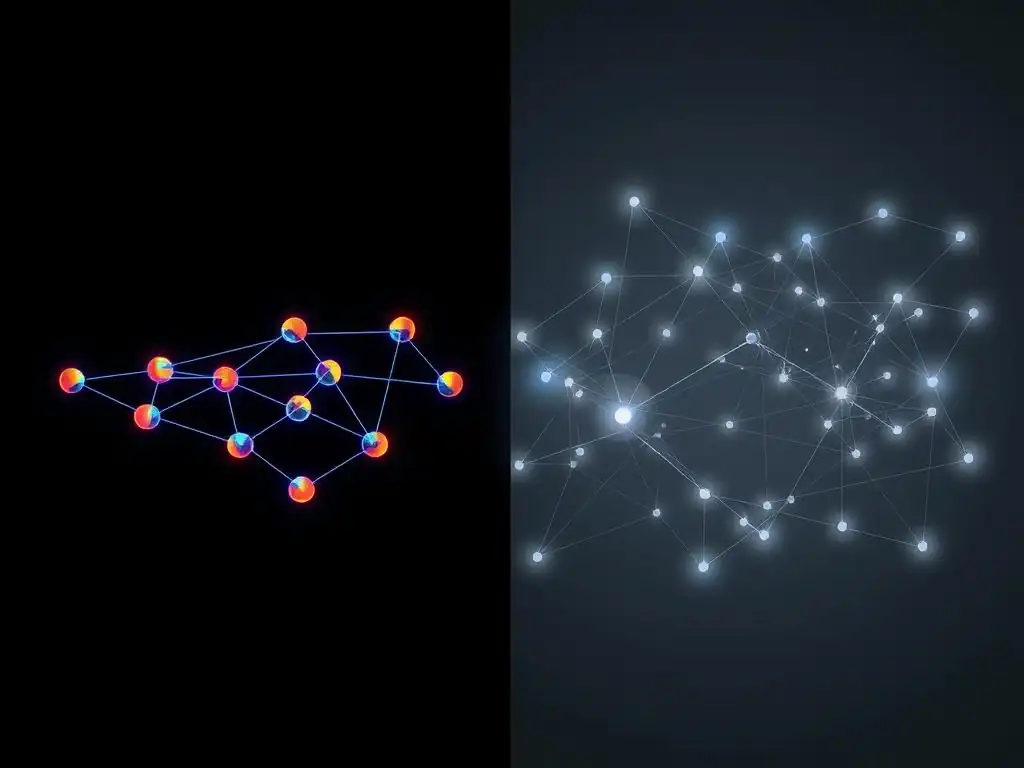
Ease of development and deployment is a crucial factor for developers choosing between LayerZero vs. Polkadot. LayerZero is designed to be easily integrated with existing blockchains. Developers can incorporate LayerZero's messaging protocol into their smart contracts with relatively minimal changes to their existing infrastructure. This makes LayerZero a more readily deployable solution for projects already built on established blockchains seeking cross-chain capabilities. Its plug-and-play nature lowers the barrier to entry for cross-chain development.
Polkadot, while offering a powerful and scalable platform, requires a more significant commitment for development and deployment. Building a parachain on Polkadot necessitates developing a blockchain that conforms to the Polkadot framework and participating in parachain slot auctions. This involves a more substantial undertaking compared to integrating LayerZero. However, Polkadot provides a comprehensive development environment (Substrate) and a supportive ecosystem for building parachains. While LayerZero offers quicker and easier integration for existing projects, Polkadot provides a more robust and feature-rich platform for building natively interoperable blockchains, albeit with a higher initial development hurdle.
Governance and Community: Decentralization and Control
Governance and community engagement are important aspects to consider when comparing LayerZero vs. Polkadot. LayerZero, as a protocol, is governed by the LayerZero Foundation and is moving towards greater decentralization through community governance. The protocol's governance structure is still evolving, but the intention is to empower the community to participate in decision-making regarding protocol upgrades and future development. LayerZero's governance model is focused on the protocol level, ensuring its ongoing evolution and adaptation.
Polkadot has a well-established on-chain governance system that is actively utilized by its community. DOT holders can participate in referenda and vote on proposals for network upgrades, treasury spending, and other critical decisions. Polkadot's governance is deeply integrated into its architecture and culture, fostering a strong sense of community ownership and decentralized control.
Polkadot's mature governance system provides a robust and transparent framework for network evolution, while LayerZero is in the process of further decentralizing its governance model. Both projects recognize the importance of community involvement, but Polkadot's governance structure is more established and deeply ingrained in its network operations.
LayerZero vs. Polkadot: Fee Structures and Cost Efficiency
Transaction Fees on LayerZero: Gas Costs and Oracle Fees
Transaction fees on LayerZero are designed to be cost-efficient, primarily consisting of gas costs on the source and destination chains, along with oracle fees. Since LayerZero utilizes Ultra Light Nodes, the gas costs associated with cross-chain messaging are significantly lower compared to traditional bridges that operate full nodes. The primary gas costs are incurred on the source chain for initiating the transaction and on the destination chain for executing the transaction. These gas costs are chain-dependent and fluctuate based on network congestion and gas prices of the respective blockchains.
In addition to gas costs, LayerZero transactions also involve oracle fees. These fees compensate the decentralized oracles (like Chainlink or Band Protocol) for their role in verifying and relaying transaction data across chains. Oracle fees are typically a small fraction of the overall transaction cost and are designed to incentivize oracles to provide reliable and secure services. LayerZero's fee structure aims to minimize costs by optimizing gas consumption and incorporating reasonable oracle fees, making cross-chain transactions more economically viable for users and applications.
Transaction Fees on Polkadot: DOT Staking and Parachain Slot Auctions
Transaction fees on Polkadot operate differently due to its parachain-based architecture. Users interacting with parachains typically pay transaction fees in the parachain's native token or DOT, depending on the parachain's configuration. These transaction fees are generally comparable to or lower than fees on other layer-1 blockchains, as parachains benefit from Polkadot's scalability. The fees collected on parachains are often used to incentivize parachain validators or for parachain-specific purposes.
Beyond transaction fees, Polkadot's economic model includes DOT staking and parachain slot auctions, which indirectly influence the overall cost of participating in the Polkadot ecosystem. Projects seeking to launch a parachain need to secure a parachain slot through auctions, often requiring them to bond a significant amount of DOT. While this DOT is not spent, it is locked up for the duration of the slot lease, representing an opportunity cost.
DOT staking, essential for securing the Relay Chain, also involves locking up DOT tokens and earning staking rewards. These economic mechanisms, while not direct transaction fees, are integral to Polkadot's economic model and contribute to the overall cost considerations for projects and users within the Polkadot ecosystem.
Cost Comparison: Which Protocol is More Economical?
When comparing the cost-efficiency of LayerZero vs. Polkadot, the context and use case are crucial. For simple cross-chain asset transfers or messaging between existing blockchains, LayerZero generally offers a more economical solution due to its lower gas costs and efficient ULN architecture. LayerZero's pay-as-you-go model is cost-effective for applications that require occasional or moderate cross-chain communication. The transaction fees on LayerZero are directly proportional to usage, making it a scalable and cost-efficient option for many cross-chain applications.
Polkadot's cost model is more complex. While transaction fees on parachains are competitive, the upfront cost of securing a parachain slot can be substantial, making it less economical for projects that primarily require simple cross-chain bridging. Polkadot's strength lies in providing a robust and scalable platform for building entire interconnected ecosystems of blockchains.
For projects aiming to build dedicated parachains or participate extensively within the Polkadot ecosystem, the long-term benefits of shared security, scalability, and interoperability may outweigh the initial costs of parachain slot auctions. In essence, LayerZero is generally more cost-effective for point-to-point cross-chain communication, while Polkadot's economic model is geared towards supporting a comprehensive and scalable multi-chain ecosystem, with different cost considerations depending on the level of participation.
LayerZero and Polkadot: Ecosystem and Adoption
LayerZero's Growing Ecosystem: Projects and Partnerships
LayerZero, despite being a relatively newer protocol, has witnessed rapid growth in its ecosystem and adoption. Several prominent DeFi protocols and applications have integrated LayerZero to enable cross-chain functionality. Stargate Finance, as mentioned earlier, is a flagship example, demonstrating LayerZero's capabilities in cross-chain stablecoin swaps. Other notable projects leveraging LayerZero include Hashflow, a decentralized exchange aggregator, and Radiant Capital, a cross-chain money market. These integrations highlight LayerZero's growing traction within the DeFi space and its appeal to projects seeking seamless cross-chain interoperability.
LayerZero has also forged strategic partnerships with various blockchain networks and infrastructure providers. These partnerships are crucial for expanding LayerZero's reach and interoperability across a wider range of blockchains. The growing number of projects and partnerships within the LayerZero ecosystem indicates a strong positive trajectory and increasing confidence in its technology and potential. The rapid expansion of LayerZero's ecosystem positions it as a significant contender in the cross-chain interoperability landscape, with further growth and adoption expected in the future.
Polkadot's Established Ecosystem: Parachains and Projects
Polkadot boasts a more mature and established ecosystem, characterized by a diverse array of parachains and projects spanning various sectors. The Polkadot ecosystem includes parachains focused on DeFi (Acala, Moonbeam), NFTs (Unique Network), data storage (Crust Network), and many other use cases. This diversity reflects Polkadot's versatility and its ability to support a wide range of decentralized applications and functionalities. The parachain model has fostered innovation and specialization, leading to a rich and interconnected ecosystem within Polkadot.
The number of live parachains on Polkadot is continuously growing, with new projects launching and contributing to the ecosystem's expansion. Polkadot's established ecosystem provides a robust and well-supported environment for developers and users, with a strong track record of innovation and growth. Compared to LayerZero, Polkadot's ecosystem is more mature and encompasses a wider range of projects and parachains, reflecting its longer history and more comprehensive multi-chain framework.
Community Support and Developer Activity: Comparing Community Engagement
Community support and developer activity are vital indicators of the long-term health and sustainability of any blockchain project. Polkadot has a large and active community, fostered by its established ecosystem and on-chain governance system. DOT holders actively participate in governance proposals and contribute to the network's development and direction. Polkadot's developer community is also strong, supported by the Substrate framework and a wealth of resources and documentation. The robust community and developer activity around Polkadot contribute to its continued growth and innovation.
LayerZero's community is also growing rapidly, fueled by its increasing adoption and innovative technology. While LayerZero's community may be newer and smaller compared to Polkadot's, it is highly engaged and enthusiastic. Developer activity around LayerZero is also increasing, with more projects integrating the protocol and building cross-chain applications. LayerZero's community is characterized by its focus on cross-chain interoperability and its excitement about the potential of omnichain applications. Both LayerZero and Polkadot benefit from active and engaged communities, contributing to their respective growth and development trajectories.
The Future of Cross-Chain Communication: LayerZero and Polkadot's Role
LayerZero's Roadmap: Future Developments and Improvements
LayerZero's roadmap focuses on further enhancing its protocol and expanding its interoperability capabilities. Key areas of development include improving the efficiency and security of the Ultra Light Node, integrating with more blockchain networks, and expanding the functionality of its messaging protocol. LayerZero is actively working on optimizing gas costs, reducing latency, and enhancing the robustness of its oracle network. Future developments may also include features like cross-chain smart contract calls and more advanced cross-chain data transfer capabilities.
LayerZero's roadmap reflects its commitment to becoming the leading omnichain interoperability protocol, connecting all blockchains in a seamless and secure manner. The focus on continuous improvement and expansion suggests that LayerZero will continue to evolve and play an increasingly important role in the future of cross-chain communication. The roadmap emphasizes enhancing the core functionalities of LayerZero and broadening its reach across the expanding multi-chain landscape.
Polkadot's Roadmap: Future Developments and Improvements
Polkadot's roadmap is ambitious and multifaceted, centered around further scaling and evolving its multi-chain framework. Key areas of focus include increasing the number of parachains supported by the Relay Chain, enhancing parachain interoperability, and improving the overall performance and scalability of the network. Polkadot is actively working on advancements like asynchronous backing, which aims to significantly increase parachain throughput, and cross-chain composability, enabling more complex interactions between parachains.
Polkadot's roadmap also includes advancements in governance, security, and developer tooling, aiming to further strengthen its ecosystem and make it more accessible and user-friendly. The long-term vision for Polkadot is to become the foundational layer for Web3, providing a scalable and interoperable infrastructure for a decentralized future. Polkadot's roadmap demonstrates its commitment to continuous innovation and its ambition to remain at the forefront of blockchain technology and cross-chain interoperability.
The Impact on Blockchain Interoperability and the Decentralized Web (Web3)
Both LayerZero and Polkadot are playing a crucial role in shaping the future of blockchain interoperability and the evolution of the decentralized web, Web3. LayerZero's lightweight and efficient cross-chain messaging protocol is enabling a more interconnected and fluid multi-chain ecosystem. By reducing friction and costs associated with cross-chain interactions, LayerZero is facilitating the development of truly omnichain applications that can leverage the strengths of multiple blockchains. This enhanced interoperability is essential for realizing the full potential of Web3 and creating a more user-friendly and interconnected decentralized internet.
Polkadot's multi-chain framework is providing a scalable and secure foundation for building a diverse range of interconnected blockchains. By enabling parachains to share security and communicate seamlessly, Polkadot is fostering innovation and specialization within its ecosystem. Polkadot's vision of a heterogeneous multi-chain future is contributing to the development of a more scalable and robust Web3 infrastructure. Both LayerZero and Polkadot are instrumental in breaking down blockchain silos and paving the way for a more interoperable and interconnected decentralized web, each with their distinct yet complementary approaches to cross-chain communication.
Conclusion: Choosing the Right Cross-Chain Protocol
Summarizing the Key Differences: LayerZero vs. Polkadot
In summarizing the LayerZero vs. Polkadot crosschain comparison, key differences emerge in their architectures, security models, and overall approach to interoperability. LayerZero is a lightweight messaging protocol designed to connect existing blockchains with minimal overhead, emphasizing cost-efficiency and ease of integration. Its Ultra Light Node and decentralized oracle network provide a trust-minimized approach to cross-chain communication. LayerZero excels in facilitating point-to-point cross-chain interactions between independent blockchains.
Polkadot, in contrast, is a comprehensive multi-chain framework built for inherent interoperability and scalability. Its parachain architecture, secured by a central Relay Chain, provides shared security and parallel processing capabilities. Polkadot requires blockchains to be built or adapted to its framework, offering a more tightly integrated and robust ecosystem. Polkadot is ideal for projects seeking to build entire interconnected ecosystems of blockchains and benefit from shared security and high throughput. The choice between LayerZero and Polkadot depends heavily on the specific needs and goals of a project.
Considerations for Developers: Selecting the Appropriate Solution
For developers seeking to add cross-chain functionality to existing applications on established blockchains, LayerZero presents a more readily deployable and cost-effective solution. Its ease of integration and lower gas costs make it attractive for projects needing to bridge assets or data between chains without fundamentally altering their existing infrastructure. Developers prioritizing speed of deployment and cost-efficiency for cross-chain communication might find LayerZero to be a suitable choice.
For developers aiming to build new blockchains or complex multi-chain applications requiring high scalability and shared security, Polkadot offers a more robust and feature-rich platform. Its parachain model and comprehensive development environment (Substrate) provide a solid foundation for building natively interoperable blockchains within a thriving ecosystem. Developers prioritizing long-term scalability, shared security, and building within a comprehensive multi-chain framework might find Polkadot to be a more strategic choice, despite the higher initial development commitment. The decision should be guided by the specific project requirements, resource constraints, and long-term vision for cross-chain interoperability.
Final Thoughts: The Future of Blockchain Interoperability with Cross-Chain Technologies
The future of blockchain technology is undoubtedly multi-chain, and cross-chain technologies like LayerZero and Polkadot are pivotal in realizing this vision. Both protocols represent significant advancements in addressing the challenges of blockchain interoperability, albeit with distinct approaches and strengths. LayerZero's lightweight messaging and Polkadot's multi-chain framework are contributing to a more interconnected and user-friendly decentralized web.
As these technologies mature and evolve, we can expect to see even greater innovation in cross-chain communication, unlocking new possibilities for decentralized applications and fostering a more seamless and efficient blockchain ecosystem. The ongoing development and adoption of cross-chain protocols like LayerZero and Polkadot are essential steps towards achieving true blockchain interoperability and realizing the full potential of Web3.
Frequently Asked Questions
How does LayerZero facilitate cross-chain communication?
LayerZero utilizes oracles and relayers to transmit messages between chains. This system relies on independent entities to verify and relay information, promoting secure and efficient communication.
What are the key differences between LayerZero's architecture and Polkadot's parachain model?
LayerZero is an omnichain interoperability protocol connecting various blockchains, while Polkadot uses a parachain model where chains connect to a central Relay Chain for security and interoperability. This difference influences scalability and the level of customization.
What are the primary use cases for LayerZero beyond typical cross-chain transfers?
LayerZero enables complex cross-chain applications like lending, borrowing, and decentralized exchanges. Its generalized messaging protocol opens doors for innovative DeFi solutions.
What are the regulatory challenges facing cross-chain protocols like LayerZero and Polkadot?
The regulatory landscape is still evolving, with concerns about security, compliance, and jurisdictional issues. Clear guidelines are needed for cross-chain transactions to foster trust and adoption.
How do LayerZero and Polkadot compare in terms of scalability and transaction costs?
LayerZero aims for efficient and cost-effective transactions, but costs can vary based on network congestion. Polkadot's scalability relies on its parachain architecture, potentially offering lower costs with higher throughput.
Final Reflection: Bridging the Blockchain Divide
The exploration of LayerZero and Polkadot, as leading cross-chain protocols, reveals that the future of blockchain technology hinges on seamless interoperability. While both projects offer distinct approaches to connecting disparate chains, their shared goal underscores a fundamental truth: the isolated silos of individual blockchains must give way to a unified, interconnected ecosystem to unlock the full potential of decentralized technology.
The ongoing evolution of cross-chain solutions profoundly impacts the cultural and social landscape of the blockchain world. The ability to easily transfer assets and data between different chains fosters innovation, reduces fragmentation, and ultimately empowers users with greater control over their digital lives. The future is already here – it's just not evenly distributed.
- William Gibson. This quote resonates deeply as we witness the uneven adoption and integration of cross-chain technology, highlighting the need for continued development and wider accessibility.
As we conclude this comparative analysis, I invite you to reflect on the implications of a truly interconnected blockchain world. Consider how the principles of interoperability, security, and scalability, embodied by projects like LayerZero and Polkadot, can shape not only the future of finance but also the future of data ownership, governance, and collaboration. What role will you play in building this future? The bridges are being built; it's time to cross them.
Unlock the Future of Cross-Chain Innovation!
Thank you for exploring the exciting world of cross-chain protocols. Now that you understand the differences between leading solutions, it's time to actively participate in shaping the future of blockchain interoperability. Are you ready to take the next step?
Here are some ways to get involved:
- Explore decentralized applications: Discover dApps built on various cross-chain protocols and start engaging with them. This is your chance to experience the benefits of cross-chain technology firsthand.
- Share this analysis with fellow blockchain enthusiasts. Spreading knowledge helps strengthen the entire ecosystem.
- Join the conversation! Participate in discussions on blockchain forums and share your predictions about which cross-chain solution will lead the industry.
Which cross-chain dApp are you most excited to try, and why? Share your thoughts in the comments below!
Leave a Reply