
Optimistic Rollups: Are They the Scalability Bridge to Mass Market Adoption?


Welcome to Blockchain Trends, your compass in the ever-evolving world of decentralized innovation. Beyond the hype, lies a revolution.
Intrigued by how blockchain will reshape industries? Delve into our exploration of Optimistic rollups, a potential bridge to unlock mass market adoption. Discover how these scalability solutions are paving the way for a faster, more efficient, and ultimately, more accessible blockchain future. Prepare to uncover the possibilities.
Optimistic Rollups: A Scalability Solution for Ethereum
- Introduction: Addressing Ethereum's Scalability Challenges with Layer-2 Solutions
- Optimistic Rollups: How They Work
- Enhancing Scalability and Throughput on Ethereum
- Optimistic Rollups vs. ZK-Rollups: A Comparative Analysis
- Benefits for Developers and Users on Optimistic Rollups
- Challenges and Limitations of Optimistic Rollups
- Optimistic Rollups and Mass Adoption: The Road Ahead
- Case Studies: Live Optimistic Rollup Implementations
- The Future of Optimistic Rollups: Innovation and Development
- Conclusion: Optimistic Rollups as a Key Component of Ethereum's Scalability Roadmap
-
Frequently Asked Questions
- What are Optimistic Rollups and how do they address blockchain scalability?
- How do Optimistic Rollups differ from other layer-2 scaling solutions like ZK-Rollups?
- What are the key benefits of using Optimistic Rollups for decentralized applications (dApps)?
- What are the potential risks or drawbacks associated with using Optimistic Rollups?
- How are regulations impacting the development and adoption of Optimistic Rollups?
- Final Reflection: Embracing the Optimistic Future of Scalability
- Uncover the Future: Dive Deeper into the Rollup Revolution!
Introduction: Addressing Ethereum's Scalability Challenges with Layer-2 Solutions
Understanding Ethereum's Layer-1 Scalability Limitations: Gas Costs and Transaction Throughput
Ethereum, the leading platform for decentralized applications (dApps), has faced significant hurdles in achieving mainstream adoption due to its inherent scalability limitations. The base layer, or Layer-1, of Ethereum, while robust and secure, processes transactions sequentially. This architecture leads to constraints in transaction throughput, typically handling around 15-30 transactions per second (TPS). When network activity surges, such as during periods of high demand for popular DeFi protocols or NFT mints, the network becomes congested.
This congestion directly translates to soaring gas costs, the fees users pay to execute transactions. In peak times, simple transactions can cost tens or even hundreds of dollars, making Ethereum prohibitively expensive for everyday users and smaller transactions. For instance, during periods of high NFT trading volume in 2021 and 2022, gas fees for simple token swaps on decentralized exchanges (DEXs) skyrocketed, sometimes exceeding the value of the transaction itself. This situation highlighted the urgent need for effective Ethereum scalability solutions to lower costs and increase transaction processing capacity.
Layer-2 Solutions: A Path to Scalable Ethereum Applications
Layer-2 solutions emerge as a promising approach to overcome Ethereum's Layer-1 scalability bottlenecks without compromising its security or decentralization. These solutions operate on top of the main Ethereum chain, inheriting its security while handling transactions off-chain. By processing transactions outside of the congested Layer-1, Layer-2 solutions significantly enhance transaction throughput and reduce gas fees. They essentially act as expressways built alongside the main highway, diverting traffic and easing congestion.
Various Layer-2 scaling solutions have been developed, each with its own set of trade-offs and mechanisms. These include state channels, sidechains, Plasma, and rollups. Rollups, in particular, have gained considerable traction due to their ability to offer significant scalability improvements while maintaining a high degree of security and Ethereum Virtual Machine (EVM) compatibility. They represent a crucial step towards making Ethereum accessible and efficient enough for mass market adoption, paving the way for a more scalable and user-friendly decentralized ecosystem.
Optimistic Rollups: A Leading Approach to Ethereum Scaling
Among the diverse Layer-2 landscape, Optimistic Rollups stand out as a leading scalability solution for Ethereum. They are named "optimistic" because they assume transactions are valid by default and only challenge them if fraud is suspected. This optimistic approach allows for significantly faster and cheaper transaction processing compared to Layer-1. Optimistic rollups achieve scalability by batching numerous transactions off-chain and then submitting only the compressed transaction data and the resulting state root to the Ethereum mainnet.
This method drastically reduces the computational burden on Layer-1, as Ethereum only needs to verify the validity of the state root rather than processing each individual transaction. Furthermore, Optimistic Rollups are designed to be EVM-compatible, meaning developers can easily migrate their existing Ethereum dApps to these Layer-2 networks with minimal code changes.
This compatibility is a crucial factor in their growing adoption, as it allows for a seamless transition to a more scalable Ethereum ecosystem without requiring a complete overhaul of the existing infrastructure. Optimistic rollups scalability solutions are therefore considered a key element in Ethereum's roadmap to handle mass market demand.
Optimistic Rollups: How They Work
Transaction Batching and Fraud Proofs: The Core of Optimistic Rollups
The operational efficiency of Optimistic Rollups hinges on two core mechanisms: transaction batching and fraud proofs. Transaction batching is the process of aggregating multiple transactions into a single batch that is then submitted to the Ethereum mainnet. A sequencer, a node in the Optimistic Rollup network, collects transactions from users, orders them, and executes them off-chain. Periodically, the sequencer bundles these executed transactions and submits them to the Layer-1 Ethereum chain as a single transaction. This significantly reduces the gas cost, as the cost of submitting data to Layer-1 is amortized across numerous transactions.
Fraud proofs are the security backbone of Optimistic Rollups. Since the system optimistically assumes all transactions are valid, a mechanism is needed to challenge and revert fraudulent or invalid transactions. During a designated challenge period, typically around 7 days, anyone can submit a fraud proof if they believe a transaction in a batch is invalid.
If a fraud proof is successfully submitted and verified on Layer-1, the fraudulent transaction and subsequent transactions in the batch are reverted, and the sequencer may be penalized. This challenge period introduces a withdrawal delay but ensures the security of the rollup by leveraging Ethereum's Layer-1 consensus.
Optimistic Rollups vs. Other Layer-2 Solutions (e.g., ZK-Rollups, Validium)
While Optimistic Rollups are a prominent Layer-2 scaling solution, other approaches exist, each with distinct characteristics. ZK-Rollups (Zero-Knowledge Rollups) are another type of rollup that uses cryptographic proofs called zk-SNARKs or zk-STARKs to validate transactions. Unlike Optimistic Rollups' fraud proofs, ZK-Rollups generate validity proofs for every batch of transactions before submitting them to Layer-1. This approach offers faster finality and theoretically higher security as fraud proofs are not needed. However, ZK-Rollups are generally more complex to implement, especially for general-purpose EVM compatibility.
Validium is another Layer-2 solution that, like ZK-Rollups, uses validity proofs but stores transaction data off-chain, making it even more scalable but potentially less secure than rollups which post data on-chain. Sidechains, on the other hand, are independent blockchains that run parallel to Ethereum and have their own consensus mechanisms. While sidechains offer scalability, they typically have weaker security assumptions compared to rollups as they do not inherit Ethereum's Layer-1 security directly. Optimistic Rollups strike a balance by providing significant scalability gains with relatively simpler technology compared to ZK-Rollups while inheriting Ethereum's security through the fraud proof mechanism.
Ensuring Security: The Mechanics of Fraud Proofs
The security of Optimistic Rollups hinges on the robust mechanics of fraud proofs and the economic incentives that support them. The challenge period, typically lasting one week, is crucial for allowing participants to monitor the rollup chain and identify potential fraudulent transactions. During this period, anyone can act as a challenger, downloading the transaction data posted by the sequencer and re-executing the computations. If a discrepancy is found, meaning the sequencer has submitted an incorrect state root due to a fraudulent transaction, a fraud proof can be constructed and submitted to the Ethereum mainnet.
The fraud proof process involves demonstrating on-chain that the sequencer made an incorrect state transition. This is usually done by running a fault-finding game on Ethereum Layer-1, where the challenger and sequencer interact to pinpoint the exact point of fraud. If the fraud proof is successful, the Ethereum smart contract on Layer-1 reverts the fraudulent batch and penalizes the sequencer, often through slashing a staked bond.
This economic disincentive discourages sequencers from acting maliciously. The open and permissionless nature of fraud proofs ensures that anyone can participate in securing the rollup, bolstering its overall security and reliability as a scalability solution.
Enhancing Scalability and Throughput on Ethereum
Increasing Transaction Throughput with Optimistic Rollups: Transactions Per Second (TPS)
Optimistic Rollups significantly boost Ethereum's transaction throughput, addressing a critical bottleneck for mass adoption. While Ethereum Layer-1 can handle approximately 15-30 TPS, Optimistic Rollups can theoretically increase this capacity to several hundreds or even thousands of TPS, depending on the specific implementation and network conditions. This substantial improvement stems from the off-chain transaction processing and batching mechanisms inherent in Optimistic Rollups. By processing transactions outside the congested Layer-1 and submitting only aggregated data, they free up valuable Layer-1 resources.
For instance, Arbitrum and Optimism, two leading Optimistic Rollup solutions, have demonstrated capabilities exceeding hundreds of TPS in practice. This represents a 10x to 100x improvement over Ethereum Layer-1, making it possible to support applications requiring high transaction volumes, such as high-frequency trading platforms, social media dApps, and blockchain-based gaming. The increased throughput provided by Optimistic Rollups is crucial for enabling a wider range of use cases on Ethereum and accommodating a growing user base without sacrificing speed or incurring exorbitant gas fees. Optimistic rollups scalability solutions directly address the need for higher TPS in the Ethereum ecosystem.
Reducing Transaction Fees on Layer-2 Networks: Lower Gas Costs
One of the most tangible benefits of Optimistic Rollups is the dramatic reduction in transaction fees, making Ethereum more accessible and affordable for users. By processing transactions off-chain and batching them, Optimistic Rollups significantly lower the gas costs associated with each individual transaction. The gas fees on Optimistic Rollups are primarily determined by the cost of submitting the compressed transaction data to Ethereum Layer-1, which is shared across all transactions within a batch. This shared cost model results in substantially lower fees compared to executing transactions directly on Layer-1.
Users on Optimistic Rollups often experience gas fees that are a fraction of those on Ethereum Layer-1, sometimes as low as 1/10th or even 1/100th of the Layer-1 costs. This fee reduction is particularly beneficial for users engaging in frequent or small-value transactions, such as DeFi users making frequent trades or users interacting with micro-payment applications. Lower gas fees unlock new possibilities for use cases that were previously economically infeasible on Ethereum due to high transaction costs, paving the way for wider adoption and greater inclusivity in the decentralized ecosystem.
Improved Transaction Speed: Faster Confirmation Times
Beyond lower fees, Optimistic Rollups also offer improved transaction speed and faster confirmation times compared to Ethereum Layer-1. While Ethereum Layer-1 block times are around 12-15 seconds, and finality can take several minutes or even longer, Optimistic Rollups provide significantly faster transaction confirmation. Because sequencers process transactions off-chain and batch them, transactions on Optimistic Rollups are typically confirmed within seconds. While finality, meaning the irreversible confirmation of a transaction on Layer-1, is still tied to the challenge period (around 7 days), users experience much faster initial confirmation on the rollup itself.
This faster transaction speed enhances the user experience, particularly for applications requiring quick interactions, such as decentralized exchanges and games. Users no longer have to wait minutes for transactions to be confirmed, leading to a smoother and more responsive experience. While withdrawals back to Layer-1 are subject to the challenge period delay, the day-to-day transaction speed within the Optimistic Rollup environment is significantly improved, making it closer to the speed expected in traditional centralized systems and contributing to a better user experience in the decentralized world.
Optimistic Rollups vs. ZK-Rollups: A Comparative Analysis
Scalability Performance: TPS and Latency Comparison
When comparing Optimistic Rollups and ZK-Rollups in terms of scalability performance, both offer significant improvements over Ethereum Layer-1, but with different characteristics. ZK-Rollups, due to their use of validity proofs, theoretically offer slightly higher TPS potential and faster finality compared to Optimistic Rollups. Validity proofs provide immediate cryptographic certainty of transaction validity, eliminating the need for a challenge period for finality. However, generating these proofs is computationally intensive.
Optimistic Rollups, while having a longer finality time due to the fraud proof mechanism, are generally simpler to implement and can still achieve impressive TPS improvements. The actual TPS achieved in practice can vary based on implementation and network conditions, but both types of rollups can reach hundreds to thousands of TPS, a substantial leap from Ethereum Layer-1's capacity. In terms of latency, ZK-Rollups might offer slightly lower latency for finality due to the immediate validity proofs. However, for user experience within the rollup environment, both types offer significantly faster transaction confirmations compared to Layer-1.
Security Considerations: Fraud Proofs vs. Cryptographic Validity
Security is paramount in Layer-2 solutions, and Optimistic Rollups and ZK-Rollups approach it differently. Optimistic Rollups rely on fraud proofs and economic incentives to ensure security. Their security is ultimately derived from Ethereum Layer-1, as fraud proofs are verified on the mainnet. The challenge period, while introducing a withdrawal delay, allows for open participation in monitoring and challenging potentially invalid transactions, leveraging the decentralization of Ethereum.
ZK-Rollups, on the other hand, rely on cryptographic validity proofs. These proofs mathematically guarantee the correctness of transactions, offering a higher degree of security in theory as they eliminate the need to trust that someone will actively challenge fraud. However, the complexity of generating and verifying these proofs, particularly for general-purpose EVM compatibility, is a significant hurdle. Both approaches enhance security compared to sidechains or Plasma, but they achieve it through different mechanisms, with Optimistic Rollups leveraging economic security and ZK-Rollups relying on cryptographic security.
Development Complexity and Ecosystem: Choosing the Right Approach
The development complexity and ecosystem maturity are crucial factors when considering Optimistic Rollups versus ZK-Rollups. Optimistic Rollups are generally considered easier to develop and deploy, especially for general-purpose EVM compatibility. Their design is closer to Ethereum's existing architecture, making it simpler to port existing dApps and tooling. This has led to a more mature ecosystem for Optimistic Rollups, with several live implementations like Arbitrum and Optimism already hosting a wide range of DeFi and other applications.
ZK-Rollups, particularly for general-purpose EVM compatibility, are more complex to develop. Generating efficient validity proofs for complex smart contracts is a significant technical challenge. While ZK-Rollups are rapidly advancing, the ecosystem for general-purpose ZK-EVMs is still under development and less mature compared to Optimistic Rollups. For developers seeking easier migration, faster deployment, and a more established ecosystem, Optimistic Rollups currently present a more readily accessible path to scalability. However, ZK-Rollups are rapidly progressing and hold immense potential for the future, especially for applications demanding the highest level of security and faster finality.
Benefits for Developers and Users on Optimistic Rollups
Simplified Smart Contract Deployment: Ethereum Compatibility
One of the key advantages of Optimistic Rollups is their strong Ethereum Virtual Machine (EVM) compatibility, which significantly simplifies smart contract deployment. Optimistic Rollups are designed to be as close as possible to the Ethereum environment, allowing developers to port their existing Ethereum dApps with minimal modifications. Most smart contracts written for Ethereum can be deployed on Optimistic Rollups with little to no code changes, reducing development effort and accelerating the adoption of Layer-2 scaling.
This EVM compatibility extends beyond just smart contracts to include developer tooling, libraries, and infrastructure. Developers can continue using familiar Ethereum development tools like Hardhat, Truffle, and Ethers.js when building on Optimistic Rollups. This seamless transition lowers the barrier to entry for developers and facilitates the rapid expansion of the Optimistic Rollup ecosystem. The ease of deployment and compatibility are major drivers behind the popularity of Optimistic Rollups among developers looking for scalable Ethereum solutions.
Enhanced User Experience: Faster and Cheaper Transactions
For end-users, Optimistic Rollups offer a significantly enhanced user experience compared to interacting directly with Ethereum Layer-1. The most immediate benefits are faster transaction speeds and dramatically lower transaction fees. Users experience near-instant transaction confirmations on Optimistic Rollups, eliminating the long wait times often encountered on Ethereum Layer-1, especially during periods of network congestion.
Furthermore, the significantly reduced gas fees make using dApps on Optimistic Rollups much more affordable. This is particularly crucial for users engaging in frequent transactions, smaller transactions, or those who are priced out of using Ethereum Layer-1 due to high gas costs. The combination of faster speeds and lower fees creates a smoother, more efficient, and more accessible user experience, making decentralized applications more appealing and practical for a wider audience. This enhanced user experience is a critical factor in driving mass adoption of blockchain technology.
Composability and Interoperability within the Ethereum Ecosystem
Optimistic Rollups are designed to maintain composability and interoperability within the broader Ethereum ecosystem. Composability refers to the ability of different dApps and smart contracts to interact seamlessly with each other. Optimistic Rollups strive to preserve this crucial feature of Ethereum by ensuring that dApps deployed on the rollup can interact with other dApps on the same rollup and, to some extent, with dApps on Ethereum Layer-1 and other Layer-2 solutions.
Interoperability, the ability of different blockchain networks to communicate and exchange data, is also an important consideration. While cross-rollup communication is still evolving, Optimistic Rollups are designed to facilitate bridging assets and information between different Layer-2 networks and Ethereum Layer-1. Maintaining composability and interoperability is crucial for preserving the network effects of the Ethereum ecosystem and ensuring that Layer-2 solutions work together to create a cohesive and scalable decentralized web.
Challenges and Limitations of Optimistic Rollups
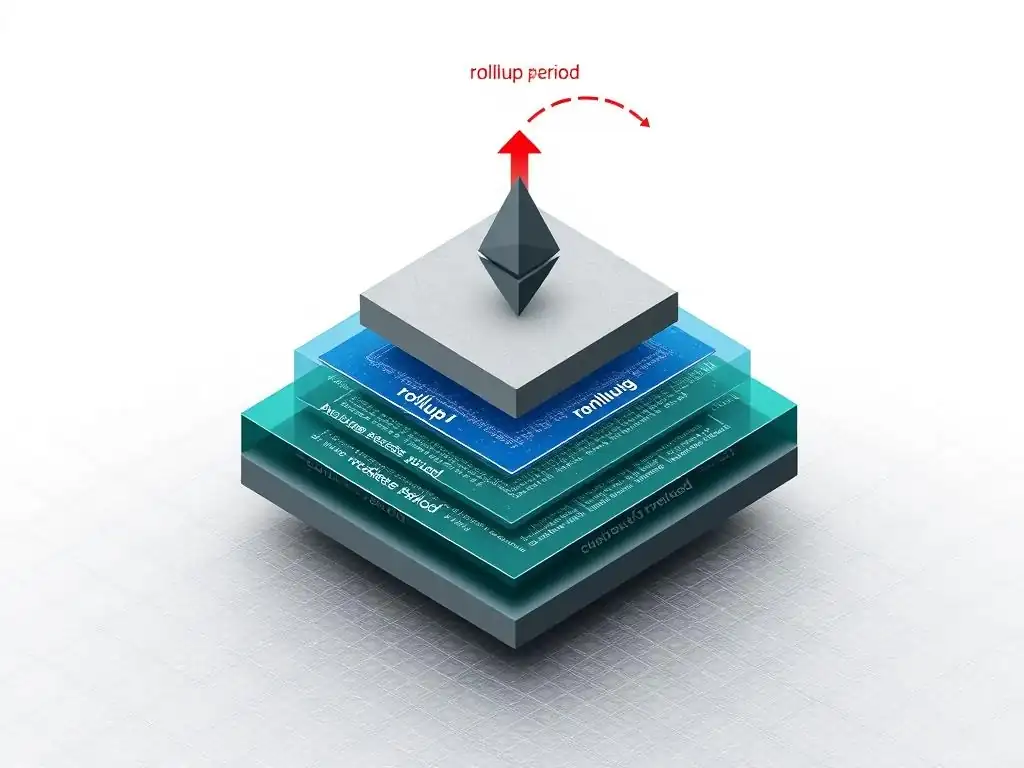
The Challenge of Fraud Proofs: The Withdrawal Period
Despite their advantages, Optimistic Rollups face certain challenges and limitations. One notable challenge is the withdrawal period associated with fraud proofs. Due to the need for a challenge window to allow for fraud submissions, withdrawals from an Optimistic Rollup back to Ethereum Layer-1 typically take around 7 days. This delay can be inconvenient for users who need to access their funds quickly on Layer-1. While transactions within the rollup are fast, the withdrawal delay is a trade-off for the security model based on fraud proofs.
This withdrawal period can impact certain use cases, particularly those requiring rapid asset movement between Layer-2 and Layer-1. While solutions like fast bridges are emerging to mitigate this delay, they often introduce additional fees or rely on trusted intermediaries, potentially compromising some of the decentralization benefits. Reducing the withdrawal period while maintaining security remains an ongoing area of research and development in the Optimistic Rollup space.
Capital Efficiency and Liquidity Fragmentation: Bridging Assets
Another challenge related to Optimistic Rollups is capital efficiency and potential liquidity fragmentation. Moving assets between Ethereum Layer-1 and an Optimistic Rollup, or between different rollups, requires bridging mechanisms. These bridges can sometimes be capital inefficient, as they may require locking up assets on one chain to mint corresponding representations on another. Furthermore, the existence of multiple Layer-2 networks can lead to liquidity fragmentation, where liquidity is spread across different rollups, potentially reducing the overall efficiency of decentralized exchanges and DeFi protocols.
While bridging technology is improving, and efforts are underway to enhance cross-rollup communication, managing liquidity across a fragmented Layer-2 landscape remains a challenge. Efficient and secure bridging solutions are crucial for optimizing capital efficiency and minimizing liquidity fragmentation as the Ethereum ecosystem scales with multiple Layer-2 solutions. Addressing this challenge is important for ensuring a seamless and efficient user experience across the entire Ethereum ecosystem.
Security Assumptions and Potential Risks: Centralization Concerns
While Optimistic Rollups inherit security from Ethereum Layer-1 through fraud proofs, they also introduce some new security assumptions and potential risks. One concern is the potential for centralization in the sequencer role. In many current Optimistic Rollup implementations, a single sequencer is responsible for ordering transactions and submitting batches to Layer-1. If this sequencer becomes malicious or is compromised, it could potentially censor transactions or disrupt the rollup's operation, at least temporarily.
While fraud proofs are designed to mitigate malicious behavior, a centralized sequencer still represents a potential point of vulnerability. Decentralizing the sequencer role is an active area of development, with proposals for using decentralized sequencer networks or implementing sequencer auctions to enhance resilience and reduce centralization risks. Furthermore, the security of fraud proofs relies on the assumption that there is at least one honest participant who will monitor the rollup and submit fraud proofs if necessary. Ensuring robust incentives for participants to act as challengers is crucial for maintaining the security of Optimistic Rollups in the long term.
Optimistic Rollups and Mass Adoption: The Road Ahead
Overcoming Challenges to Unlock Mass Adoption: Incentivizing Participation
Optimistic Rollups hold immense potential for unlocking mass adoption of Ethereum and blockchain technology in general. To fully realize this potential, it is crucial to address the existing challenges and further optimize these solutions. Incentivizing participation in the fraud proof mechanism is essential for ensuring robust security. This can involve designing economic incentives for challengers to actively monitor rollups and submit fraud proofs when necessary. A vibrant and active challenger community strengthens the security and reliability of Optimistic Rollups.
Further research and development are needed to reduce the withdrawal period associated with fraud proofs. Exploring techniques like faster fraud proof verification, alternative challenge mechanisms, or hybrid approaches could help minimize this delay without compromising security. Reducing the withdrawal period would significantly improve the user experience and make Optimistic Rollups more practical for a wider range of use cases.
Enabling DeFi Scalability: Lowering Costs and Increasing Throughput
Optimistic Rollups are particularly well-suited to enabling the scalability of Decentralized Finance (DeFi) applications on Ethereum. DeFi protocols often require high transaction throughput and low transaction fees to function efficiently and attract a large user base. Optimistic Rollups directly address these needs by providing significantly lower gas costs and increased TPS, making DeFi more accessible and affordable for everyday users.
By scaling DeFi, Optimistic Rollups can unlock the full potential of decentralized financial services, enabling wider participation in lending, borrowing, trading, and other financial activities. Lowering barriers to entry and improving the user experience are crucial for driving the growth and mainstream adoption of DeFi. Optimistic rollups scalability solutions are therefore integral to the future expansion of the DeFi ecosystem on Ethereum.
Potential for Enterprise Applications: Scalable and Cost-Effective Solutions
Beyond DeFi, Optimistic Rollups also present significant potential for enterprise applications of blockchain technology. Many enterprise use cases require scalable and cost-effective blockchain solutions to handle large volumes of transactions and integrate with existing business processes. Optimistic Rollups can provide the necessary scalability and cost-efficiency to make Ethereum a viable platform for enterprise blockchain deployments.
Use cases such as supply chain management, tokenized assets, and enterprise data management can benefit from the scalability and lower fees offered by Optimistic Rollups. By making blockchain technology more accessible and practical for businesses, Optimistic Rollups can drive enterprise adoption and unlock new opportunities for innovation and efficiency across various industries. The scalability provided by Optimistic Rollups opens doors for a wider range of enterprise-grade blockchain applications on the Ethereum platform.
Case Studies: Live Optimistic Rollup Implementations
Arbitrum: Scaling DeFi with Optimistic Rollups
Arbitrum is one of the leading Optimistic Rollup implementations and has gained significant traction in scaling the DeFi ecosystem on Ethereum. Launched by Offchain Labs, Arbitrum One is a general-purpose Optimistic Rollup that boasts full EVM compatibility, allowing for easy migration of Ethereum dApps. Arbitrum has successfully onboarded numerous prominent DeFi protocols, including Uniswap, SushiSwap, and Curve, enabling users to access these platforms with significantly lower fees and faster transaction speeds compared to Ethereum Layer-1.
Arbitrum has demonstrated substantial scalability improvements in practice, processing hundreds of transactions per second and reducing gas fees dramatically. Its robust infrastructure and thriving ecosystem have made it a popular choice for both developers and users seeking a scalable and cost-effective Ethereum Layer-2 solution. Arbitrum’s success highlights the real-world impact of Optimistic Rollups in scaling DeFi and making it more accessible to a wider audience.
Optimism: Scaling Ethereum Applications with OVM
Optimism is another prominent Optimistic Rollup solution focused on scaling Ethereum applications. Optimism utilizes its Optimistic Virtual Machine (OVM), which is also designed to be EVM-compatible, though with some architectural differences compared to Arbitrum. Optimism has also attracted a strong ecosystem of dApps, including Synthetix and Uniswap, providing users with access to these applications at significantly reduced costs and faster speeds.
Optimism has emphasized simplicity and ease of use in its design, aiming to create a developer-friendly and user-friendly Layer-2 environment. Like Arbitrum, Optimism has demonstrated significant scalability gains and cost reductions in practice, contributing to the overall growth and adoption of the Ethereum ecosystem. Optimism's focus on simplicity and its growing ecosystem further illustrate the viability and effectiveness of Optimistic Rollups as a scalability solution.
Impact on User Adoption and Transaction Volume: Growth Metrics
The impact of Optimistic Rollups on user adoption and transaction volume is evident in the growth metrics of platforms like Arbitrum and Optimism. Both platforms have witnessed a significant surge in user activity and total value locked (TVL) since their launch. Arbitrum and Optimism consistently rank among the top Layer-2 solutions in terms of TVL and daily transaction volume, indicating strong user adoption and platform usage.
Data from blockchain analytics platforms shows a substantial increase in the number of unique addresses interacting with Optimistic Rollups and a corresponding rise in the volume of transactions processed on these networks. This growth demonstrates the effectiveness of Optimistic Rollups in attracting users and driving activity to Layer-2, alleviating congestion on Ethereum Layer-1 and making decentralized applications more accessible and usable. The growth metrics of live Optimistic Rollup implementations serve as compelling evidence of their impact on the Ethereum ecosystem.
The Future of Optimistic Rollups: Innovation and Development
Ongoing Research and Development: Fault Proof Improvements
The field of Optimistic Rollups is continuously evolving, with ongoing research and development focused on further improving their performance, security, and user experience. One key area of innovation is fault proof improvements. Researchers are exploring more efficient and faster fault proof mechanisms to potentially reduce the withdrawal period and enhance the overall responsiveness of Optimistic Rollups. Techniques like interactive fraud proofs and zero-knowledge proof integration are being investigated to optimize the challenge process and minimize delays.
Another area of research is focused on enhancing sequencer decentralization. Developing robust and secure decentralized sequencer networks is crucial for mitigating centralization risks and improving the resilience of Optimistic Rollups. Exploring different sequencer architectures, consensus mechanisms for sequencers, and incentive models for decentralized sequencing are all active areas of research aimed at strengthening the security and decentralization of Optimistic Rollups.
Hybrid Rollup Solutions: Combining Strengths
The future may see the emergence of hybrid rollup solutions that combine the strengths of different Layer-2 approaches. For instance, combining Optimistic Rollups with elements of ZK-Rollups could potentially lead to solutions that offer both EVM compatibility and faster finality. Hybrid approaches might leverage ZK-proofs for certain aspects of transaction validation while retaining the simpler fraud proof mechanism for other parts, aiming to optimize both performance and security.
Another hybrid approach could involve combining Optimistic Rollups with Validium data availability solutions to achieve even greater scalability while maintaining some level of on-chain data verification. Exploring these hybrid models could lead to innovative Layer-2 solutions that offer a tailored balance of scalability, security, and complexity, catering to different application requirements and use cases within the Ethereum ecosystem.
Long-Term Impact on the Ethereum Ecosystem
Optimistic Rollups are poised to play a crucial role in the long-term evolution and scalability of the Ethereum ecosystem. As Ethereum continues to strive for mass adoption, Optimistic Rollups provide a viable and increasingly mature path to achieving the necessary scalability improvements. By offloading transaction processing to Layer-2 while inheriting Layer-1 security, Optimistic Rollups enable Ethereum to handle a significantly larger volume of transactions at lower costs, making it more accessible and practical for a global user base.
The continued development and adoption of Optimistic Rollups, alongside other Layer-2 solutions, are essential for Ethereum to evolve into a truly scalable and robust platform for decentralized applications. Optimistic Rollups are not just a temporary fix but are becoming a fundamental component of Ethereum's scalability roadmap, paving the way for a future where decentralized applications can reach their full potential and become mainstream.
Conclusion: Optimistic Rollups as a Key Component of Ethereum's Scalability Roadmap
Key Advantages and Disadvantages of Optimistic Rollups
Optimistic Rollups offer several key advantages as Ethereum scalability solutions. Their primary benefit is significant scalability improvement, increasing transaction throughput and reducing gas fees dramatically. They boast strong EVM compatibility, simplifying dApp migration and development. They leverage Ethereum Layer-1 security through fraud proofs, providing a robust security model. These advantages make them a leading Layer-2 approach for scaling Ethereum.
However, Optimistic Rollups also have disadvantages. The withdrawal period due to fraud proofs introduces delays for moving assets back to Layer-1. Potential centralization risks associated with sequencers need to be addressed through ongoing development. Capital inefficiency and liquidity fragmentation across Layer-2 networks remain challenges to be mitigated. Understanding these advantages and disadvantages is crucial for evaluating Optimistic Rollups' role in the broader Ethereum ecosystem.
Role in Achieving Mass Adoption: A Layer-2 Future
Optimistic Rollups are instrumental in paving the way for mass adoption of Ethereum and decentralized applications. By overcoming Ethereum's scalability limitations, they make blockchain technology more accessible, affordable, and user-friendly. Lower gas fees and faster transaction speeds are critical for attracting mainstream users and enabling a wider range of use cases. Optimistic Rollups are a key component of a Layer-2 centric future for Ethereum, where most user activity and application logic will occur on scalable Layer-2 networks, while Layer-1 serves as a secure settlement layer.
The success of Optimistic Rollups in scaling DeFi and their potential for enterprise applications demonstrate their transformative impact on the Ethereum ecosystem. As Layer-2 solutions mature and challenges are addressed, Optimistic Rollups will continue to play a vital role in realizing the vision of a scalable and decentralized web, bringing blockchain technology to a global audience.
Looking Ahead: The Future of Ethereum Scalability
The future of Ethereum scalability is likely to be multi-faceted, with Optimistic Rollups being a crucial piece of the puzzle. While Optimistic Rollups are currently a leading solution, ongoing innovation and development across various Layer-2 approaches, including ZK-Rollups and hybrid models, will shape the landscape of Ethereum scalability. Continued research into fault proofs, sequencer decentralization, and cross-rollup interoperability will further enhance the performance and user experience of Layer-2 solutions.
Ethereum's transition to a more scalable and sustainable platform will rely on the collective progress of Layer-2 technologies. Optimistic Rollups, with their proven effectiveness and growing ecosystem, are poised to remain a central pillar in Ethereum's scalability roadmap, contributing significantly to its journey towards becoming a truly mass-market blockchain platform.
Frequently Asked Questions
What are Optimistic Rollups and how do they address blockchain scalability?
Optimistic Rollups are a layer-2 scaling solution that bundle multiple transactions off-chain, then post a summary of these transactions to the main Ethereum chain. They "optimistically" assume transactions are valid, reducing on-chain computation and increasing throughput.
How do Optimistic Rollups differ from other layer-2 scaling solutions like ZK-Rollups?
Unlike ZK-Rollups, Optimistic Rollups rely on a fraud-proof system where anyone can challenge the validity of a transaction within a specific timeframe. This allows for greater compatibility with the Ethereum Virtual Machine (EVM) but requires a challenge period.
What are the key benefits of using Optimistic Rollups for decentralized applications (dApps)?
Optimistic Rollups offer increased transaction throughput and reduced gas fees, making dApps more accessible and usable for a wider audience. This improved scalability can lead to mass market adoption of blockchain applications.
What are the potential risks or drawbacks associated with using Optimistic Rollups?
One potential drawback is the challenge period, which can delay withdrawals. Also, the success of the system relies on the active participation of challengers monitoring the rollup for fraudulent transactions.
How are regulations impacting the development and adoption of Optimistic Rollups?
Regulatory uncertainty surrounding DeFi and cryptocurrencies can impact the development and adoption of Optimistic Rollups. Clearer regulations are needed to foster innovation and investment in these scalability solutions.
Final Reflection: Embracing the Optimistic Future of Scalability
The journey through the landscape of Optimistic Rollups reveals more than just technical solutions; it unveils a potential paradigm shift in how we perceive blockchain scalability and its accessibility to the masses. The promise of faster transactions and lower fees, achieved through these innovative solutions, isn't just about technological advancement; it's about democratizing access to decentralized technologies and paving the way for widespread adoption.
The influence of Optimistic Rollups extends far beyond the technical realm, shaping the very fabric of the digital economy. The potential for seamless and affordable transactions is not just a feature; it's a catalyst for innovation, empowering developers and users alike to build and participate in a more inclusive and efficient ecosystem. The future belongs to those who believe in the beauty of their dreams.
- Eleanor Roosevelt. This quote resonates deeply with the spirit of Optimistic Rollups, a testament to the power of innovative thinking in overcoming seemingly insurmountable challenges.
As we stand on the cusp of this new era, let us not merely observe the unfolding of these technological advancements, but actively engage with them. Consider how Optimistic Rollups, and other scalability solutions, can empower you, your community, and the world around you. Embrace the potential for a more accessible, efficient, and decentralized future, and let your actions contribute to building the bridge to mass market adoption.
Okay, I'm ready to craft a Call to Action for the end of the article "Optimistic Rollups: Are They the Scalability Bridge to Mass Market Adoption?" on Blockchain Trends. Here's the CTA I've created:
Uncover the Future: Dive Deeper into the Rollup Revolution!
Thank you for exploring the potential of Optimistic Rollups and their impact on blockchain scalability with us. We hope you found valuable insights into how this technology could pave the way for wider adoption. Now, let's put that knowledge to work!
Here's how you can further explore the Optimistic Rollup landscape:
- Begin exploring a rollup-centric project. Select one dApp or project currently leveraging Optimistic Rollups and experiment with it firsthand. This will give you direct experience with the technology's capabilities and limitations.
- Discuss the pros and cons. Share your thoughts.
- Follow key developers and projects in the Optimistic Rollup space on social media. Stay updated on the latest advancements, debates, and potential breakthroughs in this exciting area.
What specific use case of Optimistic Rollups are you most excited to see realized, and why? We would love to hear your insights!
Leave a Reply