
Pros and Cons of Blockchain Sharding: Weighing the Advantages and Disadvantages


Welcome to Blockchain Trends, your compass in the ever-evolving world of decentralized technology. Beyond the buzzwords, we delve into the real-world applications of blockchain, from revolutionizing finance to reshaping industries. Wondering how to overcome blockchain's inherent limitations? This week, we dissect the benefits and challenges of blockchain sharding, exploring whether this groundbreaking technique holds the key to unlocking true scalability. Dive in and discover what the future holds!
- Blockchain Sharding: Enhancing Scalability and Security
- Advantages of Blockchain Sharding: Achieving Scalability and Efficiency
- Disadvantages of Blockchain Sharding: Addressing Security and Complexity
- Blockchain Sharding Advantages and Disadvantages: A Comparative Analysis
- Real-World Implementations and Use Cases for Blockchain Sharding
- Mitigating Risks and Optimizing Performance in Sharded Systems
- The Future of Blockchain Sharding: Innovation and Integration
- Conclusion: Evaluating Blockchain Sharding for Scalable and Secure Blockchain Networks
-
Frequently Asked Questions
- What is blockchain sharding and why is it being considered?
- What are the main benefits of implementing blockchain sharding?
- What are the most significant challenges associated with blockchain sharding?
- How does sharding differ from other blockchain scaling solutions like Layer-2 scaling?
- What is the future outlook for blockchain sharding adoption, considering its benefits and challenges?
- Final Reflection: Navigating the Shardscape of Tomorrow
- Unleash the Potential: Is Sharding Right for You?
Blockchain Sharding: Enhancing Scalability and Security
Understanding Blockchain Sharding and its Impact on Throughput
Blockchain sharding is a database partitioning technique adapted to distributed ledgers to improve transaction processing speed, or throughput. Imagine a traditional blockchain as a single highway handling all traffic. As more users and applications join the network, this highway becomes congested, leading to slower transaction times and higher fees. Sharding addresses this bottleneck by dividing the blockchain into smaller, manageable pieces called "shards."
Each shard operates like its own independent blockchain, processing a subset of the network's transactions. This parallel processing dramatically increases the overall throughput of the blockchain network. Instead of every node needing to process every transaction, nodes are assigned to specific shards and only validate transactions relevant to their shard. This division of labor is the core principle behind sharding's scalability benefits.
To illustrate the impact on throughput, consider a non-sharded blockchain capable of processing, say, 15 transactions per second (TPS), similar to the early Ethereum network. If this blockchain is sharded into 10 shards, and each shard can independently process 15 TPS, the theoretical total throughput could increase to 150 TPS. While real-world implementations might not achieve perfect linear scaling due to overhead from cross-shard communication and coordination, sharding fundamentally shifts the scalability paradigm.
Instead of being limited by the processing capacity of a single node processing the entire chain, the network's capacity becomes a function of the number of shards, allowing for near-linear scalability as more shards are added. This potential for significant throughput improvement is a primary driver behind the adoption of sharding in various blockchain projects aiming to support mass adoption and high-volume applications.
Advantages of Blockchain Sharding: Achieving Scalability and Efficiency
Increased Transaction Throughput Through Parallel Processing
The most prominent benefit of blockchain sharding is the substantial increase in transaction throughput. By partitioning the blockchain into multiple shards, the network can process transactions in parallel. Instead of each node validating every single transaction, nodes within each shard are responsible only for validating transactions within their designated shard.
This parallel processing mechanism is analogous to adding more lanes to a highway; more traffic can flow simultaneously, significantly reducing congestion and increasing the overall volume of transactions the network can handle per second. For example, Zilliqa, a blockchain project that implemented sharding, reported achieving a throughput exceeding 2,800 TPS in their testnet, a dramatic improvement compared to non-sharded blockchains. This increase in throughput is crucial for supporting applications that demand high transaction volumes, such as decentralized exchanges, social media platforms, and payment systems.
Reduced Latency and Faster Confirmation Times
Beyond increased throughput, sharding also contributes to reduced latency and faster transaction confirmation times. Latency refers to the delay between submitting a transaction and its inclusion in a block. In a non-sharded blockchain, as network congestion increases, users experience longer wait times for their transactions to be processed and confirmed. Sharding mitigates this by distributing the transaction load across multiple shards.
With fewer transactions per shard, the time it takes for a shard to process transactions and produce blocks decreases. Consequently, transactions are confirmed more quickly. Imagine waiting in line at a supermarket with only one checkout lane versus multiple lanes; sharding effectively opens up multiple checkout lanes, speeding up the entire process. While specific latency reductions depend on various network parameters and sharding implementation, the principle of distributed load inherently leads to faster confirmation times, improving the user experience and making blockchain technology more suitable for real-time applications.
Improved Network Capacity for Decentralized Applications (dApps)
The enhanced throughput and reduced latency facilitated by sharding directly translate to improved network capacity for decentralized applications (dApps). Many dApps, especially those aiming for mainstream adoption, require the ability to handle a large number of users and transactions concurrently. Non-sharded blockchains often struggle to meet these demands, leading to scalability bottlenecks that hinder dApp performance and user experience.
Sharding provides the necessary infrastructure to support dApps with growing user bases and complex functionalities. For example, a decentralized social media platform built on a sharded blockchain can accommodate a significantly larger number of users posting, liking, and sharing content without experiencing performance degradation.
Similarly, decentralized finance (DeFi) applications, which often involve high-frequency trading and complex interactions, can benefit from the increased transaction processing capacity and faster confirmation times offered by sharding. This scalability empowers developers to build more ambitious and user-friendly dApps, paving the way for wider adoption of decentralized technologies.
Efficient Resource Utilization Across the Network
Sharding leads to more efficient resource utilization within the blockchain network. In traditional blockchains, every full node must store the entire blockchain history and process all transactions, regardless of network size or activity. This requirement can be resource-intensive, limiting the number of participants who can afford to run full nodes and potentially centralizing network control.
Sharding alters this paradigm by allowing nodes to specialize and focus on processing and storing only a portion of the blockchain data – the data relevant to their assigned shard. This reduces the computational and storage burden on individual nodes. For instance, instead of needing terabytes of storage to hold the entire blockchain, a node in a sharded system might only need a fraction of that to store its shard's data.
This reduction in resource requirements lowers the barrier to entry for running nodes, encouraging greater decentralization and network participation. Furthermore, it allows for more efficient use of network resources, as computational power and storage are distributed and utilized more effectively across the shards, leading to a more sustainable and scalable blockchain ecosystem.
Disadvantages of Blockchain Sharding: Addressing Security and Complexity
Security Vulnerabilities: Data Availability and Collusion Attacks
Despite its scalability benefits, blockchain sharding introduces new security challenges. One primary concern is data availability. In a sharded system, each shard only holds a portion of the overall blockchain data. If a shard becomes unavailable or malicious nodes within a shard withhold data, it can be challenging to reconstruct the complete blockchain state and verify transactions.
Imagine if a crucial page is torn out of a multi-volume encyclopedia; the information on that page becomes inaccessible, hindering comprehension. Similarly, data unavailability in a shard can compromise the integrity and verifiability of the blockchain. Another security risk is collusion attacks within a shard.
If a significant portion of the nodes in a shard become malicious and collude, they could potentially manipulate transactions or even double-spend coins within that shard. While cross-shard attacks are generally considered more difficult, the reduced number of validators in each shard compared to the entire network can make individual shards more vulnerable to attacks if not properly mitigated through robust security mechanisms. Addressing these data availability and collusion risks is paramount in designing secure and reliable sharded blockchain systems.
Implementation Complexity and Protocol Design Challenges
Implementing blockchain sharding is significantly more complex than building a non-sharded blockchain. Designing a sharding protocol involves tackling numerous intricate challenges, including shard creation and management, cross-shard communication, data and state management across shards, and ensuring consistent consensus across the entire sharded network. Developing secure and efficient mechanisms for these aspects requires advanced cryptographic techniques, sophisticated distributed systems design, and rigorous testing.
For instance, ensuring atomic cross-shard transactions, where transactions involving multiple shards either succeed or fail entirely, is a complex problem that necessitates careful protocol design and potentially introduces performance overhead. Furthermore, upgrading a sharded blockchain protocol or implementing new features can be more challenging due to the distributed nature of the system and the need to coordinate changes across multiple shards. This complexity translates into longer development times, higher engineering costs, and a greater potential for vulnerabilities if not handled meticulously.
Network Synchronization and Cross-Shard Communication Overhead
Maintaining network synchronization and managing cross-shard communication in a sharded blockchain introduces significant overhead. Shards, while operating semi-independently, need to interact and synchronize to ensure overall network consistency and enable cross-shard transactions. Cross-shard communication, necessary for transferring assets or executing contracts spanning multiple shards, can be complex and time-consuming. It often requires specialized protocols and mechanisms to ensure atomicity, consistency, and prevent double-spending across shards.
This communication overhead can partially offset the performance gains achieved through parallel processing. For example, if a significant portion of transactions are cross-shard, the network performance might be limited by the speed and efficiency of the cross-shard communication layer. Optimizing cross-shard communication protocols to minimize latency and overhead is crucial for realizing the full potential of sharding and ensuring efficient network operation.
Potential for Uneven Shard Distribution and Load Imbalance
Another potential challenge in sharded blockchains is the risk of uneven shard distribution and load imbalance. Ideally, transactions should be distributed evenly across shards to maximize parallel processing benefits. However, in practice, it can be difficult to achieve perfect load balancing. Certain shards might become "hot shards" if they disproportionately receive transactions, leading to congestion and reduced performance in those specific shards, while other shards remain underutilized.
This load imbalance can negate some of the scalability advantages of sharding. Factors contributing to uneven shard distribution can include biased transaction routing mechanisms, uneven distribution of user activity, or the nature of certain applications that inherently generate more transactions for specific shards. Developing dynamic sharding schemes that can adapt to changing transaction patterns and redistribute load across shards dynamically is essential to mitigate load imbalance and ensure optimal network performance.
Blockchain Sharding Advantages and Disadvantages: A Comparative Analysis
Security Trade-offs: Shard Size vs. Attack Surface
When comparing the benefits and drawbacks of blockchain sharding, security trade-offs are crucial. Sharding inherently reduces the number of validators per shard compared to a non-sharded blockchain. Smaller shard sizes, while potentially increasing the number of shards and thus overall throughput, also reduce the security per shard. A smaller number of validators in a shard increases the attack surface and makes it easier for malicious actors to gain control of a shard and launch attacks like collusion or data withholding.
Conversely, increasing shard size to enhance security by increasing the validator count per shard can reduce the overall scalability gains. Finding the optimal shard size involves a delicate balancing act between security and scalability. Projects implementing sharding often employ sophisticated mechanisms like random shard assignment and frequent validator shuffling to mitigate the risks associated with smaller shard sizes and enhance the overall security of the sharded system.
Performance Analysis: Throughput, Latency, and Scalability Metrics
Performance analysis is key to evaluating the effectiveness of blockchain sharding. While sharding demonstrably increases throughput and reduces latency compared to non-sharded blockchains, the actual performance gains in real-world implementations can vary. Factors like the number of shards, cross-shard communication overhead, consensus mechanism within each shard, and transaction distribution patterns all influence the overall performance.
For instance, Zilliqa's sharded testnet demonstrated throughput exceeding 2,800 TPS, significantly higher than many non-sharded blockchains which typically process in the range of 10-100 TPS. However, these are often testnet figures, and real-world performance under diverse network conditions and attack vectors needs to be carefully considered.
Scalability metrics are also crucial; a well-designed sharded blockchain should exhibit near-linear scalability, meaning that as the number of shards increases, the network's throughput should increase proportionally. Analyzing these performance metrics through rigorous testing and real-world deployments is essential to validate the scalability claims of sharded blockchains and understand their limitations.
Cost Analysis: Development, Deployment, and Maintenance
Cost analysis is another important factor when considering blockchain sharding. Developing and deploying sharded blockchain systems is generally more expensive than non-sharded systems due to the increased complexity of protocol design, implementation, and testing. The engineering effort required to address the security and communication challenges inherent in sharding translates to higher development costs.
Deployment also involves considerations like infrastructure setup for managing multiple shards and ensuring network synchronization. Maintenance and upgrades of sharded blockchains can also be more complex and resource-intensive due to the distributed nature of the system and the need to coordinate changes across shards. While sharding offers long-term scalability benefits that can justify the initial investment, a thorough cost-benefit analysis, considering both development, deployment, and ongoing maintenance costs, is crucial for organizations evaluating sharded blockchain solutions.
Real-World Implementations and Use Cases for Blockchain Sharding
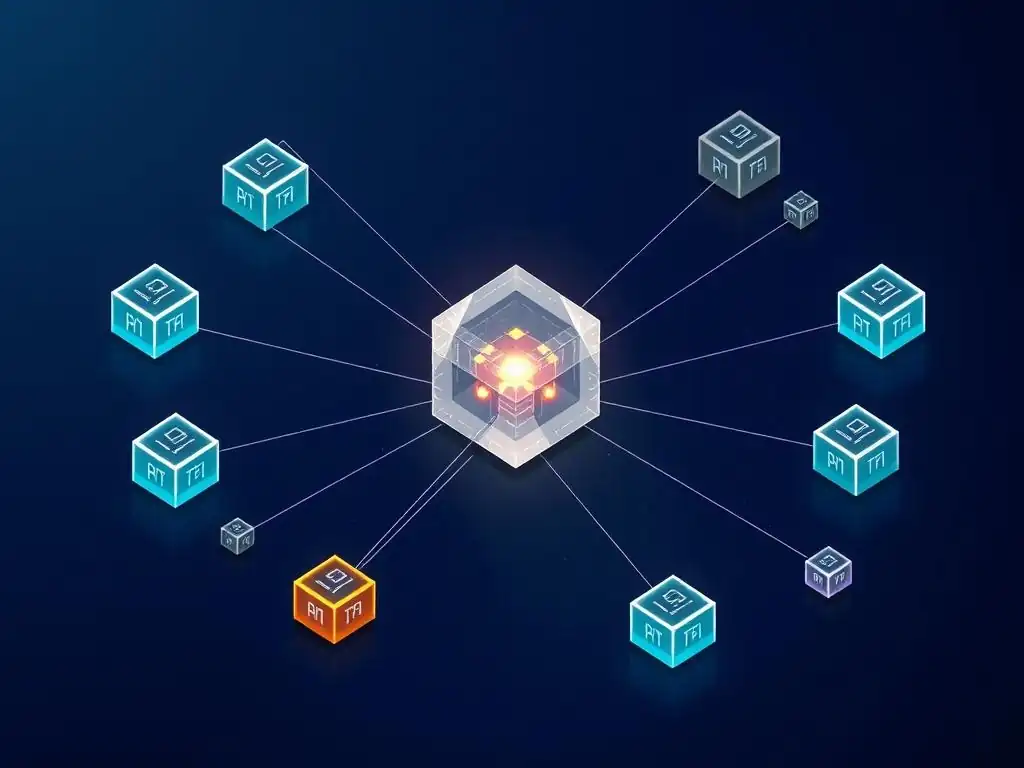
Ethereum, the second-largest cryptocurrency by market capitalization, has been actively pursuing sharding as a core component of its scalability roadmap. Originally envisioned as Ethereum 2.0, now simply referred to as Ethereum after "The Merge," sharding aims to significantly enhance Ethereum's transaction processing capacity. Ethereum's sharding implementation involves the "Beacon Chain," which acts as the central coordinator, and multiple "shard chains."
The Beacon Chain manages validators and their assignment to shards, while shard chains are responsible for processing transactions in parallel. While the initial roadmap for Ethereum sharding involved 64 shard chains, the current focus is on data sharding, which aims to increase data availability and network bandwidth, rather than transaction processing sharding as originally planned.
This evolution reflects the complexities and challenges encountered in implementing full transaction processing sharding and highlights the ongoing research and development in this area. Despite the shift in focus, sharding remains a crucial element in Ethereum's long-term scalability strategy, aiming to address network congestion and enable wider adoption.
Zilliqa is one of the pioneering blockchain projects that has successfully implemented sharding in its mainnet. Zilliqa utilizes network sharding, dividing the network into multiple shards, each capable of processing transactions independently. Their implementation has demonstrated significant throughput improvements compared to non-sharded blockchains. In their testnet, Zilliqa reported achieving over 2,800 TPS, showcasing the potential of sharding to enhance transaction processing capacity.
Real-world performance on the Zilliqa mainnet has also shown substantial improvements in throughput and reduced transaction confirmation times compared to earlier blockchain generations. Zilliqa's practical implementation serves as a valuable case study, demonstrating the feasibility and benefits of sharding in a live blockchain environment. Their experience provides insights into the challenges and solutions associated with deploying and operating sharded blockchain networks, contributing to the broader understanding and development of sharding technologies.
Opportunities for Sharding in Supply Chain Management
Beyond cryptocurrencies and DeFi, blockchain sharding presents significant opportunities in various enterprise applications, particularly in supply chain management. Supply chains often involve a vast network of participants and generate a massive volume of data related to product tracking, provenance, and transactions. A sharded blockchain can provide the scalability needed to handle this data deluge efficiently.
Imagine a global supply chain tracking millions of products across multiple stages, from manufacturing to delivery. A non-sharded blockchain might struggle to process the immense volume of transactions and data associated with tracking each product movement and status update. Sharding could enable the creation of a highly scalable and efficient supply chain blockchain where different shards manage different aspects of the supply chain or different geographical regions.
This could lead to faster data processing, improved transparency, and enhanced traceability throughout the supply chain, ultimately benefiting businesses and consumers alike. Furthermore, sharding can facilitate the integration of diverse supply chain participants onto a single blockchain platform, fostering collaboration and data sharing while maintaining data security and integrity.
Mitigating Risks and Optimizing Performance in Sharded Systems
Random Shard Assignment and Committee Selection
To mitigate security risks and enhance fairness in sharded systems, random shard assignment and committee selection are crucial techniques. Random shard assignment ensures that validators are assigned to shards randomly, preventing malicious actors from strategically concentrating their resources in a specific shard to launch attacks. This randomness makes it more difficult for attackers to predict shard compositions and coordinate attacks.
Committee selection, often used in conjunction with random shard assignment, involves randomly selecting a subset of validators to form a committee responsible for validating transactions within a shard. Frequent reshuffling of these committees further enhances security by limiting the time malicious actors have to compromise a specific shard. These techniques, inspired by cryptographic randomness and verifiable random functions, aim to distribute trust and security across the sharded network, making it more resilient to attacks and maintaining network integrity.
Data Availability Sampling and Fraud Proofs
Addressing data availability challenges in sharded blockchains requires robust mechanisms like data availability sampling and fraud proofs. Data availability sampling allows nodes to probabilistically verify that shard data is available without downloading the entire shard data. Nodes randomly sample portions of the shard data and, through cryptographic techniques like erasure coding and Merkle trees, can confidently determine if the data is available. This significantly reduces the overhead associated with verifying data availability compared to requiring every node to download and verify all shard data. Fraud proofs provide a mechanism for nodes to challenge invalid transactions or data within a shard. If a node detects fraudulent activity, it can submit a fraud proof to the network, alerting other nodes to the issue. These mechanisms, collectively, enhance data availability and integrity in sharded systems, ensuring that even if some nodes are malicious or unavailable, the network can still function securely and reliably.
Optimized Cross-Shard Communication Protocols
Optimizing cross-shard communication protocols is paramount for achieving high performance in sharded blockchains. Inefficient cross-shard communication can become a bottleneck, negating the scalability benefits of sharding. Various techniques are being explored to optimize cross-shard communication, including asynchronous communication, where shards can communicate without requiring immediate responses, and specialized routing protocols that minimize communication latency.
State channels and sidechains, sometimes considered layer-2 solutions, can also be integrated with sharded systems to offload cross-shard transactions and further reduce communication overhead on the main sharded chain. Research and development in efficient cross-shard communication protocols are ongoing, aiming to minimize latency, maximize throughput, and ensure secure and reliable communication between shards, ultimately enabling sharded blockchains to achieve their full scalability potential.
The Future of Blockchain Sharding: Innovation and Integration
Research and Development in Dynamic Sharding
The future of blockchain sharding is actively shaped by ongoing research and development, particularly in dynamic sharding. Dynamic sharding aims to address the challenge of load imbalance and improve network adaptability by dynamically adjusting shard sizes and configurations based on network conditions and transaction patterns. Instead of fixed shards, dynamic sharding allows for shards to split, merge, or reconfigure themselves in response to changing network demands.
This adaptability can lead to more efficient resource utilization and improved performance under fluctuating workloads. For instance, during periods of high network activity, dynamic sharding could automatically increase the number of shards to handle the increased transaction volume, and then reduce the number of shards during periods of low activity to optimize resource consumption. Research in dynamic sharding is exploring various techniques for shard splitting, merging, and load balancing, aiming to create more flexible and responsive sharded blockchain systems.
Sharding is not necessarily a standalone solution for blockchain scalability; it can be effectively integrated with layer-2 scaling solutions to achieve even greater scalability and performance. Layer-2 solutions, such as state channels, rollups, and sidechains, operate on top of the main blockchain layer to offload transaction processing and reduce congestion on the main chain.
Combining sharding with layer-2 solutions can create a multi-layered scaling architecture where sharding provides horizontal scalability at the base layer, while layer-2 solutions further enhance scalability for specific applications or use cases. For example, rollups, which bundle multiple transactions into a single transaction on the main chain, can be deployed on a sharded blockchain to amplify their scaling benefits.
Similarly, state channels can be used for high-frequency transactions within shards, further reducing the load on the main sharded chain. This synergistic integration of sharding and layer-2 solutions represents a promising direction for achieving truly massive scalability and supporting a wide range of blockchain applications.
Beyond scalability, sharding can also play a crucial role in enhancing blockchain interoperability and cross-chain communication. As the blockchain ecosystem becomes increasingly fragmented with numerous independent blockchains, interoperability becomes paramount for seamless asset transfer and data sharing across different chains. Sharding technologies can be adapted to facilitate cross-chain communication and bridge different blockchain networks.
For instance, sharded blockchains could be designed to interoperate with other blockchains by creating dedicated shards or communication channels for cross-chain transactions. Furthermore, research is exploring the use of sharding principles to create more interoperable blockchain architectures where different blockchains can be viewed as shards within a larger interconnected network. This vision of a sharded and interoperable blockchain ecosystem promises to unlock new possibilities for cross-chain applications and foster greater collaboration and innovation within the blockchain space.
Conclusion: Evaluating Blockchain Sharding for Scalable and Secure Blockchain Networks
Blockchain sharding presents a compelling approach to address the scalability challenges facing blockchain technology. By dividing the blockchain into shards and enabling parallel processing, sharding offers significant benefits in terms of increased transaction throughput, reduced latency, and improved network capacity.
However, it also introduces complexities and security challenges related to data availability, cross-shard communication, and potential vulnerabilities within shards. A thorough evaluation of blockchain sharding benefits and challenges reveals that while sharding offers a promising path towards scalable blockchain networks, careful protocol design, robust security mechanisms, and ongoing research are essential for realizing its full potential.
The success of sharding hinges on effectively mitigating its inherent risks and optimizing performance through techniques like random shard assignment, data availability sampling, and efficient cross-shard communication protocols. As real-world implementations like Zilliqa and ongoing developments in Ethereum demonstrate, blockchain sharding is a dynamic and evolving field with the potential to unlock the next generation of scalable and secure blockchain applications, paving the way for wider adoption and mainstream integration of decentralized technologies.
Frequently Asked Questions
What is blockchain sharding and why is it being considered?
Blockchain sharding is a database partitioning technique applied to blockchains. It aims to improve scalability by dividing the blockchain into smaller, more manageable pieces, or shards. This allows for parallel processing of transactions.
What are the main benefits of implementing blockchain sharding?
The primary benefit is increased transaction throughput and reduced latency. Sharding allows multiple shards to process transactions simultaneously, significantly boosting the overall performance of the blockchain network.
What are the most significant challenges associated with blockchain sharding?
A major challenge is security vulnerabilities, particularly concerning cross-shard attacks. Ensuring data consistency and integrity across all shards also presents a complex technical hurdle.
How does sharding differ from other blockchain scaling solutions like Layer-2 scaling?
While Layer-2 scaling solutions build on top of the existing blockchain, sharding involves modifying the blockchain's architecture itself. This allows for greater scalability potential but also presents more complexity.
What is the future outlook for blockchain sharding adoption, considering its benefits and challenges?
The future hinges on overcoming the security and complexity challenges. Successful implementation could unlock significant scalability improvements, paving the way for broader blockchain adoption in various industries.
The exploration of blockchain sharding, as we've seen, presents a complex tapestry of potential and peril. The promise of scalability and enhanced transaction throughput is undeniably compelling in today's congested blockchain landscape, yet the inherent challenges to security and cross-shard communication demand careful consideration. The future of decentralized technology hinges on our ability to navigate these complexities effectively.
This journey into sharding's intricacies has underscored the critical need for ongoing research and development. Understanding the nuanced trade-offs between performance gains and potential vulnerabilities is paramount to realizing the full potential of blockchain technology. The key to successful sharding lies not just in dividing the network, but in ensuring that the resulting shards remain secure, interoperable, and true to the decentralized ethos of blockchain.
This ongoing evolution will undoubtedly shape the future of decentralized applications and the broader digital economy.
Now, as you consider the blockchain's future, reflect on the balance between innovation and security. How can we, as developers, users, and advocates, contribute to a future where blockchain technology is both powerful and resilient? Let us strive to build a decentralized world that is not only scalable but also secure, equitable, and truly transformative.
Unleash the Potential: Is Sharding Right for You?
Thank you for exploring the intricacies of blockchain sharding with us! Now that you understand the benefits and drawbacks, consider how this technology might influence your blockchain projects.
To take the next step:
- Dive Deeper: Analyze your current blockchain's performance bottlenecks to see if sharding could help improve scalability.
- Explore Related Topics: Research existing sharded blockchains and evaluate their real-world performance to expand your understanding.
- Share Your Thoughts: Join blockchain forums or comment sections to discuss your ideas and potential applications with other professionals.
What specific challenges do you anticipate when implementing blockchain sharding, and how might you address them?
Leave a Reply