
The Security of Layer2: Addressing Concerns and Misconceptions

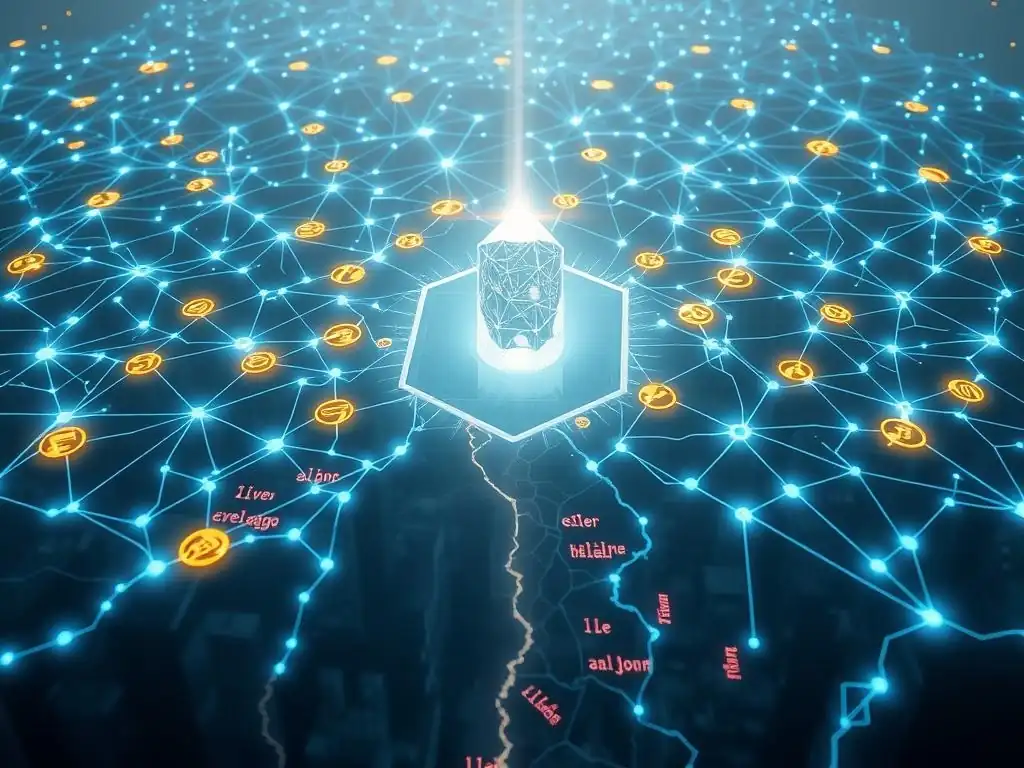
Welcome to Blockchain Trends, your gateway to understanding the revolutionary impact of blockchain beyond the hype! Explore how this groundbreaking technology is reshaping industries, from decentralized finance to enterprise solutions.
But is everything built on blockchain truly secure? Dive into our latest article where we tackle the critical topic of Layer 2 blockchain security. Uncover the challenges, address the misconceptions, and learn how developers are building a more robust and reliable future for decentralized systems. Are Layer 2 solutions really as safe as they appear? Read on to find out!
Ethereum Layer 2 Security: Addressing Concerns and Misconceptions
- Introduction: Understanding Ethereum Layer 2 Security
- Demystifying Ethereum Layer 2 Security Myths and Realities
- Analyzing Different Ethereum Layer 2 Security Models
- Addressing Specific Ethereum Layer 2 Security Risks
- Best Practices for Enhancing Ethereum Layer 2 Security
- The Future of Ethereum Layer 2 Security: Innovations and Advancements
- Conclusion: Ethereum Layer 2 Security - A Continuously Evolving Landscape
-
Frequently Asked Questions
- How does Layer 2 blockchain security differ from Layer 1 security?
- What are the most common security vulnerabilities in Layer 2 solutions?
- How do rollups contribute to improved Layer 2 blockchain security?
- What role does decentralization play in securing Layer 2 networks?
- What regulatory challenges impact Layer 2 blockchain security?
- Final Reflection: Fortifying the Future of Layer 2
- Level Up Your Layer 2 Knowledge!
Introduction: Understanding Ethereum Layer 2 Security
The Importance of Layer 2 Solutions for Ethereum Scalability
Ethereum, as a pioneering blockchain, has experienced tremendous growth, leading to significant network congestion and high transaction fees, particularly during peak demand. This scalability challenge hinders its widespread adoption for everyday use cases. Layer 2 solutions emerge as a critical innovation to address these limitations. They operate on top of the Ethereum Layer 1 (the main blockchain), inheriting its security while processing transactions off-chain.
By handling transactions outside the main Ethereum network and then submitting summarized or verified data back to Layer 1, Layer 2 solutions drastically increase transaction throughput and reduce gas costs. This enhancement is crucial for enabling Ethereum to support a larger volume of users and applications, paving the way for its evolution into a truly scalable global platform. Without effective scaling solutions like Layer 2, Ethereum's potential to become the infrastructure of the decentralized web would be severely limited by its inherent capacity constraints.
The necessity for Layer 2 solutions is further highlighted by the increasing demand for decentralized applications (dApps) and decentralized finance (DeFi). These applications often require high transaction frequency and low latency, which are not efficiently supported by the Ethereum mainnet alone. For example, decentralized exchanges (DEXs) on Layer 1 can become prohibitively expensive to use during periods of high network activity, making trading and other DeFi operations less accessible and practical for many users.
Layer 2 solutions offer a viable pathway to overcome these hurdles, making dApps and DeFi more user-friendly and cost-effective. The development and adoption of robust Layer 2 technologies are therefore not just about improving transaction speed; they are fundamental for ensuring the long-term viability and mass adoption of the entire Ethereum ecosystem and the broader vision of a decentralized future.
Common Security Concerns Surrounding Ethereum Layer 2
Despite the significant benefits of Layer 2 solutions, concerns regarding their security are prevalent and understandable. A primary concern stems from the fact that Layer 2 solutions, by design, introduce an additional layer of complexity on top of the already intricate Ethereum Layer 1. This added complexity can potentially create new attack vectors and vulnerabilities if not meticulously designed and implemented.
For instance, the mechanisms by which Layer 2 solutions interact with Layer 1, such as bridges or state channels, can become targets for exploits if not secured rigorously. Furthermore, the relative novelty of many Layer 2 technologies means they haven't undergone the same level of battle-testing and scrutiny as the established Ethereum mainnet, leading to questions about their long-term security resilience.
Another key security apprehension revolves around the concept of decentralization within Layer 2 solutions. While Layer 2 aims to enhance Ethereum's capabilities, some implementations might compromise on decentralization in pursuit of scalability, potentially leading to centralized points of failure. For example, certain Layer 2 architectures may rely on centralized sequencers or operators to process transactions, raising concerns about censorship resistance and single points of attack. Data availability is also a prominent security concern.
Layer 2 solutions often process transaction data off-chain, and ensuring that this data remains accessible and verifiable is crucial for the overall security of the system. If data availability is compromised, it could lead to fraudulent activities or the inability to reconstruct the correct state of the Layer 2 network. These valid security concerns necessitate a thorough examination and understanding of the different Layer 2 security models and mitigation strategies.
Demystifying Ethereum Layer 2 Security Myths and Realities
Myth 1: Ethereum Layer 2 Networks are Inherently Less Secure than Layer 1
Reality: Security Depends on Design and Implementation
The assertion that all Ethereum Layer 2 networks are inherently less secure than Layer 1 is a significant oversimplification. The security of any blockchain network, whether Layer 1 or Layer 2, is not a monolithic property but rather a multifaceted characteristic determined by its specific design, implementation, and operational practices. Ethereum Layer 1 benefits from years of rigorous testing, extensive audits, and a vast, decentralized network of validators, making it exceptionally robust.
However, this maturity does not automatically imply that all Layer 2 solutions are less secure. In reality, different Layer 2 technologies employ diverse security models, some of which can offer security guarantees comparable to, or even in certain aspects, exceeding those of Layer 1 for specific use cases.
For example, ZK-Rollups leverage advanced cryptography, specifically zero-knowledge proofs, to ensure transaction validity and state correctness. These cryptographic proofs provide a high degree of mathematical certainty about the integrity of Layer 2 operations, which in some ways can be considered a stronger form of security than the probabilistic finality of Layer 1 consensus mechanisms. Conversely, other Layer 2 solutions, such as sidechains, might indeed introduce different security trade-offs. Sidechains often operate with their own consensus mechanisms and validator sets, which may be smaller or less decentralized than Ethereum's, potentially making them more vulnerable to attacks. Therefore, it's crucial to move beyond blanket statements and evaluate the security posture of each Layer 2 solution individually, considering its specific architecture, cryptographic underpinnings, and operational safeguards. The focus should be on understanding the specific security model of each Layer 2 rather than making generalized assumptions about their inherent insecurity compared to Layer 1.
Myth 2: Ethereum Layer 2 Solutions are Centralized and Vulnerable
Reality: Varying Degrees of Decentralization in Layer 2 Architectures
The claim that Ethereum Layer 2 solutions are inherently centralized and therefore vulnerable is another misconception that requires nuanced understanding. While it is true that some Layer 2 implementations exhibit elements of centralization, it's inaccurate to categorize all Layer 2 solutions as uniformly centralized. The landscape of Layer 2 technologies is diverse, with varying degrees of decentralization embedded in their architectures.
Certain Layer 2 solutions, particularly in their early stages of development, might rely on more centralized components, such as sequencers that order transactions, or centralized bridges facilitating asset transfers between Layer 1 and Layer 2. This reliance can indeed introduce potential vulnerabilities and raise concerns about censorship or single points of failure.
However, many Layer 2 projects are actively working towards progressive decentralization of their critical components. For example, efforts are underway to decentralize sequencers in rollups by implementing mechanisms like distributed sequencer networks or by leveraging Layer 1 consensus for sequencer selection.
Optimistic Rollups, for instance, inherently incorporate a degree of decentralization through their fraud-proof system, which allows any participant to challenge invalid state transitions, thereby reducing reliance on a single centralized operator. Furthermore, the choice of Layer 2 solution often involves a trade-off between decentralization and performance.
Some Layer 2s might initially opt for a degree of centralization to achieve higher throughput and lower latency, with plans to decentralize further as the technology matures and the ecosystem develops. Therefore, it is essential to assess the specific architecture and roadmap of each Layer 2 solution to understand its current level of decentralization and its trajectory towards greater decentralization, rather than assuming all Layer 2s are monolithic in their centralized nature.
Myth 3: Data Availability is a Weak Point in Ethereum Layer 2 Security
Reality: Data Availability Solutions and Their Security Models
The notion that data availability (DA) is an inherent weak point in Ethereum Layer 2 security is partially true but requires further context. Data availability is indeed a critical aspect of Layer 2 security, as it ensures that all transaction data necessary to reconstruct the Layer 2 state and verify its correctness is publicly accessible.
If transaction data is not available, it becomes impossible to detect fraud in Optimistic Rollups or to reconstruct the state in case of a Layer 2 operator failure. Historically, some early Layer 2 designs might have relied on less robust data availability solutions, potentially creating vulnerabilities.
However, the Layer 2 ecosystem has significantly evolved, and sophisticated data availability solutions are now being implemented and refined. For rollups, the standard approach is to post transaction data as calldata on Ethereum Layer 1. This method leverages Ethereum's own robust data availability guarantees, ensuring that transaction data is secured by the same consensus mechanism as Layer 1 itself.
While posting calldata on Layer 1 adds to the gas cost, it provides a high level of security and data availability. Furthermore, research and development are actively progressing on alternative, more efficient data availability solutions specifically designed for Layer 2, such as Validium chains which use external DA providers secured by cryptographic proofs, or solutions like Celestia, a modular data availability network.
These emerging DA solutions aim to offer a balance between cost-effectiveness and strong security guarantees, often employing techniques like data availability sampling to enhance scalability without compromising security. Therefore, while data availability was a valid concern in earlier Layer 2 iterations, current and future Layer 2 solutions are increasingly addressing this challenge with robust and innovative data availability mechanisms, mitigating the perceived weakness.
Analyzing Different Ethereum Layer 2 Security Models
Rollups: Optimistic Rollups and ZK-Rollups Security Comparison
Rollups are a prominent category of Layer 2 solutions that achieve scalability by executing transactions off-chain and posting transaction data to Layer 1. Within rollups, two main types exist: Optimistic Rollups and ZK-Rollups, each employing distinct security models with varying trade-offs. Optimistic Rollups, as the name suggests, operate on the assumption that transactions are valid unless proven otherwise.
This "optimistic" approach allows for faster and cheaper transaction processing. ZK-Rollups, on the other hand, utilize zero-knowledge proofs to cryptographically prove the validity of off-chain transactions before they are finalized on Layer 1. This cryptographic validation offers a fundamentally different security paradigm compared to Optimistic Rollups.
The core security difference lies in how fraud is prevented and resolved. Optimistic Rollups rely on a fraud-proof system where a challenge period is allowed after transactions are posted to Layer 1. During this period, anyone can submit a fraud proof if they detect an invalid transaction.
If a fraud proof is successful, the invalid transaction is reverted, and the sequencer may be penalized. This system depends on the assumption that there will always be at least one honest participant to monitor the rollup and submit fraud proofs if necessary. ZK-Rollups, conversely, do not require a challenge period.
They generate cryptographic proofs (specifically, succinct non-interactive arguments of knowledge, or SNARKs/STARKs) for every batch of transactions. These proofs mathematically guarantee the validity of the transactions. Once a ZK-proof is verified on Layer 1, the transactions are considered final and secure, offering faster finality and theoretically stronger security against fraud compared to the probabilistic nature of fraud proofs in Optimistic Rollups.
Optimistic Rollups: Fraud Proofs and Dispute Resolution
Optimistic Rollups derive their security from a mechanism known as fraud proofs and a dispute resolution process. When an Optimistic Rollup sequencer submits a batch of transactions to Layer 1, it asserts that these transactions are valid. However, instead of providing cryptographic proof of validity upfront, Optimistic Rollups allow for a challenge period, typically lasting around 7 days.
During this period, any network participant can examine the transaction data posted on Layer 1 and, if they identify an invalid transaction or state transition, submit a fraud proof to Layer 1. This fraud proof essentially demonstrates, using the publicly available transaction data and the rollup's execution logic, that the sequencer has acted maliciously or made a mistake.
Upon successful verification of a fraud proof by the Layer 1 smart contract, the invalid transaction is reverted, and the rollup state is corrected to the valid state. Furthermore, the sequencer that submitted the fraudulent batch is typically penalized, for example, by having their staked funds slashed. This dispute resolution mechanism is crucial for the security of Optimistic Rollups. It relies on the assumption of at least one honest and incentivized participant to monitor the rollup and challenge invalid transactions.
The length of the challenge period is a trade-off between security and user experience. A longer period enhances security by providing more time for fraud proofs but delays finality for users withdrawing funds from the rollup back to Layer 1. Prominent examples of Optimistic Rollups include Arbitrum and Optimism, which have gained significant traction in the Ethereum ecosystem.
ZK-Rollups: Cryptographic Proofs and Enhanced Security
ZK-Rollups, in contrast to Optimistic Rollups, employ zero-knowledge proofs to provide cryptographic assurance of transaction validity. For every batch of transactions processed off-chain, a ZK-Rollup sequencer generates a cryptographic proof, such as a SNARK or STARK. This proof succinctly demonstrates to anyone verifying it that the batch of transactions was executed correctly according to the rollup's rules and that the resulting state transition is valid. Crucially, these proofs are computationally expensive to generate but are very fast and cheap to verify.
Once a ZK-proof is generated, it is submitted to the Layer 1 smart contract along with the state root representing the new state of the rollup. The Layer 1 contract then efficiently verifies the ZK-proof. If the proof is valid, the state update is accepted and finalized on Layer 1.
The security model of ZK-Rollups is considered stronger in certain aspects compared to Optimistic Rollups because it relies on cryptographic certainty rather than a probabilistic dispute resolution system. With ZK-Rollups, there is no need for a challenge period, as the validity of transactions is mathematically guaranteed by the proof. This leads to faster finality for users, as transactions are considered finalized as soon as the ZK-proof is verified on Layer 1.
Furthermore, ZK-Rollups are theoretically more resistant to certain types of attacks that might exploit the challenge period in Optimistic Rollups. However, ZK-Rollup technology is generally more complex to implement and computationally intensive, especially for general-purpose computation. Notable examples of ZK-Rollups include StarkNet and zkSync, which are actively developing and deploying ZK-Rollup solutions for various Ethereum scaling needs.
Sidechains: Security Considerations and Trust Assumptions
Sidechains represent another category of Layer 2 scaling solutions, operating as independent blockchains that run parallel to Ethereum and are connected to it via bridges. Unlike rollups that inherit Ethereum's security to a large extent, sidechains typically have their own consensus mechanisms and validator sets, which means their security is largely independent of Ethereum Layer 1.
This independence offers greater flexibility in design and customization but also introduces different security considerations and trust assumptions. The security of a sidechain depends heavily on the robustness of its own consensus mechanism, the decentralization of its validator set, and the security of the bridge connecting it to Ethereum.
A key security consideration for sidechains is the size and reputation of their validator set. If a sidechain has a small or less reputable validator set, it may be more vulnerable to attacks, such as 51% attacks, where malicious actors could collude to control the majority of validators and manipulate the sidechain's state. Furthermore, the consensus mechanism employed by the sidechain plays a crucial role in its security.
Different consensus algorithms, such as Proof-of-Stake (PoS) or Proof-of-Authority (PoA), have varying security properties and trade-offs. PoS systems, for example, rely on economic incentives to secure the network, while PoA systems depend on the reputation of validators. The security of the bridge connecting the sidechain to Ethereum is also paramount.
Bridges are often complex smart contracts or multi-signature setups and can become targets for exploits if not designed and audited meticulously. Users of sidechains must understand and accept these inherent security considerations and trust assumptions, which differ significantly from the security model of rollups. Examples of sidechains include Polygon PoS and xDai Chain.
The Role of Consensus Mechanisms in Sidechain Security
The consensus mechanism employed by a sidechain is a cornerstone of its security architecture. It dictates how transactions are validated, blocks are finalized, and the overall integrity of the sidechain is maintained. Different consensus mechanisms offer varying degrees of security, decentralization, and performance, and the choice of consensus algorithm directly impacts the sidechain's resilience to attacks and vulnerabilities. Proof-of-Stake (PoS) is a common consensus mechanism for sidechains.
In PoS systems, validators are chosen to propose and validate new blocks based on the amount of cryptocurrency they stake in the network. The security of PoS relies on the economic disincentive for validators to act maliciously. If validators attempt to double-spend or validate fraudulent transactions, they risk losing their staked funds. The larger and more widely distributed the stake, the more secure the PoS system becomes.
Proof-of-Authority (PoA) is another consensus mechanism often used by sidechains, particularly in enterprise or permissioned settings. In PoA systems, a pre-selected set of reputable and trusted authorities are responsible for validating transactions and creating new blocks. The security of PoA relies on the trustworthiness and accountability of these authorities.
While PoA can achieve high throughput and efficiency, it is generally considered less decentralized and potentially less secure than PoS, especially in public, permissionless environments, as it depends on the integrity of a smaller, known group of validators. Other consensus mechanisms, such as Delegated Proof-of-Stake (DPoS) or variations of Byzantine Fault Tolerance (BFT) algorithms, are also employed in sidechains, each with its own security characteristics and trade-offs. Ultimately, understanding the specific consensus mechanism and its security properties is crucial for evaluating the overall security posture of any sidechain.
State Channels: Security Implications of Off-Chain Transactions
State channels represent a different approach to Layer 2 scaling, focusing on enabling fast and low-cost transactions between a fixed set of participants by moving transactions off-chain. Instead of processing every transaction on the main blockchain, state channels involve opening a channel between participants, conducting multiple transactions off-chain within this channel, and then settling the final state on the main chain.
This approach significantly reduces the load on Layer 1 and allows for near-instantaneous transactions between channel participants. However, state channels come with their own set of security implications and assumptions, primarily related to ensuring data integrity and preventing double-spending within the off-chain environment.
The security of state channels relies heavily on the initial on-chain setup of the channel and the cryptographic commitments made by participants. When a channel is opened, participants typically lock funds in a multi-signature smart contract on Layer 1. This contract acts as an escrow and enforces the rules of the channel. Transactions within the channel are essentially signed messages exchanged directly between participants, updating the agreed-upon state of the channel.
These off-chain transactions are not immediately broadcast to the main blockchain. Only when the channel is closed is the final state, agreed upon by all participants, submitted to the Layer 1 contract for settlement. The security challenge lies in ensuring that all participants behave honestly off-chain and that mechanisms are in place to prevent any single participant from unilaterally altering the channel state or double-spending funds.
Ensuring Data Integrity and Preventing Double-Spending
Ensuring data integrity and preventing double-spending are paramount for the security of state channels. State channels rely on cryptographic signatures and commitment schemes to achieve these goals. Every off-chain transaction within a state channel is typically signed by the sender, providing cryptographic proof of their agreement to the transaction. Participants maintain a record of the agreed-upon channel state, and any update to the state requires signatures from all involved parties (or a predefined subset depending on the channel design). This multi-signature requirement prevents any single participant from unilaterally changing the channel state without the consent of others.
To prevent double-spending, state channels often employ sequence numbers or commitment schemes. Each state update is associated with a sequence number, ensuring that states are processed in the correct order and that older, superseded states cannot be replayed. Commitment schemes can also be used to cryptographically bind participants to specific states, making it difficult to renege on agreed-upon transactions.
In case of disputes or if a participant becomes unresponsive, state channels typically incorporate a mechanism to close the channel unilaterally and revert to the last agreed-upon state on-chain. This process often involves a timeout period to allow all participants to submit their latest signed state to the Layer 1 contract.
If a participant attempts to submit an outdated or fraudulent state, other participants can challenge it by submitting a more recent signed state, which will be considered the valid and final state. Examples of state channel implementations include payment channels like the Lightning Network (although primarily for Bitcoin) and generalized state channels applicable to Ethereum.
Addressing Specific Ethereum Layer 2 Security Risks
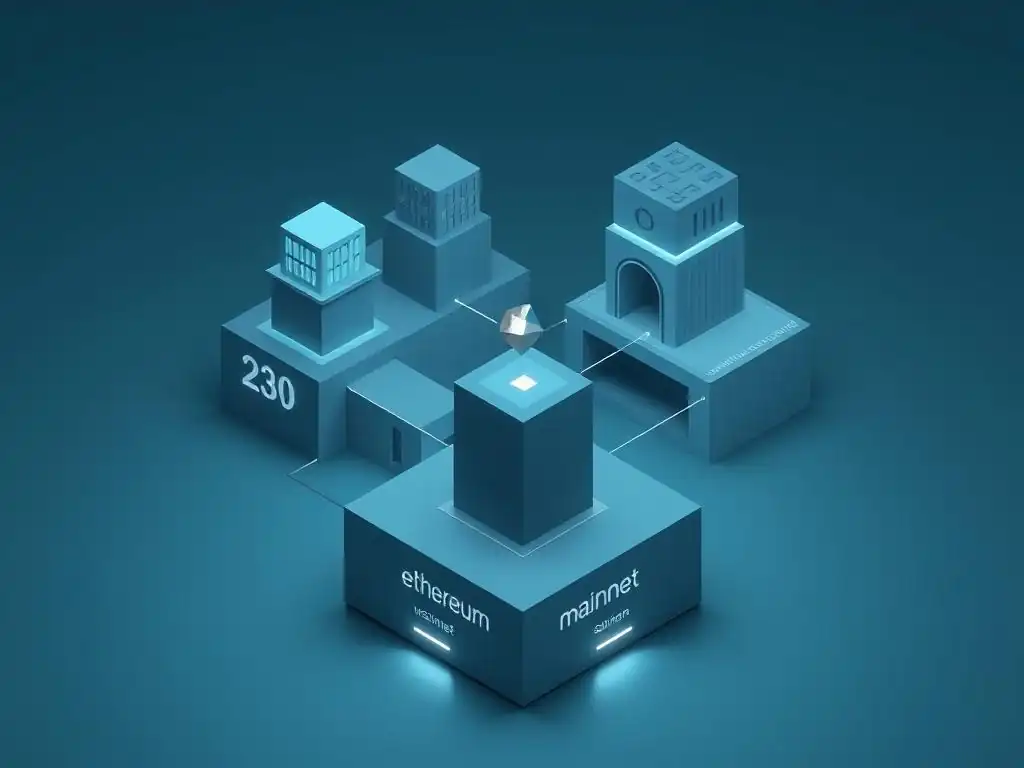
Smart Contract Vulnerabilities in Layer 2 Environments
While Layer 2 solutions aim to enhance Ethereum's capabilities, they also introduce new environments for smart contract deployment, which are not immune to vulnerabilities. Smart contracts deployed on Layer 2 networks are subject to similar types of vulnerabilities as those on Layer 1, such as reentrancy attacks, integer overflows, and logic errors. The complexity of Layer 2 architectures, including bridges and communication protocols between Layer 1 and Layer 2, can even introduce novel attack vectors.
For instance, vulnerabilities in the smart contracts governing bridges could lead to significant fund losses, as demonstrated by several high-profile bridge exploits in the past. Therefore, rigorous security audits and best practices for smart contract development are just as, if not more, critical in Layer 2 environments.
The interaction between Layer 2 smart contracts and Layer 1 also needs careful consideration from a security perspective. Layer 2 smart contracts often rely on Layer 1 for security guarantees, data availability, or dispute resolution. Vulnerabilities in the interface or communication mechanisms between Layer 1 and Layer 2 could undermine the security of the entire Layer 2 application.
Furthermore, the relative novelty of many Layer 2 platforms means that developer tooling and security best practices might be less mature compared to the well-established Ethereum Layer 1 development ecosystem. This can increase the risk of developers inadvertently introducing vulnerabilities into Layer 2 smart contracts. Therefore, developers building on Layer 2 should prioritize security from the outset, employing thorough testing, formal verification where applicable, and continuous monitoring to mitigate potential smart contract risks in these emerging environments.
Sequencer Risks and Potential Mitigation Strategies
Sequencers are a critical component in many Layer 2 architectures, particularly in rollups. They are responsible for ordering transactions, executing them off-chain, and submitting transaction batches to Layer 1. The role of the sequencer introduces potential risks, as a malicious or compromised sequencer could potentially censor transactions, reorder them for profit (MEV extraction), or even halt the Layer 2 network. In many current Layer 2 implementations, sequencers are often centralized, which raises concerns about single points of failure and censorship resistance. If a centralized sequencer is compromised or malfunctions, it could disrupt the entire Layer 2 network.
To mitigate sequencer risks, various strategies are being explored and implemented. One key approach is to decentralize sequencers. Decentralized sequencer networks aim to distribute the sequencer role among multiple participants, reducing reliance on a single entity. This can be achieved through various mechanisms, such as using a distributed consensus protocol to elect sequencers or implementing a rotating sequencer set.
Another mitigation strategy is to introduce mechanisms that limit the sequencer's power. For example, users could have the ability to bypass the sequencer and directly submit transactions to Layer 1 if they suspect censorship or malicious behavior. Furthermore, economic incentives and penalties can be designed to discourage sequencer misbehavior. For instance, sequencers might be required to stake funds, which could be slashed if they are found to be acting maliciously.
The Importance of Decentralized Sequencers
Decentralized sequencers are crucial for enhancing the security and censorship resistance of Layer 2 solutions, especially rollups. Centralized sequencers present a single point of failure and a potential censorship vector. A centralized sequencer could, in theory, refuse to process certain transactions, effectively censoring users or applications on the Layer 2 network. Furthermore, a compromised centralized sequencer could potentially manipulate transaction ordering for their own benefit or even halt the network's operation. Decentralizing the sequencer function addresses these risks by distributing responsibility and authority among multiple participants.
Decentralized sequencer networks can be implemented in various ways. One approach is to use a distributed consensus protocol, such as a variant of Proof-of-Stake, to elect sequencers in a decentralized manner. This ensures that no single entity controls the sequencer selection process. Another approach is to have a rotating set of sequencers, where different participants take turns acting as the sequencer for определенный period of time.
This rotation reduces the opportunity for any single sequencer to exert undue influence or engage in malicious behavior over the long term. Decentralized sequencers not only improve censorship resistance but also enhance the overall robustness and fault tolerance of Layer 2 networks. By eliminating the single point of failure associated with centralized sequencers, decentralized sequencers contribute significantly to making Layer 2 solutions more secure and aligned with the principles of decentralization inherent in blockchain technology.
Cross-Chain Bridge Security and Interoperability Challenges
Cross-chain bridges are essential for interoperability between different blockchains, including Layer 1 and Layer 2 networks. They enable the transfer of assets and data between chains, facilitating a more interconnected blockchain ecosystem. However, bridges are also complex systems and have become a significant source of security vulnerabilities and exploits in the blockchain space.
The security of bridges is paramount, as vulnerabilities can lead to substantial financial losses, impacting users and the overall trust in interoperable blockchain solutions. Bridge security is challenging due to the inherent complexities of cross-chain communication, the need for trust assumptions across different security models, and the potential for smart contract vulnerabilities in bridge implementations.
Common bridge vulnerabilities include smart contract exploits, oracle manipulation, and issues related to consensus mismatches between connected chains. Many bridges rely on "wrapped" assets, where assets are locked on one chain and a representative asset is minted on another. The mechanisms for locking and unlocking these assets, as well as maintaining the peg between wrapped assets and the original assets, are critical points of vulnerability. Oracle manipulation can also be a risk if bridges rely on oracles to verify cross-chain events.
If oracles are compromised or manipulated, it can lead to incorrect bridge operations and potential fund losses. Furthermore, differences in consensus mechanisms and security models between connected chains can create interoperability challenges and security gaps. Securing cross-chain bridges requires a multi-faceted approach, including robust smart contract audits, formal verification, decentralized oracle networks, and ongoing monitoring and security updates.
Best Practices for Enhancing Ethereum Layer 2 Security
Robust Auditing and Formal Verification of Layer 2 Code
Robust auditing and formal verification are indispensable best practices for enhancing the security of Ethereum Layer 2 solutions. Given the complexity and novelty of many Layer 2 technologies, thorough security audits conducted by independent and reputable security firms are crucial. These audits should meticulously examine the entire codebase of the Layer 2 solution, including smart contracts, core protocol logic, and any off-chain components that interact with the on-chain system.
Audits should identify potential vulnerabilities, security flaws, and areas for improvement in the design and implementation. Regular audits, especially after any significant code changes or upgrades, are essential to maintain a high level of security over time.
Formal verification represents an even more rigorous approach to security assurance. It involves using mathematical methods to formally prove the correctness of smart contracts and protocols. Formal verification can mathematically guarantee that a smart contract behaves as intended and is free from certain types of vulnerabilities, such as reentrancy or overflow errors.
While formal verification can be computationally intensive and may not be applicable to all aspects of a complex Layer 2 system, it can provide a very high degree of confidence in the security of critical components, such as core smart contracts or cryptographic primitives. Combining robust auditing with formal verification, where feasible, provides a comprehensive approach to proactively identify and mitigate security risks in Layer 2 solutions, enhancing their reliability and trustworthiness.
Implementing Multi-Sig and Threshold Signature Schemes
Implementing multi-signature (multi-sig) and threshold signature schemes (TSS) is a valuable best practice for enhancing the security of various aspects of Layer 2 solutions, particularly in managing critical operations and securing sensitive assets. Multi-sig schemes require multiple private keys to authorize a transaction or operation. This significantly reduces the risk of a single point of failure or a single compromised key leading to unauthorized actions.
Multi-sig can be applied to various areas within Layer 2, such as securing bridge contracts, controlling sequencer operations, or managing administrative functions. For instance, bridge contracts holding large amounts of assets can be secured by multi-sig wallets, requiring signatures from multiple trusted parties to authorize withdrawals or upgrades.
Threshold signature schemes (TSS) are a more advanced cryptographic technique that extends the benefits of multi-sig. TSS allows a group of participants to collectively generate a signature without ever revealing their individual private keys to each other. This enhances security and privacy compared to traditional multi-sig. TSS can be particularly useful for decentralized sequencer networks or for securing cross-chain communication protocols. By distributing key management and authorization across multiple parties using multi-sig or TSS, Layer 2 solutions can significantly strengthen their security posture, reduce reliance on single trusted entities, and mitigate risks associated with key compromise or insider threats.
Regular Security Updates and Patching
Regular security updates and patching are absolutely essential for maintaining the ongoing security of Ethereum Layer 2 solutions. Like any software system, Layer 2 protocols and smart contracts may be subject to newly discovered vulnerabilities over time. As the technology evolves and attackers develop new techniques, it is crucial to proactively address potential security weaknesses through timely updates and patches. Layer 2 projects should establish a clear process for identifying, assessing, and responding to security vulnerabilities. This includes monitoring for security incidents, conducting regular vulnerability assessments, and having a well-defined procedure for releasing and deploying security patches.
Security updates should be communicated transparently to users and the wider community, informing them about the nature of the vulnerability and the steps taken to address it. Users should be encouraged to promptly update their Layer 2 clients or applications to the latest versions to benefit from security fixes. Delaying security updates can leave Layer 2 systems vulnerable to known exploits, potentially leading to fund losses or service disruptions. A proactive and responsive approach to security updates and patching is a cornerstone of maintaining a secure and resilient Layer 2 ecosystem.
Monitoring and Anomaly Detection Systems
Implementing robust monitoring and anomaly detection systems is a crucial proactive measure for enhancing the security of Ethereum Layer 2 solutions. Continuous monitoring of Layer 2 network activity, smart contract interactions, and system performance can help detect suspicious behavior or potential security incidents in real-time or near real-time. Anomaly detection systems can be configured to identify deviations from normal patterns of activity, such as unusual transaction volumes, unexpected contract calls, or network performance anomalies. These anomalies can be indicative of potential attacks, exploits, or system malfunctions.
Monitoring systems should collect and analyze relevant data, such as transaction logs, event logs, network traffic, and resource utilization metrics. Automated alerts should be configured to trigger notifications when anomalies are detected, allowing security teams to investigate and respond promptly. Machine learning techniques can be employed to enhance anomaly detection capabilities, enabling systems to learn normal behavior patterns and more accurately identify deviations.
Effective monitoring and anomaly detection systems act as an early warning system, providing valuable time to mitigate security threats before they can cause significant damage. This proactive security posture is essential for maintaining the integrity and reliability of Layer 2 solutions in the face of evolving security challenges.
The Future of Ethereum Layer 2 Security: Innovations and Advancements
Zero-Knowledge Proofs and Their Growing Role in Layer 2
Zero-knowledge proofs (ZKPs) are poised to play an increasingly significant role in the future of Ethereum Layer 2 security. As discussed earlier, ZK-Rollups already leverage ZKPs to provide strong cryptographic guarantees of transaction validity. However, the application of ZKPs in Layer 2 security is expanding beyond just ZK-Rollups. Advancements in ZKP technology are making them more efficient and versatile, opening up new possibilities for enhancing security and privacy in various Layer 2 contexts. For example, ZKPs can be used to build privacy-preserving Layer 2 applications, where users can transact and interact with dApps without revealing sensitive information on-chain.
Furthermore, research is ongoing to explore the use of ZKPs for more efficient and secure cross-chain bridges. ZKPs could potentially enable trustless or trust-minimized bridges by allowing for cryptographic verification of cross-chain events without relying on trusted intermediaries or oracles. The development of more efficient ZKP algorithms and hardware acceleration for ZKP computations is driving the adoption of ZKPs in Layer 2. As ZKP technology matures, we can expect to see even wider application in securing and enhancing the functionality of Ethereum Layer 2 solutions, contributing to a more secure and privacy-preserving decentralized ecosystem.
Decentralized Data Availability Solutions
Decentralized data availability (DA) solutions are crucial for enhancing the security and resilience of Layer 2 networks, particularly rollups. While posting calldata on Ethereum Layer 1 provides a secure DA solution, it can be a significant cost factor, especially as Layer 2 transaction volume grows. Decentralized DA solutions aim to provide alternative, more cost-effective, and scalable ways to ensure data availability without compromising security. Projects like Celestia and EigenDA are developing modular DA networks that are specifically designed for Layer 2 rollups and other blockchain applications.
These decentralized DA solutions often employ techniques like data availability sampling (DAS) to achieve scalability and security. DAS allows nodes to probabilistically verify data availability by sampling only a small portion of the data, rather than downloading the entire dataset. This significantly reduces the bandwidth and storage requirements for nodes while still providing strong probabilistic guarantees of data availability.
Decentralized DA solutions also aim to enhance censorship resistance by distributing data storage and validation across a decentralized network of nodes. As decentralized DA solutions mature and become more widely adopted, they are expected to play a key role in making Layer 2 rollups more scalable, secure, and cost-effective, further accelerating the adoption of Layer 2 scaling technologies.
Research and Development in Layer 2 Security Protocols
Ongoing research and development are fundamental for continually improving the security of Ethereum Layer 2 protocols. The Layer 2 landscape is rapidly evolving, with new technologies and architectural approaches constantly emerging. Academic research, industry initiatives, and open-source development efforts are actively pushing the boundaries of Layer 2 security. Research areas include developing more robust and efficient cryptographic primitives for Layer 2, designing novel consensus mechanisms for decentralized sequencers, and exploring new approaches to cross-chain bridge security. Formal verification techniques are also being refined and applied to increasingly complex Layer 2 protocols to provide stronger security assurances.
Furthermore, research is focused on addressing emerging security challenges specific to Layer 2 environments, such as MEV in rollups, sequencer centralization risks, and the security implications of new Layer 2 architectures like validiums and sovereign rollups. Collaboration between researchers, developers, and security experts is crucial for driving innovation and ensuring that Layer 2 technologies are built upon a solid foundation of security principles. Continuous research and development are essential for staying ahead of potential threats and for ensuring the long-term security and sustainability of the Ethereum Layer 2 ecosystem.
Conclusion: Ethereum Layer 2 Security - A Continuously Evolving Landscape
Understanding the Trade-offs Between Scalability and Security
Ethereum Layer 2 security is a nuanced and continuously evolving landscape. As we have explored, Layer 2 solutions offer significant scalability benefits for Ethereum, but they also introduce new security considerations and trade-offs. There is no one-size-fits-all approach to Layer 2 security, and different Layer 2 technologies employ diverse security models with varying strengths and weaknesses.
Optimistic Rollups prioritize speed and cost-effectiveness, relying on fraud proofs for security, while ZK-Rollups emphasize cryptographic certainty and faster finality through zero-knowledge proofs. Sidechains offer greater flexibility but introduce independent security domains and trust assumptions. State channels focus on efficient peer-to-peer transactions but require careful management of off-chain state.
Understanding these trade-offs is crucial for users, developers, and the broader Ethereum community. Choosing the right Layer 2 solution involves carefully evaluating its security model, decentralization level, performance characteristics, and suitability for specific use cases. It's important to recognize that Layer 2 security is not simply a matter of being "more" or "less" secure than Layer 1.
Rather, it's about understanding the specific security properties of each Layer 2 solution and the trade-offs inherent in its design. As Layer 2 technologies mature and evolve, ongoing research, development, and security audits are essential for navigating these trade-offs and ensuring a secure and scalable Ethereum ecosystem.
Embracing a Proactive Approach to Layer 2 Security
Embracing a proactive approach to Layer 2 blockchain security is paramount for the continued growth and adoption of Ethereum scaling solutions. This proactive approach requires a multi-faceted strategy that encompasses robust security audits, formal verification, implementation of best practices like multi-sig and monitoring systems, and a commitment to continuous security updates and patching. Developers building on Layer 2 must prioritize security from the outset, incorporating secure coding practices and thoroughly testing their applications. Users should educate themselves about the security models of different Layer 2 solutions and choose solutions that align with their risk tolerance and security requirements.
Furthermore, the broader Ethereum community plays a vital role in fostering a proactive security culture. Open collaboration, knowledge sharing, and ongoing dialogue between researchers, developers, security experts, and users are crucial for identifying and addressing emerging security challenges in the Layer 2 space. By embracing a proactive and collaborative approach to security, the Ethereum ecosystem can ensure that Layer 2 solutions are not only scalable and efficient but also robust, reliable, and secure, paving the way for the widespread adoption of decentralized applications and the realization of Ethereum's full potential.
Frequently Asked Questions
How does Layer 2 blockchain security differ from Layer 1 security?
Layer 2 security relies on the underlying Layer 1 blockchain's security for its finality. However, it introduces its own unique security challenges relating to the bridging and rollup mechanisms employed.
What are the most common security vulnerabilities in Layer 2 solutions?
Common vulnerabilities include smart contract bugs within the Layer 2 protocol, exploitable bridges between Layer 1 and Layer 2, and potential sequencer centralization issues where a single entity controls transaction ordering.
How do rollups contribute to improved Layer 2 blockchain security?
Rollups enhance security by posting transaction data to the Layer 1 blockchain, allowing for data availability and fraud proofs. This makes it difficult for malicious actors to manipulate or censor transactions without being detected.
What role does decentralization play in securing Layer 2 networks?
Greater decentralization of sequencers and validators reduces the risk of censorship and single points of failure. A more decentralized network is more resilient to attacks and manipulation.
What regulatory challenges impact Layer 2 blockchain security?
Regulatory uncertainty around cross-chain bridges and DeFi protocols can introduce security risks. Lack of clear guidelines might hinder audits and best practice implementations, potentially leading to vulnerabilities and exploitation.
Final Reflection: Fortifying the Future of Layer 2
The exploration of Layer 2 blockchain security brings us to a crucial juncture, highlighting that robust security is not just a feature, but the very foundation upon which the future of decentralized applications will be built. The misconceptions surrounding Layer 2 security, as we've discussed, must be actively addressed to foster trust and widespread adoption of these scaling solutions.
The ongoing evolution of Layer 2 technologies profoundly impacts the entire blockchain ecosystem. Understanding and prioritizing their security is paramount to realizing the full potential of Web3 and ensuring a safe and reliable user experience. Security is always excessive until it's not enough.
This quote perfectly encapsulates the proactive and vigilant approach we must adopt when securing these innovative solutions.
As we conclude, consider the role you play in shaping the future of decentralized technology. Let's collectively commit to informed discussions, rigorous audits, and continuous improvement in Layer 2 security. By doing so, we can unlock the transformative power of blockchain for everyone, building a more secure and decentralized world, one Layer at a time.
Okay, here's a Call to Action (CTA) designed for the end of a web article titled "The Security of Layer2: Addressing Concerns and Misconceptions" on the website Blockchain Trends (blockchaintrends.org):
Level Up Your Layer 2 Knowledge!
Thank you for exploring the crucial aspects of Layer 2 security! We hope this article has provided you with valuable insights and clarified some common misconceptions. Now it's time to take your understanding to the next level.
Here's how you can further your Layer 2 journey:
- Dive Deep: Explore a specific Layer 2 solution, such as Optimism or Arbitrum, by reviewing their official documentation and community resources. This hands-on research will solidify your understanding of their security models.
- Join the Conversation: Share this article with your network to spark discussion on Layer 2 security and help others separate fact from fiction.
- Unexpected Tip: Experiment with using a Layer 2 DEX with a small amount of test funds and carefully observe how transactions are handled to evaluate the UX and gain first-hand experience.
What are your biggest concerns about the security of Layer 2 solutions, and how do you plan to address them in your own projects or investments?
Leave a Reply