
Sharding's Second Chance: Can This Technique Deliver on its Scalability Promise?


Welcome to Blockchain Trends, your compass in navigating the ever-evolving world of decentralized innovation! Delve into the transformative power of blockchain beyond just cryptocurrencies. Are you ready to unravel the complexities and opportunities presented by blockchain scalability solutions benefits? Our featured article, "Sharding's Second Chance: Can This Technique Deliver on its Scalability Promise?" explores whether this long-promised solution can truly unlock the full potential of blockchain. Discover the potential and pitfalls that lie ahead, and join us as we examine the future of decentralized systems. Intrigued? Read on to learn more about Sharding and its implications for the future!
- Sharding's Evolving Role: Can It Deliver on Blockchain Scalability?
- Understanding Blockchain Sharding
- The Potential of Sharding: Benefits for Blockchain Networks
- Past Challenges: Why Sharding Faced Setbacks
- Innovations Addressing Limitations
- Real-World Applications
- Sharding vs. Other Scalability Solutions
- The Future of Blockchain Scalability
- Conclusion: Is Sharding Key to Blockchain's Potential?
-
Frequently Asked Questions
- What exactly is sharding in the context of blockchain technology?
- How does sharding aim to improve blockchain scalability?
- What are some potential challenges or drawbacks associated with implementing sharding?
- Beyond increased transaction speed, what are the other potential benefits of blockchain scalability solutions benefits?
- What role does regulation play in the development and adoption of blockchain scalability solutions like sharding?
- Final Reflection: Embracing the Decentralized Future
- Ignite Blockchain Scalability: Your Next Steps
The Scalability Trilemma: Security, Decentralization, and Throughput
Blockchain technology, since its inception with Bitcoin, has promised a decentralized and secure future. However, a persistent challenge has hindered its widespread adoption: scalability. The scalability trilemma, a concept popularized in the blockchain space, highlights the inherent tension between three crucial properties of a blockchain system: security, decentralization, and throughput.
Achieving a high degree of all three simultaneously has proven to be remarkably difficult. For instance, Bitcoin, prioritizing security and decentralization, processes around 7 transactions per second (TPS), a stark contrast to traditional payment processors like Visa, which can handle thousands of TPS. Ethereum, while more advanced, still faces scalability bottlenecks, especially during periods of high network activity, leading to increased transaction fees and slower confirmation times.
This trilemma forces blockchain developers and researchers to constantly explore innovative solutions to enhance throughput without compromising security or decentralization. If a blockchain network sacrifices decentralization to achieve higher throughput, it risks becoming more centralized and susceptible to censorship or control by a few entities.
Conversely, prioritizing decentralization and security at the expense of throughput limits the blockchain's ability to handle a large volume of transactions, hindering its utility for mainstream applications. Finding the right balance and developing effective blockchain scalability solutions is paramount to unlocking the full potential of this transformative technology and enabling its use in real-world scenarios that demand high performance and reliability.
Scalability's Importance: Enabling Broader Blockchain Adoption
Scalability is not merely a technical hurdle; it's a critical gateway to broader blockchain adoption. Imagine a future where decentralized applications (dApps) are as commonplace as mobile apps are today. For this vision to materialize, blockchain networks must be capable of supporting millions, if not billions, of users and transactions seamlessly.
Current limitations in scalability restrict the potential use cases of blockchain. For example, a decentralized social media platform built on a blockchain that can only handle a few transactions per second would be unusable during peak hours, failing to meet the demands of a dynamic and interactive social environment.
The ability to scale efficiently directly translates into lower transaction fees and faster confirmation times, making blockchain technology more accessible and attractive to both users and developers. High fees, often experienced on congested networks, can deter users from interacting with dApps or transacting on-chain, effectively creating a barrier to entry.
Similarly, slow transaction confirmation times can hinder the user experience, particularly for applications requiring quick interactions, such as point-of-sale systems or real-time gaming. Therefore, effective blockchain scalability solutions are not just about increasing TPS; they are about creating a user-friendly, cost-effective, and high-performance ecosystem that can support the widespread adoption of blockchain technology across diverse industries and applications.
Understanding Blockchain Sharding
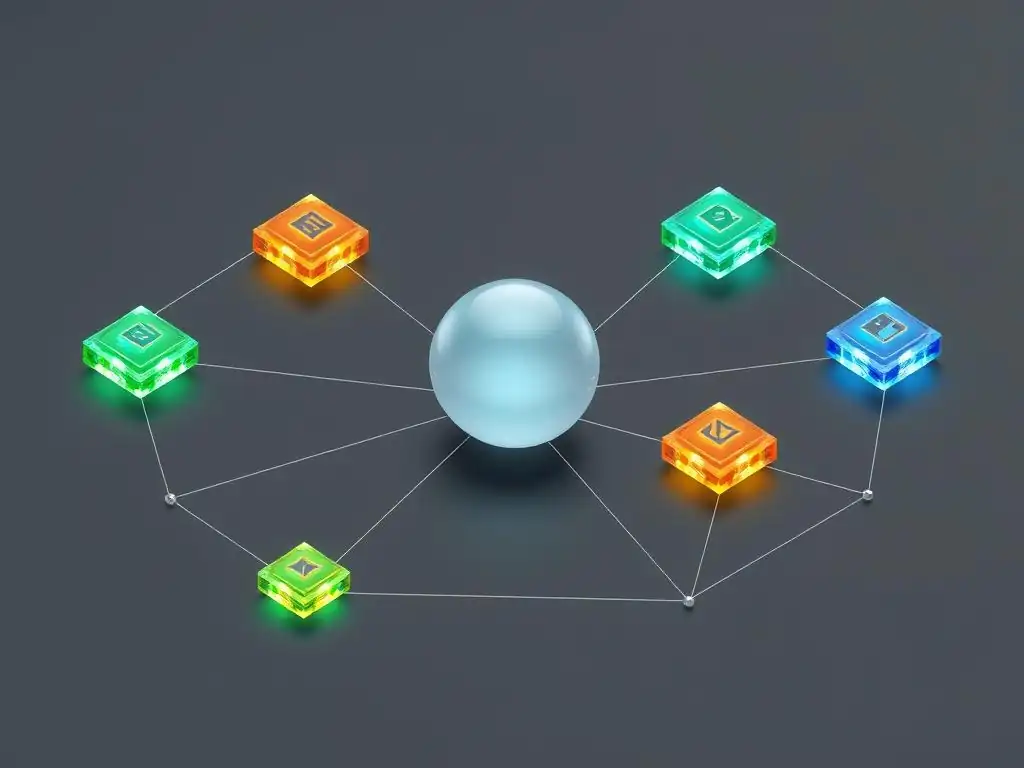
Sharding, inspired by database sharding techniques, is a layer-1 blockchain scalability solution that aims to improve transaction throughput by dividing the blockchain network into smaller, manageable pieces called "shards." Instead of the entire network processing every single transaction, as in traditional blockchains, sharding allows shards to process transactions in parallel.
Each shard operates as its own independent blockchain, responsible for processing a subset of the network's transactions and maintaining a portion of the overall blockchain state. This parallel processing significantly increases the network's overall transaction capacity, as multiple shards can process transactions concurrently, vastly improving the blockchain's performance and throughput.
Think of it like distributing the workload among different teams in a company. Instead of one team handling all tasks sequentially, multiple teams work simultaneously on different aspects, accelerating the overall output. In the context of blockchain, each shard acts as a team, processing a specific portion of the transaction load.
This partitioning approach is fundamental to sharding's ability to enhance scalability. By distributing the computational and storage burden across multiple shards, the network can handle a significantly larger volume of transactions without compromising processing speed or network responsiveness. This fundamental shift from sequential to parallel processing is what makes sharding a potentially transformative approach to blockchain scalability.
Database Sharding Principles: The Foundation
The concept of sharding is not new to the tech world; it's a well-established technique in database management systems. Database sharding, at its core, involves partitioning a large database into smaller, faster, and more easily managed databases, known as shards. These shards are distributed across multiple servers, allowing for parallel processing and improved query performance.
Several key principles from database sharding are directly applicable to blockchain sharding. One fundamental principle is data partitioning, where data is divided and distributed across shards based on a specific sharding key or function. This ensures that each shard is responsible for a distinct subset of the data, avoiding data duplication and conflicts.
Another crucial aspect is shard management and coordination. In database sharding, a central coordinator or metadata server is often used to track the location of data across different shards and route queries to the appropriate shard. While blockchain sharding aims for decentralization and avoids central coordinators, similar mechanisms are necessary to ensure proper communication and coordination between shards. Furthermore, database sharding principles emphasize data consistency and integrity across shards.
Techniques like distributed transactions and two-phase commit protocols are used to maintain data consistency in distributed database systems. Blockchain sharding adapts and innovates upon these principles, aiming to achieve similar levels of data consistency and integrity in a decentralized and trustless environment. Understanding these foundational principles from database sharding provides a strong base for comprehending the complexities and nuances of blockchain sharding implementations.
Blockchain sharding architectures can be broadly categorized into different types, each focusing on partitioning different aspects of the blockchain process. State sharding is perhaps the most ambitious and complex form of sharding. It involves dividing not only the transaction processing but also the blockchain state – the account balances, smart contract code, and other data – across shards. Each shard maintains only a portion of the overall state, reducing the storage and computational burden on individual nodes. Ethereum 2.0's sharding implementation is a prominent example of state sharding, aiming to distribute the entire Ethereum state across 64 shards initially.
Transaction sharding, on the other hand, focuses on partitioning the transaction processing workload. In this approach, the entire blockchain state is still replicated across all shards, but transactions are divided and processed in parallel by different shards. While less complex than state sharding, transaction sharding can still significantly improve transaction throughput by enabling parallel transaction validation. Compute sharding, a less commonly discussed but potentially valuable approach, focuses on distributing the computational workload associated with smart contract execution.
Complex smart contracts can be computationally intensive, creating bottlenecks in blockchain networks. Compute sharding aims to distribute the execution of these contracts across shards, improving the overall efficiency and scalability of smart contract platforms. These different sharding architectures represent various strategies for tackling blockchain scalability, each with its own trade-offs in terms of complexity, security, and performance.
The Potential of Sharding: Benefits for Blockchain Networks
Increased Transaction Throughput: Achieving Higher Transactions Per Second (TPS)
The primary benefit of sharding is a substantial increase in transaction throughput, measured in Transactions Per Second (TPS). By enabling parallel processing, sharding can theoretically scale the TPS of a blockchain network linearly with the number of shards. For example, if a blockchain without sharding can process 10 TPS, and it's sharded into 10 shards, the network could potentially achieve close to 100 TPS. This dramatic improvement in throughput is crucial for supporting applications that demand high transaction volumes, such as decentralized exchanges (DEXs), high-frequency trading platforms, and applications with a massive user base.
Consider Ethereum's current mainnet, which, even after the Merge, struggles to consistently achieve high TPS, often leading to network congestion and high gas fees during peak demand. Ethereum 2.0's sharding implementation aims to address this directly by significantly increasing its TPS capacity. While the exact TPS target for sharded Ethereum is debated and depends on various factors, it is projected to be several orders of magnitude higher than the current mainnet, potentially reaching thousands or even tens of thousands of TPS.
This leap in throughput would transform Ethereum's capabilities, making it a viable platform for a much wider range of applications and mass adoption scenarios. The ability to process significantly more transactions per second is the cornerstone of sharding's promise to deliver scalable blockchain solutions.
Reduced Latency: Faster Transaction Confirmation
Beyond increased throughput, sharding also contributes to reduced latency, meaning faster transaction confirmation times. In a non-sharded blockchain, all transactions are processed sequentially by all nodes in the network. This process can lead to delays, especially when the network is congested. With sharding, because transactions are processed in parallel by different shards, the time it takes for a transaction to be included in a block and confirmed is significantly reduced. Each shard handles a smaller set of transactions, leading to faster block creation times within each shard and consequently, faster overall confirmation times for users.
For applications where speed is critical, such as payment systems or real-time gaming, reduced latency is a significant advantage. Imagine using a decentralized payment application that takes several minutes to confirm a transaction – this would be impractical for everyday use. Sharding can bring transaction confirmation times down to levels comparable to or even faster than traditional payment systems. For instance, some sharded blockchain projects are targeting sub-second transaction finality. This reduction in latency enhances the user experience, making blockchain applications more responsive and user-friendly, and opening up possibilities for real-time and high-speed blockchain-based applications.
Enhanced Network Capacity: Supporting More Users and Applications
Sharding's scalability benefits extend to enhanced network capacity, enabling blockchain networks to support a significantly larger number of users and applications. As the network's transaction processing capacity increases, it can accommodate a greater volume of activity without experiencing congestion or performance degradation. This increased capacity is vital for the long-term growth and adoption of blockchain technology. A blockchain network with limited capacity will eventually reach a saturation point, hindering further growth and innovation.
With sharding, as the demand for network resources grows, the network can potentially scale by adding more shards, effectively increasing its overall capacity on demand. This dynamic scalability is crucial for accommodating the anticipated growth in blockchain adoption in the coming years.
Imagine a decentralized social network aiming to onboard millions of users – it would require a blockchain infrastructure capable of handling the massive influx of users and their interactions. Sharding offers a pathway to build blockchain networks with the capacity to support such large-scale applications, paving the way for truly mainstream blockchain adoption and the realization of its transformative potential.
Scalability Benefits: A Summary
The scalability benefits offered by sharding are multifaceted and highly impactful. It directly addresses the critical challenge of blockchain scalability by:
- Boosting Transaction Throughput: Achieving significantly higher TPS, enabling blockchains to handle massive transaction volumes.
- Reducing Latency: Providing faster transaction confirmation times, enhancing user experience and enabling real-time applications.
- Enhancing Network Capacity: Supporting a larger number of users and applications, fostering network growth and adoption.
These benefits collectively contribute to making blockchain technology more practical, efficient, and user-friendly. By overcoming the scalability bottleneck, sharding unlocks the potential for blockchain to become a truly global and ubiquitous technology, powering a wide range of decentralized applications and services across various industries. The promise of these scalability benefits is what drives the ongoing research and development efforts in sharding and related blockchain scalability solutions benefits.
Past Challenges: Why Sharding Faced Setbacks
Security Concerns: Vulnerability to Attacks
Despite its theoretical promise, sharding has faced significant challenges, particularly concerning security. A major concern is the potential vulnerability to "one-shard takeover" attacks. In a sharded blockchain, each shard is responsible for processing a subset of transactions and maintaining a portion of the state. If an attacker can gain control of a single shard, they could potentially manipulate transactions and data within that shard, compromising the integrity of the entire network. The security of a sharded blockchain relies on the assumption that it is computationally infeasible for an attacker to control a significant portion of any single shard.
However, if the number of validators per shard is relatively small compared to the total network validators, the security of individual shards can be weaker than that of a non-sharded blockchain. For instance, if a blockchain has 1000 validators in total and is sharded into 10 shards, each shard might have, on average, only 100 validators.
An attacker would need to control a significant fraction of these 100 validators in a shard to launch an attack, which, while still challenging, is less daunting than attacking the entire pool of 1000 validators in a non-sharded system. Addressing these security concerns and developing robust mechanisms to protect against shard takeover attacks has been a crucial hurdle in the development and adoption of sharding.
Cross-Shard Communication Overhead: Performance Bottlenecks
Another significant challenge with sharding is managing cross-shard communication. In many blockchain applications, transactions often involve interactions across different shards. For example, a transaction might involve transferring assets from an account in one shard to an account in another shard. Facilitating these cross-shard transactions efficiently and securely introduces significant complexity and potential performance bottlenecks. Traditional approaches to cross-shard communication can involve locking mechanisms or complex atomic transaction protocols, which can add significant overhead and reduce the overall performance gains of sharding.
If cross-shard communication is inefficient, it can negate the benefits of parallel processing within shards. Imagine shards operating at high speed individually, but being slowed down significantly whenever they need to interact with each other. This bottleneck can limit the achievable scalability and overall efficiency of the sharded blockchain. Developing efficient and secure cross-shard communication protocols is critical for realizing the full potential of sharding and ensuring that it truly delivers on its scalability promise. Optimizing inter-shard interactions to minimize latency and overhead has been a major focus of research and development in sharding technologies.
Data Availability Issues: Ensuring Data Integrity
Data availability is a critical aspect of blockchain security and integrity. It refers to the guarantee that all data necessary to reconstruct the blockchain state is available to all participants in the network. In a sharded blockchain, where data is partitioned across shards, ensuring data availability becomes more complex. A concern arises if a malicious shard becomes unavailable or withholds data. If a shard stops providing its data, it can become impossible for other shards or new nodes joining the network to verify transactions and reconstruct the complete blockchain state, potentially leading to data integrity issues.
Traditional data availability solutions, such as requiring all nodes to download and verify all data, are not scalable in a sharded environment. Downloading and verifying data from all shards would essentially negate the scalability benefits of sharding. Therefore, innovative data availability solutions are needed for sharded blockchains. Techniques like data availability sampling (DAS), which allows nodes to probabilistically verify data availability without downloading the entire dataset, are being explored to address this challenge. Ensuring data availability in a secure and scalable manner is a fundamental requirement for the viability and robustness of sharded blockchain systems.
Implementation Complexity: Technical Hurdles
Implementing sharding in a blockchain network is a highly complex technical undertaking. It involves significant modifications to the core blockchain protocol and requires addressing numerous intricate challenges related to consensus mechanisms, network architecture, data management, and cross-shard communication. Designing and implementing a sharded blockchain requires expertise in distributed systems, cryptography, and blockchain technology. The complexity of sharding has been a major factor contributing to its relatively slow adoption compared to other scalability solutions.
Developing secure and efficient sharding protocols requires extensive research, rigorous testing, and careful engineering. Ensuring that the sharded system maintains the desired levels of security, decentralization, and performance under various network conditions is a significant challenge. The technical hurdles associated with sharding implementation have led to a more cautious and iterative approach to its development and deployment. While the potential benefits of sharding are substantial, the complexity of its implementation has been a key reason why it has faced setbacks and has taken longer to mature into practical and widely adopted blockchain scalability solutions.
Innovations Addressing Limitations
Verifiable Random Functions (VRFs) for Secure Shard Assignment
To mitigate security concerns related to shard takeover attacks, innovations like Verifiable Random Functions (VRFs) are being employed for secure shard assignment. VRFs are cryptographic functions that provide publicly verifiable proofs of randomness. In the context of sharding, VRFs can be used to randomly assign validators to shards in a provably fair and unpredictable manner. This randomness makes it significantly harder for an attacker to predict which validators will be assigned to a particular shard and thus reduces the likelihood of a coordinated attack on a specific shard.
The verifiable nature of VRFs ensures that the shard assignment process is transparent and auditable. Any participant in the network can verify that the shard assignment was indeed random and unbiased. This transparency and verifiability enhance the security and trust in the sharded system.
Projects like Algorand have incorporated VRFs into their consensus mechanism to achieve secure leader election, a concept that is closely related to secure shard assignment. By leveraging cryptographic tools like VRFs, sharded blockchains can significantly strengthen their security and address the vulnerabilities associated with shard takeover attacks, making them more robust and resistant to malicious actors.
Asynchronous Cross-Shard Communication: Optimizing Inter-Shard Interactions
To overcome the performance bottlenecks caused by cross-shard communication overhead, asynchronous communication methods are being explored and implemented. Traditional synchronous cross-shard communication often involves waiting for confirmation from the receiving shard before proceeding, leading to delays and reduced throughput. Asynchronous communication, on the other hand, allows shards to send messages or transactions to other shards without immediately waiting for a response. This enables shards to continue processing transactions concurrently, even when cross-shard interactions are involved, significantly improving overall network performance.
Techniques like optimistic cross-shard communication are being developed, where shards assume that cross-shard transactions will be valid and proceed with processing them optimistically. If a transaction later turns out to be invalid, mechanisms are in place to handle rollbacks or resolve conflicts. This optimistic approach reduces the latency associated with cross-shard communication and allows for more efficient parallel processing.
Furthermore, advancements in message queuing and inter-process communication technologies are being adapted for sharded blockchains to optimize the efficiency and reliability of asynchronous cross-shard communication. By moving away from synchronous models and embracing asynchronous approaches, sharding architectures can minimize communication overhead and realize greater scalability gains.
Data Availability Sampling (DAS): Enhancing Data Resilience
To address data availability issues in sharded blockchains, Data Availability Sampling (DAS) has emerged as a promising solution. DAS allows nodes to probabilistically verify that data is available without needing to download the entire dataset. Instead of downloading all data from a shard, nodes randomly sample small portions of the data. If enough random samples are successfully retrieved, with high probability, it can be inferred that the entire dataset is available. This probabilistic approach significantly reduces the data download and verification burden on individual nodes, making data availability checks much more scalable in a sharded environment.
DAS techniques are being actively researched and developed for various sharding implementations. Different DAS protocols vary in their sampling strategies and security assumptions, but the core principle remains the same: achieving data availability assurance with significantly reduced overhead. Projects like Celestia are pioneering the use of DAS as a core component of their modular blockchain architecture, focusing specifically on providing a scalable and secure data availability layer. By incorporating DAS, sharded blockchains can ensure data integrity and resilience without sacrificing scalability, addressing a critical challenge that previously hindered the practical viability of sharding.
Polygon Avail and Celestia: Modular DA Layers
Polygon Avail and Celestia are notable examples of projects focusing on modular data availability (DA) layers, designed to address data availability challenges for sharded and other scalable blockchain architectures. These projects are building specialized DA layers that can be used by various execution layers, including sharded blockchains and rollups. By decoupling data availability from execution, these modular DA layers aim to provide optimized and scalable solutions for ensuring data integrity and availability.
Polygon Avail focuses on providing a robust and general-purpose DA layer that can be used by different blockchain ecosystems. It utilizes techniques like data availability sampling and erasure coding to ensure data availability and fault tolerance. Celestia, similarly, is building a modular blockchain network with a strong emphasis on data availability.
It aims to provide a highly scalable and secure DA layer that can be easily integrated with various execution environments. These modular DA layer projects represent a significant advancement in addressing data availability challenges for sharding and other blockchain scalability solutions. By providing specialized and optimized DA infrastructure, they contribute to making sharded blockchains more practical, secure, and scalable, paving the way for wider adoption.
Real-World Applications
Decentralized Finance (DeFi) applications are prime candidates for benefiting from sharded blockchains. DeFi platforms often experience high transaction volumes, especially during periods of market volatility or popular token launches, leading to network congestion and exorbitant gas fees on non-sharded blockchains. Sharding offers a solution to scale DeFi applications, enabling them to handle a significantly larger number of transactions at lower costs and faster speeds. For instance, decentralized exchanges (DEXs) built on sharded blockchains could process trades much more efficiently, rivaling the performance of centralized exchanges while maintaining decentralization and transparency.
Consider the example of a decentralized lending platform. With sharding, such a platform could handle a much larger volume of loan requests, repayments, and liquidations without experiencing network bottlenecks. This scalability would make DeFi services more accessible and affordable to a wider user base. Furthermore, sharding can enable the development of more complex and sophisticated DeFi products that require high throughput and low latency, such as decentralized derivatives exchanges or algorithmic trading platforms. By providing the necessary scalability infrastructure, sharded blockchains can unlock the full potential of DeFi and facilitate its mainstream adoption within the financial industry.
Enterprise Blockchain Solutions: Supply Chain Management
Enterprise blockchain solutions, particularly in supply chain management, can also greatly benefit from sharding. Supply chains often involve a vast number of transactions and data points, tracking goods as they move through various stages from manufacturing to delivery. Traditional blockchain solutions, with their limited throughput, can struggle to handle the massive scale and complexity of enterprise supply chains. Sharding can provide the necessary scalability to support large-scale supply chain tracking and management systems.
Imagine a global supply chain for a major retailer, involving thousands of suppliers, distributors, and logistics providers. A sharded blockchain can be used to track the movement of goods across this complex network, recording information about origin, ownership, location, and condition at each stage. The increased throughput and capacity of sharding would enable real-time tracking and updates, improving transparency, efficiency, and accountability throughout the supply chain.
Furthermore, sharding can facilitate the integration of blockchain with other enterprise systems, such as ERP and CRM, enabling seamless data exchange and process automation. For enterprise applications demanding high transaction volume and data throughput, sharding presents a viable and scalable blockchain solution.
Blockchain gaming, with its potential for play-to-earn models and decentralized game economies, requires scalable blockchain infrastructure. Traditional blockchain games often face limitations in handling the high volume of in-game transactions, such as item trading, token transfers, and in-game actions. Sharding can provide the necessary scalability to support complex and dynamic blockchain game economies, enabling smoother gameplay and richer player experiences. For example, massively multiplayer online role-playing games (MMORPGs) with thousands of concurrent players and constant in-game interactions would require a highly scalable blockchain backend.
Sharding can enable the creation of fully on-chain games where all in-game assets and actions are recorded and managed on the blockchain. This would enhance transparency, player ownership, and the potential for truly decentralized game economies. Moreover, sharding can reduce transaction fees within blockchain games, making microtransactions and in-game trading more economically viable. For blockchain gaming to reach mainstream adoption and compete with traditional gaming platforms, scalability is paramount, and sharding offers a promising pathway to achieve the necessary performance and capacity.
Decentralized social media platforms, aiming to provide censorship-resistant and user-controlled alternatives to centralized platforms, face significant scalability challenges. Social media applications typically handle massive amounts of user-generated content, interactions, and data. Traditional blockchains, with their limited throughput, are often inadequate for supporting the real-time and high-volume nature of social media. Sharding can provide the scalability needed to build decentralized social media platforms capable of handling millions of users and their interactions efficiently and cost-effectively.
Imagine a decentralized Twitter-like platform built on a sharded blockchain. Such a platform would need to handle a constant stream of tweets, retweets, likes, and follows from a large user base. Sharding can enable the platform to process these interactions in parallel, ensuring a smooth and responsive user experience, comparable to or even better than centralized social media platforms.
Furthermore, sharding can reduce transaction fees associated with posting and interacting on the platform, making it more accessible and affordable for users. For decentralized social media to become a viable alternative to centralized platforms, scalability is crucial, and sharding offers a potential solution to handle the high user volume and data demands of social networking applications.
Sharding, as a layer-1 scaling solution, directly modifies the base blockchain protocol to improve scalability. In contrast, Layer-2 scaling solutions operate on top of the base layer without altering its core protocol. Two prominent categories of Layer-2 solutions are rollups and channels. Rollups bundle multiple transactions off-chain and submit a summarized proof of their validity to the main chain. This reduces the computational burden on the main chain and increases throughput. Channels, such as state channels and payment channels, allow participants to conduct multiple transactions off-chain and only interact with the main chain to open and close the channel.
Sharding and Layer-2 solutions have different strengths and weaknesses. Sharding, in theory, offers greater scalability potential as it parallelizes transaction processing at the base layer. However, it is technically more complex to implement and has faced security concerns. Layer-2 solutions, while potentially offering less overall scalability than sharding, are generally easier to implement and deploy in the short term.
Rollups, in particular, have gained significant traction and are considered a promising near-term scalability solution for blockchains like Ethereum. The choice between sharding and Layer-2 solutions often depends on the specific scalability requirements, technical feasibility, and desired trade-offs between complexity, security, and performance. Often, a combination of Layer-1 and Layer-2 solutions may be the optimal approach to achieving comprehensive blockchain scalability.
Sidechains and parachains are also alternative scalability solutions that operate differently from both sharding and Layer-2 solutions. Sidechains are independent blockchains that run parallel to the main chain and are connected to it through a two-way peg. They can have their own consensus mechanisms and block parameters, allowing for greater flexibility and customization. Parachains, used in the Polkadot ecosystem, are also independent blockchains that connect to a central relay chain, sharing its security and interoperability features.
Sidechains and parachains offer scalability by offloading transaction processing from the main chain to these separate chains. They provide more autonomy and flexibility compared to Layer-2 solutions, but they also introduce complexities related to interoperability and security. Sidechains typically rely on their own security models, which may be less robust than the main chain's security.
Parachains, on the other hand, benefit from the shared security of the relay chain in Polkadot. Sharding, sidechains, and parachains represent different approaches to scaling blockchain networks, each with its own trade-offs in terms of security, decentralization, interoperability, and implementation complexity. The most suitable solution often depends on the specific application requirements and the desired characteristics of the blockchain network.
Consensus algorithm optimizations represent another approach to improving blockchain scalability. Traditional consensus algorithms like Proof-of-Work (PoW), while secure and decentralized, are often slow and energy-intensive, limiting transaction throughput. Newer consensus algorithms like Proof-of-Stake (PoS), Delegated Proof-of-Stake (DPoS), and others aim to improve efficiency and reduce latency. Proof-of-Stake (PoS) replaces energy-intensive mining with staking, where validators are selected based on the amount of cryptocurrency they hold and are willing to "stake" as collateral. This can significantly reduce block creation times and increase TPS.
Delegated Proof-of-Stake (DPoS) further enhances efficiency by allowing token holders to delegate their staking power to a smaller set of validators, streamlining the consensus process. Consensus algorithm optimizations can improve scalability to some extent, but they often have inherent limits in terms of achievable TPS. While optimizing consensus algorithms is a valuable approach, it may not be sufficient to achieve the levels of scalability required for mass adoption.
Sharding, Layer-2 solutions, and sidechains/parachains often complement consensus algorithm optimizations, providing additional layers of scalability on top of improved consensus mechanisms. A holistic approach to blockchain scalability often involves combining various techniques to achieve optimal performance and efficiency.
The Future of Blockchain Scalability
Integrating Sharding with Layer-2 Solutions
The future of blockchain scalability is likely to involve a combination of different solutions, with sharding and Layer-2 technologies potentially working synergistically. Integrating sharding with Layer-2 solutions, such as rollups, could unlock even greater scalability potential. For example, rollups can be deployed on top of a sharded blockchain, further increasing transaction throughput and reducing costs. Each shard could potentially host multiple rollups, multiplying the overall transaction processing capacity of the network.
This layered approach combines the base-layer scalability provided by sharding with the efficiency and cost-effectiveness of Layer-2 solutions. Rollups can handle a large volume of transactions off-chain, while sharding ensures that the base layer can still accommodate a significantly increased throughput compared to non-sharded blockchains. Furthermore, Layer-2 solutions can potentially mitigate some of the complexities and security concerns associated with sharding implementation.
By combining these technologies, developers can create highly scalable and robust blockchain systems capable of supporting a wide range of applications and massive user adoption. The integration of sharding and Layer-2 solutions represents a promising direction for achieving truly scalable and future-proof blockchain infrastructure.
The Impact of Sharding on Decentralization
A crucial consideration for any blockchain scalability solution is its impact on decentralization. While sharding aims to improve scalability, it is essential to ensure that it does not compromise the decentralized nature of blockchain networks. Concerns have been raised that sharding could potentially lead to reduced decentralization if individual shards become too small or if validator distribution across shards is uneven. However, well-designed sharding architectures can actually enhance decentralization in some aspects.
By reducing the computational and storage burden on individual nodes, sharding can lower the barriers to entry for participating in the network as a validator. This could potentially lead to a larger and more diverse validator set, increasing decentralization. Furthermore, innovations like VRFs for secure shard assignment and DAS for data availability contribute to maintaining security and trust in a sharded environment, even with a potentially larger and more distributed validator pool.
The impact of sharding on decentralization is a complex issue that requires careful design and implementation. However, with appropriate safeguards and mechanisms in place, sharding can be implemented in a way that enhances, rather than diminishes, the decentralized nature of blockchain networks.
Regulatory Considerations
As blockchain technology matures and its adoption expands, regulatory considerations become increasingly important, including for blockchain scalability solutions benefits. Sharding, as a significant infrastructure upgrade, may have regulatory implications, particularly in jurisdictions with evolving blockchain regulations. Regulators may be interested in understanding the security, performance, and governance aspects of sharded blockchain networks. Compliance with regulations related to data privacy, security, and financial transactions will be crucial for the widespread adoption of sharded blockchains, especially in regulated industries like finance and healthcare.
Projects developing and deploying sharded blockchain solutions need to be proactive in engaging with regulators and ensuring compliance with relevant legal and regulatory frameworks. Transparency, security audits, and robust governance mechanisms will be important for building trust and demonstrating compliance to regulators.
The regulatory landscape for blockchain is still evolving, and it is essential for the blockchain industry to work collaboratively with regulators to establish clear and supportive frameworks that foster innovation while addressing legitimate regulatory concerns. Regulatory clarity and compliance will be key factors in shaping the future adoption and impact of sharding and other blockchain scalability solutions benefits.
Overcoming Scalability Challenges: Sharding's Potential
Despite the challenges and complexities, sharding remains a highly promising approach to overcoming blockchain scalability limitations. Ongoing research and development are continuously addressing the past setbacks and improving the security, efficiency, and practicality of sharding implementations. Innovations in areas like VRFs, asynchronous communication, and DAS are significantly enhancing the viability of sharded blockchains. Furthermore, the increasing interest in modular blockchain architectures and specialized DA layers further strengthens the potential of sharding as a core scalability solution.
While sharding may not be a silver bullet solution to all blockchain scalability challenges, it offers a fundamental and powerful approach to significantly increase transaction throughput and network capacity. Combined with Layer-2 solutions, consensus algorithm optimizations, and other scalability techniques, sharding can play a crucial role in building the scalable blockchain infrastructure needed for mass adoption and the realization of blockchain's transformative potential. The continued evolution and refinement of sharding technologies, coupled with growing industry expertise and investment, suggest a bright future for sharding as a key component of scalable blockchain ecosystems.
Conclusion: Is Sharding Key to Blockchain's Potential?
Evaluating Sharding as a Long-Term Solution
Evaluating sharding as a long-term solution requires considering its strengths, weaknesses, and the evolving landscape of blockchain scalability solutions. Sharding offers a fundamental approach to scaling blockchain networks by parallelizing transaction processing at the base layer. This architectural advantage positions it as a potentially powerful long-term solution for achieving truly massive scalability. However, the complexity of implementation, past security concerns, and the emergence of effective Layer-2 solutions necessitate a nuanced assessment.
While Layer-2 solutions have gained significant traction in the near term, they may have limitations in terms of ultimate scalability compared to sharding. Sharding, with its ability to scale the base layer itself, holds the potential to achieve higher levels of throughput and capacity in the long run. The ongoing development and refinement of sharding technologies, particularly in addressing security and cross-shard communication challenges, are crucial for realizing its long-term potential. Sharding, when implemented effectively and in conjunction with other scalability techniques, can be a key component of a truly scalable and future-proof blockchain ecosystem.
The Importance of Continued Research
Continued research and development are paramount for unlocking the full potential of sharding and overcoming its remaining limitations. Areas requiring ongoing research include:
- Enhanced Security Protocols: Developing even more robust security mechanisms to prevent shard takeover attacks and ensure the overall security of sharded networks.
- Optimized Cross-Shard Communication: Improving the efficiency and scalability of cross-shard communication protocols to minimize overhead and maximize parallel processing gains.
- Data Availability Sampling Advancements: Refining DAS techniques to further enhance data availability assurance and reduce computational burden.
- Interoperability and Standardization: Promoting interoperability between different sharded blockchains and developing industry standards for sharding implementations.
Continued research in these areas will be essential for making sharding more practical, secure, and widely adopted. The blockchain scalability challenge is an ongoing endeavor, and sustained innovation and collaboration within the research community are crucial for developing and deploying effective and long-term scalability solutions, including sharding.
Scalability Solutions: A Final Assessment
In final assessment, sharding represents a significant and promising approach to blockchain scalability. While it has faced challenges and is technically complex, ongoing innovations and advancements are addressing its limitations and enhancing its viability. Sharding, alongside Layer-2 solutions, consensus algorithm optimizations, and other scalability techniques, forms a comprehensive toolkit for tackling the blockchain scalability trilemma.
No single solution is likely to be a panacea, and a multi-faceted approach, combining the strengths of different techniques, is likely to be the most effective path towards achieving truly scalable, secure, and decentralized blockchain networks. Sharding, with its potential for massive base-layer scalability, remains a crucial area of focus and a key piece of the puzzle in realizing the full potential of blockchain technology and blockchain scalability solutions benefits for mass adoption.
Frequently Asked Questions
What exactly is sharding in the context of blockchain technology?
Sharding is a database partitioning technique applied to blockchains. It divides the blockchain's workload across multiple smaller, independent shards, allowing for parallel processing and increased transaction throughput.
How does sharding aim to improve blockchain scalability?
By dividing the blockchain into shards, transactions can be processed concurrently rather than sequentially. This parallel processing reduces the burden on the main chain, leading to higher transaction speeds and improved scalability.
What are some potential challenges or drawbacks associated with implementing sharding?
One major challenge is ensuring cross-shard communication is secure and efficient. Maintaining data consistency across shards and preventing attacks that target individual shards are also significant hurdles.
Beyond increased transaction speed, what are the other potential benefits of blockchain scalability solutions benefits?
Scalability solutions like sharding can lead to lower transaction fees, making blockchain more accessible. They can also enable the support of more complex applications and a wider range of use cases.
What role does regulation play in the development and adoption of blockchain scalability solutions like sharding?
Clear and supportive regulations can foster innovation and investment in scalability solutions. However, unclear or restrictive regulations could hinder development and adoption, creating legal uncertainties for developers and businesses.
Final Reflection: Embracing the Decentralized Future
The journey through sharding's potential, as a key component of blockchain scalability solutions benefits, reveals a landscape ripe with both promise and persistent challenges. While the technical complexities remain significant, the underlying need for scalable decentralized systems is more pressing than ever, as blockchain technology seeks to move beyond niche applications and into the mainstream. The potential to unlock truly decentralized finance, supply chain management, and countless other applications hinges on our ability to overcome these hurdles.
The pursuit of blockchain scalability is not merely a technical exercise; it's a fundamental step towards a more equitable and transparent future. Witnessing the evolution of sharding, from a theoretical concept to a tangible solution, underscores the power of collective innovation. The future belongs to those who believe in the beauty of their dreams,
as Eleanor Roosevelt so eloquently stated. This belief, coupled with relentless effort, is what will ultimately unlock the true potential of blockchain technology and its transformative impact on society.
Now, as you consider the implications of sharding and its role in shaping the future of blockchain, I invite you to reflect on your own contribution to this evolving landscape. How can you leverage your skills and knowledge to support the development of scalable, decentralized solutions? The future of blockchain is not predetermined; it is being actively shaped by the choices we make today. Embrace the challenge, explore the possibilities, and become a part of building a more decentralized and equitable world.
Okay, I'm ready. Let's craft a compelling Call to Action (CTA) for the end of the "Sharding's Second Chance" article on Blockchain Trends (blockchaintrends.org). Here's a draft:
Ignite Blockchain Scalability: Your Next Steps
Thanks for diving into the world of sharding and its potential to revolutionize blockchain scalability. We hope you now have a clearer understanding of the challenges and opportunities that lie ahead. Ready to take this knowledge and turn it into action? Here's how:
- Dive deeper: Propose a novel sharding optimization for a specific blockchain use case!: This is your chance to put your newfound knowledge into practice and contribute to the future of blockchain technology.
- Explore sharding implementations across different blockchain platforms to gain a broader perspective.
- Share this article with your network and spark a conversation about the future of scalable blockchains.
What's one groundbreaking sharding solution you'd love to see implemented to solve a specific scalability bottleneck in your favorite blockchain application? Share your thoughts in the comments below!
Leave a Reply