
State Channels: Addressing the Blockchain Scalability Bottleneck


Welcome to Blockchain Trends, your guide to understanding the revolutionary impact of blockchain technology.
Ever wondered how blockchain can handle the massive transaction volumes needed for widespread adoption? Dive into our latest article and unlock the secrets of Blockchain scalability with our practical state channels tutorial. Discover how this innovative solution bypasses on-chain congestion, enabling faster, cheaper, and more efficient transactions. Ready to explore the future of decentralized systems? Let's begin!
Layer-2 Scaling: Exploring the Potential of State Channels
- Understanding Blockchain Scalability Challenges
- State Channels: An In-Depth Look
- Building a Simple Payment Channel: A Practical Guide
- Benefits of State Channels
- Limitations and Challenges
- State Channels in the Layer-2 Landscape
- Use Cases and Applications
- The Future of State Channels
- Security Best Practices
-
Frequently Asked Questions
- What are state channels and how do they help with blockchain scalability?
- How do state channels differ from other blockchain scaling solutions like sidechains?
- What are some limitations or drawbacks of using state channels?
- Can state channels be used for any type of blockchain application?
- What does the future hold for state channel technology in the broader blockchain ecosystem?
- Final Reflection: Bridging the Scalability Gap
- Unblock Your Blockchain Knowledge!
Understanding Blockchain Scalability Challenges
The Blockchain Scalability Trilemma
The blockchain scalability trilemma, a concept popularized by Vitalik Buterin, posits that a blockchain system faces inherent trade-offs between three desirable properties: scalability, security, and decentralization. Achieving all three simultaneously remains a significant challenge in blockchain technology. Decentralization, the distribution of control and consensus across a network, enhances security by reducing single points of failure and censorship resistance. Security, in turn, ensures the integrity and immutability of the blockchain.
However, increasing either decentralization or security often comes at the cost of scalability, which refers to the system's ability to handle a large volume of transactions and users efficiently. For instance, a highly decentralized network with numerous nodes requires more time and resources to reach consensus on each transaction, thereby limiting transaction throughput. This trilemma underscores the fundamental difficulty in designing blockchain systems that are simultaneously fast, secure, and truly decentralized, making scalability a critical area of innovation.
This inherent tension within the blockchain trilemma is not merely theoretical; it has tangible consequences for the real-world applicability of blockchain technology. Consider the example of increasing the block size in a proof-of-work blockchain to theoretically improve transaction throughput. While larger blocks might allow more transactions to be processed per block, they also increase the computational and storage demands on nodes.
This, in turn, can lead to centralization, as fewer individuals or entities may possess the resources to operate full nodes, undermining the decentralized nature of the blockchain. Similarly, prioritizing speed by reducing the complexity of consensus mechanisms might compromise security, making the network more vulnerable to attacks. Therefore, addressing the blockchain scalability challenge necessitates innovative solutions that can navigate this trilemma without sacrificing core blockchain principles.
Transaction Throughput Bottlenecks: Bitcoin and Ethereum
Bitcoin, the pioneer cryptocurrency, and Ethereum, the leading platform for decentralized applications, both face significant transaction throughput limitations. Bitcoin's network, designed for security and decentralization, typically processes around 7 transactions per second (TPS). During periods of high network activity, such as bull markets or increased adoption, this limited throughput leads to transaction congestion and elevated transaction fees.
In December 2017, during a peak in Bitcoin's price, transaction fees soared to an average of over $50 per transaction as users competed to have their transactions included in blocks. This congestion severely hindered Bitcoin's usability for everyday transactions, particularly micropayments, and highlighted the pressing need for scalability solutions.
Ethereum, while boasting a slightly higher theoretical throughput than Bitcoin, also encounters scalability bottlenecks. Prior to the ongoing transition to Ethereum 2.0, Ethereum's main network could handle approximately 15-20 TPS. The rise of Decentralized Finance (DeFi) applications and the explosion of Non-Fungible Tokens (NFTs) have placed immense pressure on the Ethereum network.
In periods of high demand, such as during popular NFT drops or DeFi protocol launches, gas prices (transaction fees on Ethereum) can spike dramatically, sometimes exceeding hundreds of dollars for even simple transactions. This not only makes using DeFi and NFT platforms expensive for the average user but also limits the potential for wider adoption and innovation within the Ethereum ecosystem. These real-world examples from Bitcoin and Ethereum underscore the practical limitations imposed by current blockchain scalability and the critical need for effective layer-2 scaling solutions like state channels.
The Imperative for Scalable Solutions: Decentralized Finance (DeFi) and Beyond
The imperative for scalable blockchain solutions is particularly pronounced in the rapidly evolving landscape of Decentralized Finance (DeFi). DeFi aims to recreate traditional financial services in a decentralized and transparent manner, offering services like lending, borrowing, trading, and asset management without intermediaries. However, the scalability limitations of current blockchains like Ethereum directly impede the growth and broader adoption of DeFi.
For DeFi to compete with traditional finance, it must be capable of handling transaction volumes and speeds comparable to existing financial systems. Traditional payment processors like Visa, for instance, can handle thousands of transactions per second, a stark contrast to the current capabilities of most blockchains.
Beyond DeFi, the need for blockchain scalability extends to a wide range of potential applications. Consider enterprise blockchain applications for supply chain management, where numerous transactions related to tracking goods and verifying provenance need to be processed efficiently. Similarly, decentralized social media platforms, gaming applications with in-game economies, and microtransaction-based services all require blockchain networks capable of handling high transaction volumes with low latency and minimal fees.
Without scalable solutions, the transformative potential of blockchain technology across these diverse sectors will remain constrained. Therefore, addressing the blockchain scalability bottleneck is not just about improving transaction speeds for cryptocurrencies; it is about unlocking the full potential of blockchain technology to revolutionize various industries and enable a truly decentralized future.
State Channels: An In-Depth Look
Defining State Channels: Off-Chain Transactions with On-Chain Security
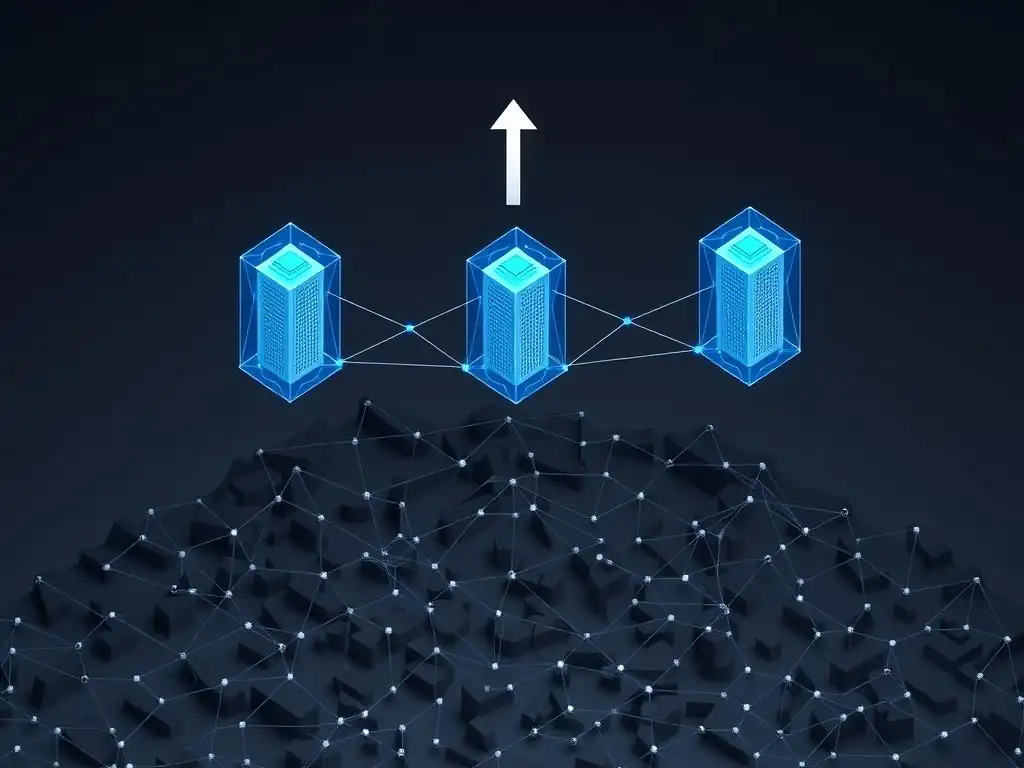
State channels represent a layer-2 scaling solution designed to enhance blockchain scalability by enabling participants to conduct multiple transactions off-chain while still leveraging the security of the underlying main blockchain. In essence, a state channel creates a direct communication pathway between participants, allowing them to transact amongst themselves without requiring every transaction to be recorded and verified on the main chain.
This off-chain transaction mechanism dramatically reduces the load on the main blockchain, as only the opening and closing of the channel, along with any dispute settlements, need to be processed on-chain. The core principle behind state channels is to maximize transaction throughput and minimize transaction costs by moving the bulk of transactional activity away from the main blockchain while maintaining its security guarantees for dispute resolution and final settlement.
The security of state channels is fundamentally anchored to the underlying blockchain through the use of smart contracts. Before engaging in off-chain transactions, participants lock up a certain amount of cryptocurrency in a smart contract deployed on the main blockchain. This on-chain commitment serves as the foundation of the state channel. All subsequent transactions within the channel occur off-chain, facilitated by cryptographic signatures and state updates exchanged directly between the participants.
These off-chain transactions are essentially agreements between the participants, secured by cryptographic mechanisms. In case of disputes or when participants wish to conclude their interactions, they can bring the latest agreed-upon state back to the on-chain smart contract for settlement. This design ensures that even though most transactions happen off-chain, the security and immutability of the main blockchain are always available as a backstop, providing trust and security to the off-chain interactions.
The Mechanics of State Channels: Commitment and Settlement
The operation of state channels can be broken down into distinct phases: commitment, off-chain interaction, and settlement. The process begins with a commitment phase, where participants who wish to transact with each other agree to open a state channel. This involves deploying a smart contract on the main blockchain and depositing funds into it.
This deposit acts as a shared escrow account, secured by the smart contract's rules. The initial state of the channel, including the deposited funds and participant balances, is recorded on-chain through this contract deployment. This on-chain commitment is the crucial first step that establishes the security framework for all subsequent off-chain interactions.
Once the channel is open and funds are deposited, participants can engage in numerous transactions off-chain. These transactions involve exchanging signed messages that represent updated states of the channel. For example, in a payment channel, these messages would represent transfers of funds between participants.
Each transaction involves creating and exchanging cryptographically signed state updates, ensuring authenticity and non-repudiation. Crucially, these off-chain transactions are fast and inexpensive, as they bypass the need for main-chain transaction fees and block confirmation times. When participants are finished transacting, or if they wish to finalize the channel's state, they enter the settlement phase.
This involves submitting the latest agreed-upon state, signed by all participants, to the on-chain smart contract. The smart contract then verifies the signatures, validates the state update against the initial commitment, and distributes the funds according to the final agreed-upon state. In case of disputes or if one party becomes unresponsive, mechanisms within the smart contract, such as timeout periods and dispute resolution processes, ensure that the channel can be closed fairly and securely, leveraging the main blockchain's dispute resolution capabilities.
Key Components: Smart Contracts, Signatures, and State Updates
State channels rely on several key components working in concert to enable secure and efficient off-chain transactions. Smart contracts are fundamental to establishing and managing state channels. Deployed on the main blockchain, these contracts act as the anchor of the channel, holding the initial funds deposited by participants and enforcing the rules governing channel operation and settlement.
The smart contract defines the conditions for opening, updating, and closing the channel, ensuring that all participants adhere to pre-agreed protocols. It also provides the crucial security guarantees, acting as an impartial arbiter in case of disputes and ensuring the final distribution of funds according to the channel's agreed-upon state.
Cryptographic signatures are another essential component, enabling secure and verifiable off-chain communication. Each transaction within a state channel involves participants digitally signing state updates. These signatures provide proof of agreement and intent, ensuring that transactions cannot be repudiated or tampered with.
Digital signatures guarantee the authenticity and integrity of off-chain messages, allowing participants to trust the state updates they receive from each other. State updates themselves represent the evolving state of the channel throughout its lifetime. These updates are essentially signed messages exchanged between participants, reflecting changes in balances, commitments, or other relevant channel parameters.
Each state update builds upon the previous one, creating a chain of agreed-upon states. The latest signed state update represents the current agreed-upon state of the channel and is used for final settlement on the main blockchain. The combination of smart contracts, cryptographic signatures, and state updates forms the core technological infrastructure that enables the functionality and security of state channels as a layer-2 blockchain scaling solution.
Building a Simple Payment Channel: A Practical Guide
Step 1: Deploying the Channel Contract
The first step in creating a simple payment channel involves deploying a smart contract to the blockchain. This smart contract will govern the operation of the payment channel and ensure the secure transfer of funds. Typically written in a language like Solidity for Ethereum-based blockchains, the contract needs to define the logic for opening the channel, processing payments, and closing the channel.
A simplified contract would include functions for initializing the channel with participating addresses, depositing funds, updating the channel state based on payment transactions, and withdrawing funds upon channel closure. The deployment process involves compiling the smart contract code and then submitting the compiled bytecode along with an initial transaction to the blockchain network.
This deployment transaction incurs a gas fee, which is the cost of executing the smart contract deployment on the blockchain. Once deployed, the smart contract receives a unique address on the blockchain, which serves as the identifier for the payment channel and where participants will interact with it.
For instance, on Ethereum, using a tool like Remix IDE or Truffle, a developer would write a Solidity contract. A very basic example might include state variables to store participant addresses and their balances, along with functions for openChannel(address participant1, address participant2), deposit(uint amount), updateState(bytes32 state), and closeChannel(). The openChannel function might initialize the participant addresses. The deposit function would allow participants to add funds to the contract. The updateState function would be a placeholder for more complex state update logic (in a real application, this would involve signature verification and state transition logic). The closeChannel function would handle fund distribution based on the final agreed-upon state. After writing and compiling this contract, the developer would use a wallet like MetaMask to deploy it to the Ethereum network, paying the necessary gas fees in Ether (ETH). The resulting contract address is then used in subsequent steps to interact with the payment channel.
Step 2: Opening the Channel: Depositing Funds
After the channel contract is deployed, the next step is to open the channel and deposit funds. This involves participants interacting with the deployed smart contract and sending transactions to deposit cryptocurrency into the channel. Typically, both parties intending to transact within the channel need to deposit funds to establish their initial balances within the payment channel. The deposit function in the smart contract, defined in the previous step, would be used for this purpose.
Each participant would call this function, specifying the amount they wish to deposit. These deposit transactions are regular blockchain transactions and require gas fees to be paid. Upon successful processing of these deposit transactions, the smart contract's internal state is updated to reflect the deposited amounts, effectively initializing the payment channel with the agreed-upon starting balances for each participant.
Continuing with the Ethereum example, if Alice and Bob want to open a payment channel, they would both interact with the deployed smart contract. Alice, using her wallet (e.g., MetaMask), would call the deposit function of the smart contract, specifying the amount of ETH she wants to deposit, say 1 ETH. She would then approve the transaction in her wallet, paying the required gas fee. Similarly, Bob would also call the deposit function and deposit, for example, 0.5 ETH. These two transactions, once confirmed on the Ethereum blockchain, would update the smart contract's internal balance records. The contract would now hold 1.5 ETH in total, with Alice's initial balance recorded as 1 ETH and Bob's as 0.5 ETH within the channel. The payment channel is now open and funded, ready for off-chain transactions.
Step 3: Transacting Off-Chain: Updating the State
Once the payment channel is open and funded, Alice and Bob can begin transacting off-chain. To send a payment, say Alice wants to send 0.1 ETH to Bob, they engage in an off-chain communication process. Alice would create a new state representing this transaction. This new state would reflect the updated balances: Alice's balance reduced by 0.1 ETH and Bob's balance increased by 0.1 ETH. This state update is then cryptographically signed by Alice using her private key.
Alice sends this signed state update to Bob. Bob, upon receiving the signed state update, verifies Alice's signature to ensure its authenticity and integrity. If the signature is valid, Bob acknowledges receipt and may also sign the same state update to signify his agreement. Both Alice and Bob now hold a copy of this signed state update, which represents the latest agreed-upon state of the payment channel.
This process of creating and exchanging signed state updates can be repeated for multiple transactions. For example, if Bob then wants to send 0.05 ETH back to Alice, he would create a new state update reflecting this transfer, sign it, and send it to Alice for verification and acknowledgment. The key here is that these transactions happen entirely off-chain.
They do not require any blockchain transactions and thus are near-instantaneous and incur no blockchain transaction fees. Alice and Bob are essentially maintaining a ledger of transactions between themselves, secured by cryptographic signatures and backed by the initial on-chain commitment of funds in the smart contract. The latest mutually signed state update always represents the current agreed-upon balances within the payment channel.
Step 4: Closing the Channel: Withdrawing Funds
When Alice and Bob are finished transacting within the payment channel, or if they decide to conclude their interaction, they need to close the channel and withdraw their funds. To close the channel cooperatively, they would agree on the latest state update, which reflects their final balances after all off-chain transactions. One of them, typically the channel initiator or the one who wants to close, would submit this latest signed state update to the closeChannel function of the deployed smart contract. The smart contract then verifies the signatures on the submitted state update to ensure it's a valid and agreed-upon state. Upon successful verification, the smart contract distributes the funds held within the channel according to the balances reflected in the submitted state update. Alice and Bob would then receive their respective shares of the funds back to their on-chain addresses.
In a non-cooperative closure scenario, which might occur if one party becomes unresponsive or attempts to act maliciously, the smart contract typically includes mechanisms to handle disputes. For example, if Alice has the latest signed state update but Bob is unresponsive, Alice might initiate a unilateral channel closure by submitting her latest signed state to the smart contract along with a timeout period. This initiates a challenge period.
If Bob disputes Alice's submitted state, he can submit a more recent signed state update within the timeout period. The smart contract would then evaluate the submitted states, potentially based on pre-defined dispute resolution logic (e.g., prioritizing the latest signed state or involving an external arbitrator if necessary), and distribute the funds accordingly.
If Bob does not respond within the timeout period, Alice's submitted state is considered valid, and the funds are distributed based on it. This ensures that even in the absence of cooperation, participants can securely withdraw their funds from the payment channel, leveraging the dispute resolution capabilities of the underlying blockchain and the smart contract.
Benefits of State Channels
Near-Instant Transaction Speeds
One of the most significant advantages of state channels is the dramatic improvement in transaction speed. Because transactions occur off-chain, they are not subject to the block confirmation times of the main blockchain. In blockchains like Bitcoin, block confirmation can take approximately 10 minutes on average, and for practical security, waiting for multiple confirmations is often recommended, extending the transaction time further. Ethereum, with its faster block times, still requires several seconds for confirmation.
In contrast, transactions within a state channel are essentially instantaneous. The exchange of signed state updates between participants happens directly and rapidly, limited only by network latency between them, which is typically in milliseconds. This near-instant transaction speed makes state channels ideal for applications requiring real-time interactions and frequent transactions, such as micropayments, gaming, and high-frequency trading.
For example, consider a micropayment scenario where a user is paying per second to stream content. Using on-chain transactions for each second of streaming would be impractical due to slow confirmation times and high transaction fees. However, with state channels, payments can be processed instantly as the user consumes content, creating a seamless and real-time payment experience.
Similarly, in online gaming, state channels can enable rapid in-game transactions for buying items or interacting with other players without experiencing delays associated with blockchain confirmations. This speed advantage is a key differentiator of state channels, making them a compelling solution for use cases where transaction speed is paramount.
Significantly Reduced Transaction Costs
State channels drastically reduce transaction costs compared to conducting all transactions directly on the main blockchain. Every transaction on a blockchain like Bitcoin or Ethereum incurs a transaction fee, known as gas on Ethereum, to compensate miners or validators for processing and including the transaction in a block. These fees can fluctuate based on network congestion and can become substantial, especially during periods of high demand.
State channels, by moving the majority of transactions off-chain, eliminate these per-transaction blockchain fees for interactions within the channel. Only the opening and closing transactions, and potentially dispute resolution transactions, incur on-chain fees. For applications involving numerous transactions, the aggregate cost savings from using state channels can be enormous.
For instance, in a payment channel used for frequent micropayments, the cost of opening and closing the channel is amortized over a large number of off-chain transactions. If a user makes hundreds or thousands of micropayments within a channel session, the effective transaction cost per payment becomes negligible, essentially limited to the initial channel setup and final settlement fees.
This cost efficiency makes state channels particularly attractive for use cases where frequent, low-value transactions are common, where the accumulated blockchain fees for on-chain transactions would be prohibitively expensive. The reduced transaction cost is a major driver for adopting state channels in applications ranging from micropayments and IoT (Internet of Things) micro-transactions to decentralized exchanges and gaming platforms.
Enhanced Privacy for Channel Participants
State channels offer enhanced privacy compared to conducting all transactions publicly on the main blockchain. On a public blockchain, all transaction details, including sender, receiver, and transaction amounts, are recorded on the publicly accessible ledger, visible to anyone. While pseudonymous, this transparency can still reveal transaction patterns and potentially deanonymize users over time.
In contrast, transactions within a state channel occur directly between participants and are not broadcast to the entire blockchain network. Only the channel opening and closing transactions are recorded on-chain, revealing the initial and final channel balances but not the details of individual transactions that occurred within the channel.
This off-chain transaction mechanism provides a significant degree of privacy for channel participants. The specifics of their transactions, such as the amounts and frequency of payments exchanged within the channel, remain private and are only known to the channel participants themselves. This enhanced privacy is valuable in various applications, particularly those involving sensitive financial transactions or where users prefer to keep their transactional activity confidential.
For example, in payment channels used for private messaging or content subscriptions, users might prefer that their payment details are not publicly recorded on the blockchain. State channels offer a way to achieve this privacy while still benefiting from the security and decentralization of the blockchain for channel setup and settlement.
Improved User Experience: Seamless Payments
The combination of near-instant transaction speeds and significantly reduced transaction costs offered by state channels leads to a vastly improved user experience, particularly in payment applications. Users experience seamless payments without the delays and high fees associated with traditional on-chain blockchain transactions. The user experience becomes closer to that of traditional payment systems, where transactions are typically fast and inexpensive. This improved user experience is crucial for mainstream adoption of blockchain-based applications, as users are accustomed to the speed and convenience of existing centralized systems.
Consider the user experience in a micropayment scenario again. With state channels, a user can make numerous small payments effortlessly, without having to wait for blockchain confirmations or worry about escalating transaction fees. The payment process becomes transparent and almost invisible to the user, operating smoothly in the background.
This seamless payment experience is a significant advantage for applications aiming to replace or augment traditional payment systems with blockchain-based alternatives. By abstracting away the complexities and limitations of main-chain transactions, state channels pave the way for user-friendly blockchain applications that can compete with and potentially surpass the user experience offered by centralized platforms.
Limitations and Challenges
Complexity of Implementation
While offering substantial benefits, state channels are not without their limitations and challenges, one of which is the complexity of implementation. Developing robust and secure state channel systems requires intricate smart contract design and careful management of off-chain state updates. Writing secure smart contracts that govern channel behavior, handle disputes correctly, and prevent vulnerabilities like double-spending is a non-trivial task requiring specialized blockchain development expertise.
Furthermore, building the off-chain communication protocols and state management logic adds another layer of complexity. Developers need to ensure reliable and secure exchange of signed state updates between participants, handling network disruptions and potential malicious behavior.
Compared to simpler on-chain transaction models, implementing state channels demands a higher level of technical sophistication and attention to detail. This complexity can increase development time, costs, and the potential for introducing bugs or security flaws if not implemented correctly. The need for specialized skills and the intricate nature of state channel implementations can be a barrier to wider adoption, particularly for projects with limited development resources or expertise in layer-2 scaling solutions. Therefore, while the theoretical benefits of state channels are compelling, the practical challenges of implementation need to be carefully considered and addressed.
Requirement for Participant Cooperation
A fundamental limitation of state channels is the requirement for participant cooperation for efficient operation. State channels are most effective when participants are online and responsive, able to promptly exchange signed state updates and agree on channel state transitions.
If one participant becomes unresponsive or goes offline for an extended period, it can complicate channel operation and potentially lead to delays or challenges in closing the channel. While state channel designs often include mechanisms to handle non-cooperative behavior, such as timeout periods and dispute resolution processes within the smart contract, these mechanisms typically involve reverting to on-chain transactions, which negates some of the speed and cost benefits of state channels.
For example, in a payment channel, if one party becomes unresponsive during a transaction or when closing the channel, the other party may need to initiate a unilateral closure process through the smart contract, which involves waiting for timeout periods and potentially paying on-chain transaction fees. This reliance on participant cooperation can limit the applicability of state channels in scenarios where participants may not always be reliably online or responsive, or where trust levels between participants are low.
In situations where guaranteed 24/7 availability and responsiveness cannot be assured, the benefits of state channels may be diminished compared to other scaling solutions.
Capital Inefficiency: Locked Liquidity
State channels introduce a degree of capital inefficiency due to the requirement for participants to lock up funds in the channel's smart contract. To participate in a state channel, users need to commit capital upfront, which becomes locked within the channel for the duration of their interactions. This locked liquidity cannot be used for other purposes while it is committed to the channel.
For applications requiring large transaction volumes or involving numerous participants, the aggregate amount of locked capital across multiple state channels can be substantial. This capital inefficiency can be a concern, particularly in scenarios where capital is scarce or where users prefer to keep their assets liquid and readily available for other investments or uses.
For instance, in a payment channel network designed to facilitate payments between many users, each channel requires a certain amount of capital to be locked up. If a user participates in multiple channels to transact with different parties, their total locked capital can accumulate, reducing their overall capital efficiency.
This locked liquidity is a trade-off inherent in state channel designs, which prioritize security and off-chain transaction efficiency but at the cost of tying up capital. Solutions to mitigate this capital inefficiency, such as optimizing channel designs to minimize locked capital or exploring mechanisms for capital re-use across channels, are areas of ongoing research and development.
Potential for Griefing Attacks
State channels, while generally secure, are susceptible to certain types of attacks, including griefing attacks. Griefing attacks, in the context of state channels, refer to situations where a malicious participant attempts to disrupt or hinder the operation of the channel, not necessarily to steal funds, but to cause inconvenience, delays, or resource wastage for other participants.
One common form of griefing attack involves a participant refusing to sign state updates or deliberately delaying responses, forcing other participants to resort to slower and more costly on-chain dispute resolution mechanisms. Another potential griefing tactic is to repeatedly open and close channels, incurring on-chain transaction fees for other participants without any legitimate transactional purpose.
While state channel designs often incorporate mechanisms to mitigate griefing attacks, such as timeout periods and penalties for non-cooperative behavior, these defenses are not always perfect and may not completely eliminate the potential for disruption. The effectiveness of griefing attack mitigation depends on the specific design of the state channel protocol and smart contract. Addressing the potential for griefing attacks requires careful protocol design, robust dispute resolution mechanisms, and potentially reputation systems or incentives to discourage malicious behavior and promote cooperative channel operation.
State Channels in the Layer-2 Landscape
State Channels vs. Plasma: Data Availability and Security
State channels and Plasma are both layer-2 scaling solutions for blockchains, but they differ significantly in their approach to data availability and security. State channels prioritize off-chain transaction efficiency and privacy, relying on participant cooperation and on-chain smart contracts for security and dispute resolution. Crucially, state channels do not require all transaction data to be publicly available on-chain.
Only the channel opening and closing transactions, and potentially dispute settlements, are recorded on the main chain. The detailed transaction history within the channel is maintained off-chain by the participants themselves. This approach enhances privacy and reduces on-chain data load but relies on the assumption that channel participants will retain and provide transaction data if disputes arise.
Plasma, in contrast, is a layer-2 scaling solution that aims to achieve higher throughput by processing transactions off-chain in "child chains," while still maintaining a strong link to the security of the main chain. A key difference from state channels is that Plasma emphasizes data availability.
Plasma chains are designed to ensure that all transaction data is publicly available, typically through mechanisms like Merkle trees and fraud proofs. This data availability is crucial for Plasma's security model, which relies on fraud proofs to allow users to challenge invalid transactions and exit the Plasma chain if necessary.
In essence, Plasma prioritizes data availability and strong on-chain security guarantees, while state channels prioritize off-chain efficiency and privacy, with a more cooperative security model. The choice between state channels and Plasma depends on the specific application requirements, with state channels being more suitable for applications requiring high transaction speed and privacy, and Plasma being more appropriate for applications demanding strong data availability and on-chain security guarantees.
State Channels vs. Rollups: Throughput and Trust Assumptions
Rollups, another prominent category of layer-2 scaling solutions, offer a different trade-off compared to state channels in terms of throughput and trust assumptions. Rollups process transactions off-chain but, unlike state channels, they post transaction data (or compressed versions of it) back to the main chain. This on-chain data availability is a defining characteristic of rollups and is crucial for their security model. There are two main types of rollups: Optimistic Rollups and Zero-Knowledge (ZK) Rollups.
Optimistic Rollups assume that transactions are valid unless proven otherwise. They post transaction data to the main chain and allow a challenge period for anyone to submit fraud proofs if invalid transactions are detected. ZK-Rollups, on the other hand, use zero-knowledge proofs to cryptographically guarantee the validity of off-chain transactions before posting them to the main chain. This eliminates the need for a challenge period and provides stronger security guarantees.
Compared to state channels, rollups generally offer higher throughput potential as they can aggregate a large number of off-chain transactions into a single on-chain transaction for data posting or verification. However, rollups typically have higher latency than state channels due to the need to post data or proofs to the main chain and potentially wait for challenge periods in the case of Optimistic Rollups.
In terms of trust assumptions, state channels rely more on participant cooperation and trust in the smart contract, while rollups, particularly ZK-Rollups, offer stronger on-chain security guarantees due to data availability and cryptographic proofs. State channels are best suited for applications requiring extremely low latency and high privacy between a limited set of participants, while rollups are more appropriate for applications needing higher throughput and stronger on-chain security for a larger user base.
Choosing the Right Layer-2 Solution: Trade-offs and Considerations
Selecting the most appropriate layer-2 scaling solution, whether state channels, Plasma, rollups, or others, involves carefully considering the specific requirements and trade-offs of the application. State channels excel in scenarios demanding near-instant transaction speeds, low transaction costs, and enhanced privacy, making them well-suited for applications like micropayments, gaming, and point-of-sale systems. However, they require participant cooperation, can have capital inefficiency issues, and might be less suitable for applications with a large number of participants or where guaranteed data availability is paramount.
Plasma offers stronger on-chain security guarantees and data availability compared to state channels, making it potentially more suitable for applications requiring high security and transparency, such as asset tokenization or complex financial instruments. However, Plasma can be more complex to implement and may have limitations in terms of general computation and state transitions. Rollups, particularly ZK-Rollups, provide a good balance of throughput, security, and general computation capabilities, making them a versatile option for scaling various types of decentralized applications, including DeFi and exchanges.
However, rollups can introduce latency and may have higher computational overhead compared to state channels. The choice ultimately depends on prioritizing factors like transaction speed, cost, privacy, security requirements, data availability needs, complexity of implementation, and the specific use case being addressed. A thorough evaluation of these trade-offs is essential for selecting the layer-2 solution that best aligns with the application's objectives and constraints.
Use Cases and Applications
Micropayments: Streaming Services and Content Monetization
Micropayments represent a compelling use case for state channels, particularly in streaming services and content monetization. The ability of state channels to facilitate near-instant transactions with minimal fees makes them ideal for scenarios where users pay small amounts frequently, such as per-second streaming, pay-per-article access, or micro-tipping for content creators. Traditional on-chain transactions are impractical for micropayments due to high transaction fees and slow confirmation times, making them economically infeasible for very small payments. State channels overcome this limitation by enabling off-chain transactions, dramatically reducing transaction costs and latency.
For streaming services, state channels can enable per-second or per-minute billing models, allowing users to pay only for the exact amount of content they consume. This granular payment model can offer greater flexibility and cost-effectiveness compared to subscription-based models. Content creators can leverage state channels to monetize their content directly through micropayments, bypassing intermediaries and receiving direct compensation for their work.
For example, a video streaming platform could use state channels to charge users per minute of video watched, with payments streamed in real-time as the content is consumed. Similarly, news websites could implement pay-per-article access using state channels, allowing users to pay a small fee for each article they read. State channels empower new and more granular monetization models for digital content, fostering a more direct and efficient relationship between creators and consumers.
Gaming: Real-Time Interactions and In-Game Assets
The gaming industry presents another significant area where state channels can offer substantial benefits, particularly for real-time interactions and in-game asset management. Online games often require rapid and frequent transactions for in-game actions, item purchases, and player interactions. Traditional on-chain blockchain transactions are too slow and costly for these real-time gaming scenarios. State channels, with their near-instant transaction speeds and low fees, can enable seamless in-game economies and enhance the gaming experience.
For real-time interactions, state channels can facilitate fast and low-cost transactions for in-game actions like trades, bets, or skill-based competitions. Players can interact with each other and the game environment in real-time, with transactions processed instantly through state channels. In terms of in-game assets, state channels can be used to manage ownership and transfer of virtual items, currencies, and other digital assets within the game.
Players can securely trade in-game assets with each other off-chain, with the state channel providing a secure and efficient transaction mechanism. For example, a massively multiplayer online role-playing game (MMORPG) could use state channels to manage in-game item trading between players, enabling fast and low-fee transactions without disrupting the real-time gameplay experience. State channels can unlock new possibilities for blockchain-based gaming, enabling more immersive and economically vibrant virtual worlds.
Decentralized Exchanges: Order Book Management and Fast Trading
Decentralized Exchanges (DEXs) can leverage state channels to improve their performance, particularly in order book management and fast trading. Traditional on-chain DEXs often suffer from slow transaction speeds and high gas fees, especially during periods of high network congestion, which can hinder the trading experience and limit their competitiveness compared to centralized exchanges. State channels can be employed to offload order book updates and trade executions from the main chain, significantly improving transaction speed and reducing trading costs.
For order book management, state channels can enable off-chain order placement and cancellation, with only the final trade settlements being recorded on-chain. This can drastically reduce the on-chain transaction load associated with managing a dynamic order book. For fast trading, state channels can facilitate rapid trade execution between users who have opened channels with the DEX or with each other.
Traders can execute multiple trades off-chain within the channel, benefiting from near-instant transaction speeds and minimal fees. For example, a DEX could implement state channels to enable high-frequency trading pairs, where traders can execute numerous trades within a short period without incurring high on-chain fees or experiencing transaction delays. State channels can enhance the scalability and user experience of DEXs, making them more competitive with centralized exchanges in terms of speed and cost-effectiveness.
The Future of State Channels
Advancements in Channel Design and Optimization
The future of state channels is likely to see advancements in channel design and optimization aimed at addressing current limitations and enhancing their functionality. Ongoing research and development efforts are focused on areas such as improving capital efficiency, enhancing security, and simplifying implementation. One key area of advancement is in optimizing channel designs to reduce the amount of locked liquidity. Techniques like channel factories, which allow for the efficient creation of numerous channels, and channel networks, which enable routing payments through multiple channels, are being explored to improve capital utilization.
Security enhancements are also a focus of ongoing research. Researchers are exploring new cryptographic techniques and smart contract designs to further strengthen the security of state channels and mitigate potential attack vectors, such as griefing attacks and channel jamming. Simplifying implementation is crucial for wider adoption.
Efforts are underway to develop more user-friendly state channel libraries, tools, and protocols that reduce the complexity of building and deploying state channel applications. Advancements in these areas will make state channels more practical, efficient, and accessible, paving the way for broader adoption across various use cases. The continuous evolution of state channel design and optimization is essential for realizing their full potential as a layer-2 scaling solution.
Interoperability with Other Layer-2 Solutions
Interoperability with other layer-2 solutions is a crucial direction for the future development of state channels. As the layer-2 landscape becomes more diverse, with various solutions like rollups, Plasma, and validium emerging, the ability for state channels to interact seamlessly with these other layer-2 technologies will be increasingly important. Interoperability can unlock new possibilities and synergistic benefits by combining the strengths of different layer-2 solutions. For example, state channels could be integrated with rollups to achieve a hybrid scaling approach, leveraging state channels for high-frequency, low-value transactions and rollups for larger, less frequent transactions.
Cross-layer-2 communication protocols and standards are needed to enable interoperability between state channels and other layer-2 solutions. Research and development efforts are focused on creating these interoperability frameworks, allowing for seamless asset transfers and communication between different layer-2 systems. Interoperability can also facilitate the creation of more complex and versatile layer-2 applications that leverage the combined capabilities of multiple scaling solutions.
For instance, a decentralized application could use state channels for real-time user interactions and rollups for secure and scalable data processing, creating a more robust and efficient overall system. The future of layer-2 scaling is likely to be characterized by increasing interoperability and composability, with state channels playing a key role in this interconnected ecosystem.
Impact on Decentralized Application Development
State channels are poised to have a significant impact on decentralized application (dApp) development by enabling the creation of more performant and user-friendly dApps. The scalability improvements offered by state channels, particularly in terms of transaction speed and cost reduction, remove key barriers to building dApps that can compete with traditional centralized applications in terms of user experience. Developers can leverage state channels to create dApps with real-time functionality, seamless micropayment integration, and enhanced privacy features, opening up new possibilities for dApp innovation across various sectors.
For example, state channels can empower developers to build blockchain-based games with real-time gameplay and in-game economies that are indistinguishable from traditional online games in terms of responsiveness and user experience. They can also facilitate the development of decentralized social media platforms with seamless micropayment-based content monetization and enhanced user privacy. Furthermore, state channels can enable the creation of more efficient and user-friendly decentralized exchanges and DeFi applications.
By addressing the scalability limitations of main-chain blockchains, state channels unlock the potential for dApps to reach mainstream adoption and compete effectively with centralized alternatives. The future of dApp development is likely to be significantly shaped by layer-2 scaling solutions like state channels, enabling a new generation of performant, scalable, and user-centric decentralized applications.
Security Best Practices
Secure Smart Contract Implementation
Secure smart contract implementation is paramount for the security of state channels. Smart contracts form the foundation of state channels, governing channel operation, fund management, and dispute resolution. Vulnerabilities in smart contracts can lead to critical security breaches, potentially resulting in fund losses or channel manipulation. Therefore, adhering to security best practices throughout the smart contract development lifecycle is essential. This includes following secure coding principles, conducting thorough code audits, and utilizing formal verification methods to identify and mitigate potential vulnerabilities.
Secure coding principles involve writing clean, well-structured, and easily auditable code, avoiding common smart contract vulnerabilities such as reentrancy attacks, integer overflows, and access control issues. Thorough code audits, conducted by independent security experts, are crucial for identifying and validating the security of smart contracts. Formal verification methods, which use mathematical techniques to prove the correctness and security properties of smart contracts, can provide an additional layer of assurance.
Furthermore, continuous monitoring and updates of smart contracts are necessary to address newly discovered vulnerabilities and adapt to evolving security threats. Robust smart contract security is the cornerstone of secure and reliable state channel implementations.
Preventing Double Spending and Fraud
Preventing double spending and fraud is a core security requirement for state channels. Double spending, the act of spending the same funds multiple times, is a fundamental threat in digital currency systems. State channels must incorporate mechanisms to effectively prevent double spending and other forms of fraudulent behavior.
Cryptographic signatures and state updates are key tools for preventing double spending in state channels. Each transaction within a channel is cryptographically signed by the sender, providing proof of authorization and preventing repudiation. State updates are sequentially linked, creating a chain of agreed-upon states, making it difficult to tamper with the transaction history.
Smart contracts also play a crucial role in preventing fraud. The smart contract enforces the rules of the channel, ensuring that funds are only transferred according to valid and agreed-upon state updates. Dispute resolution mechanisms within the smart contract are designed to detect and penalize fraudulent behavior, such as submitting invalid state updates or attempting to double-spend funds. Implementing robust double-spending prevention and fraud detection mechanisms is essential for maintaining the integrity and security of state channels and ensuring trust among participants.
Implementing Dispute Resolution Mechanisms
Implementing effective dispute resolution mechanisms is critical for the robustness and security of state channels. While state channels are designed for cooperative operation, disputes may arise due to non-cooperative behavior, disagreements about channel state, or malicious actions. Robust dispute resolution mechanisms are needed to handle these situations fairly and efficiently, ensuring that participants can resolve conflicts and securely withdraw their funds even in the absence of cooperation. Smart contracts are central to implementing dispute resolution in state channels. The smart contract defines the rules and procedures for resolving disputes, acting as an impartial arbiter.
Common dispute resolution mechanisms include timeout periods, challenge periods, and on-chain adjudication processes. Timeout periods allow participants to unilaterally close the channel if the other party becomes unresponsive. Challenge periods provide an opportunity for participants to contest submitted state updates and present evidence to the smart contract for resolution. On-chain adjudication processes may involve submitting evidence and arguments to the smart contract, which then uses pre-defined logic or potentially external oracles to resolve the dispute and distribute funds accordingly. Well-designed dispute resolution mechanisms are essential for ensuring the fairness, security, and resilience of state channels in real-world deployments.
Frequently Asked Questions
What are state channels and how do they help with blockchain scalability?
State channels are a layer-two scaling solution that allows participants to conduct transactions off-chain, reducing the burden on the main blockchain. Only the channel opening and closing transactions are recorded on the blockchain.
How do state channels differ from other blockchain scaling solutions like sidechains?
Unlike sidechains, state channels do not require a separate consensus mechanism. They rely on smart contracts on the main chain to enforce the agreements made off-chain, offering potentially higher security.
What are some limitations or drawbacks of using state channels?
State channels require participants to lock their funds into the channel for the duration of its use. They also require all participants to be online and cooperative to facilitate transactions and settle disputes.
Can state channels be used for any type of blockchain application?
While versatile, state channels are best suited for applications involving frequent interactions between a limited number of participants. Scenarios like payment channels and gaming are common use cases.
What does the future hold for state channel technology in the broader blockchain ecosystem?
State channels are expected to play an increasingly important role in enhancing blockchain scalability and enabling new applications. Further research and development are focused on improving their flexibility and usability.
Final Reflection: Bridging the Scalability Gap
The journey through state channels, as a solution to the blockchain scalability bottleneck, reveals a critical truth: innovation is essential for the continued evolution of decentralized technologies. The promise of blockchain hinges on its ability to handle real-world transaction volumes, and state channels offer a tangible path towards achieving that goal. Understanding and implementing these solutions is no longer a theoretical exercise, but a practical necessity for the widespread adoption of blockchain technology.
The impact of state channels extends beyond mere transaction speed; it touches upon the very core of blockchain's potential to revolutionize industries. Witnessing the evolution of these scaling solutions firsthand underscores the importance of continuous learning and adaptation in the rapidly changing landscape of decentralized technologies. The future belongs to those who learn more skills and combine them in creative ways.
- Robert Greene. This quote encapsulates the spirit of innovation required to overcome the challenges facing blockchain scalability, and state channels represent a significant step in that direction.
Now, as you delve deeper into the world of blockchain and decentralized applications, consider the power of state channels not just as a technical solution, but as a testament to human ingenuity. Reflect on how you can contribute to the ongoing quest for scalability, whether through development, research, or simply by advocating for the adoption of these vital technologies. The future of blockchain depends on our collective effort to bridge the scalability gap and unlock its full potential.
Unblock Your Blockchain Knowledge!
Thank you for exploring the world of State Channels with us. Now that you see how they can transform blockchain scalability, it's time to get involved and help drive this innovation forward.
Here are a few ways you can contribute:
- Explore open-source implementations. Visit platforms like GitHub to study existing State Channel projects and consider contributing to their development. This hands-on approach is the quickest way to deepen your understanding and start applying this technology.
- Share this article with your network to spark a conversation about the potential of State Channels to address blockchain's biggest challenges.
- Join the Blockchain Trends community forums to discuss real-world use cases for State Channels. Let’s brainstorm how this technology can solve problems in your industry.
What specific scalability challenge are you most eager to solve with State Channels, and what innovative application do you hope to create?
Leave a Reply