
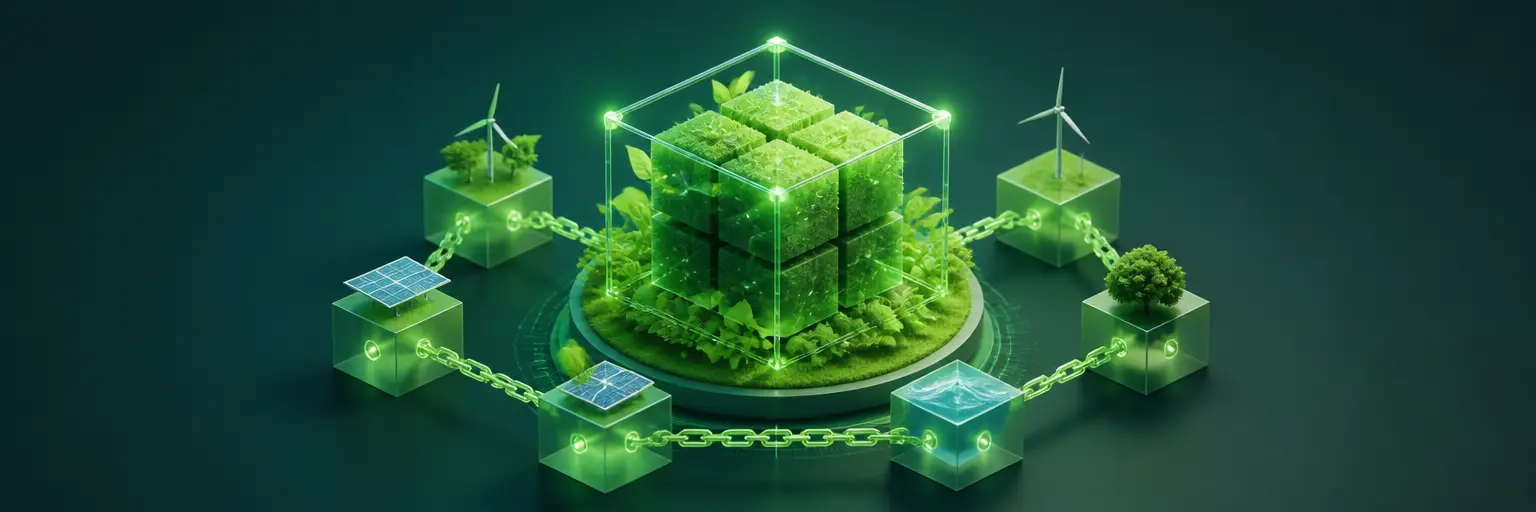
Decentralized Renewable Energy Grids: Blockchain's Role in a Cleaner Energy Future
Explore the future of green blockchain technology 🌱⚡—from energy-efficient consensus mechanisms and sustainable Web3 infrastructure to carbon tracking, renewable energy markets, and climate-focused decentralized applications. Discover how blockchain innovation can reduce environmental impact, support transparent sustainability initiatives, and accelerate the transition to a cleaner, more responsible digital economy.
44 articles
Decentralizing Sustainability: How Blockchain Empowers Green Initiatives Worldwide
Demystifying Green Blockchain: Understanding the Technology and its Environmental Promise
Green Blockchain and ESG Investing: Aligning Crypto with Environmental, Social, and Governance Goals
Green Blockchain and Sustainable Urban Development: Building Smart and EcoFriendly Cities
Predicting the Future of Green Blockchain: Trends and Breakthroughs to Watch
DeFi Goes Green: Exploring EcoFriendly Decentralized Finance Solutions
Investing in Green Blockchain: Opportunities and Risks in the Sustainable Crypto Space
Green Blockchain Standards: Defining and Measuring Sustainability in the Crypto World
The Challenge of Scalability in Green Blockchain: Balancing Growth and Environmental Impact
The LongTerm Vision for Green Blockchain: A Sustainable Future Powered by Decentralization
Green Blockchain's Next Wave: Innovations Driving Sustainable Crypto Futures
Green Blockchain and the Circular Economy: Reducing Waste and Promoting Resource Efficiency
Green Blockchain Governance: Ensuring Transparency and Accountability in EcoFriendly Projects
Can Blockchain Save the Planet? Exploring the Transformative Power of Green Tech
Green Blockchain and Citizen Science: Empowering Communities to Monitor Environmental Health
The Power of Green Blockchain for Water Management and Conservation
Blockchain for Climate Action: Tracking and Monitoring Environmental Data with Transparency
The Future of Green Blockchain Regulation: Policies and Frameworks for Sustainable Growth
Green Blockchain and the UN Sustainable Development Goals (SDGs): Achieving Global Impact
Future Proofing the Planet: Green Blockchain as a Tool for LongTerm Sustainability
Exploring Green Blockchain Platforms: Comparing Energy Efficiency and Sustainability Features
Smart Contracts for Sustainability: Automating Green Initiatives with Blockchain Technology
Green Blockchain for Waste Management: Optimizing Recycling and Reducing Landfill Waste
Green Blockchain and the Fight Against Deforestation: Tracking and Protecting Forests Globally
The Environmental Impact of Blockchain: Moving Towards a Sustainable Ecosystem
Beyond Bitcoin: Discovering the Diverse Landscape of Green Blockchain Technologies
The Future is Green: How Blockchain is Powering Renewable Energy Initiatives
Green Blockchain and the Internet of Things (IoT): Connecting Sustainable Devices and Data
The Role of NFTs in a Green Future: Supporting Environmental Art and Conservation Efforts
🌱 Future of Green Blockchain Tech: Sustainable Innovation for a Cleaner Digital Economy
The Future of Green Blockchain Tech explores how blockchain can become more energy-efficient, environmentally responsible, and aligned with global sustainability goals. As organizations, developers, investors, and policymakers seek alternatives to energy-intensive digital infrastructure, this subcategory examines the technologies transforming blockchain and the environment. Discover insights into low-energy consensus mechanisms, renewable-powered networks, carbon-conscious Web3 applications, sustainable cryptocurrency infrastructure, and transparent environmental reporting. At Blockchain Trends, readers can follow how decentralized systems may support climate action, responsible innovation, and a more efficient digital economy beyond cryptocurrencies.
⚡ Energy-Efficient Blockchain Consensus Mechanisms
Learn how blockchain networks are reducing energy consumption through innovations such as Proof of Stake, delegated consensus, Proof of Authority, and emerging hybrid protocols. This section explains how consensus design affects electricity usage, transaction efficiency, network security, scalability, and the overall environmental footprint of blockchain platforms.
Readers can expect clear analysis of energy-efficient blockchain technology, including comparisons between Proof of Work and alternative consensus models. We also explore network decentralization, validator incentives, transaction finality, and the technical developments helping distributed ledgers become more sustainable without sacrificing reliability or security.
🔋 Renewable Energy and Sustainable Blockchain Infrastructure
Green blockchain development increasingly depends on access to clean and affordable electricity. This section examines how renewable energy sources, including solar, wind, hydroelectric, and geothermal power, can support blockchain mining, data centers, validator operations, and decentralized applications.
Discover how blockchain companies are adopting renewable-powered infrastructure, energy-aware scheduling, efficient hardware, and carbon reduction strategies. Articles will also consider the challenges of renewable energy availability, grid stability, electronic waste, data-center cooling, and responsible infrastructure management.
🌍 Blockchain for Climate Action and Environmental Transparency
Blockchain can help improve environmental accountability by creating transparent, traceable, and tamper-resistant records. Explore applications involving carbon credits, emissions tracking, renewable energy certificates, sustainable supply chains, biodiversity protection, and climate finance.
This section focuses on how decentralized ledgers may strengthen carbon market integrity and reduce greenwashing. Readers will learn about tokenized environmental assets, verifiable sustainability data, smart contracts for climate incentives, and the importance of reliable real-world information supplied through trusted data systems.
🏢 Sustainable Enterprise Blockchain and Green Business
Businesses are exploring blockchain to improve resource efficiency, supply chain visibility, compliance, and environmental reporting. This section covers sustainable enterprise blockchain use cases across manufacturing, logistics, energy, agriculture, finance, retail, and public services.
Expect practical discussions about blockchain-based traceability, circular economy platforms, product provenance, ethical sourcing, and automated sustainability reporting. We also examine how enterprises can evaluate energy consumption, operational costs, data privacy, scalability, and measurable environmental benefits before adopting a blockchain solution.
🚀 The Role of Web3 in a Low-Carbon Future
The next generation of Web3 may place sustainability at the center of decentralized applications, digital ownership, and community governance. This section explores green decentralized finance, eco-conscious NFTs, sustainable decentralized autonomous organizations, peer-to-peer energy markets, and blockchain-based impact projects.
Readers will discover how Web3 developers can design applications with lower transaction costs, efficient smart contracts, lightweight infrastructure, and transparent environmental objectives. The focus remains on practical innovation that connects decentralization, financial inclusion, digital identity, and climate responsibility.
📊 Measuring Blockchain’s Environmental Impact
Accurate measurement is essential for determining whether a blockchain project is genuinely sustainable. Learn how researchers and organizations assess electricity consumption, carbon emissions, hardware life cycles, water usage, energy sources, transaction efficiency, and environmental externalities.
This section explains important sustainability metrics and reporting principles, including carbon intensity, energy mix, emissions per transaction, lifecycle analysis, and renewable energy verification. By understanding the data behind green blockchain claims, readers can make more informed decisions and identify credible environmental progress.
🔮 Future Trends in Green Blockchain Technology
The future of sustainable blockchain may be shaped by advances in cryptography, layer-two networks, modular architectures, zero-knowledge systems, efficient hardware, and intelligent energy management. This section tracks emerging research and market trends that could make blockchain faster, cleaner, and more accessible.
Explore forecasts covering climate-positive blockchain projects, sustainable token economies, regulatory standards, green digital assets, energy-aware protocols, and collaboration between blockchain developers and the renewable energy sector. The goal is to understand how decentralized systems can evolve responsibly as environmental expectations increase.
❓ Frequently Asked Questions About the Future of Green Blockchain Tech
What is green blockchain technology?
Green blockchain technology refers to blockchain networks, applications, and infrastructure designed to reduce energy consumption, carbon emissions, electronic waste, and other environmental impacts. It can include energy-efficient consensus mechanisms, renewable-powered data centers, optimized software, and transparent sustainability reporting.
Is Proof of Stake more environmentally friendly than Proof of Work?
In many cases, Proof of Stake requires significantly less electricity than Proof of Work because it does not depend on large-scale computational mining. However, the complete environmental impact also depends on hardware, energy sources, network activity, validator infrastructure, and the methods used to measure emissions.
How can blockchain support renewable energy?
Blockchain can help record renewable energy production, verify energy certificates, track electricity provenance, and enable peer-to-peer energy trading. Smart contracts may automate payments and settlements, although successful implementation requires suitable regulations, reliable energy data, and integration with existing power grids.
Can blockchain improve carbon credit markets?
Blockchain can provide transparent records for the issuance, transfer, and retirement of carbon credits. It may help reduce double counting and improve traceability, but blockchain cannot independently verify whether an environmental project delivers real emissions reductions. High-quality measurement, auditing, and trusted data remain essential.
What should companies consider before adopting green blockchain solutions?
Companies should evaluate the technology’s actual energy use, emissions profile, scalability, cybersecurity, privacy, regulatory compliance, integration requirements, and measurable environmental outcomes. A credible solution should provide verifiable sustainability data rather than relying only on marketing claims or vague carbon-neutral statements.