
The Future of Data Privacy Regulations and Their Impact on the Evolution of Blockchain Identity
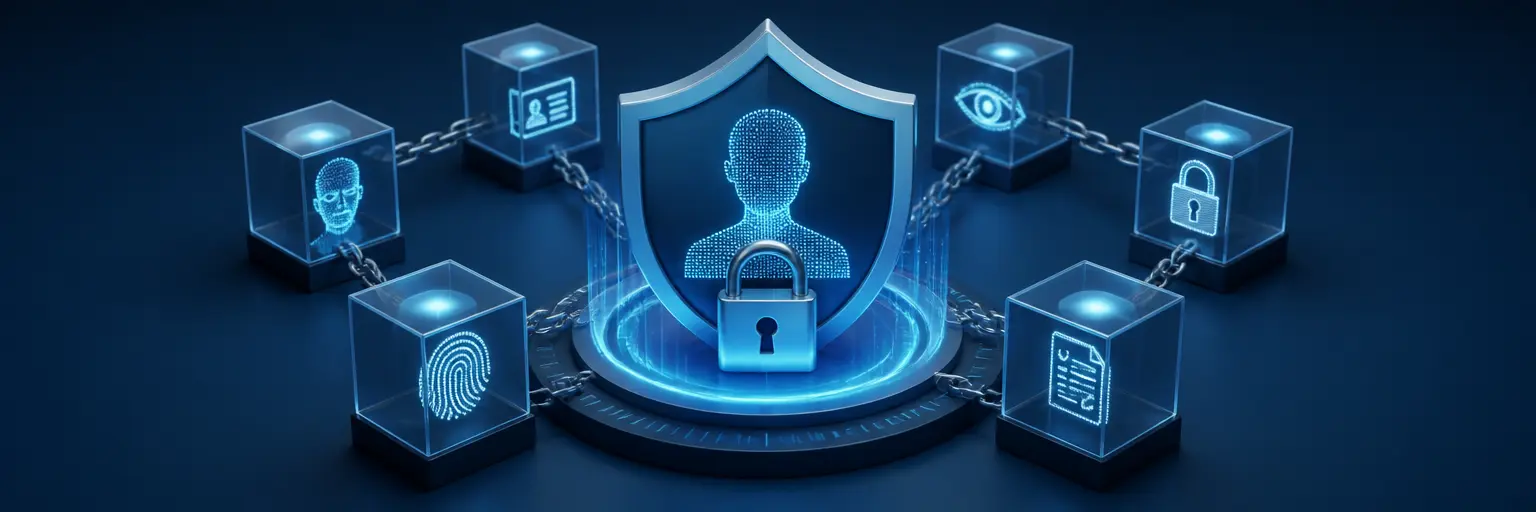
Discover how privacy and security in blockchain identity are reshaping digital trust 🔐. Explore decentralized identity solutions, verifiable credentials, zero-knowledge proofs, self-sovereign identity, and secure data sharing that help users control personal information while reducing identity theft and fraud. Stay informed on the latest blockchain identity security trends and privacy-focused innovations advancing safer, more transparent digital ecosystems.
49 articles
Who Controls Your Identity on the Blockchain? Privacy, Power, and Decentralization
The Hidden Security Flaws in BlockchainBased Digital Identity Systems
Phishing and Social Engineering Attacks Targeting Blockchain Identity Users: How to Stay Safe
ZeroKnowledge Proofs: The Key to Unlocking Privacy in Blockchain Identity?
Securing Your Digital Self: A Deep Dive into Blockchain Identity Security Protocols
Financial Services and Blockchain Identity: Ensuring Secure and Private Transactions in Decentralized Finance
Data Interoperability and Privacy: Navigating the Complexities of CrossBlockchain Identity Sharing
The Future of Privacy and Security in Blockchain Identity: Emerging Trends and Breakthrough Technologies
SelfSovereign Identity and Privacy: Empowering Users with Unprecedented Data Control and Security
Privacy by Design in Blockchain Identity Systems: Building Security and Confidentiality from the Ground Up
Unveiling the Privacy Paradox of Blockchain Identity: Control vs. Transparency
Homomorphic Encryption for Blockchain Identity: Protecting Data While in Use
Blockchain Identity: The Ultimate Privacy Solution or a New Frontier of Surveillance?
KYC/AML in Blockchain Identity: Balancing Regulatory Compliance with User Privacy Expectations
CrossBorder Data Transfers and Blockchain Identity: Addressing Privacy Concerns in a Globalized World
PrivacyEnhancing Technologies (PETs) Revolutionizing Blockchain Identity Security and User Control
Centralization Risks in Decentralized Identity: Are We Trading Control for Perceived Security?
Auditing and Accountability in Blockchain Identity: Ensuring Transparency and Trust in Decentralized Networks
Privacy in the Age of Decentralized Identity: Blockchain's Promise and Perilous Paths
Hardware Security Modules (HSMs) for Blockchain Identity: Fortifying Key Management and Data Protection
Blockchain Identity: Is Your Data Really Safe? Unmasking Privacy Myths
Secure MultiParty Computation: Enhancing Privacy in Decentralized Identity Networks
Enterprise Adoption of Blockchain Identity: Addressing Critical Privacy and Security Imperatives for Businesses
Decentralized Identifiers (DIDs): A PrivacyFirst Approach to Blockchain Identity Management?
The Regulatory Minefield of Blockchain Identity Privacy: GDPR, CCPA, and Global Compliance
Government Use Cases for Blockchain Identity: Balancing National Security with Citizen Privacy Rights
Data Breaches on the Blockchain: Are Digital Identities Truly Protected?
Identity Theft in the Blockchain Era: New Challenges and Evolving Security Measures
CCPA and Blockchain Identity: California's Impact on Decentralized Privacy and User Rights
🔐 Privacy & Security in Blockchain Identity
Welcome to Privacy & Security in Blockchain Identity at Blockchain Trends, your resource for understanding how decentralized technologies can protect digital identity in an increasingly connected world. Explore blockchain identity security, self-sovereign identity, decentralized identifiers, verifiable credentials, zero-knowledge proofs, data privacy, identity theft prevention, and secure digital authentication. This subcategory explains how blockchain can help individuals and organizations control personal information while reducing unauthorized access, data breaches, fraud, and excessive dependence on centralized identity providers.
🛡️ Blockchain Identity Security Explained
Discover how blockchain-based identity systems use cryptographic verification, distributed networks, tamper-resistant records, and decentralized trust models to strengthen digital security. Articles in this section examine how identity information can be verified without relying entirely on a single database or institution, helping reduce common vulnerabilities linked to centralized data storage.
Readers can expect practical explanations of blockchain authentication, cryptographic keys, digital signatures, identity wallets, access control, and secure credential management. We also explore the limitations of blockchain security, including compromised private keys, malicious applications, poor user practices, and implementation risks that organizations must address.
🔑 Self-Sovereign Identity and User Control
Self-sovereign identity, often called SSI, gives people greater control over how their personal data is created, stored, shared, and revoked. This section explores how users can manage decentralized digital identities and present verified credentials without repeatedly submitting unnecessary personal information to multiple service providers.
Expect detailed discussions of identity wallets, decentralized identifiers, user consent, data portability, and selective disclosure. We explain how SSI may improve privacy while supporting secure onboarding, online account access, education credentials, healthcare records, financial services, and enterprise identity management.
🧩 Zero-Knowledge Proofs and Privacy-Preserving Verification
Zero-knowledge proofs allow one party to demonstrate that a statement is true without revealing the underlying information. In blockchain identity, this technology can support privacy-preserving authentication, age verification, compliance checks, and access control while limiting the exposure of sensitive personal data.
Articles in this area make advanced privacy technology easier to understand by showing how zero-knowledge identity verification works in practical situations. Learn how users could prove eligibility, residency, accreditation, or compliance without disclosing an entire identity profile or creating unnecessary records on a public blockchain.
🌐 Decentralized Identifiers and Verifiable Credentials
Decentralized identifiers, or DIDs, and verifiable credentials are core building blocks of modern blockchain identity. This section explains how DIDs can establish digital identity relationships without depending exclusively on centralized registries, while verifiable credentials enable cryptographically signed proof of claims.
Readers can learn how issuers, holders, and verifiers interact across decentralized identity networks. We cover credential issuance, authentication, revocation, interoperability, identity verification standards, and the role of blockchain in creating trustworthy digital credentials for businesses, institutions, governments, and individuals.
⚖️ Data Privacy, Compliance, and Regulation
Blockchain identity solutions must balance transparency and immutability with privacy laws and data protection requirements. Explore the challenges of applying regulations such as the GDPR and other privacy frameworks to decentralized systems, especially when personal data must be corrected, deleted, minimized, or transferred.
This section examines privacy compliance in blockchain identity, data minimization, off-chain storage, consent management, encryption, auditability, and regulatory identity requirements. We also discuss how organizations can design blockchain identity products that support know-your-customer processes and anti-money-laundering controls without collecting more information than necessary.
🚨 Identity Theft, Fraud, and Threat Protection
Blockchain identity can help combat identity fraud by making credentials easier to verify and harder to counterfeit. Learn how cryptographic proofs, credential revocation, decentralized authentication, and transaction traceability may reduce phishing, synthetic identity fraud, account takeover, and unauthorized identity claims.
However, blockchain does not eliminate every security threat. Our coverage highlights phishing-resistant authentication, private key protection, wallet security, social engineering, smart contract vulnerabilities, malicious insiders, and recovery planning. The goal is to help readers understand both the security benefits and operational risks of decentralized identity systems.
🏢 Enterprise and Government Blockchain Identity Security
Businesses and public institutions are exploring blockchain identity for secure employee access, customer onboarding, digital licenses, professional certifications, and public services. This section evaluates how decentralized identity can improve trust between organizations while reducing repetitive verification procedures and fragmented identity databases.
Expect analysis of enterprise identity architecture, permissioned blockchains, identity governance, cybersecurity controls, interoperability, audit trails, and large-scale deployment challenges. We explain what organizations should consider when selecting blockchain identity platforms, managing credentials, protecting personal data, and integrating decentralized identity with existing systems.
🔮 The Future of Private and Secure Digital Identity
The future of blockchain identity will likely combine decentralized identifiers, verifiable credentials, privacy-enhancing technologies, artificial intelligence, biometrics, secure hardware, and interoperable identity standards. This section follows emerging developments that could reshape how people prove who they are online without surrendering control of their personal data.
Blockchain Trends examines the opportunities and unanswered questions surrounding decentralized identity, including digital sovereignty, cross-border authentication, Web3 security, consumer adoption, regulatory change, and recovery from lost credentials. Our coverage helps readers evaluate which innovations are ready for practical use and which remain experimental.
❓ Frequently Asked Questions About Privacy and Security in Blockchain Identity
🔒 How does blockchain improve digital identity security?
Blockchain can improve identity security by using cryptographic signatures, decentralized verification, and tamper-resistant records. Instead of placing all identity information in one centralized database, blockchain identity systems can distribute trust and allow credentials to be verified without exposing unnecessary personal data.
🧾 Is personal information stored directly on a blockchain?
Responsible blockchain identity solutions generally avoid storing sensitive personal information directly on a public blockchain. Instead, they may store encrypted data off-chain while recording proofs, references, or credential status on-chain. This approach supports data minimization and can make privacy compliance easier.
🕵️ What are zero-knowledge proofs used for in digital identity?
Zero-knowledge proofs allow users to prove specific facts without revealing complete personal information. For example, a person could prove that they are over a required age or meet a compliance condition without sharing their full date of birth, identity document, or broader personal profile.
🔑 What happens if a blockchain identity private key is lost?
Loss of a private key can prevent access to decentralized identity wallets or credentials. Secure systems may offer recovery mechanisms such as trusted contacts, multi-party recovery, hardware protection, or managed guardianship. Users should understand recovery options before adopting a blockchain identity solution.
⚖️ Is blockchain identity compliant with privacy regulations?
Blockchain identity can support privacy compliance, but compliance depends on the system’s architecture and implementation. Using off-chain storage, encryption, consent controls, selective disclosure, credential revocation, and limited on-chain data can help organizations meet privacy obligations while maintaining verifiable identity services.