
Your Digital Identity, Reimagined: The Power of Verifiable Credentials on the Blockchain
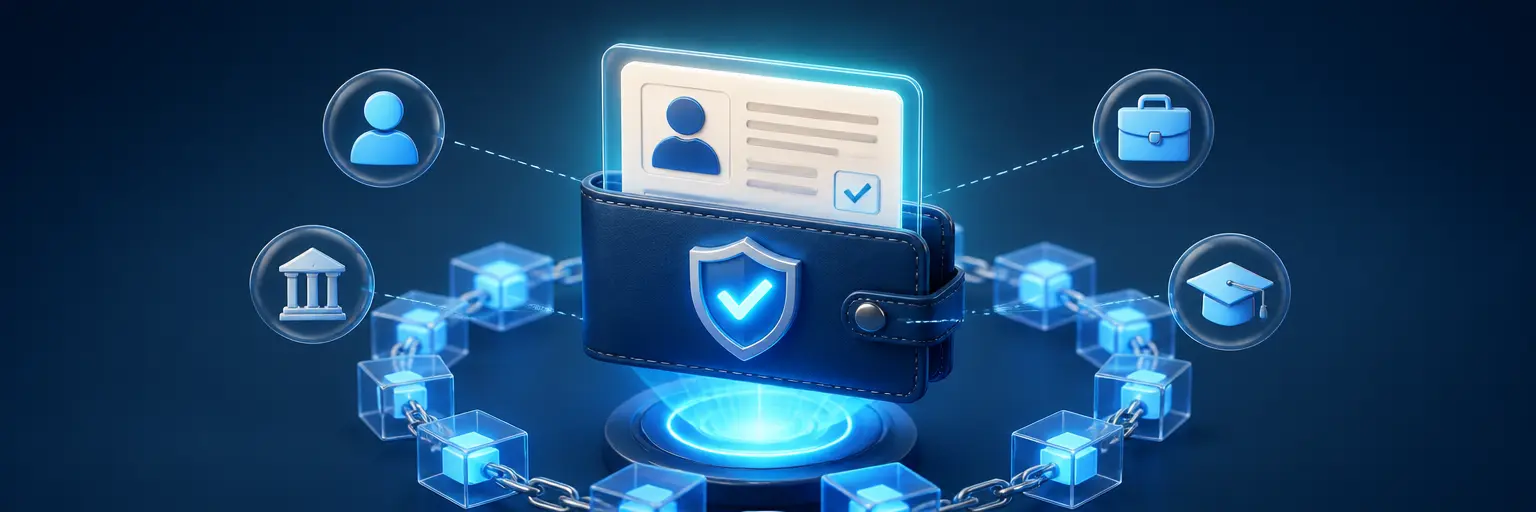
Explore how verifiable credentials and blockchain are redefining digital identity with secure, privacy-focused, and tamper-resistant verification. Discover decentralized identity (DID), self-sovereign identity, blockchain authentication, and trusted digital credentials that give individuals greater control over their personal data while helping organizations streamline compliance and build trust. 🔐🌐
59 articles
Interoperability and Verifiable Credentials: Connecting Different Blockchain Networks
The Security Advantages of Using Blockchain for Verifiable Credentials
Government Services Reimagined: Secure Citizen Identity with Verifiable Credentials
Education Transformed: Digital Diplomas and Credentials on the Blockchain
The Internet of Things (IoT) and Verifiable Credentials: Securing Connected Devices
The Future of Digital Trust: Verifiable Credentials and the Blockchain Promise
The Regulatory Landscape of Verifiable Credentials and Blockchain Technology
Ensuring Inclusivity and Accessibility in Verifiable Credential Design
The Convergence of Verifiable Credentials and Decentralized Finance (DeFi)
Blockchain for Identity: How Verifiable Credentials are Changing the Game
Scalability Challenges for Verifiable Credentials on Public Blockchains
Decoding Decentralized Identifiers (DIDs): The Foundation of Verifiable Credentials
Navigating the Complexity of Verifiable Credentials and Blockchain: A Beginner's Guide
Beyond Passwords: Exploring the Secure World of BlockchainBased Verifiable Credentials
Will Verifiable Credentials Replace Passwords? Exploring the LongTerm Vision
RealWorld Examples of Verifiable Credentials in Action: Case Studies
Financial Services and Verifiable Credentials: Enhancing Security and Compliance
Overcoming Adoption Barriers for Verifiable Credentials and Blockchain
Revolutionizing Healthcare: Verifiable Credentials and Blockchain for Patient Data Management
Why Businesses Need to Pay Attention to Verifiable Credentials and Blockchain
W3C Standards for Verifiable Credentials: Ensuring Interoperability and Trust
Protecting Personal Data: How Verifiable Credentials Enhance Privacy Online
The Technical Architecture of BlockchainBased Verifiable Credential Systems
Verifiable Credentials: A Deep Dive into Blockchain's Identity Revolution
Beyond Identity: Exploring Broader Applications of Verifiable Credential Technology
Secure and Seamless: The Benefits of Verifiable Credentials on a Blockchain
Exploring Different Blockchain Platforms for Verifiable Credential Solutions
Compliance and Verifiable Credentials: Meeting Regulatory Requirements with Blockchain
Immutable Identities: How Blockchain Ensures the Integrity of Verifiable Credentials
🔐 Verifiable Credentials & Blockchain
Discover how verifiable credentials and blockchain technology are transforming digital identity, authentication, and trust. This subcategory explores decentralized identity systems, blockchain-based credentials, digital certificates, identity wallets, and privacy-preserving verification for individuals, businesses, governments, and educational institutions. At Blockchain Trends, readers can learn how cryptographic proofs and decentralized networks enable secure, portable, and user-controlled identity verification without relying exclusively on centralized databases.
🌐 Understanding Verifiable Credentials
Verifiable credentials are digitally signed records that confirm information about a person, organization, or device. They can represent academic qualifications, professional licenses, identity attributes, employment history, certifications, memberships, and access rights. Unlike traditional paper documents or static digital files, verifiable credentials can be cryptographically checked to confirm their authenticity and integrity.
Readers can expect clear explanations of credential issuers, credential holders, and verifiers, as well as the role of digital signatures, public-key cryptography, decentralized identifiers, and trusted registries. Content in this section will explain how verifiable credentials support faster onboarding, reduce document fraud, and improve trust across digital services.
⛓️ Blockchain-Based Digital Identity
Blockchain provides a tamper-resistant infrastructure for recording proofs, validating issuer information, and supporting decentralized identity ecosystems. Rather than placing sensitive personal data directly on a public blockchain, modern identity solutions typically use blockchain to verify claims while keeping private information in secure wallets or encrypted storage.
This subcategory examines how blockchain in digital identity can reduce dependence on centralized identity providers and enable portable credentials across platforms. Readers will find insights into decentralized identity architecture, blockchain identity verification, smart contracts, distributed ledgers, and the benefits and limitations of using blockchain for trusted digital interactions.
🪪 Decentralized Identifiers and Identity Wallets
Decentralized identifiers, commonly known as DIDs, allow users, organizations, and devices to establish identifiers that are not necessarily controlled by a single central authority. When combined with digital identity wallets, DIDs can help users store, manage, and present credentials securely across multiple applications and services.
Expect practical coverage of self-sovereign identity, wallet security, credential portability, key management, recovery methods, and user consent. Articles will also explore how identity wallets may support passwordless authentication, secure account access, reusable KYC, digital passports, and privacy-focused interactions in Web3 and enterprise environments.
🛡️ Privacy, Security, and User Control
Privacy is one of the most important considerations in blockchain-based identity. Verifiable credentials can enable selective disclosure, allowing individuals to prove a specific fact without revealing unnecessary personal information. For example, a user may prove that they are over a certain age without disclosing their full birth date.
This section covers zero-knowledge proofs, data minimization, consent management, encryption, revocation, and protection against identity theft. Readers will learn how decentralized identity systems can provide stronger privacy and greater control over personal data while also addressing risks such as lost private keys, malicious issuers, wallet attacks, and unauthorized tracking.
🏢 Enterprise and Government Use Cases
Organizations are exploring verifiable credentials for employee identification, supply chain verification, healthcare records, financial compliance, education certificates, professional accreditation, and customer onboarding. Blockchain identity solutions can help institutions verify claims more efficiently while reducing administrative costs and fraud.
Readers can explore real-world applications of enterprise digital identity, including reusable KYC credentials, employee access management, digital licenses, electronic health records, university diplomas, and government-issued credentials. The content will also examine implementation challenges involving interoperability, governance, legal recognition, and integration with existing identity infrastructure.
📜 Standards, Interoperability, and Regulation
Successful digital identity networks require shared standards so that credentials issued by one platform can be recognized by another. This subcategory follows developments involving W3C Verifiable Credentials, decentralized identifiers, trust frameworks, open identity protocols, and interoperability initiatives.
Regulation is equally important because identity systems handle sensitive personal information and may support legally significant transactions. Articles will discuss data protection, electronic signatures, anti-money-laundering requirements, know-your-customer rules, digital identity legislation, and the evolving relationship between blockchain technology and regulatory compliance.
🚀 The Future of Trusted Digital Identity
Verifiable credentials are expected to become an important component of the future internet, connecting people, businesses, devices, and services through trusted digital claims. As decentralized systems mature, credentials may become more portable, machine-readable, privacy-preserving, and integrated into everyday digital experiences.
Blockchain Trends explores emerging developments such as decentralized identity networks, tokenized qualifications, AI-assisted verification, machine identities, Web3 authentication, digital product passports, and cross-border credentials. Follow this subcategory for research-driven analysis, practical explanations, industry trends, and expert perspectives on the future of blockchain-powered identity.
❓ Frequently Asked Questions About Verifiable Credentials and Blockchain
🔎 What are verifiable credentials?
Verifiable credentials are digital records containing claims that are issued and cryptographically signed by a trusted organization or individual. A recipient can store the credential and present it to another party, which can verify its authenticity without contacting the issuer every time.
⛓️ How does blockchain support verifiable credentials?
Blockchain can provide a trusted infrastructure for checking issuer information, decentralized identifiers, credential status, and revocation data. Sensitive personal information should generally remain off-chain, while the blockchain stores proofs or references that help confirm validity.
🛡️ Are blockchain-based credentials private?
They can be designed to provide strong privacy through selective disclosure, encryption, and zero-knowledge proofs. Privacy depends on the system’s architecture, wallet security, governance, and the amount of information recorded on-chain. A well-designed solution minimizes unnecessary data exposure.
🏢 Where are verifiable credentials used?
Common use cases include digital identity verification, education certificates, employee credentials, professional licenses, healthcare records, reusable KYC, travel documents, supply chain claims, and secure access management. Their portability makes them useful across multiple organizations and platforms.
🔐 What are the main challenges of blockchain digital identity?
Key challenges include interoperability, regulatory compliance, user experience, private-key recovery, credential revocation, identity governance, adoption, and integration with legacy systems. Building trustworthy identity ecosystems requires cooperation between technology providers, governments, businesses, standards organizations, and end users.