
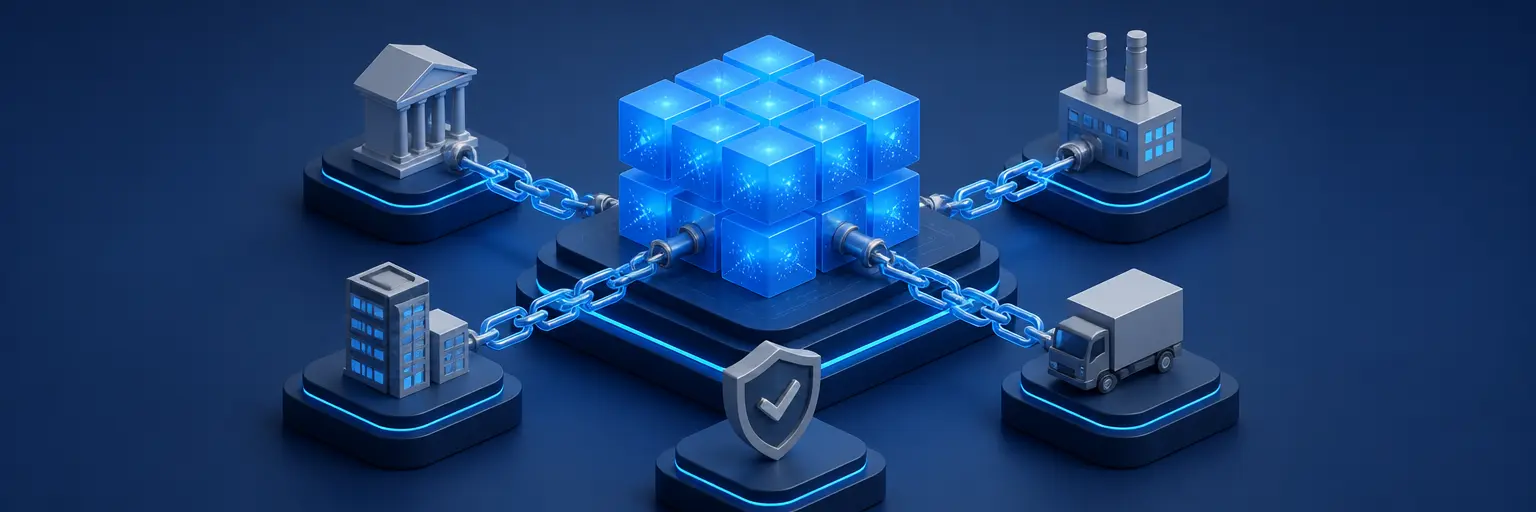
Overcoming Barriers to Entry: Implementing Enterprise Blockchain in Your Organization
Discover Enterprise Blockchain Platforms designed to streamline operations, enhance transparency, and enable secure collaboration across industries. Explore scalable blockchain solutions for supply chain management, finance, healthcare, identity, and more—featuring smart contracts, permissioned networks, interoperability, and robust data security. 🚀 Stay ahead of blockchain innovation with insights into enterprise adoption, real-world use cases, and the future of decentralized business systems.
51 articles
RealWorld Examples: Companies Leveraging Enterprise Blockchain for Growth
Expert Insights: Industry Leaders on the Future of Enterprise Blockchain Platforms
Healthcare Revolution: Blockchain Platforms for Secure Data Management
CostEffective Blockchain: Understanding Pricing Models for Enterprise Platforms
Enterprise Blockchain for Finance: Transforming Banking and Investment
The Future of Enterprise Systems: Why Blockchain Platforms are Gaining Traction
The Evolution of Enterprise Blockchain Platforms: Trends to Watch in [Year]
Unlocking New Revenue Streams: Monetizing Data with Enterprise Blockchain
Enterprise Blockchain Platforms for Digital Identity Management
Retail Innovation: How Blockchain Platforms are Enhancing Customer Experience
Navigating the Enterprise Blockchain Ecosystem: Partners and Providers
Enterprise Blockchain Governance: Ensuring Transparency and Accountability
Reducing Fraud and Counterfeiting with Enterprise Blockchain Solutions
Beyond Crypto: How Enterprise Blockchains are Revolutionizing Industries
Enterprise Blockchain and Data Privacy: Balancing Transparency and Confidentiality
Enhancing Transparency in Supply Chains with Enterprise Blockchain Platforms
Regulation and Enterprise Blockchain: Navigating the Legal Landscape
Security First: Protecting Enterprise Data with Blockchain Platforms
Boost Your Business with Blockchain: Exploring Top Enterprise Platforms
Mastering Smart Contracts on Enterprise Blockchain Platforms: A Practical Guide
The Power of Permissioned Blockchains: Tailoring Solutions for Enterprise Needs
Choosing the Right Enterprise Blockchain: A Platform Comparison Guide
Hyperledger Fabric vs. Corda vs. Quorum: Which Enterprise Blockchain Reigns Supreme?
The Transformative Power of Blockchain: Enterprise Applications Unveiled
The Enterprise Blockchain Adoption Curve: Are You Ready to Embrace Decentralization?
From Pilot to Production: Successfully Implementing Enterprise Blockchain Platforms
Enterprise Blockchain Platforms: The Key to Digital Transformation
Building Decentralized Applications (dApps) on Enterprise Blockchain Platforms
Secure and Scalable: Understanding the Architecture of Enterprise Blockchains
🏢 Enterprise Blockchain Platforms: Scalable Solutions for Modern Businesses
Enterprise blockchain platforms help organizations use distributed ledger technology to improve trust, transparency, automation, and data coordination across complex business networks. On Blockchain Trends, this subcategory explores permissioned blockchain platforms, enterprise-grade distributed ledgers, smart contract infrastructure, and blockchain solutions for business across finance, supply chain, healthcare, identity, logistics, and public services. Discover how leading platforms support scalability, privacy, interoperability, compliance, and secure digital transformation beyond cryptocurrencies.
⚙️ What Are Enterprise Blockchain Platforms?
Enterprise blockchain platforms are business-focused technologies designed to help companies create, manage, and operate blockchain networks in controlled environments. Unlike many public blockchains, these platforms often provide permissioned access, identity management, transaction privacy, governance tools, and predictable performance for organizations with regulatory and operational requirements.
Readers can learn how enterprise distributed ledger technology works, how validators and participants are managed, and why businesses choose blockchain for shared records. Articles in this section explain key concepts such as consensus mechanisms, smart contracts, tokenization, cryptographic security, and network governance in a practical and accessible way.
📈 Scalable Blockchain Infrastructure for Business
Large organizations need blockchain networks that can support substantial transaction volumes, high availability, and reliable performance. This subcategory examines scalable enterprise blockchain infrastructure, including transaction throughput, latency, cloud deployment, node management, storage, monitoring, and disaster recovery.
Expect comparisons and analysis of blockchain architectures built for real-world workloads. Content may cover private blockchain networks, consortium blockchains, hybrid blockchain models, modular infrastructure, and methods for improving operational efficiency while maintaining security and regulatory control.
🔐 Privacy, Security, and Compliance
Security and data privacy are essential when blockchain is used for confidential corporate information. Explore how enterprise platforms protect sensitive transactions through permission controls, encryption, secure identity frameworks, private channels, zero-knowledge technologies, and detailed audit trails.
This section also considers legal and regulatory obligations affecting enterprise blockchain adoption. Readers can expect insights into compliance workflows, data protection, access governance, risk management, cybersecurity standards, and responsible blockchain implementation for regulated industries.
🔗 Interoperability and Integration
Enterprise blockchain platforms rarely operate in isolation. Successful deployments must connect with existing databases, cloud services, APIs, enterprise resource planning systems, customer relationship management software, payment networks, and Internet of Things devices.
Learn how blockchain interoperability enables different networks and business systems to exchange trusted information. Articles may explore cross-chain communication, API integration, oracle services, middleware, data standards, and hybrid architectures that connect blockchain applications with established enterprise technology.
🤖 Smart Contracts and Business Automation
Smart contracts allow organizations to automate agreements, approvals, settlements, and business processes according to predefined rules. Enterprise platforms provide tools for developing and deploying secure, auditable, and policy-driven smart contracts that can reduce manual administration and operational delays.
Readers can discover practical use cases such as automated payments, insurance claims, procurement approvals, trade finance, royalty distribution, digital asset management, and supply chain verification. Content also addresses smart contract testing, upgradeability, governance, and risk reduction.
🌐 Leading Enterprise Blockchain Use Cases
Enterprise blockchain technology is being evaluated across industries that depend on accurate records and cooperation between multiple parties. Explore applications in financial services, global supply chains, healthcare data exchange, digital identity, real estate, energy, manufacturing, logistics, and government services.
Each use case demonstrates how blockchain can improve traceability, reduce reconciliation, limit fraud, and create shared visibility between authorized participants. Readers can compare the benefits, limitations, costs, and implementation challenges associated with different business blockchain applications.
🧩 Choosing the Right Enterprise Blockchain Platform
Selecting a platform requires more than comparing technical features. Organizations should evaluate scalability, platform maturity, developer tools, interoperability, privacy options, governance, vendor support, total cost of ownership, and regulatory suitability.
This subcategory offers guidance for technology leaders, developers, consultants, and decision-makers assessing blockchain providers. Expect practical evaluation criteria, platform comparisons, implementation checklists, and strategic insights for building a blockchain roadmap aligned with measurable business objectives.
❓ Frequently Asked Questions About Enterprise Blockchain Platforms
What is an enterprise blockchain platform?
An enterprise blockchain platform is a business-oriented system for building and operating distributed ledger networks. It typically includes permissioned access, identity management, smart contract tools, privacy controls, governance features, and enterprise integration capabilities.
How is enterprise blockchain different from public blockchain?
Public blockchains are generally open to anyone, while enterprise blockchains often restrict participation to approved organizations. Enterprise platforms emphasize privacy, compliance, predictable performance, controlled governance, and integration with existing business systems.
What industries use enterprise blockchain technology?
Common industries include banking, insurance, healthcare, logistics, manufacturing, retail, energy, real estate, government, and supply chain management. Businesses typically use blockchain to share trusted records, automate workflows, verify products, and improve transaction transparency.
Are enterprise blockchain platforms secure?
Enterprise blockchain platforms can provide strong security through cryptography, permissioned identities, access controls, consensus mechanisms, monitoring, and immutable audit trails. However, security also depends on smart contract quality, governance, infrastructure configuration, and the practices of participating organizations.
How should a company choose an enterprise blockchain platform?
A company should assess its business goals, data privacy requirements, transaction volume, regulatory environment, integration needs, development resources, and long-term operating costs. Comparing platform architecture, interoperability, scalability, support, and governance can help identify the most suitable enterprise blockchain solution.