
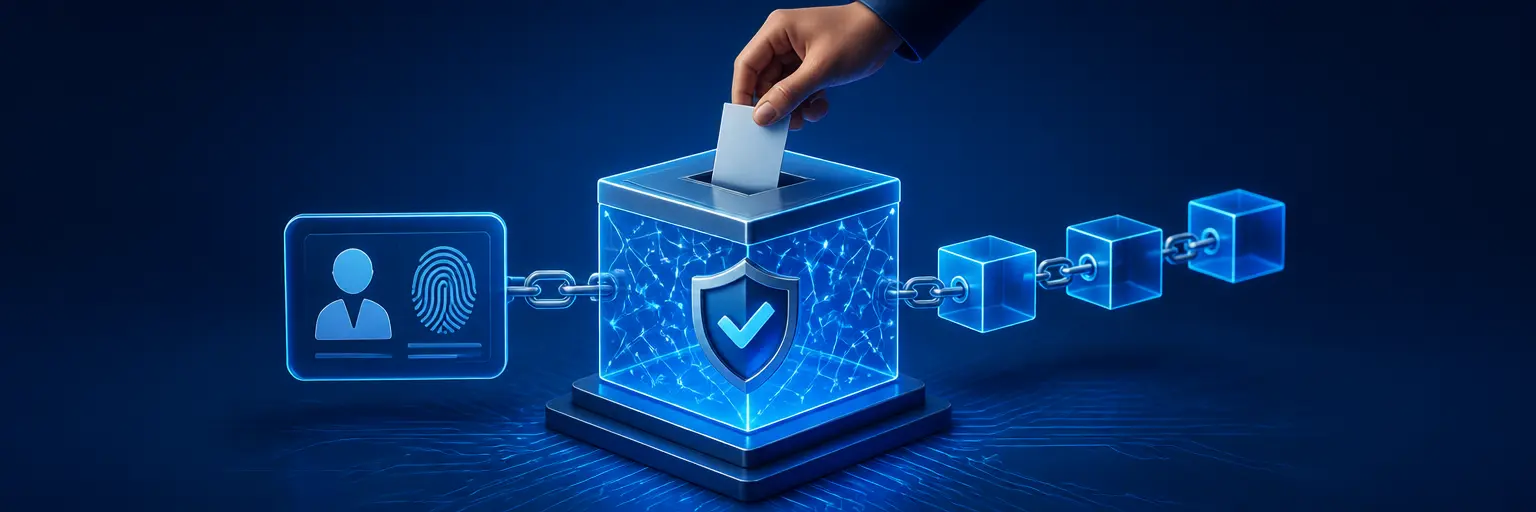
The Global Impact of Blockchain Digital Identity: Bridging the Digital Divide
Explore how blockchain in voting and digital identity can strengthen trust, privacy, and transparency in modern governance. 🗳️🔐 Discover secure digital identity solutions, tamper-resistant voting systems, verifiable credentials, and decentralized authentication designed to reduce fraud while giving individuals greater control over their data. Stay informed about enterprise blockchain innovations shaping secure elections, identity verification, data privacy, and decentralized systems for a more connected digital future.
61 articles
Blockchain Voting: A Solution for Secure and Transparent Remote Elections
Blockchain Voting: Mitigating the Risks of Centralized Election Systems
The Benefits of BlockchainBased Digital Identity for Businesses and Individuals
RealWorld Examples of Blockchain Voting: Successes and Lessons Learned
Digital Democracy: How Blockchain Could Revolutionize Election Integrity
Secure and Seamless: The Potential of Blockchain in Mobile Voting
Blockchain Digital Identity in Healthcare: Securing Patient Data and Improving Access
Financial Services and Blockchain Identity: Enhancing Security and KYC Processes
The Regulatory Landscape of Blockchain Voting: Navigating Legal Hurdles
The CostEffectiveness of Blockchain Digital Identity: LongTerm Benefits and ROI
Blockchain Voting: Can It Really Secure Our Elections?
Government Services and Blockchain Identity: Delivering CitizenCentric Solutions
The Role of DAOs in Shaping the Future of Blockchain Voting and Governance
Blockchain Voting Pilot Programs: Testing the Waters of Digital Democracy
Is Blockchain the Answer to Voter Fraud? Exploring the Technology's Potential
Decentralized Identity Management: The Future of Online Authentication with Blockchain
Secure Your Digital Life: Blockchain's Role in Protecting Online Identities
Smart Contracts and Elections: Automating Trust in the Voting Process
RealWorld Applications of Blockchain Digital Identity: Beyond Passwords
Beyond Passwords: The Evolution of Authentication with Blockchain Digital Identity
Decentralized Voting Platforms: Empowering Citizens with Blockchain Technology
The Convergence of Blockchain Voting and Digital Identity: Synergies and Opportunities
Can Blockchain Voting Prevent Double Voting? A Deep Dive into Security Mechanisms
The Impact of Blockchain Digital Identity on User Privacy and Data Control
Travel and Blockchain Identity: Streamlining Border Control and Passenger Verification
Beyond Cryptocurrencies: Blockchain's Impact on Digital Identity Management
The Ethical Considerations of Blockchain Voting and Digital Identity Systems
Exploring Different Consensus Mechanisms for Secure Blockchain Voting Platforms
Blockchain Digital Identity: Empowering Underserved Populations with Secure Identification
🔐 Blockchain in Voting & Digital Identity
Explore how blockchain technology is transforming voting systems and digital identity management for governments, enterprises, institutions, and citizens. This subcategory from Blockchain Trends examines secure digital voting, decentralized identity, verifiable credentials, blockchain-based voter registration, identity verification, privacy protection, and trusted digital services. Discover how distributed ledgers can improve transparency, accountability, fraud prevention, data ownership, and access control while addressing the practical, legal, and ethical challenges of real-world adoption.
🗳️ Blockchain-Based Voting Systems
Learn how blockchain voting platforms are designed to support secure elections, remote voting, auditability, and tamper-evident records. Articles cover the potential of decentralized voting infrastructure to create transparent election processes while preserving ballot confidentiality and voter privacy.
Readers can expect analysis of online voting security, voter authentication, smart contracts for election administration, ballot verification, end-to-end audit trails, and the limitations of blockchain voting. Content also explores whether blockchain can reduce election fraud and how it can complement established electoral safeguards rather than replace them.
🪪 Decentralized Digital Identity
Discover how decentralized identity, often called self-sovereign identity, enables individuals to control and share verified personal information without relying on a single centralized database. Blockchain-based identity solutions can support secure authentication, portable credentials, and privacy-preserving access to digital services.
This section explains decentralized identifiers, digital wallets, identity verification, verifiable credentials, identity ownership, and consent-based data sharing. Readers will gain practical insight into how blockchain identity management may improve onboarding, reduce identity theft, and support trusted interactions across organizations and platforms.
🛡️ Privacy, Security & Fraud Prevention
Blockchain can strengthen digital trust by creating immutable records and verifiable transactions, but identity and voting applications require carefully designed privacy controls. Explore technologies such as zero-knowledge proofs, encryption, selective disclosure, multi-factor authentication, and secure key management.
Articles examine how blockchain systems can help prevent duplicate voting, credential fraud, account takeovers, and unauthorized data changes. They also address important risks, including exposed personal information, lost private keys, metadata analysis, smart contract vulnerabilities, and the challenge of balancing transparency with anonymity.
🏛️ Government, Enterprise & Public Services
Understand how public institutions and businesses are evaluating blockchain for citizen identity, employee credentials, access management, compliance, licensing, benefits distribution, and secure digital records. Enterprise blockchain solutions can connect trusted organizations while improving the efficiency of identity-related workflows.
Readers will find coverage of permissioned blockchains, consortium networks, governance models, interoperability standards, and regulatory compliance. The content highlights how blockchain digital identity systems can support know your customer processes, healthcare records, education credentials, financial inclusion, and cross-border services.
⚖️ Regulation, Governance & Real-World Adoption
Successful blockchain voting and identity projects depend on more than technical performance. This section explores data protection laws, election regulations, accessibility requirements, digital identity frameworks, institutional governance, and public trust.
Expect balanced discussions of implementation costs, scalability, interoperability, usability, digital exclusion, legal recognition, and stakeholder accountability. These insights help readers evaluate blockchain identity and voting solutions based on measurable outcomes, security standards, and responsible technology adoption.
❓ Frequently Asked Questions About Blockchain in Voting & Digital Identity
🔎 What is blockchain voting?
Blockchain voting uses distributed ledger technology to record election-related data in a tamper-evident and auditable way. Depending on the design, it may support voter registration, ballot tracking, vote counting, and election auditing. However, secure blockchain voting must also protect voter anonymity, prevent coercion, provide accessibility, and undergo independent security testing.
🪪 How does blockchain support digital identity?
Blockchain can provide a trusted infrastructure for decentralized identifiers and verifiable credentials. Instead of storing all personal information in one central database, users may hold credentials in a digital wallet and share only the information required for a specific service. This approach can improve privacy, portability, and user control.
🔐 Is blockchain identity completely private?
No. Blockchain does not automatically guarantee privacy. Public transaction data can sometimes reveal patterns or sensitive metadata, and information written directly to an immutable ledger may be difficult to remove. Effective solutions use privacy-by-design methods such as off-chain storage, encryption, selective disclosure, and zero-knowledge proofs.
🛡️ Can blockchain eliminate election fraud?
Blockchain may help protect records from unauthorized alteration and improve election auditing, but it cannot eliminate every form of election fraud. Threats can occur during voter registration, device use, authentication, software operation, coercion, or vote transmission. Blockchain should therefore be combined with strong election procedures, independent audits, secure infrastructure, and transparent governance.
🚀 What are the main challenges of blockchain in voting and identity?
Key challenges include scalability, usability, accessibility, privacy, interoperability, cybersecurity, regulatory compliance, key recovery, and public trust. Adoption also requires cooperation between governments, enterprises, technology providers, election officials, and citizens. Careful pilot programs and evidence-based governance are essential for responsible implementation.