
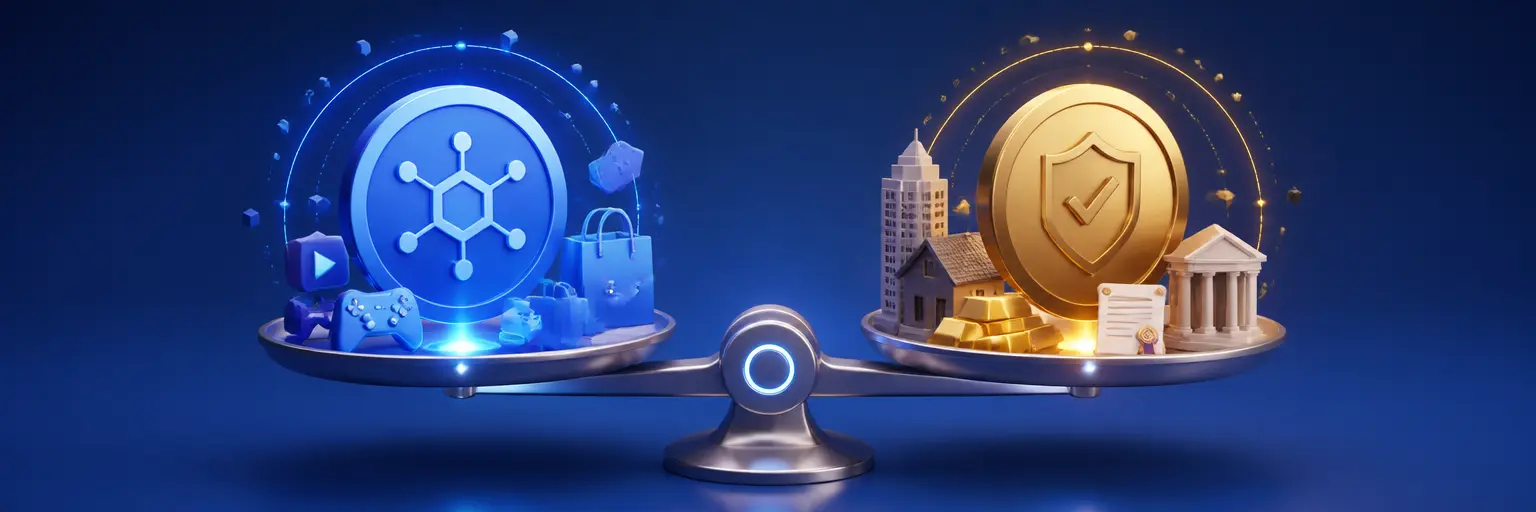
Tokenomics 101: Mastering the Utility vs. Security Token Debate
Explore how utility and security tokens shape blockchain tokenization and digital asset markets. 🔍 Understand the key differences in purpose, rights, compliance, and investor access—from tokens that unlock products and services to those representing regulated ownership or financial interests. Stay informed on tokenomics, blockchain regulation, digital securities, and decentralized finance to better evaluate emerging opportunities and the future of compliant blockchain innovation. 🚀
58 articles
Utility Tokens and Governance: Empowering Communities Through Decentralization
Utility Tokens vs. Cryptocurrencies: What Sets Them Apart?
Tokenomics Deep Dive: Utility vs. Security Token Models
Security Token Offerings (STOs): The Future of Compliant Fundraising?
Utility Tokens: Driving Innovation in Decentralized Autonomous Organizations (DAOs)
Demystifying Token Types: Utility, Security, and Beyond – What You Need to Know
Utility Tokens: Building Decentralized Economies from the Ground Up
Utility Tokens: The Engine of Decentralized Applications (dApps)
Utility Tokens in DeFi: Fueling Decentralized Finance Applications
Tokenizing the World: Utility and Security Tokens as Building Blocks
The Legal Line in the Sand: Utility vs. Security Token Regulations
Security Tokens: A New Era for Alternative Investments?
The Convergence of Utility and Security: Hybrid Token Models Emerge
Security Tokens: Expanding Access to Investment Opportunities Globally
Decoding Token Types: Is it Utility or Security? A Simple Guide
The Investor's Dilemma: Choosing Between Utility and Security Token Opportunities
The Regulatory Future of Utility and Security Tokens: Predictions and Trends
Security Tokens and Debt: Tokenized Bonds and Lending Platforms
Security Tokens: Dividends, Equity, and Regulatory Scrutiny
The Risks and Rewards of Utility Token Investments
Security Tokens: Paving the Way for Institutional Adoption of Crypto
Token Type Matters: Why Understanding Utility vs. Security is Crucial
Security Tokens and Tokenized Funds: Diversification and Portfolio Management
The Evolution of Tokens: From Utility to Security and Beyond
Choosing the Right Token Model: Utility or Security for Your Project?
The Future of Fundraising: STOs vs. Traditional IPOs
Security Token Platforms: Infrastructure for Compliant Tokenized Assets
Utility Tokens and the Metaverse: Powering Virtual Worlds and Experiences
The LongTerm Vision for Utility Tokens: Sustainability and Scalability
🔍 Utility vs. Security Tokens: Understanding Tokenization and Tokenomics
Utility vs. Security Tokens is a core topic in tokenization and tokenomics, helping readers understand how blockchain-based assets are designed, regulated, and used. On Blockchain Trends, this subcategory explores the difference between utility tokens that provide access to products or services and security tokens that may represent ownership, investment rights, or financial interests. Discover how token classification influences compliance, fundraising, governance, market access, and the future of decentralized systems.
⚙️ What Are Utility Tokens?
Utility tokens are digital assets created to provide access to a blockchain platform, decentralized application, product, or service. They may be used to pay transaction fees, unlock features, access digital ecosystems, reward users, or participate in decentralized protocols. Readers can expect clear explanations of utility token functionality, token utility models, supply design, distribution strategies, and the role of utility tokens in Web3 adoption.
This section also examines how utility tokens support decentralized finance, gaming, data networks, creator economies, and enterprise blockchain applications. Articles may explore token demand, network effects, staking, rewards, governance participation, and the risks of designing a token with limited or artificial utility.
🛡️ What Are Security Tokens?
Security tokens are blockchain-based representations of investment interests or ownership in an asset, company, fund, debt instrument, or revenue stream. Depending on the jurisdiction, they may be subject to securities laws and financial regulations. Readers will learn how security token offerings, tokenized shares, real estate tokens, bonds, and investment contracts can connect traditional finance with blockchain technology.
Content in this section focuses on investor protection, legal disclosure, compliance requirements, custody, transfer restrictions, and regulated trading venues. It also explains how security tokenization can improve transparency, fractional ownership, settlement efficiency, and access to traditionally illiquid assets while introducing important regulatory and operational responsibilities.
⚖️ Utility Tokens vs. Security Tokens: Key Differences
Understanding the difference between utility and security tokens requires more than examining the name or marketing language of a digital asset. Classification may depend on the token’s economic purpose, buyer expectations, rights, distribution method, and the laws applicable in a specific jurisdiction. Readers can compare token purpose, ownership rights, profit expectations, regulatory treatment, and transferability.
Detailed comparisons help businesses, investors, developers, and policymakers evaluate token structures more effectively. Expect practical discussions of fundraising, ecosystem access, dividends, governance, investment returns, decentralization, issuer obligations, and the potential consequences of misclassifying a token.
📜 Regulation, Compliance, and Legal Classification
Token classification is closely connected to financial regulation, anti-money laundering requirements, know-your-customer procedures, consumer protection, and securities laws. This subcategory explains why legal treatment differs across countries and why a token considered a utility asset in one market may face security token requirements in another. Readers can explore regulatory frameworks, enforcement trends, licensing, disclosures, and compliance technology.
Blockchain Trends presents regulatory concepts in an accessible way while emphasizing that legal analysis should be based on the relevant jurisdiction and project structure. Articles may cover regulatory uncertainty, token registration, exemptions, compliant token issuance, digital asset legislation, and the growing importance of legal counsel in blockchain fundraising.
💼 Tokenization, Fundraising, and Real-World Assets
Utility and security tokens serve different purposes in blockchain fundraising and asset tokenization. Utility tokens can support ecosystem participation, while security tokens may help represent ownership or financial claims. Readers can discover how token economics influence capital formation, community growth, liquidity, investor access, and the creation of digital markets for real-world assets.
Topics may include tokenized real estate, private equity, company shares, commodities, intellectual property, invoices, bonds, and other financial instruments. The content also considers market infrastructure, smart contract automation, fractional ownership, settlement processes, and the challenges of connecting on-chain records with legally enforceable off-chain rights.
📊 Tokenomics and Economic Design
Tokenomics determines how a digital asset is created, distributed, used, valued, and governed. This section explores supply limits, inflation, vesting schedules, allocations, incentives, liquidity, staking, burning mechanisms, and treasury management. Readers will learn why strong token utility and sustainable economic design are essential for long-term network health.
Security token economics may focus on ownership, cash flows, voting rights, redemption, and investor returns, while utility token economics often emphasizes usage, participation, and ecosystem incentives. By comparing these models, readers can better evaluate token projects, white papers, fundraising proposals, and decentralized applications.
🔐 Risks, Benefits, and Investor Considerations
Every token model involves opportunities and risks. Utility tokens may offer access to emerging digital ecosystems but can face volatility, weak demand, unclear utility, and speculative behavior. Security tokens may provide regulated investment exposure and fractional ownership, yet they can involve compliance costs, limited liquidity, custody risks, and restrictions on eligible investors.
Readers can expect balanced analysis of market volatility, smart contract vulnerabilities, fraud, regulatory enforcement, liquidity limitations, governance risks, and information asymmetry. Educational content helps users ask informed questions before buying, issuing, holding, or integrating blockchain tokens into a business strategy.
🚀 The Future of Utility and Security Tokens
The distinction between utility and security tokens is evolving as blockchain technology becomes integrated with financial services, enterprise systems, digital identity, gaming, and decentralized infrastructure. Future token models may combine access rights, governance features, ownership claims, and automated compliance through programmable smart contracts.
Blockchain Trends examines how tokenized economies, regulated digital markets, central bank initiatives, decentralized finance, and real-world asset platforms may shape the next phase of blockchain adoption. Follow this subcategory for insights into emerging standards, legal developments, institutional participation, and the future of digital ownership.
❓ Frequently Asked Questions About Utility vs. Security Tokens
What is the main difference between a utility token and a security token?
A utility token is primarily designed to provide access to a product, service, platform, or blockchain ecosystem. A security token generally represents an investment interest, ownership claim, debt instrument, or expectation of financial returns. However, classification depends on the token’s actual characteristics and applicable laws, not simply its label.
Are utility tokens regulated?
Utility tokens may still be subject to regulation, particularly when they are marketed as investments, provide financial rights, or are sold in ways that create an expectation of profit. They may also involve consumer protection, taxation, anti-money laundering, and data privacy requirements. Businesses should obtain professional legal guidance before launching a token.
Are security tokens the same as cryptocurrencies?
No. A cryptocurrency is generally designed to function as digital money or a native asset within a blockchain network. A security token represents an investment or financial interest and may be subject to securities regulations. Some security tokens use blockchain technology while remaining legally connected to traditional assets or contractual rights.
Why is token classification important?
Token classification affects how an asset can be issued, marketed, sold, transferred, and traded. It may determine whether registration, investor disclosures, licensing, know-your-customer checks, or trading restrictions are required. Correct classification helps reduce legal risk and supports greater confidence among users and investors.
Can a token be both a utility token and a security token?
A token may have multiple features, but its legal classification depends on the complete economic and contractual structure. A token marketed for platform access could still be treated as a security if buyers reasonably expect profits from the issuer’s efforts. Professional legal and regulatory analysis is essential when a project combines utility, governance, ownership, or investment characteristics.