
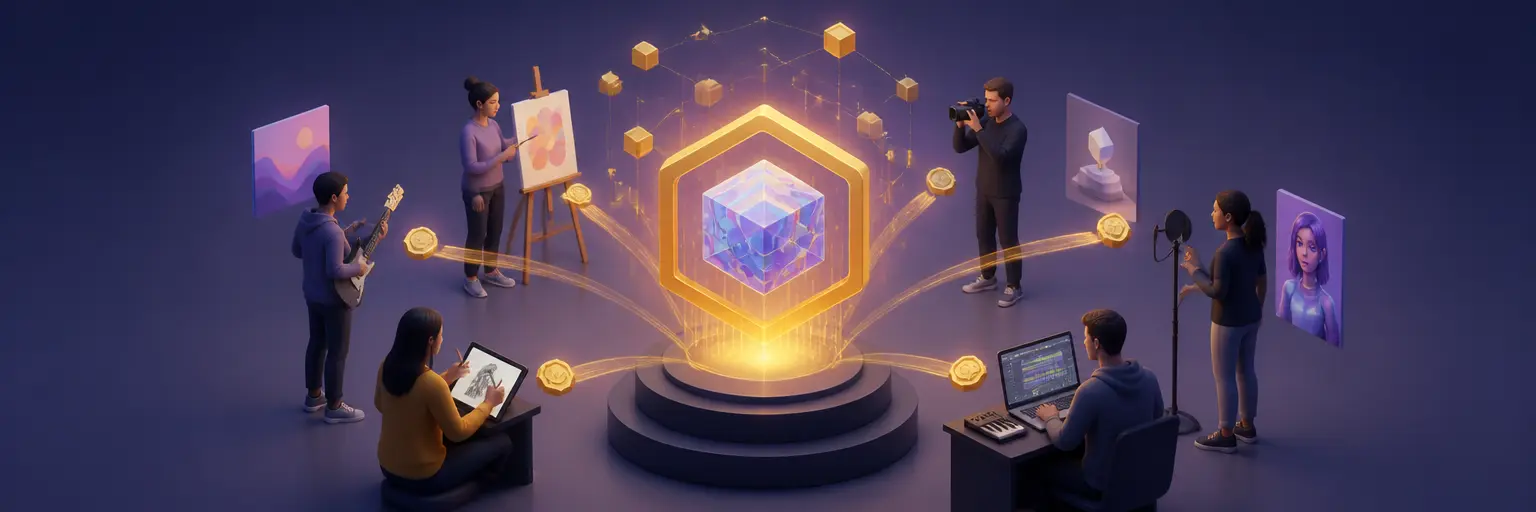
NFT Ticketing: Revolutionizing Event Access and Creator Revenue
Explore how NFTs and the creator economy are reshaping digital ownership, monetization, and community engagement. Discover blockchain-powered tools that help artists, musicians, gamers, and creators launch unique digital assets, build direct relationships with audiences, and unlock new revenue streams through tokenization. 🚀 Learn about NFT utility, royalties, decentralized marketplaces, fan tokens, and emerging Web3 business models shaping the future of creative industries. 🎨
66 articles
Dynamic NFTs: Evolving Digital Assets that React to RealWorld Events
Exploring Different Blockchain Platforms for NFT Creation: Ethereum, Solana, and More
NFTs and the Creator Revolution: How Digital Ownership is Rewriting the Rules
NFT Memberships and Access: Creating Exclusive Experiences for Creator Communities
NFTs and the Democratization of Art: Empowering Creators Globally
Generative Art NFTs: Exploring Algorithmic Creativity and Blockchain
Creating Your First NFT: A StepbyStep Guide for Digital Artists
The Creator Economy's Shift to Decentralization: NFTs as a Catalyst for Change
The Evolution of Digital Art: From Traditional to NFTBased Creation
NFT Myths Debunked: Separating Fact from Fiction in the Creator Economy
NFT Drops and Launches: Creating Excitement and Demand for Creator Collections
NFT Communities as Support Systems for Creators: Collaboration and Growth
The Creator's Toolkit: Essential Platforms and Marketplaces for NFT Sales
Addressing NFT Scams: Protecting Creators and Collectors in the Digital Art World
Understanding Gas Fees and Optimizing NFT Transactions for Creators
The Environmental Impact of NFTs: Sustainable Practices for EcoConscious Creators
Creator Independence Unleashed: How NFTs Cut Out the Middleman
Smart Contracts and Creator Rights: How NFTs Automate Creator Payments
The Future of Creator Monetization: NFTs and Beyond in the Web3 Era
Decentralized Autonomous Organizations (DAOs) for Creators: Collective Ownership and Governance
Copyright and NFTs: Understanding Intellectual Property in the Creator Economy
NFT Wallets and Security: Protecting Your Digital Assets as a Creator
Pricing Your NFTs: Determining Fair Value in the Creator Economy
AI and NFTs: The Intersection of Artificial Intelligence and the Creator Economy
NFT Marketing Strategies: Promoting Your Digital Art and Building a Creator Brand
NFTs: A New Era of DirecttoFan Engagement for Creators
Writers and NFTs: Can Blockchain Empower Authors in the Digital Age?
NFT Art Auctions: A Guide for Creators to Maximize Value and Reach
Virtual Real Estate NFTs: Building Creator Hubs in the Metaverse
🎨 NFTs & the Creator Economy: Discovering New Digital Ownership Models
Welcome to the NFTs & the Creator Economy subcategory at Blockchain Trends, where we explore how non-fungible tokens, digital ownership, and blockchain technology are transforming the way creators produce, distribute, and monetize content. As part of our Tokenization and Tokenomics coverage, this section examines the role of NFTs in art, music, gaming, sports, entertainment, publishing, virtual worlds, and online communities. Readers can expect practical insights into NFT marketplaces, creator royalties, token utility, digital collectibles, Web3 business models, and decentralized communities, with a focus on the opportunities and challenges shaping the next generation of the creator economy.
🖼️ NFT Art, Digital Collectibles, and Creative Ownership
Explore how NFTs give digital artists and creative professionals new ways to establish provenance, verify authenticity, and sell unique digital works. Our coverage examines NFT art marketplaces, generative art, collectible projects, digital photography, illustrations, audiovisual experiences, and blockchain-based certificates of ownership.
Readers will also learn how tokenized ownership can support artists through direct sales, limited editions, community access, and secondary-market participation. We explain important concepts such as minting, metadata, smart contracts, wallet security, gas fees, NFT valuation, and the difference between owning a token and owning the underlying intellectual property.
🎵 Music, Media, and New Revenue Streams for Creators
Blockchain is creating alternative models for musicians, filmmakers, writers, influencers, and independent media businesses. This section explores music NFTs, token-gated content, fan memberships, digital tickets, royalty management, collectible releases, and direct-to-audience distribution without relying solely on traditional intermediaries.
Discover how creators can use NFTs to build stronger fan relationships and develop recurring revenue opportunities. Articles address creator monetization, smart-contract royalties, fan ownership, digital memberships, Web3 publishing, decentralized media, and community-funded projects, while also considering legal, technical, and practical limitations.
🎮 Gaming, Virtual Worlds, and Metaverse Economies
Learn how NFTs support digital assets in blockchain gaming, metaverse platforms, virtual real estate, avatar systems, and online social experiences. We cover in-game items, character skins, land ownership, interoperability, play-to-earn models, and the growing shift toward player-owned economies.
Our analysis focuses on whether tokenized assets provide meaningful utility or simply introduce speculative behavior. Readers can expect insights into Web3 gaming economics, NFT utility, digital identity, virtual goods, decentralized platforms, marketplace liquidity, and sustainable token models designed to benefit players, developers, creators, and communities.
🤝 Creator Communities, Memberships, and Fan Engagement
NFTs can function as access passes to exclusive communities, events, educational resources, collaborative projects, and premium experiences. This section explores how creators use token-gated websites, NFT memberships, decentralized autonomous organizations, social tokens, and digital badges to develop engaged audiences.
We examine the opportunities and risks of community-led creator businesses, including governance, moderation, inclusion, speculation, and long-term value. Learn how Web3 communities and tokenized memberships can strengthen fan participation while requiring transparent communication, clear benefits, secure infrastructure, and responsible tokenomics.
⚖️ NFT Regulation, Intellectual Property, and Market Risks
The NFT ecosystem raises important questions about copyright, trademarks, consumer protection, taxation, securities regulation, privacy, and platform responsibility. Our coverage explains the legal and regulatory issues that artists, collectors, marketplaces, brands, and investors should consider before launching or purchasing NFT projects.
Readers will also find balanced analysis of scams, phishing attacks, fake collections, wash trading, copyright disputes, illiquid markets, environmental concerns, and changing platform policies. We emphasize research, wallet security, contract verification, transparent project documentation, and informed decision-making rather than hype-driven speculation.
❓ Frequently Asked Questions About NFTs & the Creator Economy
What is an NFT?
An NFT, or non-fungible token, is a unique blockchain-based record that can represent ownership, access, authenticity, or participation. NFTs may be associated with digital art, music, gaming items, memberships, tickets, certificates, and other digital or physical assets. The token itself does not always transfer copyright or intellectual property rights, so buyers should review the project’s terms carefully.
How do NFTs benefit creators?
NFTs can help creators sell directly to audiences, offer limited digital editions, create membership programs, distribute exclusive content, and build global communities. Depending on the smart contract and marketplace, creators may also receive automated royalties from eligible secondary sales. However, royalty enforcement and marketplace support can vary, so creators should understand the technical and legal conditions before launching an NFT collection.
Are NFTs a good investment?
NFTs are highly speculative and may lose value or become difficult to sell. Their price can depend on utility, cultural relevance, community strength, scarcity, creator reputation, marketplace demand, and broader market conditions. NFTs should be researched as digital assets with significant risks rather than treated as guaranteed investments.
What is the creator economy?
The creator economy includes independent artists, musicians, writers, video producers, developers, influencers, educators, and entrepreneurs who earn income from digital content, communities, products, services, and fan relationships. Blockchain and NFTs add tools for direct monetization, digital ownership, tokenized access, community governance, and global payment systems.
How can someone safely participate in the NFT ecosystem?
Start by using a reputable wallet and marketplace, enabling strong account security, verifying official contract addresses, and researching the creator or project. Never share a wallet seed phrase or sign unfamiliar transactions. Check ownership rights, fees, token utility, refund policies, and marketplace liquidity before purchasing. Responsible participation requires caution, independent research, and an understanding that NFT markets can change rapidly.