
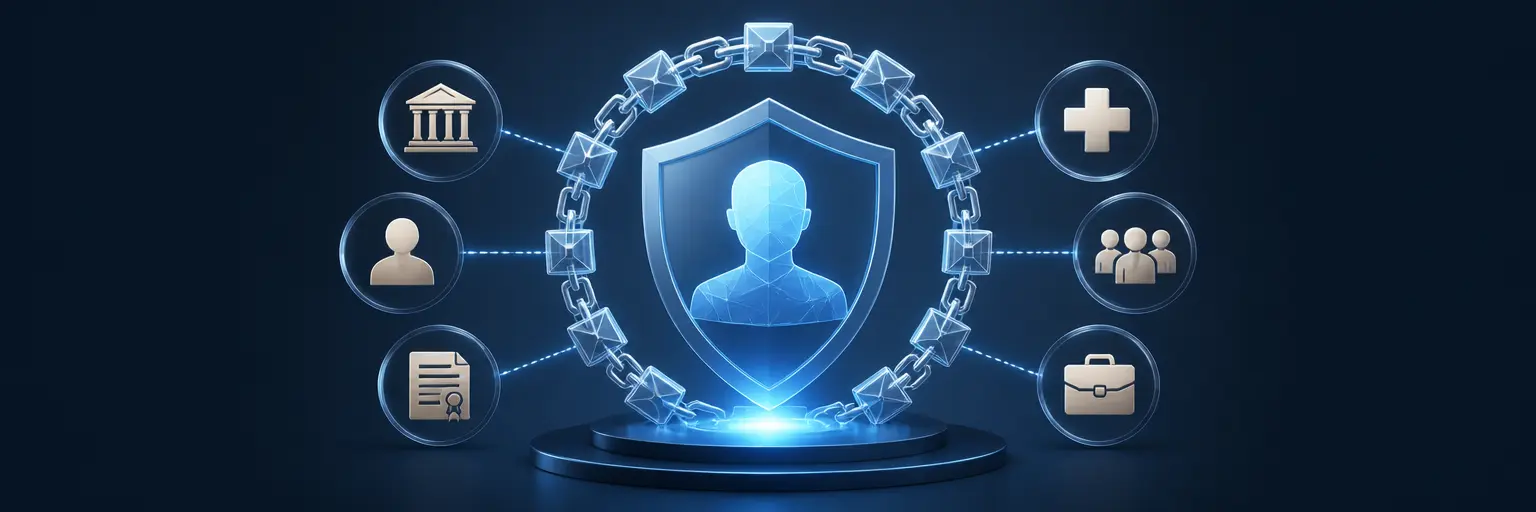
The Future of Digital Identity: Blockchain as a Catalyst for Innovation and Transformation
Explore how blockchain for digital identity is transforming privacy, security, and trust in online interactions. Discover decentralized identity solutions that give individuals greater control over personal data while helping organizations streamline verification, reduce fraud, and support compliant access management. 🔐🌐 Stay informed about self-sovereign identity, verifiable credentials, digital IDs, and the future of secure, user-owned identity systems.
59 articles
Case Studies: Successful Blockchain Identity Implementations Across Various Industries
Navigating the Blockchain Identity Landscape: A Practical Guide for Businesses and Organizations
The Rise of SSI: Blockchain's Impact on Personal Data Ownership and Control
IoT Security: Protecting Connected Devices with BlockchainBased Identity Management
KYC/AML Revolution: Streamlining Compliance with Blockchain Identity Solutions
Reimagining Digital Identity: The Blockchain Revolution is Here
Public vs. Private Blockchains for Digital Identity: Choosing the Right Architecture for Your Needs
Unlocking Secure and Private Digital Identity with Blockchain Technology
What is SelfSovereign Identity and Why Blockchain is the Perfect Match?
CrossChain Identity Solutions: Breaking Down Data Silos in the Blockchain Ecosystem
Demystifying Blockchain Identity: Making Decentralized Identity Accessible to Everyone
Streamlining Processes: Efficiency Gains with BlockchainBased Identity Systems
Government Services Reimagined: BlockchainBased Digital Identity for Citizens
Boosting Security: Blockchain's Unbreakable Shield for Digital Identities
Decentralized Identifiers (DIDs): The Core Building Blocks of Blockchain Identity Explained
Smart Contracts and Digital Identity: Automating Trust and Verification Processes Seamlessly
Key Management: The Cornerstone of Security in Blockchain Identity Solutions
Biometrics and Blockchain: A Powerful Synergy for Enhanced Identity Verification and Security
ZeroKnowledge Proofs: Enhancing Privacy and Security in Blockchain Identity Systems
The Ethical Implications of Blockchain Digital Identity: Privacy, Control, and Inclusion
Decentralized Control: Understanding SelfSovereign Identity on the Blockchain
Beyond Centralized Systems: Why Blockchain is the Future of Digital Identity
Security Vulnerabilities: Addressing Potential Risks in Blockchain Identity Architectures
The Time for Blockchain Identity is Now: Seizing Opportunities and Addressing Challenges HeadOn
Join the Digital Identity Revolution: Exploring Blockchain's Limitless Possibilities for the Future
Blockchain Identity and GDPR Compliance: Navigating Data Protection Regulations
Verifiable Credentials (VCs): Trustworthy Digital Proofs on the Blockchain for a Credible Web
The Business Case for Blockchain Digital Identity: ROI and Strategic Advantages
Interoperable Identity: Blockchain's Promise for a Seamless Digital Web
🔐 Blockchain for Digital Identity: Decentralized, Secure, and User-Controlled Credentials
Welcome to Blockchain for Digital Identity on Blockchain Trends, your source for exploring how decentralized technology is reshaping identity verification, authentication, privacy, and digital trust. This subcategory examines how blockchain-based identity systems can help individuals and organizations manage credentials securely without relying entirely on centralized databases. Discover insights into self-sovereign identity, verifiable credentials, decentralized identifiers, digital wallets, biometric privacy, identity governance, and blockchain authentication for government, healthcare, finance, education, and enterprise use cases.
🌐 Understanding Blockchain-Based Digital Identity
Blockchain for Digital Identity explores the principles behind decentralized identity management and explains how distributed ledgers can create more trustworthy systems for proving who someone is online. Readers can learn how cryptographic proofs, tamper-resistant records, and decentralized identifiers support secure digital identity verification while reducing dependence on centralized identity providers.
Our content translates complex concepts into practical explanations for technology professionals, policymakers, businesses, and anyone interested in the future of online identity. Expect coverage of identity ownership, credential portability, authentication workflows, blockchain identity standards, and the difference between storing personal data on a blockchain and using blockchain to verify data.
🧑💻 Self-Sovereign Identity and User Control
Self-sovereign identity, often called SSI, gives people greater control over their personal information and digital credentials. This subcategory explains how users may collect, store, present, and revoke verifiable credentials through digital wallets without repeatedly sharing unnecessary personal data with websites, institutions, or service providers.
Readers can expect analysis of privacy-by-design identity models, user-controlled data, consent management, selective disclosure, and portable credentials. We also examine the practical challenges of SSI adoption, including usability, recovery procedures, interoperability, legal recognition, and the responsibility users may have when managing their own digital identity keys.
🪪 Decentralized Identifiers and Verifiable Credentials
Decentralized identifiers, or DIDs, and verifiable credentials are essential building blocks of blockchain identity solutions. Articles in this section explain how DIDs can establish identifiers without depending on a single central authority, while verifiable credentials can provide cryptographically signed evidence of qualifications, employment, age, licenses, or organizational membership.
Learn how credential issuers, holders, and verifiers interact in decentralized identity ecosystems. Topics may include DID methods, credential schemas, digital signatures, revocation registries, trust frameworks, and standards such as those developed by the World Wide Web Consortium. The goal is to show how interoperable digital credentials can improve identity verification across platforms and borders.
🛡️ Privacy, Security, and Fraud Prevention
Blockchain-based identity systems can strengthen security by using cryptographic authentication and tamper-evident verification instead of relying solely on passwords or centralized databases. This section explores how decentralized identity may help reduce identity theft, credential fraud, account takeover, document forgery, and unauthorized data modification.
Privacy remains equally important. Readers will find discussions about zero-knowledge proofs, data minimization, pseudonymous identity, selective disclosure, encryption, key management, and the risks of exposing sensitive information on a permanent ledger. We emphasize that blockchain does not automatically guarantee privacy and that responsible system design is critical for protecting personal data.
🏛️ Government, Public Services, and Digital Citizenship
Governments are exploring blockchain for digital identity to improve access to public services, benefits, licenses, voting systems, tax administration, and civil records. This subcategory examines how decentralized identity infrastructure could support more efficient public administration while preserving citizen privacy and improving the reliability of official credentials.
Our coverage also considers digital citizenship, national identity programs, cross-border identity verification, refugee documentation, and inclusion for people who lack traditional forms of identification. Readers can assess the opportunities and risks of government-backed blockchain identity, including surveillance concerns, digital exclusion, governance accountability, and the need for transparent public standards.
🏢 Enterprise Identity and Industry Use Cases
Businesses can use blockchain identity solutions to streamline customer onboarding, employee verification, supplier management, compliance processes, and secure access to digital services. Expect practical analysis of enterprise blockchain identity, decentralized access management, Know Your Customer procedures, business credentials, and identity verification across complex supply chains.
We explore applications in banking, insurance, healthcare, education, travel, logistics, employment, and professional certification. Key topics include verifiable employee credentials, reusable KYC information, privacy-preserving compliance, fraud reduction, identity interoperability, and the business case for replacing fragmented identity systems with trusted digital credential networks.
⚖️ Regulation, Governance, and Ethical Considerations
Blockchain digital identity operates at the intersection of technology, law, public policy, and human rights. This section covers data protection regulations, electronic identification frameworks, identity assurance requirements, consent, data ownership, liability, and the legal status of digital credentials.
Readers will also find balanced discussions about governance models, decentralized trust authorities, standards organizations, accountability, and ethical design. We examine how blockchain identity projects can avoid discrimination, protect vulnerable users, support accessibility, and comply with privacy principles such as data minimization and the right to control personal information.
🚀 The Future of Decentralized Identity
The future of digital identity may involve interoperable wallets, portable credentials, passwordless authentication, decentralized access control, and trusted digital interactions across Web3 and traditional online services. Blockchain Trends investigates emerging developments that could make identity more secure, private, reusable, and user-centered.
Stay informed about identity wallets, zero-knowledge identity proofs, decentralized credentials, biometric protection, digital passports, Web3 authentication, and cross-platform identity standards. We also evaluate real-world adoption barriers, including scalability, user experience, regulatory uncertainty, fragmented ecosystems, lost keys, and the need for trusted recovery mechanisms.
❓ Frequently Asked Questions About Blockchain for Digital Identity
What is blockchain for digital identity?
Blockchain for digital identity uses distributed ledger technology, cryptography, and decentralized identifiers to help verify identity information without depending entirely on one centralized database. Blockchain may record proofs, identifiers, or verification events while sensitive personal data is generally stored securely outside the blockchain.
What is self-sovereign identity?
Self-sovereign identity is an approach that allows individuals to manage and present their own digital credentials. Instead of repeatedly surrendering personal information to multiple organizations, users can store credentials in a digital wallet and share only the information required for a specific transaction.
Are blockchain identity systems private?
Blockchain identity systems can improve privacy through selective disclosure, encryption, pseudonyms, and zero-knowledge proofs, but privacy is not automatic. Poorly designed systems may expose identifying information or create permanent transaction records, so privacy-preserving architecture and responsible data governance are essential.
What are decentralized identifiers and verifiable credentials?
A decentralized identifier is a digital identifier that can be created and managed without relying exclusively on a central authority. A verifiable credential is a digitally signed statement, such as a diploma, license, or proof of age, that can be checked for authenticity and integrity by an authorized verifier.
What are the main challenges of blockchain digital identity?
Important challenges include regulatory compliance, interoperability, scalability, user experience, key recovery, accessibility, identity theft, governance, and the risk of permanent data exposure. Successful blockchain identity solutions must combine strong cryptography with clear legal frameworks, reliable standards, secure wallet design, and inclusive implementation.