
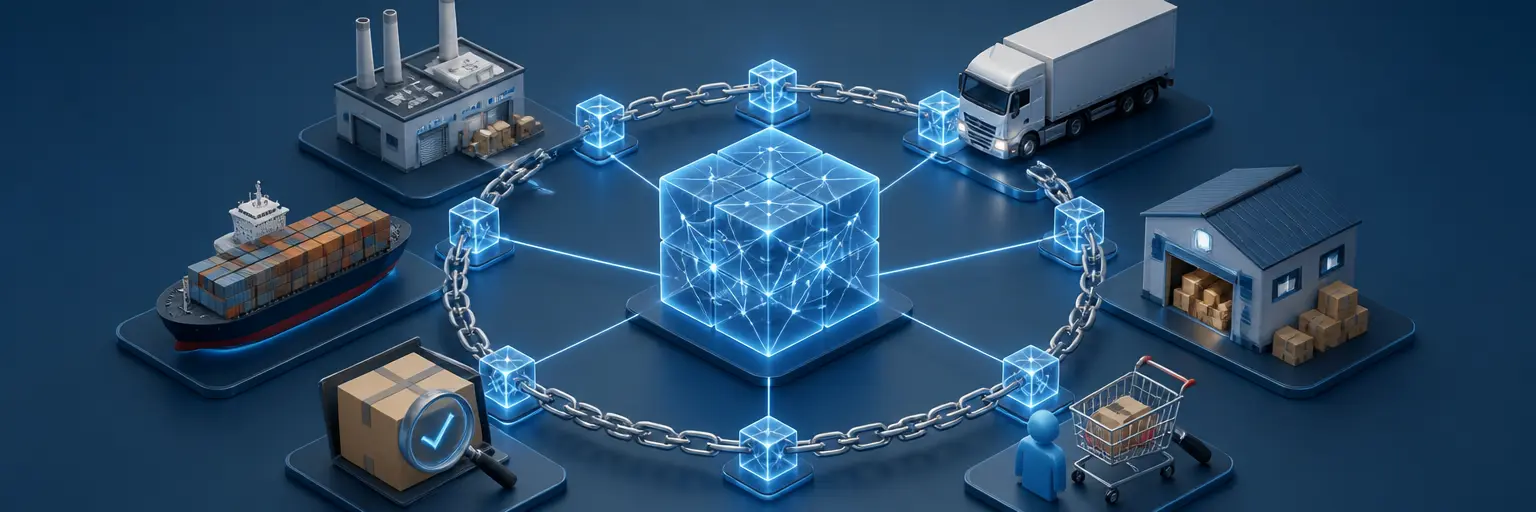
Supplier Verification Simplified: Blockchain's Impact on Manufacturing Supply Chain Integrity
Explore real-world blockchain in supply chain case studies to see how decentralized technology is improving transparency, traceability, efficiency, and trust across global logistics. Discover practical success stories featuring blockchain applications in manufacturing, shipping, retail, food safety, and procurement—showing how organizations reduce fraud, verify product origins, streamline operations, and build more resilient supply networks. 🚚🔗 Gain valuable insights into enterprise blockchain adoption and the future of smarter, more connected supply chains.
56 articles
Conflict Minerals No More? Blockchain's Potential for Ethical Mining Supply Chains Case Study
Consumer Trust, Digitally Built: Blockchain's Influence on Food Supply Chain Confidence
Transforming Pharmaceutical Supply Chains: Blockchain Innovations for Drug Safety and Traceability Case Studies
Luxury Goods Authenticity: Blockchain's Role in Combating Counterfeiting and Ensuring Provenance Case Studies
Reverse Logistics Revolution: Blockchain for Streamlined Returns and Waste Reduction Case Study
Sustainable Supply Chains, Powered by Blockchain: RealWorld Case Studies
Driving Sustainability in Supply Chains: Blockchain Initiatives for Environmental and Social Impact Case Studies
Data Integrity Guaranteed: Blockchain's Foundation for Trustworthy Supply Chain Operations
Supply Chain Finance, Reimagined: Blockchain's Potential to Optimize Financial Flows Case Study
Optimizing Logistics and Distribution: BlockchainEnabled Efficiencies and Cost Savings Case Studies
Streamlining CrossBorder Trade: Blockchain Solutions for Efficient and Secure International Logistics Case Studies
Customs Clearance Revolution: Streamlining Trade with Blockchain Case Study Analysis
FutureProofing Supply Chains: Insights from CuttingEdge Blockchain Implementations Case Studies
Medical Device Security: Blockchain's Contribution to Patient Safety in Supply Chains Case Study
Blockchain Adoption in Supply Chains: Successes, Challenges, and Key Learnings Case Studies
Inventory Intelligence: Blockchain for Efficient Management in Complex Supply Chains Case Study
From Farm to Fork, Digitally Secured: A Blockchain Case Study in Agricultural Supply Chains
Overcoming Supply Chain Bottlenecks: Blockchain Solutions in Action Case Studies
Ecosystem Transformation: Blockchain's Broader Impact on Supply Chain Networks Case Studies
Supply Chain Optimization: RealWorld Examples of BlockchainDriven Efficiency Gains Case Studies
Global Logistics Reimagined: Blockchain's Transformative Power in International Trade Case Study
Diamonds and Decentralization: Tracing Gemstones with Blockchain for Provenance Case Study
The Power of Distributed Ledger: Revolutionizing Supply Chain Management with Blockchain Case Studies
Small Farmers, Big Tech: Blockchain Empowering Agricultural Supply Chains A Case Study
Collaborative Supply Chains: Fostering Trust and Efficiency with Blockchain Case Studies
Unlocking Efficiency: A Deep Dive into Blockchain's Impact on Automotive Supply Chains
Carbon Footprint Tracking: A Blockchain Case Study in Environmentally Conscious Supply Chains
Electronics Transparency: How Blockchain Enhances Visibility in Tech Supply Chains
Beyond Counterfeit Goods: How Blockchain Secures the Luxury Supply Chain A Case Study
📦 Blockchain in Supply Chain Case Studies: Real-World Enterprise Success Stories
Explore how blockchain technology is transforming supply chains through real-world case studies, enterprise implementations, and measurable success stories. This subcategory examines how manufacturers, retailers, logistics providers, food producers, pharmaceutical companies, and global brands use distributed ledger technology to improve traceability, transparency, product authentication, compliance, inventory management, and supply chain efficiency. At Blockchain Trends, readers can discover practical examples of blockchain adoption beyond cryptocurrencies and understand how decentralized systems are solving complex business challenges.
🔍 Supply Chain Transparency and Product Traceability
Discover case studies showing how blockchain creates a shared, tamper-resistant record of products as they move from raw materials and manufacturers to distributors, retailers, and customers. These examples explain how companies use blockchain-based supply chain tracking to record transactions, verify origins, monitor shipments, and improve visibility across multi-tier supplier networks.
Readers can expect clear analysis of the business benefits, including faster recalls, improved supplier accountability, reduced fraud, and stronger customer confidence. Each case study highlights the technologies, data flows, implementation strategies, and operational outcomes behind successful product traceability and supply chain transparency programs.
🌾 Food, Agriculture, and Ethical Sourcing Case Studies
Learn how blockchain is being applied to food supply chains, agriculture, seafood, coffee, fresh produce, and ethically sourced commodities. These case studies explore how companies verify product origins, document farming and processing conditions, monitor temperature-sensitive shipments, and provide consumers with reliable information about sustainability and provenance.
The featured examples demonstrate how blockchain for food safety can support faster contamination investigations, responsible sourcing, and compliance with industry standards. You will also find insights into the challenges of collecting trustworthy data, onboarding farmers and suppliers, and connecting blockchain platforms with IoT sensors and existing enterprise systems.
💊 Pharmaceutical and Healthcare Supply Chain Success Stories
Examine blockchain applications in pharmaceutical logistics, medical supply distribution, clinical materials, and healthcare product authentication. These case studies reveal how distributed ledgers help organizations track medicines across international supply chains, verify authorized participants, reduce counterfeit drugs, and maintain auditable records for regulators.
Readers will gain a practical understanding of how blockchain in pharmaceutical supply chains supports serialization, chain-of-custody monitoring, recall management, and regulatory compliance. The analysis also considers privacy requirements, interoperability, data governance, and the importance of integrating blockchain with enterprise resource planning and warehouse management systems.
🚢 Logistics, Shipping, and Global Trade Applications
Explore real-world blockchain case studies in freight forwarding, maritime shipping, customs documentation, trade finance, and international logistics. These examples show how blockchain networks can reduce paperwork, synchronize information between trading partners, and create a trusted digital record for shipments, bills of lading, invoices, and customs declarations.
Successful implementations demonstrate how blockchain logistics solutions can reduce administrative costs, shorten clearance times, minimize disputes, and improve shipment visibility. The articles also explain the role of smart contracts, digital identities, tokenized documents, and permissioned blockchain platforms in modern global trade.
🏭 Manufacturing, Retail, and Supplier Management
Discover how manufacturers and retailers use blockchain to manage suppliers, validate components, monitor production, and protect brand reputation. Case studies cover industries such as automotive, electronics, apparel, luxury goods, and consumer products, where companies need reliable information about materials, labor practices, quality controls, and distribution channels.
These success stories show how enterprise blockchain for supply chain management can strengthen collaboration without requiring every organization to share sensitive commercial data publicly. Readers will learn how blockchain supports supplier verification, anti-counterfeiting programs, circular economy initiatives, warranty management, and more accurate product lifecycle records.
⚙️ Blockchain Technology, Smart Contracts, and IoT Integration
Understand the technical foundations behind successful supply chain blockchain projects. This section explores how permissioned ledgers, smart contracts, Internet of Things devices, RFID tags, QR codes, digital twins, cloud platforms, and application programming interfaces work together to capture and verify supply chain data.
Readers can expect accessible explanations of implementation architecture, data validation, consensus mechanisms, cybersecurity, scalability, and interoperability. The case studies emphasize that blockchain is most effective when paired with reliable data sources and well-designed business processes, rather than treated as a standalone replacement for every existing supply chain system.
📊 Measuring ROI, Efficiency, and Business Impact
Go beyond technology claims with case studies focused on measurable outcomes. This section examines indicators such as reduced processing times, lower documentation costs, fewer disputes, improved inventory accuracy, faster product recalls, reduced counterfeit activity, enhanced compliance, and stronger customer engagement.
Each example helps readers evaluate whether blockchain delivers meaningful value in a specific supply chain environment. The analysis highlights blockchain return on investment, adoption costs, network effects, integration requirements, governance models, and the difference between pilot projects and scalable enterprise deployments.
🧩 Challenges, Lessons Learned, and Adoption Strategies
Explore the practical barriers that organizations face when implementing blockchain in supply chain operations. These include fragmented data standards, supplier adoption, privacy concerns, regulatory uncertainty, integration with legacy systems, unclear governance, scalability limitations, and the “garbage in, garbage out” problem.
The case studies provide actionable lessons for organizations planning a blockchain supply chain project. Readers will learn why successful initiatives begin with a clearly defined business problem, establish shared standards, involve key stakeholders early, and use measurable milestones to move from proof of concept to production.
❓ Frequently Asked Questions About Blockchain in Supply Chain Case Studies
What is blockchain in supply chain management?
Blockchain in supply chain management uses a distributed ledger to record and share verified information about products, transactions, shipments, suppliers, and processes. It can improve transparency, traceability, security, and accountability across organizations that may not fully trust one another.
What are the main benefits of blockchain for supply chains?
Key benefits include product traceability, faster recalls, counterfeit prevention, improved inventory visibility, streamlined documentation, automated smart contract payments, stronger compliance, and better coordination between suppliers, logistics providers, manufacturers, and retailers.
Which industries are using blockchain supply chain solutions?
Blockchain supply chain applications are being explored and deployed in food and agriculture, pharmaceuticals, healthcare, logistics, shipping, automotive manufacturing, electronics, fashion, luxury goods, retail, energy, and international trade.
What challenges can companies face when adopting blockchain?
Common challenges include high integration costs, limited interoperability, inconsistent data quality, supplier onboarding, privacy requirements, regulatory changes, unclear network governance, and the need to connect blockchain platforms with existing ERP, warehouse, logistics, and IoT systems.
How can a company measure the success of a blockchain supply chain project?
Organizations can measure success through traceability coverage, recall response time, documentation costs, shipment visibility, dispute reduction, inventory accuracy, compliance performance, counterfeit detection, processing speed, user adoption, and overall return on investment. A successful project should link blockchain adoption to specific operational and commercial goals.