
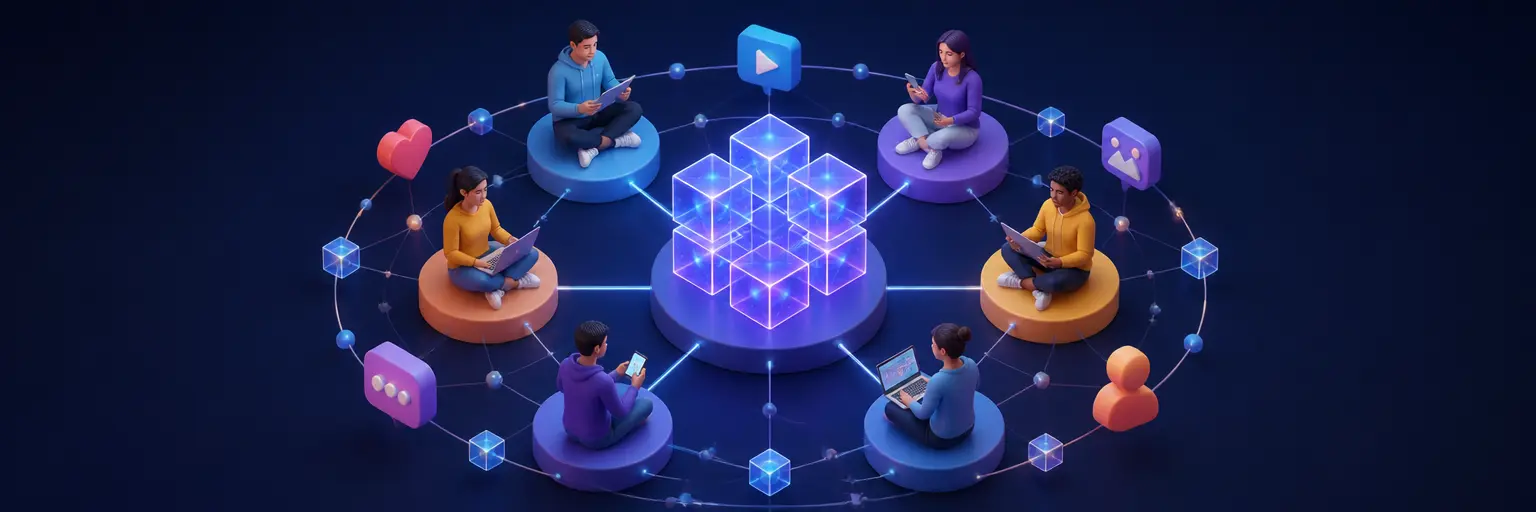
The Impact of Decentralized Social Media on Free Speech
Explore decentralized social media platforms that give users greater control over identity, content, and digital communities. Powered by blockchain technology, these Web3 networks promote data ownership, censorship resistance, transparent governance, and creator monetization—helping shape a more open and user-centered internet. 🚀
66 articles
Exploring the Governance Models of Decentralized Social Media
Are Decentralized Social Media Platforms Truly CensorshipProof?
The Evolution of Social Media: From Centralized to Decentralized
The Ethical Implications of Decentralized Social Media Platforms
The Tech Behind Decentralized Social Platforms: Blockchain Explained
The Challenges Facing Decentralized Social Media Adoption
Decentralized Social Media for Businesses: Marketing and Community Building
The Future of Content Creation and Distribution on Decentralized Platforms
CommunityOwned Social Media: The Power of Decentralized Governance
CensorshipResistant Social Media: The Promise of Decentralization
Navigating the Decentralized Social Media Landscape: What to Know
Decentralized Social Media: A Haven for Niche Communities?
Building Communities on Decentralized Social Networks: Best Practices
The Potential for Decentralized Social Media in Developing Countries
Unlocking Creator Potential with Decentralized Social Media Monetization
The Benefits of Data Ownership on Decentralized Social Platforms
User Experience on Decentralized Social Media: Is it Ready for Mainstream?
Monetizing Content in a Decentralized World: Social Media and Blockchain
Breaking Free from Big Tech: Decentralized Social Media Alternatives
Are Decentralized Social Networks More Secure Than Traditional Platforms?
Peepeth and the Vision of Microblogging on the Blockchain
Addressing User Experience Challenges in Decentralized Social Media
The LongTerm Vision for Decentralized Social Media Platforms
The Future of Social Interaction: Decentralized Platforms and Beyond
The Debate Around Content Moderation in Decentralized Platforms
Decentralized Social Media and the Future of Online Identity Verification
Decentralized Social Media and the Fight Against Algorithmic Bias
The Rise of Decentralized Social Platforms: Trends to Watch
Investing in Decentralized Social Media: Opportunities and Risks
🌐 Decentralized Social Media Platforms: The Future of User-Owned Communication
Decentralized social media platforms are transforming how people create, share, discover, and monetize digital content. Unlike traditional social networks controlled by a single company, decentralized social media uses blockchain technology, distributed protocols, and user-owned identity systems to give individuals greater control over their data, online communities, and digital presence. On Blockchain Trends, this subcategory explores the technologies, platforms, business models, and regulatory developments shaping the next generation of social networking.
🔗 How Decentralized Social Media Works
Readers can expect clear explanations of the infrastructure behind decentralized social networks, including blockchain-based identity, distributed storage, peer-to-peer communication, smart contracts, and open social protocols. Articles will examine how platforms can operate without relying entirely on centralized servers or a single corporate authority.
This section will also explain important concepts such as user-owned profiles, portable social graphs, interoperability, content ownership, and censorship resistance. Whether you are new to Web3 or already familiar with blockchain, the content will help you understand how decentralized platforms differ from conventional social media networks.
🧑💻 User Ownership, Privacy, and Digital Identity
Decentralized social media platforms aim to return control of digital identity and personal information to users. Readers will learn how blockchain wallets, decentralized identifiers, verifiable credentials, and self-sovereign identity can support safer and more flexible online experiences.
Coverage will focus on privacy-preserving social networking, data portability, permission management, and the risks associated with storing sensitive information on public blockchains. Articles will also explore how users can manage reputations, social connections, and content access without depending on a centralized platform’s database.
🎨 Content Creation and Creator Monetization
Decentralized social networks are creating new opportunities for writers, artists, musicians, video creators, journalists, and online educators. This section examines how creators can monetize their work through digital collectibles, tokenized memberships, micropayments, subscriptions, decentralized marketplaces, and community-supported content.
Readers can discover how blockchain-based creator economies may reduce platform fees, improve revenue transparency, and strengthen direct relationships between creators and audiences. Topics may include token-gated communities, programmable royalties, fan ownership, social tokens, and sustainable alternatives to advertising-driven business models.
🛡️ Content Moderation and Community Governance
Content moderation is one of the most important challenges facing decentralized social media. Readers will learn how distributed communities approach harmful content, misinformation, harassment, spam, and illegal material when there is no single company making every moderation decision.
This section will explore community governance, decentralized autonomous organizations, reputation systems, moderation layers, user-controlled filters, and transparent dispute processes. The goal is to provide a balanced view of both the opportunities and limitations of censorship resistance and permissionless communication.
🔄 Interoperability and the Open Social Web
Interoperability allows users to communicate across different applications and retain access to their identity, followers, and content. Articles in this subcategory will examine open social protocols and emerging standards designed to connect decentralized applications, communities, and publishing platforms.
Readers can expect coverage of portable accounts, cross-platform publishing, federated networks, decentralized messaging, and composable social applications. These technologies could help build an open social web where users are not locked into one platform and developers can create new experiences on shared infrastructure.
📈 Web3 Social Platforms, Trends, and Market Developments
Blockchain Trends will follow the leading decentralized social media platforms, protocols, applications, and ecosystem developments. Content may include platform reviews, technology comparisons, adoption trends, funding activity, user experience analysis, and case studies from emerging Web3 social networks.
Readers will gain practical insight into the factors influencing adoption, including scalability, transaction costs, onboarding, wallet usability, network effects, content discovery, and regulatory uncertainty. This analysis will help readers evaluate whether decentralized social media is ready for mainstream use and where future growth may occur.
⚖️ Regulation, Safety, and the Future of Decentralized Communication
Decentralized social networks raise important legal and ethical questions involving privacy, intellectual property, consumer protection, online safety, financial regulation, and data governance. This section will explain how changing laws and regulatory frameworks may affect blockchain-based social platforms and their users.
Readers can expect thoughtful analysis of responsible Web3 development, platform accountability, digital rights, user safety, and regulatory compliance. By combining technology coverage with policy insight, Blockchain Trends helps readers understand how decentralized communication could evolve in a secure, inclusive, and sustainable way.
❓ Frequently Asked Questions About Decentralized Social Media Platforms
What are decentralized social media platforms?
Decentralized social media platforms are online networks that use blockchain, distributed infrastructure, or open protocols to reduce dependence on a single centralized company. They may give users greater control over identity, content, data, communities, and monetization. Some platforms are fully decentralized, while others use a hybrid model that combines centralized services with blockchain features.
How is decentralized social media different from traditional social media?
Traditional social media is usually operated by a central company that controls user accounts, algorithms, data storage, advertising, and moderation. Decentralized social media may offer portable identities, interoperable accounts, community governance, transparent rules, and user-owned data. However, the exact features vary by platform, and many decentralized networks are still developing their technology and user experience.
Can creators earn money on decentralized social media platforms?
Yes. Creators may earn revenue through subscriptions, digital collectibles, token-gated content, direct payments, community memberships, sponsorships, decentralized marketplaces, and programmable royalties. These models can provide more direct connections between creators and audiences, although users should carefully consider transaction fees, token volatility, platform security, and applicable regulations.
Is decentralized social media more private and secure?
Decentralization can improve transparency, data portability, and resistance to single points of failure, but it does not automatically guarantee privacy or security. Public blockchain transactions may be visible, smart contracts can contain vulnerabilities, and users may remain responsible for protecting private keys and personal information. Strong privacy practices, reputable applications, and careful wallet management are essential.
What are the main challenges facing decentralized social networks?
Key challenges include scalability, user onboarding, blockchain fees, confusing interfaces, moderation, illegal content, spam, privacy concerns, regulatory uncertainty, and the difficulty of building large network effects. The future success of decentralized social media will depend on making Web3 tools easier to use while maintaining user ownership, open access, security, and responsible governance.