
Smart Contracts for Auditing and Compliance: Streamlining Regulatory Processes
Discover how smart contracts are transforming industries through automated, transparent, and tamper-resistant agreements. Explore real-world smart contract use cases across DeFi, supply chain management, digital identity, gaming, healthcare, real estate, and enterprise applications—and see how blockchain automation reduces costs, improves trust, and enables innovative decentralized systems. 🚀
51 articles
Smart Contracts for Digital Art and Collectibles: NFTs and Provenance
The Future of Food Safety: Smart Contracts in Agricultural Supply Chains
Securing the Internet of Things: Smart Contracts for IoT Data Integrity
RealWorld Examples of Smart Contract Success: Use Cases That Are Making a Difference
Smart Contracts and the Gig Economy: Fairer Payments and Transparent Agreements
Optimizing Logistics: Smart Contracts for Seamless and Transparent Shipments
Smart Contracts in Government: Improving Public Services and Transparency
The Intriguing World of Smart Contract Applications: From Supply Chain to Healthcare
Automating Insurance Claims: Smart Contracts for Faster and Fairer Payouts
Sustainable Blockchain: Smart Contracts for Environmental and Social Impact
Smart Contracts: Use Cases That Will Surprise You
Smart Contracts for Decentralized Autonomous Organizations (DAOs): Governance Reimagined
Gaming Transformed: Smart Contracts and the Rise of PlaytoEarn Economies
Smart Contracts for the Creator Economy: Empowering Artists and Content Creators
Smart Contracts for Event Ticketing: Preventing Fraud and Ensuring Fair Access
Transparent and Accountable Charity: Smart Contracts for Nonprofit Organizations
Unlocking Efficiency: How Smart Contracts are Transforming Business Operations
Demystifying Smart Contract Use Cases: RealWorld Applications Explained
Smart Contracts for Renewable Energy: Tracking and Trading Green Energy Certificates
Smart Contracts for Clinical Trials: Enhancing Data Integrity and Efficiency
Automating Legal Agreements: Smart Contracts for a More Efficient Legal System
Smart Contracts Powering the Future of Smart Grids and Energy Management
Smart Contracts for Personalized Healthcare: Tailored Treatments and Data Privacy
Smart Contracts in Supply Chain: Revolutionizing Traceability and Transparency
Smart Contracts in Entertainment: Streamlining Royalties and Content Distribution
Smart Contracts for Secure Communication: Encrypted and TamperProof Messaging
Smart Contracts for Automated Dispute Resolution: Faster and Fairer Justice
Smart Contracts in the Metaverse: Enabling True Digital Ownership
Manufacturing Efficiency: Smart Contracts for Streamlined Production Processes
💡 Smart Contract Use Cases: Real-World Blockchain Applications
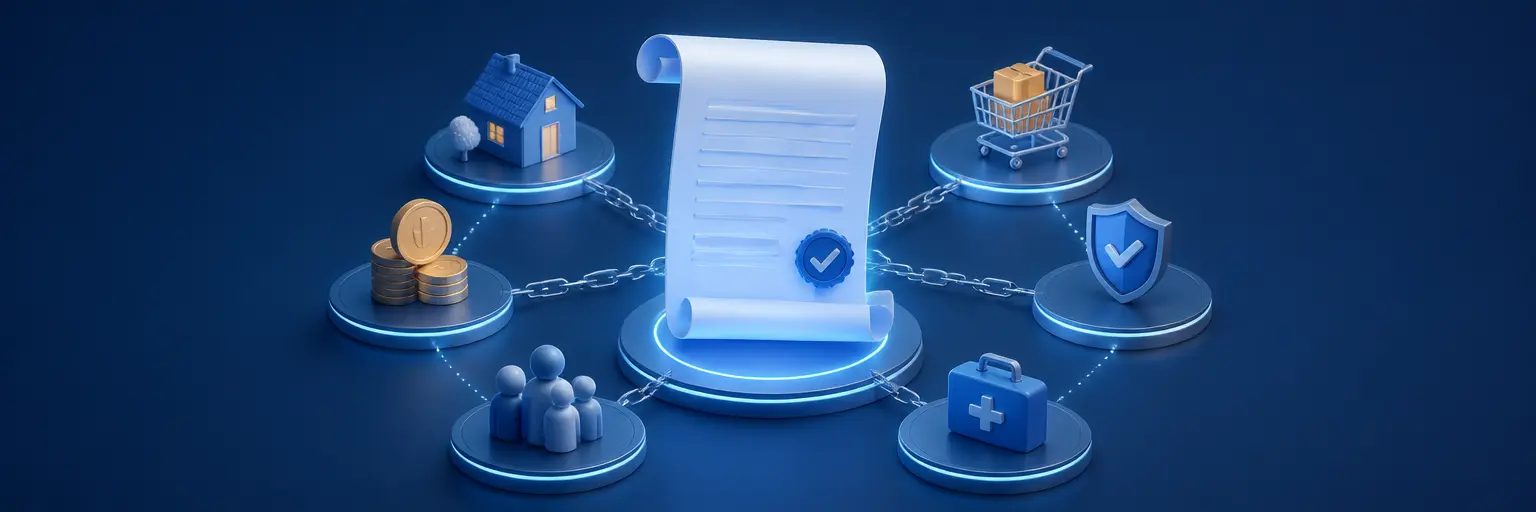
Explore how smart contract use cases are transforming industries beyond cryptocurrency. This subcategory from Blockchain Trends explains how self-executing blockchain programs automate agreements, reduce intermediaries, improve transparency, and create more efficient digital services. Discover practical applications across DeFi, supply chain management, healthcare, real estate, insurance, gaming, digital identity, governance, and enterprise blockchain development.
🏦 Smart Contracts in DeFi and Financial Services
Learn how smart contracts power decentralized finance through automated lending, borrowing, trading, staking, yield farming, insurance, and payment systems. Articles in this section explore how blockchain-based financial applications execute transactions according to predefined rules without relying on traditional intermediaries.
Readers can expect practical insights into DeFi protocols, tokenized assets, decentralized exchanges, financial automation, and smart contract security. Content also examines risks such as coding vulnerabilities, market volatility, oracle manipulation, and regulatory uncertainty.
📦 Supply Chain and Logistics Automation
Discover how smart contracts improve supply chain transparency by recording product movement, verifying transactions, and automating payments between manufacturers, suppliers, distributors, and retailers. Blockchain-based agreements can help businesses track provenance, validate quality, and reduce paperwork.
This section covers real-world examples of blockchain logistics, product traceability, inventory management, compliance verification, and automated settlements. Expect explanations of how connected devices, blockchain networks, and digital records work together to create more efficient supply chains.
🏠 Real Estate and Property Tokenization
Explore smart contract applications in real estate transactions, including property ownership records, rental agreements, escrow services, title management, and fractional ownership. Smart contracts can automate contractual obligations while creating a transparent and auditable record of property-related activity.
Readers will learn about real estate tokenization, digital deeds, programmable property rights, and blockchain-based property investment. Articles also address important considerations such as legal enforceability, identity verification, jurisdiction, and integration with existing land registries.
🩺 Healthcare and Secure Data Management
Learn how smart contracts may support healthcare data sharing, insurance claims, patient consent, pharmaceutical tracking, and provider payments. By using programmable permissions, blockchain systems can help coordinate access to sensitive information while preserving data integrity.
This content explores electronic health records, medical supply chains, decentralized identity, automated claims processing, and privacy-focused blockchain solutions. Readers can also understand why healthcare implementations require strong security, regulatory compliance, and careful management of personal data.
🎮 Gaming, NFTs, and Digital Ownership
Discover how smart contracts enable blockchain gaming, non-fungible tokens, in-game economies, digital collectibles, and player-owned assets. Unlike traditional game items, smart contract-based assets can provide verifiable ownership and may be transferable across compatible platforms.
Expect coverage of NFT marketplaces, play-to-earn models, tokenized game assets, royalties, decentralized gaming economies, and digital ownership. Articles explain both the opportunities and challenges, including scalability, user experience, asset valuation, and sustainable game design.
🪪 Digital Identity and Access Control
Smart contracts can help create decentralized identity systems that give individuals greater control over credentials, permissions, and personal information. Applications include identity verification, professional certifications, age verification, and secure access to online services.
This section examines self-sovereign identity, verifiable credentials, blockchain authentication, privacy-preserving access, and automated authorization. Readers will learn how smart contracts can reduce identity fraud while supporting selective data sharing and trusted digital interactions.
⚖️ Insurance, Legal Agreements, and Compliance
Explore how smart contracts automate insurance policies and legal agreements by triggering actions when predefined conditions are met. Parametric insurance, for example, can issue payments automatically after verified events such as weather disruptions or flight delays.
Content covers automated claims, digital contracts, compliance workflows, dispute resolution, legal technology, and blockchain-based governance. Readers will also gain a realistic understanding of why code-based agreements must work alongside legal frameworks, human oversight, and reliable external data.
🌐 Enterprise Blockchain and Business Automation
Discover how companies use smart contracts to automate procurement, licensing, invoicing, payroll, loyalty programs, and partner agreements. Enterprise blockchain solutions can connect organizations while improving auditability and reducing repetitive administrative processes.
This section focuses on private blockchain networks, permissioned smart contracts, business process automation, interoperability, and enterprise integration. Expect practical discussions about deployment costs, scalability, governance, privacy, and selecting the right blockchain platform for a business use case.
❓ Frequently Asked Questions About Smart Contract Use Cases
What are smart contract use cases?
Smart contract use cases are practical applications of blockchain programs that automatically execute actions when predefined conditions are satisfied. They are used in areas such as DeFi, supply chains, healthcare, real estate, insurance, gaming, identity, and enterprise automation.
How do smart contracts benefit businesses?
Smart contracts can reduce intermediaries, automate workflows, improve transparency, lower administrative costs, and create tamper-resistant records. Businesses must still evaluate security, scalability, legal compliance, privacy, and integration requirements before deployment.
Are smart contracts legally binding?
The legal status of a smart contract depends on the jurisdiction, the agreement’s structure, and applicable regulations. Code can automate performance, but a complete legal framework may require written terms, recognized signatures, consumer protections, and dispute-resolution processes.
What industries use smart contracts today?
Smart contracts are used or tested across financial services, logistics, real estate, healthcare, insurance, gaming, entertainment, government, energy, and digital identity. Adoption varies based on technical maturity, regulation, business incentives, and the availability of trustworthy data.
What are the main risks of smart contract applications?
Key risks include coding errors, security exploits, oracle failures, network congestion, privacy concerns, unclear regulation, and irreversible transactions. Professional auditing, secure development practices, testing, monitoring, and well-designed governance can help reduce these risks.