
Designing Smart Contracts for Scalable IoT Applications
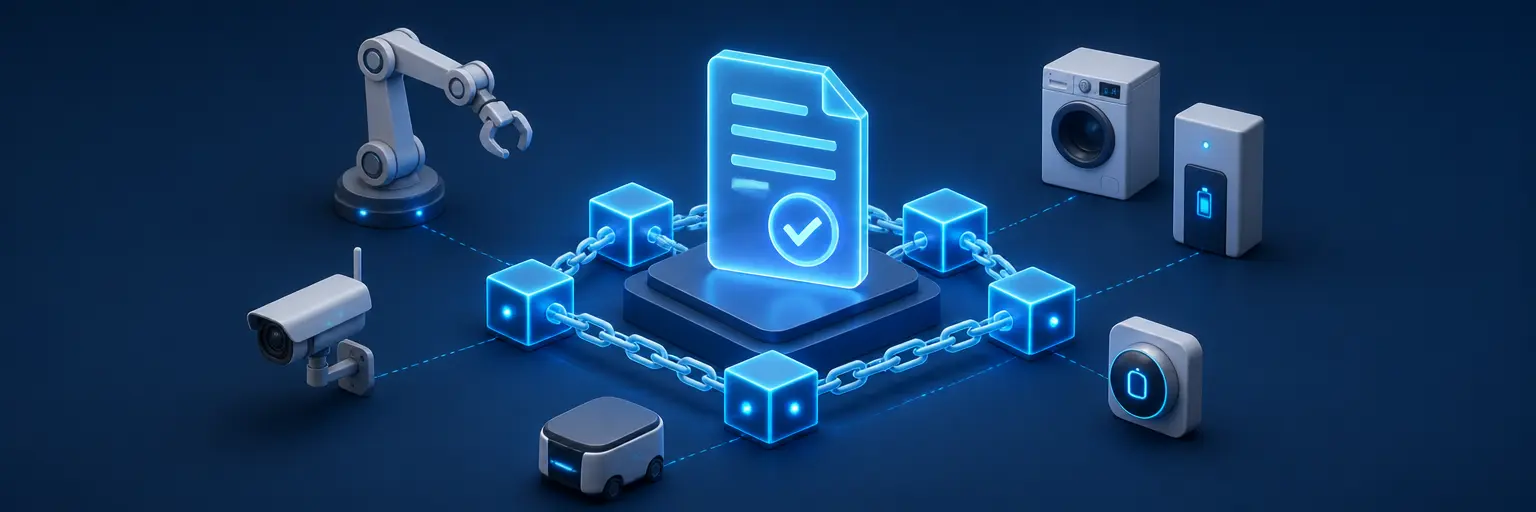
Discover how smart contracts for IoT automation connect blockchain with intelligent devices to enable secure, transparent, and self-executing workflows. 🤖🔗 Explore IoT blockchain solutions for automated payments, supply chain tracking, device authentication, and real-time data sharing—helping businesses reduce manual processes, strengthen trust, and build more efficient decentralized systems.
53 articles
How Smart Contracts Are Transforming the Logistics Industry with IoT
Smart Contracts vs. Traditional Contracts: A Comparison for IoT Solutions
Exploring CrossIndustry Use Cases of Smart Contracts in IoT
How Smart Contracts Are Shaping the Future of Connected Devices
How Smart Contracts Improve Data Integrity in IoT Solutions
The Role of Smart Contracts in IoT Network Governance
Smart Contracts: The Missing Link in IoT Automation?
Smart Contracts and IoT: The Key to Unlocking Industry 4.0
The Role of Smart Contracts in Enhancing IoT Device Security
Smart Contracts in the Automotive Industry: Driving IoT Innovation
IoT Automation: How Smart Contracts Can Reduce Operational Costs
The Role of Smart Contracts in Securing IoT Ecosystems
Can Smart Contracts Solve the IoT Security Dilemma?
How to Create Effective Smart Contracts for IoT Applications
Smart Contracts in Agriculture: Automating IoT Solutions for Farming
The Synergy Between Smart Contracts and IoT: A Perfect Match?
How Smart Contracts Facilitate PeertoPeer IoT Networks
Smart Contracts and IoT: A New Paradigm for Remote Monitoring
The Future of Smart Contracts in IoT Automation: Trends and Predictions
How Smart Contracts Can Facilitate IoT Device Authentication
Smart Contracts in the Healthcare Sector: Revolutionizing IoT Patient Care
Exploring the Legal Implications of Smart Contracts in IoT
The Future of Smart Contracts in IoT: Challenges and Opportunities
Smart Contracts and IoT: Bridging the Gap Between Technology and Compliance
How to Overcome Common Challenges When Implementing Smart Contracts in IoT
The Impact of Smart Contracts on IoT Device Interoperability
Understanding Smart Contracts: The Key to Seamless IoT Automation
Leveraging Smart Contracts for Efficient IoT Data Management
Smart Contracts and IoT: Enabling RealTime Data Processing
🔗 Smart Contracts for IoT Automation: Connecting Devices, Data, and Decentralized Workflows
Smart Contracts for IoT Automation explores how blockchain-based agreements can help connected devices communicate, verify events, and trigger actions without relying entirely on centralized intermediaries. Within the Blockchain and IoT category on Blockchain Trends, this subcategory covers decentralized automation, machine-to-machine transactions, trusted sensor data, device identity, and secure IoT ecosystems. Discover how smart contracts can support automated payments, supply chain monitoring, predictive maintenance, energy management, logistics, and other real-world applications of blockchain technology beyond cryptocurrencies.
⚙️ How Smart Contracts Automate IoT Devices
Readers can learn how smart contracts define rules that connected devices, gateways, and business systems can follow automatically. When an IoT sensor records a verified event—such as a temperature change, delivery milestone, equipment failure, or energy usage threshold—the smart contract can initiate a predefined response. This may include sending an alert, releasing a payment, updating a blockchain record, or activating another device.
This section explains the relationship between IoT automation and blockchain technology, including event-driven workflows, decentralized applications, oracle services, and machine-to-machine communication. It also examines how programmable agreements can reduce manual processing, improve operational efficiency, and create transparent, auditable automation across connected environments.
🔐 Secure Device Identity and Trusted IoT Data
Reliable automation depends on knowing whether a device is authentic and whether its data has been altered. Smart contracts for IoT can work with decentralized identities, cryptographic signatures, access-control systems, and tamper-evident blockchain records to help verify devices and sensor readings. These technologies can strengthen trust between manufacturers, operators, suppliers, and automated systems.
Readers can expect practical insights into IoT cybersecurity, blockchain data integrity, device authentication, and decentralized identity. The content also addresses important limitations, including compromised sensors, inaccurate off-chain data, private-key management, network vulnerabilities, and the need for secure blockchain oracles that connect physical events with digital contracts.
🏭 Industrial IoT and Smart Manufacturing Automation
Industrial organizations can use smart contracts to coordinate machinery, production systems, maintenance providers, and supply chain partners. For example, a contract could authorize maintenance when a machine reaches a specific usage level, release payment after a quality inspection, or record a component’s history throughout the manufacturing process.
This section covers industrial IoT, smart manufacturing, machine-to-machine payments, predictive maintenance, asset tracking, and automated compliance. Readers will discover how blockchain-based automation can improve accountability and reduce disputes while also considering scalability, system integration, data privacy, and the operational requirements of factories and enterprise environments.
🚚 Supply Chain, Logistics, and Automated Payments
Smart contracts can connect IoT sensors with supply chain processes by recording shipment conditions, location data, delivery confirmations, and custody changes. If a shipment arrives within agreed conditions, a contract may automatically approve payment or update ownership. If a temperature-sensitive product exceeds its permitted range, the system can notify stakeholders or apply contractual rules.
Readers can explore how blockchain IoT supply chains support traceability, inventory visibility, cold-chain monitoring, freight automation, and transparent logistics. This section also explains why successful deployments require accurate sensor data, clearly defined business rules, compatible systems, and governance agreements among manufacturers, carriers, retailers, and customers.
⚡ Smart Energy, Utilities, and Connected Infrastructure
Connected meters and energy devices can provide real-time information for automated billing, grid management, demand response, and peer-to-peer energy trading. Smart contracts may help verify energy production or consumption and execute transactions according to predefined terms, supporting more responsive and decentralized energy markets.
This content examines blockchain for energy management, smart grids, renewable energy automation, connected utilities, and peer-to-peer energy trading. Readers will also learn about challenges such as regulatory compliance, privacy, transaction costs, interoperability, grid reliability, and the need to process large volumes of IoT data efficiently.
🧩 IoT Blockchain Architecture and Integration
Understanding the architecture behind smart contract automation is essential for evaluating real-world solutions. This section explores the roles of sensors, edge devices, IoT gateways, cloud platforms, blockchain networks, oracle providers, APIs, and decentralized applications. It explains how data can move from a physical environment to a blockchain while minimizing unnecessary costs and latency.
Readers can expect discussions of edge computing, permissioned blockchains, public networks, Layer 2 solutions, interoperability, API integration, and scalable IoT platforms. The goal is to clarify which components handle data collection, verification, computation, storage, and contract execution, helping organizations choose an architecture suited to their security and performance needs.
📊 Benefits, Challenges, and Business Use Cases
Smart contracts for IoT automation can deliver measurable benefits, including faster workflows, fewer intermediaries, greater transparency, automated compliance, lower administrative costs, and improved coordination between organizations. These advantages are especially relevant for supply chains, manufacturing, logistics, healthcare equipment, agriculture, energy, and smart city infrastructure.
However, blockchain IoT solutions are not suitable for every process. Readers will find balanced analysis of scalability, transaction fees, privacy, governance, legal enforceability, oracle reliability, interoperability, and return on investment. This helps businesses distinguish between promising use cases and projects where conventional databases or centralized automation may remain more practical.
❓ Frequently Asked Questions About Smart Contracts for IoT Automation
What are smart contracts for IoT automation?
Smart contracts for IoT automation are blockchain-based programs that execute predefined actions when connected devices or verified data meet specific conditions. They can trigger payments, alerts, access permissions, maintenance requests, or operational updates without requiring every step to be handled manually.
How do IoT devices interact with a blockchain smart contract?
IoT devices typically send data through a gateway, API, or oracle service rather than connecting directly to the blockchain. The oracle verifies or delivers relevant off-chain information to the smart contract, which then applies its programmed rules and initiates the appropriate action.
What are the main benefits of blockchain-based IoT automation?
Key benefits include data integrity, transparent records, automated agreements, improved traceability, reduced administrative work, and machine-to-machine transactions. Blockchain can also help multiple organizations coordinate without depending on one central database owner.
What challenges affect smart contracts and IoT systems?
Common challenges include unreliable sensors, cybersecurity threats, limited device resources, blockchain scalability, transaction costs, privacy concerns, oracle security, interoperability, and uncertain legal or regulatory requirements. A secure design must protect both the physical devices and the digital infrastructure.
Which industries can use smart contracts for IoT automation?
Potential applications include manufacturing, logistics, supply chain management, energy, utilities, agriculture, healthcare, insurance, transportation, and smart cities. The strongest use cases generally involve multiple parties, measurable real-world events, recurring workflows, and a clear need for trusted automation.