
Healthcare IoT Data Secured: Blockchain's Transformative Impact on Patient Monitoring
Discover how blockchain for IoT data management creates trusted, tamper-resistant records for connected devices and smart ecosystems. Explore secure data sharing, device authentication, real-time tracking, and automated workflows powered by decentralized technology—helping businesses improve IoT security, data integrity, privacy, and operational efficiency. 🔗📡 Stay informed on emerging solutions that connect blockchain and IoT to build more transparent, reliable, and scalable digital infrastructure.
61 articles
Boost IoT Data Integrity: Leveraging Blockchain for Unbreakable Trust
Building a BlockchainBased IoT Data Management System: Key Considerations
The Evolution of IoT Security: Blockchain as the Cornerstone
Energy Consumption Concerns: Addressing Blockchain's Footprint in IoT Deployments
Blockchain vs. Traditional Databases for IoT Data Management: A Detailed Comparison
Blockchain for Secure Location Data Management in IoT Applications
Data Breaches in IoT: Can Blockchain Be the Ultimate Shield?
Blockchain for IoT in Manufacturing: Optimizing Production and Supply Chains
The Trust Factor: Building Verifiable IoT Ecosystems with Blockchain
Scaling Blockchain for Massive IoT Deployments: Is it Possible?
Smart Cities Powered by Blockchain IoT Data Management: RealWorld Examples
Powering Green IoT: Can Blockchain Reduce the Environmental Impact?
Interoperability Hurdles: Connecting Blockchain and Diverse IoT Devices
Transparency in IoT: How Blockchain Enables Verifiable Data Management
Securing Sensor Data in IoT with Blockchain: Ensuring Accuracy and Trust
The Future of IoT Data: Why Decentralization with Blockchain is Key
Managing Device Data in IoT Networks Using Blockchain Technology
Secure Your IoT Data: Blockchain's Immutability Advantage Explained
Energy Sector IoT Data Management: Blockchain for Smart Grids and Renewables
Automotive IoT Data Security: Blockchain for Connected and Autonomous Vehicles
Best Practices for Securing IoT Data with Blockchain Technology
From Sensors to Security: Blockchain's EndtoEnd IoT Data Management
The Untapped Potential: Blockchain's Secret Weapon for IoT Data Security
Industrial IoT Data Revolutionized: Blockchain for Enhanced Efficiency & Security
TimeSeries IoT Data Management on the Blockchain: Challenges and Solutions
The Silent Revolution: How Blockchain is Reshaping IoT Data Landscapes
Blockchain for IoT in Supply Chains: Tracking & Transparency Revolution
The Cost of Decentralization: Is Blockchain for IoT Data Management Affordable?
Securing IoT Data at the Edge: BlockchainBased Solutions
🔗 Blockchain for IoT Data Management: Secure, Trusted, and Scalable Connected Systems
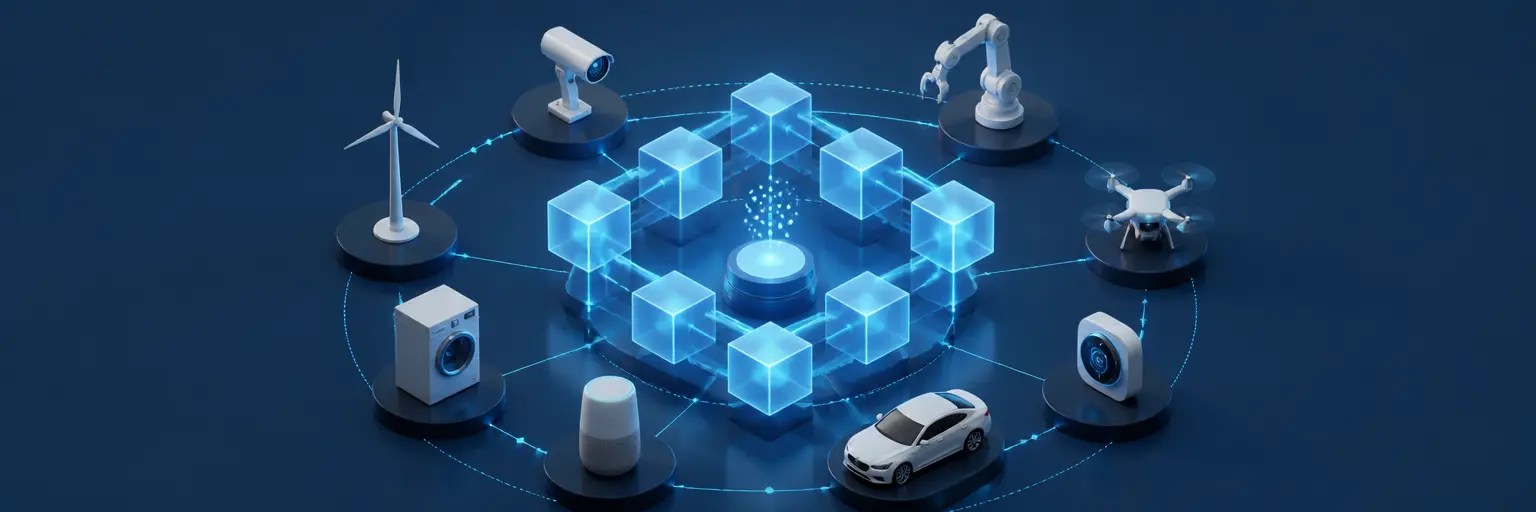
Blockchain for IoT data management explores how decentralized ledger technology can improve the way Internet of Things devices collect, verify, share, and protect information. As smart sensors, connected machines, industrial equipment, vehicles, and consumer devices generate enormous volumes of data, organizations need reliable methods for ensuring data integrity, privacy, traceability, and access control. This subcategory on Blockchain Trends examines the practical connection between blockchain and IoT, focusing on secure data exchange, decentralized architectures, device identity, automation, and trusted machine-to-machine communication.
🌐 How Blockchain Improves IoT Data Integrity
Readers can discover how blockchain creates a tamper-resistant record of IoT data transactions. Instead of relying exclusively on a central database, blockchain can distribute transaction records across a network, making unauthorized changes easier to detect. This is especially valuable for applications involving industrial IoT data, supply chain monitoring, smart cities, connected healthcare, and energy systems.
Articles in this section explain concepts such as cryptographic hashing, consensus mechanisms, immutable ledgers, digital signatures, and timestamped records. By understanding these technologies, businesses can evaluate how blockchain supports trusted sensor data, auditable information flows, and verifiable device activity across complex IoT environments.
🔐 IoT Security, Privacy, and Device Identity
Connected devices can introduce significant cybersecurity risks, including spoofed identities, unauthorized access, data manipulation, and insecure communication channels. Blockchain for IoT data management offers new approaches to decentralized device authentication, identity verification, permissions management, and secure communication between machines.
This subcategory covers how blockchain-based identity systems can help confirm whether a device is authorized to join an IoT network or submit data. Readers can also explore privacy-enhancing techniques, encryption, permissioned blockchains, and data minimization strategies designed to protect sensitive information while maintaining reliable device-to-device interactions.
⚙️ Smart Contracts and Automated IoT Workflows
Smart contracts for IoT can automatically execute predefined actions when trusted conditions are met. For example, a connected sensor could trigger a maintenance request, release a payment, update an inventory record, or adjust an energy system after verified data is recorded on a blockchain network.
Readers will learn how blockchain automation can reduce manual intervention and improve operational efficiency. Topics may include machine-to-machine payments, automated supply chain events, predictive maintenance, connected logistics, and rules-based data sharing. These use cases demonstrate how smart contracts can transform raw IoT data into transparent and actionable business processes.
🏭 Blockchain for Industrial IoT and Supply Chains
Industrial IoT environments depend on accurate data from factories, warehouses, vehicles, production lines, and logistics networks. Blockchain can provide a shared and traceable data layer for recording product movement, equipment performance, environmental conditions, and compliance information.
This section helps readers understand how blockchain and IoT work together to improve supply chain visibility, product provenance, inventory accuracy, and operational accountability. Content may also address real-time monitoring, cold-chain logistics, manufacturing quality control, asset tracking, and the challenges of integrating blockchain with existing enterprise systems.
📊 Scalable Blockchain Architectures for IoT Data
IoT networks can generate millions of data points, while many blockchain platforms face limitations involving transaction speed, storage capacity, network fees, and energy consumption. This makes scalability a central consideration when designing blockchain-based IoT solutions.
Readers can explore approaches such as edge computing, off-chain storage, sidechains, layer-2 networks, permissioned ledgers, data compression, and hybrid blockchain architectures. These methods can help organizations manage high-volume IoT data without placing every sensor reading directly on-chain, supporting more efficient and cost-effective deployments.
💡 Real-World Blockchain and IoT Applications
Blockchain-enabled IoT solutions are being explored across many industries. Potential applications include smart energy grids, connected vehicles, healthcare monitoring, agricultural sensors, environmental tracking, smart buildings, digital twins, and decentralized infrastructure networks.
Through practical examples and industry analysis, this subcategory highlights both the benefits and limitations of real-world deployments. Readers can evaluate how blockchain improves transparency, accountability, data sharing, and automation, while also considering regulatory requirements, interoperability, governance, and return on investment.
🧩 Interoperability, Governance, and Implementation Challenges
Successful blockchain and IoT integration requires more than selecting a distributed ledger. Organizations must address device compatibility, communication standards, data ownership, network governance, cybersecurity, regulatory compliance, and integration with cloud platforms and enterprise software.
This content helps readers assess the practical challenges of deploying blockchain for IoT data management. It explains why interoperability and governance are essential for building networks that can operate across organizations, device manufacturers, blockchain platforms, and technology ecosystems.
❓ Frequently Asked Questions About Blockchain for IoT Data Management
What is blockchain for IoT data management?
Blockchain for IoT data management refers to using distributed ledger technology to record, verify, secure, and share data generated by connected devices. It can improve data integrity, device authentication, transparency, and traceability across IoT networks.
How does blockchain secure Internet of Things data?
Blockchain can protect IoT data through cryptographic signatures, decentralized verification, immutable transaction records, and permission-based access. These features make unauthorized changes easier to identify, although blockchain should be combined with encryption, secure hardware, and strong network security.
Can blockchain store all IoT sensor data?
Usually, storing every sensor reading directly on a blockchain is impractical because of cost, performance, and storage limitations. Many solutions use off-chain databases, cloud storage, edge computing, or decentralized storage, while recording hashes or proofs on the blockchain to verify data integrity.
What are the main benefits of blockchain and IoT integration?
Key benefits include trusted data sharing, improved device identity management, tamper-resistant records, supply chain transparency, automated workflows, machine-to-machine transactions, and enhanced accountability between organizations.
What challenges affect blockchain-based IoT systems?
Common challenges include scalability, energy consumption, latency, interoperability, privacy, governance, implementation costs, device limitations, and regulatory uncertainty. A successful deployment requires selecting the right blockchain architecture and aligning it with the IoT use case.