
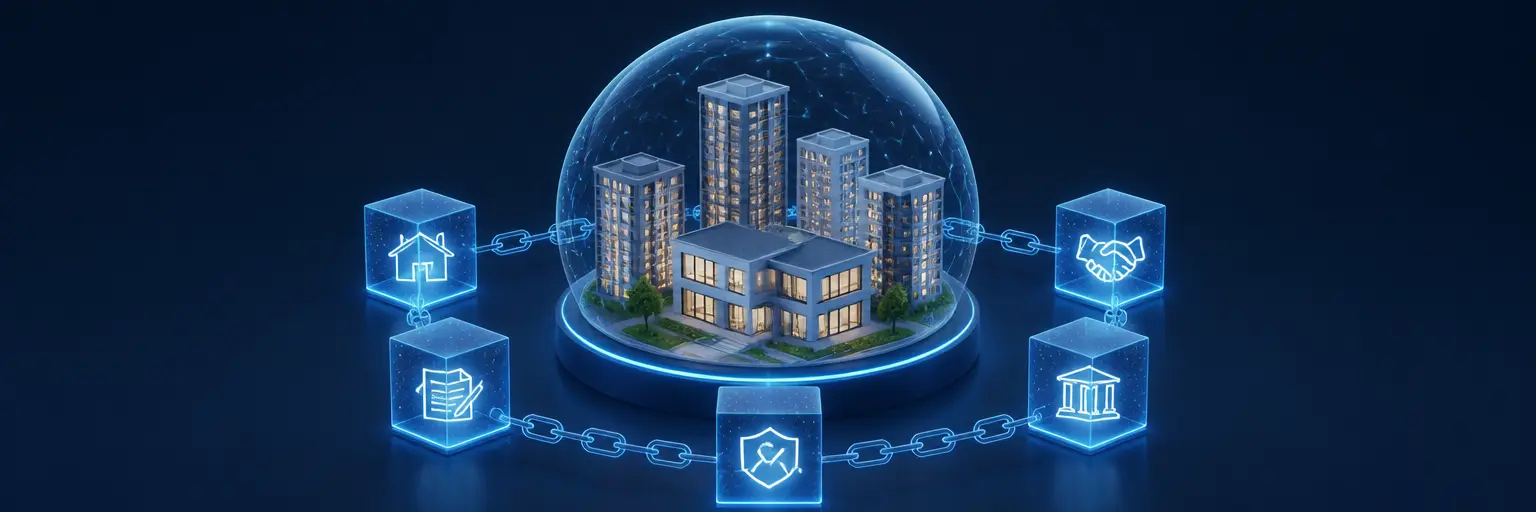
CrossBorder Real Estate Transactions: Simplifying International Deals with Blockchain
Explore how blockchain is transforming real estate through greater transparency, faster transactions, secure digital records, and tokenized property ownership. Discover the technology’s impact on property management, smart contracts, real estate investment, and decentralized marketplaces—and learn how blockchain can reduce costs, streamline transactions, and reshape the future of the global property market. 🏢🔗
46 articles
Property Tokenization Platforms: A Guide to Investing in Digital Real Estate
Real Estate Investment Trusts (REITs) on the Blockchain: The Next Evolution
Real Estate Token Offerings (RTOs): A New Fundraising Model for Developers
The Rise of Real Estate DAOs: Decentralized Autonomous Organizations in Property
The Role of NFTs in Real Estate: Beyond Digital Collectibles
Will Blockchain Eliminate the Need for Real Estate Lawyers? Examining the Impact
The Impact of Blockchain on Real Estate Commissions: A Shifting Landscape
Rent and Lease Reinvented: Blockchain Solutions for Streamlined Property Management
Commercial Real Estate on the Blockchain: Opportunities and Challenges
Cutting Costs, Not Corners: Blockchain's Efficiency Revolution in Real Estate
Smart Cities, Smarter Real Estate: Blockchain's Role in Urban Development
Challenges to Blockchain Adoption in Real Estate: Overcoming Hurdles
Land Registry Reimagined: Blockchain's Promise for Secure and Efficient Title Deeds
Blockchain for Title Insurance: Reducing Risk and Enhancing Trust
Blockchain for Property Developers: Streamlining Construction and Sales
Real Estate Marketplaces on the Blockchain: Decentralized Platforms for Buying and Selling
Is Blockchain Overhyped in Real Estate? Separating Fact from Fiction
Smart Contracts in Real Estate: Automating Property Deals for Speed and Security
Blockchain and Property Valuation: Enhancing Accuracy and Transparency
Unlocking Liquidity: How Blockchain Tokenization is Transforming Real Estate Investment
Blockchain and Property Taxes: Streamlining Payments and Enhancing Accountability
Beyond Mortgages: BlockchainBased Real Estate Financing Innovations
Blockchain's Potential to Solve the Real Estate Affordability Crisis
Real Estate Data Security: Fortifying Property Information with Blockchain
Case Study: BlockchainPowered Property Sales Successes and Lessons Learned
Real Estate Auctions on the Blockchain: Increasing Efficiency and Reach
Tokenized Real Estate vs. Traditional REITs: A Comparative Analysis
The Future of Real Estate Investment Portfolios: Diversification with Blockchain Assets
Real Estate and Web3: The Decentralized Future of Property Ownership
🏠 Impact of Blockchain on Real Estate
Discover how blockchain is reshaping the global real estate industry through property tokenization, smart contracts, digital land registries, decentralized finance, and transparent property transactions. This subcategory from Blockchain Trends explores the practical and long-term effects of blockchain technology on buying, selling, financing, managing, and investing in real estate. Readers will find insights into how distributed ledgers can improve trust, reduce administrative costs, accelerate transactions, and create new opportunities for fractional property ownership.
🔗 Blockchain and Real Estate Transactions
Blockchain can transform traditional real estate transactions by creating a secure, shared record of ownership, contracts, payments, and transfer history. Instead of relying on multiple intermediaries and disconnected databases, buyers, sellers, brokers, lenders, and legal professionals may use transparent blockchain-based property records to verify information more efficiently.
Explore how blockchain may reduce paperwork, prevent duplicate records, improve transaction transparency, and shorten settlement times. Articles in this section examine digital property transfers, blockchain verification, automated due diligence, and the changing role of real estate intermediaries.
📜 Smart Contracts for Property Deals
Smart contracts are self-executing digital agreements that automatically perform predefined actions when specific conditions are met. In real estate, they could support rental agreements, escrow arrangements, mortgage payments, title transfers, and property sales while minimizing manual intervention.
Readers can learn how smart contracts in real estate may reduce errors, lower transaction costs, and increase operational efficiency. This section also considers important challenges, including coding errors, legal enforceability, regulatory compliance, and the need to connect blockchain systems with reliable real-world data.
🏢 Tokenization and Fractional Real Estate Ownership
Real estate tokenization converts ownership rights or economic interests in a property into blockchain-based digital tokens. This approach may allow investors to purchase smaller portions of commercial buildings, residential developments, hotels, warehouses, and other real estate assets rather than acquiring an entire property.
Find practical analysis of fractional real estate investment, tokenized property markets, digital securities, liquidity, and investor access. This content also explains why tokenization does not eliminate legal ownership requirements and why securities laws, investor protection rules, custody, valuation, and platform security remain essential.
💰 Blockchain, DeFi, and Real Estate Finance
Decentralized finance is creating new models for lending, borrowing, collateralization, and investment. Within real estate, blockchain-based financial platforms may connect property owners and investors through programmable lending systems, tokenized assets, and alternative financing structures.
Learn how DeFi for real estate could expand access to property-backed financing and create new investment products. Coverage also addresses risks such as market volatility, smart contract vulnerabilities, inadequate collateral valuation, limited liquidity, interest rate exposure, and evolving financial regulation.
🌍 Global Property Markets and Cross-Border Investment
Blockchain may make international real estate investment more accessible by supporting digital identity, transparent ownership records, programmable payments, and tokenized assets. These tools could help investors compare opportunities and participate in property markets across borders with fewer administrative barriers.
This section explores the potential of blockchain for cross-border real estate transactions, international property investment, digital settlement, and currency-independent payment systems. Readers will also discover why local land laws, taxation, licensing requirements, identity verification, and jurisdictional differences continue to influence global adoption.
🔐 Transparency, Security, and Fraud Prevention
One of blockchain’s most discussed benefits in real estate is the ability to create tamper-resistant records. A well-designed blockchain system can make ownership histories, transaction timestamps, and document changes easier to audit, potentially helping reduce fraud, forged deeds, duplicate sales, and unauthorized alterations.
Discover how blockchain property records may strengthen real estate security while improving accountability among market participants. The content also examines the limits of blockchain, including inaccurate information entered at the source, privacy concerns, cyberattacks, key management, and the importance of secure digital identity systems.
🏛️ Regulation, Land Registries, and Adoption Challenges
The impact of blockchain on real estate depends heavily on legal recognition and institutional adoption. Governments, registries, financial authorities, and property professionals must determine how blockchain records interact with deeds, title systems, zoning rules, tax obligations, privacy legislation, and existing real estate laws.
Read informed perspectives on blockchain real estate regulation, digital land registries, compliance, know-your-customer requirements, anti-money-laundering standards, and legal ownership. This section provides balanced coverage of the opportunities and barriers affecting blockchain adoption in residential and commercial property markets.
❓ Frequently Asked Questions About Blockchain’s Impact on Real Estate
What is the impact of blockchain on real estate?
Blockchain can improve real estate by supporting transparent ownership records, faster transactions, smart contracts, digital identity, tokenization, and automated settlement. Its impact may reduce administrative inefficiencies and increase access to property investment, although adoption depends on regulation, infrastructure, data accuracy, and market acceptance.
How does blockchain improve real estate transactions?
Blockchain provides a shared, tamper-resistant ledger that can record property information, transaction history, contracts, and payments. This may reduce duplicate data entry, improve verification, limit fraud, and allow parties to complete certain steps more quickly. Legal and professional review is still necessary for compliant transactions.
What is real estate tokenization?
Real estate tokenization is the process of representing ownership rights or financial interests in a property with blockchain-based tokens. It may enable fractional ownership and lower investment minimums, but tokenized real estate can be subject to securities laws, transfer restrictions, custody requirements, valuation challenges, and platform-specific risks.
Can smart contracts replace real estate agents and lawyers?
Smart contracts can automate specific processes, such as payment releases, rental terms, or transfer conditions, but they do not eliminate the need for legal, financial, and professional guidance. Real estate transactions involve local laws, inspections, negotiations, taxation, identity verification, and real-world events that require expert oversight.
What are the main risks of blockchain in real estate?
Key risks include regulatory uncertainty, privacy issues, cybersecurity threats, incorrect off-chain data, smart contract bugs, limited liquidity, volatile token markets, and unclear legal ownership. Successful blockchain adoption requires strong governance, secure technology, reliable data sources, compliant platforms, and informed participation from buyers and investors.