
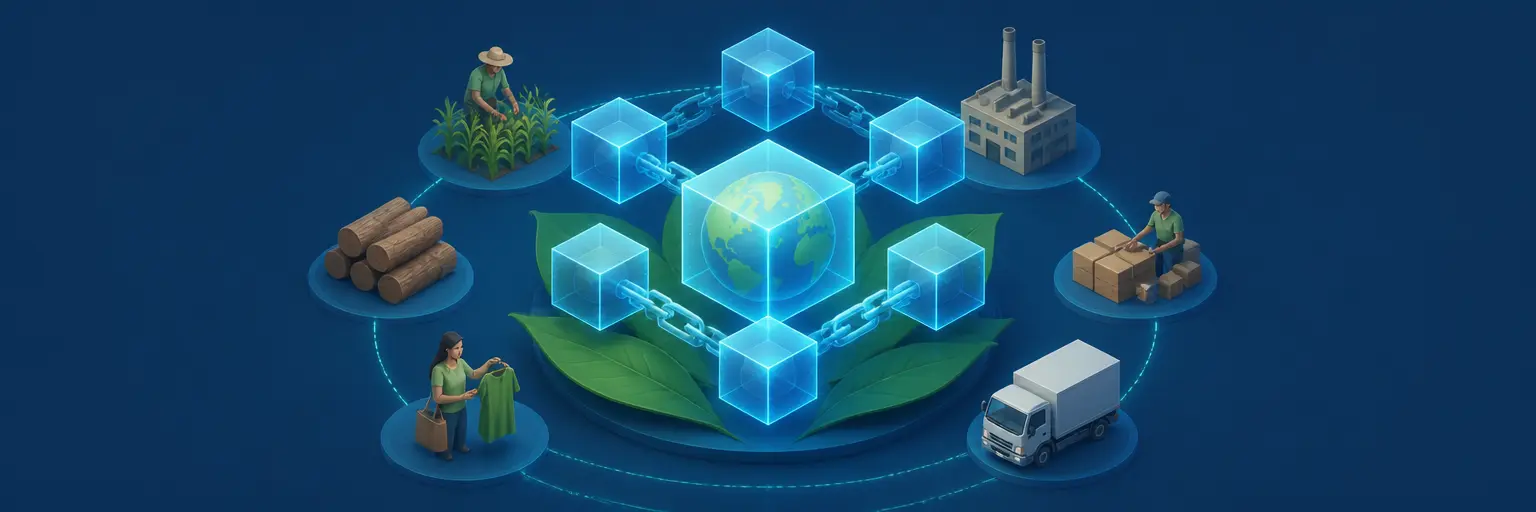
The Role of NFTs in Ethical Supply Chains: Proof of Provenance and Fair Trade
Blockchain for Supply Chain Ethics explores how decentralized technology can promote transparency, accountability, and fair business practices across global supply networks. Discover how blockchain enables traceable sourcing, verifies labor and environmental standards, reduces fraud, and empowers consumers to make informed choices. 🌍🔗 Explore real-world applications, ethical challenges, and emerging solutions shaping more responsible, sustainable, and socially impactful supply chains.
58 articles
The AntiCounterfeit Weapon: Blockchain's Role in Securing Ethical Supply Chains
Beyond Traceability: How Blockchain Ensures Ethical Sourcing and Production
Ethical Supply Chain Innovation: Exploring the Latest Blockchain Applications
Ethical Supply Chain Ecosystems: Blockchain and Collaboration for Shared Values
Luxury Goods and Ethics: Blockchain for Authenticity and Responsible Sourcing
Fighting Forced Labor: Blockchain's Potential to Enhance Ethical Supply Chains
Blockchain for Ethical Food Systems: From Farm to Table Transparency
Blockchain and Supply Chain Security: Strengthening Ethical Practices Against Threats
The Blockchain Solution for Ethical and Sustainable Supply Chain Practices
Ending Exploitation? Blockchain's Promise for Ethical Labor in Global Supply Chains
Blockchain's Impact on Ethical Supply Chain Regulation and Compliance
Blockchain for Ethical Agriculture: Ensuring Fair Prices and Sustainable Practices
Sustainable Supply Chains: How Blockchain is Driving Environmental Responsibility
Ethical Sourcing Verified: Blockchain's Power to Combat Unfair Trade Practices
Fashion's Future is Fair: Blockchain for Ethical and Sustainable Apparel Supply Chains
The Future of Fair Trade: Blockchain and the Democratization of Ethical Sourcing
Data Integrity and Ethics: Blockchain's Role in Building Accountable Supply Chains
Blockchain for Good: Ensuring Ethical Practices Across Global Supply Networks
Ethical Traceability in Action: RealWorld Examples of Blockchain in Supply Chains
Developing World Ethics: Blockchain for Fairer Supply Chains in Emerging Markets
Diamonds, Data, and Ethics: Blockchain's Impact on Responsible Mineral Sourcing
Transparency as a Strategy: Leveraging Blockchain for Ethical Supply Chain Advantage
Blockchain's Contribution to SDG Goals: Ethical and Sustainable Supply Chains
Ethical Seafood Supply Chains: Blockchain to Combat Illegal Fishing and Fraud
The Democratization of Ethics: Blockchain's Potential to Empower Supply Chain Stakeholders
Navigating Ethical Dilemmas: Blockchain Solutions for Complex Supply Chains
Blockchain's Ethical Ledger: Can Distributed Tech Revolutionize Supply Chains?
Supply Chain Scandals No More? Blockchain's Promise for Ethical Accountability
From Farm to Fork, Ethically Tracked: Blockchain for Food Supply Chain Integrity
🔗 Blockchain for Supply Chain Ethics: Transparency, Accountability, and Responsible Commerce
Explore how blockchain for supply chain ethics is helping organizations improve transparency, traceability, and accountability across global commerce. This subcategory examines how distributed ledger technology can support ethical sourcing, fair labor practices, responsible procurement, human rights monitoring, and sustainable supply chains. At Blockchain Trends, readers will discover how blockchain applications extend beyond cryptocurrencies to address real-world social impact challenges and build greater trust between businesses, suppliers, regulators, workers, and consumers.
🌍 Ethical Sourcing and Blockchain Traceability
Learn how blockchain-based supply chain tracking can document the journey of products and raw materials from origin to destination. Immutable records may help businesses verify claims about responsibly sourced minerals, conflict-free materials, sustainable agriculture, ethical manufacturing, and fair trade production. Readers can explore how blockchain creates a shared record that improves visibility across complex supplier networks.
This section also considers the practical limits of supply chain traceability. Blockchain can preserve submitted information, but reliable outcomes depend on accurate data collection, trusted audits, Internet access, and effective verification systems. Discover how companies can combine blockchain with sensors, certifications, digital identities, and independent inspections to strengthen ethical sourcing programs.
👷 Labor Rights, Human Rights, and Worker Protection
Blockchain technology may support stronger oversight of labor conditions by recording supplier certifications, compliance checks, training records, and remediation efforts. Readers will learn how decentralized systems can help organizations monitor forced labor risks, child labor concerns, worker safety, fair wages, and responsible employment practices throughout international supply chains.
The discussion also addresses privacy and inclusion. Ethical supply chain systems must protect sensitive worker information and avoid exposing vulnerable people to retaliation or surveillance. Explore approaches such as permissioned blockchains, selective disclosure, verifiable credentials, and privacy-preserving identity tools that aim to balance accountability with human rights.
♻️ Sustainable Supply Chains and Environmental Accountability
Discover how blockchain can support environmental responsibility by recording information about carbon emissions, recycled materials, renewable energy use, water consumption, waste reduction, and product life cycles. Transparent data can help companies and consumers evaluate whether sustainability claims are supported by evidence rather than vague marketing language or greenwashing.
Readers can also examine blockchain applications for circular economies, sustainable logistics, carbon markets, and product passports. These tools may improve the tracking of materials from production through reuse, repair, recycling, or disposal. The section explains why credible environmental data, standardized measurement, and independent validation remain essential for meaningful climate impact.
🤝 Fair Trade, Small Producers, and Inclusive Commerce
Blockchain for social impact can help small farmers, artisans, and independent producers establish verifiable records of origin, quality, and participation in ethical trade programs. Transparent transaction histories may improve access to buyers, financial services, insurance, and premium pricing while reducing information asymmetry between producers and large organizations.
However, technology alone cannot guarantee fair outcomes. This section explores the importance of affordable onboarding, mobile access, digital literacy, local governance, fair data ownership, and equitable distribution of value. Learn how blockchain projects can be designed to include underserved communities rather than creating new barriers to participation.
🔍 Supply Chain Audits, Compliance, and Corporate Accountability
Explore how blockchain can enhance corporate compliance by creating tamper-resistant records of supplier onboarding, audits, certifications, inspections, and corrective actions. These records may help organizations prepare for modern slavery legislation, environmental reporting requirements, due diligence rules, ESG disclosures, and responsible sourcing regulations.
This section explains how blockchain-based audit trails can support more consistent reporting and make it easier to identify gaps in supplier performance. Readers will also learn why governance, data standards, legal recognition, interoperability, and independent oversight are necessary to prevent companies from using blockchain as a superficial compliance label.
⚖️ Challenges, Risks, and Ethical Governance
Blockchain supply chain solutions face challenges involving data accuracy, scalability, cost, energy use, interoperability, privacy, and unequal access. A ledger may be difficult to alter, but it cannot automatically determine whether information entered into the system is truthful. Understanding the difference between data immutability and data integrity is essential when evaluating ethical blockchain projects.
Readers will gain a balanced perspective on responsible implementation, including stakeholder consultation, transparent governance, open standards, human rights impact assessments, and clear accountability mechanisms. The goal is to identify when blockchain offers genuine value and when simpler databases, trusted institutions, or improved business processes may be more appropriate.
❓ Frequently Asked Questions About Blockchain for Supply Chain Ethics
What is blockchain for supply chain ethics?
Blockchain for supply chain ethics refers to using distributed ledger technology to improve transparency, traceability, and accountability in sourcing, manufacturing, transportation, and sales. It can record information about product origins, supplier certifications, labor practices, environmental performance, and compliance activities in a shared, tamper-resistant system.
Can blockchain prove that a product was made ethically?
Blockchain can help preserve and share evidence, but it cannot independently prove that every claim is true. Ethical verification depends on accurate data, trusted participants, audits, inspections, certifications, and effective governance. Blockchain is best viewed as a tool for improving evidence and accountability rather than a complete substitute for independent verification.
How does blockchain help prevent forced labor and human rights abuses?
Blockchain may create clearer records of suppliers, workplace assessments, worker certifications, remediation actions, and purchasing relationships. This can make it easier to identify risk and follow up on violations. Systems must be designed carefully to protect worker privacy, prevent retaliation, and include affected communities in decision-making.
Is blockchain environmentally sustainable for supply chains?
The environmental impact depends on the blockchain network, consensus mechanism, data requirements, and overall system design. Energy-efficient permissioned or proof-of-stake networks may reduce energy consumption compared with energy-intensive alternatives. A sustainability assessment should consider the full technology lifecycle, including devices, data storage, governance, and operational needs.
What should companies consider before adopting an ethical supply chain blockchain?
Companies should define a clear problem, consult suppliers and workers, assess privacy and human rights risks, verify data sources, select suitable technical infrastructure, and establish governance responsibilities. They should also consider interoperability, affordability, regulatory compliance, independent audits, supplier training, and measurable social and environmental outcomes before implementation.